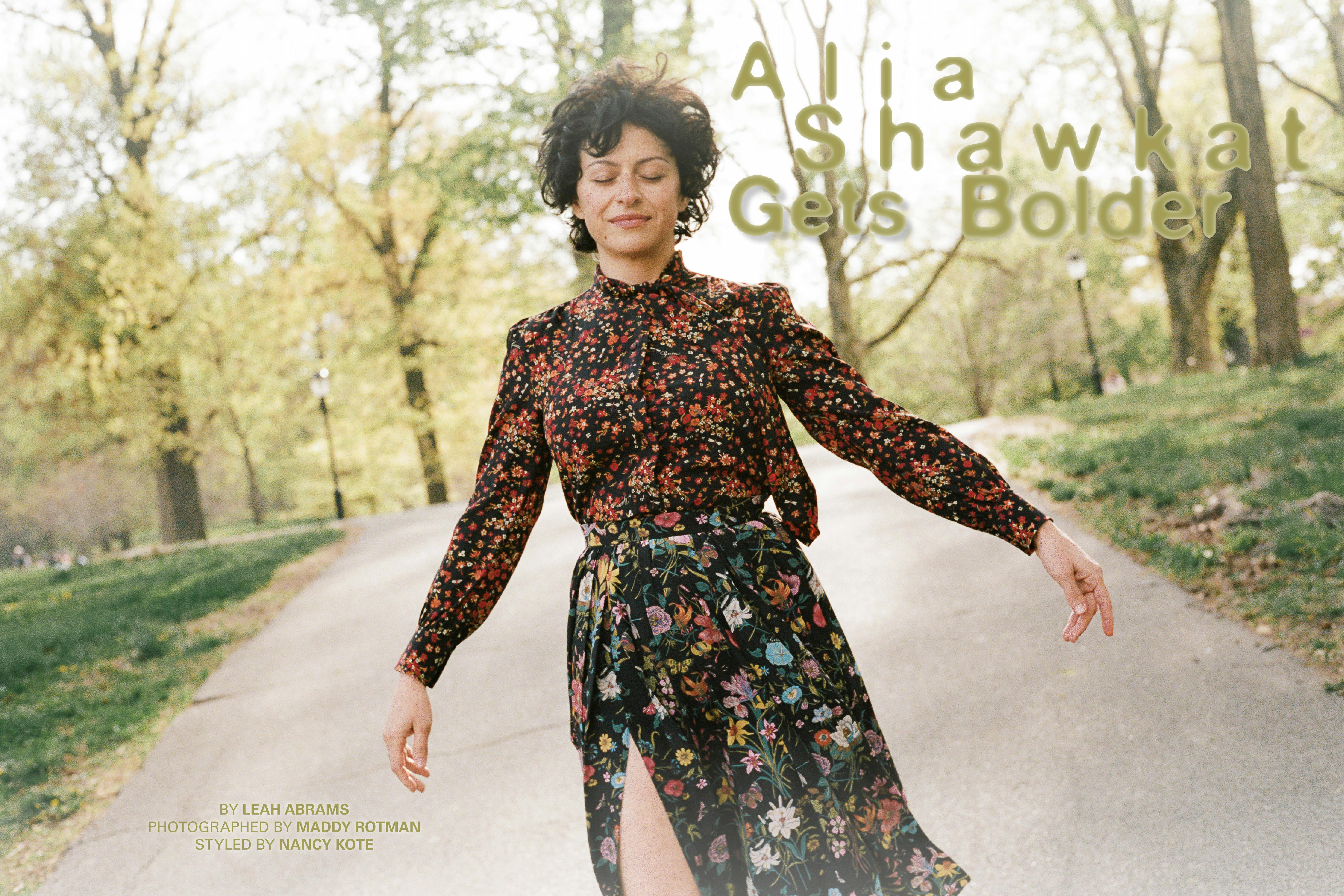
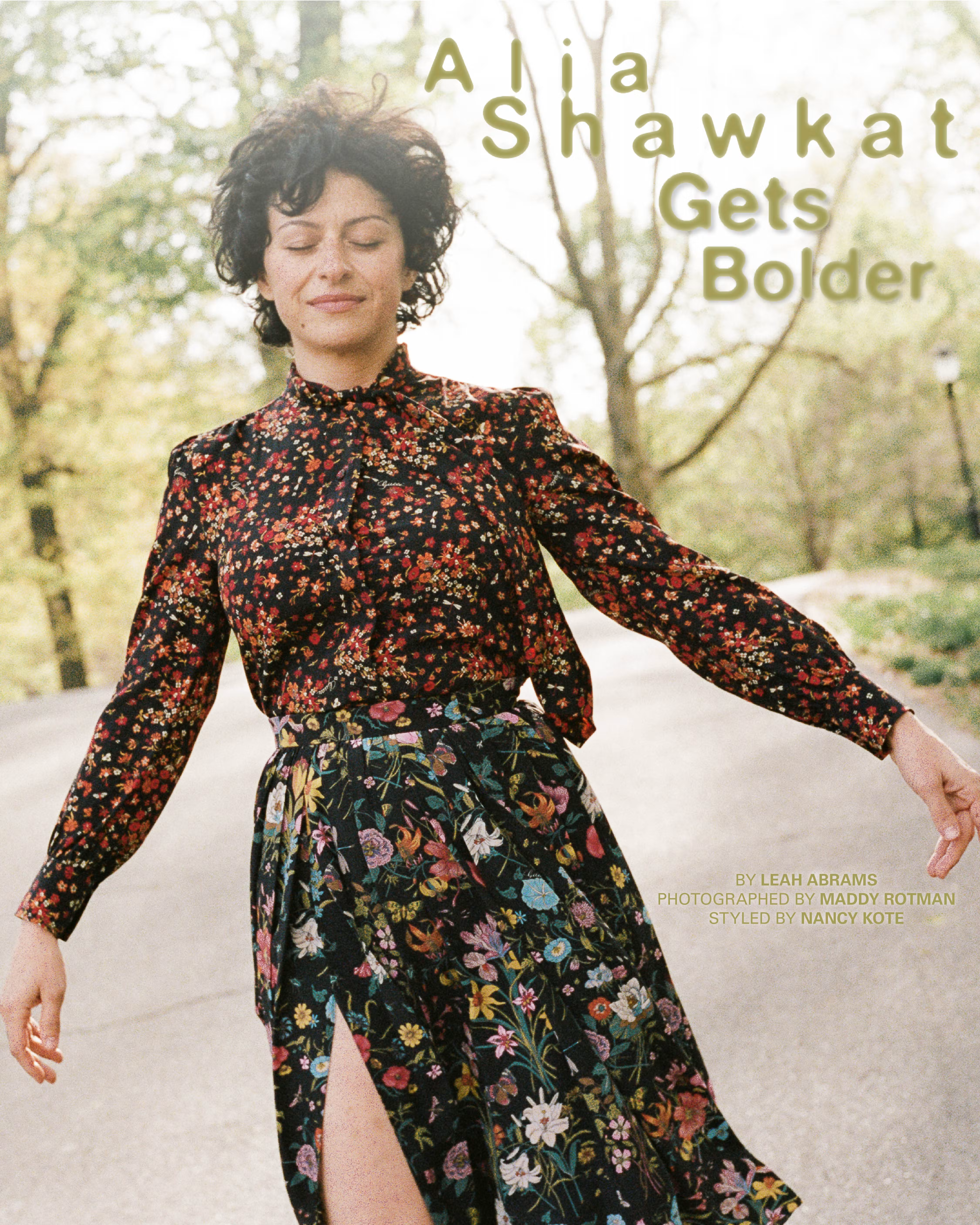
Each of Alia Shawkat’s characters has a distinctive look. There’s Maeby in Arrested Development, decked out in black chokers and graphic tees. Dory in Search Party goes from millennial everywoman in a pinstripe shirt to culty saint in white, flowing gowns. Then there’s Mae in You Got Older, who Shawkat has been playing in her stage debut at Cherry Lane Theater since February. Schlepping around the stage in windbreaker sweatpants and red ankle socks, Mae is the picture of late 20s aimlessness and ennui.
Waiting for Shawkat to arrive at our breakfast interview, I wander the block, wondering which of these people will greet me. I forgot that none of them exist, that acting requires transformation, and that the real Shawkat is a person I don’t know. When she strolls up to the corner of Fort Greene Park in a sundress, a yellow cardigan, a baseball cap, and tinted glasses, I have the sudden urge to facepalm. Of course she’s not in sweatpants. She’s a fucking actor.
It’s 10 a.m., and Shawkat has to leave by noon to prepare for her next show. After we hug, I recover my social graces, and we walk inside where the host tells us we can’t take one of the booths in a restaurant that is — no exaggeration — entirely empty. We look at each other. Then around at the vacant seats.
“Should we go somewhere else?” she asks. “This place has weird vibes.”
We’re off, walking through a perfect spring day like allies, having escaped a stilted, silent lunch for a new adventure. Shawkat knows Fort Greene well; she lived here while shooting Search Party a few months a year for five years. She suggests Evelina down the block from her old place. We’re seated at a table outside where she orders the grain bowl and a glass of unsweetened iced tea.
“ I have a lot of close friends here,” she says. “Sometimes even more than L.A. So it feels really good when I come back.”
Of course, things are different now. For one, You Got Older is — improbably for someone who’s been an on-camera mainstay for two decades — Shawkat’s first play. She’s on a grueling off-Broadway schedule of eight shows a week.
“It’s very athletic in a sense,” she says. “Physically and as an actor, I’ve had to be in really good shape. You try your best to stay present, to really drop in and let go of whatever happened that day, whatever you’re thinking about for tomorrow, and I’m just listening to Peter Friedman — who plays my dad — listening to him talk.”
For another, she has a kid now: a two-year-old son who’s in school nearby. On account of both of these changes, she’s trying to quit smoking. (On set, a prop cigarette hangs jauntily out of her mouth.) I ask how it’s going.
“Not great,” she sighs. “I mean, I don’t ever smoke around my son. But every now and then I can’t help it.”
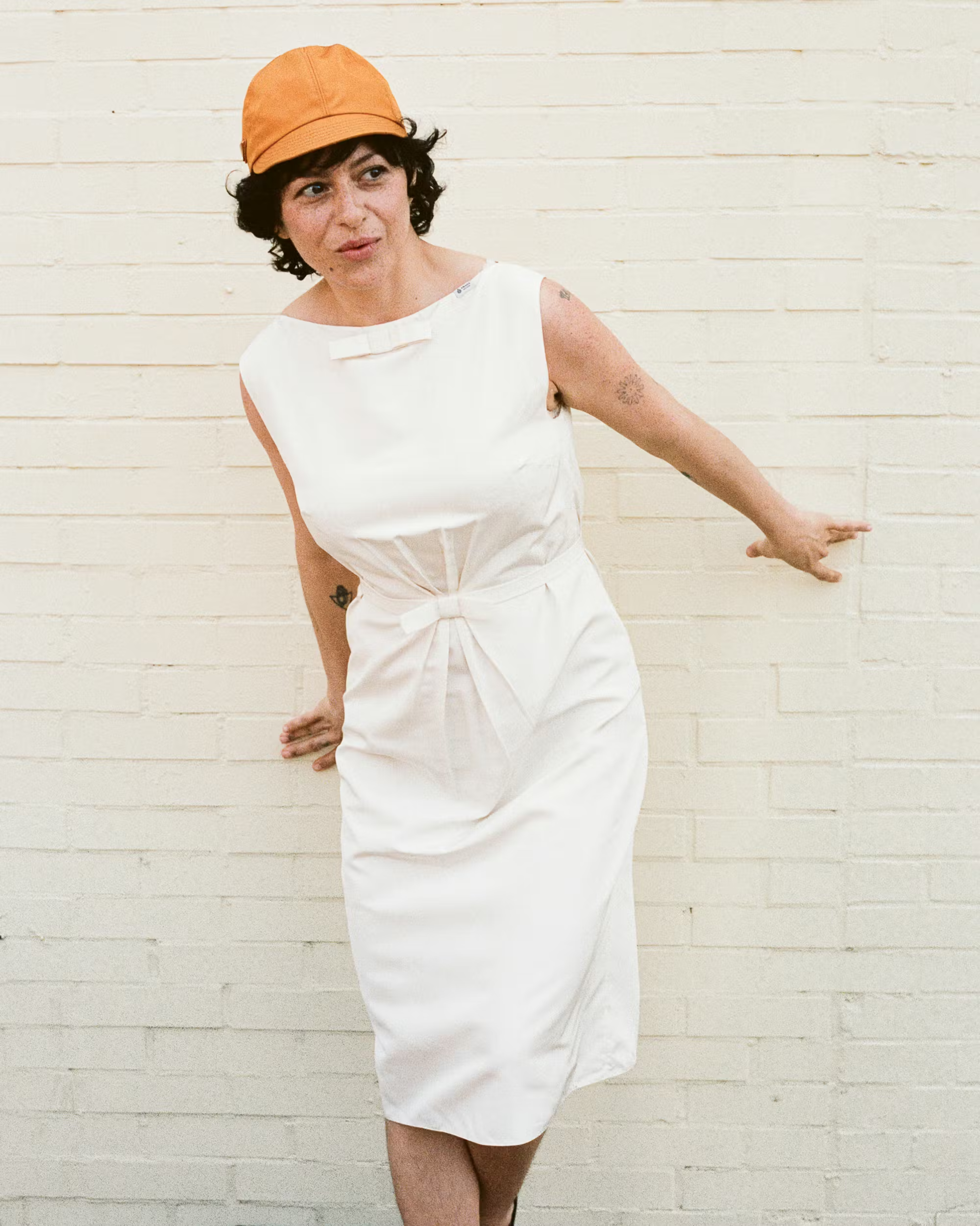
Hat, dress, and heels PRADA
Take it as a sign of the times, a conversion from the preternaturally chill indie darling she once was to the still-chill-but-slightly-more-neurotic young mom she’s become. As we walk by the playground, my pink helmet rattles against my bag, and she praises me for wearing one while I bike. She’s taken up knitting, which started as part of her preparation to play Mae and became a nice way to keep her hands moving in the hair-and-makeup chair. On shoot day, she shows up in a mohair scarf of her own creation and sets about finishing a thicker version for Friedman.
In this way, this new phase hasn’t so much changed her life as expanded it. During our lunch, a new friend and fellow toddler parent recognizes her and comes up to say hi. They talk school dropoff, and he mentions wanting to come see her play.
“ I’m very excited and thankfully did not know much about you before—”
“Good,” she laughs. “Don’t learn more.”

Shawkat was raised in Southern California and knew she wanted to act from a young age. Although her maternal grandfather, Paul Burke, was an Emmy-nominated TV cop, growing up, her parents weren’t so much in “the business” as adjacent to it. They ran a strip club in Palm Springs.
“ It’s not a seedy place by any means,” she tells me. “It’s just a funny thing that my family’s always been like, ‘It’s a business.’”
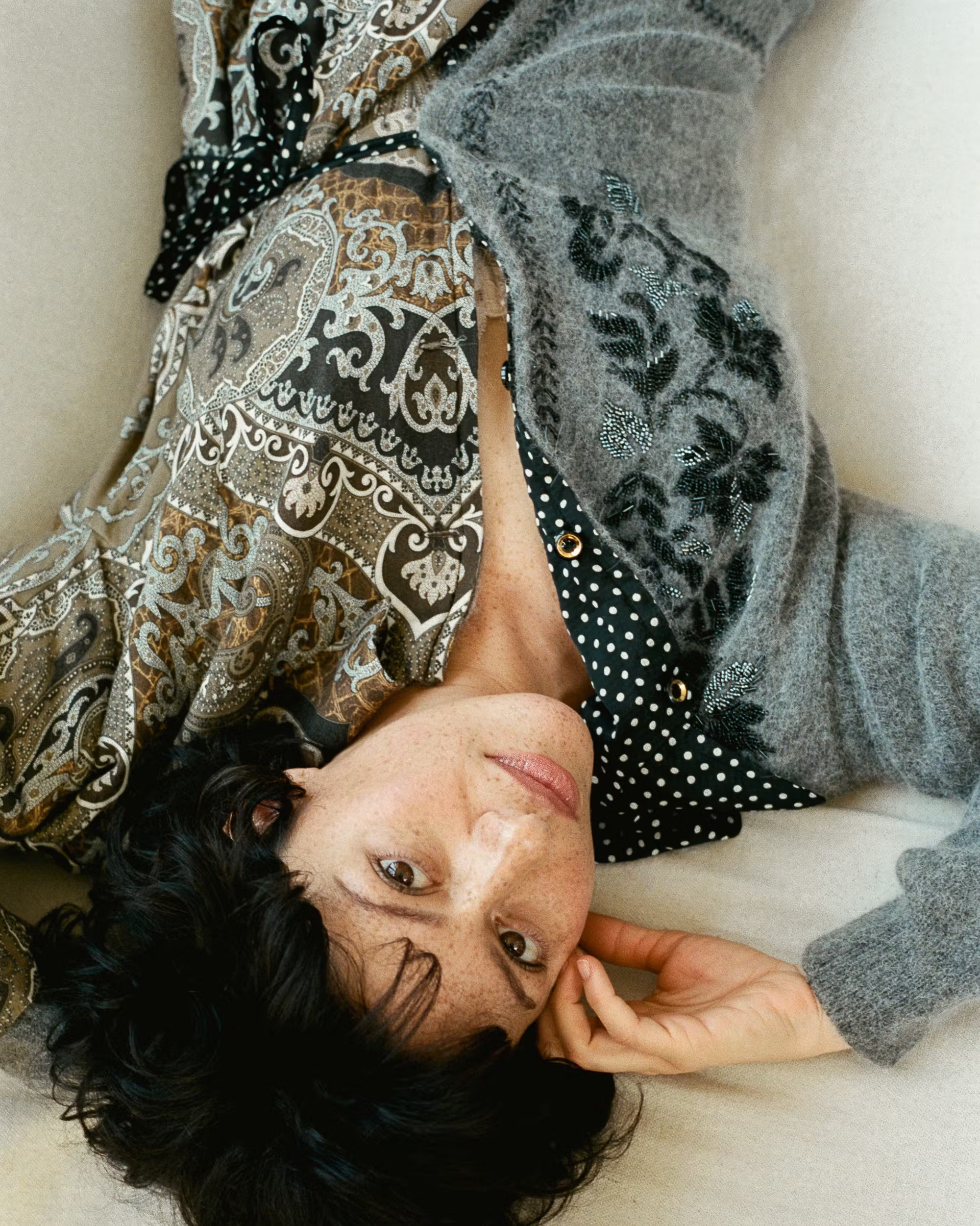
Dress JUNYA WATANABE Shoes stylist’s own
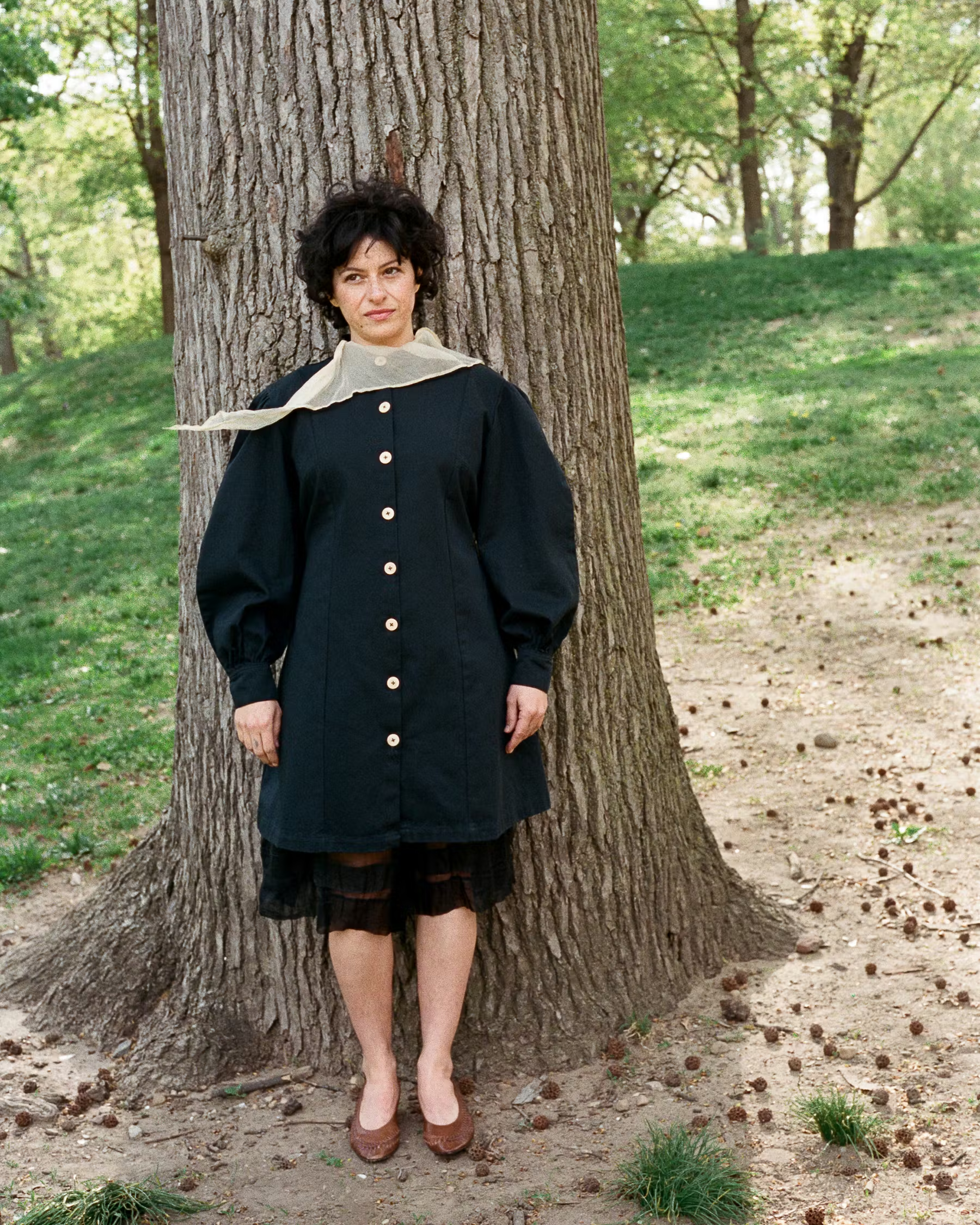
Dress and jacket SC103 Shoes VERSACE
Despite her family’s proximity to the industry, Shawkat says they didn’t talk about sex much at home. “Not in an abnormal way,” she clarifies, just in the way that it’s awkward to talk about sucking and fucking around the dinner table. It was in part that dance of sexuality and repression in the domestic sphere that drew her to You Got Older, the story of a burnt-out, horny, depressed young lawyer who goes home to care for her dad during his cancer treatment. In Mae, Shawkat found a parallel life with its own set of parallel dynamics.
“ I’ve been sent plays before,” Shawkat says, “and I’ve just never responded strongly enough to them because it does take more of an uprooting than film or TV. But I really believe that characters come to you for a reason. And I feel like, in some weird mirrored way, I’m going through a similar thing as Mae. So I was just like, I have to work through this.”
This is where I get confused. Mae is, to put it mildly, a loser. For most of the play, she’s jobless, single, completely aimless, and too disassociated to even look her dad’s illness in the eye. Meanwhile, Shawkat’s Search Party has been called the “near-perfect,” “razor sharp” portrait of her generation. She’s coming off a successful collaboration with her friend Hailey Benton Gates in Atropia, which won the Sundance Grand Jury Prize in 2025, and she’s just wrapped production on a new stoner comedy, The Wrong Girls, playing opposite Kristen Stewart. She has a child and a vibrant art practice outside of her acting career. Mae’s stagnancy feels like the diametric opposite of her life, so full of motion and surprise. I tell Shawkat that I can’t square the comparison.
“ I mean, that’s what’s so funny,” she says. “It’s not what it looks like. There are so many people who I look at and go, ’Oh wow, they seem to have it all together. They have a family and they’re working and they’re an artist and in good shape and all these things.’ But life is never that easy, you know?”
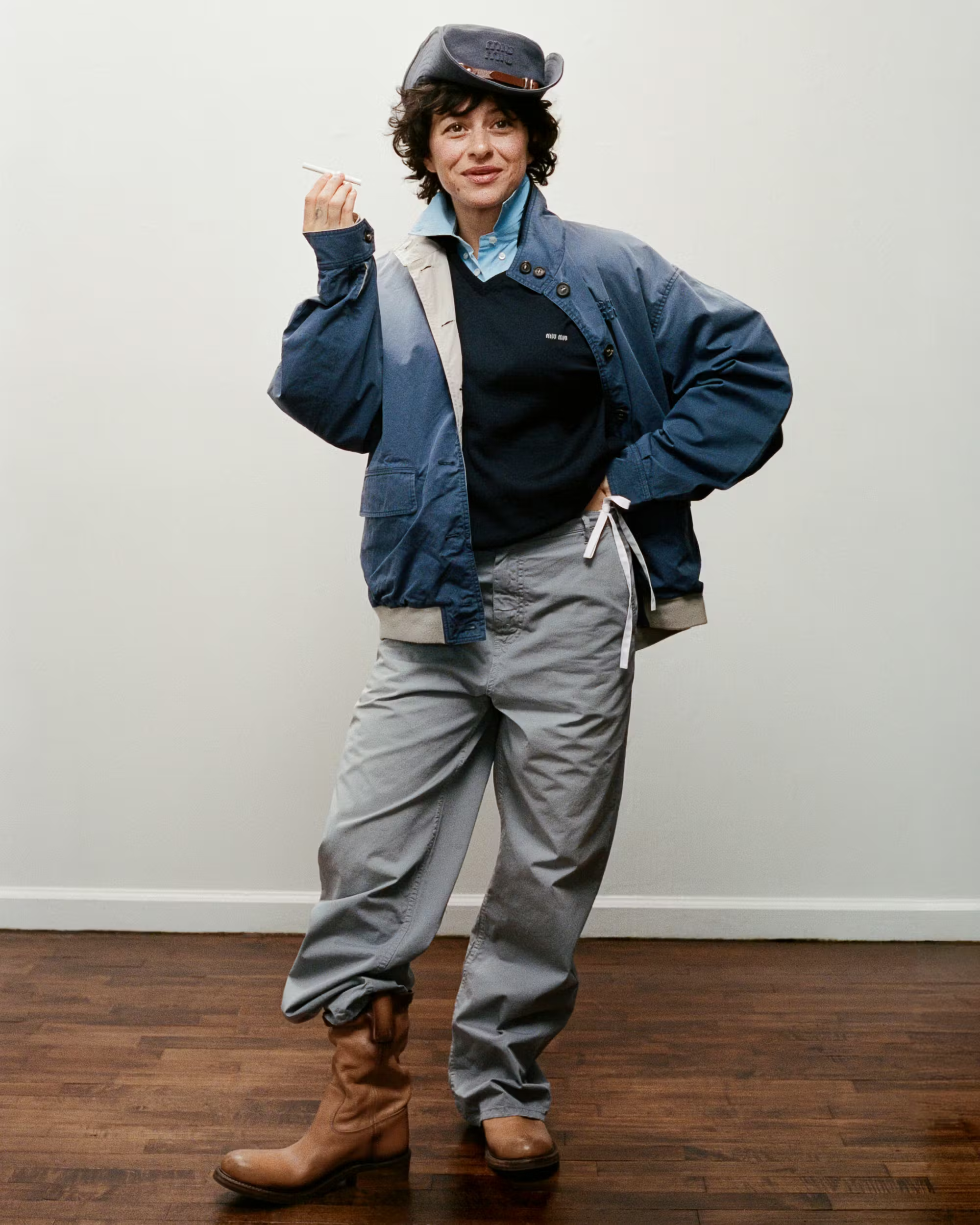
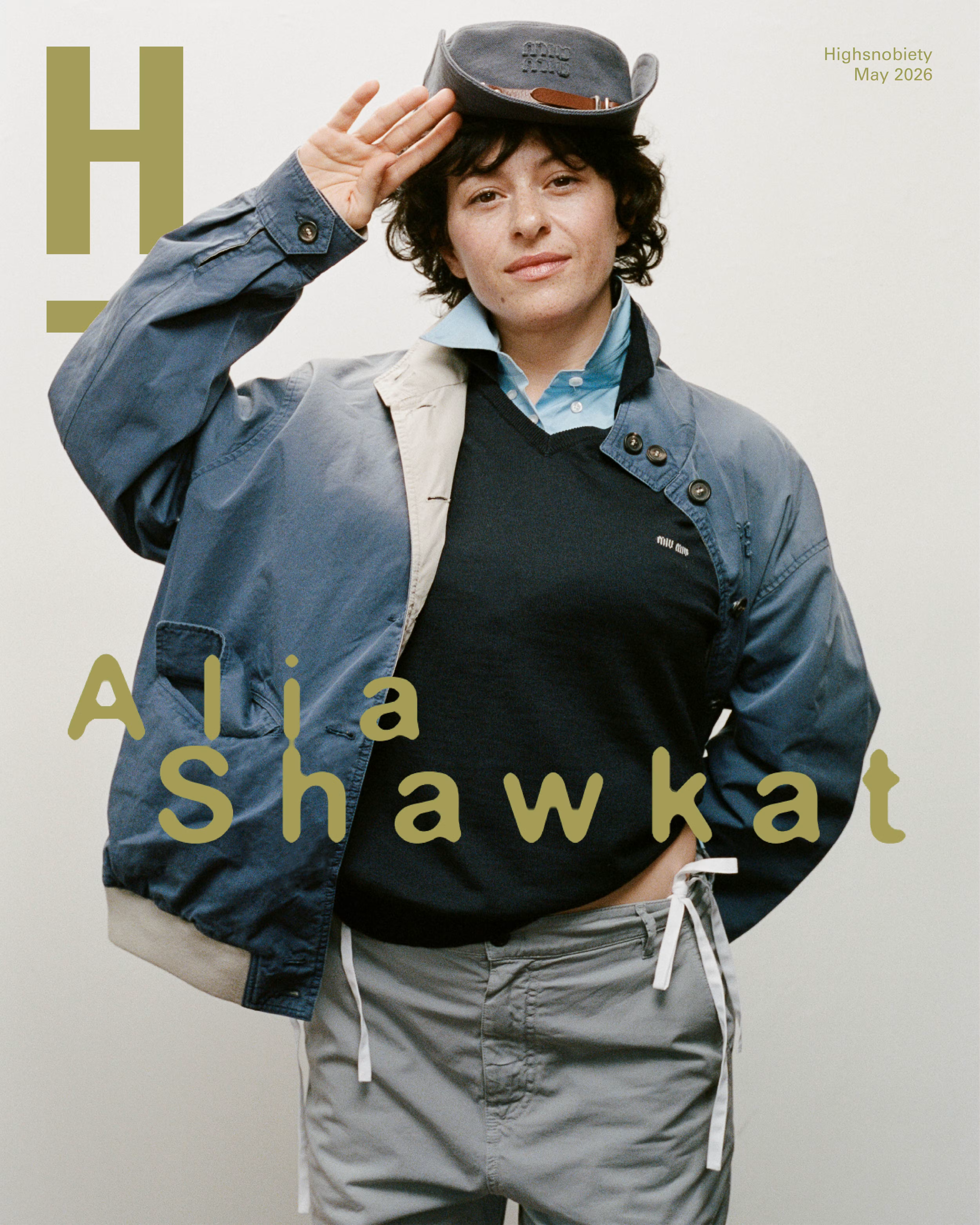
Hat, shirt, sweater, jacket, pants, and boots MIU MIU
For years after Arrested Development, Shawkat was caught in a churn of false starts, auditions that left her with the sense that she was “too weird” or “too ethnic.” Her father is Iraqi, not exactly the Hollywood default in post-9/11 America, and as the industry changed, she was pinballed by its whims, one minute cast aside, the next tokenized in a parade of “diverse voices.” Meanwhile, her former co-star and close friend Michael Cera was booking major roles in Superbad, Juno, and Scott Pilgrim vs. the World. She was stuck. It’s disorienting to be pulled in so many different directions by people who don’t actually know you.
“I think overall I’m incredibly lucky,” she says. “I’m really grateful, but I’ll always relate to that thing of feeling like you’re never as in step with the things you want to be doing in your life. You’re always a step behind. You’re trying to communicate something, but it’s not coming across, or your connections are never deep enough, or you’re not having good enough sex, or you’re hanging out with your best friends and then you leave feeling empty and you’re like, ’What happened?’ Life is just that mix.”
“And if it’s not, then good for you,” she adds. “But I’m a highly sensitive person and somewhat neurotic.”
We both laugh. I tell her my dad used to call me a “HSP.”
“ Wow, there’s a name for everything,” she says.
Shawkat has always been drawn to subversive women. As Mae, she fantasizes onstage about being tied up by a handsome cowboy every moment she gets to herself — and even some that she, awkwardly, doesn’t. In one particularly memorable scene, Mae is wrapped in the sheets of her sister’s childhood bed, feverishly masturbating, when her father bumbles in. It’s the first time in many years of covering theater that I’ve seen a woman masturbate onstage.
“ Women’s sexuality is the biggest threat, I think, to society,” Shawkat says. “That’s why it’s always been controlled.”
She’s queer, and even as a teenager, she was delivering performances that pushed against the Hollywood mainstream. Consider the cult classic Whip It, a campy coming-of-age flick centered on roller derby, in which she played opposite Elliot Page. The movie was a gay awakening for so many people in my generation, even if the gay parts were mostly subtext. And this August, Shawkat is back at it with The Wrong Girls, the aforementioned stoner comedy written and directed by Dylan Myer (the prolific screenwriter and director who happens to be married to Kristen Stewart).
“Years ago, post-COVID but right before I had my son, Dylan and I met for a coffee,” Shawkat tells me. “She sent me the script, which she had written like eight years before or something. But no one was ready for girls smoking weed.”
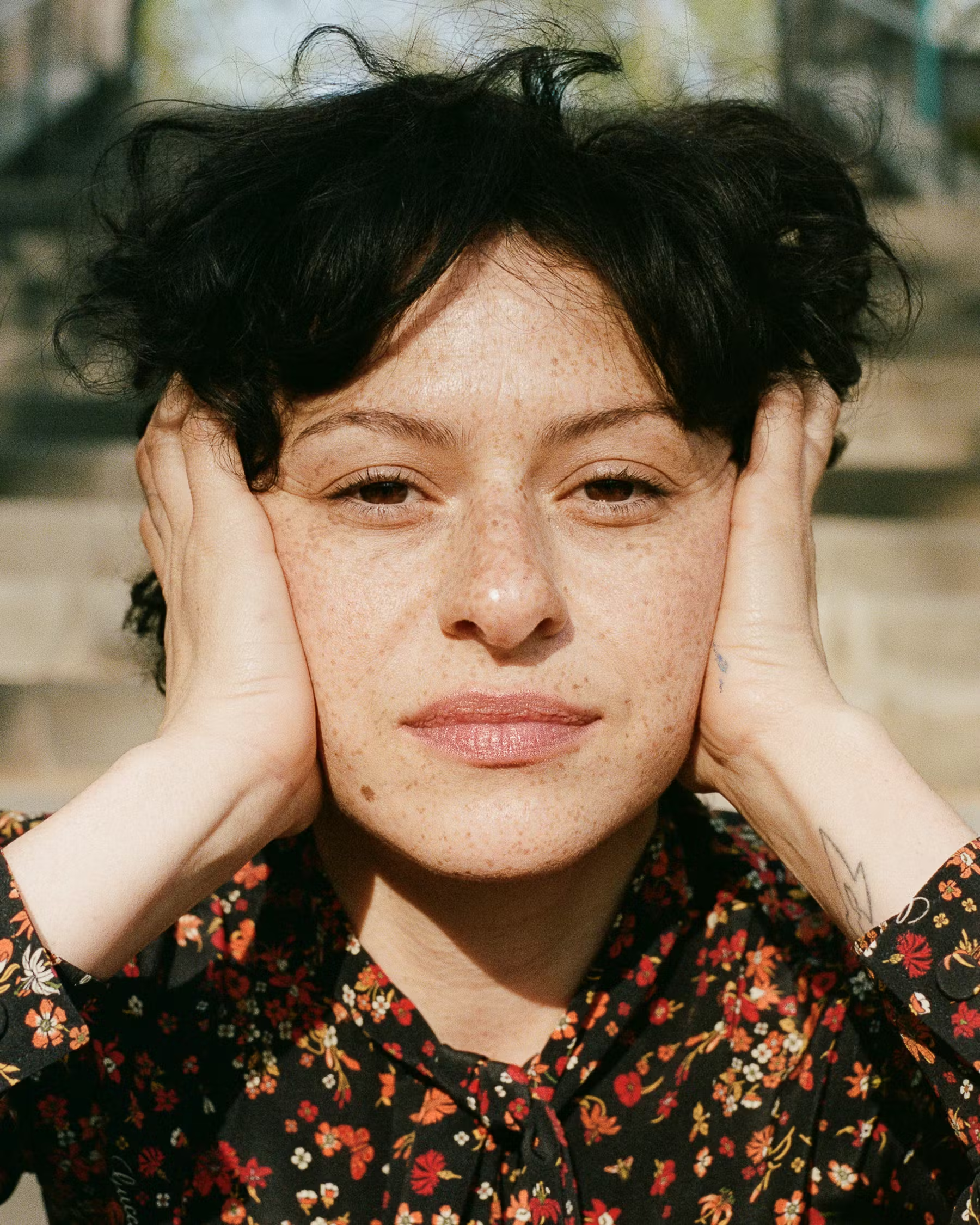
Top GUCCI
In the teaser for the movie, which dropped in April, Shawkat is standing at a cutting board crushing cereal and gummy bears on top of three slices of bread. “What’re you making, dude?” Stewart asks, rolling a joint.
Shawkat tells me that Stewart really had been smoking a joint the afternoon they got together to film the teaser in New York. She’d been worried about getting a contact high before her show that night.
The two play a pair of best friends loosely based on Meyer and her producing partner, Maggie McLean, in a cast rounded out by a list of comedy royalty: Seth Rogen, LaKeith Stanfield, Kumail Nanjiani, Zack Fox, and Tony Hale. The movie follows Shawkat and Stewart’s characters as they take an experimental new drug that endows them with the power of telepathy, setting off a psychedelic romp.
“Alia is an acrobat and, like, a genius,” Stewart says of working together. “When an actor just runs absolute heart circles around you… I dunno if I’ve ever been wrapped in that flavor of warmth on a movie. Making The Wrong Girls was like making a cartoon where everything big and scary or small and boring was fodder for our jokes and our inner world.”
“That girl has been going places since she was a baby,” Stewart adds of Shawkat. “Everyone just needs to keep the fuck up. She is kinda scary in how impressive she is. It’s very hot.”
For Shawkat, the experience was just as transcendent. “It was so fun to play someone so dumb,” she says. “Not to be hyperbolic, but it’s one of the best shoots I’ve ever done.”
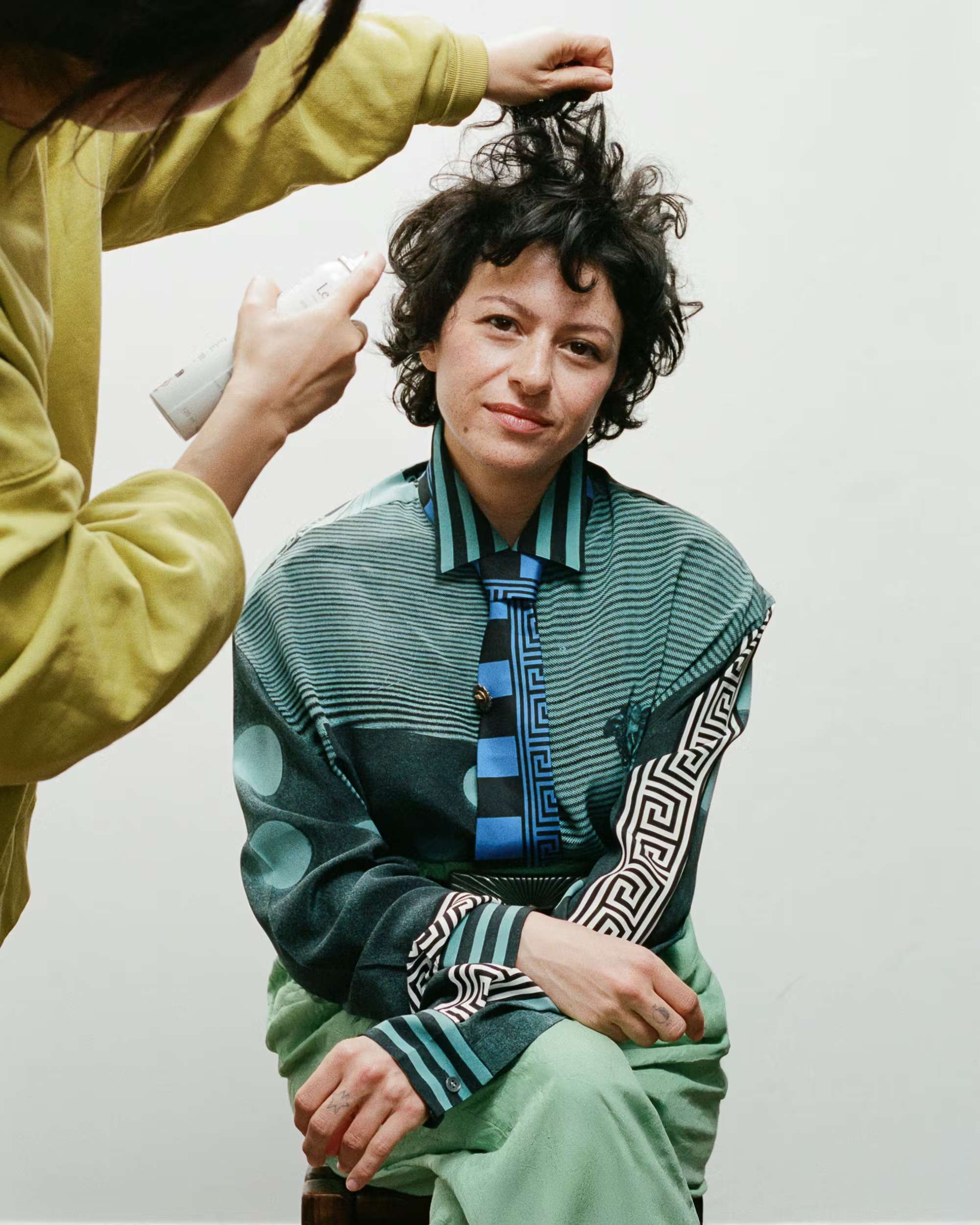
Shirt, tie, pants, and belt VERSACE
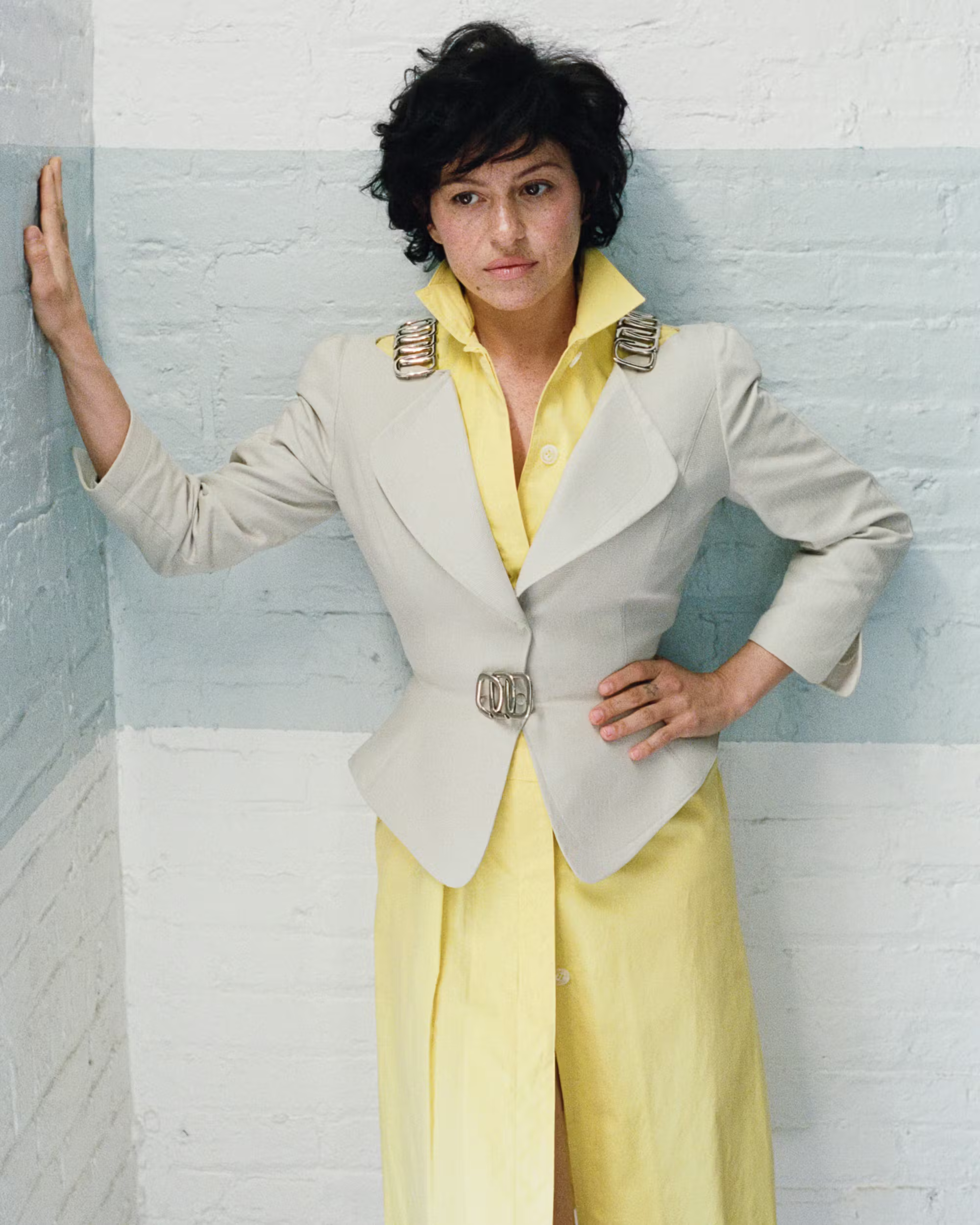
Dress HUSSEIN CHALAYAN, jacket MUGLER, shoes DIOR
As to whether she sees a thread in her own work — this daisy chain of women pushing against the grain, struggling against convention — she sits back and considers. “ I think I don’t really [think about] it very often,” she begins. “But there’s definitely connective tissue. All the characters do have this authentic female perspective.”
Part of what makes her such a captivating performer is the authenticity she brings to each role. It’s hard to distinguish whether they’re written that way, or whether it’s something about the way she accesses emotion and lets it play across her face. Shawkat says it helps when you actually like your collaborators as people, too.
“When you’re younger you don’t have a choice,” she says. “Now that I’m getting older, I only want to work with people who I honestly wanna hang with.”
Getting older is a bit of a mindfuck, but it’s also a blessing. The day before we meet up, I listen to an episode of Death, Sex, and Money that Shawkat taped in 2017, nearly a decade before. At the end of the interview — titled “Life in Our 20s,” also featuring Niecy Nash and Terri Coleman — the host asked Shawkat an impossible question.
“You are our only guest who is actually in her twenties. So I want to ask you: What do you hope in ten years you are not struggling with anymore?”
At the time, Shawkwat was 27. Listening to her in my headphones on the train, I hear her sigh.
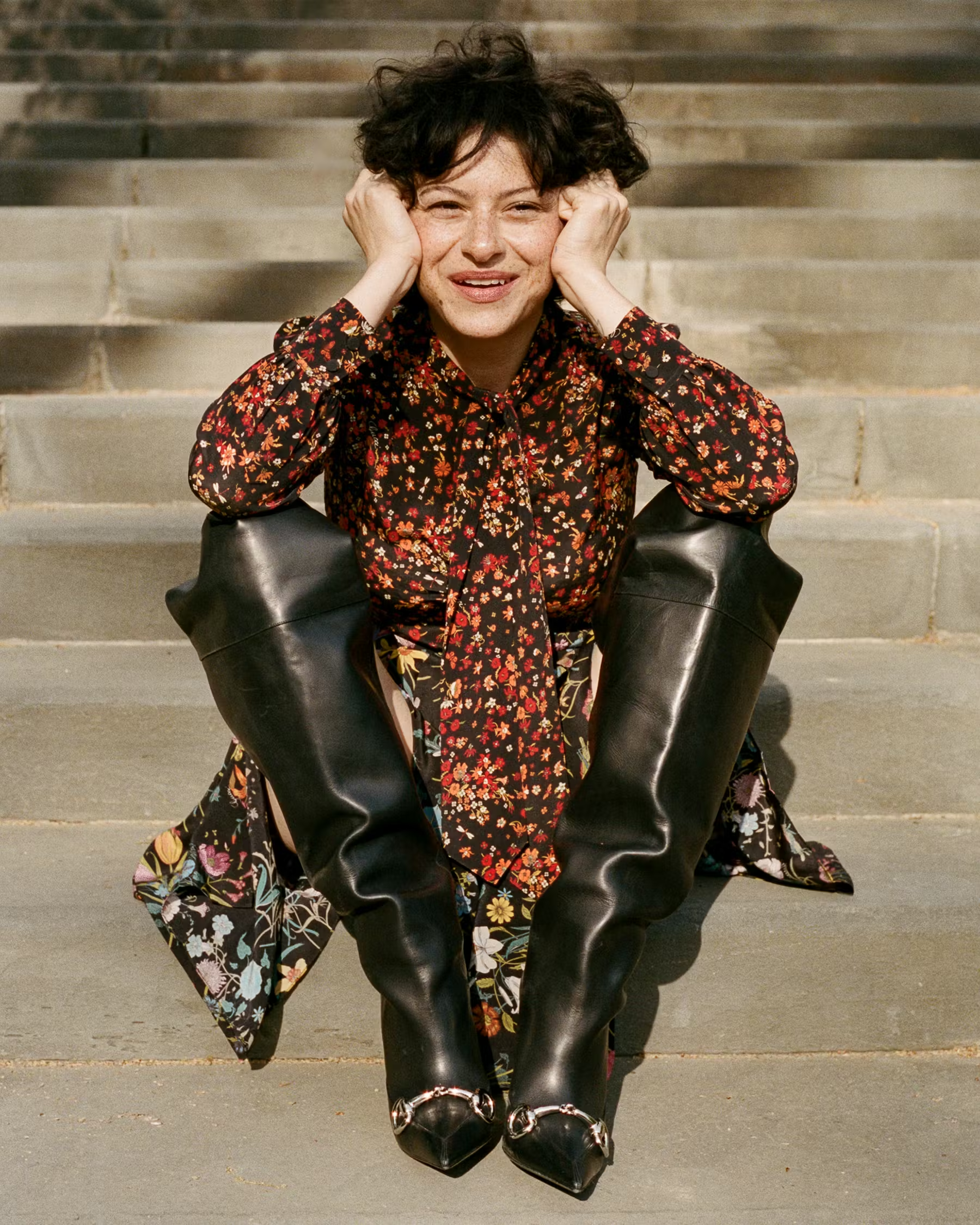
Top, dress, and boots GUCCI
“Great question,” she begins. “I hope I’m not changing to make other people comfortable…I think it’s good to have different sides of our personality. There’s something great about that, like people bring out different qualities. But I don’t want it to feel like I’m, like, searching for the mask.”
I remember this line the next day at lunch, while we’re talking about being ethnic.
“Naturally there’s this thing where you either try and hide it or lean into it, you know?” she says. “Society forces you to… what’s that word? You’re changing your clothes all the time.”
It’s why she’s proud to have worked on such projects as Atropia, which makes a satire of the American war machine deeply tied to her Iraqi background, while also satirizing the way identity is played up and down in performance. Constructing the role with Benton Gates, and bringing her real-life father onboard to play the fictional mayor, she got closer to some of the core themes of her life.
Shawkat has been outspoken about politics throughout her career, both onscreen and off, including on behalf of Palestinian liberation. In 2025, she was one of the first stars to sign onto the “Film Workers Pledge to End Complicity,” a commitment from thousands of artists to disrupt industry allegiances with Israel. “Art creates metaphor,” she says. “In times of war, [it’s] even more important because it reflects what’s happening in our collective consciousness right now.”
She reaches across mediums for inspiration. Before going onstage each night (“That’s an intimate question,” she objects, before answering), she listens to Roger Miller, soft folk that sets her mood for the show. She’s a huge Cameron Winter fan, even saw him perform in Red Hook for a crowd of “like seven people,” she says, one of whom was Paul Thomas Anderson. At one point during her photoshoot, someone brings up the fact that Winter has been spotted, of late, with Olivia Rodrigo, and the room murmurs its assent.
“Good for him,” someone else says. “I mean, who else should he be with?”
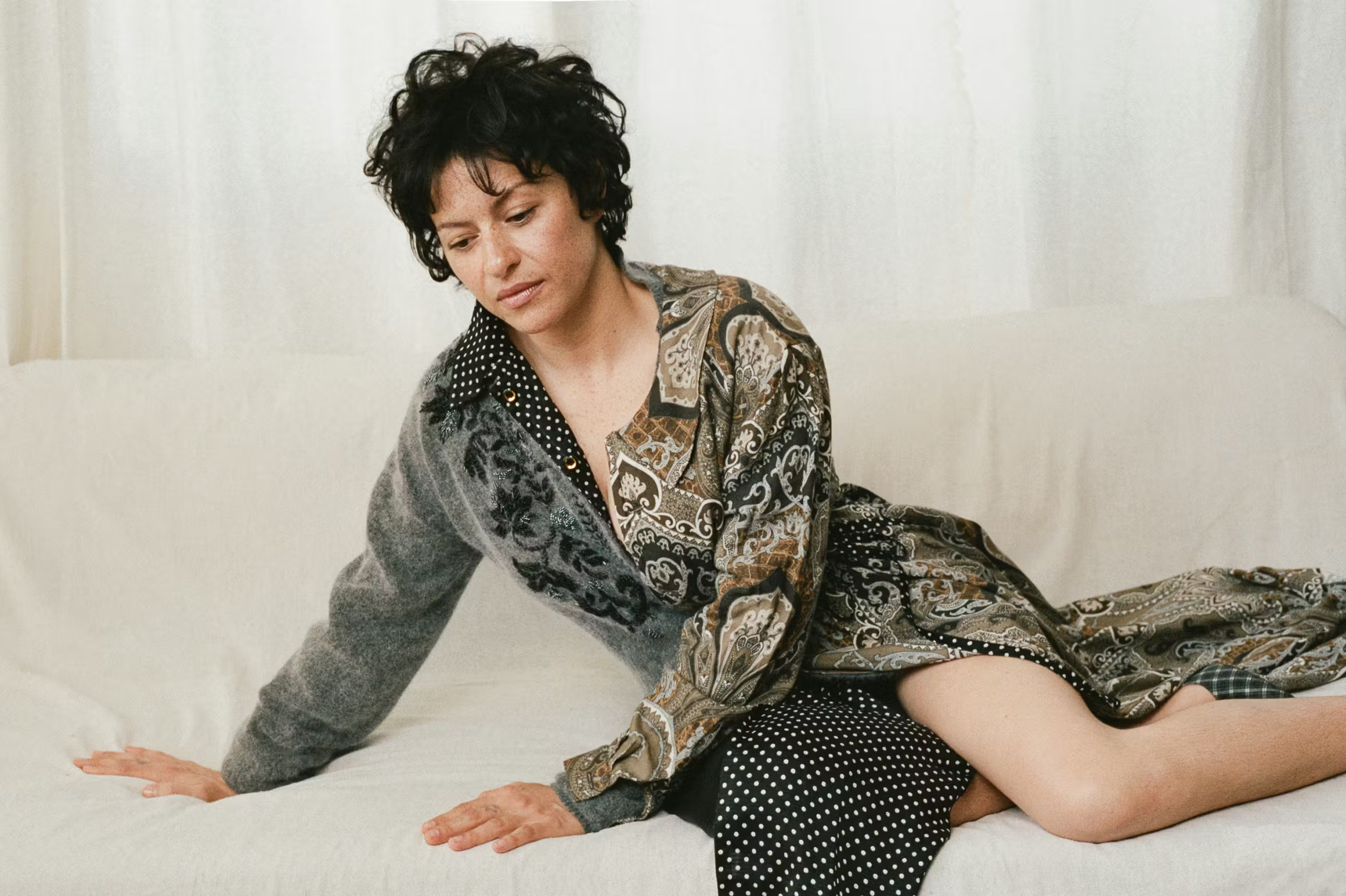
Dress JUNYA WATANABE Shoes stylist’s own
“Me!” Shawkat jokes. The camera clicks.
Then, of course, there’s her visual art practice, “a savior” for the past ten years. Somehow, Shawkat has found time to do more than just hobbyist doodles; she’s an established painter with a substantial portfolio of self-taught work. She hosted her first solo show in 2019, and an even more formal one at Los Angeles’ Frieze Art Fair in 2022 alongside her childhood friend, the ceramicist Maria Paz. Inspired by artists like Ralph Steadman and Leonora Carrington, Shawkat paints surrealist dreamscapes in oil, charcoal, and acrylic.
“As much as I love acting, it’s very much a team sport,” she explains. “It takes a lot of money and a lot of people who all need to meet up in the same place at the same time. When you’re painting, it’s just you alone with the canvas.”
Thinking of her late-twenties wish to stop “searching for the mask,” I ask if painting is a space where she feels like her true self — one where she’s in control, rather than a vessel for someone else’s creative vision.
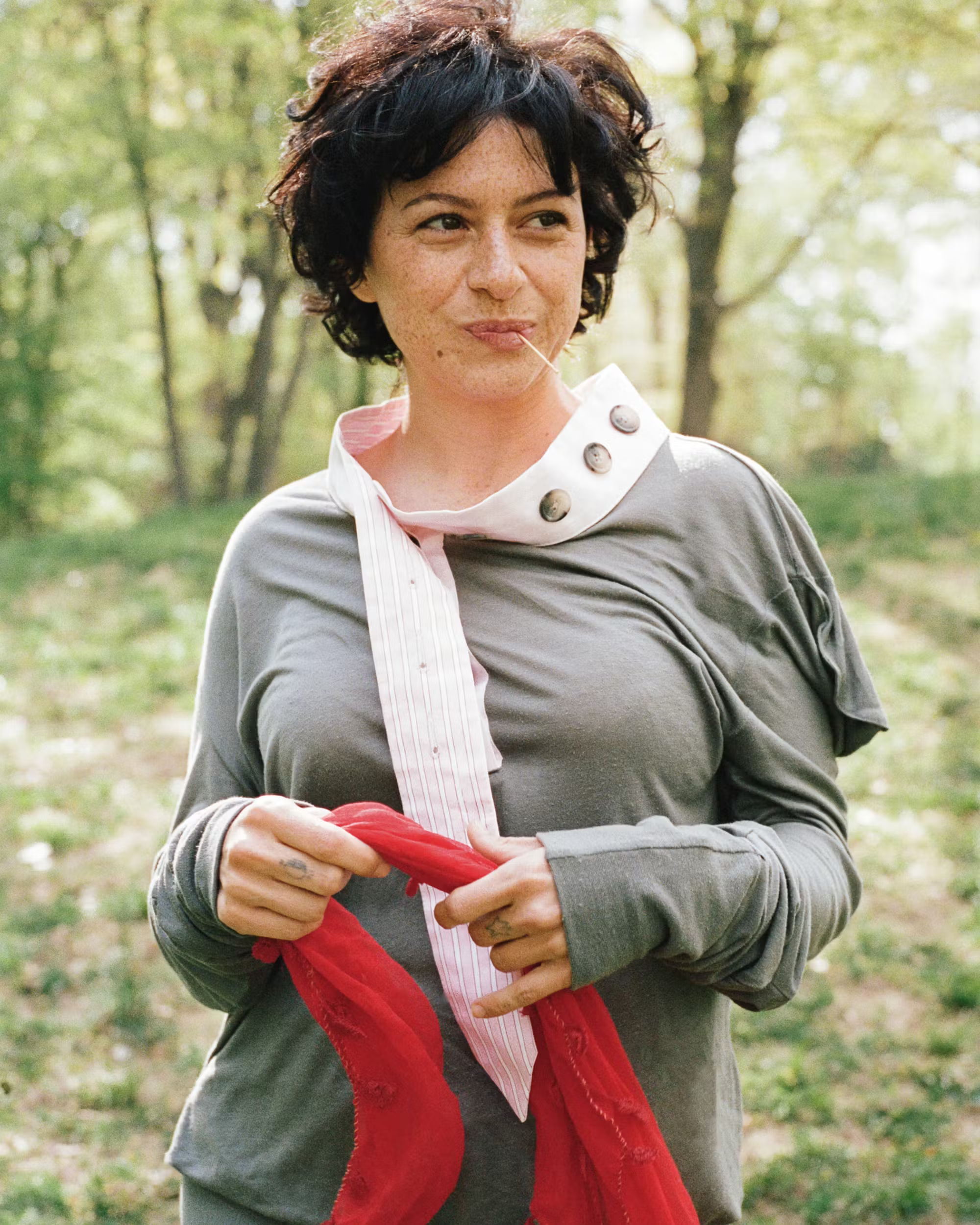
Top and skirt KIKO KOSTADINOV Scarf STYLISTS OWN
“It’s such a little thing,” she says, “but with painting, I get to wear my own clothes all day. Like, sometimes the hardest part of my day is needing to take off my clothes and put on someone else’s.” I want to laugh because of how long I spent picking my outfit that morning, and how hard I thought about the characters she’s played, which were, in so many ways, an amalgamation of “someone else’s clothes.”
It’s almost time for Shawkat to put on Mae’s clothes and prepare for the show at the Cherry Lane. We catch a few droplets on our hands; the weather is changing, turning gray. Although it hasn’t quite been ten years since she taped that message to her older self on Death, Sex, and Money, I ask Shawkat if she thinks she’s cracked the code and stopped changing herself for others.
“ When you’re a mom, it does drop you into a more authentic place in yourself,” she says. “Not that you have to be a mother to get there. But for me, I’m myself with [my son]. And that’s the most important priority: keeping that core.”
As for the next decade, she wants to get a place with a little more land, maybe a studio that overlooks it.
“I wanna be much more integrated in nature and have a horse or some shit.”
And maybe the chance, every day, to dress for herself.
Credits
By: Leah Abrams
Hair: Ayumi Yamamoto
Photographed by: Maddy Rotman
Makeup: Aya Tariq
Styled by: Nancy Kote
Photo Assistant: David Gurzhiev