
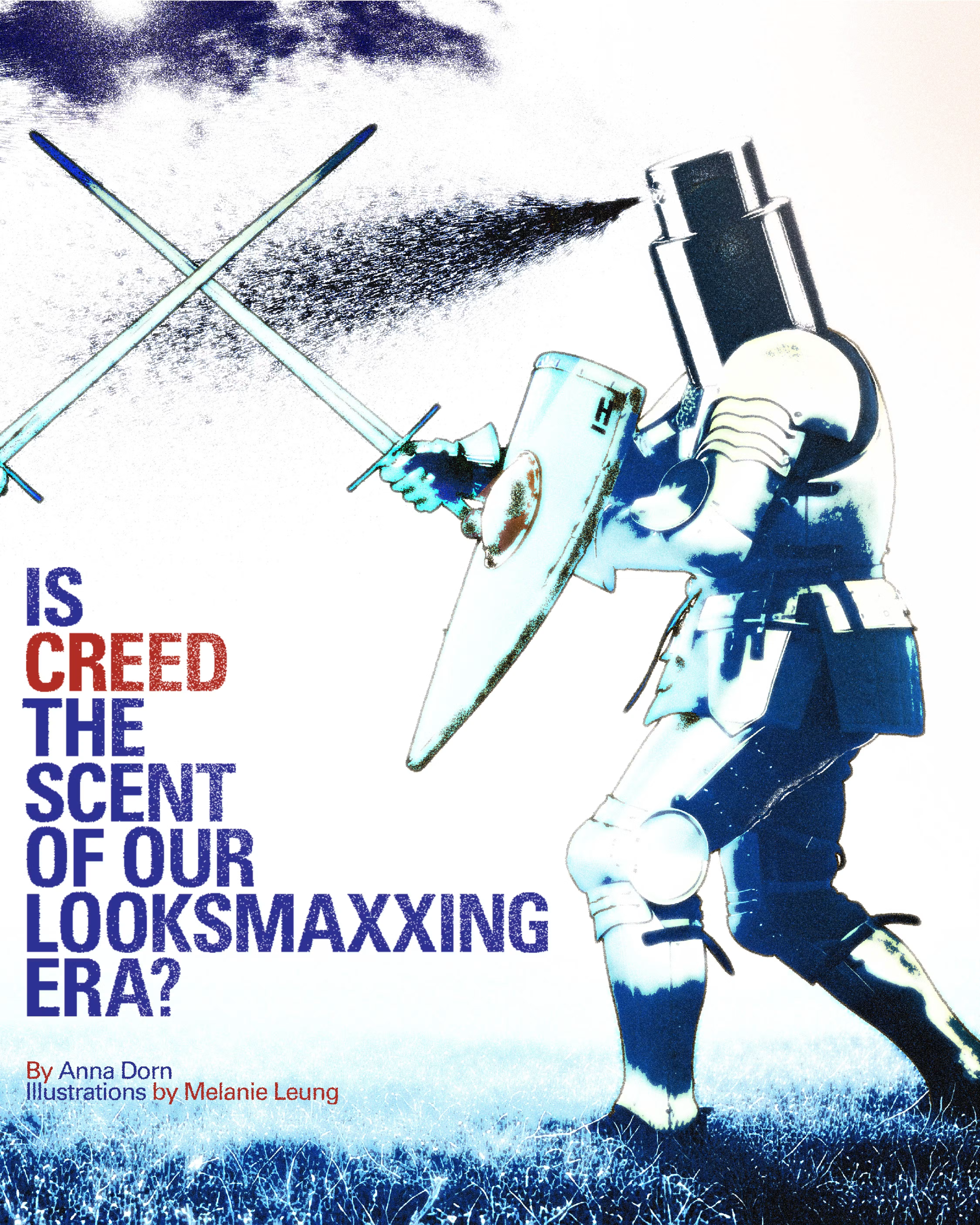
For years, the only thing I knew about the fragrance house Creed was the rumor that Lana Del Rey wore Spring Flower. My friend Rory, an Australian fraghead who asked to use a pseudonym, confirmed that this was the case in her “pre-Bayou era. (Having published a novel called Perfume & Pain, I have fraghead friends all over the world.)
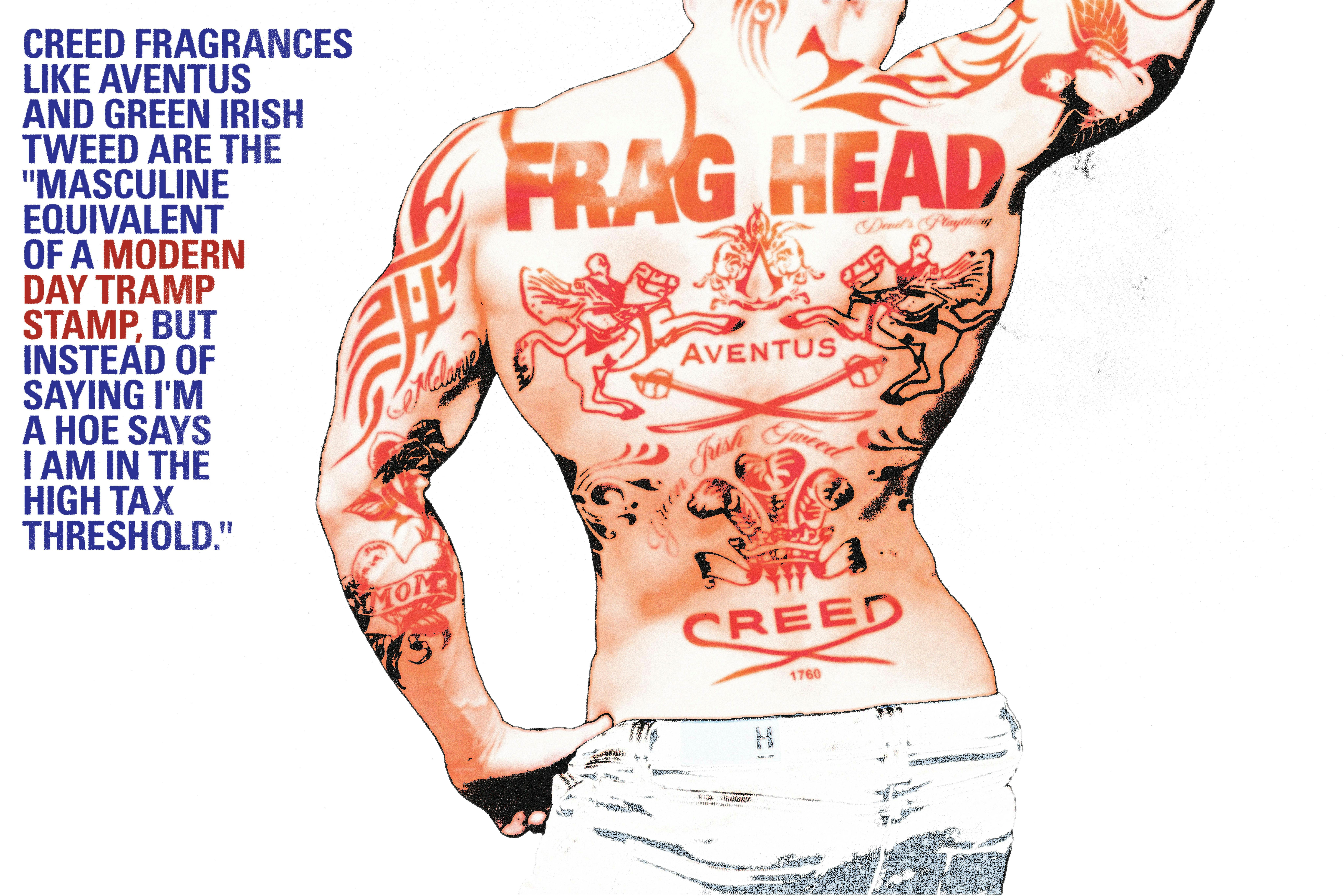
Apparently, Lana is an outlier. According to Rory, most of the people who wear Creed are men who want to feel rich. Fragrances such as Aventus ($510 for 100 milliliters) and Green Irish Tweed ($490 for the same amount) are the “masculine equivalent of a modern day tramp stamp,” he said. “But instead of saying ‘I’m a hoe,’ they say, ‘I am in a high tax bracket.’”
Creed is very expensive, relatively old, yet somehow more popular than ever. In an era when men are mewing their jawlines and looksmaxxing on Reddit, a $510 bottle of Aventus has become the olfactory equivalent of an ice-plunging habit or a 12-step skincare routine — proof that you take the project of self-optimization seriously. So what gives Creed its staying power? And why have its scents, for some, become shorthand for making it?
As I always do when looking into new scents, I went straight to the legendary and very bitchy Luca Turin’s Perfumes: The Guide. Most of the Creed reviews are, in Turin’s typical style, unfavorable. But he does call Green Irish Tweed a “truly great fragrance” with a “brilliantly imaginative” composition of metallic amber, gray citrus, and green violet leaf sweetened by a touch of apple up top and sandalwood below.
Likewise, my favorite perfume blog, Kafkaesque, calls Aventus, “a perfectly pleasant, even occasionally pretty, fragrance,” despite its “panty-dropper” reputation and the “blind, cultish worship” of its fans.
But who are these fans? Rory pointed me to German content creator Jeremy Fragrance, real name Daniel Schütz, whose wide eyes and uncanny valley smile in his first Google image search result suggest a guy who can “see sound.” But older photos reveal a young David Beckham lookalike who, unsurprisingly, began his career modeling. After a failed stint in a German boy band in the late 2000s, the idea for a fragrance YouTube channel came to him in an Abercrombie & Fitch store (I’m serious). He built a massive following through high-octane, some could say unhinged, fragrance reviews.
Schütz told me that he discovered Creed in Berlin through its bestselling Aventus and was later impressed by Millesime Imperial in Paris. His favorite brand is his own, Fragrance One, but Creed is in his top 10. It is, he wrote with characteristic ad-hoc capitalization, “the 1st High Status Niche Fragrance Brand.”
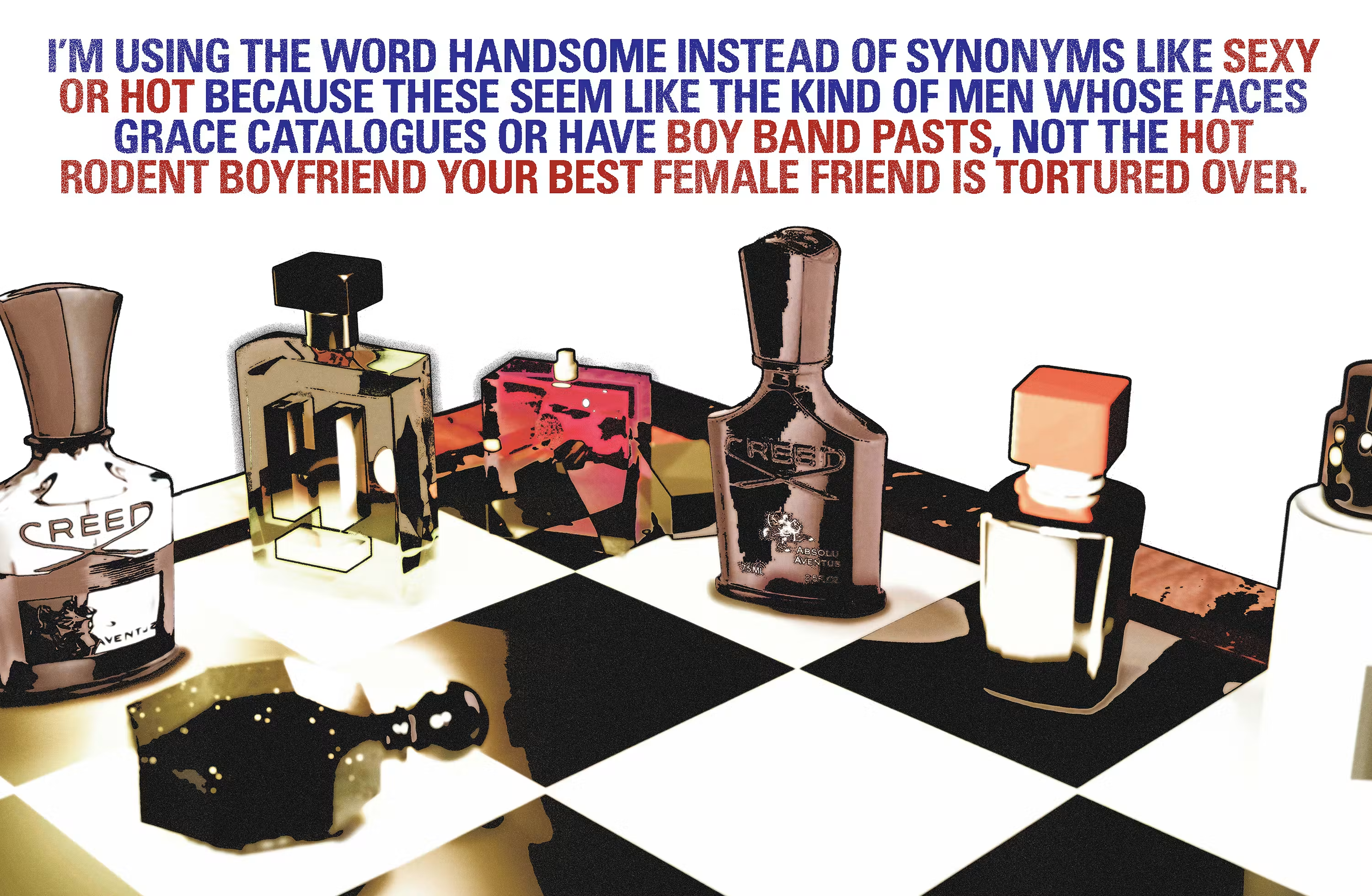
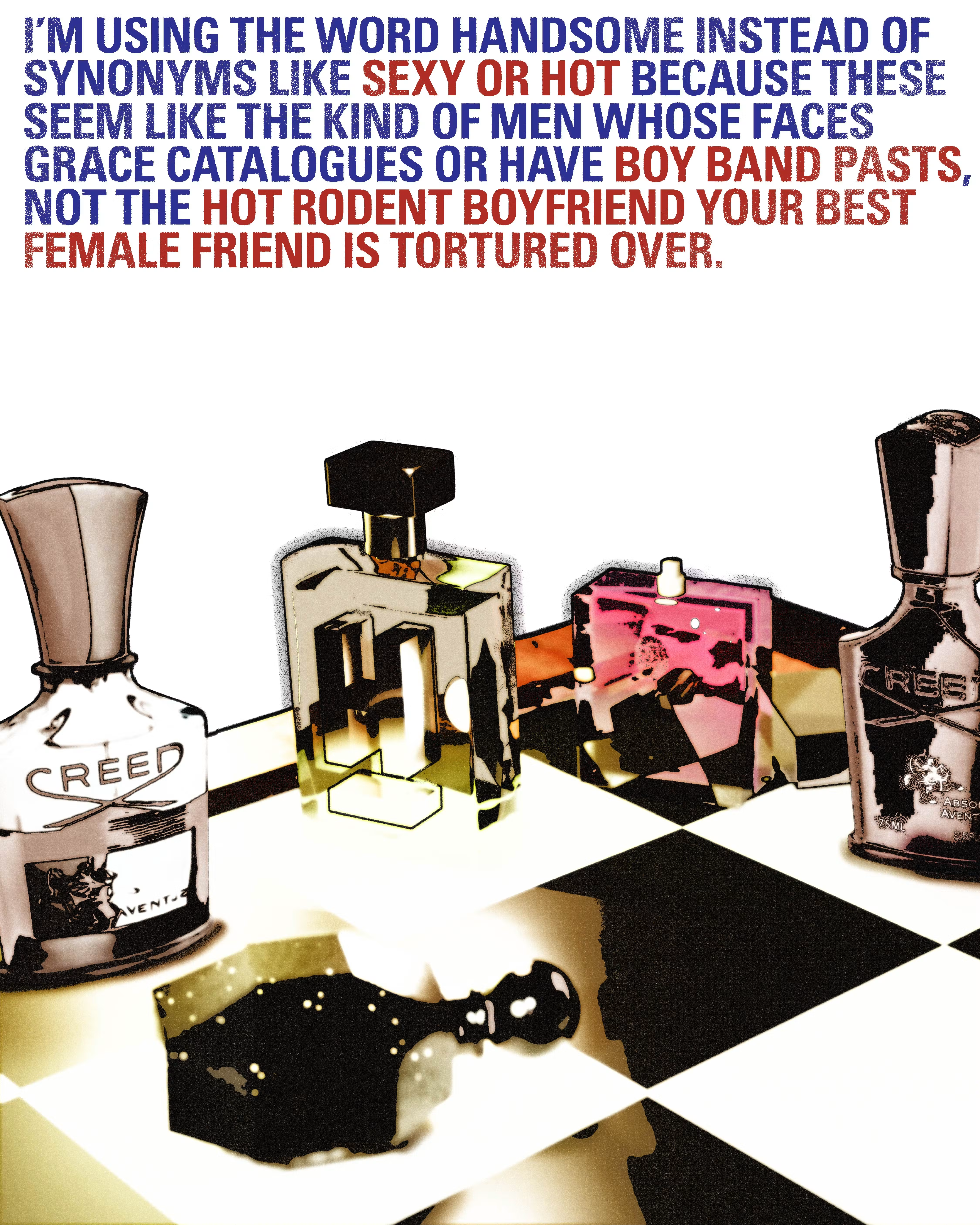
Like Schütz in his Beckham days, most Creed enthusiasts seem to be quite handsome. A few months ago at Nordstrom, I noticed several strong-jawed, thick-haired, sculpted men hovering around the Creed counter. I’m using the word handsome instead of synonyms like “sexy” or “hot” because these seem like the kind of men whose faces grace catalogues, not hot-rodent types women torture themselves over. Creed men are not Dimes Square edgelords or cocaine-snorting chefs or hypebeasts. They seem to be well-groomed, status-conscious gentlemen belonging to the professional class.
Joel Brown, a 55-year-old lawyer and YouTuber in Miami who goes by Joel The Nose, first discovered Creed as a teenager through his father’s bottle of Green Irish Tweed. Compared to other designer fragrances of the mid-1980s, he said it “smelled like royalty and success — a grown man’s fragrance while the others were for boys.”
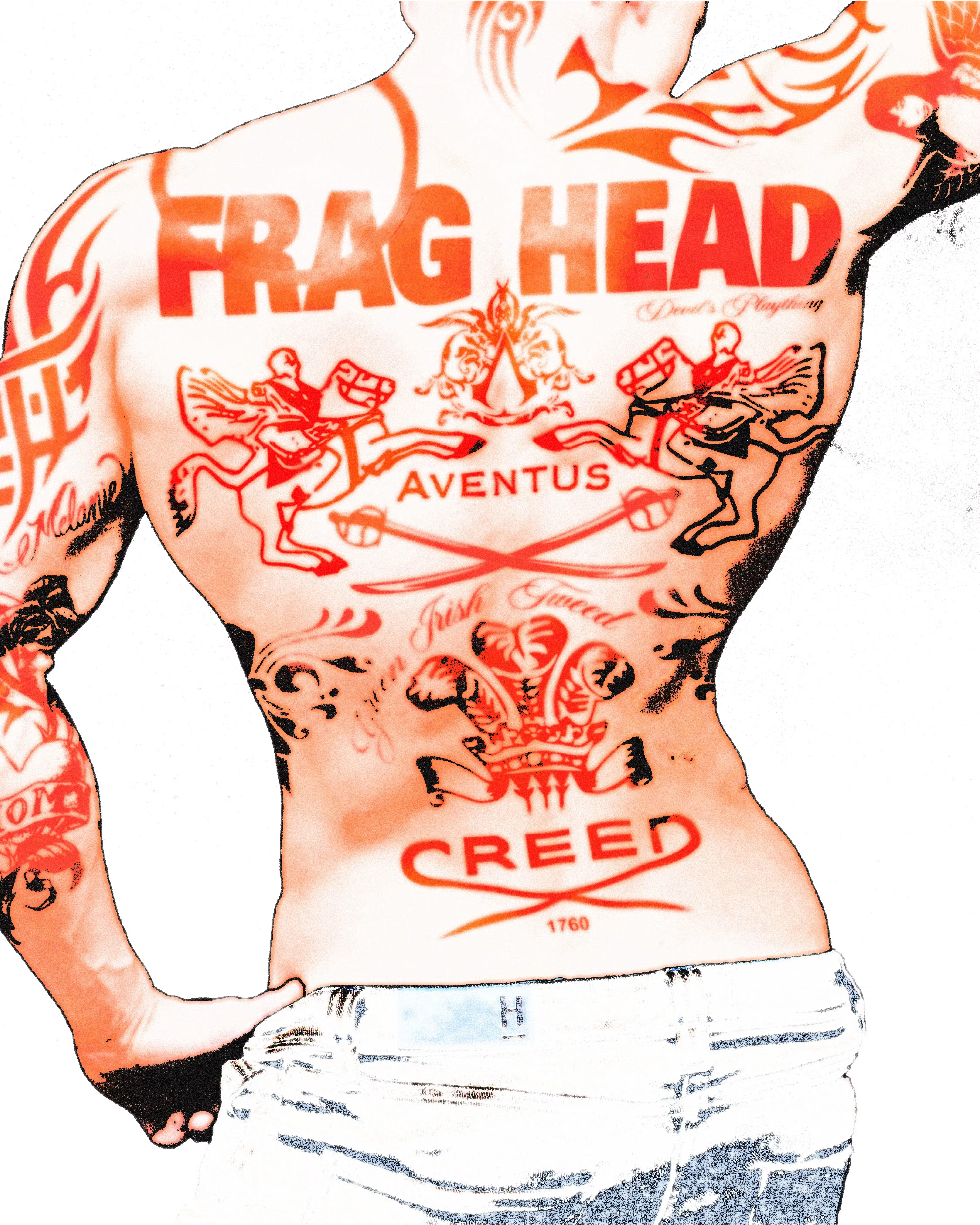
My Montreal-based perfume friend Leo, also a pseudonym, told me she dated a Creed fan who was “handsome af” in an “American Psycho way.” She admitted that Creed fragrances smell good — her ex favored Green Irish Tweed and Silver Mountain Water — “but in an ostentatious way. Like the type of man who wears pants that are just a little too short.”
To her, “It’s like the perfume version of a Lamborghini or going to a F1 event.”
Rory confirmed this perception of Creed-wearing men as “showy, ostentatious, posturing types,” but in his experience, “it’s always the ones you least expect.” He has only ever smelled Creed in the wild on three people: a meek cardiac doctor, a Buddhist who came from nothing but now lives in “a Tarantino-style marble house,” and a L’Oréal employee who used Creed as toilet spray.
The other day, I put on a few spritzes of the Aventus sample gifted to me at the Century City Bloomingdale’s to run errands, just to see how it felt. While the scent is not my personal taste — I tend to want to smell more like Kate Moss in the 90s than a man with a good job — I will say I felt very confident and very rich.

Almost everyone I spoke to mentioned Creed’s legacy as part of its appeal. The brand professes to be a British perfume house dating back to 1760, passed down “from father to son” through seven generations of master perfumers, according to the brand’s website. The house allegedly created bespoke scents for the likes of Queen Victoria, Empress Eugénie, and Winston Churchill. Creed’s tale of aristocratic heritage, royal warrants, and centuries of craftsmanship is apparently catnip to a certain type of man. The same type, I assume, that’s into Cuban cigars and Rolexes.
Steven Gavrielatos — Redolessence on YouTube — is a creative director for Navitus and Vivamor Parfums. He discovered Creed around 2012, early in his fragrance journey. His favorite fragrance is Aventus, which he acknowledges is often a Creed gateway. But he believes it’s a cultural phenomenon for good reason. “The maison has always positioned itself as a symbol of craftsmanship, heritage, and regality,” he told me. To Gavrielatos, “Creed represents tradition and excellence.”
Benjamin Moore, a 45-year-old casino operations manager in upstate New York who posts on TikTok as Benny$mellz, is a particular fan of Green Irish Tweed, praising its timelessness. “That kind of legacy doesn't happen overnight,” he said. “It’s earned over generations.”
Except — like many good marketing ploys — most of Creed’s history is made up. According to 2022’s The Ghost Perfumer by Gabe Oppenheim, the “since 1760” origin story, the generational lineage of perfumers, and the royal commissions were fabricated to evoke prestige and historical grandeur.
In fact, per Oppenheim, Creed began as a tailoring business inherited by Olivier Creed in 1949; the company reportedly worked with London clientele and Vogue before relocating to France. The first Creed perfumes didn’t appear until the 1960s when Olivier introduced an eponymous line at a shop in Lille. According to Oppenheim, there are no Creed bottles from before 1960, no bills of sale, no letters, no perfumery equipment to be found — unlike houses such as Guerlain, which has documented centuries of perfume-making. The royal warrant Creed displays, dated 1885, was for tailoring services. Formulas like Fleurs de Bulgarie, which Creed claims dated from 1845 and was made for Queen Victoria, were actually created in the 1980s. And Green Irish Tweed, allegedly favored by Cary Grant, was composed in 1985 — a year before Grant died.
All of this might explain why the Bloomingdale’s Creed representative told me she “had to talk to corporate” before she answered any of my questions about the brand. When I said I heard Cary Grant wore one of Creed’s fragrances, she said she “could not confirm or deny.”
None of this seems to matter to the Creed faithful. Even stripped of its invented history, Creed still projects a powerful fantasy. As Liv Steigrad, a behavioral strategist and another Australian fraghead friend, put it, Creed is “basically aspirational masculinity bottled and sold.” Not rugged masculinity exactly, nor louche downtown cool, but the polished, expensive kind: designer loafers, Equinox abs, and suspiciously poreless skin.
A 36-year-old graphic designer I found on Reddit was the only Creed enthusiast I spoke to who seemed to know or care about the brand’s…illusions. He was initially impressed by the royal history claims, then disappointed to learn they were just marketing tactics. Still, Creed remains one of his favorite perfume houses. “I can’t deny the appeal of the scent profiles,” he said.
Aventus was the graphic designer’s introduction to Creed, and it’s still one of his favorite fragrances. “It’s masculine, mysterious, rebellious, and unapologetic,” he said. “It’s everything I want to be.”