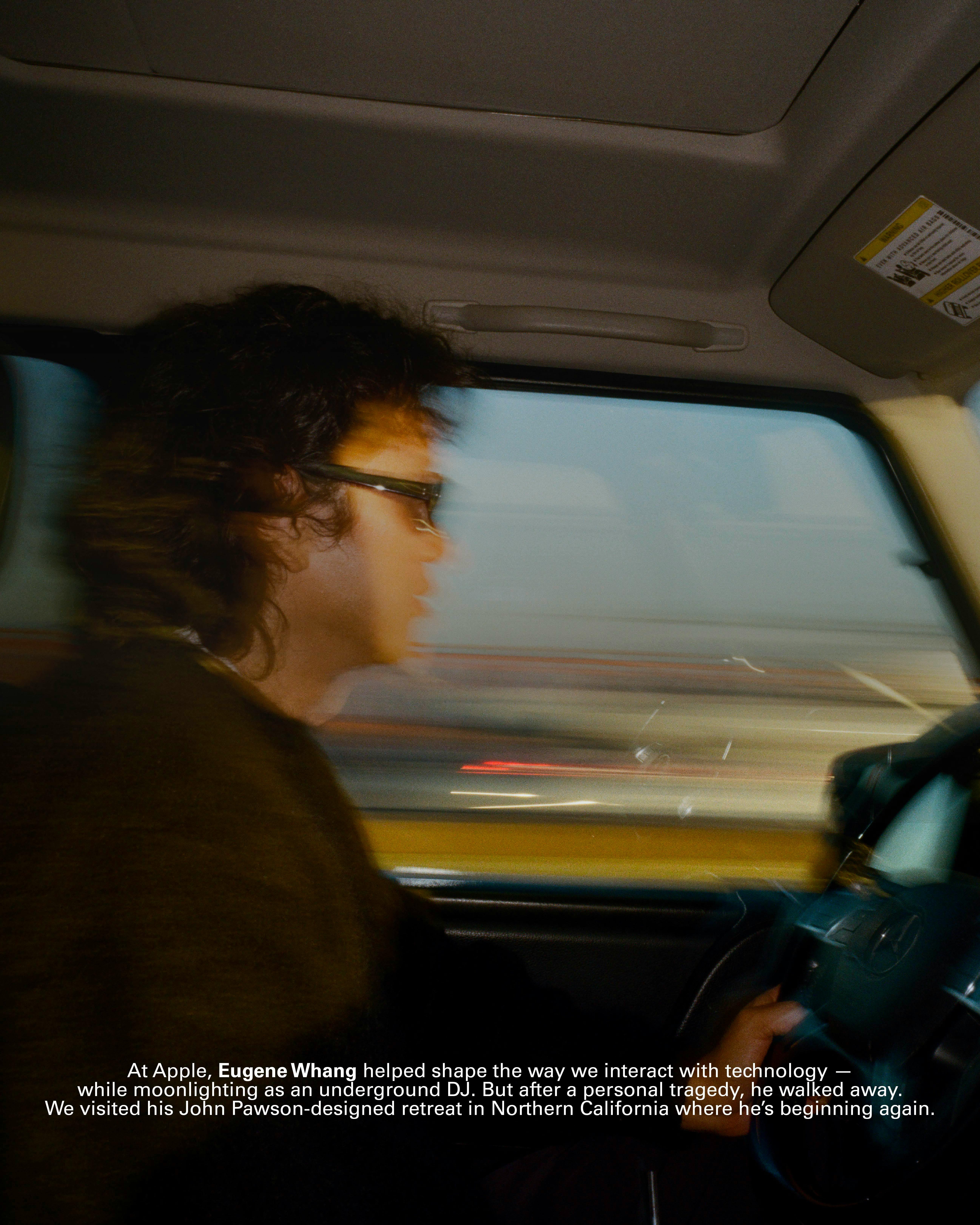
What Happens After Apple?
Eugene Whang Is Finding Out
By Noah Johnson
Photographed by Sandy Kim
Leave San Francisco to the north, over the Golden Gate Bridge, into Marin County, and it doesn’t take long before you feel like you’ve been transported to a mythical place. Serpentine roads wind between hills and cliffs, through patches of redwood forest, past windblown cypress trees and cattle grazing on the horizon. It’s fairytale stuff.
There isn’t much to do up there but appreciate some of the most beautiful and tranquil landscape on the planet. Which is exactly why Eugene Whang has made this place his sanctuary.
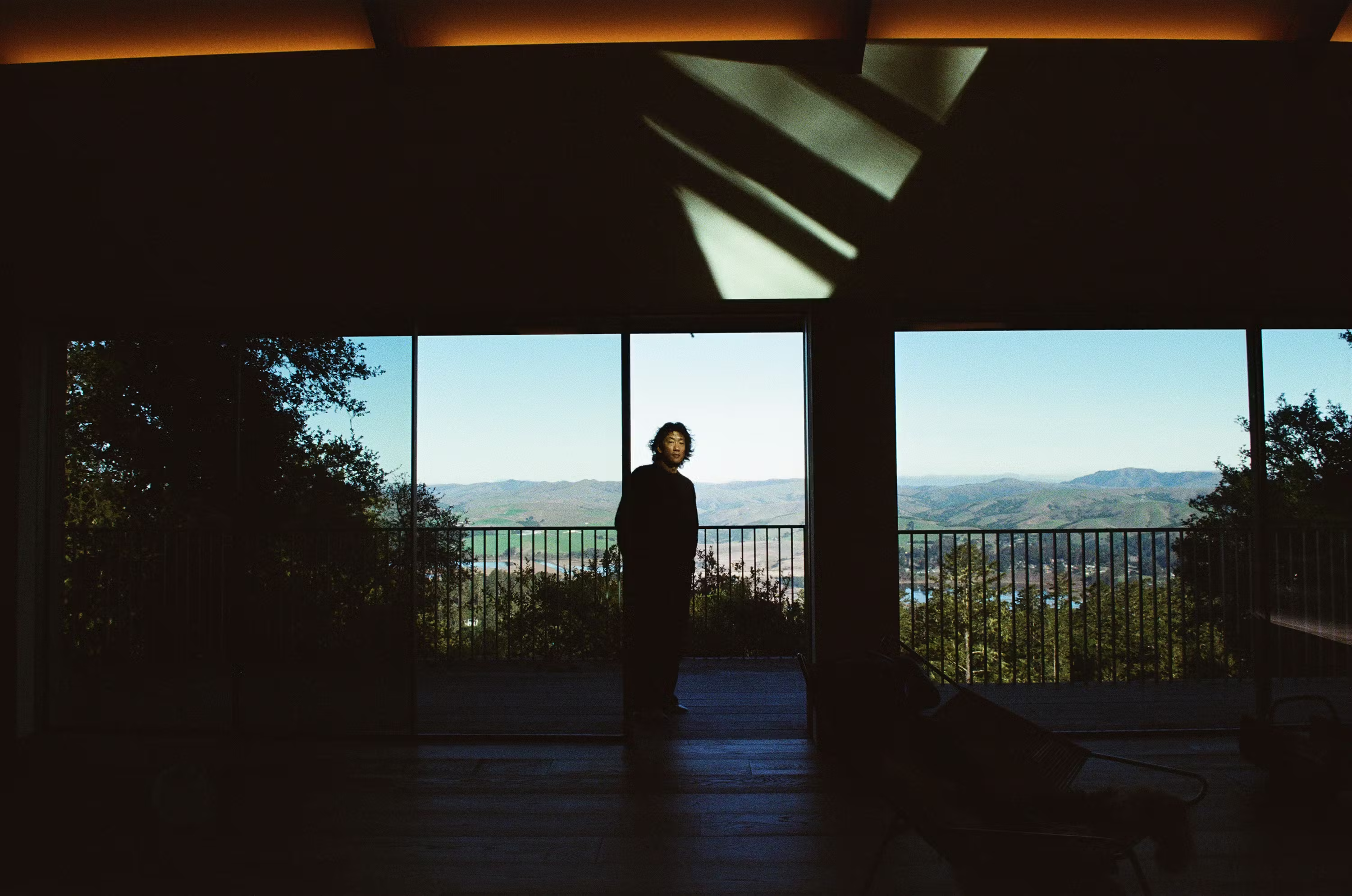
When I visit in winter, the sky is fluorescent blue, and the woods are surprisingly lush from recent rains. Whang opens the door in baggy, faded black jeans and a blue striped shirt. His shaggy hair and relaxed posture make him seem youthful — slightly disorienting when you consider that he spent more than two decades inside one of the most influential design teams in modern history.
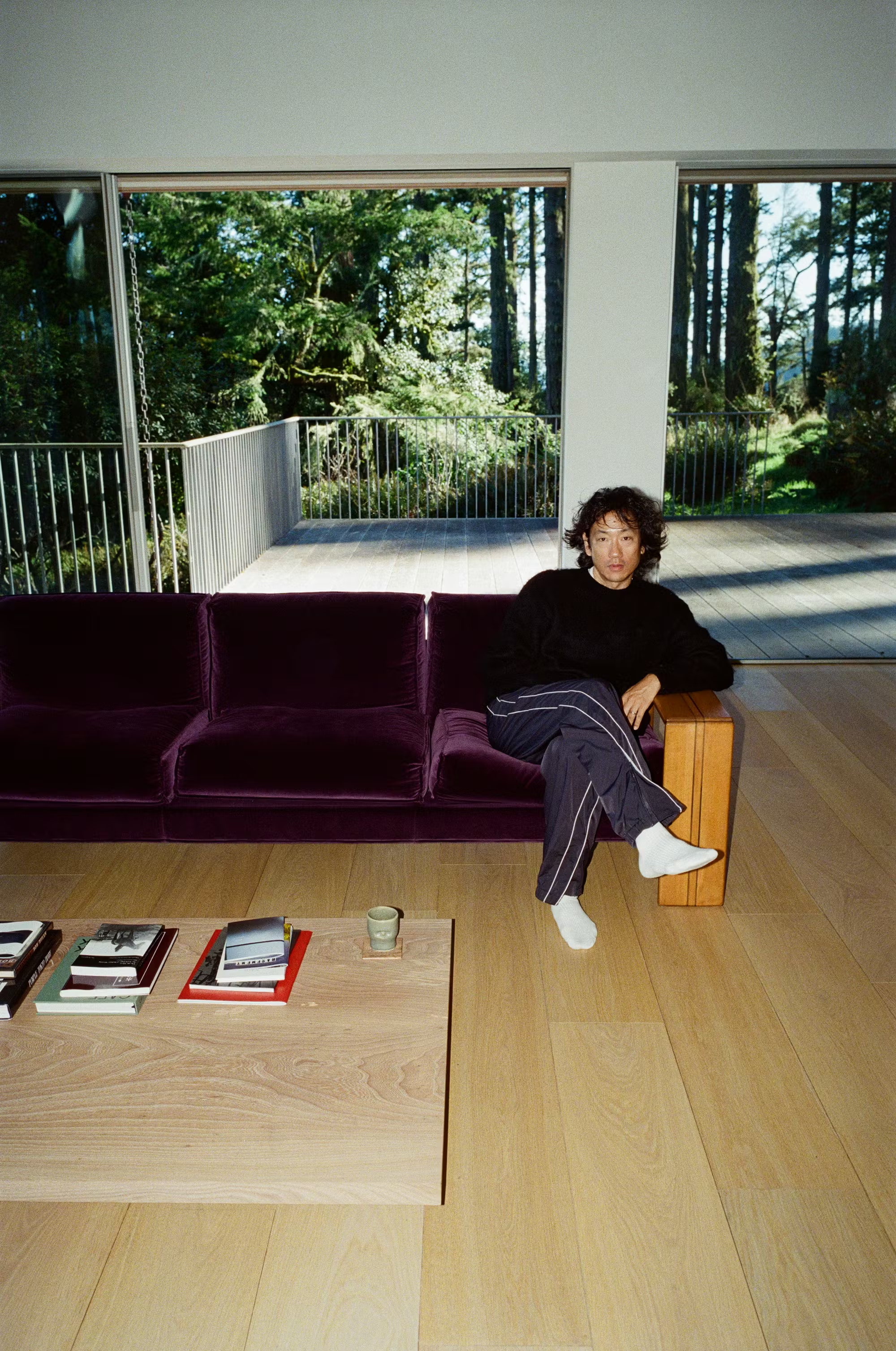
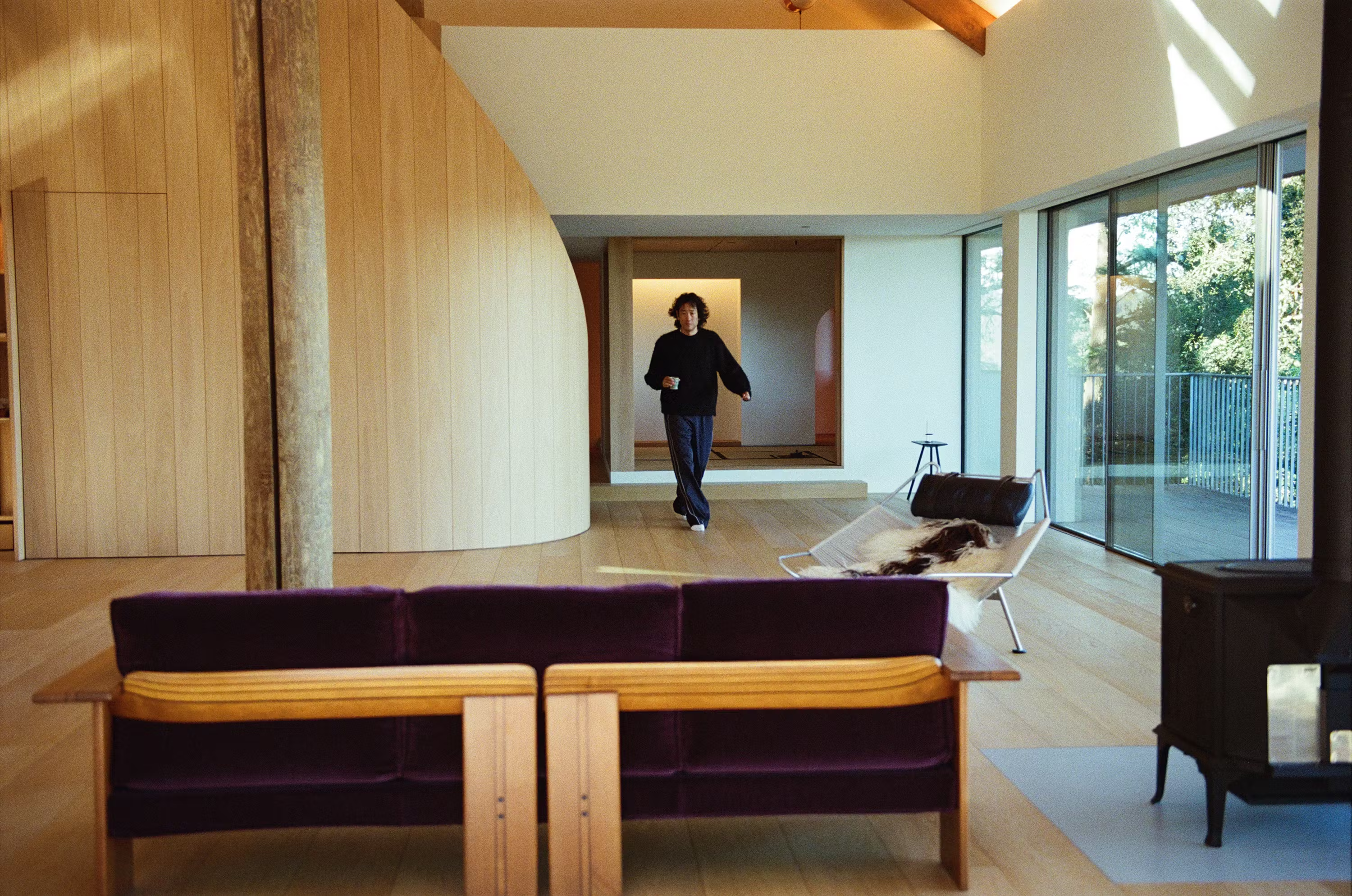
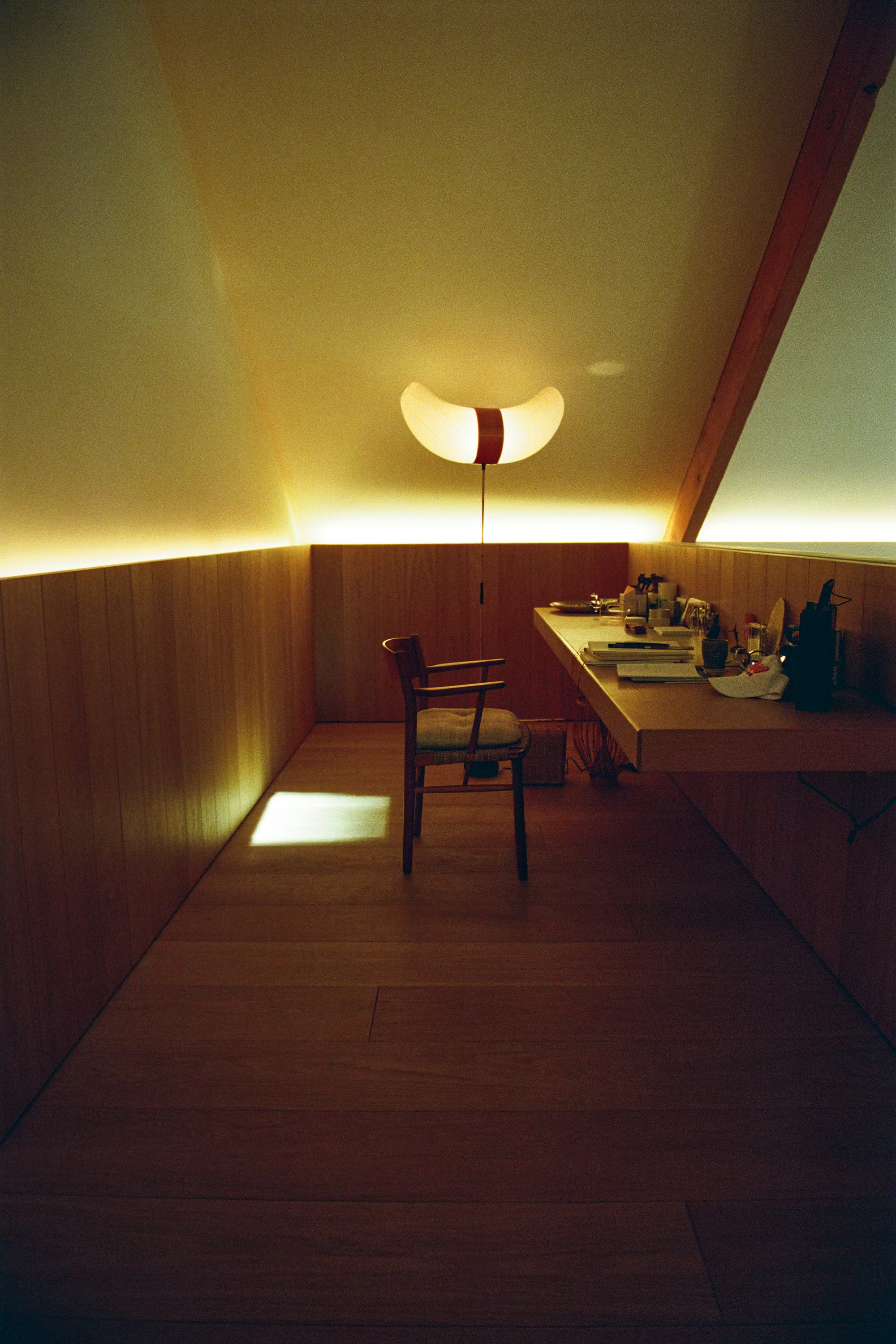
The house is spare but not cold. It’s a home, where Whang spends part of his time with his wife and young son, but the space itself is more like a container for different kinds of light. Views of nature are framed by windows like compositions. The preexisting structure sat atop this ridge since the 1990s, but Whang purchased it about eight years ago and began to renovate with John Pawson, the renowned British architect known for a form of minimalism that feels closer to meditation than décor.
“I wanted to do the project because I also wanted this crash course in interior architecture,” Whang says as he shows me through the space. “I wanted to learn from one of my favorites and to see how you went about it. And so for me, it was as much about the process as the final product.”
He wasn’t a passive client. At the center of Whang’s life story is a 22-year stint as a hardware designer at Apple, where he participated in the development of design and technology that changed the world multiple times over, from the iPod Nano to the iPhone to AirPods. So when it came time to design this home — his sanctuary — Whang saw an opportunity to deepen his knowledge and experience.
“I was fully involved with every tiny detail,” he says. “It’s very poetic at the beginning with John, which is cool. And his sketches are very simple: just a few lines that capture the essence of the mood. It was fascinating how he sees light, space, sound. Very ethereal, less quantitative. It’s not like, ‘The wall is this angle, this dimension.’”
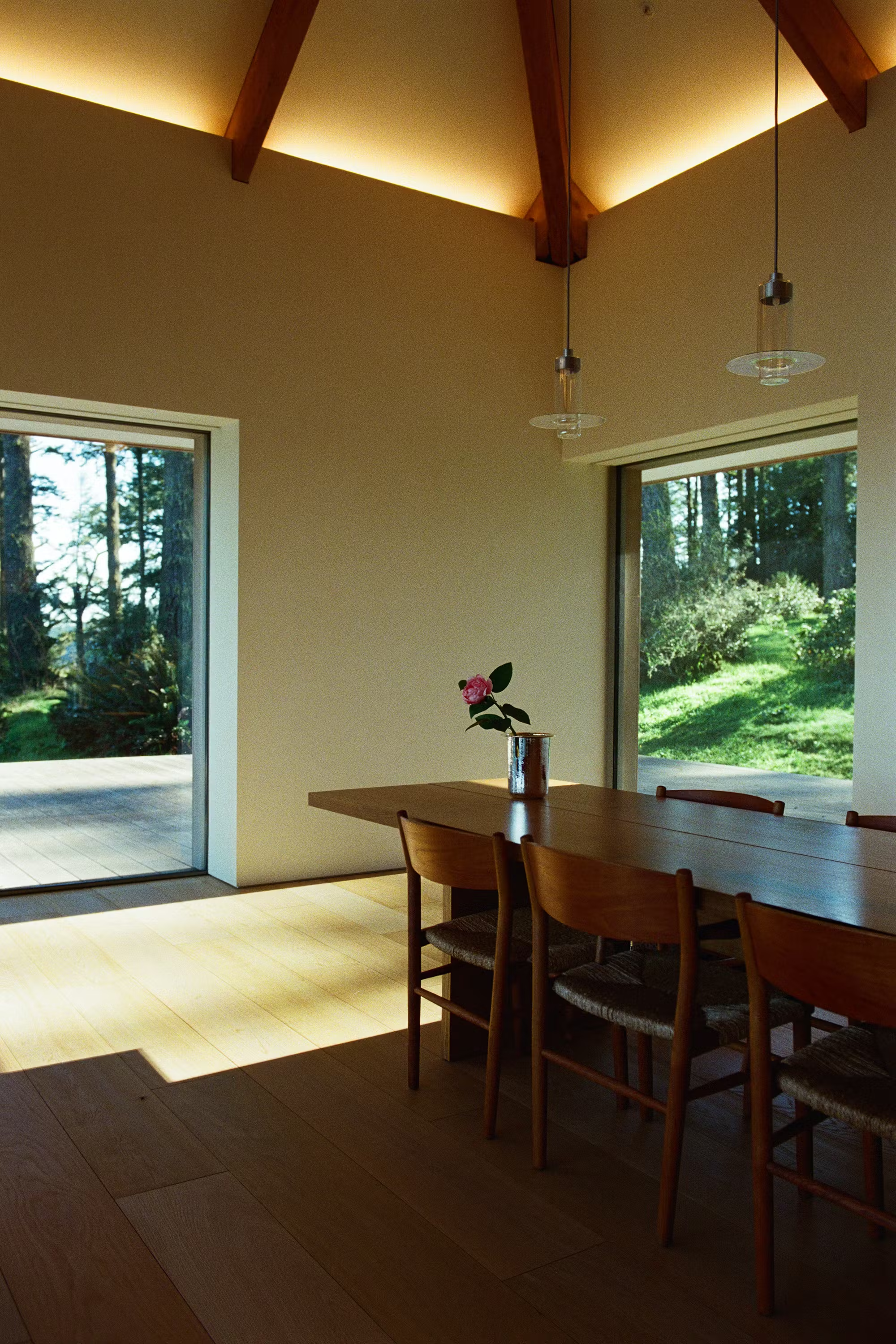
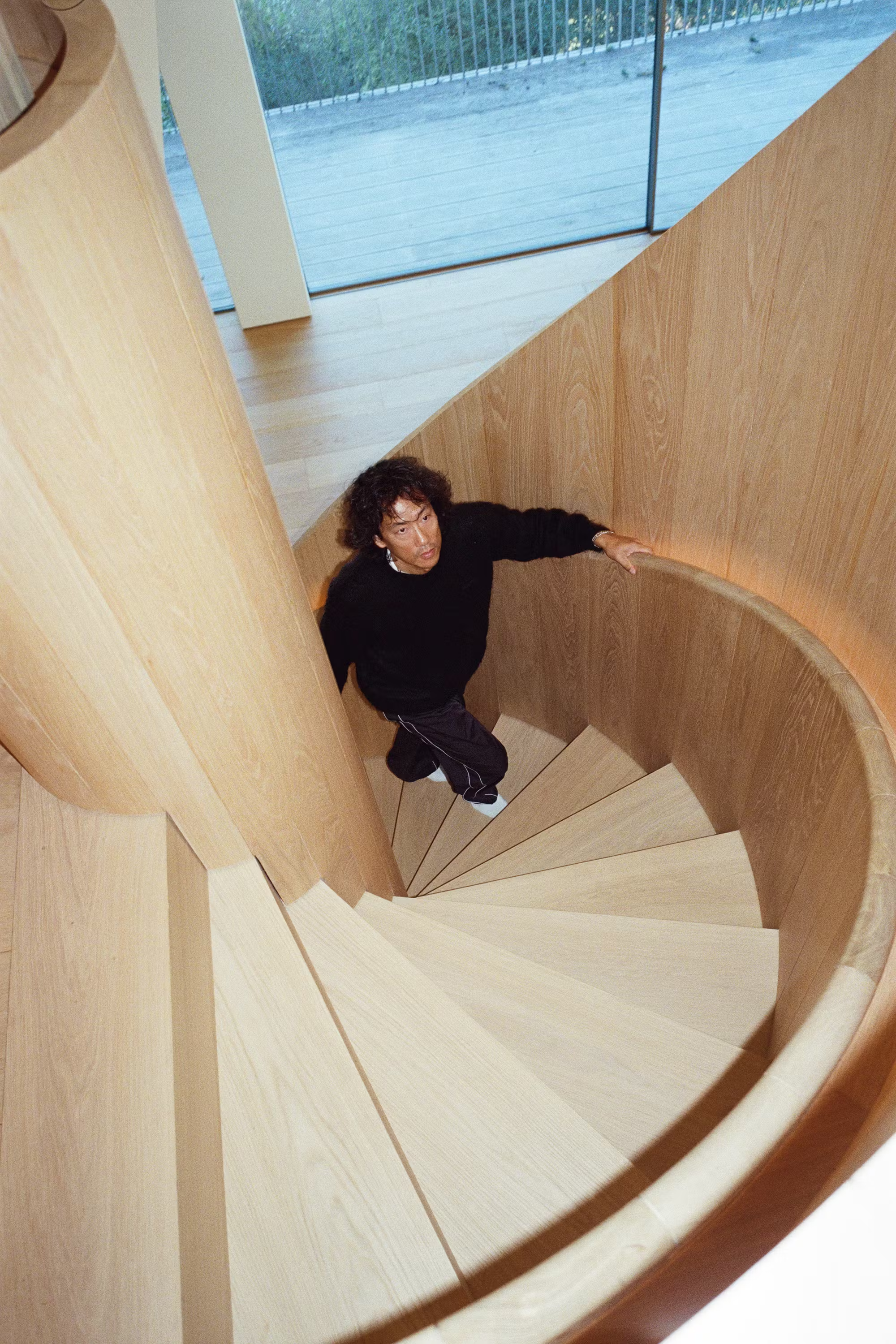
Whang gestures toward the windows overlooking Tomales Bay. “He really thinks in moments. How you frame a view. When you come in and your eye lands somewhere. How another view becomes a beacon that pulls you through the space.”
Pawson’s design signatures — uplighting; shadow gaps; clean, uninterrupted plains that hide the complexities of life — draw some obvious parallels to Apple’s design signatures. “It’s all similar stuff to the school I went to, which is Apple under Jony Ive,” Whang says. “Beauty in space. Absence of things. Letting light and proportions speak.”
“Every piece of furniture or object has such cultural baggage. Even if it’s nuanced. I’m trying to avoid having too much up here.”
— Eugene Whang
There isn’t much furniture in the house, and most of it is built-in or custom designed by Pawson. There’s no clutter, other than some toys piled up in Whang’s son’s room. There’s no television, no big audio system, no game room. “We wanted this to be kind of like a temple,” he says. “I’ve gathered a lot of stuff over the years, and we’re trying to make sure it’s kept sparse.”
Of course, the Apple-trained designer is well versed in the delicate art of restraint. But in this case, it’s not aesthetic posturing; it’s psychological. This is a man who helped design objects that live inside millions of homes. Now, he’s careful about what enters his.
“Every piece of furniture or object has such cultural baggage,” Whang says. “Even if it’s nuanced. I’m trying to avoid having too much up here. Then my mind gets pulled back into city life.”

Whang grew up in Vancouver, coming of age during a potent time for underground street culture colliding with the mainstream. His unique interests led him directly to his true calling.
“I was heavily into basketball,” he says. “I was heavily into DJing and rap culture. Also, the UK scene — rave and techno. And I was into science fiction movies a bit. All those things kind of opened my eyes to industrial design.”
While many talented young designers with similar interests were drawn to sneakers or fashion, Whang’s early ambitions were for something greater. “There are iconic pieces in those industries that are really innovative and amazing, but the majority of it is just styling,” he says. “It didn’t have real meaning behind it. It’s very expressive, which isn’t bad, but it just didn’t interest me. I wanted more utility. I wanted to go a bit deeper than a styling exercise for a season or a colorway.”
Whang found inspiration in films such as Blade Runner, which opened his mind to the idea that design could build worlds. He was closely following Apple early on, when the company felt less like a corporate giant and more like a renegade experiment.
Whang says that he wasn’t a particularly good student in industrial design school, but he did seem to have a preternatural fearlessness about where life would lead him. In his graduate year, when it was time for him to find an industry mentor, he went straight to Apple. Assuming Ive would be too busy, he found the name of a different designer from an Apple team directory — someone who looked friendly. “I guessed an email. Then I called. I just rang Apple up, like 1-800-Apple,” he says. “It was like, why not reach out? They’re just people.”
He landed the mentorship. Soon after, he landed a job. He would stay for more than 20 years.
For much of his time there, Whang was living a parallel life. By day, he was in Cupertino obsessing over microns, tolerances, and component layouts in one of the most secretive corporate design environments in the world. By night, he was in clubs and DJ booths, small rooms with bad lighting and good sound systems.
“I’ve been DJing since high school,” he says. “Music has always just been there. It’s not something I picked up later. It’s kind of like air or water for me.”
Long before “multihyphenate” became a cliché, Whang was moving between industrial design, graphic design, and nightlife. At Apple, he was designing for millions. In music, he was operating in rooms of a few hundred. But the devotion was the same.
“I think you really can feel it with companies where the people creating the products are inherently interested in culture,” he says. “They’re not tourists. When companies add culture on later as a veneer, people sense that.” For Whang, staying plugged into nightlife wasn’t about relevance; it was about calibration.
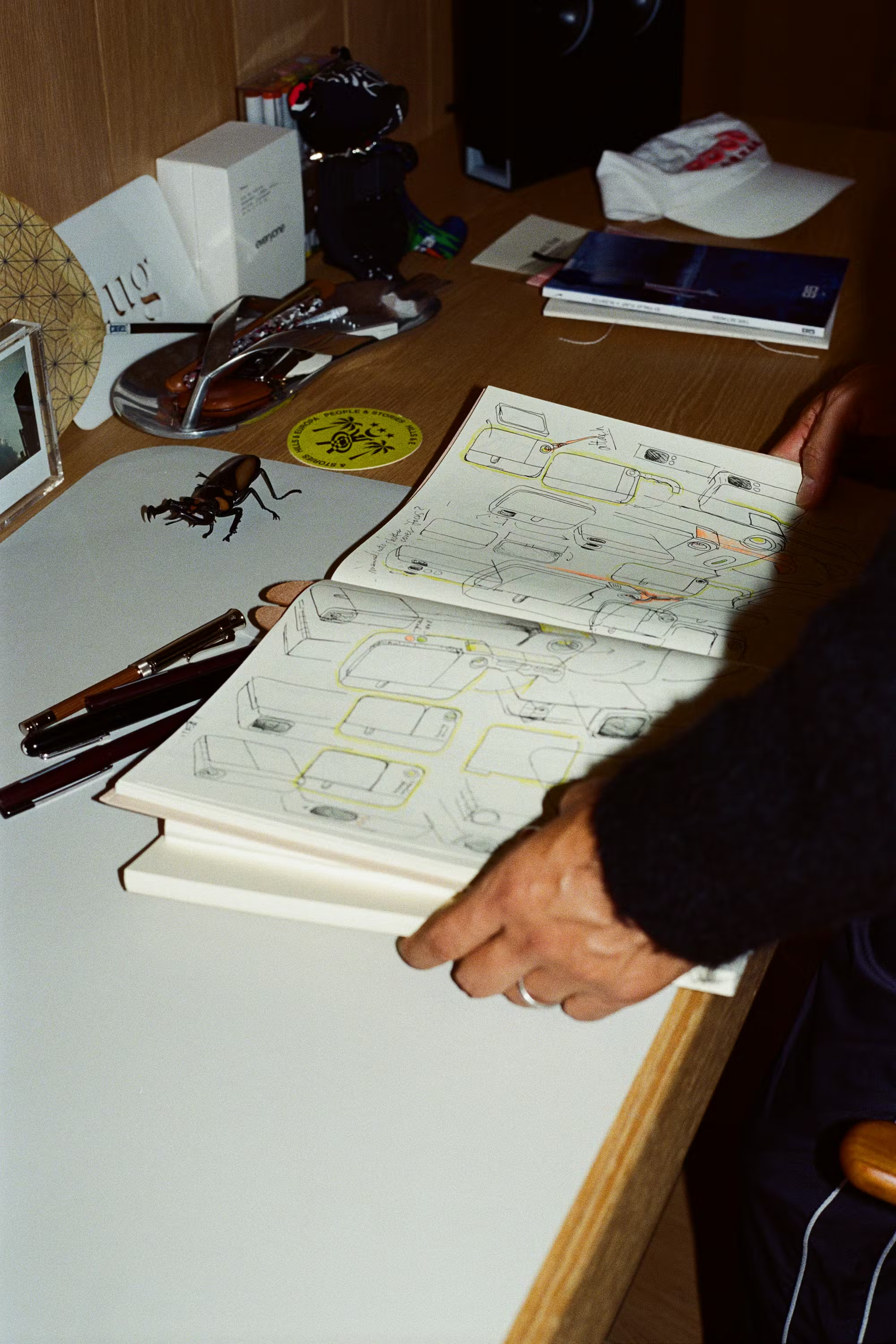
In the early 2010s, he formalized that side of his life by launching Public Release, a record label and creative platform built around DJ mixes and small-run vinyl projects. The original logo was designed by Evan Hecox, known for his work with Chocolate Skateboards — an early signal that the project would sit closer to underground culture than corporate tech. While Whang doesn’t produce the music, he says, he does “put the package together.”
But “package” understates the role. Whang curates, sequences, designs artwork, presses records, and has built a small but loyal following. The label became a meeting point for a global network of DJs, graphic designers, fashion people, and producers orbiting a shared sensibility. “That little line between popular culture and underground culture — that’s where the most interesting stuff happens,” Whang says. “I’ve always been drawn to that layer.”
“Everyone’s equal. You’re only as good as your ideas. We were very direct with one another.”
— Eugene Whang
In many ways, Public Release and the community Whang fostered through music functioned as an antidote to the pressure of Apple, where there was “so much riding on every decision,” Whang says. “So many resources. So much money. Everything has to be very carefully made.”
With Public Release, the stakes were different. The feedback loop was immediate. The rooms were intimate. The audience self-selecting. One world required secrecy and unanimous buy-in. The other rewarded risk and taste.
The fact that he sustained both for more than a decade explains something essential about Whang: He was never only designing for the masses. He was tapped into the margins the entire time. And while those margins may be tight and narrow, they are what actually moves culture.
While Apple is famously private, especially when it comes to product design, Whang describes the culture there as being more about discipline than myth. “We would huddle around a table for hours,” he says. “Everyone’s equal. You’re only as good as your ideas. We were very direct with one another. No one had any ego. You’re not criticizing the person; you’re criticizing the idea.”
Few consumer goods have the kind of influence on aesthetics in culture that Apple products have, but form and materials come last when you’re an industrial designer in Cupertino. “We literally designed from the inside out,” he says. “The interior details would have as much design work as the exterior. The shape of the PCB. The placement of components. Constant shuffling and Tetris of internals. If it’s not right on the inside, it’s not going to be right on the outside.”
That approach of putting structural integrity before appearance would ripple outward in ways that are easy to overlook now. The way consumer goods look and feel across the board, the way we open boxes, the way packages are designed, the entire experience of buying, opening, and using a thing — it’s all inflected with Apple’s desire to make things more sensual, more fun. Apple raised expectations. It taught consumers what quality felt like. Whang doesn’t split hairs about how Apple impacted our lives:
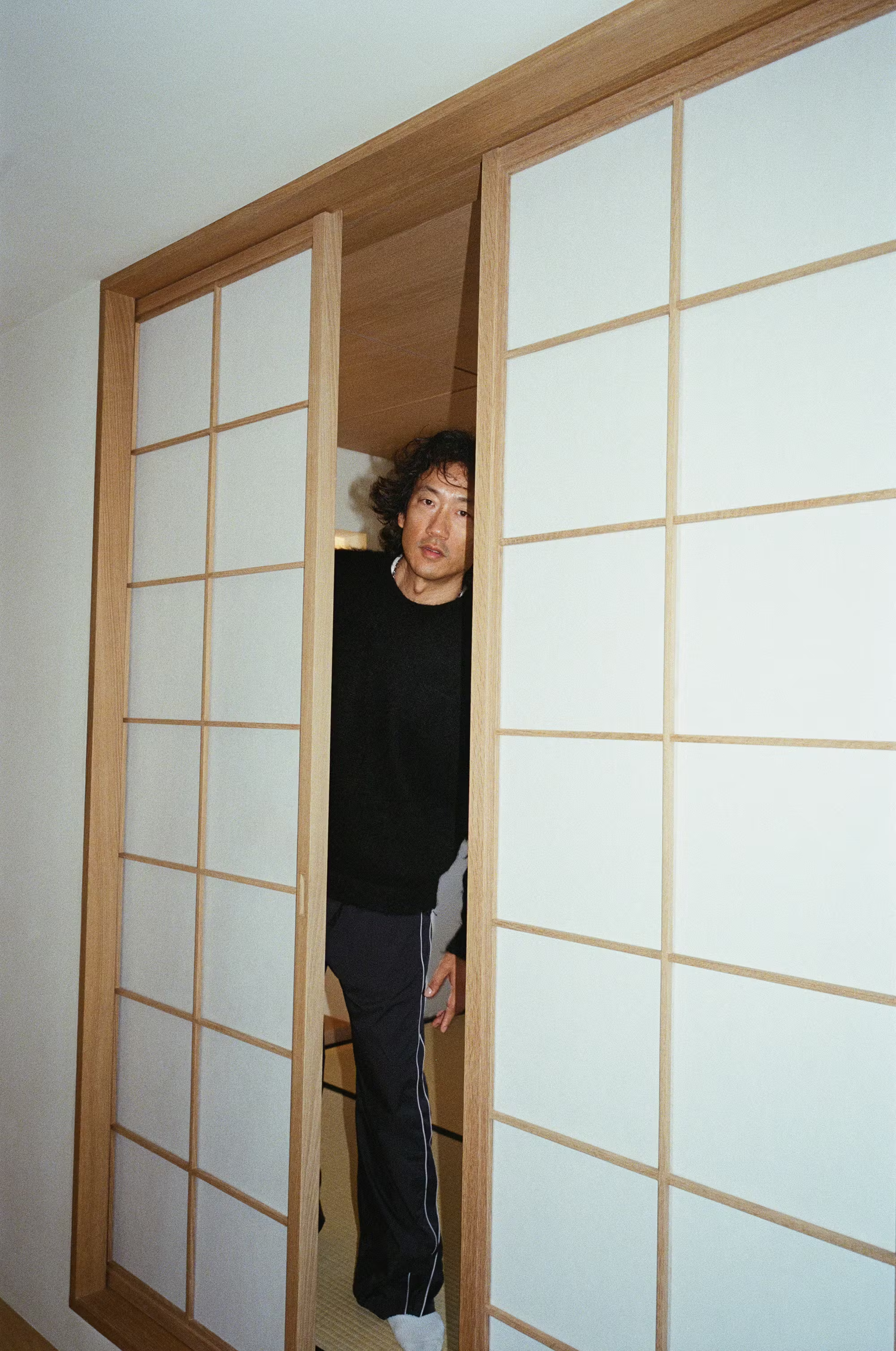
“We literally shaped culture through our products. Popular culture, underground culture, global culture — all of contemporary culture was significantly improved by our product contributions on a very visible level. They literally changed the way people lived their lives. I can’t think of another company that has had an era of products with remotely similar impact.”
During Whang’s time there, Apple transformed from renegade to dominant force. A leader not only in technology, but for the global economy. “Jony shielded us from a lot of it,” Whang says of Ive, his boss and mentor. “He had to take a lot of hits for being in that position.”
I ask if the team partied hard after a new product launch — what a feeling that must’ve been to work on something for years then see it enter the world, knowing that it could have an incalculable impact on millions.
Maybe they’d go out for a drink, Whang allows, but always with a tempered sense of what could be. “There’s always defense mode,” he says. “What’s going to go wrong that we didn’t think of?”
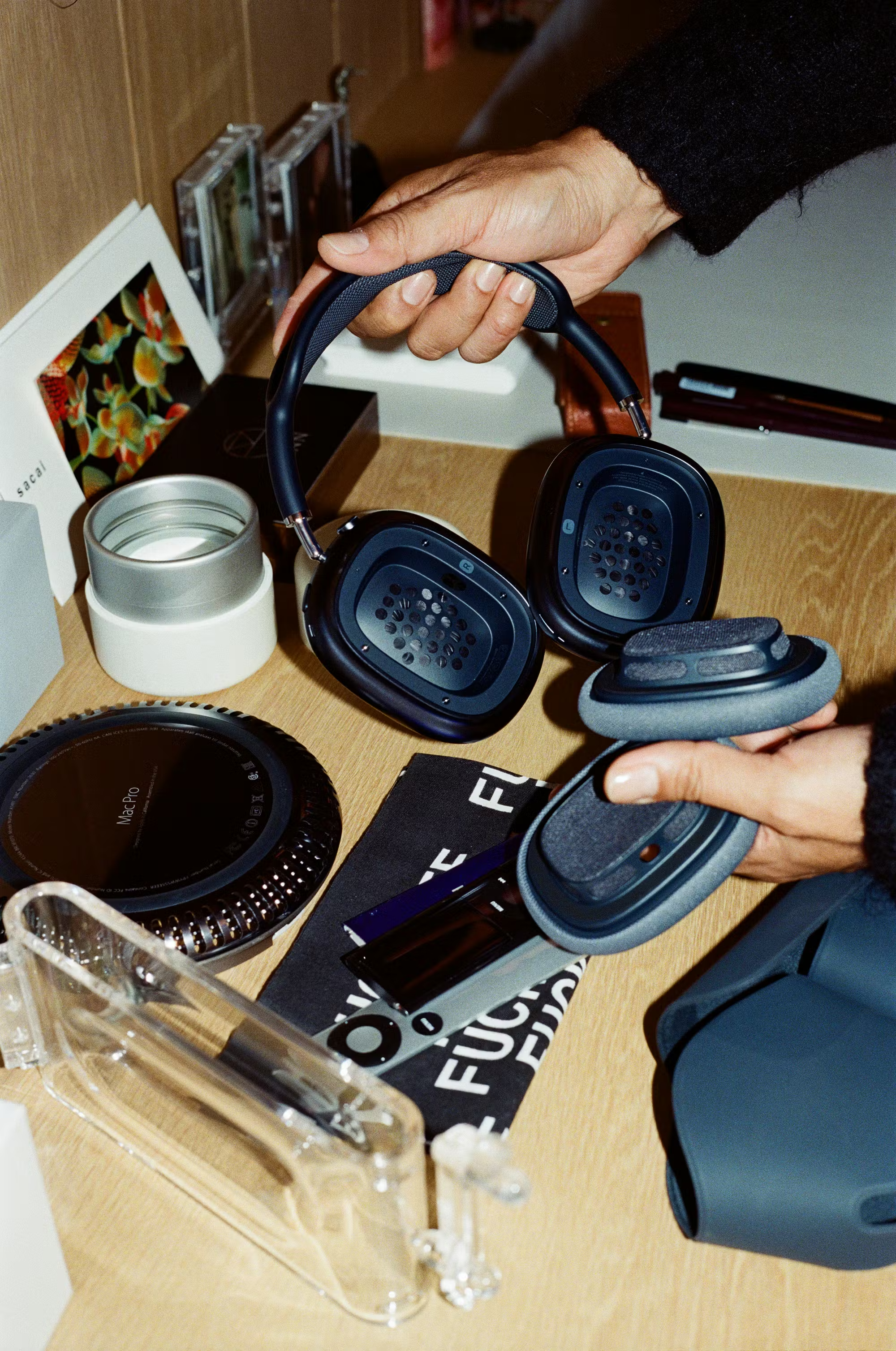
One of Whang’s final major projects at Apple was with the AirPods Max, a product that sits squarely at the intersection of mainstream tech, music, and fashion culture. In some ways, a perfect project for Whang. He and the team worked on it for five years on what was essentially three products: the headband, the case, and the cushion. The latter was particularly challenging because people’s heads and ears come in so many shapes and sizes. The team went through “hundreds and hundreds of variations,” he says.
Whang points out something I hadn’t noticed: there’s no Apple logo anywhere on the exterior of the product. Almost every other Apple product I can think of has a bitten apple somewhere visible. “We didn’t want to brand your head,” Whang says.
The $549 headphones have turned out to be one of Apple’s most successful niche products, striking a balance between luxury consumer good, durable, high-quality technology, and recognizable fashion accessory. It’s a space that Whang understands intimately.
For most of his career, Eugene Whang was part of a tightly bonded unit — “like a band,” he says. The scale of the company changed over the years, but the design team remained surprisingly small. The discipline remained intact. The pressure remained constant. Looking back, he describes the period not as glamorous, but as focused.
“When you’re in the eye of the storm, it doesn’t feel that crazy. You’re just doing the work,” Whang says. “I always thought I would end at Apple. That was my mindset.”
Then, Jony Ive left.
Shortly thereafter, Whang followed him to LoveFrom, the studio Ive launched with renowned designer Marc Newson. The smaller, more selective, even more secretive firm varied in scope. Clients include Ferrari, Airbnb, Moncler, and OpenAI. There, Whang worked on projects that spanned interior design, luxury, mobility, and technology. “It was amazing,” he says. “The work was inspiring. The people were inspiring.”
But LoveFrom was no sabbatical. If anything, the intensity increased. “I would say even more than Apple,” he says of the expectations.
Whang wasn’t at Lovefrom long before another unexpected event upended his life. His mother became ill. “For the first time, I had to focus on putting myself first,” he says. “I was depleted.”
He was traveling frequently to Vancouver, balancing hospice visits with project deadlines. At the same time, his young son was growing up fast, becoming sentient in new and exciting ways that he felt he was missing with only brief glimpses before and after work. “I was kind of like, is this what success is supposed to be?” he says.
That question lingered. Whang’s mother’s condition worsened, and in 2022, she died. Leaving LoveFrom — symbolically leaving the Apple orbit — required confronting something deeper than burnout. “And it became painfully clear that time was now the ultimate luxury,” he says.
When he stepped away, there was no master plan. He spent months recalibrating, many of them in his Northern California sanctuary, sitting with his own thoughts. When he was ready to go back to work, he knew how he wanted to do it. “I don’t want to work for,” he says. “I want to work with.”
Rather than joining another large studio or launching a high-profile brand, Whang began working directly with founders and small teams. Friends of friends. Companies in Stockholm, Milan, London, Tokyo. Some in audio. Some in furniture. Some in early-stage technology. “It’s all come through relationships,” he says.
The projects vary from traditional industrial design to broader creative direction and brand thinking. In some cases, he’s shaping product architecture. In others, he’s advising on cultural positioning. He admits that consulting comes with a strange tension. At Apple, he could trace a product from its earliest sketch to its global launch. At LoveFrom, he could embed deeply within a small team. Now, the work is lighter, more modular.
“You’re neither there at the beginning nor at the end,” he says. “It’s satisfying in that you’re helping people. But creatively, it’s not the same. You have no skin in the game.”
And yet, there’s something valuable in the looseness. “I have complete control over my time,” he says.
He’s also experimenting in quieter ways, including limited-run objects, furniture, collaborative fashion projects, small cultural interventions that don’t need to satisfy millions. “I think I’m at a bit of a crossroads,” he admits. “Do I build a studio? Do I keep it small? I don’t know.”
For someone like Whang, not knowing might be his most radical move yet.