Always Clothing Makers, Never Designers:
Evan Kinori and MAN-TLE in Conversation
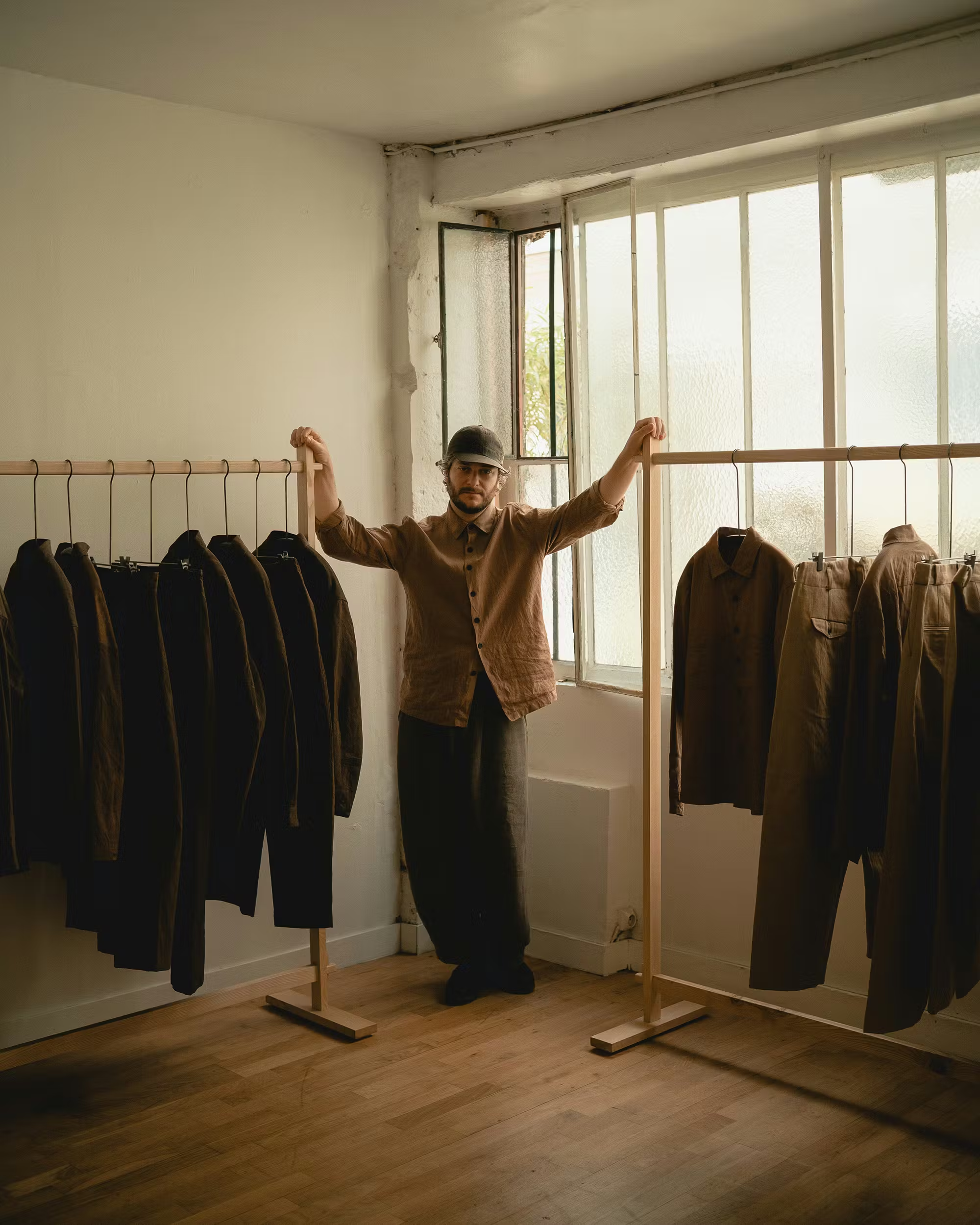
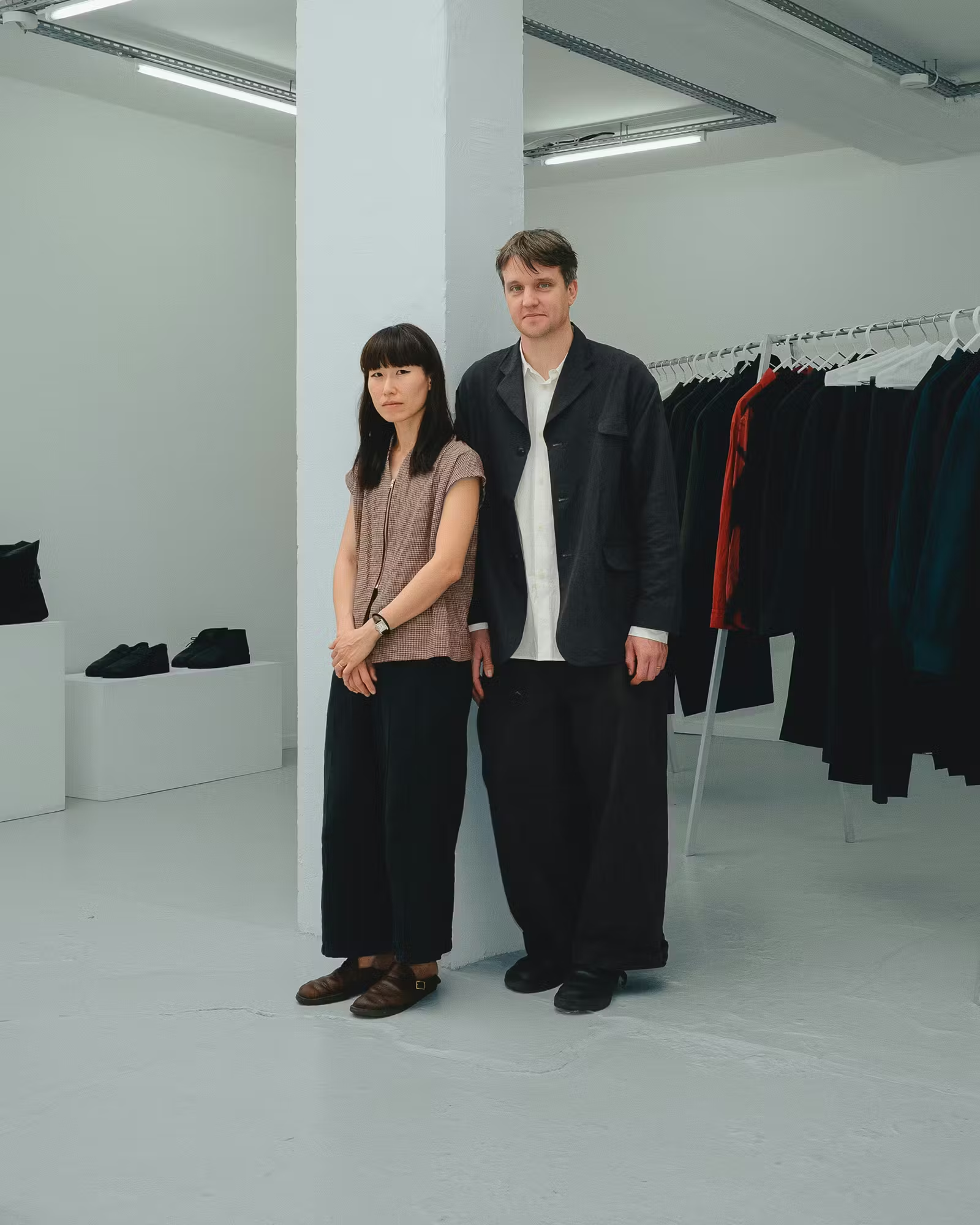
Evan Kinori and MAN-TLE founders Larz Harry and Aida Kim were all but destined for each other. San Francisco’s premier producer of the perfect wardrobe and Perth’s only manufacturer of heavy-duty clothes were always going to walk the same path toward good, purposeful clothing. For the past decade, they’ve just so happened to walk it together.
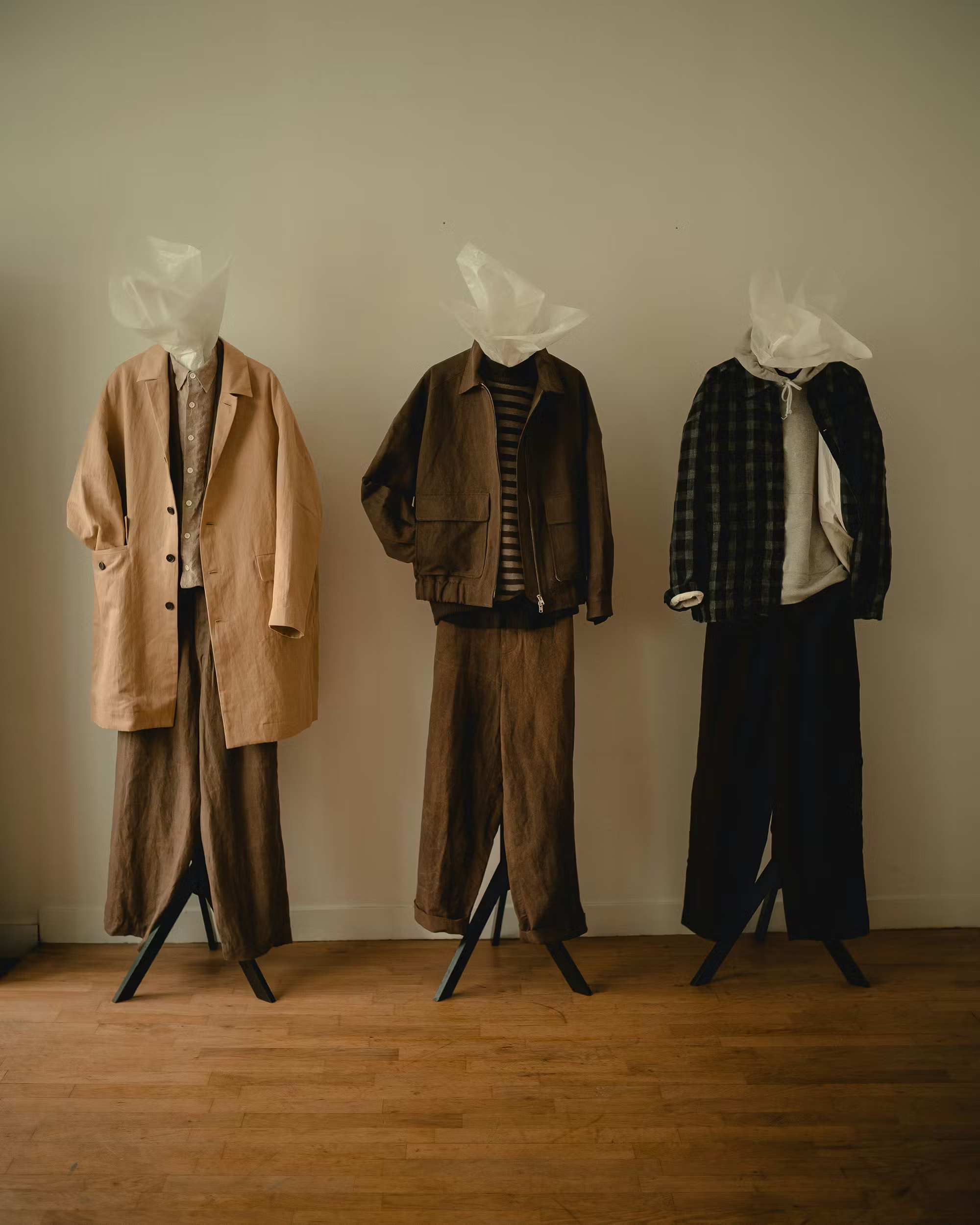
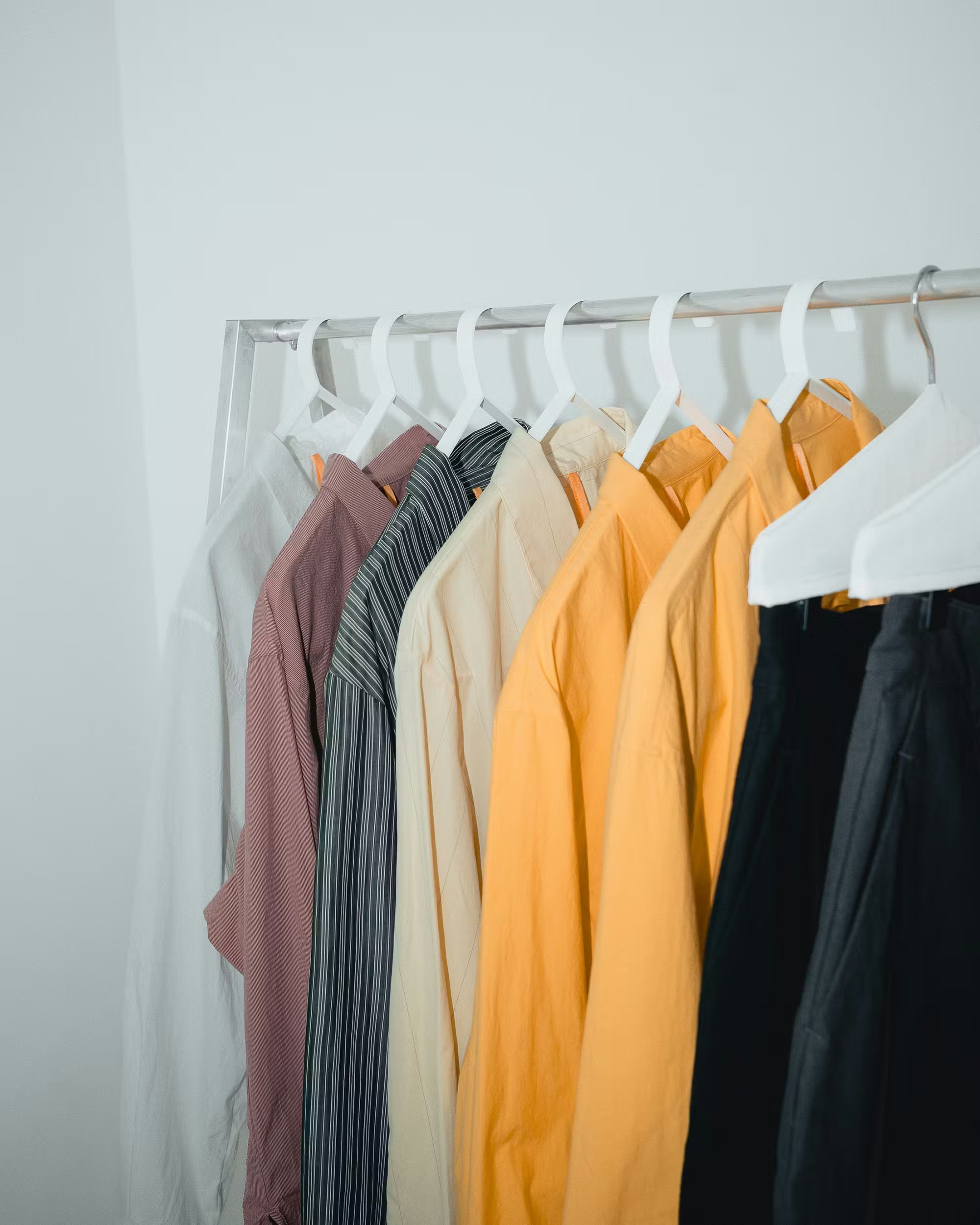
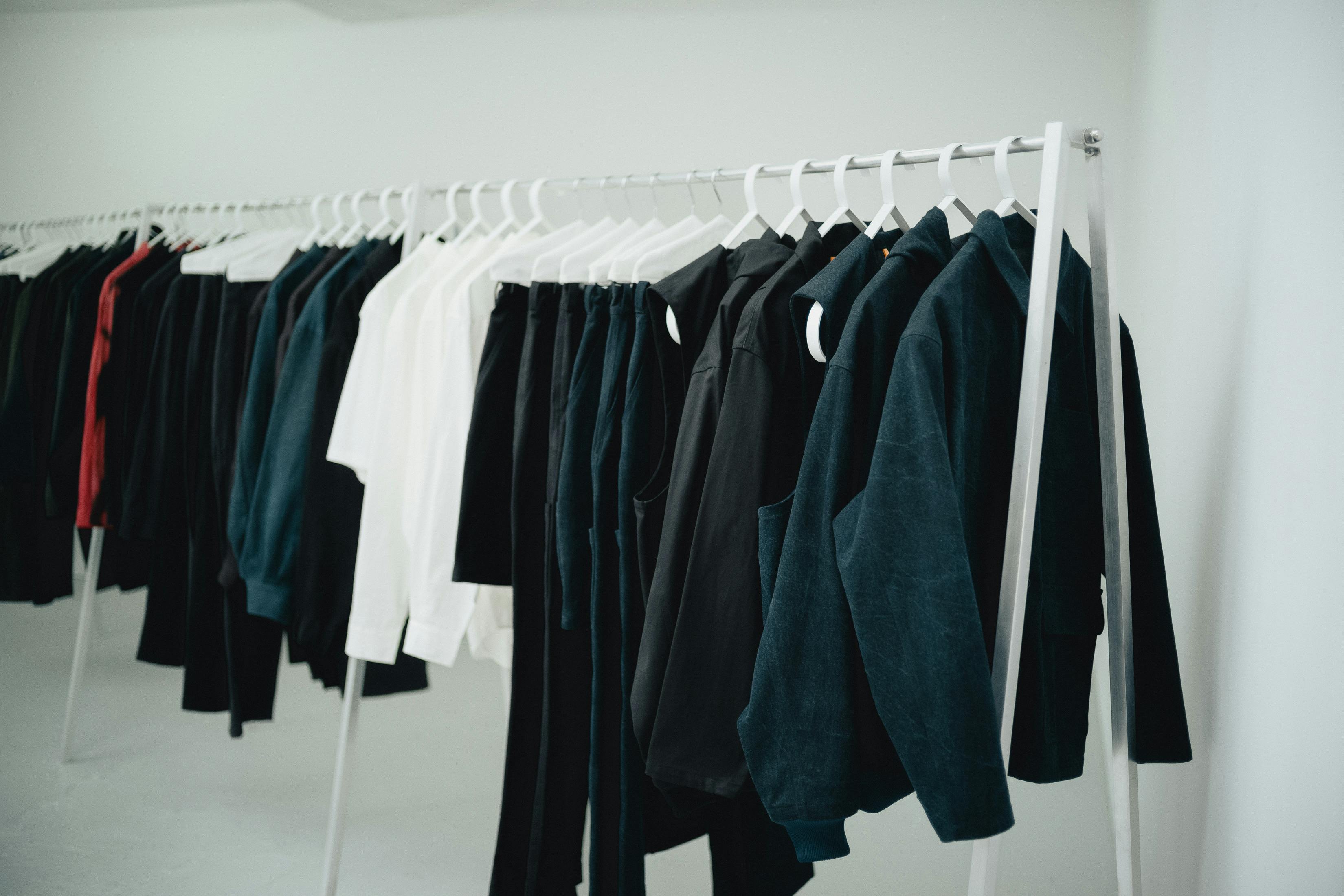
Though the two labels share a spirit of uncompromising consideration, they are as different as they are alike. Kinori’s eponymous clothing line specializes in plainly excellent shirts, jackets, and trousers that pair as organically as they separate, distinguished by rare fabrics in a range of earth tones. MAN-TLE is similarly choosy about textiles, but the clothes are as hard as Kinori’s are soft. MAN-TLE sculpts shirts, work jackets, ball caps, and roomy trousers from specially milled materials that are born as rigid as plaster but mold to fit the wearer’s form over time.
On a product level, Evan Kinori and MAN-TLE are obviously distinct. But the overarching ethos is where they align. They may speak a different design language, but their shared approach has made them natural collaborators, not just in product — though there is some of that — but in how they run their businesses, as well.
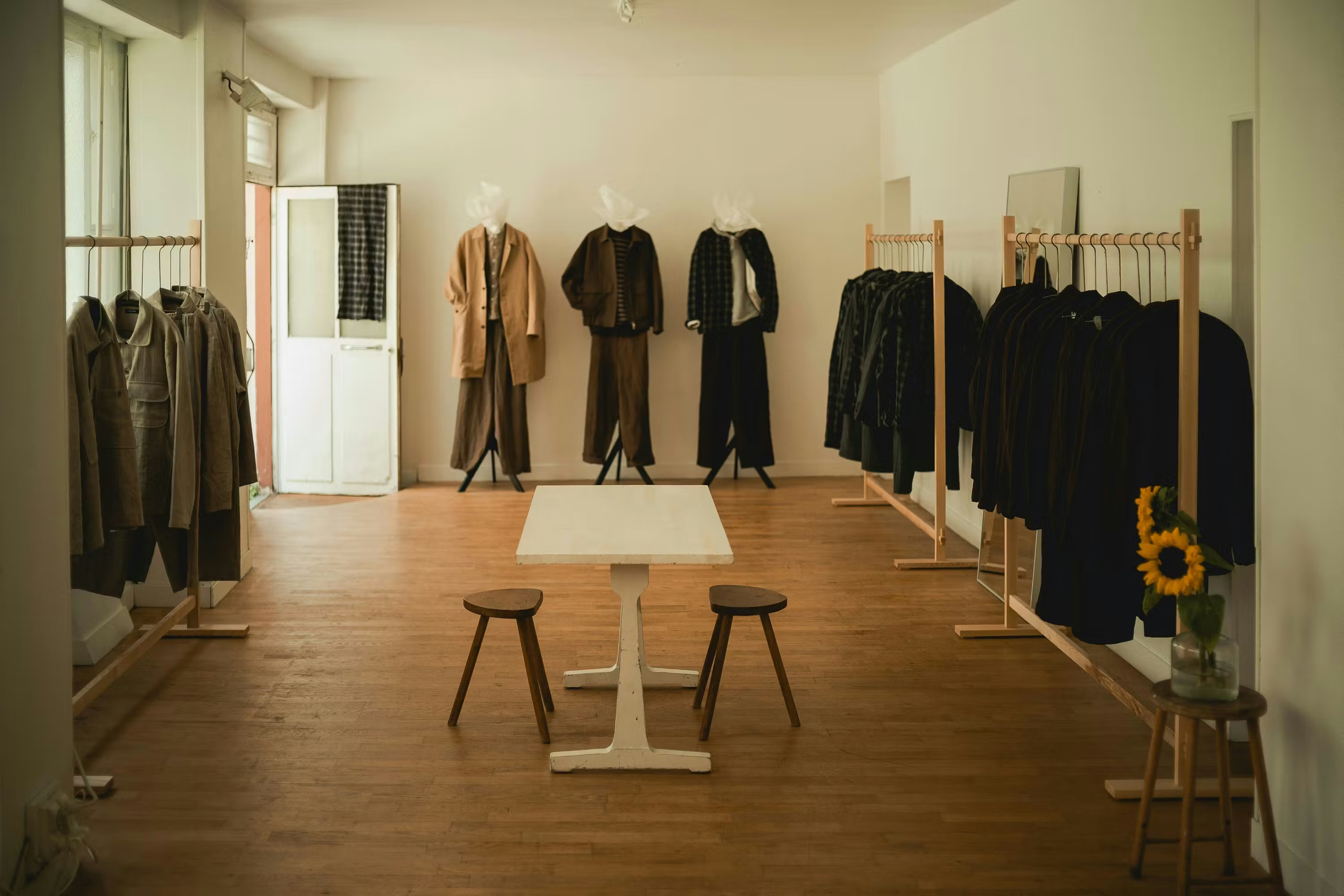
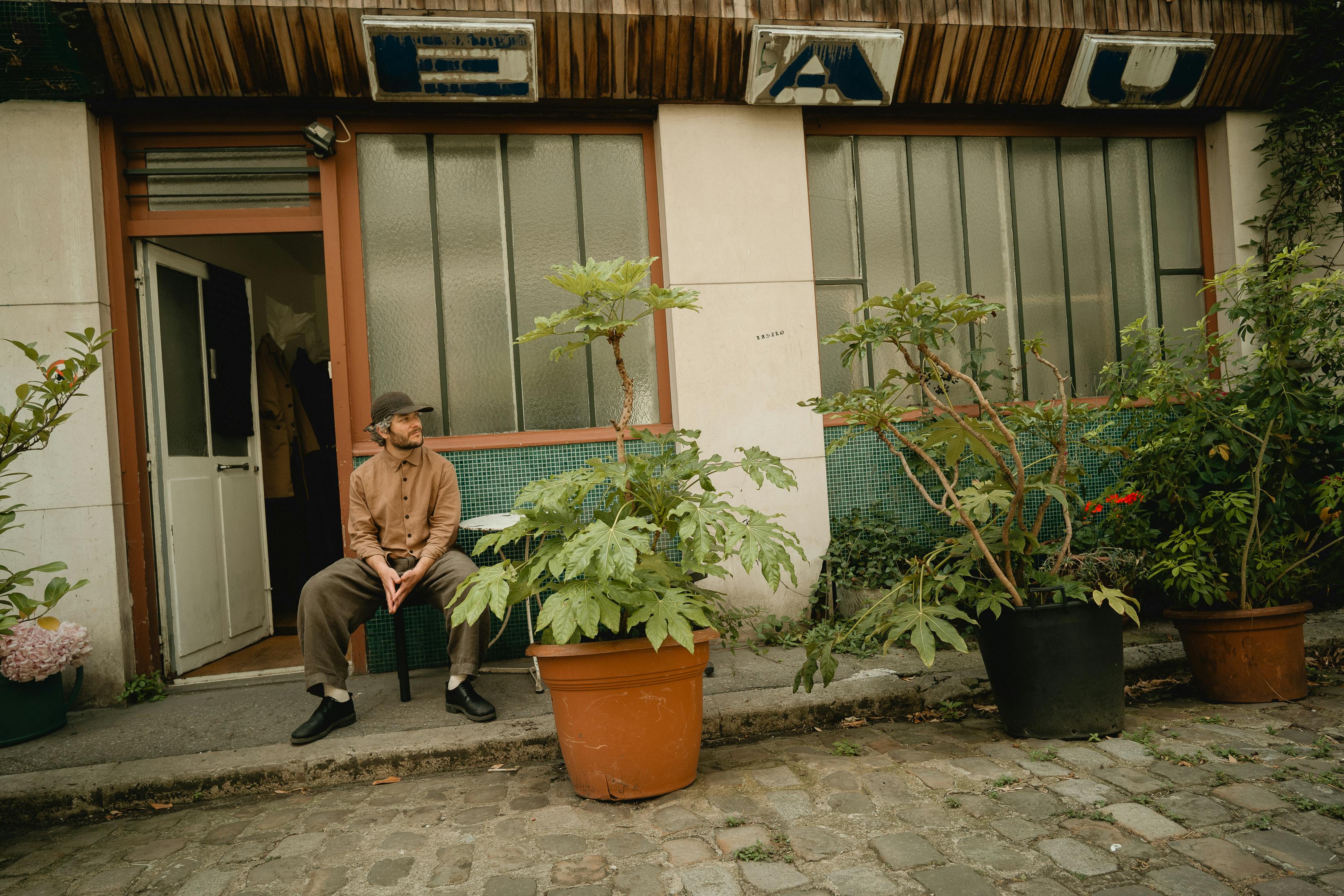
This past June, during Paris Fashion Week, Kinori and MAN-TLE’s Harry and Kim hosted a small party on the private cobblestone street where their showrooms are located to celebrate their shared 10-year anniversary. Johan Christian Chen, a mutual friend and the former CEO of thoughtful Danish design firm Frama, was in attendance. After the dust settled, they all found a moment to reflect on the 10 years that brought them here.
How’d you first meet?
Larz Harry: We were introduced by Nicholas Daley in 2017, I reckon. We were showing with Nicholas in Paris, and Evan was showing at someplace else — we had to bike there. It was a long way.
Evan Kinori: I remember you were looking around the showroom with Nick. I showed you some clothing, and you were geeking about a way a pocket was made on it.
Larz: I think it was the blazer with the bagged-out front pocket.
Evan: That spring, I had just gone on my first trip to Japan, and I was very much on the upswing of trying to build credibility through wholesale and wanting to work with the best stores to define, even for myself, what my work was. Meanwhile, everywhere in Japan, in Arts & Science and all the stores that I wanted to work with, I kept seeing MAN-TLE. They used to have this big metal plate that just said “MAN-TLE” with an elastic drawcord over it as the packaging, and the shirt was like a piece of cardboard. And I was like, “Why?” Basically right after that, I met them and fell in love.
Larz: We started chatting in Paris, and then chatted between Paris more and more.

Evan: It’s funny, for how many people who make clothes, it’s not that common that there’s a product-focused mind behind it, because in the end, a lot of people are thinking about too much other shit and are not product nerds who focus on product and ignore everybody else.
We had an easy initial connection. We share so much ethos and approach. But then the end product, in my opinion, couldn’t be more different. Even if a shape looks the same, it’s going to feel a lot different, and that makes it fun. It’s just two different worlds that are built off of a similar thinking.
Where do you think your approaches most differ?
Evan: The easiest, surface-level stuff would be color sensibility. And tactile sensibility in terms of rigidness. Of the overall engineering approach, I’m probably more romantic.
Larz: We’re coming from opposite sides of the world. So I mean, Evan’s definitely responding to where he’s come from, the way he sees where he lives, and we’re responding to the way we see where we live.
You guys just celebrated a joint 10-year anniversary in Paris. How did it feel?
Evan: When you’re a small independent company, Paris is an absurdly priced affair. But after a couple of years, you start to figure out how you want to do it without spending a fortune. And I found the space [where I now show]. It’s just out of the fray, away from all the other brands. There’s such an oversaturation, and you’re trying to do this absurd thing of presenting something that you feel is special in a sea of people that are presenting something that they think is special. So finding something that’s a little bit outside of it, and has maybe a little bit of nature or quiet, is huge.
The second or third time I showed there, I asked Larz, “Where are you going to show this time?” He sent me the address, and he didn’t even know that he had rented the space right next to me, two doors down. That was just luck, honestly.
Larz: For a brand early on, it’s quite easy to think that you have to be in the thick of it, somewhere where people are going to stumble upon your brand or in a group setting, because then there might be overlap with the buyers coming to see other things, and you’ve got to stand there the whole time and try and make the most of it. That’s how most people do it. We realized we don’t have to do it like that, and it’s not going to get the right shops. We’re not going to form the right long-lasting relationships with people who just stumble upon it. We just decided to do it by appointment. That gave us a bit more freedom to go further away.
Aida Kim: We have shared a lot, and we helped each other a lot. The 10 years meant a lot to both of us, and then we wanted to say thank you to each other, as well. It is not just about 10 years — it’s also about really surviving together for 10 years.
It blows my mind how much you share with each other, information-wise. Aren’t you technically competitors?
Larz: Evan asks too many questions.
Evan: And at the end, I’m going to pull the rug out from under them and then shut ’em out of business.
Is it really just Evan asking the questions?
Evan: Yeah, they don’t really ask anything. They know what they’re doing.
Even if, hypothetically, you see us as competitors, that’s a pretty small-minded way to approach it. When you’re trying to do a business for 10 or 20 or 30 years, if a client of mine goes and buys three MAN-TLE pieces and vice versa… Also, it’s such a hard thing to build from scratch, the type of businesses we’re interested in, which is not a short-term thing. It’s our life that we’re building. It’s incredibly helpful and valuable to be able to have a sounding board for the littlest to the biggest things. We’ve created our own little support network.
At the end of the party, I noticed Evan and Larz carrying this big black table through the courtyard as we were cleaning up. I was like, “Yeah, this is it. Ten years and still carrying tables together.” When you are at something for 10 years, you want someone to talk to.
Larz: We know that we make such different products. If we’re both making brown clothing, then I guess it would be a more difficult conversation — but we only make a little bit of brown, and everyone makes a little bit of blue every now and then.
Evan: Even if we were to use the same exact fabric, it ends up feeling different. I recognize in them one of the most original design languages out of our peers. And that makes it very comfortable to share a lot. There are so many people that do it who are pretty referential and derivative, and I wouldn’t feel impassioned to connect or share ideas that loosely with anybody that was on the more derivative side of the spectrum. To me, MAN-TLE really reads as its own language. It makes it very easy to be like, well, it doesn’t fucking matter about business because the exchange is more valuable than the business.

Aida: We both know we trust each other. We know what we are doing — we believe we know what we are doing. And then we believe Evan knows what he’s doing, so there is nothing we have to worry about.
Larz: There are other people that we talk to, I guess no one else that we’re quite as close with from a brand point of view, but there are stores that we’re very close with that have invested in the way we both see things and get behind trying to tell our story with us and representing it properly. So that’s built a community. There is a group of people who all know each other, who are all interested in the same type of thing.
Evan: Everything we do, we think in long-term: The fabrics are thought of in the long-term; the distribution is thought of in the long-term; the pricing is thought of in the long-term. Choice of color or whatever it is. All this stuff. It’s thinking in longer stretches of time instead of just being like, “This is a vibe for SS26.” In the end, that means that those partnerships mean more. And so doing something like we did, getting people together, it’s not for an activation or for press. It’s recognition. There’s plenty of shit-talking, beer-drinking, cigarette-smoking gatherings on sidewalks in Paris, but they don’t necessarily have the feeling of gratitude.
What kinds of issues do you actually call each other to talk about?
Evan: I’m sure we’ve done it many times with wholesale accounts. That’s probably the most common discussion, getting a second perspective on a store. I’ve asked about production. Very concrete, real life things. It’s not like, “Hey, which button do you like better on my shirt?” We actually never talk about design or anything to do with products. That’s why it works, because we’re comfortable in our language, and then there’s all the other bits that make a lot of sense to learn from each other on.
So, what is the process when you do a collaborative project, such as the jacket?
Evan: Just me being demanding, probably.
Larz: You had one of our down jackets and you enjoyed it, and then I think you felt that your customer could enjoy it as well if you just put a brown fabric on it.
Evan: I was like, “The sizing and the fabric are what I want to change.” Sometimes design is curatorial. It’s not always inventive. If someone makes something good, I don’t want to make anything remotely like it. I would not touch a shape or a thing that does what I would want it to do. The last thing I want to do is be like, “Oh yeah, I should do one like that.” Or, “Oh, if I put a little pocket here or change the stitching here.” A lot of people actually do think that way.
If there is a very thought-through and original and solid product, it’s cool to just put it through my lens. That’s all. And for me, that’s fabric. So the logical thing is to introduce the fabric from a different point of view, and I’ll return the favor to them at some point. They want to do one of my shirts in their fabric. You gotta do the seatbelt tape, though. You can’t do regular buttons.
Larz: On a Big Shirt? That would be cool.
Aida: But will your factory be okay with the seatbelt tape buttons?
Evan: I’ll just give you the shirt after it’s sewn, and you can figure out the rest.
Looking back, what were some of the most challenging parts of doing what you guys are doing?
Larz: The hardest thing is just managing a small team. I think it’s probably the same for every small business. It’s trying to grow it, trying to grow carefully, and to choose the right people and choose the right path. For example, lots of stores come along. You have to be very selective. You have to be very patient. I guess we always talk about patience because — and Evan’s done the same — you can’t get too excited about things and jump into them. You really have to think everything through.
Aida: We do pretty much everything by ourselves. So, yes, doing multiple jobs. Not being greedy, just trying to focus on the long term and what we are trying to make. Then always reminding ourselves that we are making the right things, always. The most challenging thing is moving to make things better.
Larz: Editing.
Aida: Being careful.
Larz: Careful and patient.
Evan: You have to really consistently claw away the noise of the outside — it’s like an ivy growing on a building that’s trying to always find a way in, and it can be bad for your building. You need to have your own vision on things and follow it through. I think we both live in quite isolated places in relation to the type of work that we do. And I think that we both find it helpful. I think if you asked most people in Paris or in the clothing world, “What’s the last place a fashion company or a clothing business that’s thriving is going to be?” And they’d be like, “Well, probably not in Perth and probably not in San Francisco.” We both thrive off of being allowed the space to think. A big challenge is not consuming too much information.
But running a small business, it just depends on the day. I mean, something can seem totally fine and be a laugh, and then a week later, it’s the biggest headache you’ve ever had. The biggest challenge is that it’s independent and that it’s all yours to figure out, whether that’s questions about working with a new store or problems in production or managing staff or whatever it is — independent means that you’re facing all of it, every single facet, and you’re trying to manage and accomplish them all with the same level of focus and consideration that you do to design.
Aida: It’s funny, especially in Perth, Australia, you feel like sometimes you’re too isolated.
Larz: We chose it for that reason, but…
Aida: We have a shop here, and sometimes it’s like MAN-TLE is just a local brand.
Evan: Yeah, I feel like that’s good. It’s grounding. When people come into the store and they think it’s a local store that makes clothes.
How do you think things will look 10 years from now? Are we gathered in this courtyard again?
Larz: Hopefully a bigger courtyard.
Evan: I think scale changes. You’re able to achieve bigger versions of what you’re dreaming about, but in the end, the conversation would be similar, and maybe some of the problems that you navigate are different. You’ll see that we keep going on the same path of considered slow growth but at the same time being successful with it. Which is a funny challenge for both of us, that it’s going well, but we want to be considered and slow.
You guys both use the word “product” in a very specific kind of way, and neither of you ever use the term “fashion.” Could you talk a bit about what “product” means to you?
Aida: It is our approach to how we think about clothing. When we started, there was the idea that we wanted to hand this garment as a product to our customer. So we folded every garment and then we put strings around it, and we didn’t want to hang the garment. That was just the first message we wanted to share when we started the brand. It was important because we really want to see clothing as a product, where we believe the product has a different approach from fashion.
“Product” can be something for your home — furniture or something. We really wanted to make things that will last long, not just because it’s strong or well-made. It has to be really loved and it has to really evolve with the person who wears it and then has to be part of them one day. And then that kind of approach is different from fashion. It’s a little word, but it changes the whole thing. It changes how to design what you’re making.
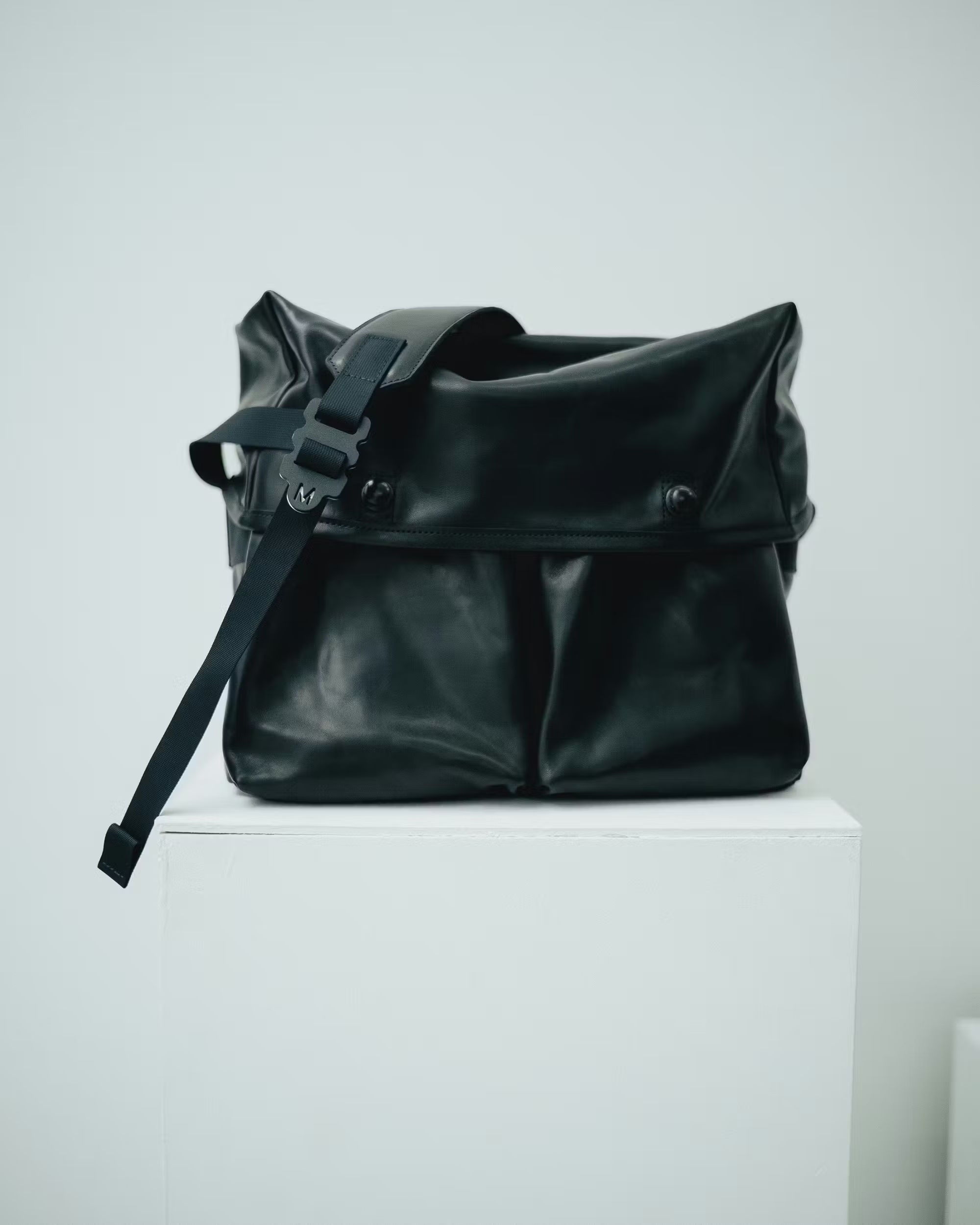
Larz: For example, we develop a new group of products, or what we call a system, we choose a fabric or a group of fabrics that then get paired with a type of hardware, and that becomes a thing that is designed to then be repeated every season. Developing a little system like that and then being able to repeat it — to us, it’s not really a fashion mindset. It’s like a piece of furniture or more of an industrial design process. That was how we ended up on the word “product,” I’m sure.
Evan: Using the word “product” implies that you are considering function, considering usage, considering things like longevity, how it will age. I think a lot of what motivates us relates more to product design. In a high-paced clothing business, you always need to sell more. You always need to sell new shit to the same people, constantly. And there’s little room for: “How’s this shirt going to be in 10 years?”
I’ve also never heard either of you all refer to yourselves as designers, but more “clothes makers.”
Aida: We always say “clothing makers.”
Evan: If any of us quit and wanted to get a job as a designer, we would be met with a rude reality of sitting at a computer drawing 17 jackets a season, or something. And I think we’d all fail at that.
Larz: That type of design is just, it’s so boring. That is so different from what we do.
Evan: We’re interested in process and materiality and all these other things that go to define the design. It’s not as if we’re not designing. We might make a shape or two or three a year, whereas for some brands, it’s all new shapes every time, which is like, I get it. It’s creative exploration and self-expression on a big scale or a faster pace. The only thing that’s a bummer, is that it’s a bit reckless at this point. A lot of those things should just be drawn up and printed in a magazine, and not gone into production.
Aida: If we didn’t make clothing, whatever we made, even a car, a building, whatever it was, our approach would be the same. It’s because of how we think and how we see things. We really appreciate long-life products, which are practical and made from good-quality ingredients, all this stuff. We really respect that. We chose clothing because that’s what we could do. It wasn’t because we are clothing-obsessed. That’s why we never talk about fashion — because we never thought about it.