There’s only one thing that really matters when it comes to clothing: What do you want to put on when it’s time to get dressed? When you peer into the dizzying abyss of your crammed, disorganized closet, what do you see that makes you feel ready for the world?
The answer is always and forever: good clothes.
The fashion industry comes up with all kinds of ways to get you to buy things, but it rarely puts the same amount of effort into making those things good. In fact, the two objectives — marketing a thing to convince you to buy it, and making a thing so good you want to live in it — are often diametrically opposed.As this first quarter-century of the new millennium windsdown, we’re all more acutely aware of how much of it has been spent in a mass marketing delirium. Almost every decision we make — what we eat, how we communicate, who we vote for — has been co-opted by the heavy hand of sales over substance. Which, to be fair, isn’t entirely the problem: Sales are essential, but when they go hand in hand with making things cheaper, flimsier, and dumber, everyone suffers.
The good thing is that fashion is reactive. So, during this same period, some designers chose to slow down, push their process deeper, and make good things: durable things; things that rely on quality materials and humane processes; things that are designed intelligently, with intent and utility. Good clothes. Some of these designers are motivated by concern for the environmental and human toll of clothing production, and some are motivated by making a garment that is simply better than any other of its kind. Some labor over unique designs; some work with templates that haven’t changed in decades. But all of them make clothes that are worth what they cost, worth the space they take up in your closet, and good in every sense of the word.
33 brands worth paying attention to for what they’re making — and how they’re making it.
— Noah Johnson
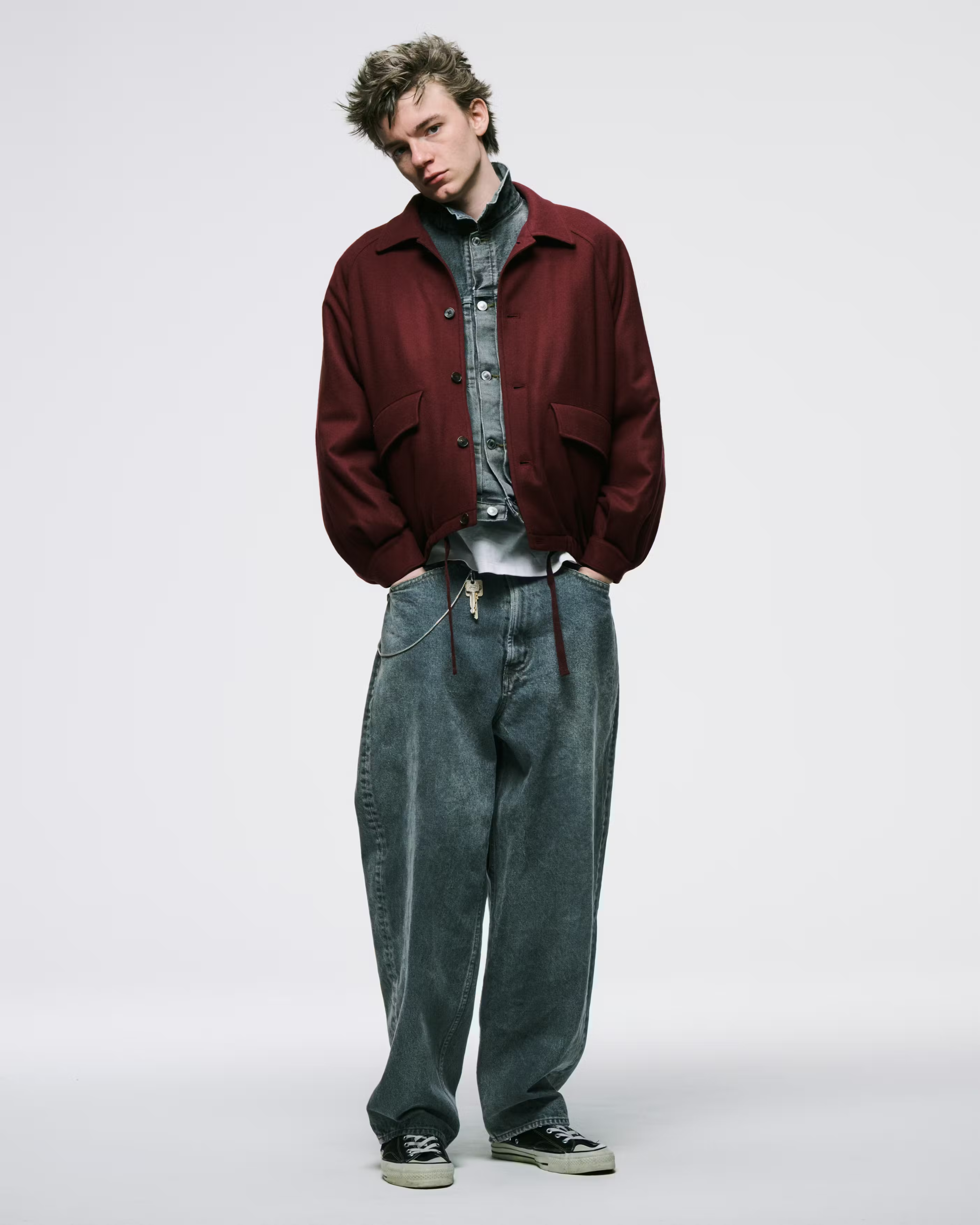
Mitsuo Okamoto / Courtesy of A.Presse
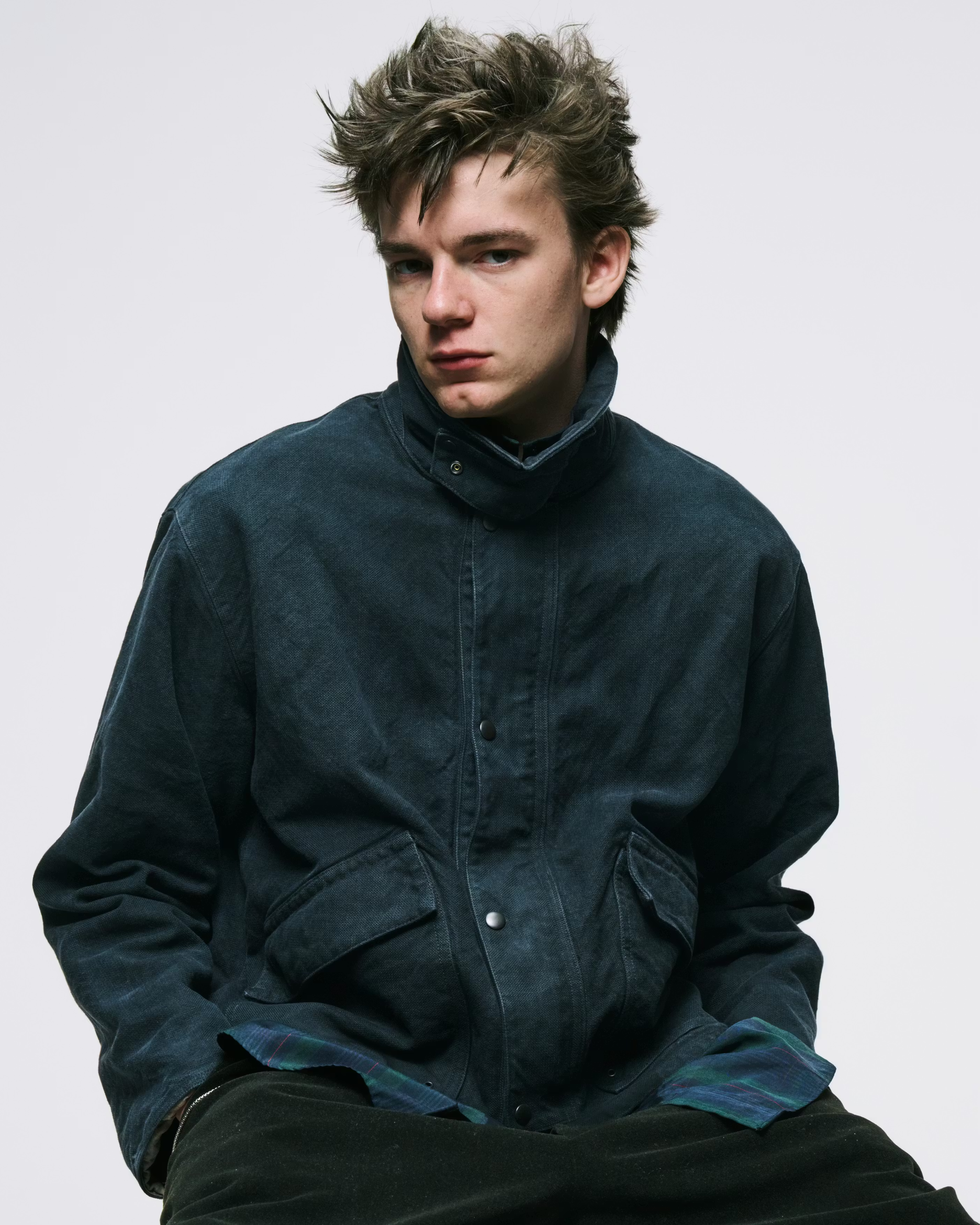
Mitsuo Okamoto / Courtesy of A.Presse
A.Presse
It took only four years for Kazuma Shigematsu to establish A.Presse as the Hermès of Japanese workwear. Shigematsu’s obsessive attention to detail is reflected in factors as overt as rare fabrics that replicate the handfeel of actual vintage and as subtle as period-correct stitching. All this rigorous nerdiness is itself quite cool but would be rendered moot if A.Presse merely traded in surface-level clothing reproduction. Instead, A.Presse brings forth the soul of each garment, transforming collared shirts, work jackets, bombers, and jeans into lived-in lookers that demand to be lived-in further.
Luca Tombolini / Courtesy of AURALEE
Luca Tombolini / Courtesy of AURALEE
AURALEE
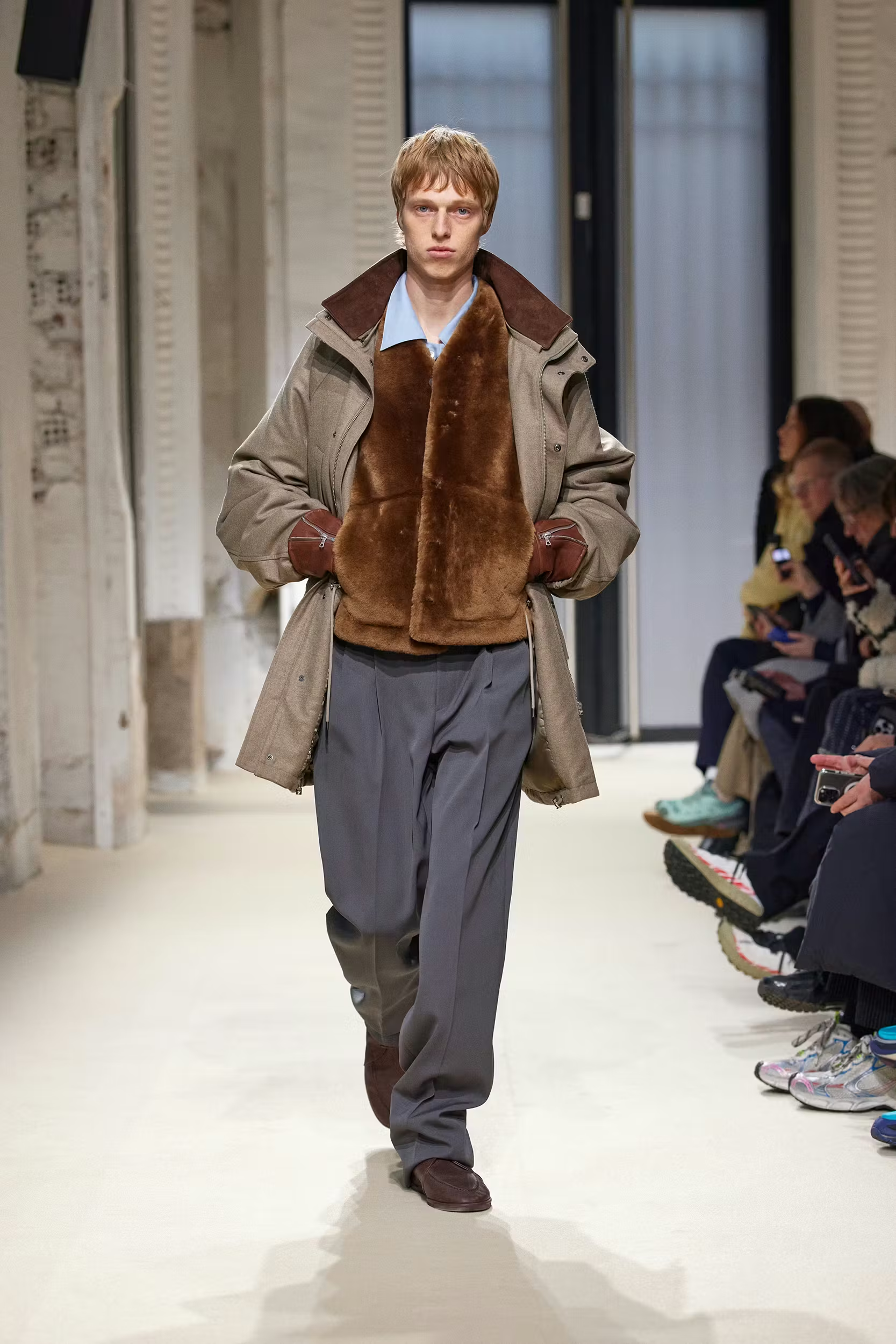
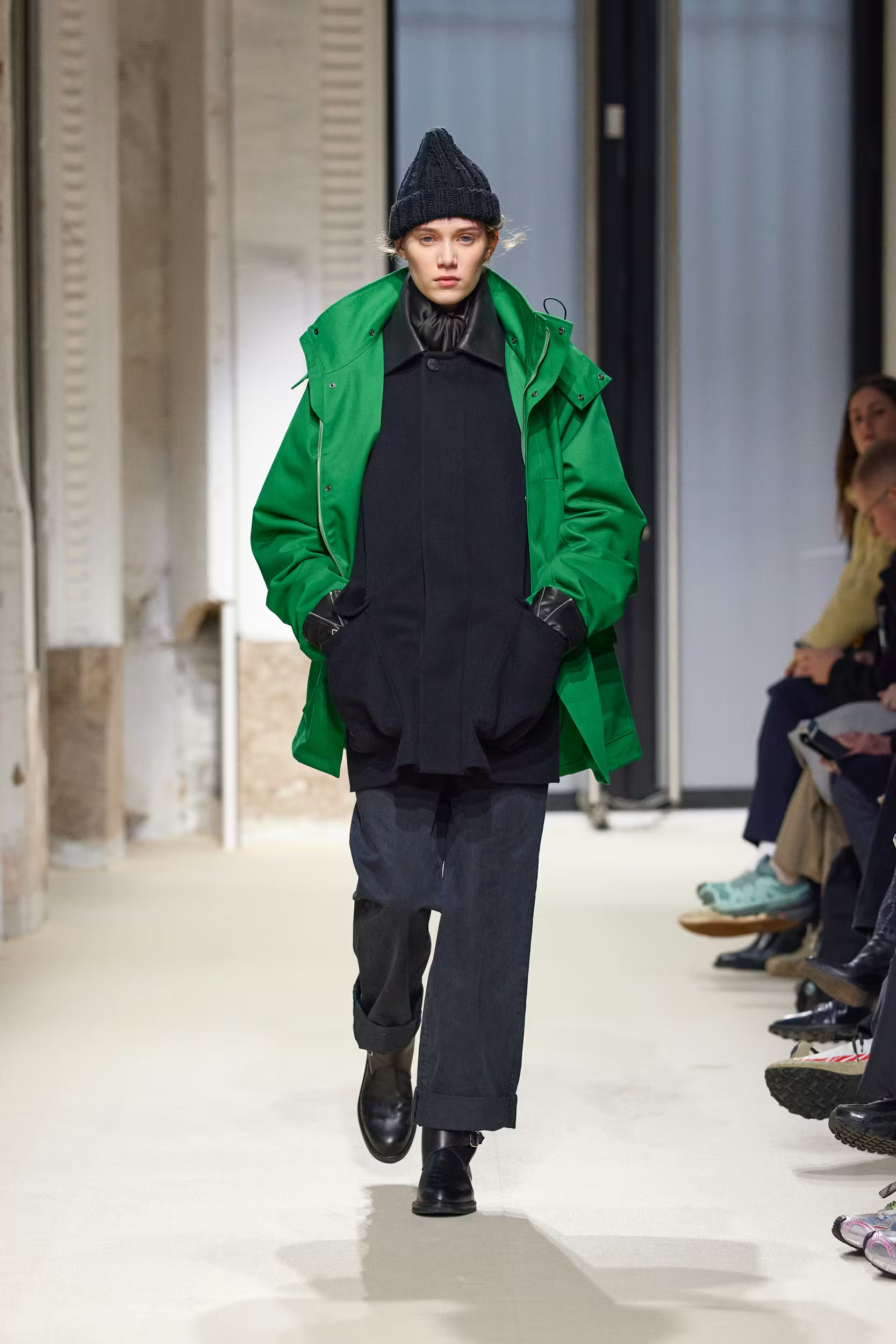
If you’re ever asked to define “good clothes” in a single word, say “AURALEE.” The Japanese brand specializes in wearable wearables whose unpretentious facades mask immense effort. AURALEE collections exclusively use bespoke textiles — a level of specificity practically unheard of for an indie maker at this scale. AURALEE makes recognizable garments entirely new by infusing them with brand signatures such as crisp Egyptian cotton “finx,” glossy “lustre” cotton jersey, and “super” kid mohair as furry as a dandelion puff.
Sam Morsink / Courtesy of Camiel Fortgens
Sam Morsink / Courtesy of Camiel Fortgens
Camiel Fortgens
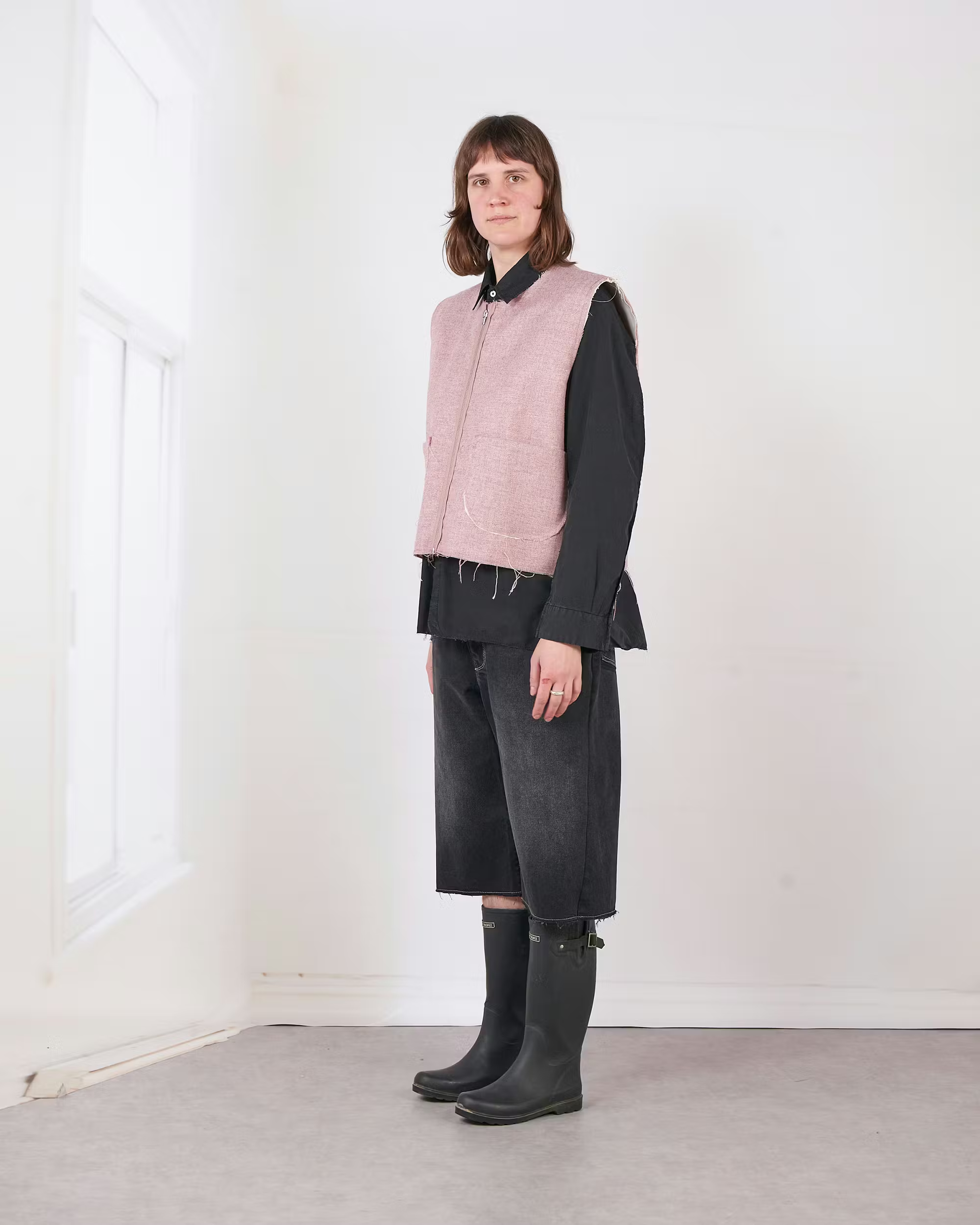
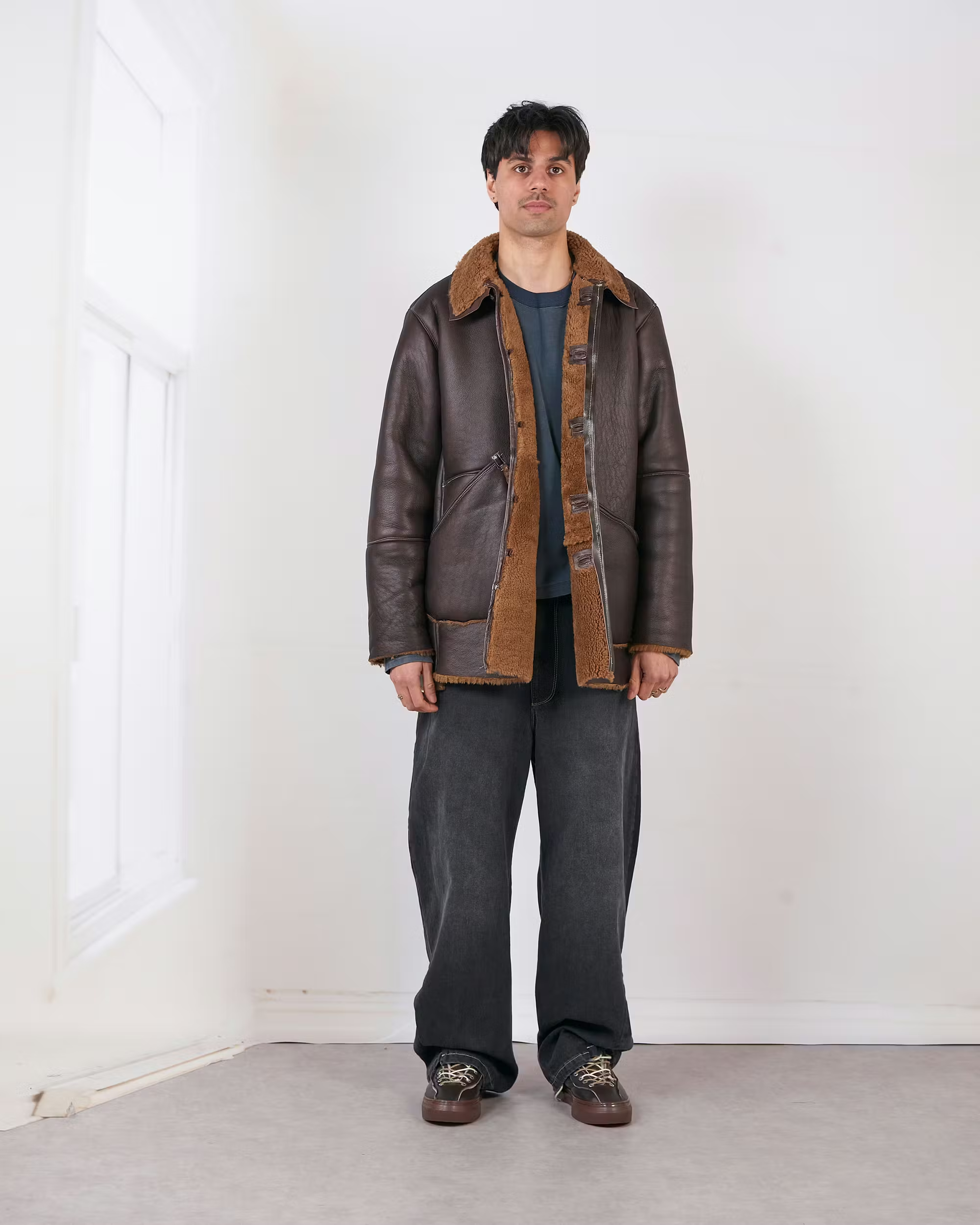
In Camiel Fortgens’ Design Academy Eindhoven graduate collection, he took menswear’s most obvious staples — the white T-shirt, the indigo jeans, the wool overcoat — and turned them into objects akin to Joseph Beuys’ “Felt Suit:” comprehensible but out of reach. A decade on, Fortgens has honed his design sense without losing his open-mindedness. His clothes are named uncomplicated things like “Worker Jacket,” “‘70s Cardigan,” and “Suit Pants,” reflective of their utilitarian inspiration, but they’re updated with raw hems, fabrics that expose or undermine the items’ reference point, and exaggerated shapes that flip the bird to staid sizing conventions. “I always wonder why we stick to sizes,” Fortgens once told Highsnobiety. “Why not just use size as a suggestion of fit?”
Maxime Tétard / Courtesy of Casey Casey
Maxime Tétard / Courtesy of Casey Casey
Casey Casey
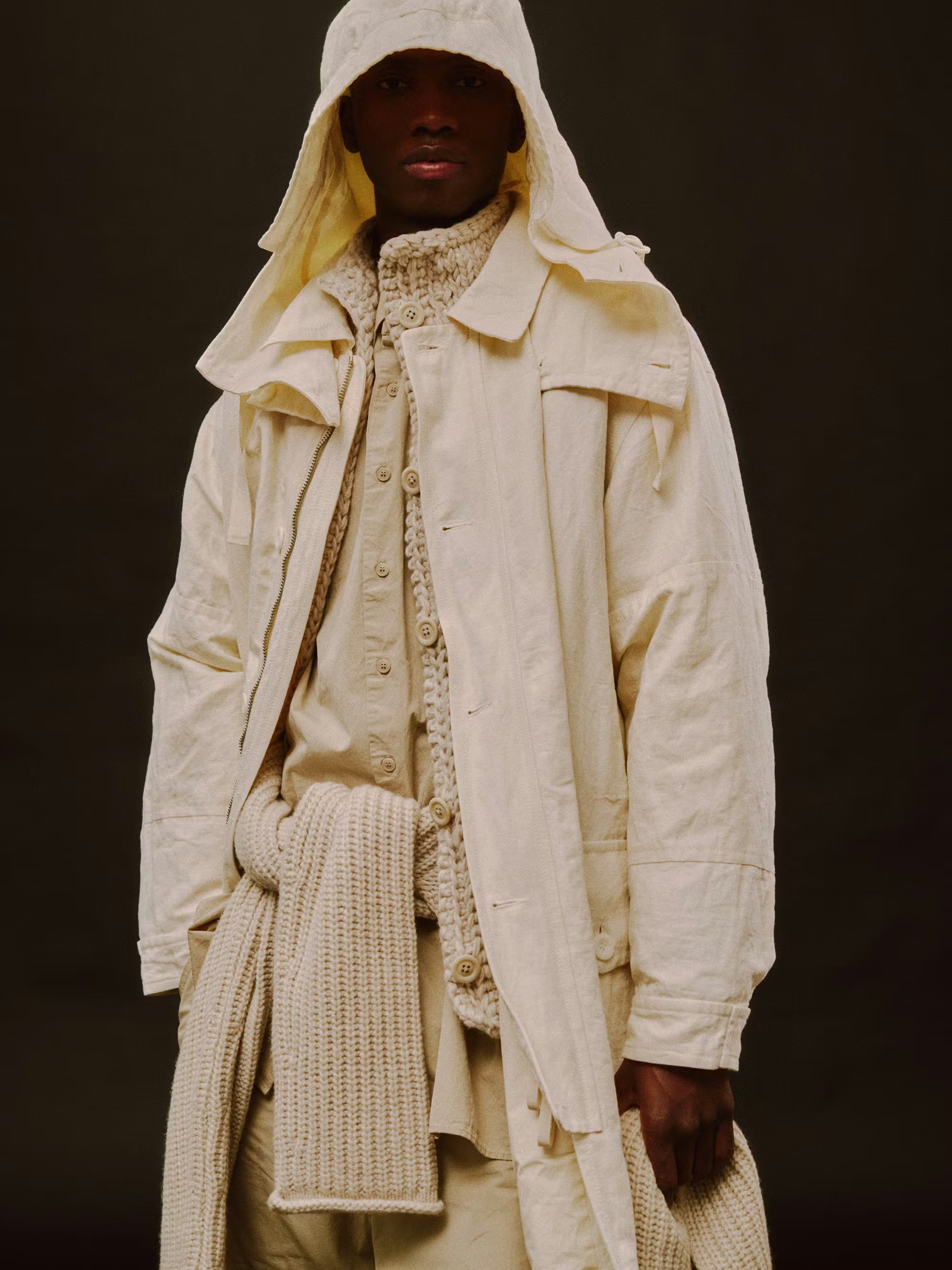
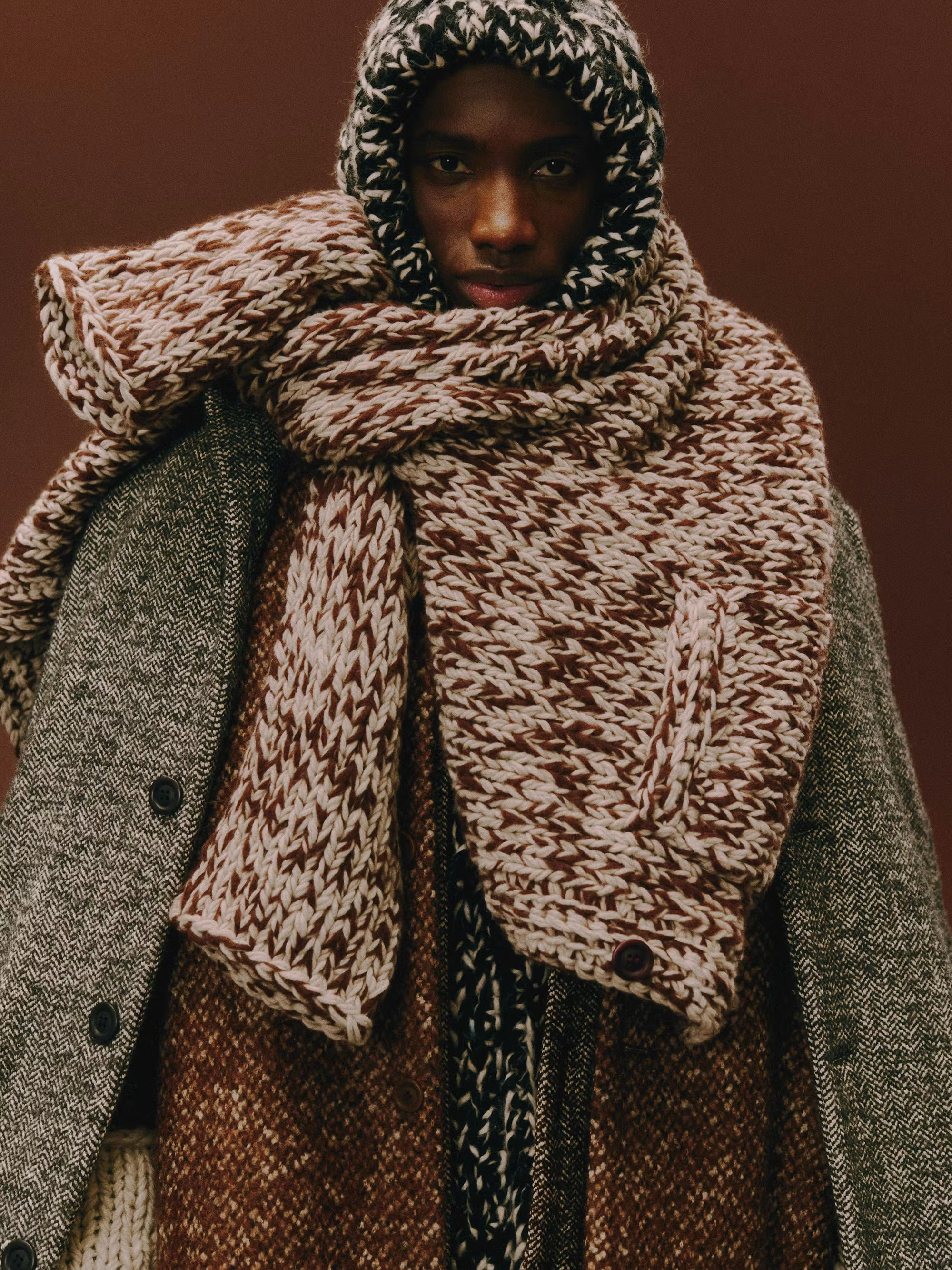
“Basically, I’m missing something in my wardrobe, and I want it.” So said founder Gareth Casey to Luncheon magazine in 2019. It’s still a worthy encapsulation of Casey Casey’s unfussy Frenchness. Clothes that effectively loosen up European workwear are washed, rumpled, and occasionally patched to affect an ease that only gets better with wear. In fact, until recently, Casey Casey clothes were sent to retailers tied up in tight bundles that guaranteed deep wrinkles, emphasizing that these garments are meant to be worn — not ironed.
Ana Garcia / Courtesy of Carter Young
Ana Garcia / Courtesy of Carter Young
Carter Young
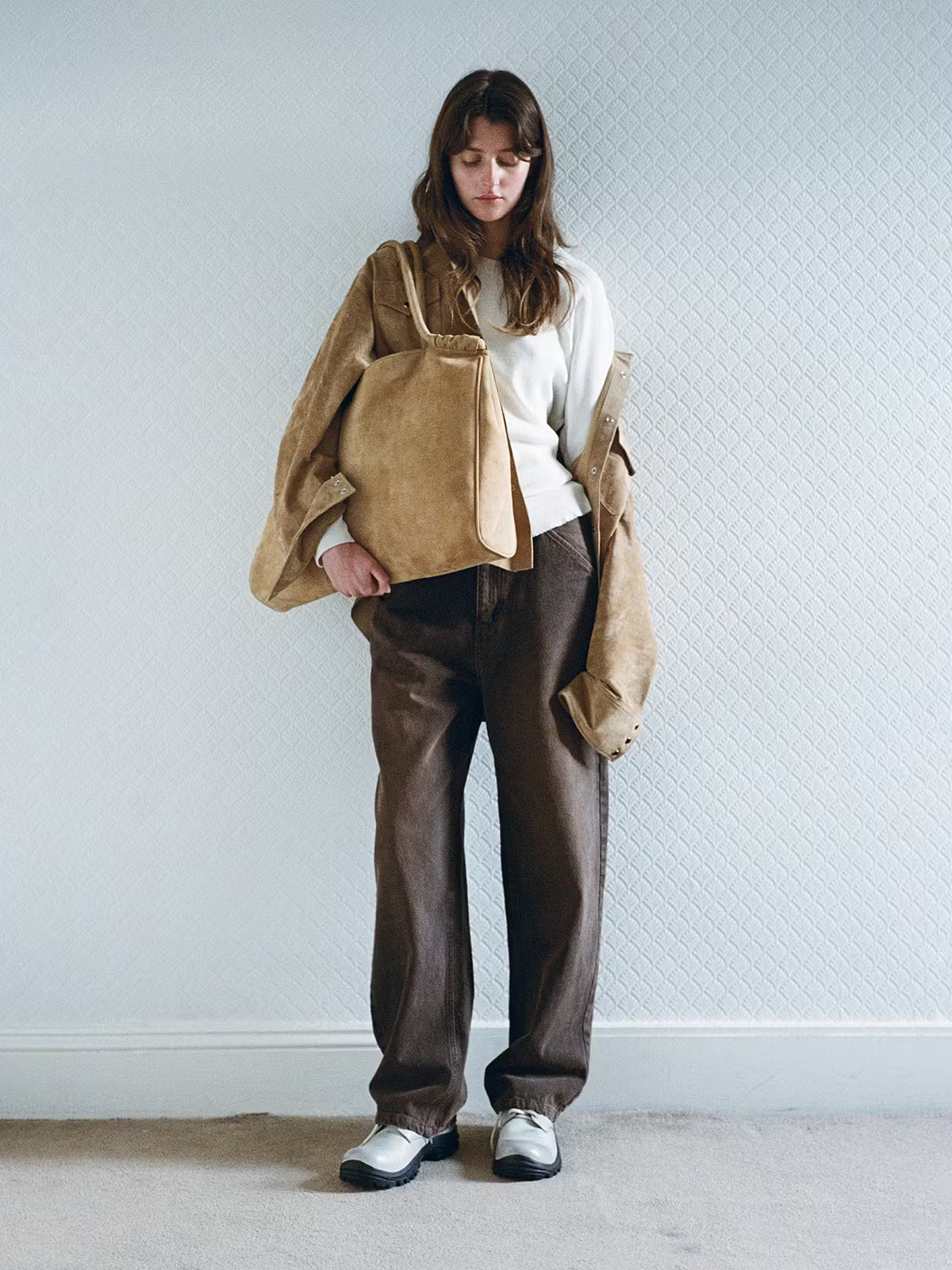
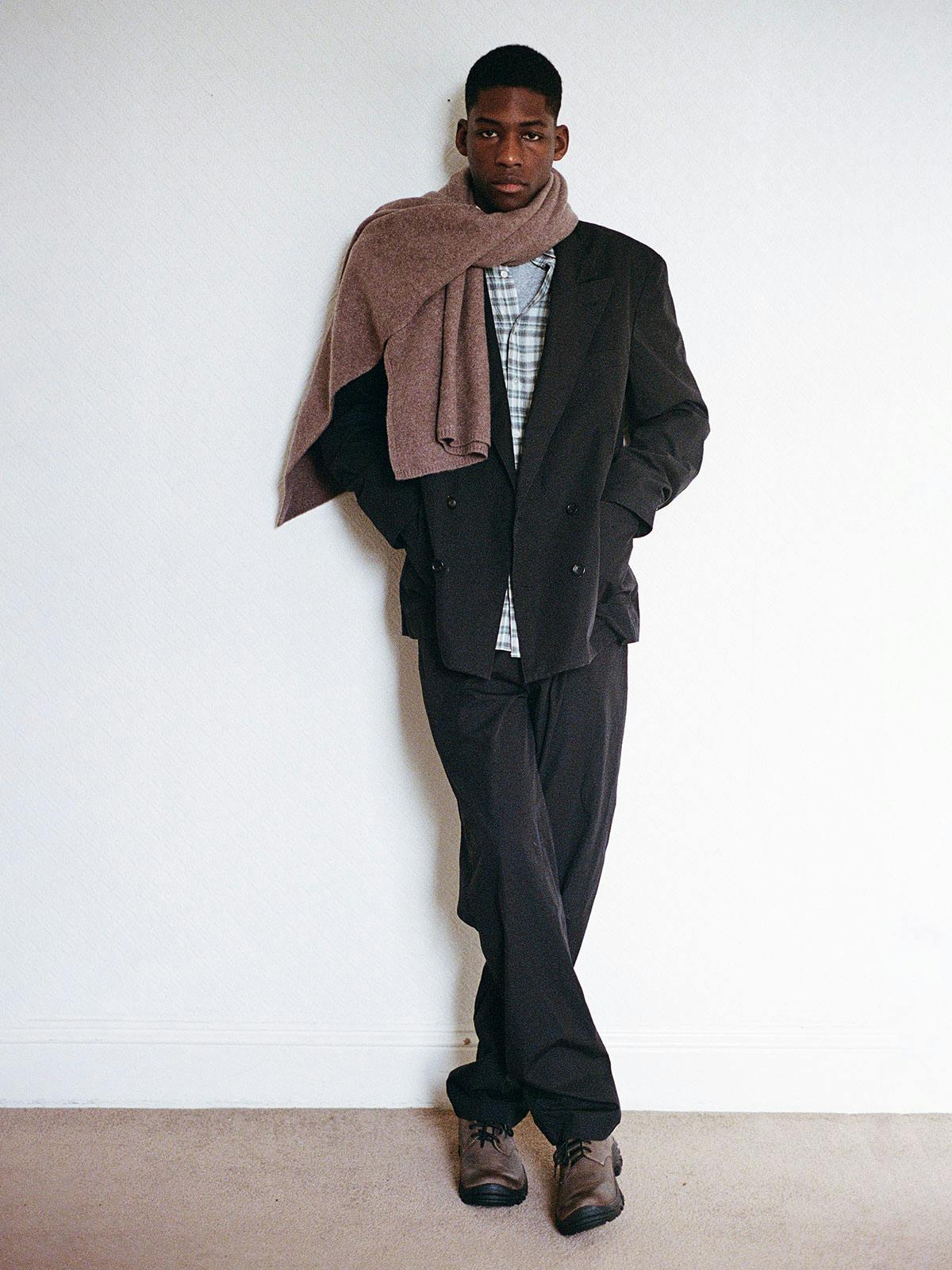
To call Carter Young's clothes timeless is to take away their agency. To call them modern isn’t much better. They instead live in between, like a hand-me-down rediscovered by a grandchild. Founder Carter Altman is not shy of admitting influences from American and European designers, dress codes, and artists; the designer himself cites seasonal inspiration from sources as disparate as William Eggleston and 2000s mallcore. What results is clothing both mature and irreverent. Think biz-cas Western button-ups, new-school washed-out denim truckers, coaches jackets cut from shirting cotton. Every small-batch item is produced ethically, often of deadstock fabrics, and meant to be worn for life. As the Carter Young website elegantly proclaims, “Our pieces are not precious.”
Jason Evans / Courtesy of Cav Empt
Jason Evans / Courtesy of Cav Empt
Cav Empt
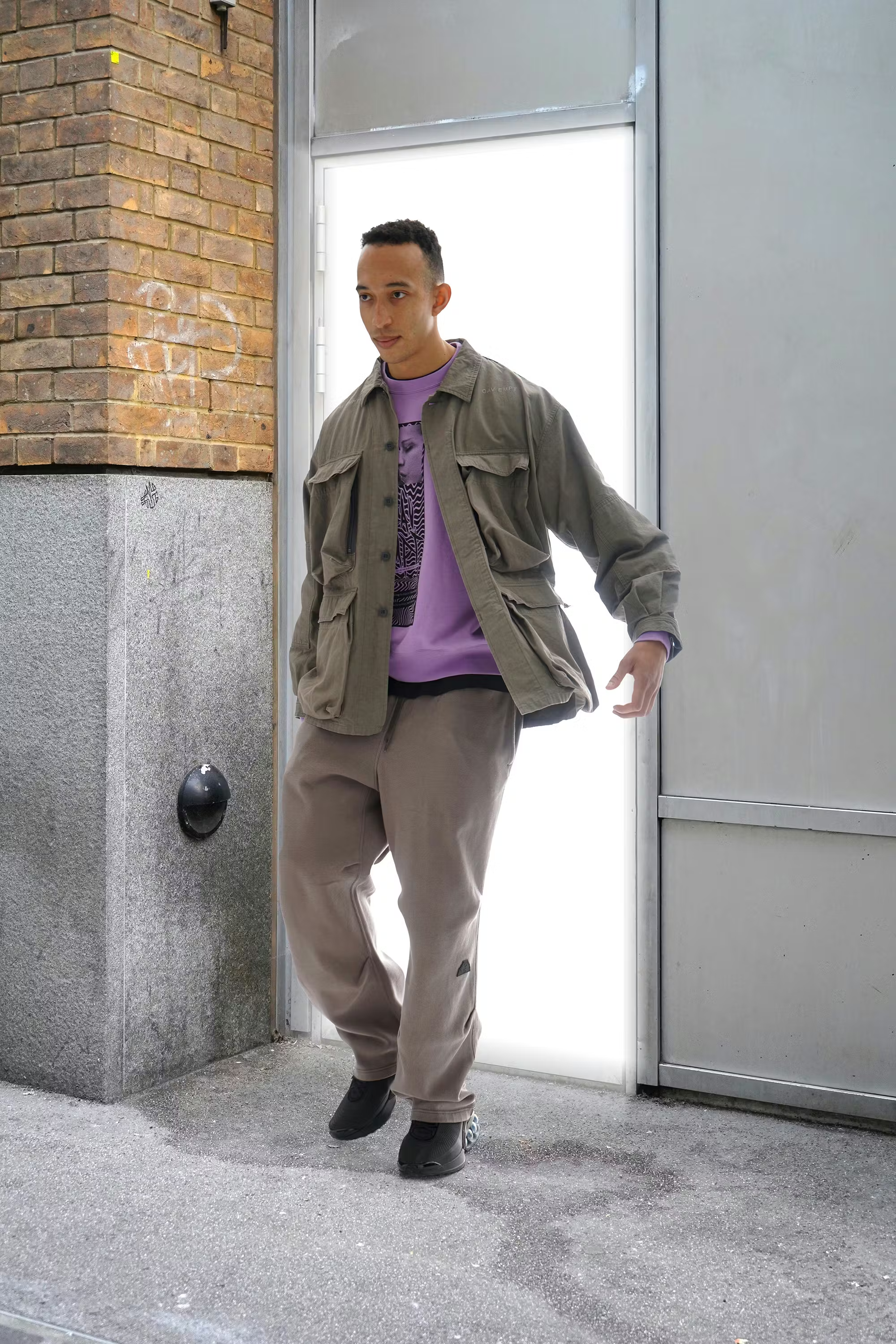
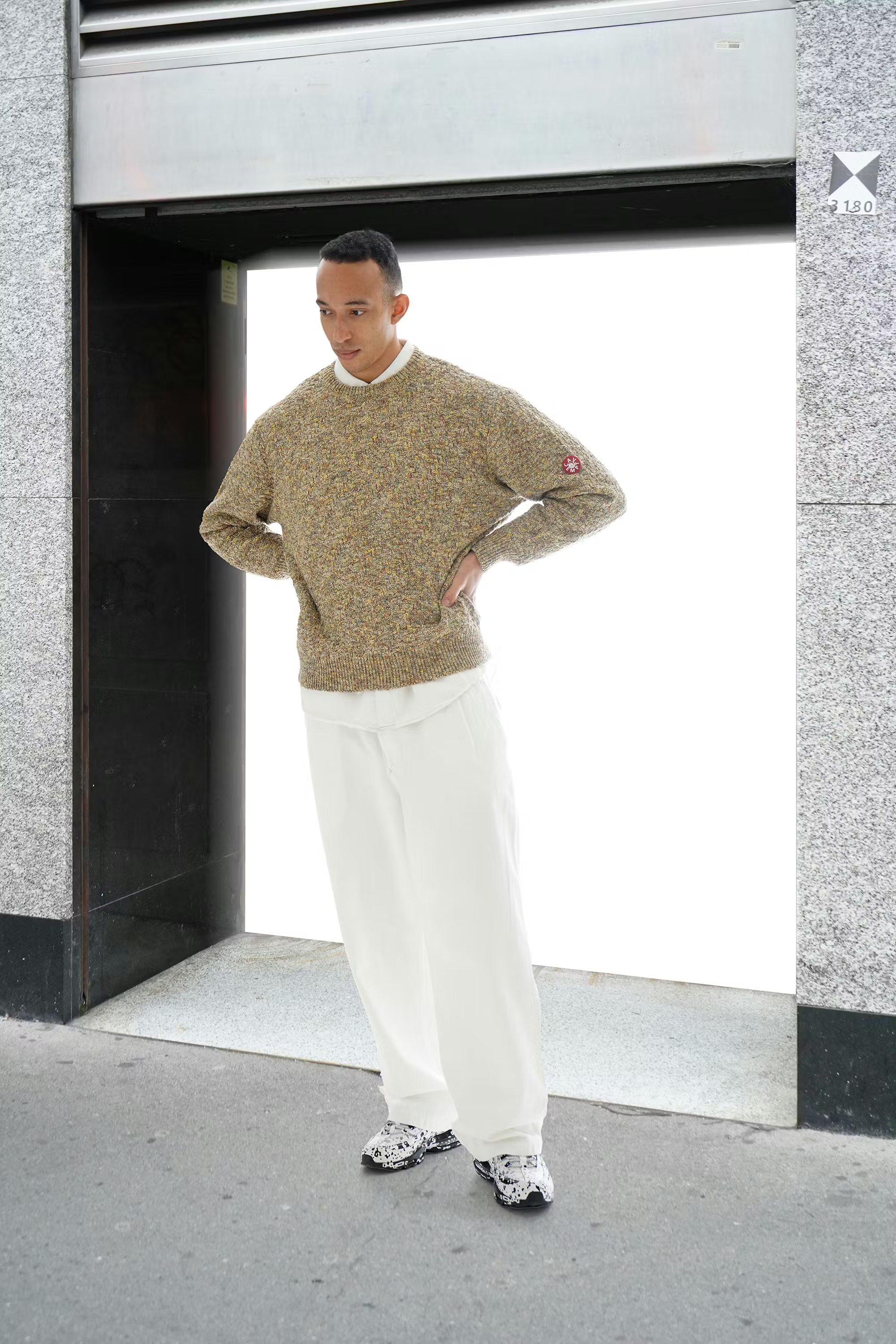
Born of BAPE and Billionaire Boys Club veterans Toby Feltwell and Sk8thing, Cav Empt was destined to be big. For the first half of its life, the brand was a buzzy commodity among the streetwear-minded, who snapped up its hole-ridden Plague hoodie and washed-out sweaters as quickly as they arrived from Japan. But long after the wave of hype crested, Cav Empt has continued to turn out brilliant garments. Its signature remains a gloriously deep-dyed sweater and heavyweight T-shirt, but its classic work jackets and tapered trousers are cool updates to old favorites, softened with special washes and made into statements by Sk8thing’s inimitable graphic design. Far from being pigeonholed as “streetwear,” Cav Empt mastered things like the wide ‘n short shacket and the high-necked driver’s sweater long before they became menswear de rigueur.
Wynston Shannon / Courtesy of Conkers
Wynston Shannon / Courtesy of Conkers
Conkers
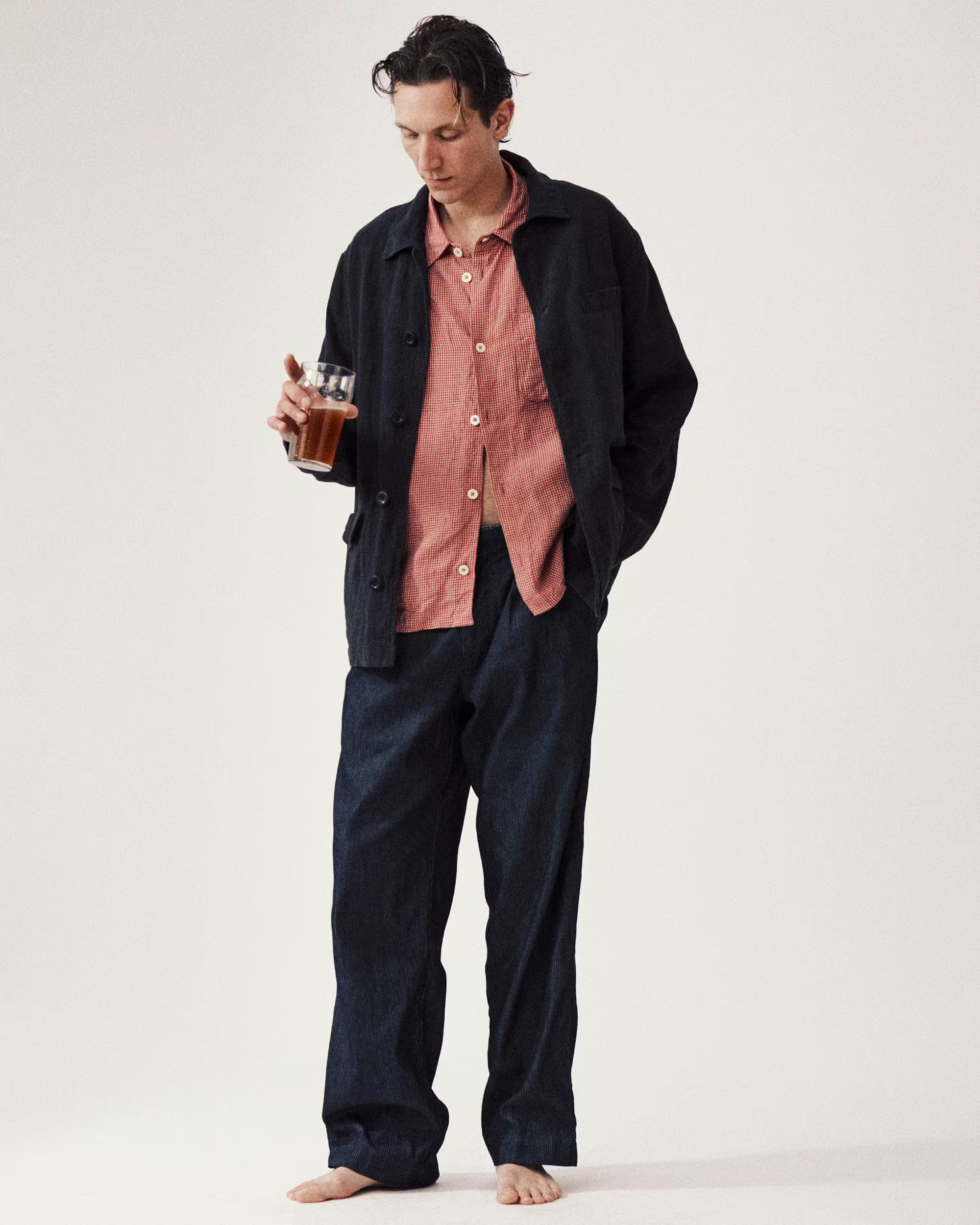
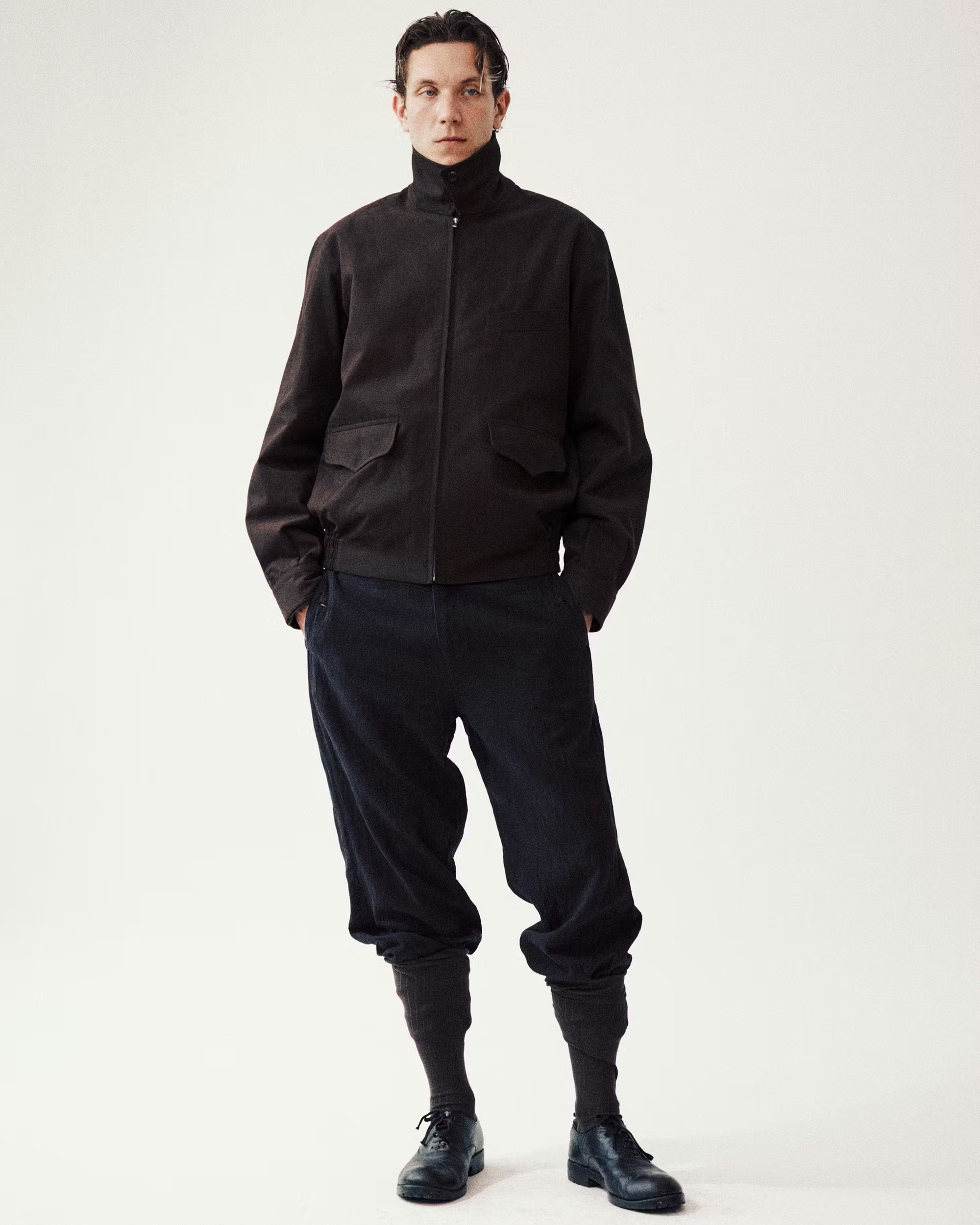
Good clothes are worth the wait. Conkers’ demands the skill of British mills and makers, necessitating small editions to maintain consistent quality (to say nothing of limited supplies of deadstock textiles). Considering the effort, though, Conkers’ hand-numbered clothes are priced to move. And move they do: Once they’re gone, they’re gone, though similar styles are offered each season because Conkers’ goal isn’t exclusivity but a modular wardrobe that supplants seasonality. The shapes, too, are familiar — the British smock, track jackets, henley shirts, gardening trousers — but transformed by textile and treatment. An anorak is made suave by lightweight form and lush leather pull tabs, for instance, and a charcoal-colored, double-zippered sport jacket becomes elegant when shaped from a woven ramie/cotton blend.
2025 Cottle by Toshi
2025 Cottle by Toshi
Cottle
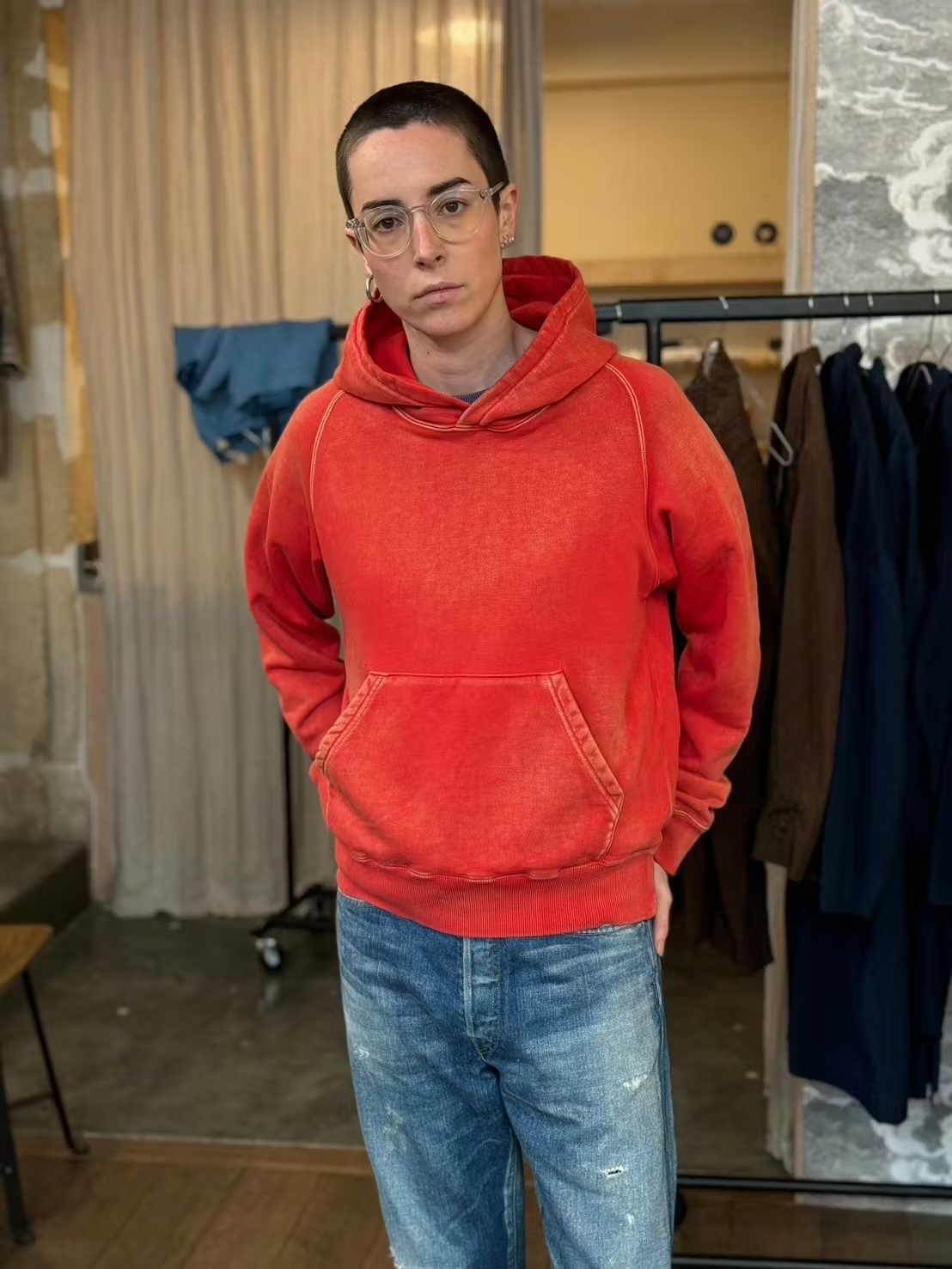
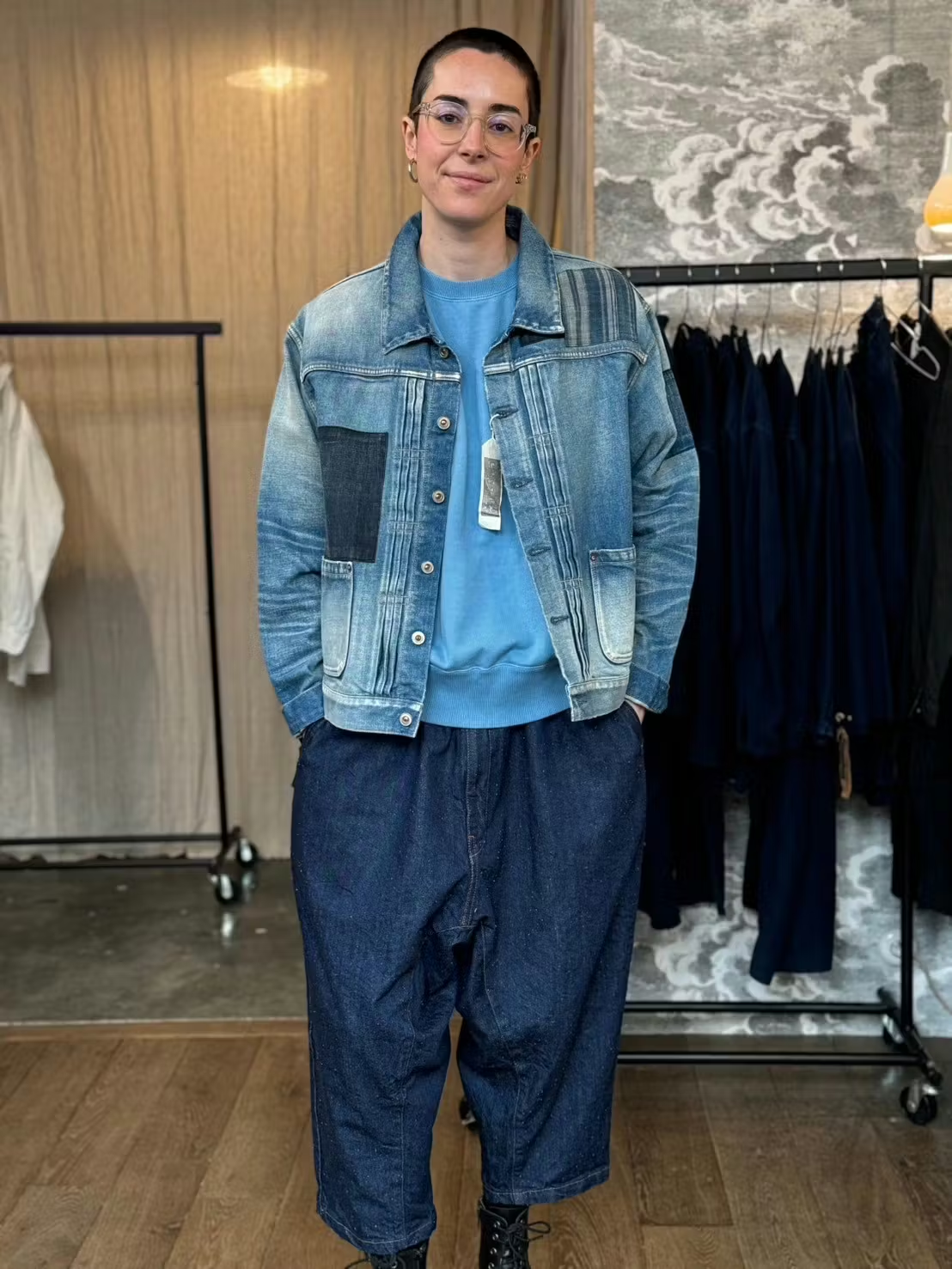
From Kojima District, a neighborhood in Japan’s denim hub of Okayama, Cottle handcrafts clothes too elegant to merely be called “workwear” and too textbook to be caught in some sort of avant abstract. It prefers an approach it calls “Uniform for Living,” a worthy summation of its botanically dyed hoodies, sweaters washed with “authentic indigo” — a treatment of lye and indigo leaves, just like the (very) old days — and organic fleece jackets cut from a yak wool and Supima cotton blend, finished with gold-spliced buffalo horn buttons in a kintsugi style. Cottle values its materials so highly that its web store lists products by their make, which includes textiles such as “Gala Silk Spinning Melody” and the brushed flannel “Sleep Nel Nel.” And, yes, Cottle does denim jeans, too. It’s just that they’re more graceful than any denim jeans you’ve ever seen.
Courtesy of Neighbour
Courtesy of Maidens
Dana Lee Brown
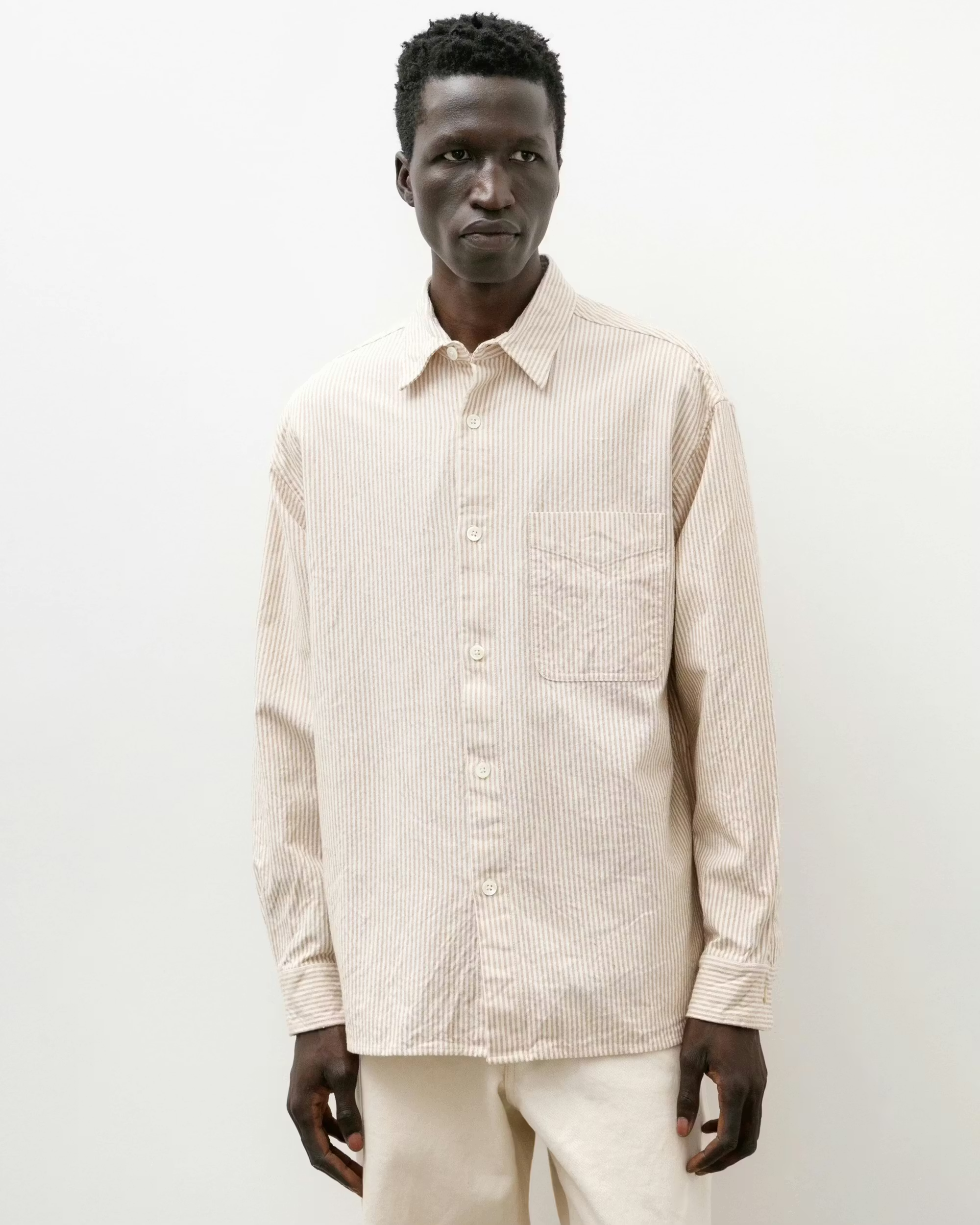
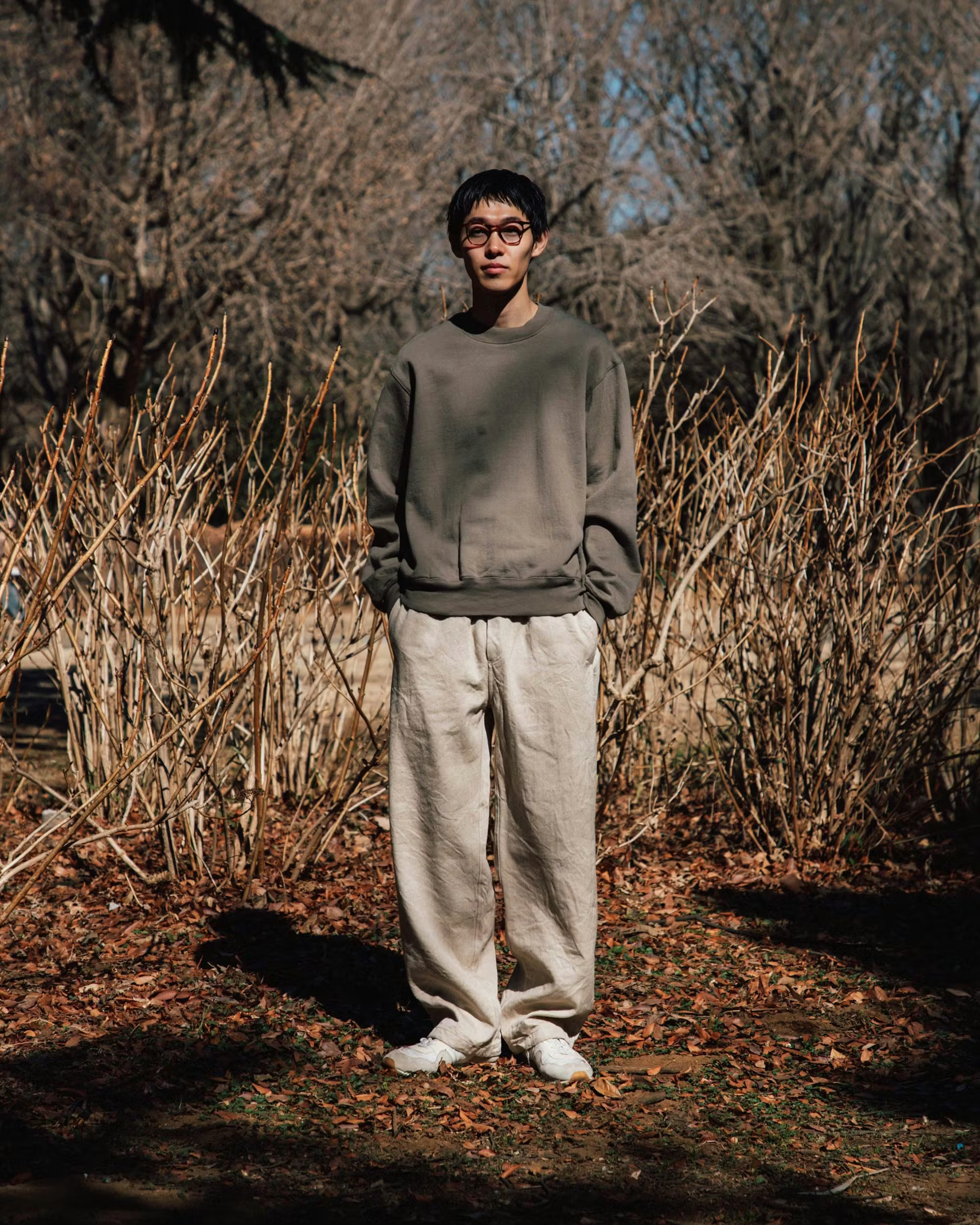
So exhausted by fashion’s endless churn that she retired for a half-decade, Dana Lee Brown’s return to making clothing was less of a splash than a dip of the toe. But that gave way to an all-in capsule of painless separates. Lee Brown’s garments are just as proudly uncomplicated as they were back in the 2010s, but now they’re better. For one, Lee Brown touts a soil-to-loom process that allows complete control and ethicality over her dyed fabrics, which inform garments influenced by the purpose-built clothes of the mid-20th century — shapes that never stopped being timeless. “There are a lot of clothes out there, and finding something that fits exactly the way you want can be really hard,” she told Highsnobiety in 2023. “Staple-driven clothing felt like the right thing to do.”
Rory Van Millingen / Courtesy of District Vision
Rory Van Millingen / Courtesy of District Vision
District Vision
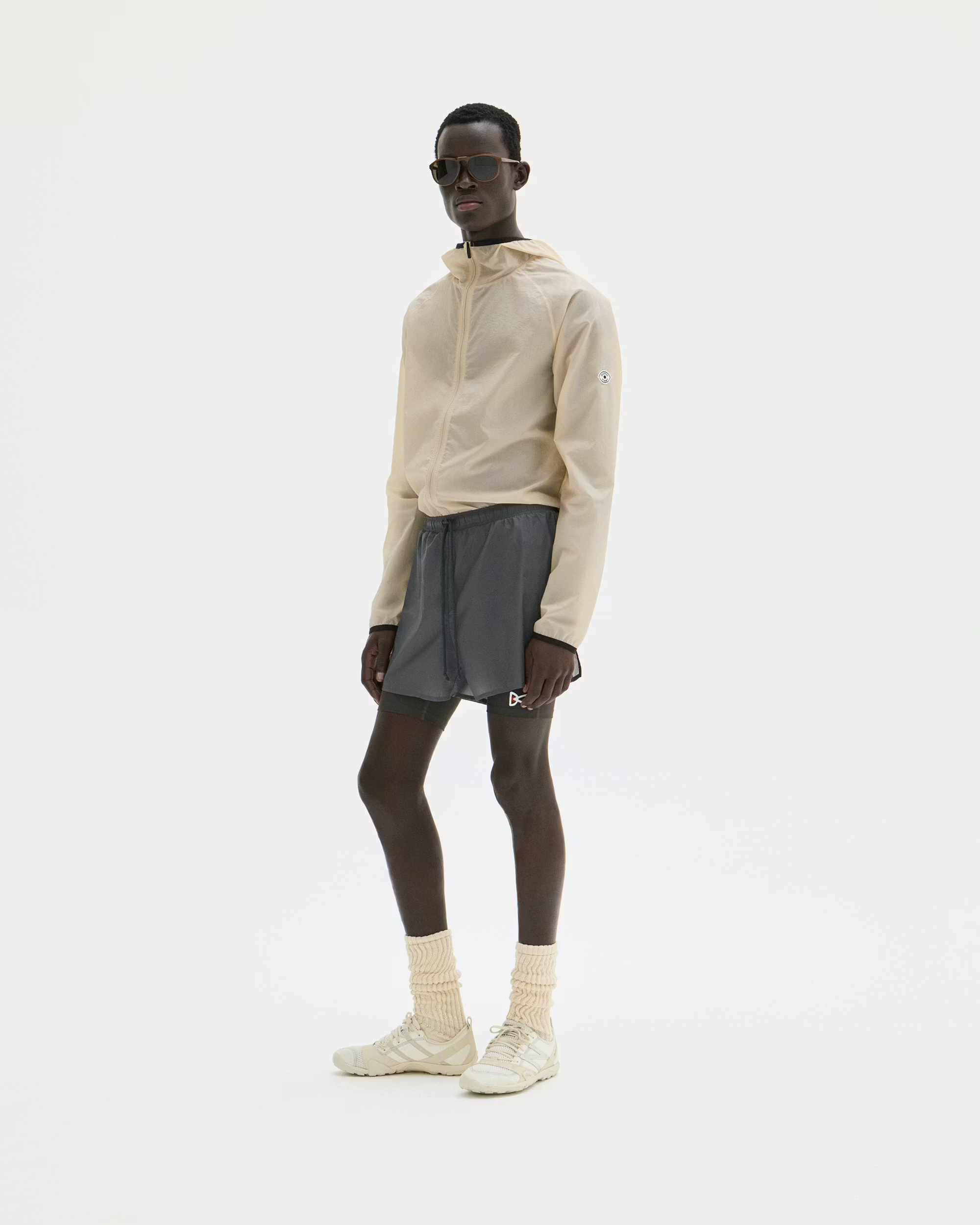
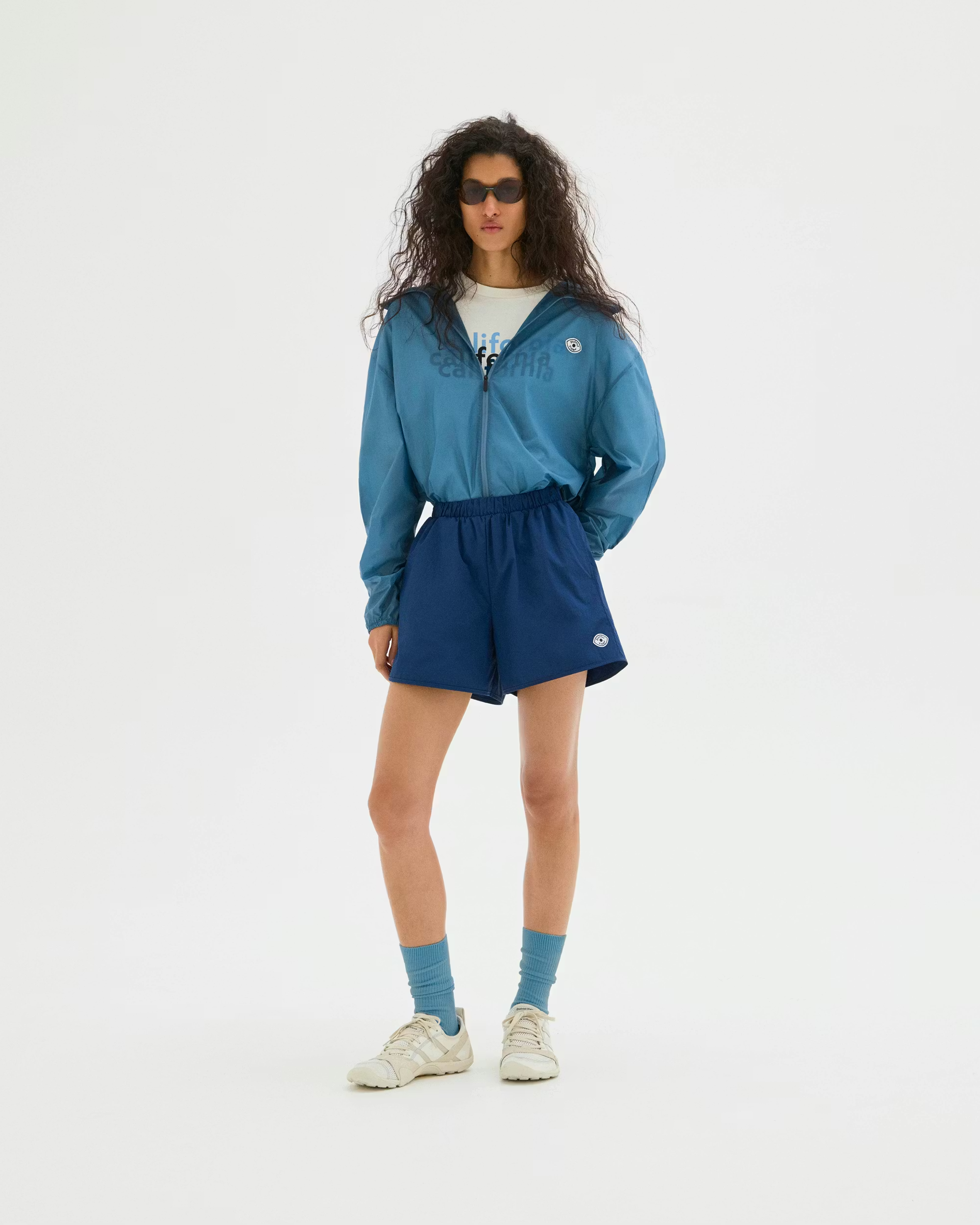
Running as a sport, as a hobby, as an industry, has never been more flooded. District Vision was always most concerned with utility, but the cool came regardless. Its elegant, uncomplicated wares cut to the core of what makes running look good. But the real genius of District Vision is the eyewear that it was quite literally born to create. None of the brand’s handmade-in-Japan sunglasses look quite like anything you’ve ever seen, but they do all look and feel sumptuous, as hardwearing as a Land Rover and twice as sporty.
Willy Vanderperre / Courtesy of Dries Van Noten
Willy Vanderperre / Courtesy of Dries Van Noten
Dries Van Noten
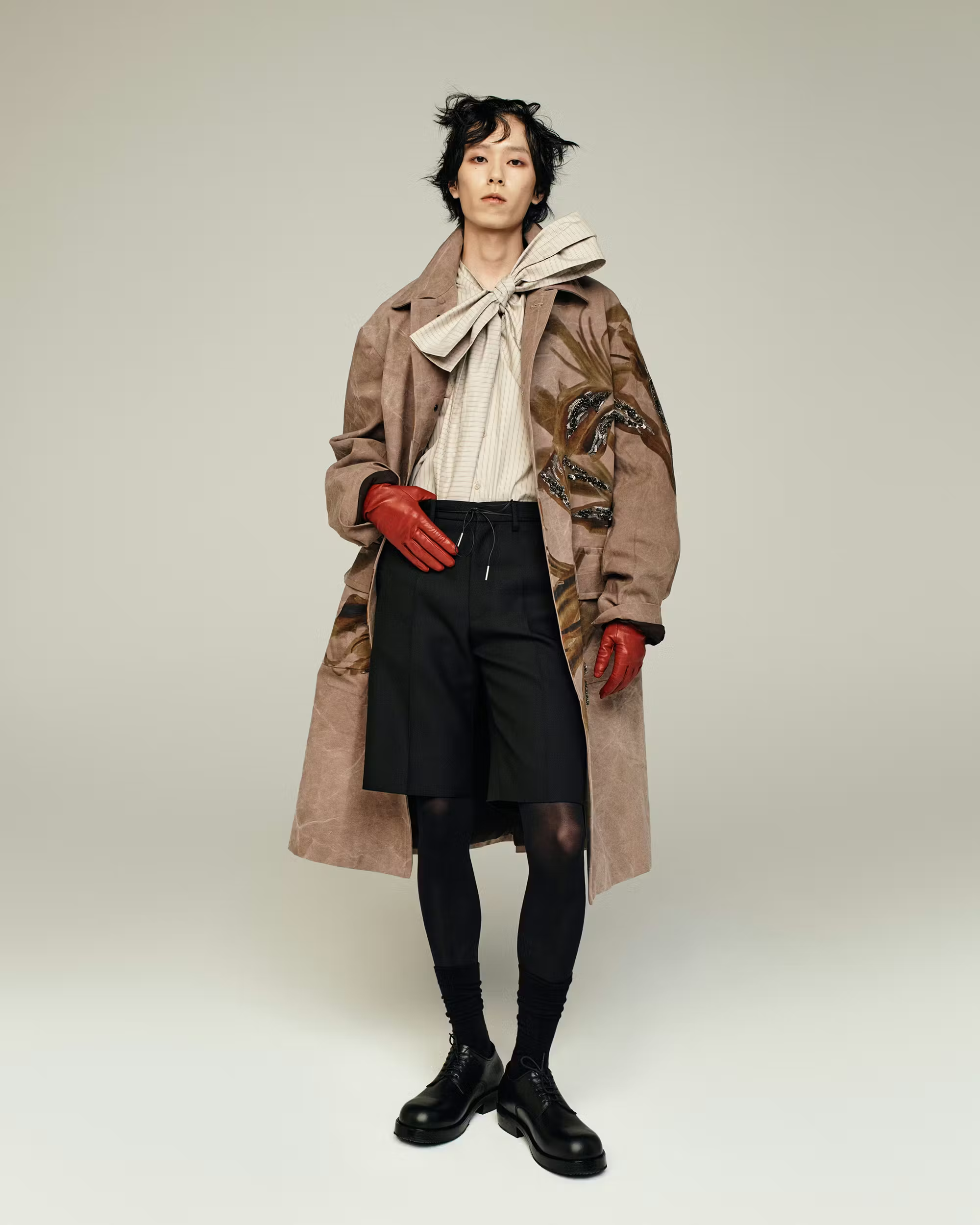
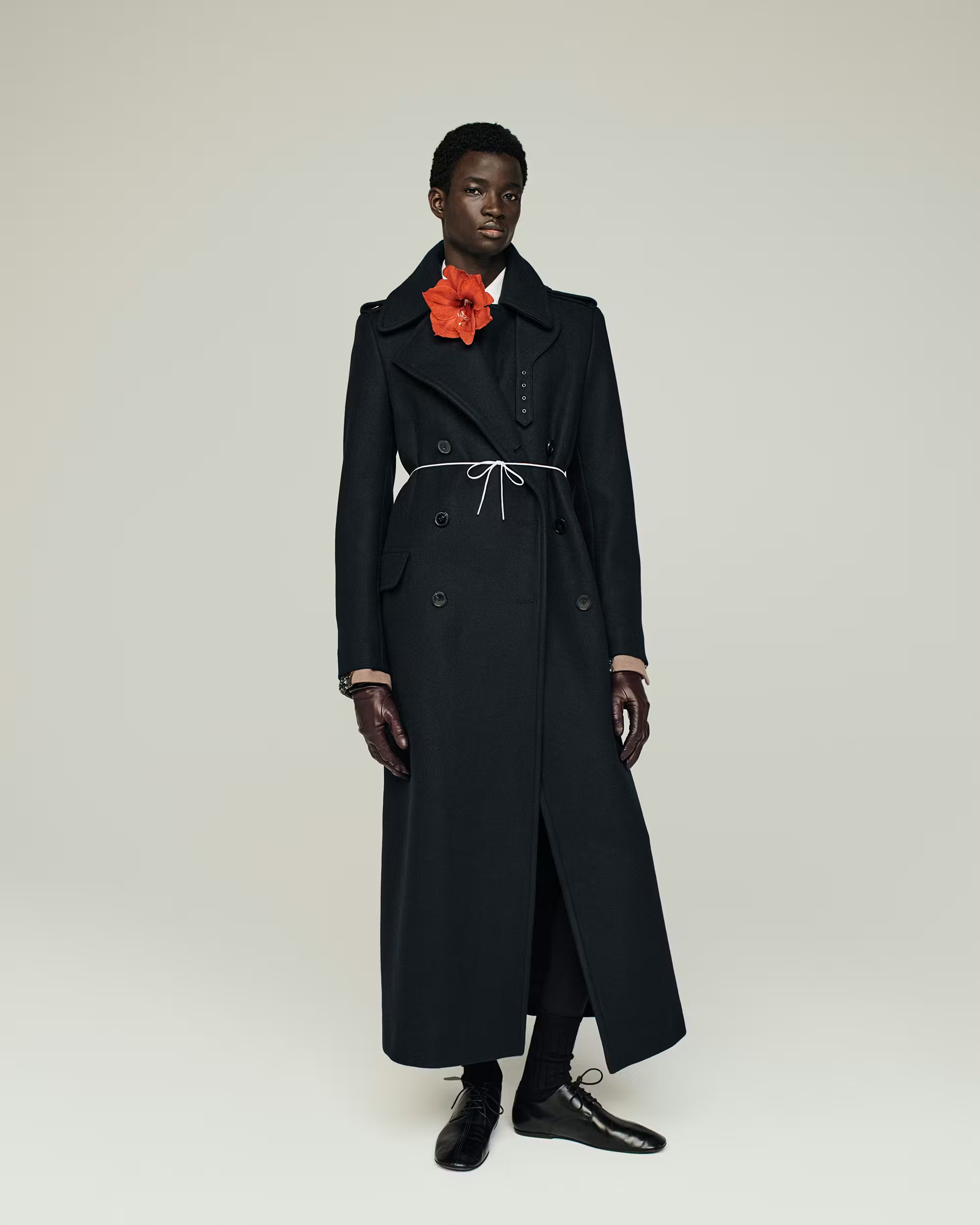
It’s tempting to describe Dries Van Noten’s eponymous line as a “luxury label” because its garments are, indeed, quite luxurious. But that framing takes away from their sincerity. Van Noten’s work is certainly on the higher end of fashion in terms of price and positioning, but it’s also honest. Reference points are often surprisingly youthful — “Fashion has to be created by newness, surprise, beauty,” Van Noten told Highsnobiety in 2024 — though the clothes are never anything but sumptuous. Statement pieces such as hand-printed shirts and hand-embroidered slacks are artful but not mere art pieces: You can, and should, wear Van Noten’s clothes. The surprise virality of Van Noten’s nameless low-top suede sneaker is proof that his well-honed formula, which has worked for more than four decades, remains potent.
Ulysses Ortega / Courtesy of Evan Kinori
Ulysses Ortega / Courtesy of Evan Kinori
Evan Kinori
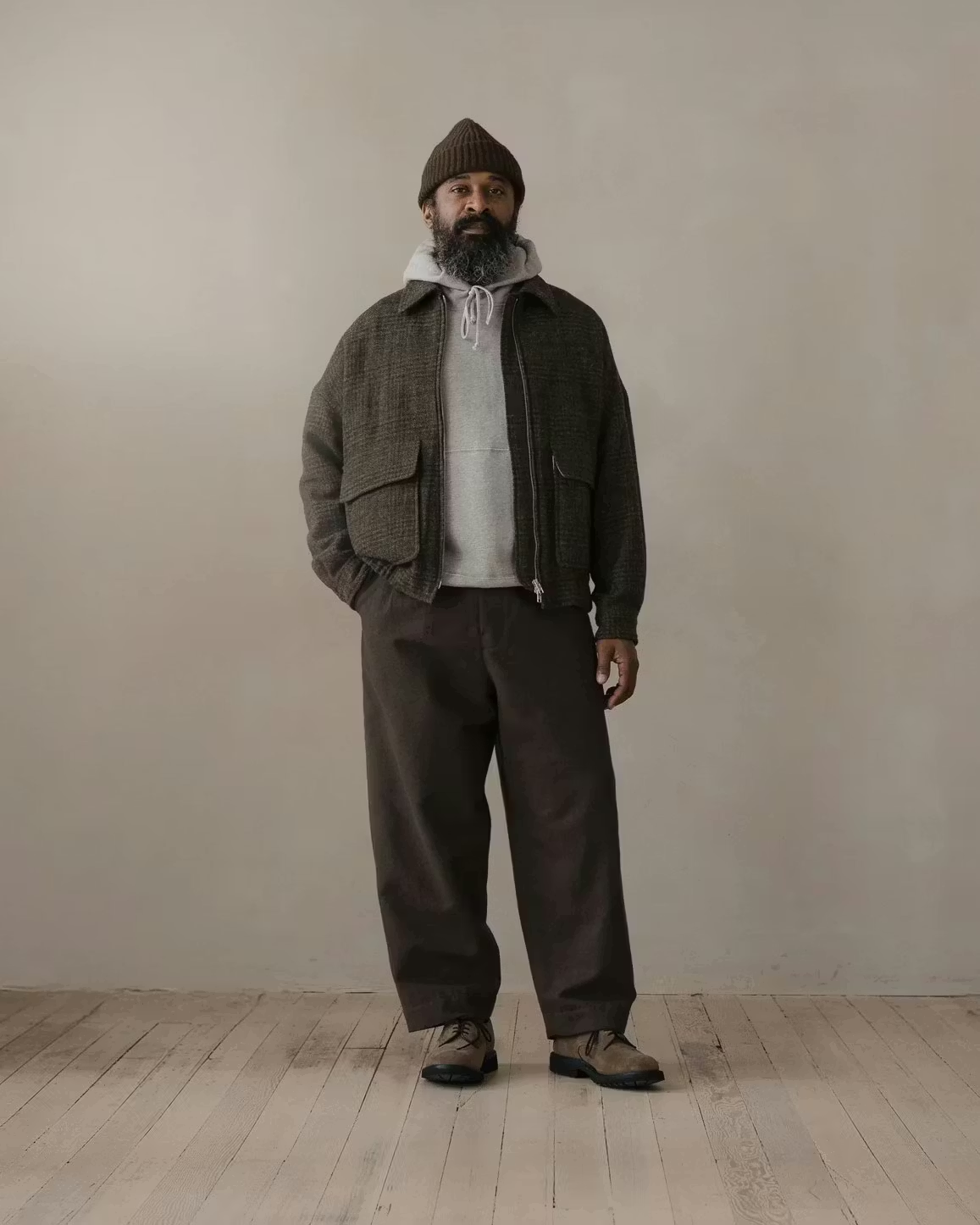
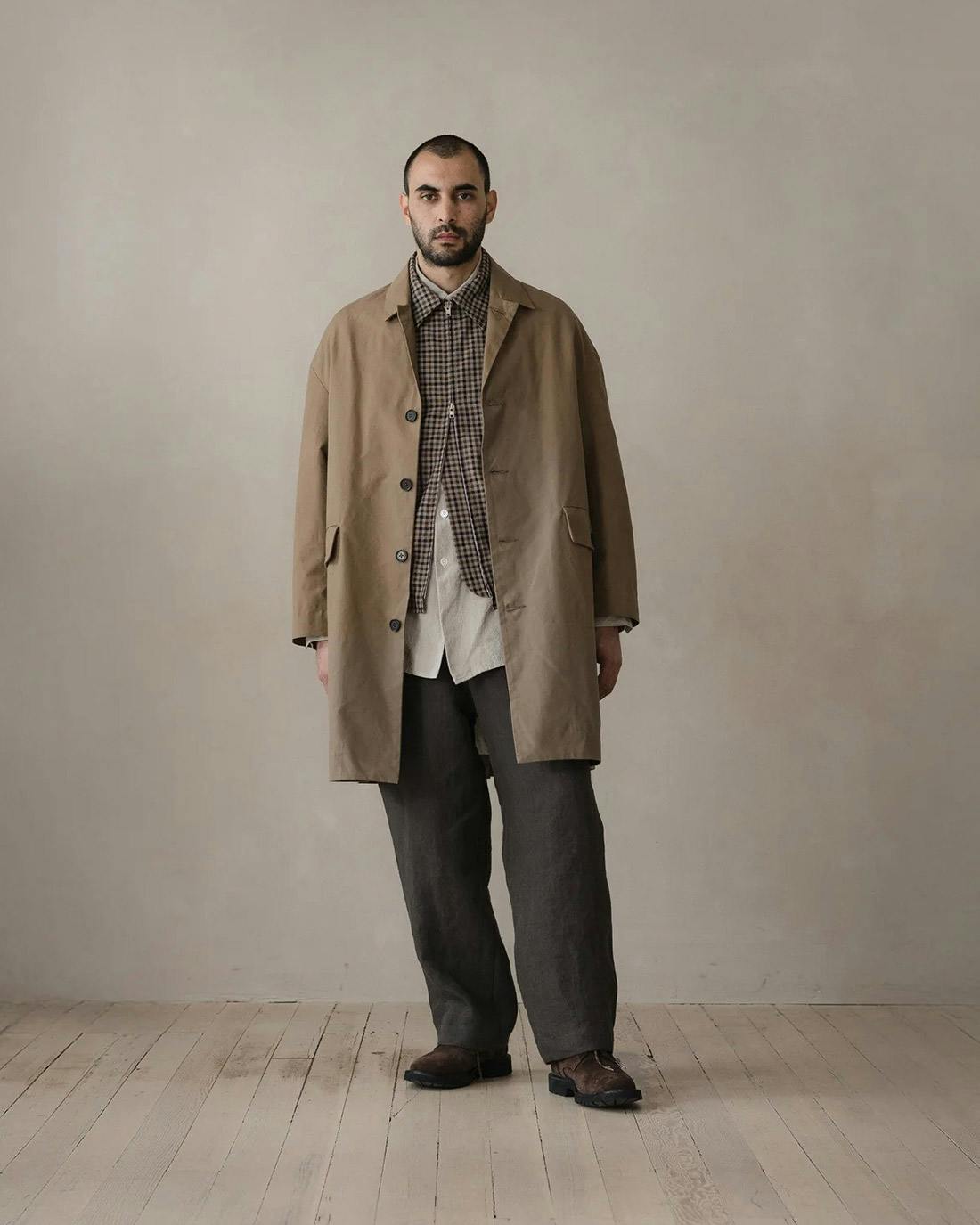
Although it was born at least partially of a straightforward desire to create quality clothes cool enough to skate in, Evan Kinori’s brand matured into an international touchstone of style with a devoted base of die-hards, not least because of Kinori’s sharp eye for storytelling and substance. His all-around artisan clothes are unpretentiously wearable and cleverly cut to blend neatly with their siblings. Their names — the Big Shirt, the Two Pocket Shirt, the Zip Jacket, the Elastic Pant — reflect a uniform consistency, but the leather-backed buttons, French seams, internationally sourced small-batch fabrics, and small editions denoted by hand on each item’s tag reveal an elite level of human craft.
Teddy Iborra / Courtesy of Gabriela Coll
Teddy Iborra / Courtesy of Gabriela Coll
Gabriela Coll
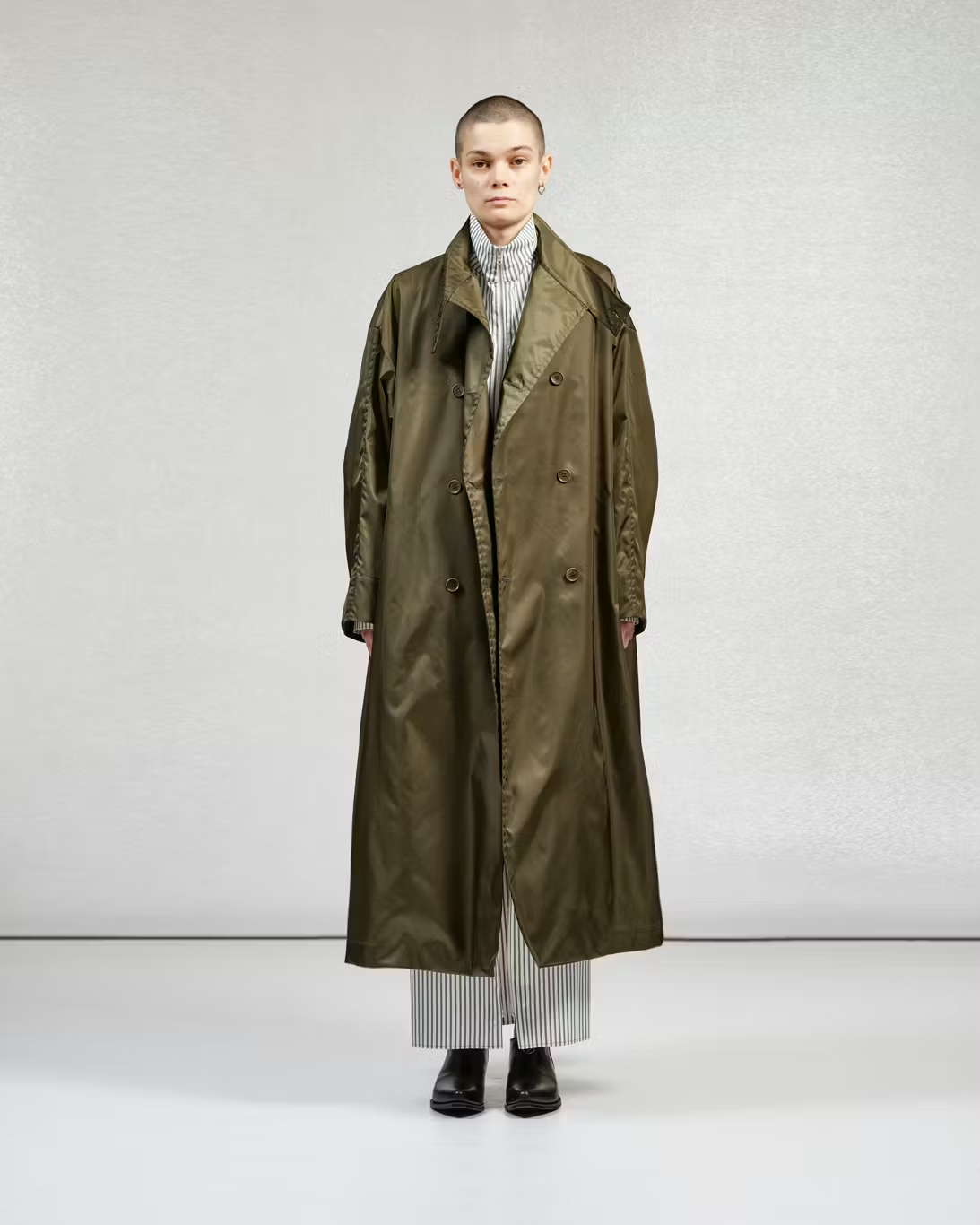
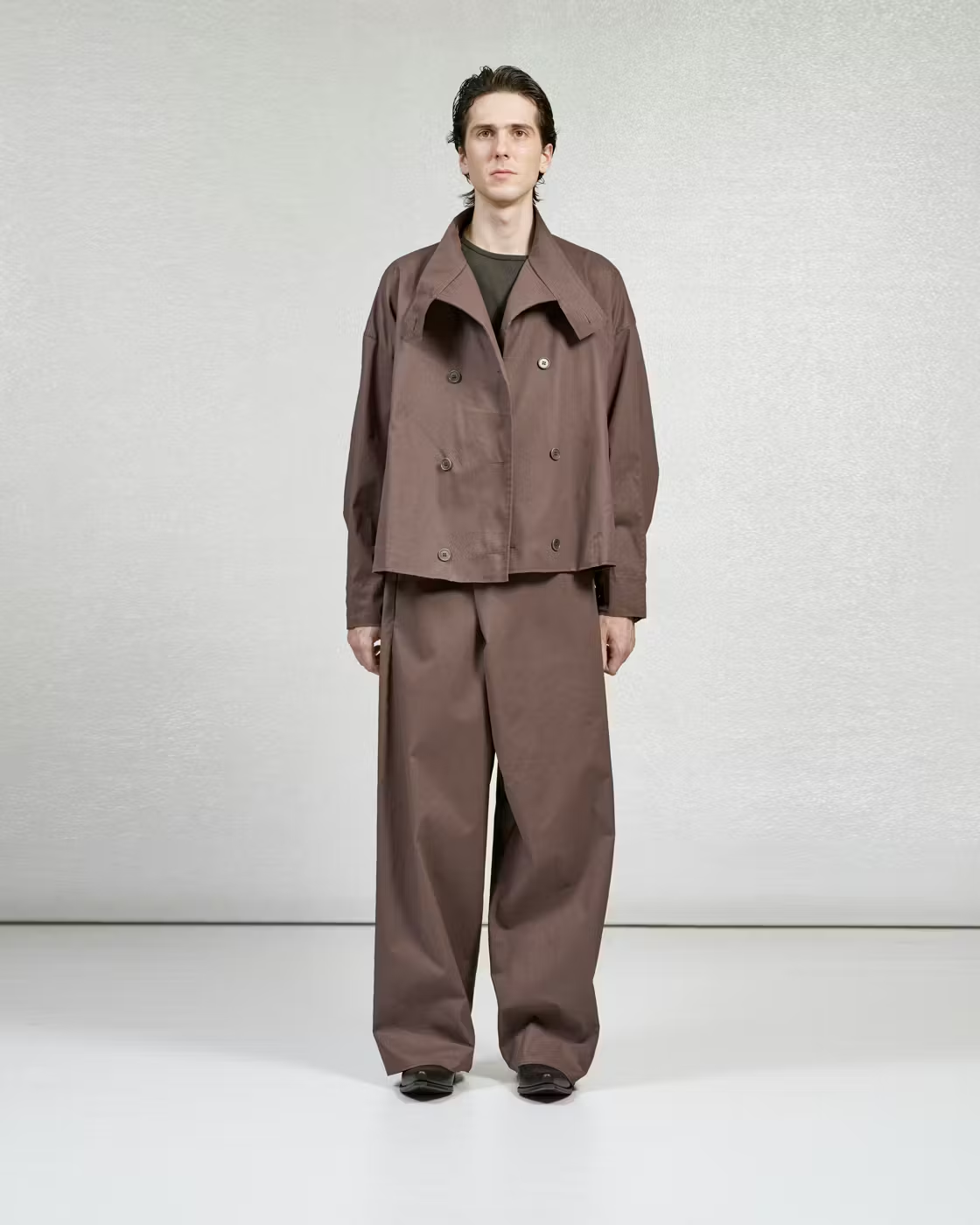
Gabriela Coll’s clothes appear at first to be as simple as their names. Each piece’s title relays its shape, material, and a number reflective of its place in the product catalog. Coll’s company is simply called Gabriela Coll Garments. But her work is too kinetic to be mere clothes. With the rigor of Donald Judd paring furniture to its barest shapes, Coll uses only as much of her world-class textiles — including Loro Piana wool and Solbiati linen — as needed to create louche silhouettes that don’t sit so much as slouch. Raw-hemmed shirts are so stripped down that they’re sometimes left sleeveless to create vests; lapels are left off of sleek blazers; the toes of handmade leather clogs are snipped off to create sandals; and the track jacket is made transcendent with just enough exquisite material and the world’s finest hardware.
Alec Marchant / Courtesy of gnuhr
Alec Marchant / Courtesy of gnuhr
gnuhr
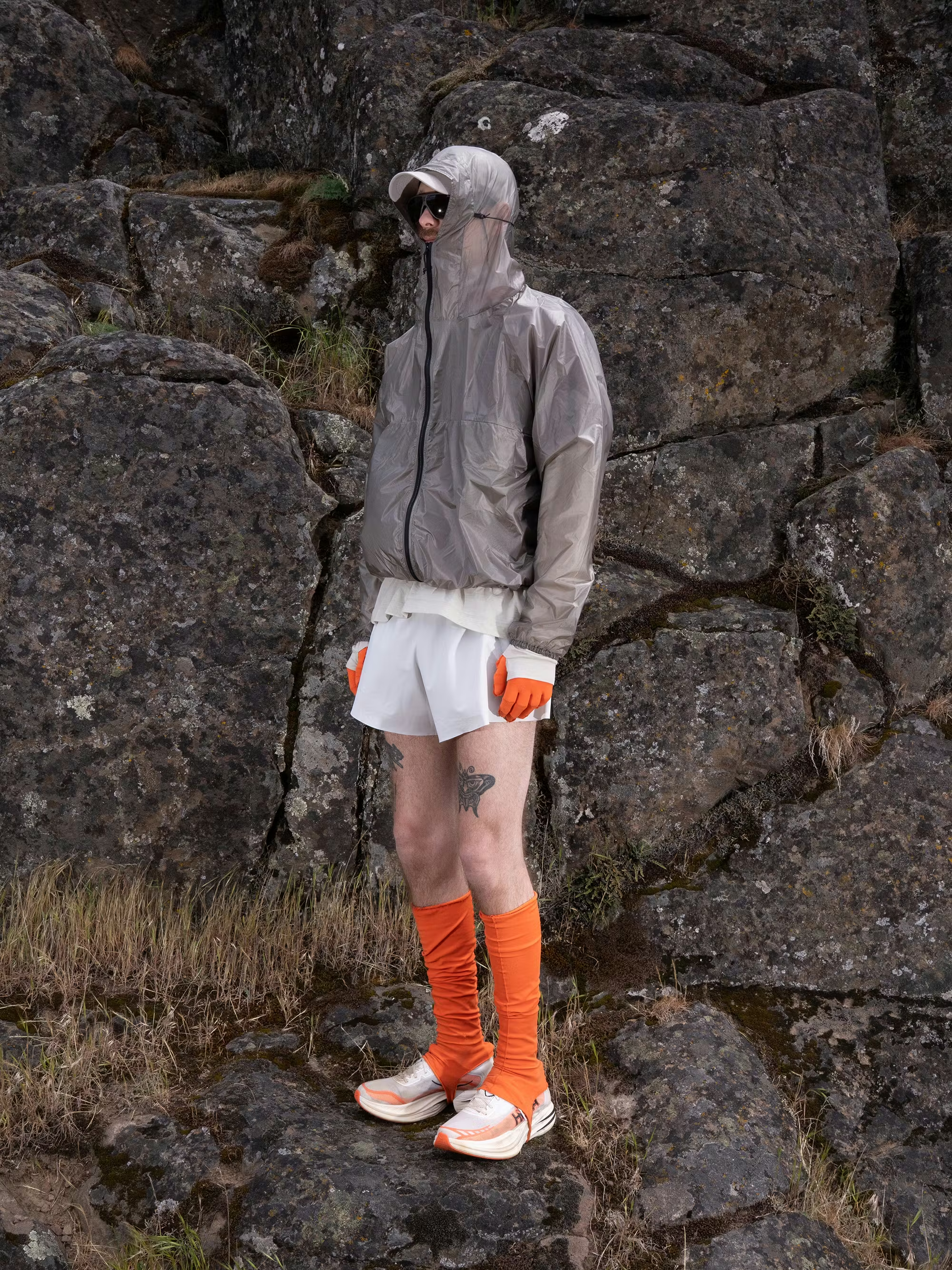
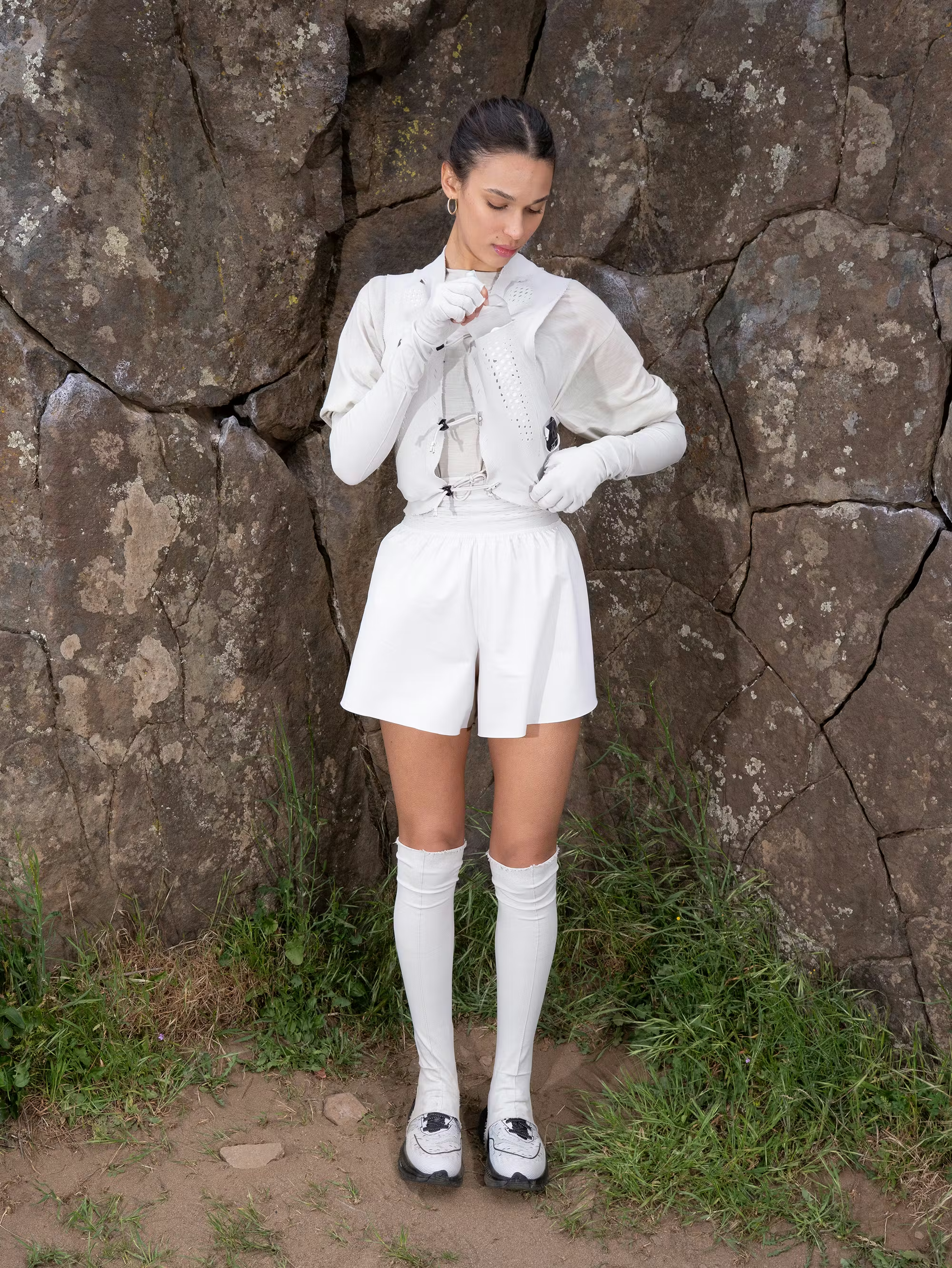
Scrolling gnuhr’s website feels a little like looking through Craigslist for car parts, if said car parts were fastidiously functional garments and accessories. But this is part of the anti-snobbery of gnuhr, where clothes are so refined that product photos are accompanied by the Pantone swatches for each item’s hue. Don’t mistake this directness for a lack of detail, though. gnuhr shapes unsexy technical material such as Polartec and Econyl into packable layering pieces fitted with thoughtful pull-tab closures, ergonomic fits, and single-stitch finishing so specific that founder Nur Abbas is in the process of patenting the technique.
Courtesy of Keith Henry
Courtesy of Keith Henry
Henry's
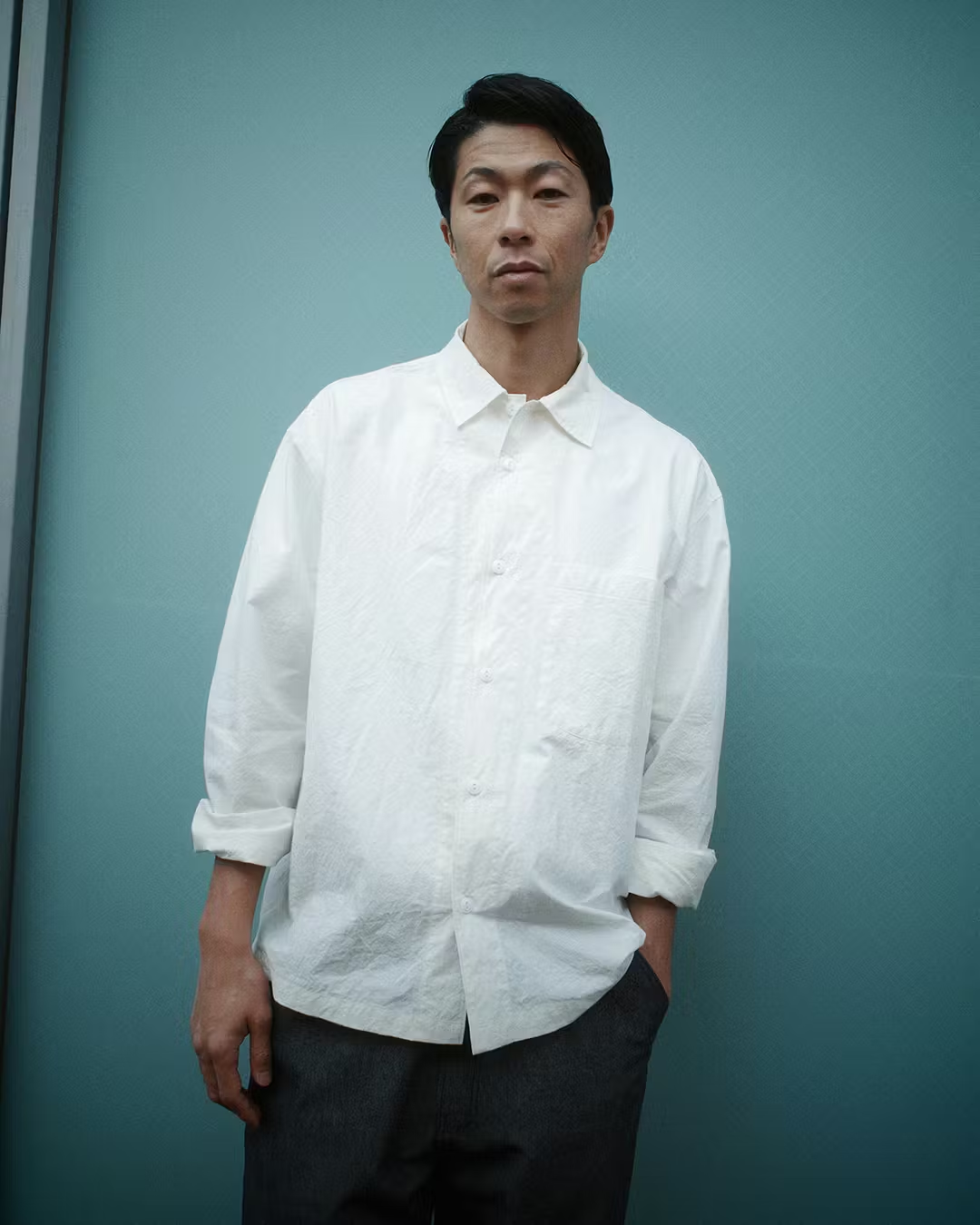
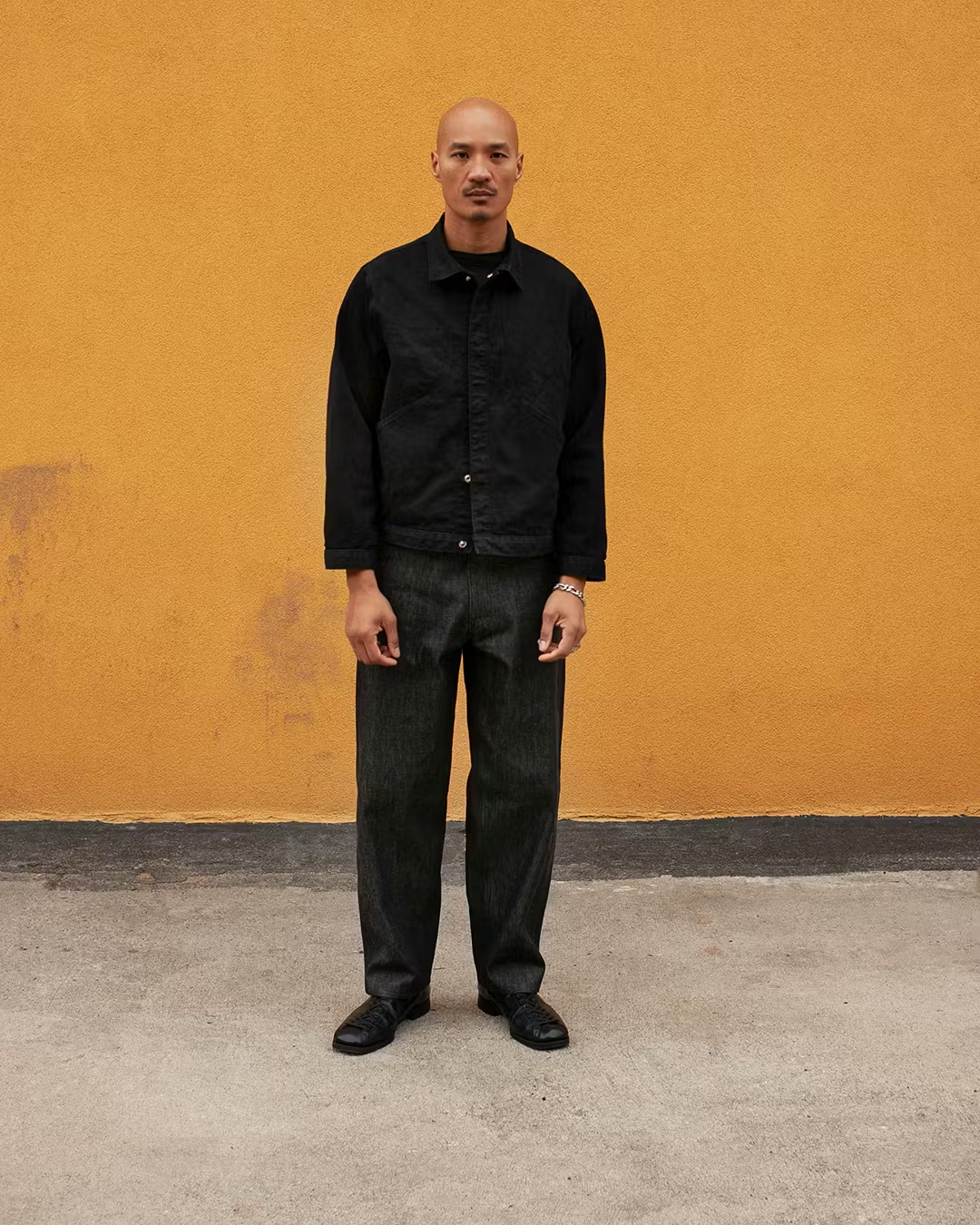
Keith Henry’s brand is named quite directly, but his product is anything but. Born of archetypal workwear — the trucker jacket, the five-pocket jean — and assembled by Henry himself, their forms are retooled to create future classics. Fans are made collectors by dint of how few clothes Henry’s can logistically produce, impatiently awaiting the seasonaless drops to see how the Swoop Jacket — a deep-pocketed, yokeless work jacket — or the loosely tapered Curved Jeans have evolved. “Evolved” is the keyword because Henry’s builds on its past work, creating a design language all its own.
Pietro Celestina / Courtesy of Jan-Jan Van Essche
Pietro Celestina / Courtesy of Jan-Jan Van Essche
Jan-Jan Van Essche
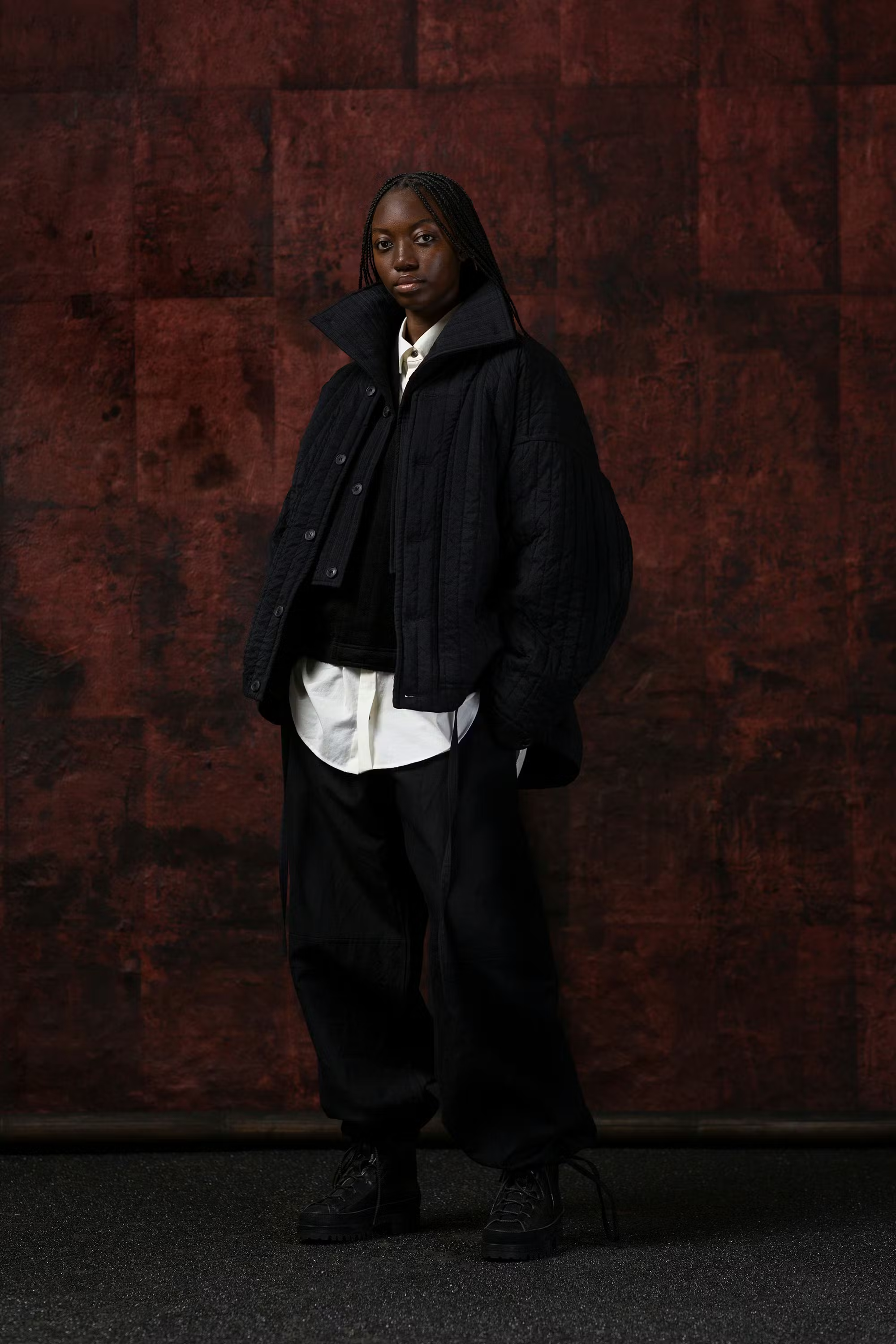
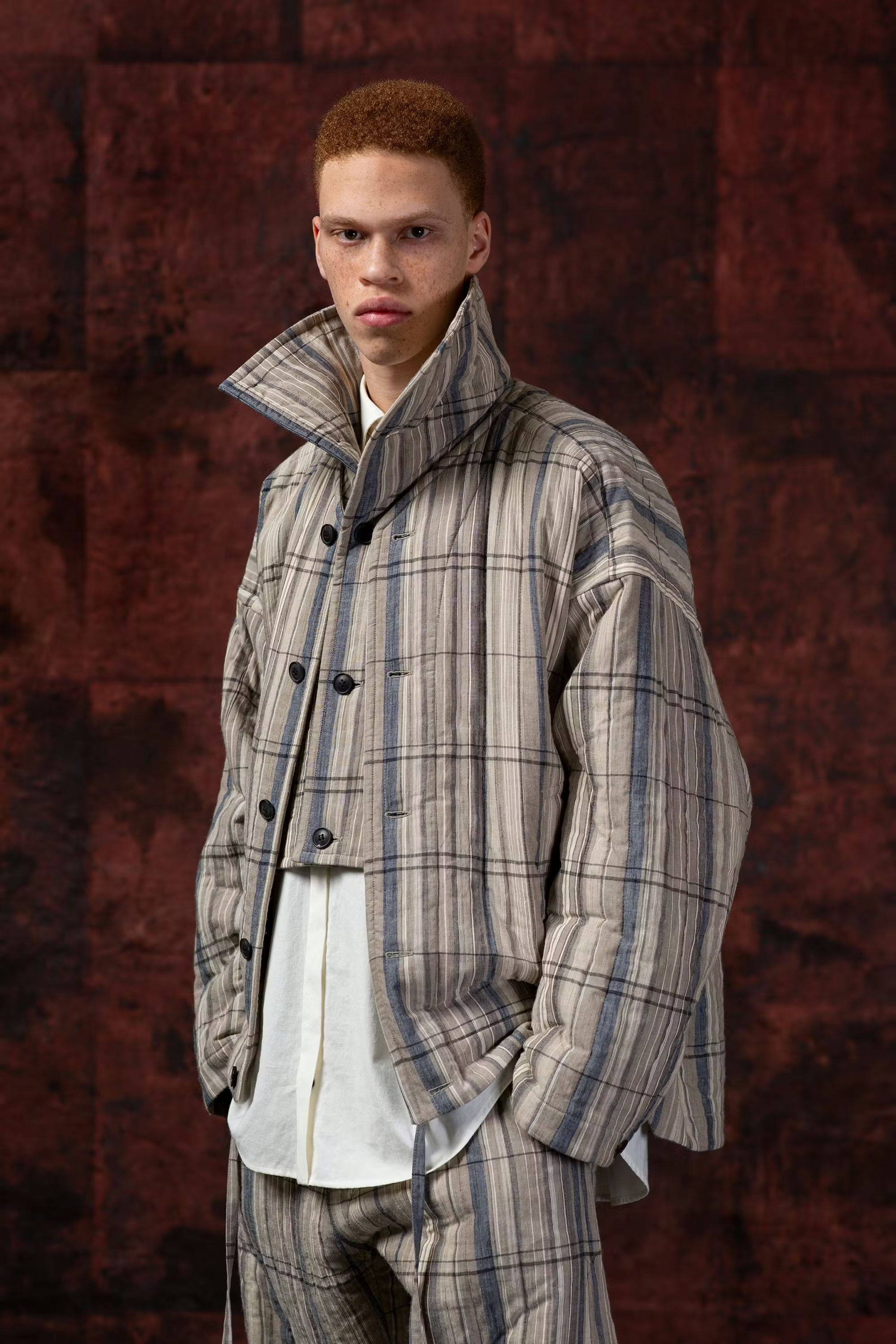
No one has ever made clothes quite like Jan-Jan Van Essche. And that includes Van Essche, who starts each collection from scratch, rarely reusing his garment patterns. Instead, Van Essche maintains stylistic touchstones that range from American workwear to Ethiopian dress, with the resulting designs — nearly all of which are made in Belgium — wholly his own. Seams, yokes, and hemlines all drift to unexpected points on the human form if they exist at all, creating full, soft silhouettes. Cut from handwoven cotton or hemp, Van Essche’s clothes are as grounded as the utilitarian garments that inspired them.
Carlos Jaramillo / Courtesy of Lady White Co.
Carlos Jaramillo / Courtesy of Lady White Co.
Lady White Co.
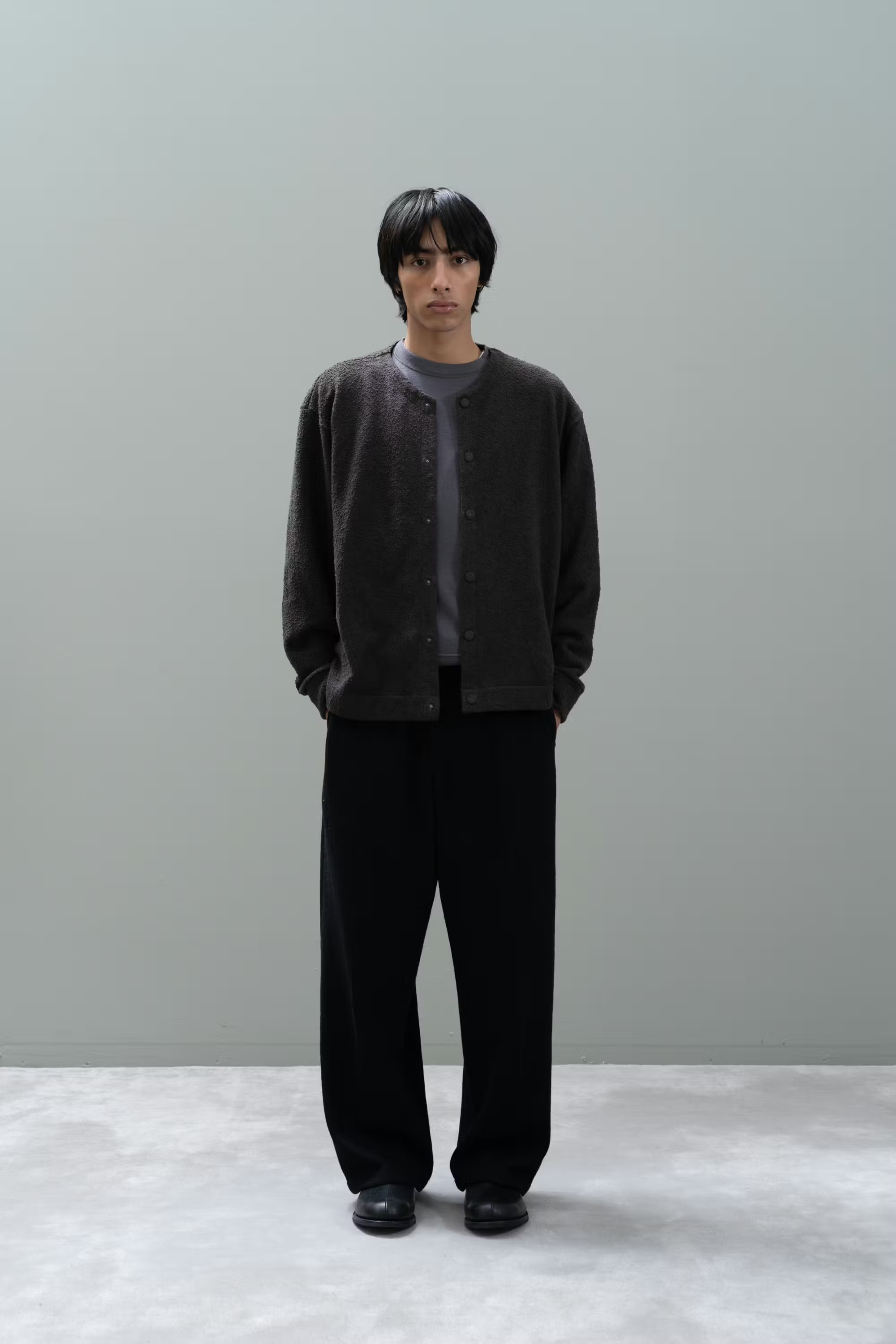
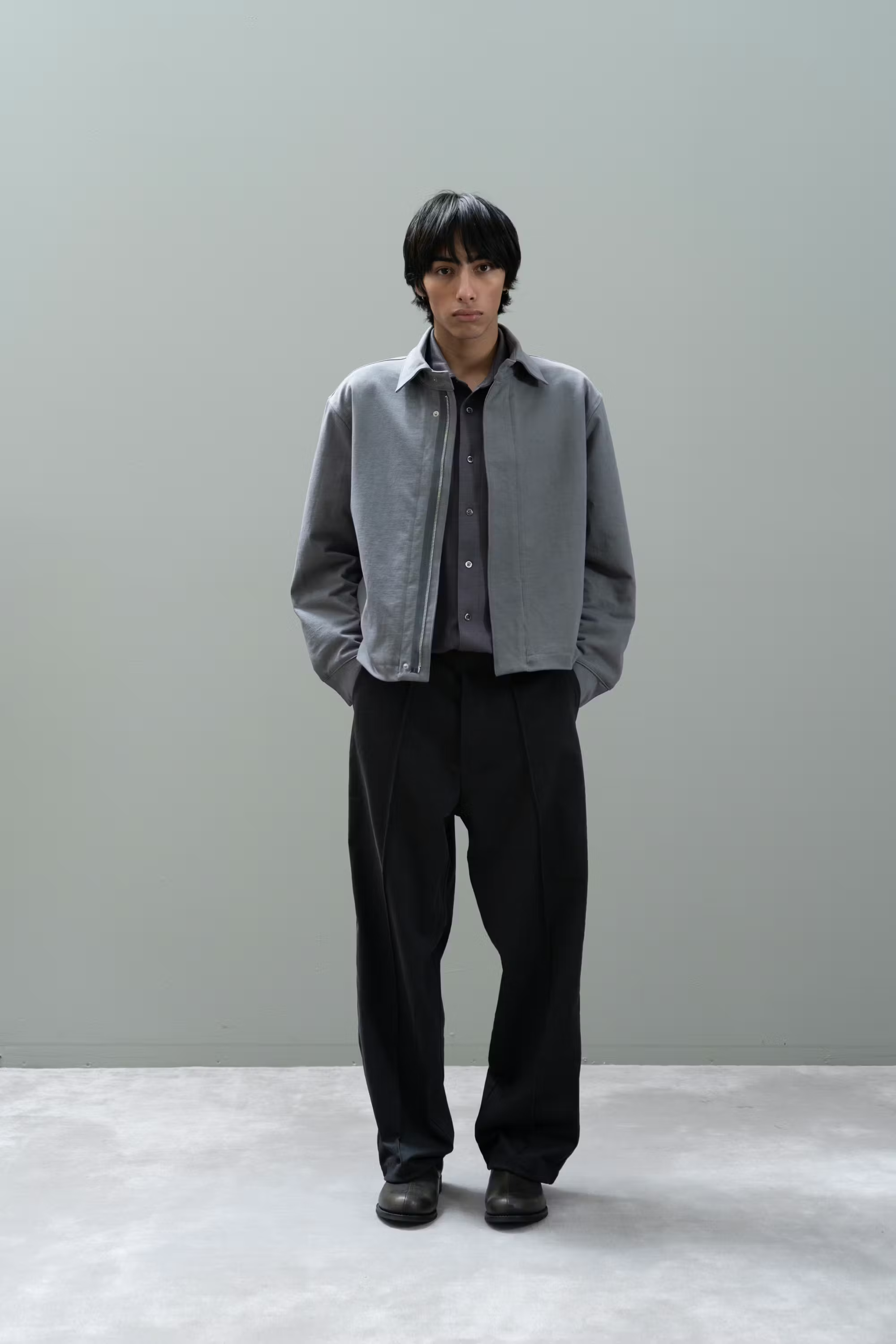
Lady White Co. perceives American sportswear the same way Le Corbusier did buildings and Noguchi furnishings. That means considering: What makes this stuff great in the first place? For the historic sweaters and hoodies that Lady White held in such high regard, that meant real craft, real materials, real pattern-making that surpasses the sigma of sportswear as simple or easy. Nothing Lady White does is “easy,” from sourcing cotton from North Carolina to cutting, assembling, and dying garments within a short drive from its headquarters. Their classically unclassic T-shirts, sweaters, shirts, shorts, and slacks are the result of painstaking effort to achieve exacting handfeel and drape.
Zander Taketomo / Courtesy of Lauren Manoogian
Zander Taketomo / Courtesy of Lauren Manoogian
Lauren Manoogian
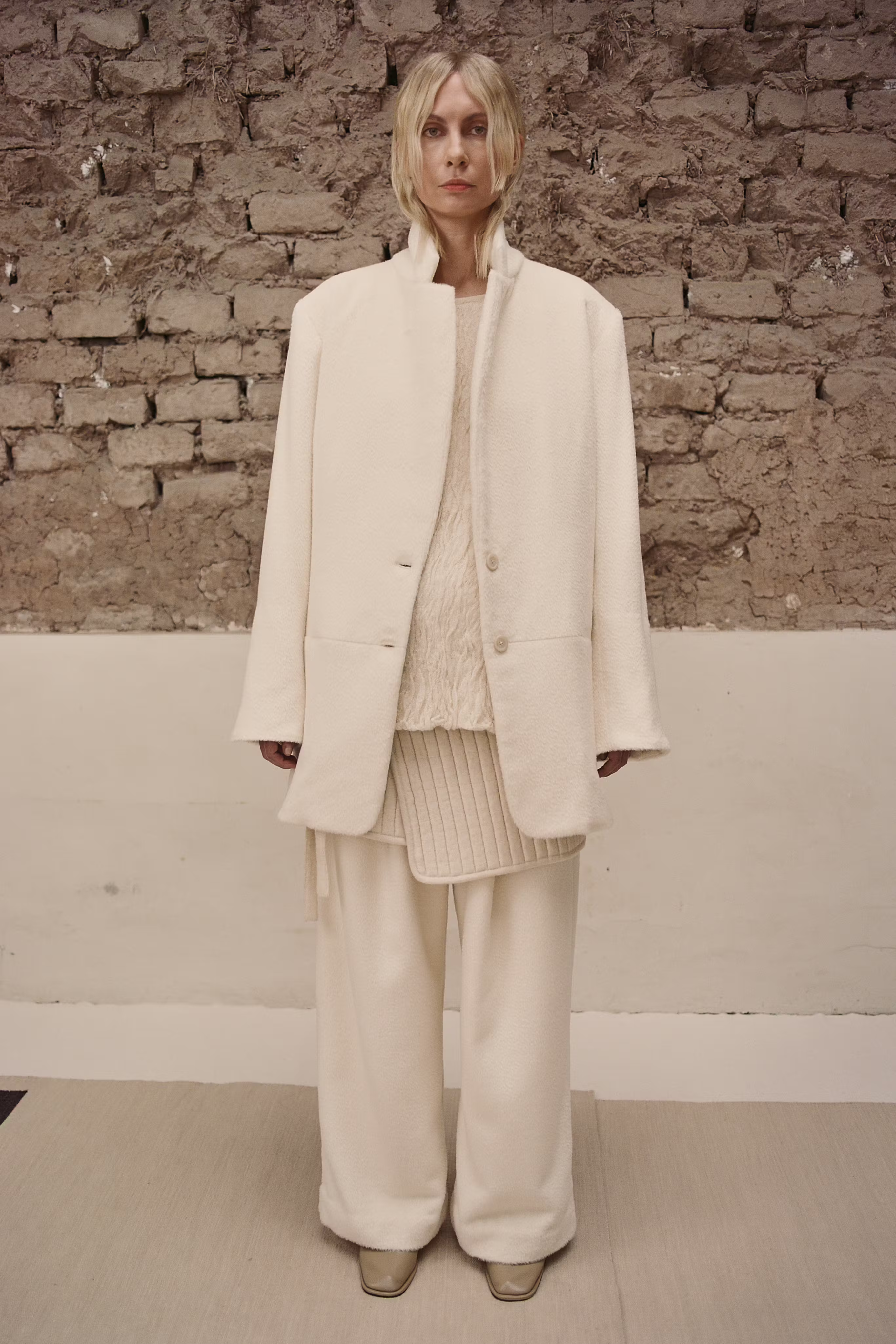
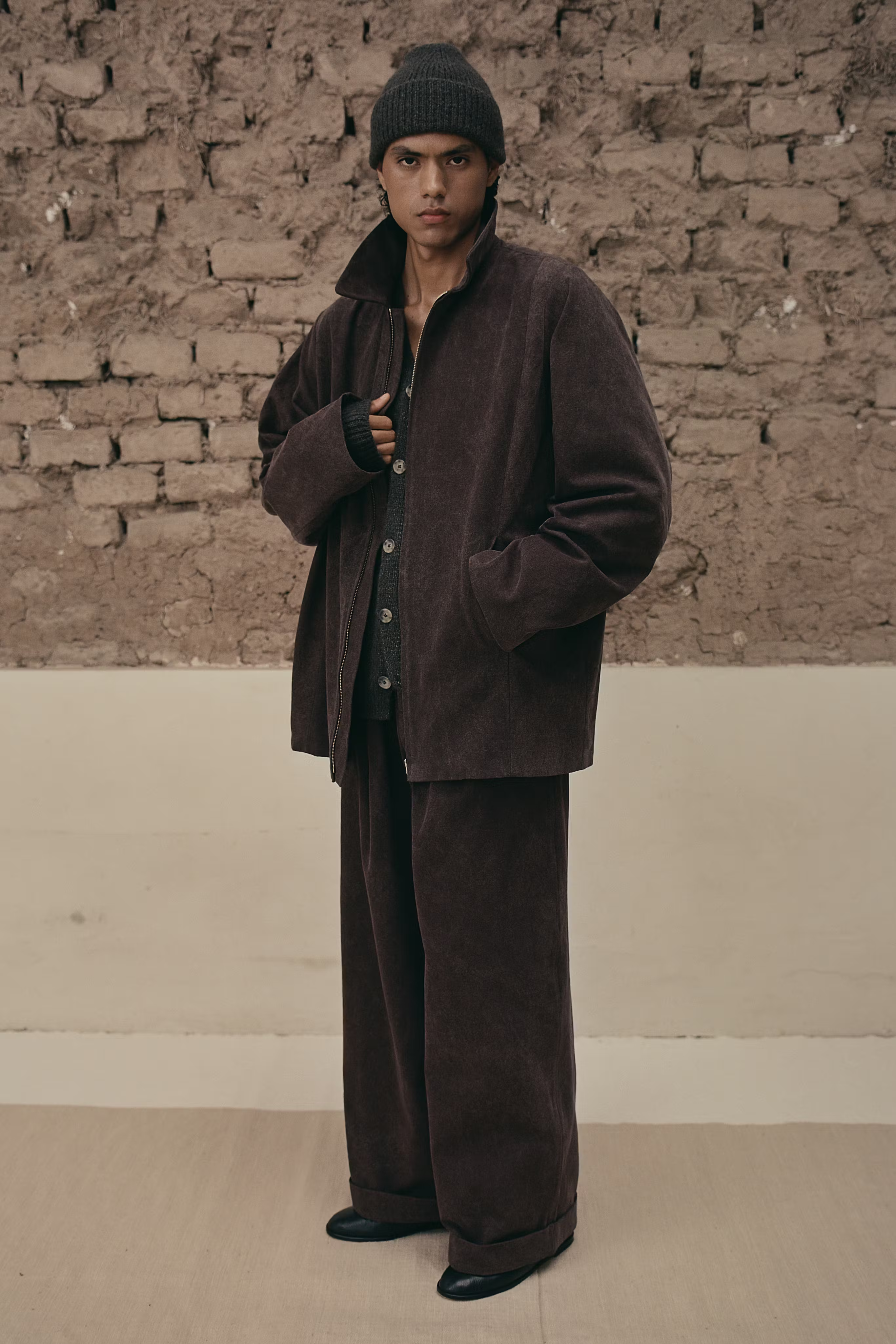
From a studio in downtown Manhattan, Lauren Manoogian creates worldly clothing. The depth of her preferred beige calls to mind all manner of building materials: plaster, mud, concrete, and shale. Atop it, Manoogian constructs organic all-timers, from her signature sweaters and cardigans knit wide enough to cocoon the wearer to the fan-favorite “vessel”-shaped jeans washed into streaks of de Kooning color. Ostensibly a womenswear line, her work is too good to be confined by gender or even aesthetic. While luminous stylist and Encens founder Samuel Drira proposes that Manoogian’s clothes are best worn big and billowy, piled like dropcloths in a painter’s studio, her insanely soft knits slot into any wardrobe.
Gregoire Avenel / Courtesy of Lemaire
Gregoire Avenel / Courtesy of Lemaire
LEMAIRE
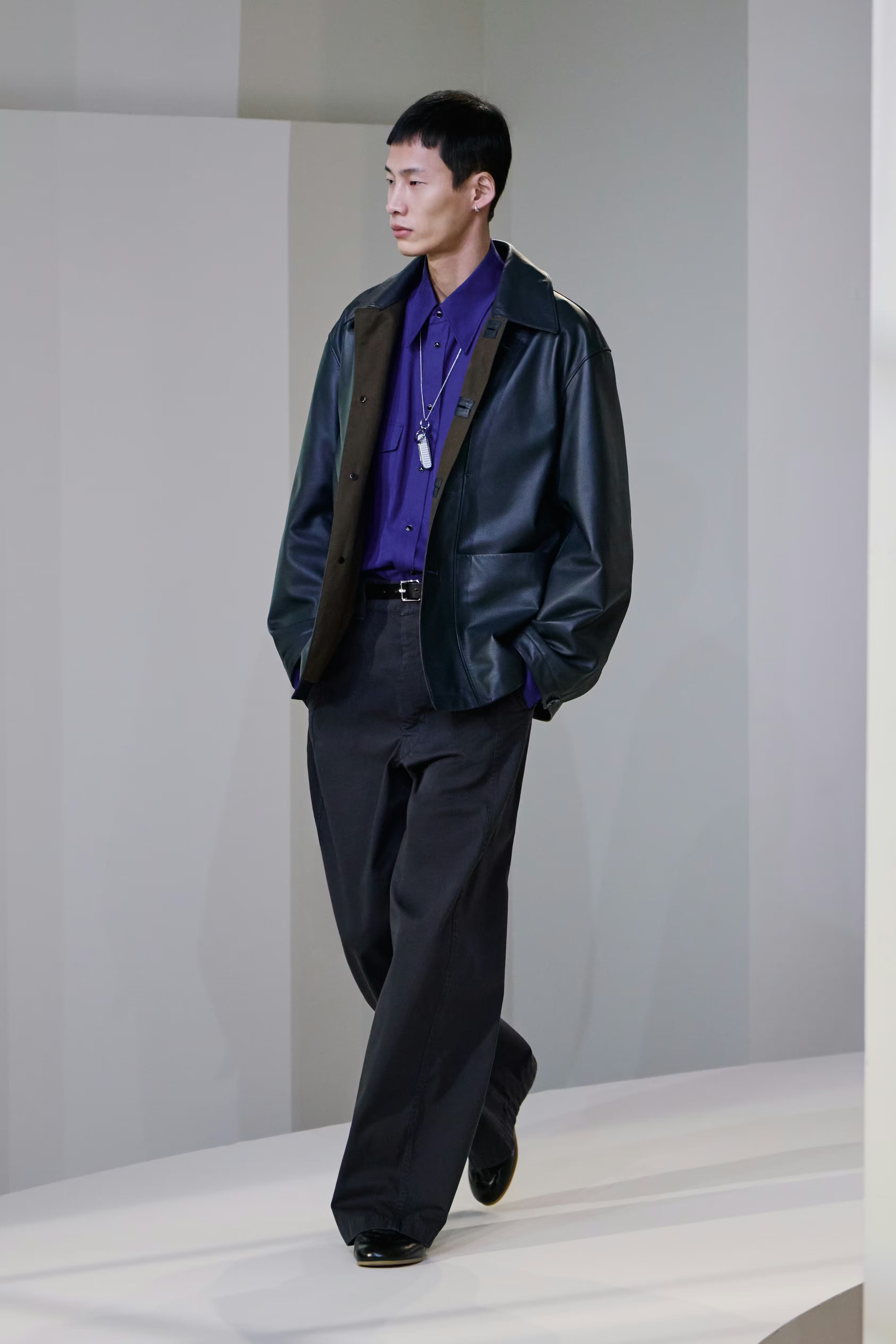
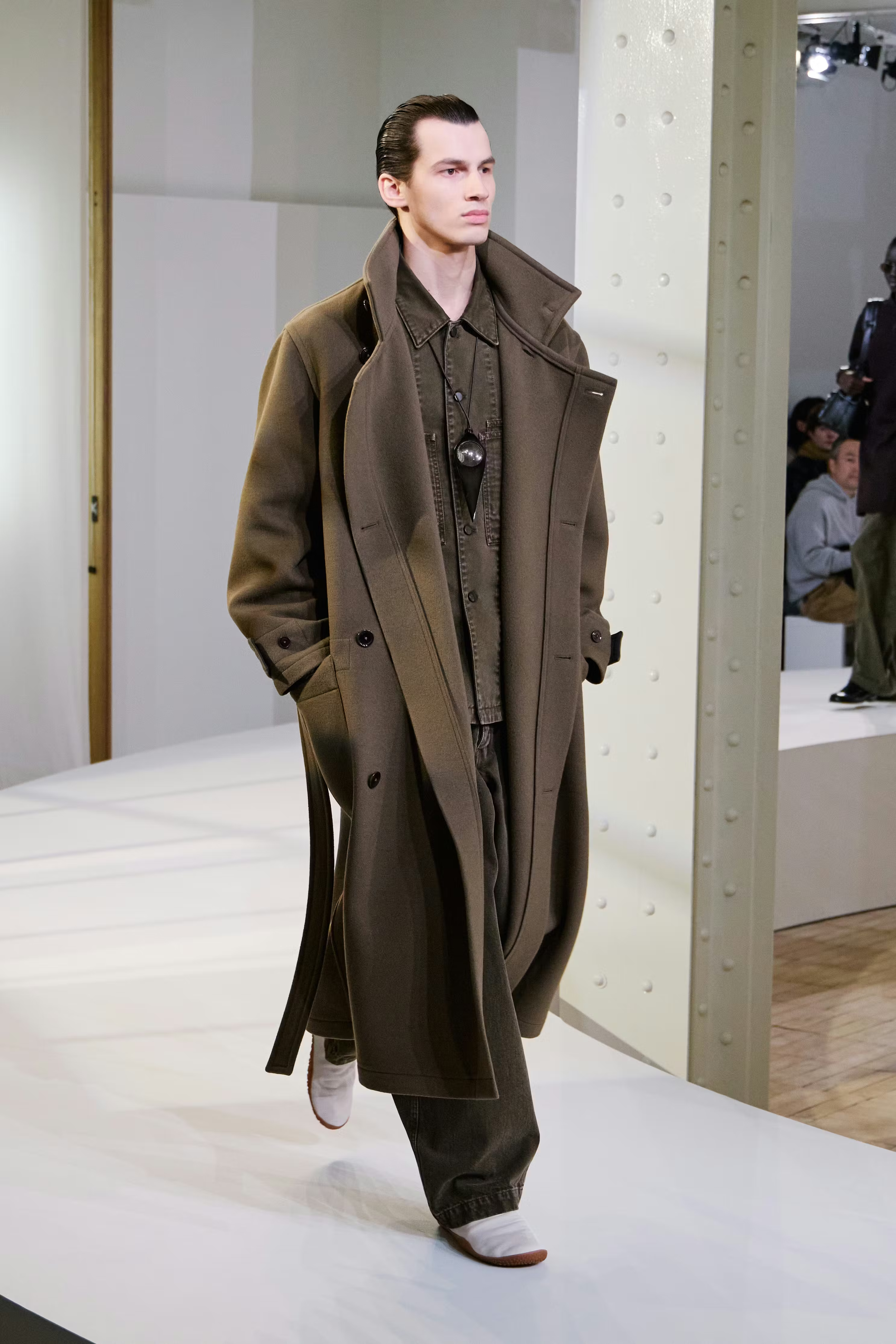
Even when he was still printing his first name on the tag, Cristophe Lemaire was creating elegant, grounded clothes. Despite his 34-year-old label growing into a $100-million global luxury house, his product remains real. This is the attitude that makes Lemaire such a natural fit for a mass-market retailer like UNIQLO, where he has guided a loose-fit revolution. But mainline Lemaire is where the real magic happens. Approachable layering pieces cut from draping wool and soft cotton twill, ballooning slacks with high rises and wide legs, base layers transformed with dropped shoulders and boxy bodies: little wonder so many brands still follow the Lemaire template.
Courtesy of MAN-TLE
Courtesy of MAN-TLE
MAN-TLE
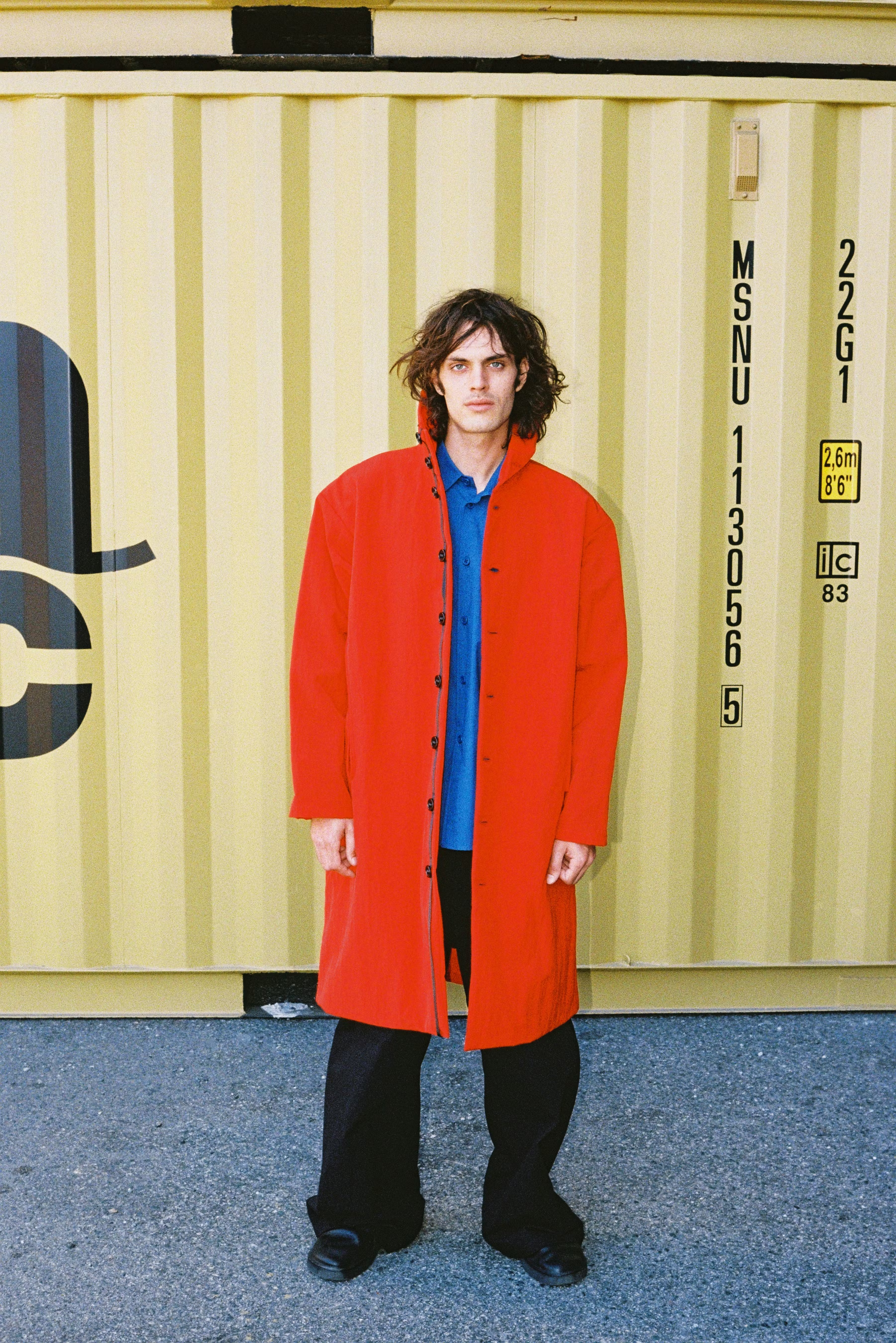
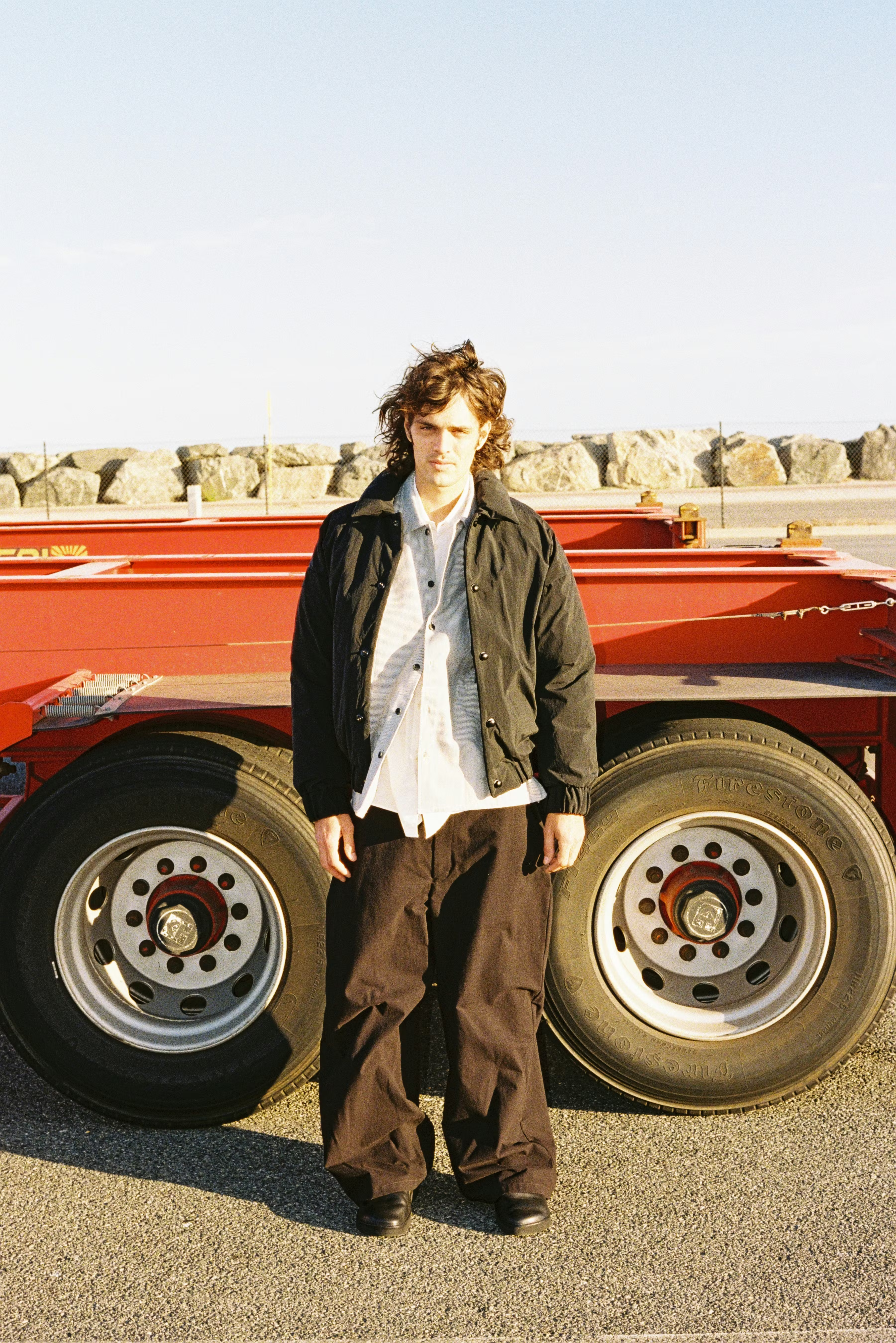
Harsh weather calls for harsh clothes. Partly shaped by the unforgiving Australian desert, MAN-TLE’s garments are protective — the company that produces MAN-TLE is called “Heavy Weight Clothing” — but they’re also so much more. The brand’s fabrics are often woven especially for MAN-TLE in Shizuoka, Japan, and mold to the wearer’s body. Its hardware is either welded to a clever military-inspired placket or created by a German automotive company. The resulting shirt-jackets, chore coats, work pants, and deep-crown caps are unfussy and all-purpose.
Ola Rindal / Courtesy of Magaret Howell
Ola Rindal / Courtesy of Magaret Howell
Margaret Howell / MHL.
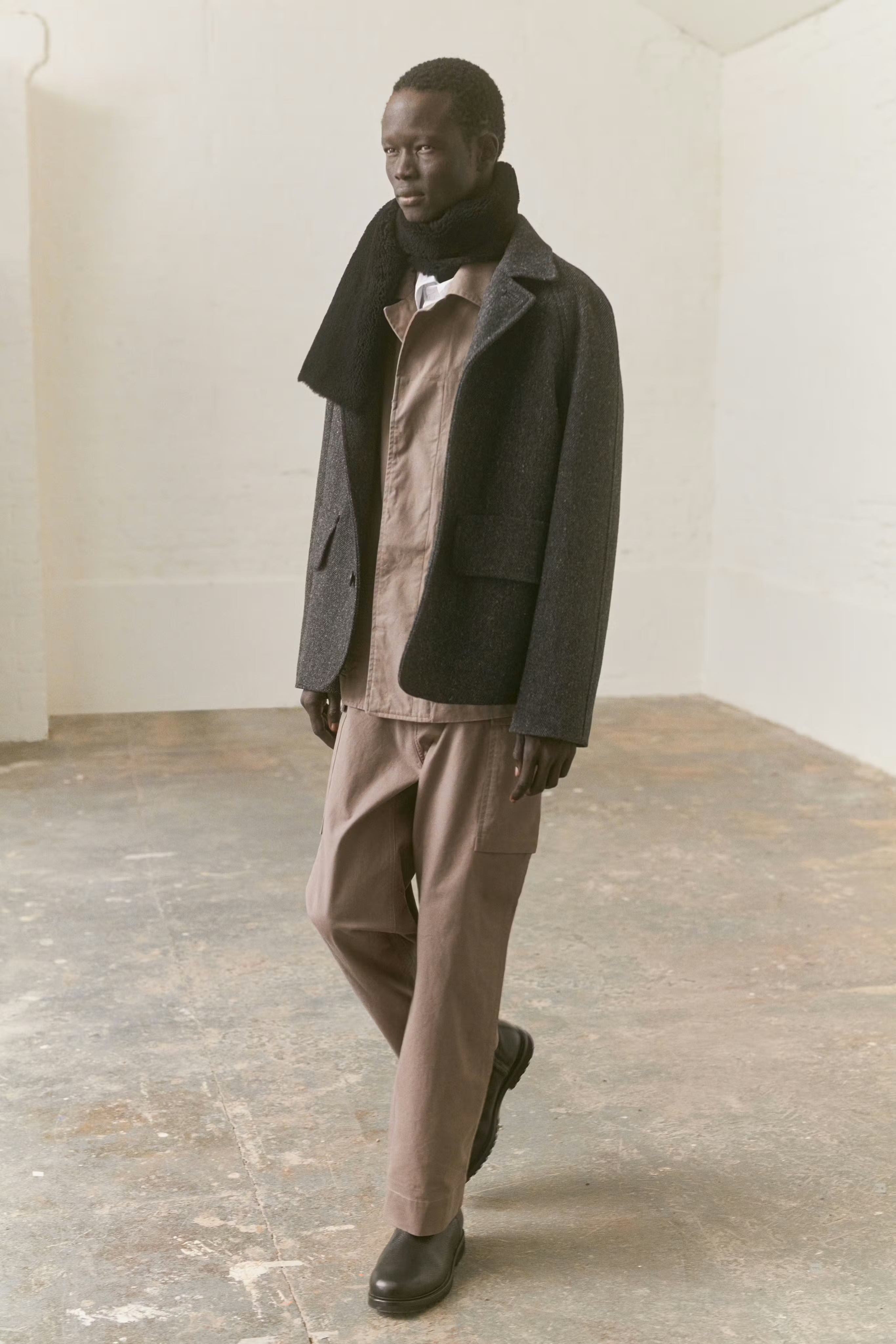
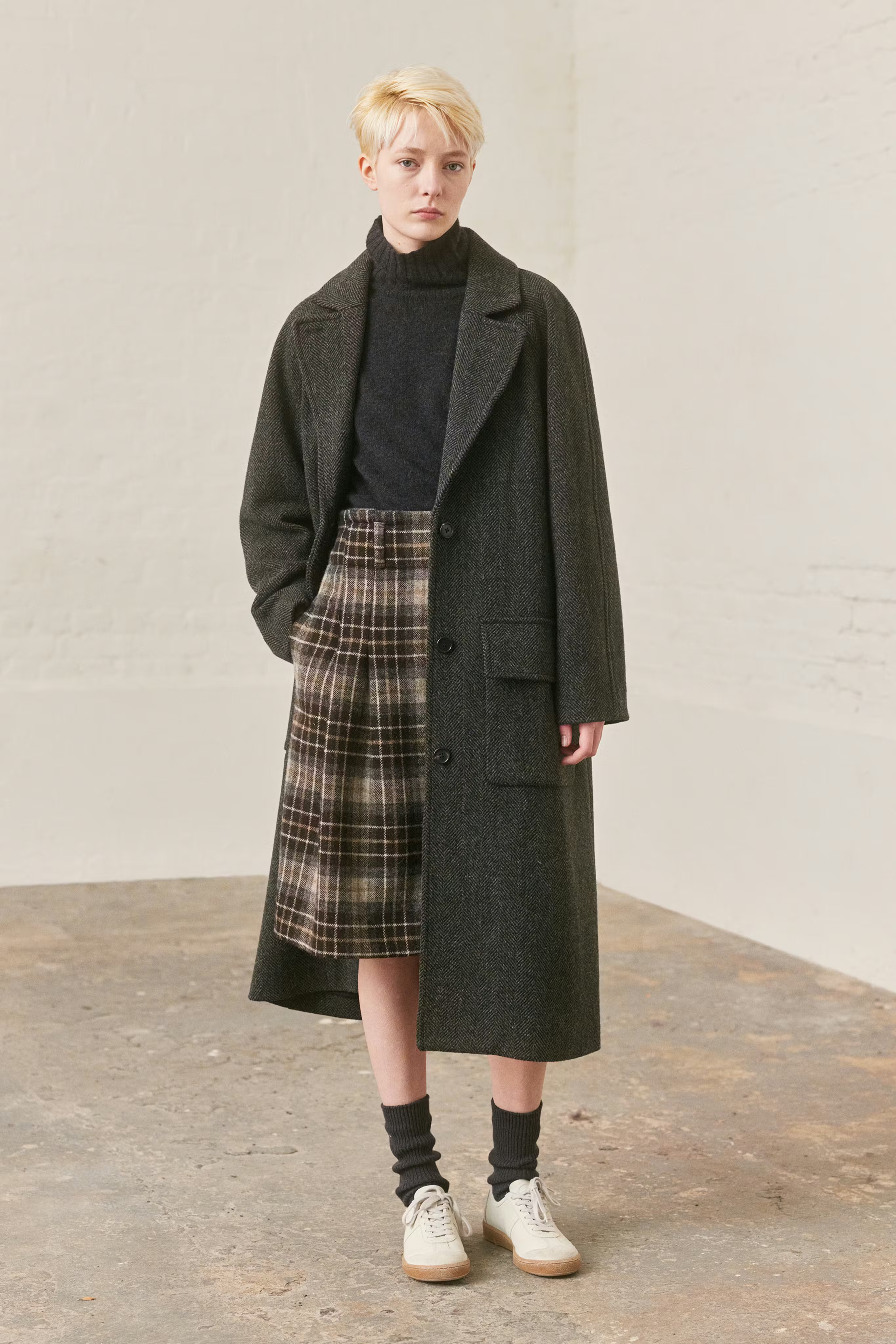
If there is a patron saint of good clothes, it’s Margaret Howell. The venerable British designer is a legend, every Good Clothes designer’s favorite designer. Her vision of timeless craft preceded nearly every brand — or person — currently going at it. Before any designer attempts to perfect the crisp collared shirt or soft jacket, they must contend with Howell’s flawless originals, still produced in rich colors and richer textiles. Little wonder Jack Nicholson refused to take off his Margaret Howell jacket while filming The Shining. Beyond her mainline collections, her MHL. sub-label offers a utilitarian gateway to the Margaret Howell wardrobe. Both function as best-in-class brands that make you wonder why you’d wear anyone else.
Victor Boyko / Getty Images
Victor Boyko / Getty Images
Miu Miu
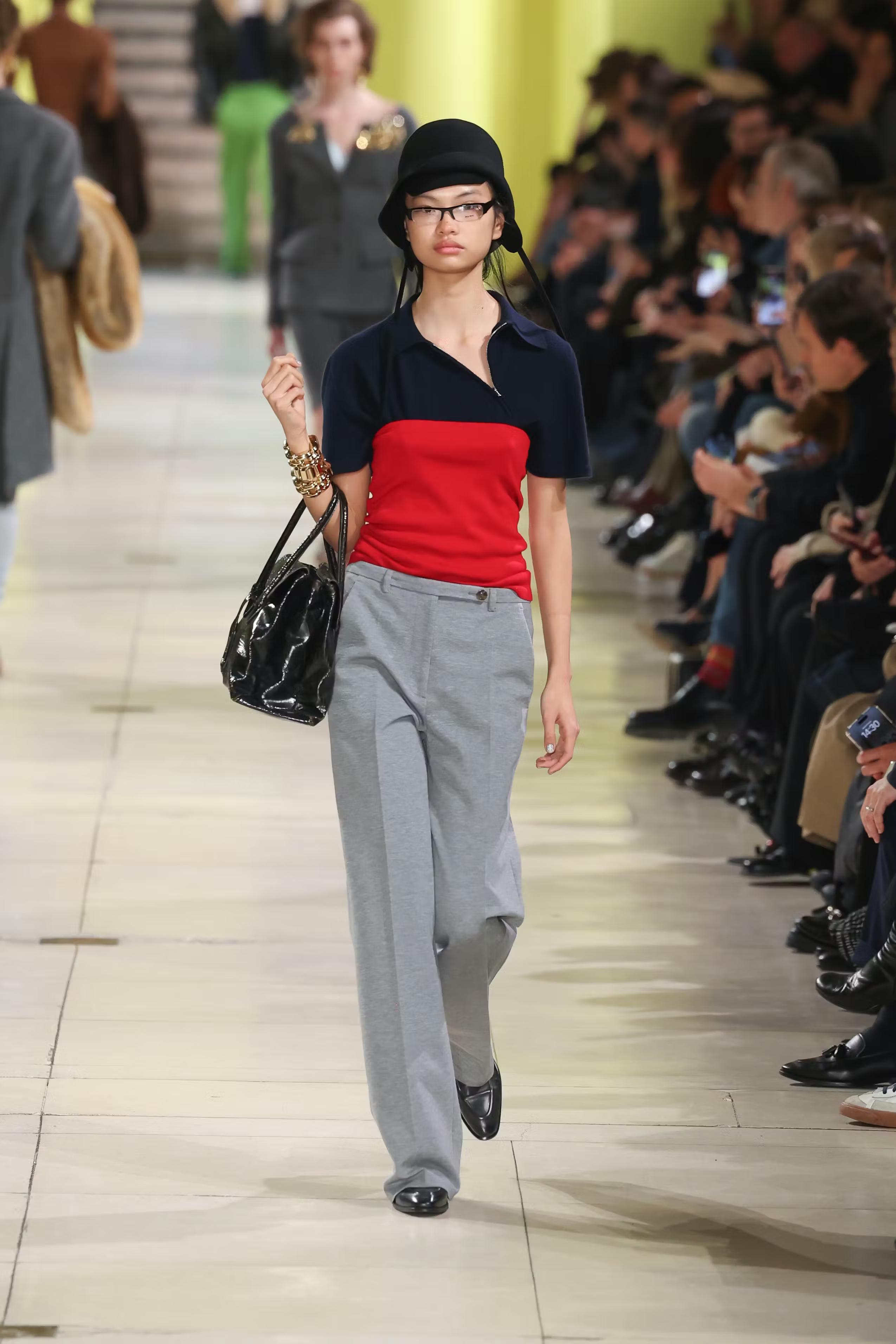
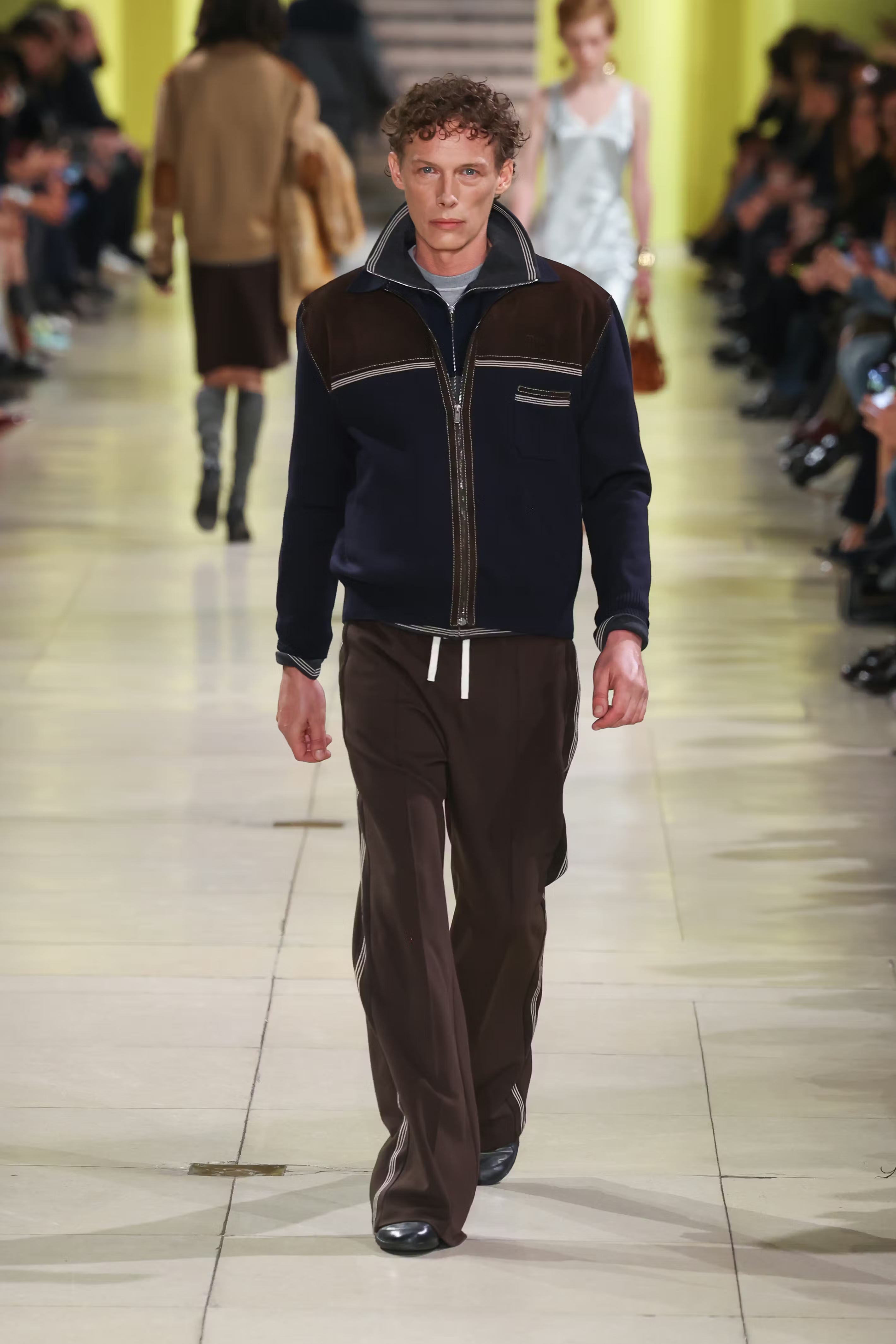
It’s not just that Miu Miu has almost singularly led luxury fashion by the nose for the better part of a half-decade, though that is indicative of the Prada sibling label’s prescient genius. It’s that behind Miu Miu’s wizardly trend-shaping capabilities lie genuinely excellent clothes, like garment-dyed chore coats and updated hiker fleeces so good that dudes were grabbing them even before Miu Miu quietly rolled out larger sizes (Miu Miu prefers to not use the term “menswear”). It’s all so evidently wearable that it’s surprising how popular it is, too; so rarely do garments this coherent also happen to be this trendy. Even the world-conquering Miu Miu New Balance sneakers are objectively great shoes, a silhouette so ingenious that quite literally every element of its design — the colors, the leathers, the soles, the tripled-up laces — has been imitated wholesale by everyone who wishes they were half as good as Miu Miu.
James Coyle / Courtesy of Monad
James Coyle / Courtesy of Monad
Monad
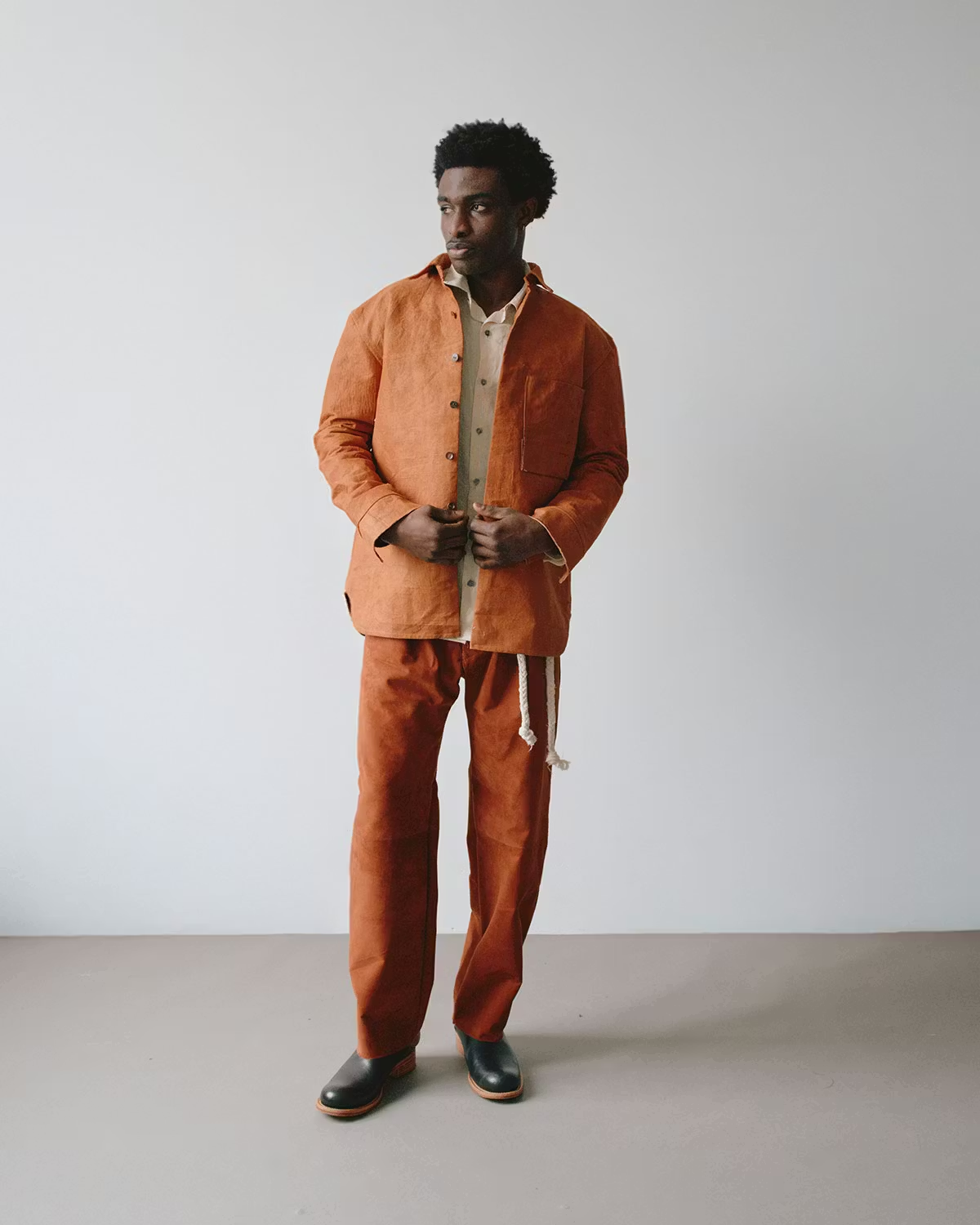
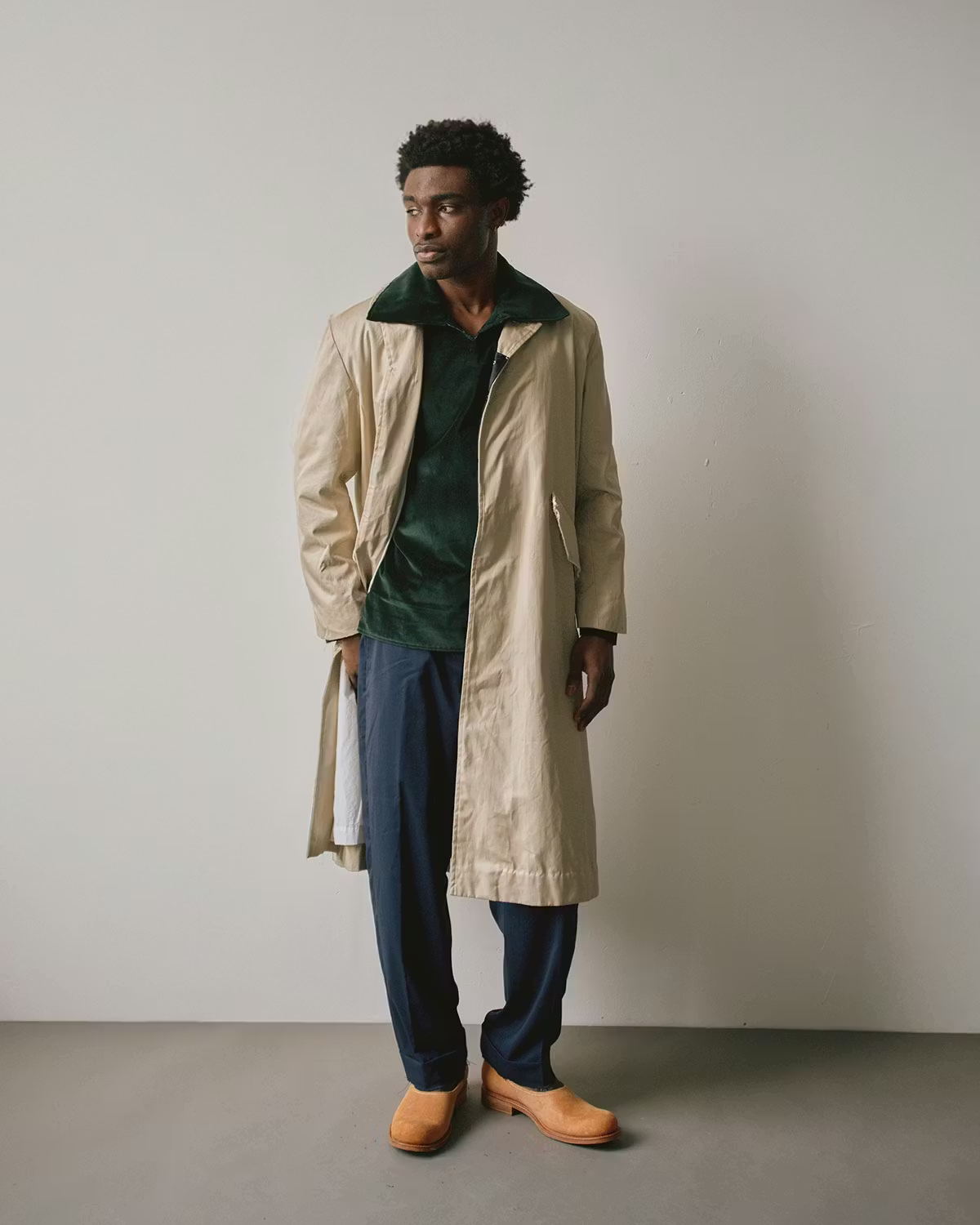
Like so many tasteful makers, Monad was given an early chance by high-concept London retailer Blue Mountain School. Clearly, they recognized Monad’s tendency toward the obsessive: hand-stitched seams, specially dyed cloths, and vintage or bespoke buttons that inform garments made in editions so small that most pieces are near one-offs. These clothes are difficult to produce but easy to wear, an extension of the craft founder Daniel Olatunji learned while studying at Central Saint Martins. But, whereas his studies encouraged perfection, Olatunji realized that he found greater satisfaction in “imperfections” like the irregular slub of a handwoven textile or the threads dangling from an unfinished seam.
Ethan & Tom / Courtesy of Nicholas Daley
Ethan & Tom / Courtesy of Nicholas Daley
Nicholas Daley
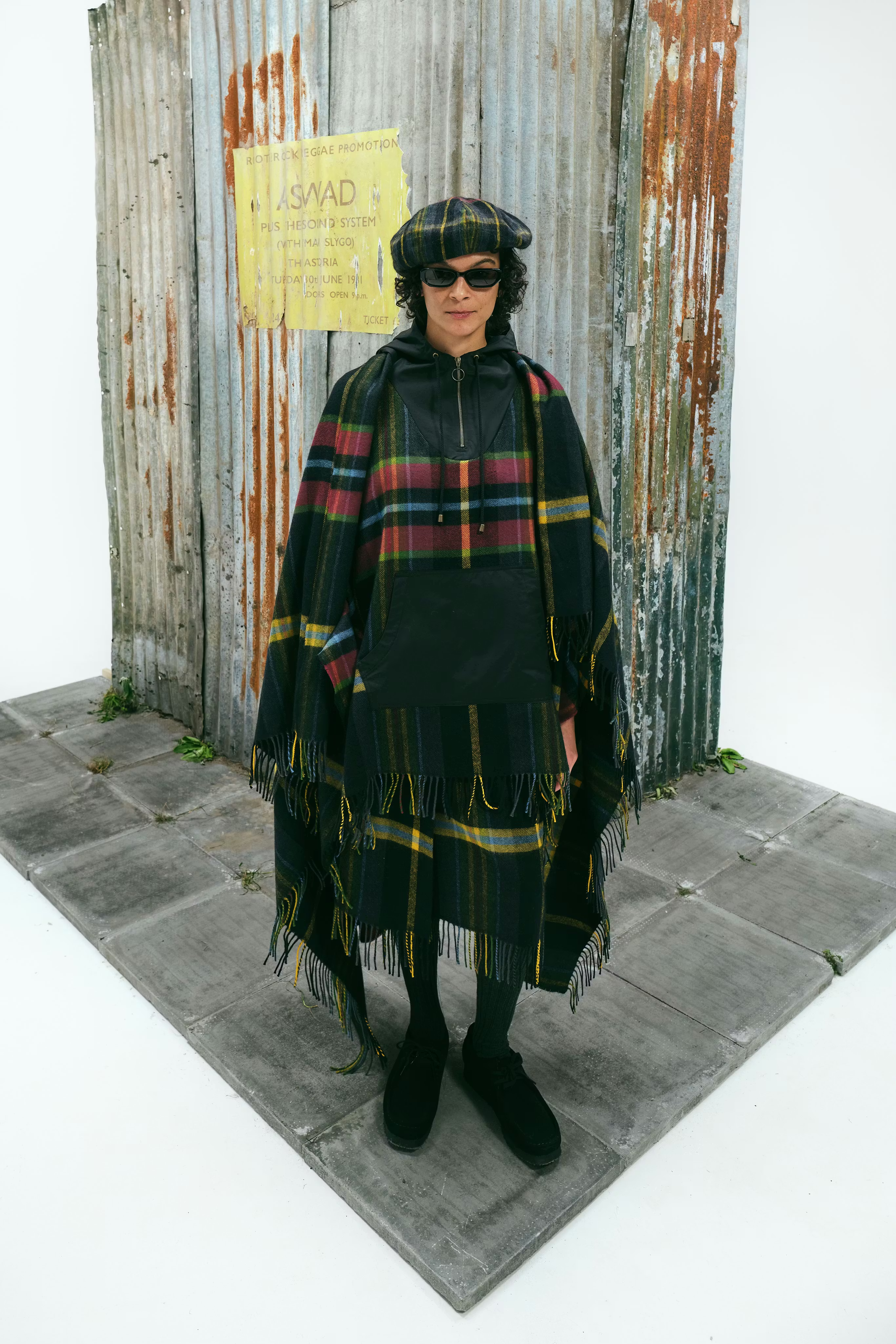
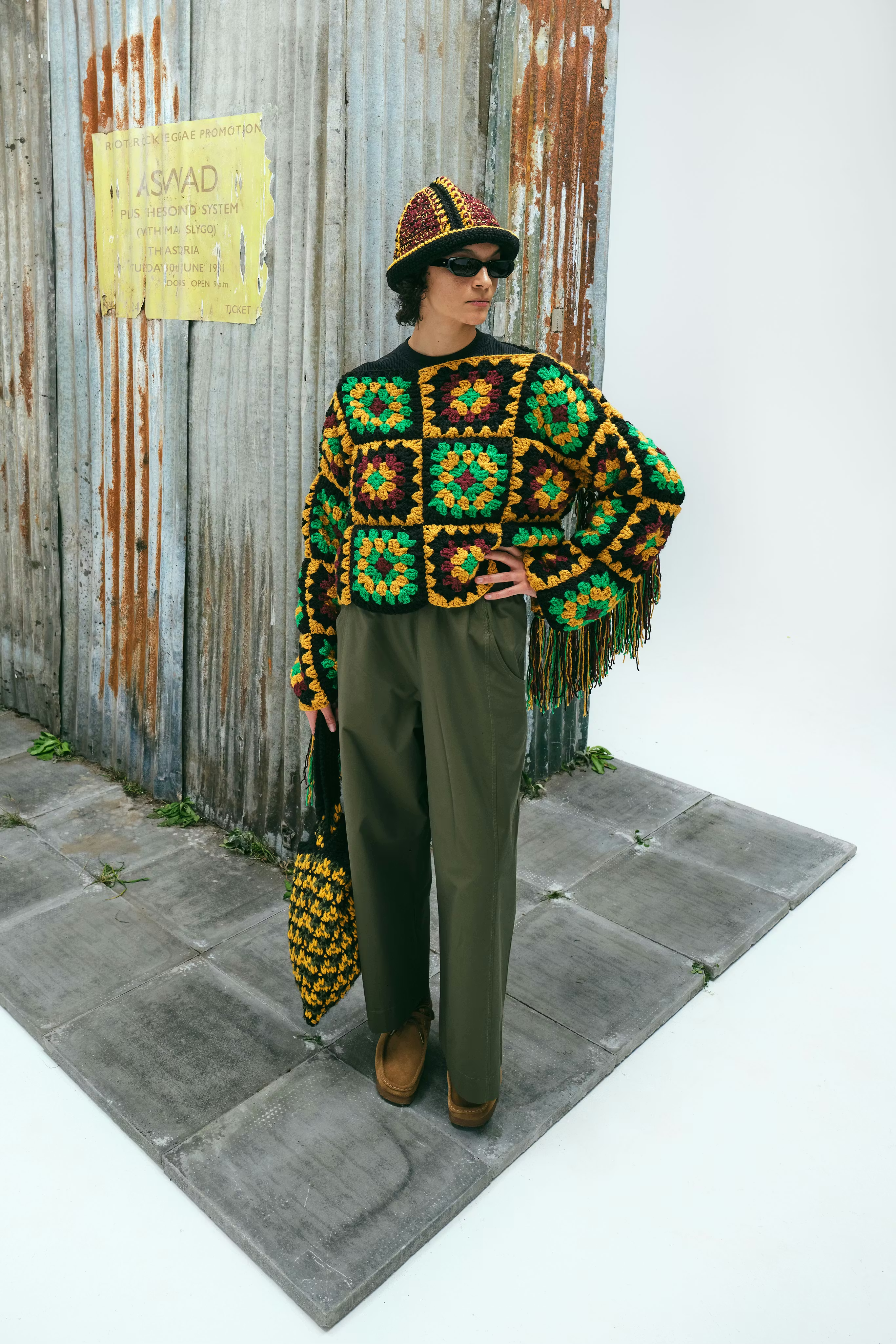
Where Jamaica meets Scotland, you find Nicholas Daley. The designer’s cultural heritage informs a collection of work-ish, sport-ish clothes that update old favorites through form and fabric. Parkas and anoraks (very UK) are paneled with waxed cotton and tartan linen (very Scottish) and paired with hand-crocheted, jute-inspired tanks and hats (very Jamaican) or even football scarves (all of the above). More than tacit references, Daley’s seasonal graphic designs pay homage to those who paved his way, including Trinidad calypso genius Lord Kitchener and his own parents, who established Dundee’s pioneering Reggae Klub to foster good times and great music.
Ola Rindal / Courtesy of Our Legacy
Ola Rindal / Courtesy of Our Legacy
Our Legacy
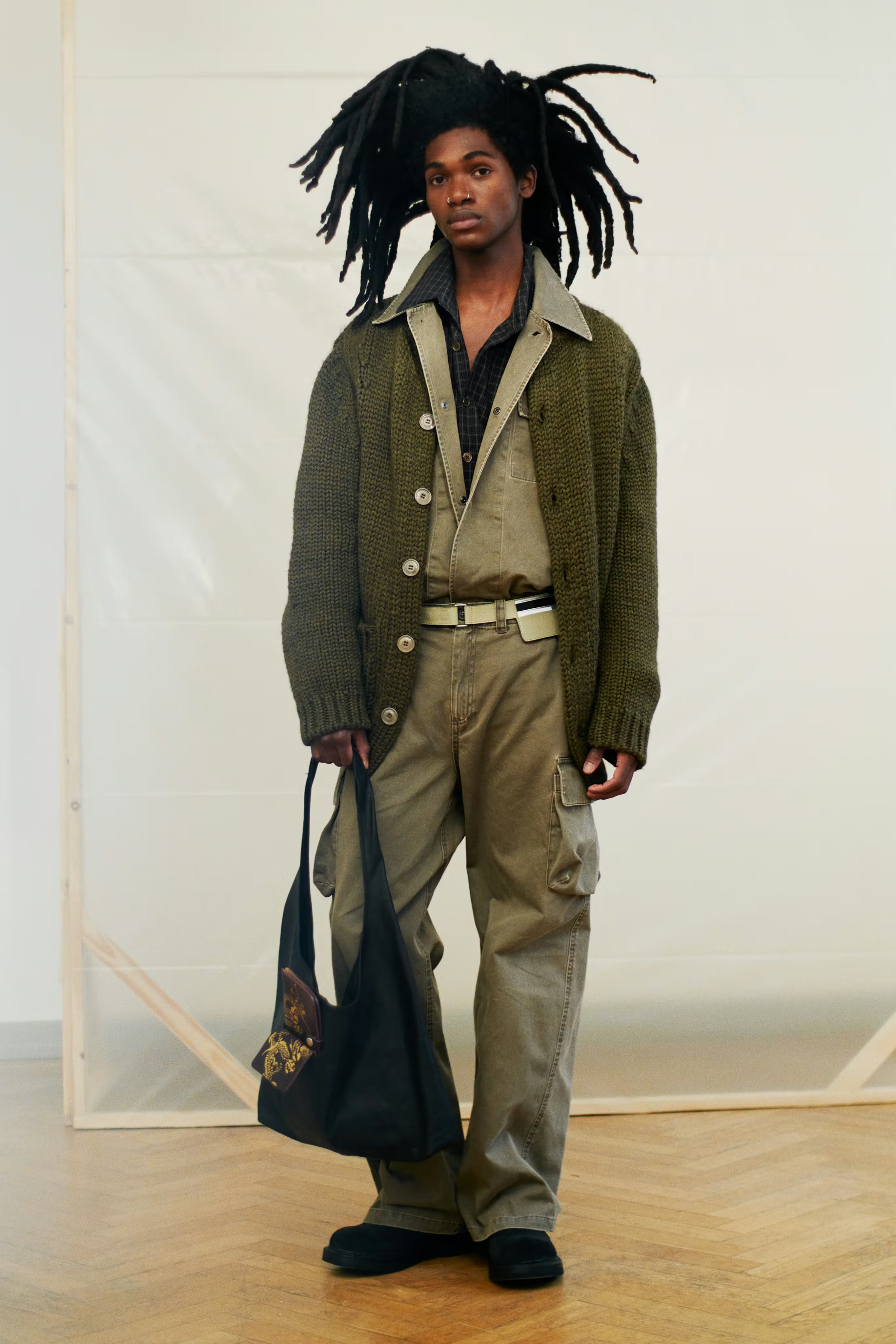
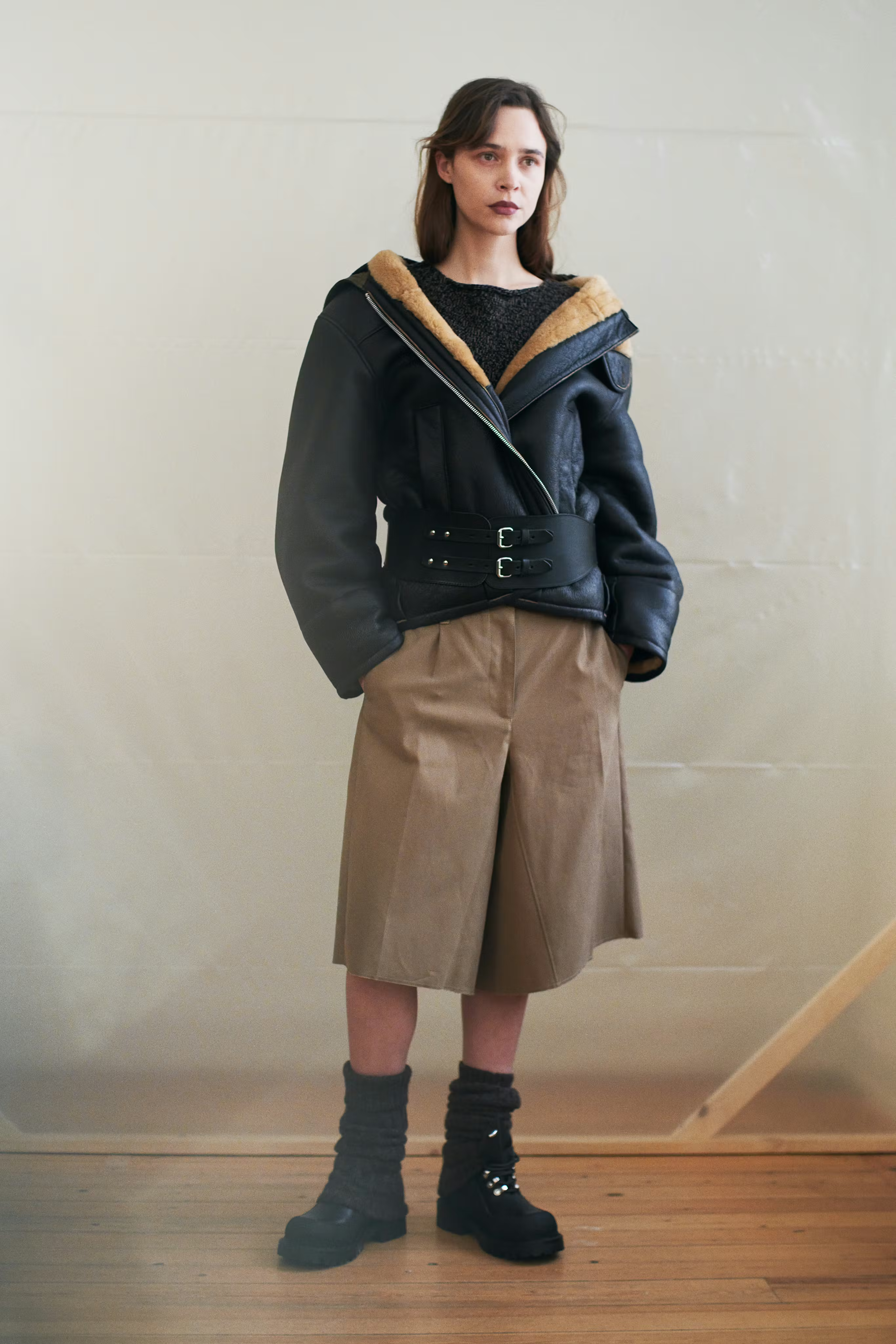
A decade years after it was founded, Our Legacy was still producing the urbane menswear with which it had become synonymous. Two decades on, the brand has become one of fashion’s most vital, expressive makers. Its co-ed collections remain realistic — anyone can wear these wide jackets, washed T-shirts, and full trousers anywhere — but the ambitions are lofty. Trompe l’oil prints transform new jeans into washed-out denim, shirts are cut provocatively wide and long to encourage expressive styling. Our Legacy is the best parts of fashion and style: the adventurous norm-flaunting aspects of the former and the true-blue wearability of the latter.
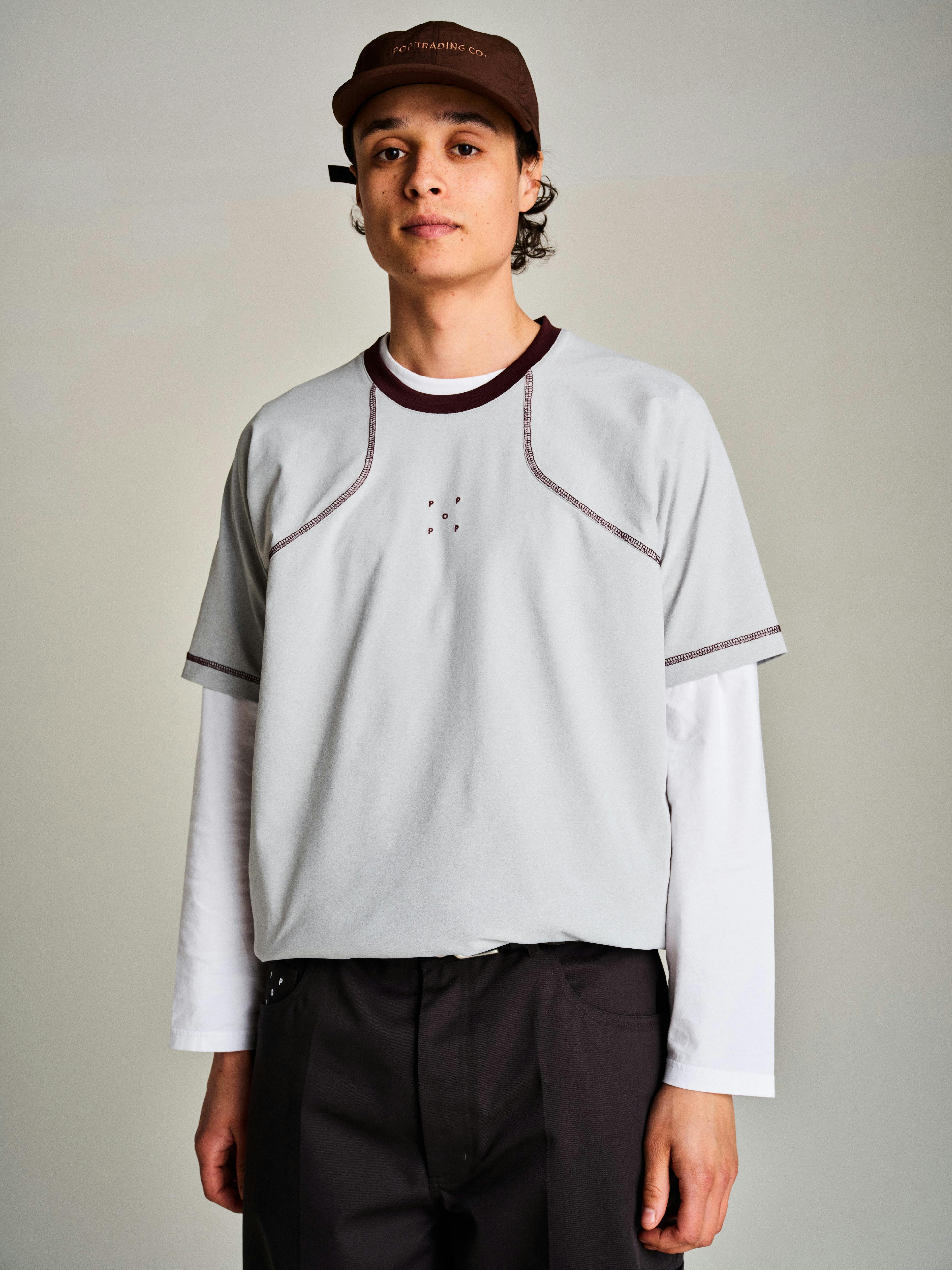
Casper Matthijs van der Linden / Courtesy of Pop Trading Company
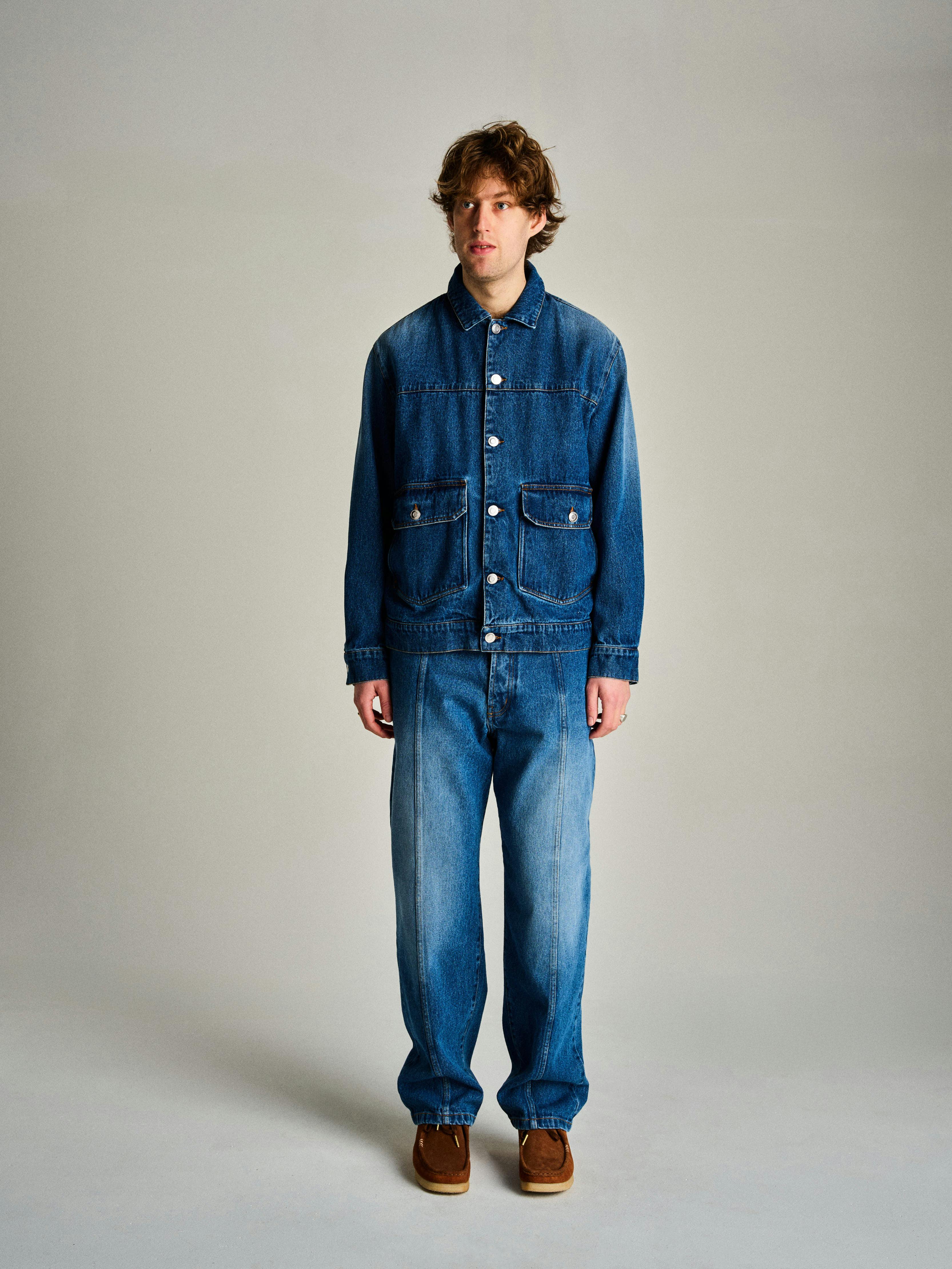
Casper Matthijs van der Linden / Courtesy of Pop Trading Company
Pop Trading Company
Skatewear has always been subtly brainy stuff. It has to be: It serves a tough-to-please audience expecting clothes both sturdy and stylish. Pop Trading Co. bridges that gap with effortless logo gear and thoughtful layering piece. In reflection of its fashion bonafides, the brand was swiftly embraced by Japanese retailers who styled its wares alongside luxury goods, because this is not clothing to be underestimated. Harrington-style jackets, half-zip sweaters, field shirts, and wool anoraks go beyond what the layperson might expect from a so-called “skate brand,” while signature striped tees and wear-over-anything vests propose a mature update to the thrifty, grungey ‘90s-y skater uniform.
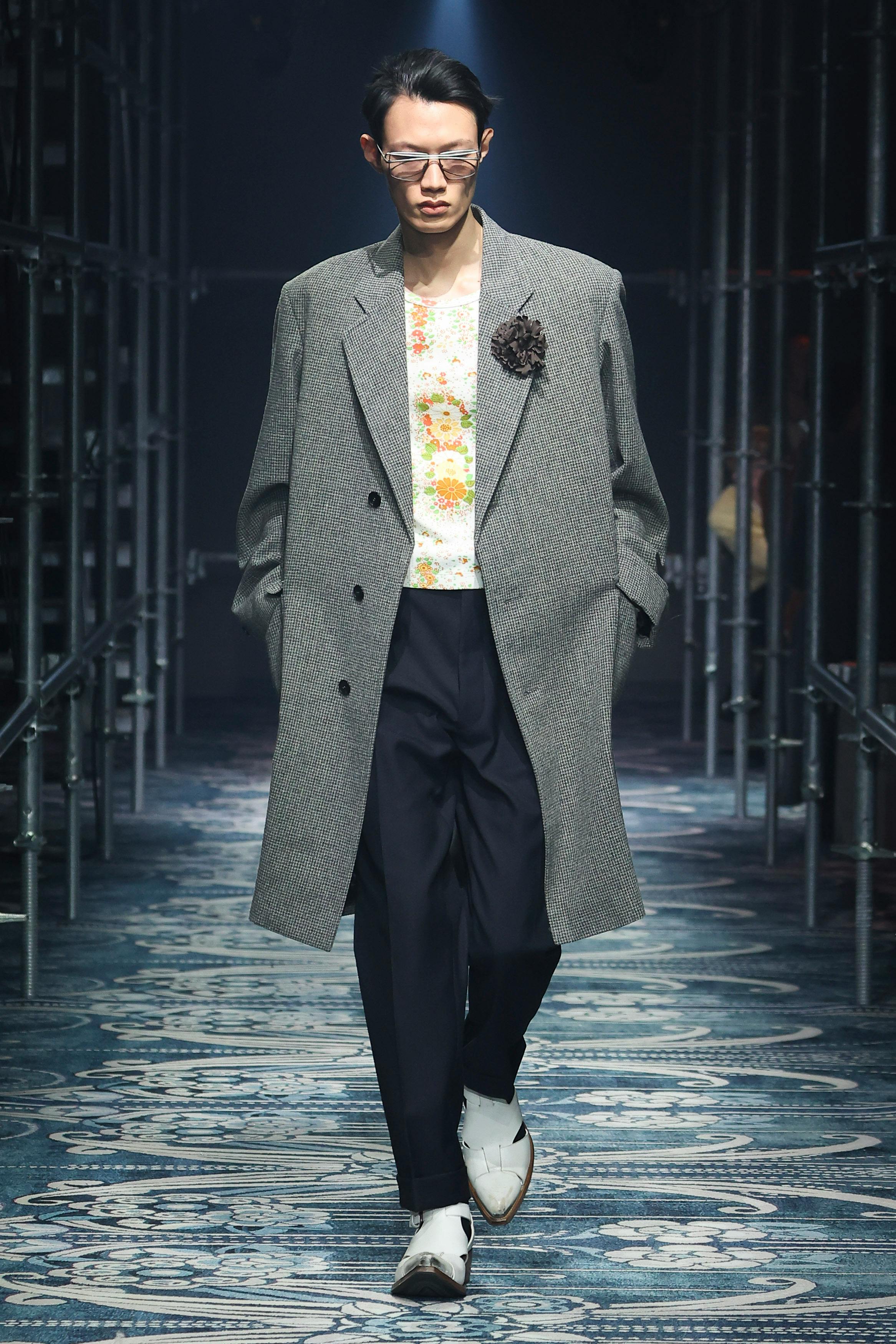
Courtesy of Prada
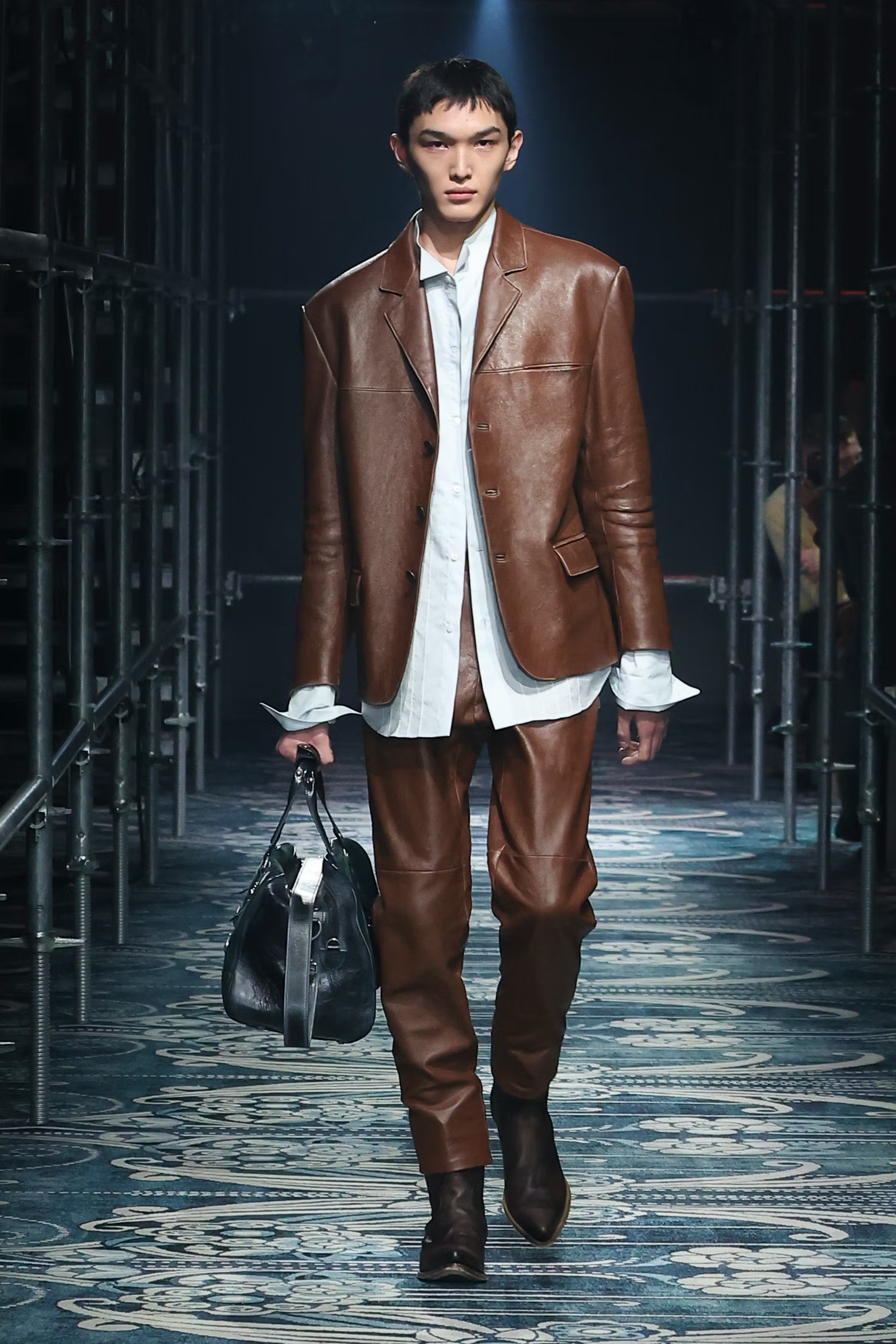
Courtesy of Prada
Prada
For more than a century, Prada has quietly purveyed perfection. It is the ultimate in reserved luxury, an ideal best represented in the brainy garments of Miuccia Prada. Go back to the late ‘80s, the early days of Prada’s ready-to-wear collections, and witness a clarity of vision so potent that it has hardly been updated at all. Trim suits, clean shirts, and cardigans in modest colors all set the standard that today’s Prada upholds. Some concessions have been made, of course, but only to better acclimate Mrs. Prada and co-creative director Raf Simons’ ongoing exploration of frill-free finery. The narrow-cut classics remain, accented by flashier hues and dynamic fabrications. Modern Prada winners include garment-dyed work coats so good you want to pluck ‘em off your screen and baby blue knit cardigans that cleverly integrate Prada’s wordless Symbole.
Courtesy of Ralph Lauren
Courtesy of Ralph Lauren
Ralph Lauren
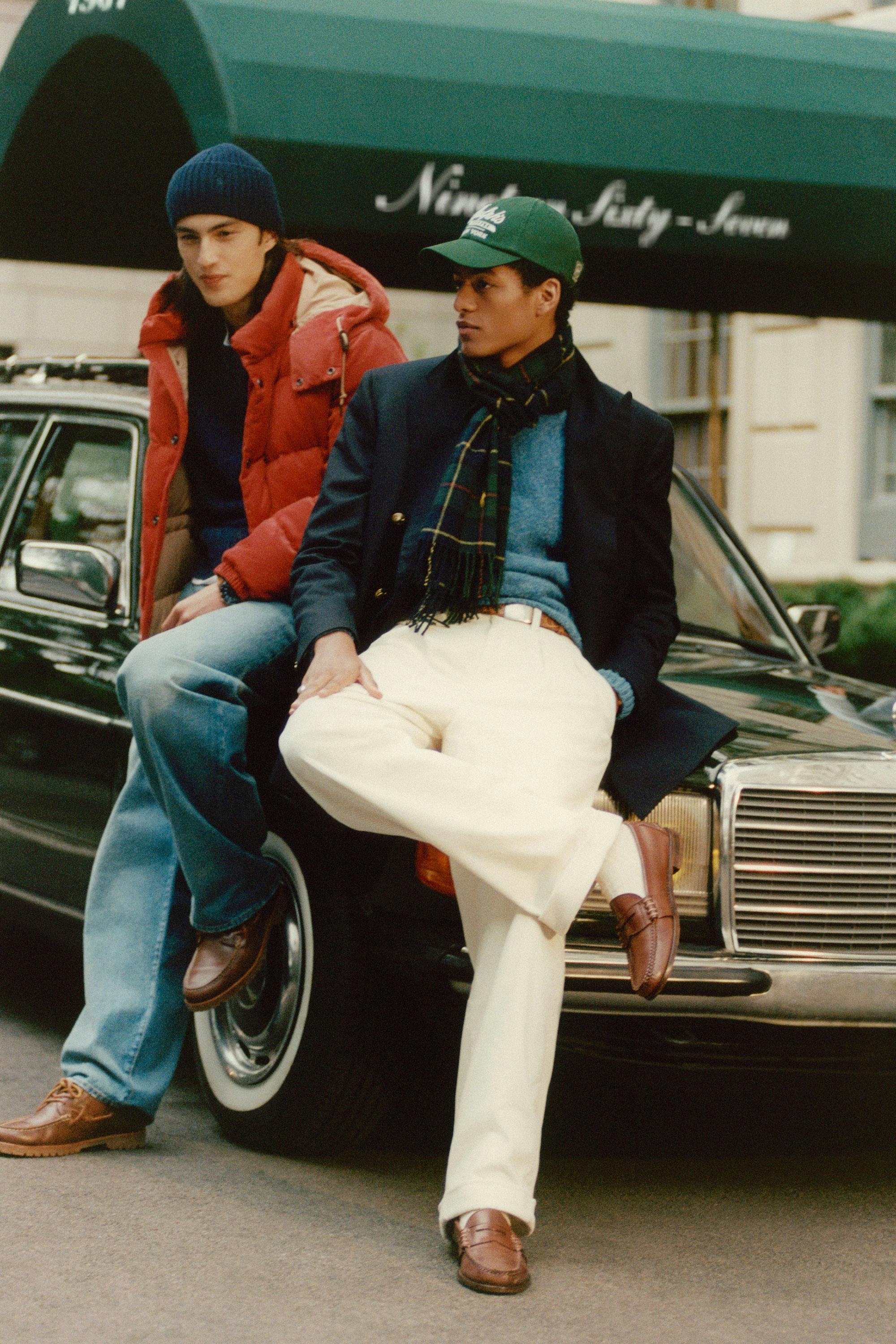
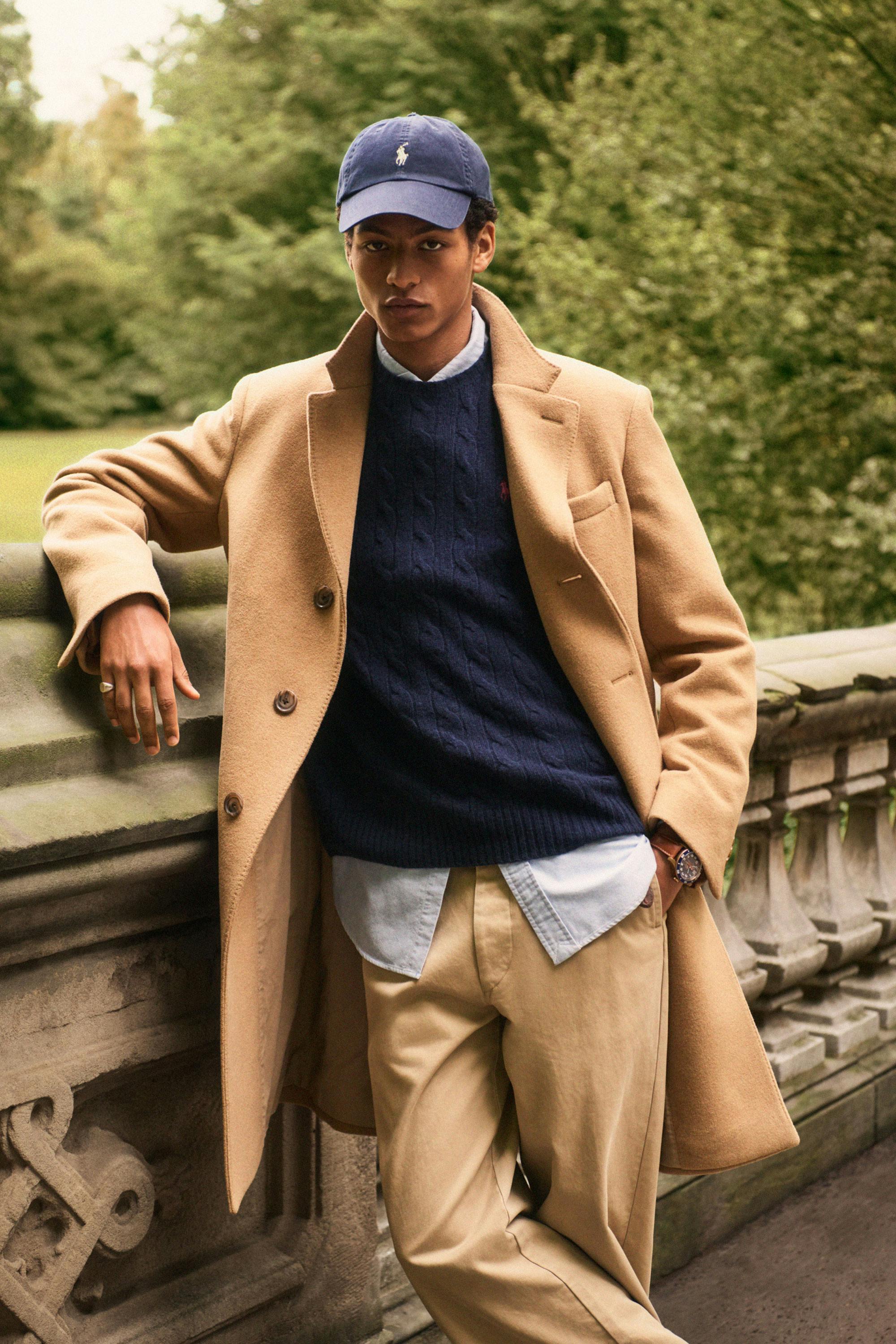
Ralph Lauren, godfather of good taste, dialed in his label’s visual identity forever ago. He established the First Great Modern American Lifestyle Label by selling a complete vision of quality livin’, from the homestead to the homeware to the outfits worn by the man himself (only one of many reasons that everyone still aspires to be the next Ralph Lauren). The wide world of Ralph Lauren is only so sturdy because it sits atop the foundation of rock-solid clothes. The Big Shirt, the pleated chino, the American flag sweater, the — yes — polo. These are epochal garments considered timeless at least partially because they’ve all been canonized in the Ralph Lauren lexicon, the closest thing that fashion has to the Great American Songbook.
Phil Engelhardt / Courtesy of Rier
Phil Engelhardt / Courtesy of Rier
Rier
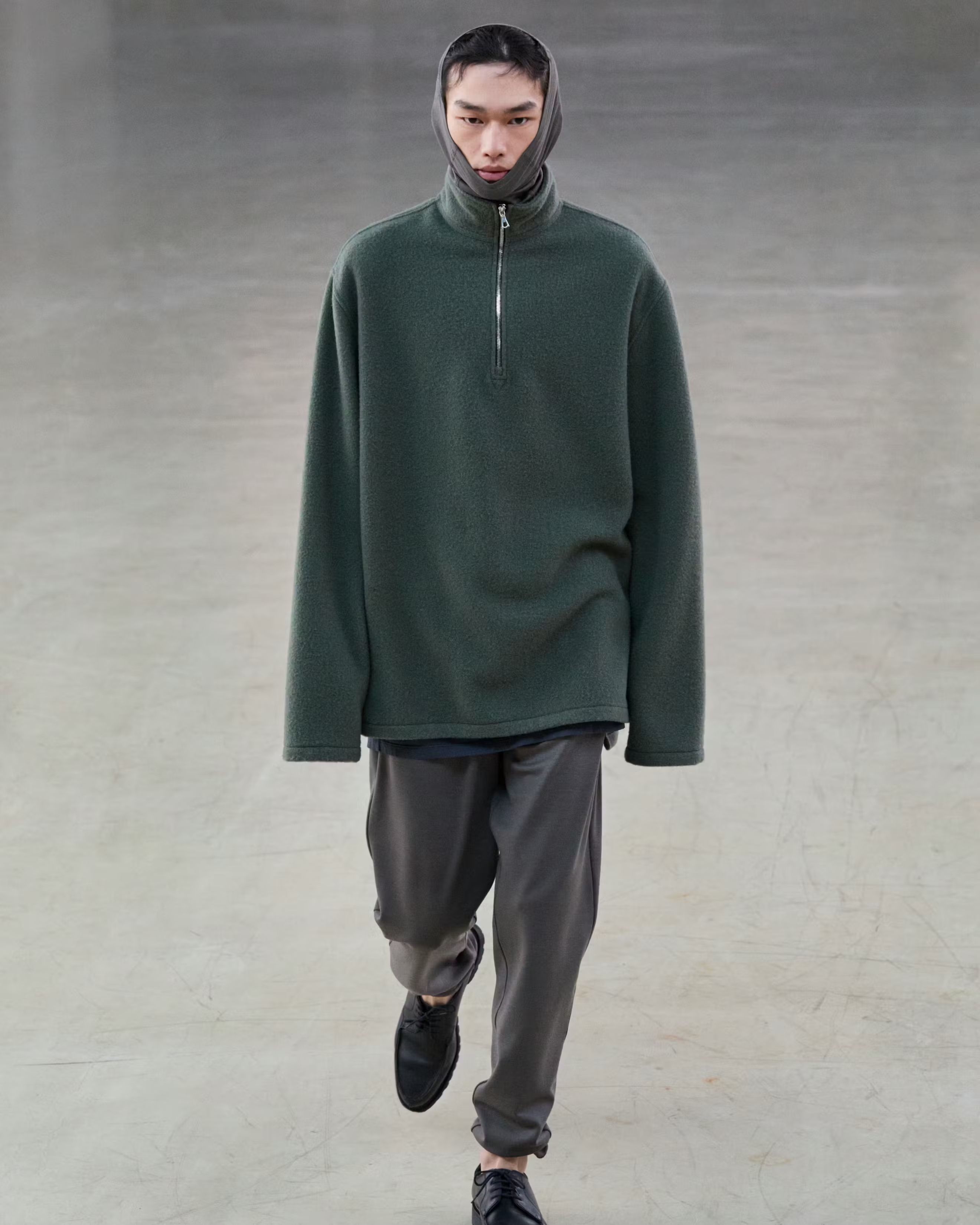
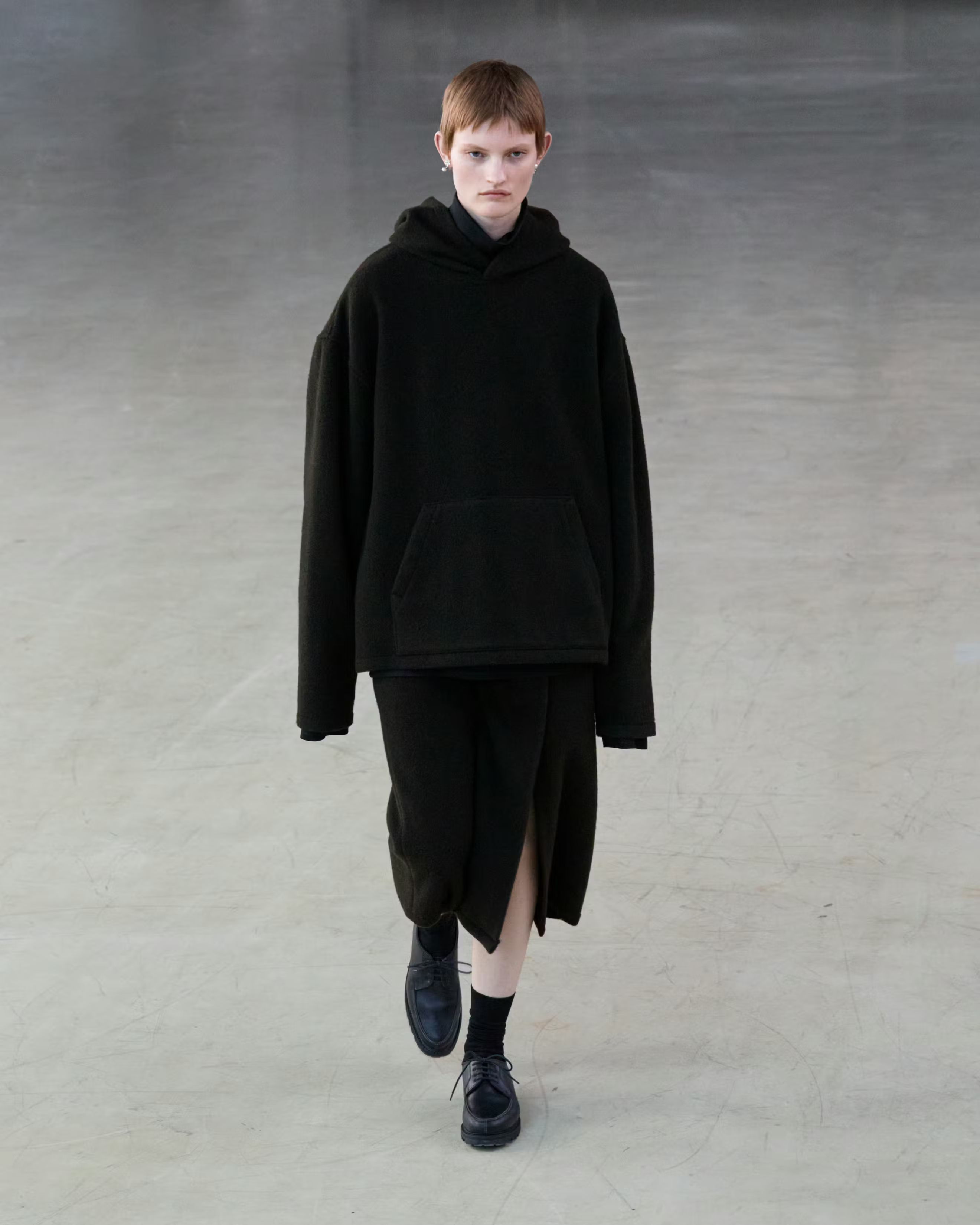
How many clothing brands aren’t inspired by their founders’ upbringing? But Prada and Miu Miu-trained Andreas Steiner’s home is rarely explored in fashion. His label, Rier, takes cues from the remote region of Tyrol — specifically, the useful garments worn by its mountain-dwelling populace. Tyrolean functionality isn’t techwear; it is organic fabrics designed to combat challenging weather. Rier’s Walker Gilet, for instance, is a wind-fighting mid-layer woven and felted like those used since the Middle Ages. And its signature Polar Fleece is a wool revision of the pullovers hikers wore in the ‘80s and ‘90s. Every Rier piece is produced in Austria or Italy, which border Tyrol, but so all-over stylish that they could only have been created by someone schooled in the global art of great taste.
Henrik Lundell / Courtesy of Saman Amel
Henrik Lundell / Courtesy of Saman Amel
Saman Amel
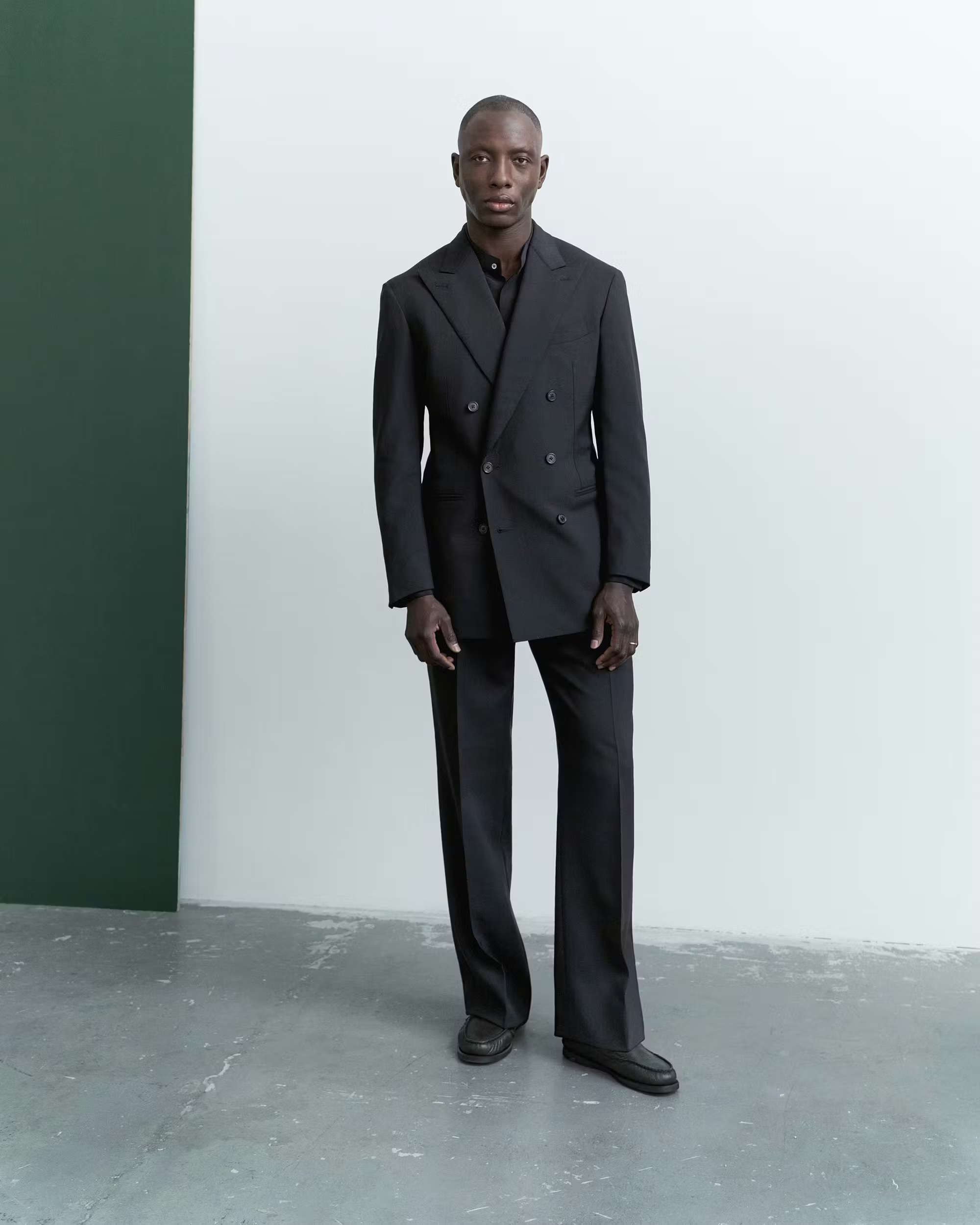
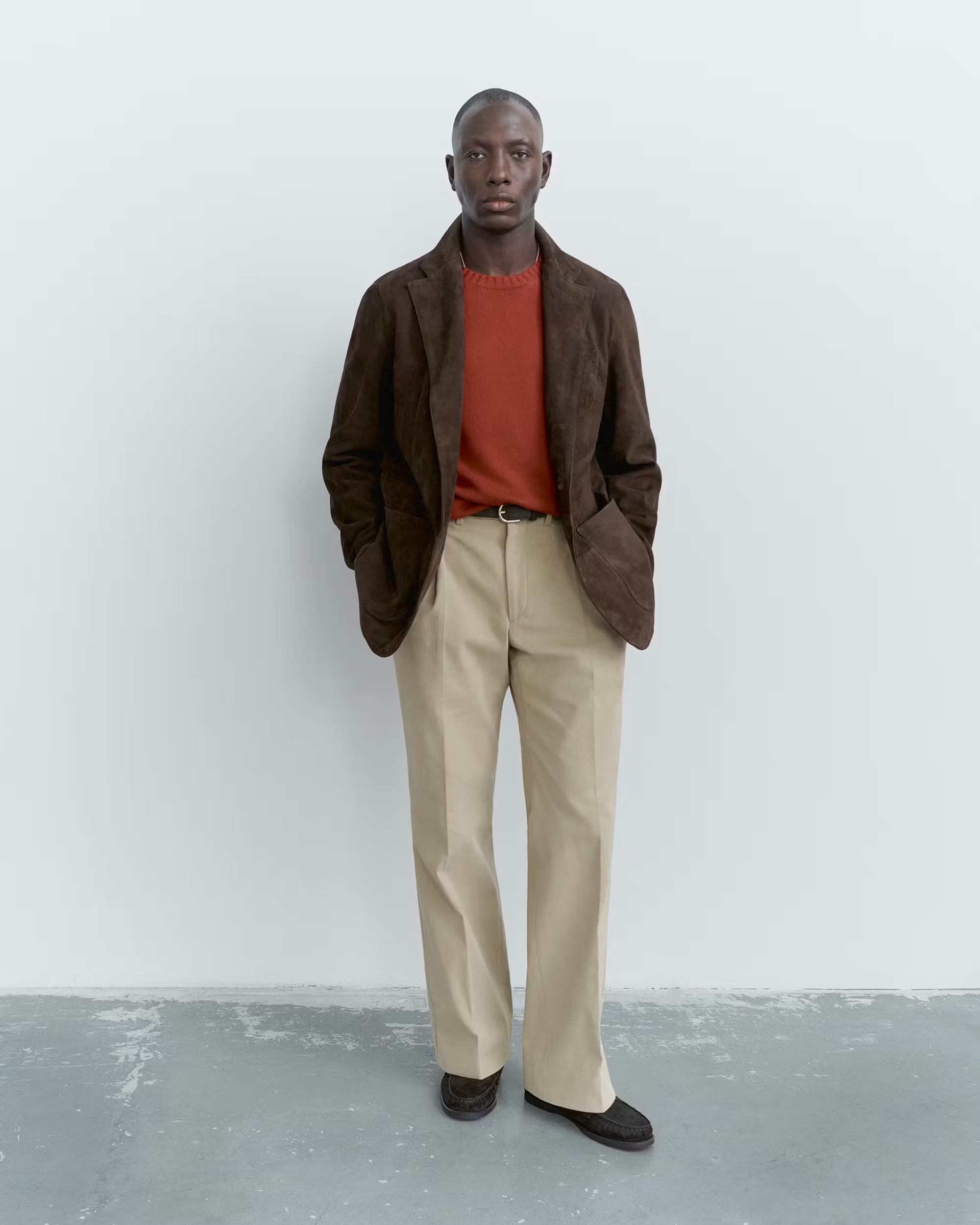
Saman Amel’s mission statement may very well stand in for the good clothes project itself: “A good wardrobe is a well curated wardrobe, based on garments made to last.” The atelier produces exquisite made-to-measure menswear of a uniquely agreeable sort. These aren’t the fade-into-the-background suits of old, but contemporary formal-casual duds immensely classy and enormously unstuffy. It feels cliché to invoke someone like Steve McQueen, but Saman Amel’s unbothered menswear is imbued with a timelessness inherent to the forefathers of good style. It’s in the brand’s peak-lapeled blazers, draped over the shoulders with the ease of cardigans, and covered-placket shirts that call out to be worn untucked and even unbuttoned. Rules were made to be broken.
Koji Shimamura / Courtesy of ssstein
Koji Shimamura / Courtesy of ssstein
ssstein
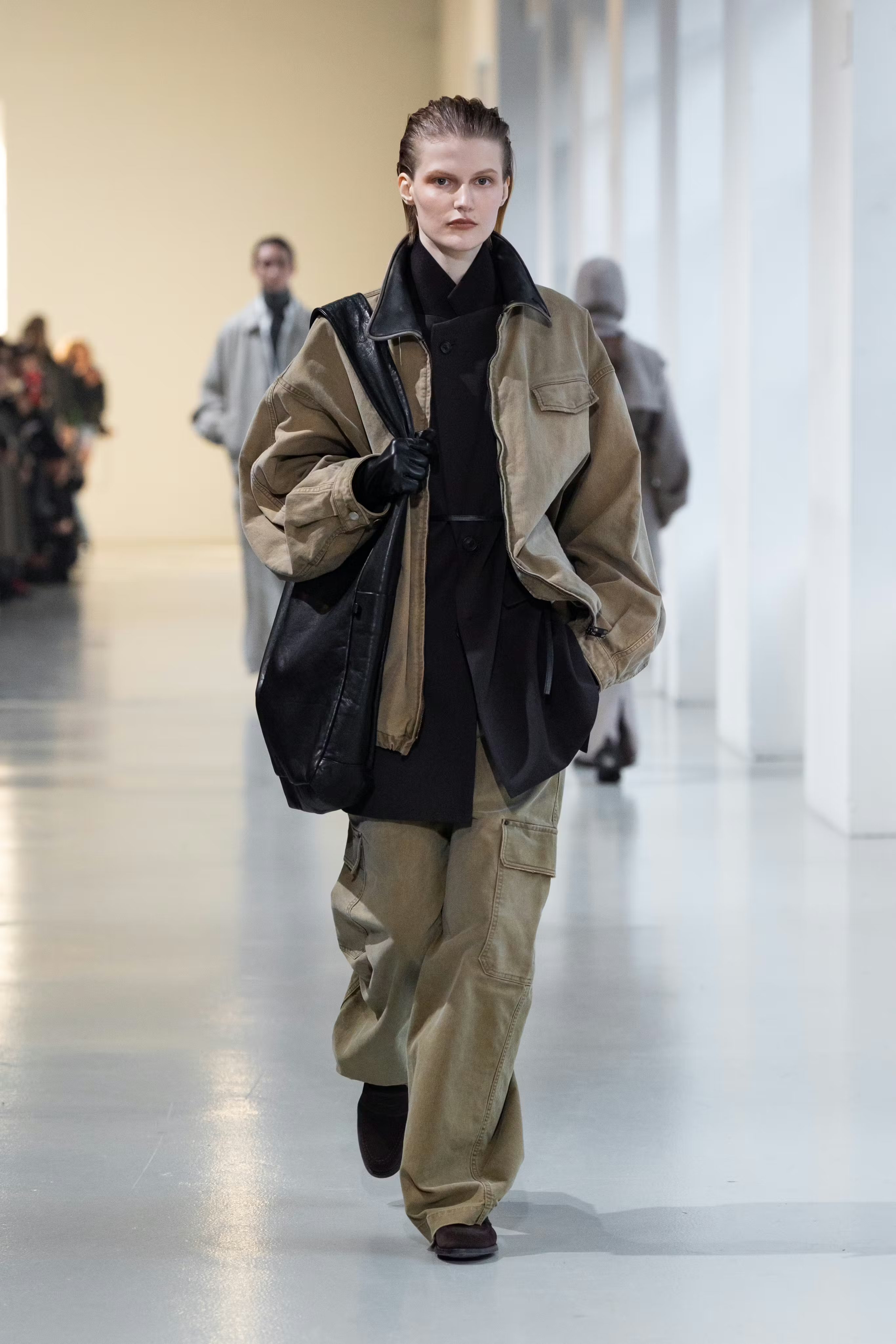
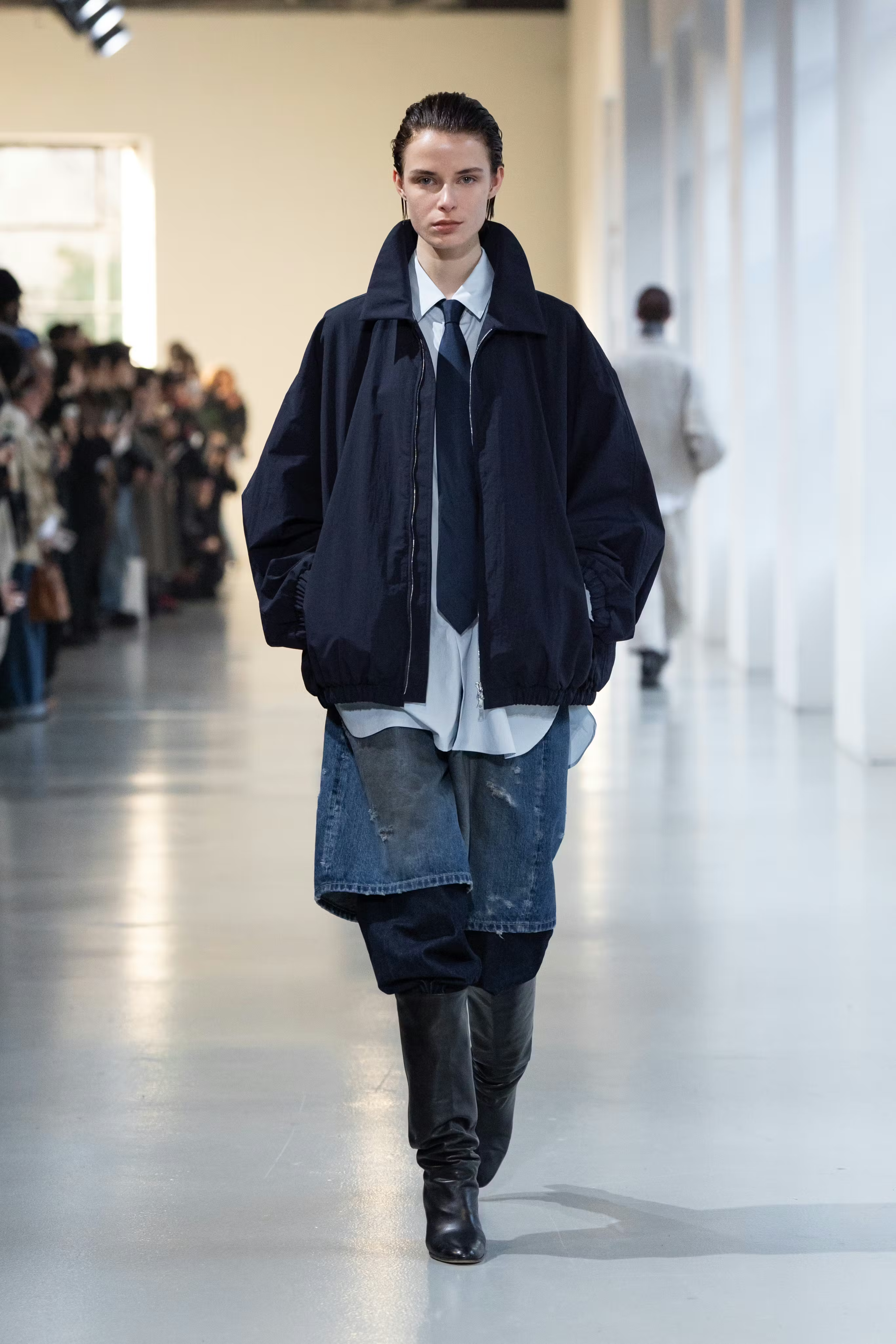
ssstein founder Kiichirō Asakawa may be self-taught, but his implicit influences, which range from Martin Margiela’s Hermès to old-school militaria, reveal a deep appreciation for intellectual design. ssstein’s clothes are neutral in tone and luxurious in make. Checked shirts, pocket tees, pleated slacks, and peak-lapel blazers are the definition of “anti-fit” — just loose enough to drape around one’s form. This just-so bigness is a ssstein specialty, revealing an appreciation of ’80s power dressing, albeit from a more modest perspective. This makes sense, given Asakawa’s fixation on sourcing vintage garments for inspiration. ssstein’s clothes, however, are entirely its own.
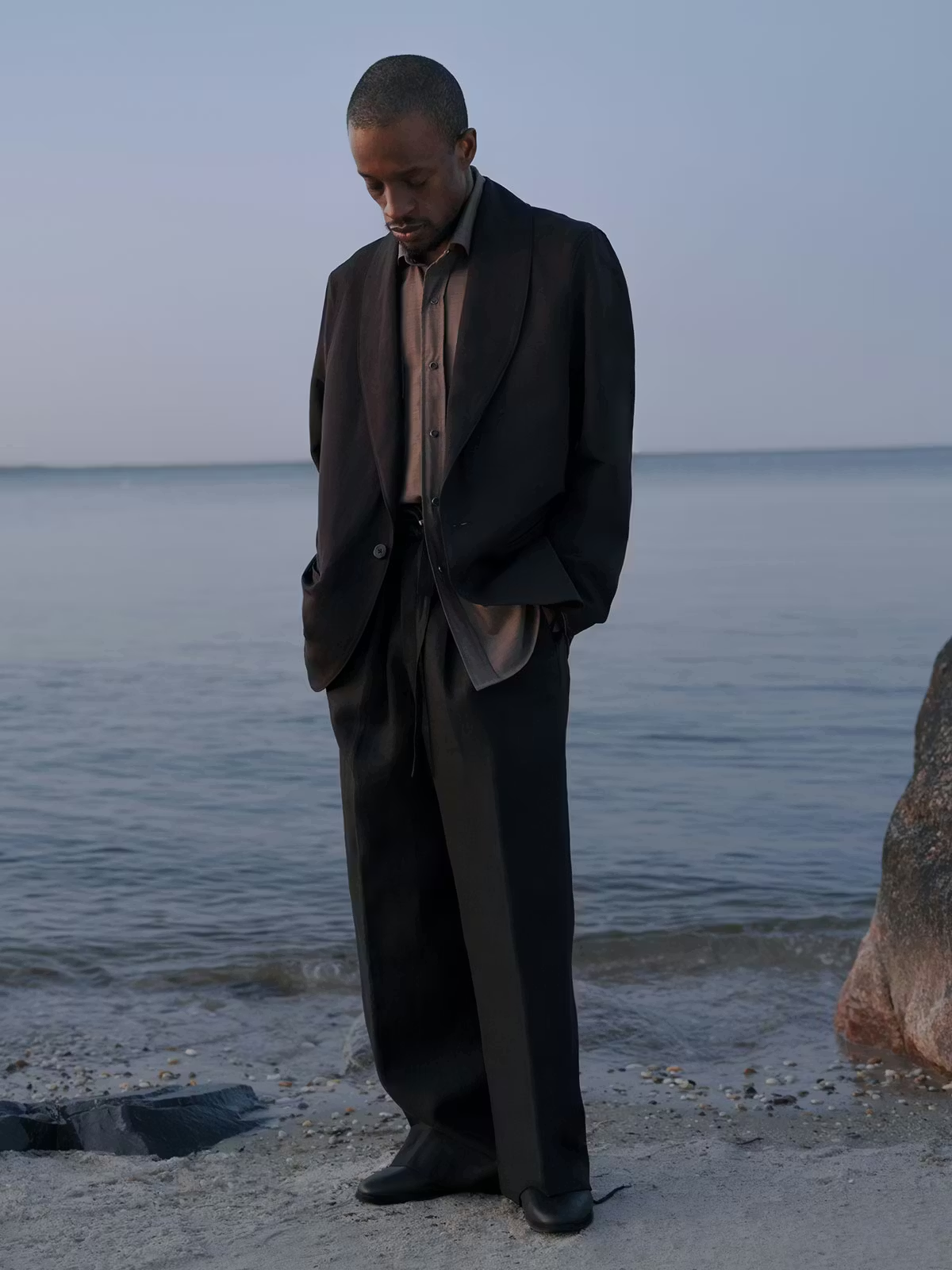
Taj Reed / Courtesy of Stòffa
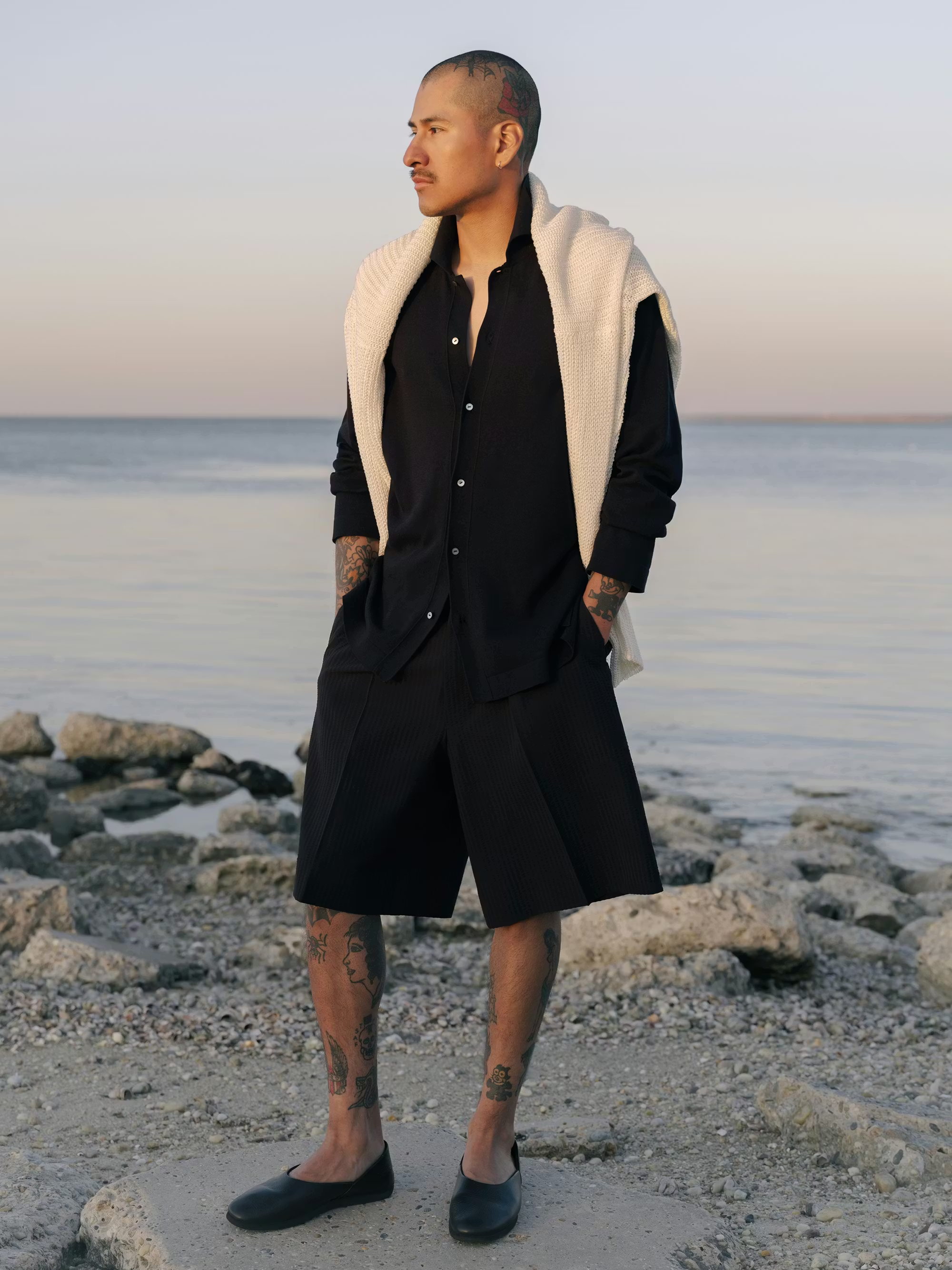
Taj Reed / Courtesy of Stòffa
Stòffa
Stòffa began as a concise offering of hats and ties. A decade later, it became the face of the ever-dissolving line between formalwear and daily dress. That wasn’t necessarily the plan, but the best things are often born of a restless urge to create and refine. After establishing a made-to-order clothing program, Stòffa began to dabble in all-natural ready-to-wear at the behest of certified good clothes retailer C’H’C’M’. Now displayed at Stòffa’s head-turning flagship store, a gallery of exquisite taste amid an otherwise barren strip of SoHo, the brand’s handsome single-hued band-collar shirts, knitted tees, wool and silk shirt-jackets, and side-adjuster slacks make their own case to passersby.
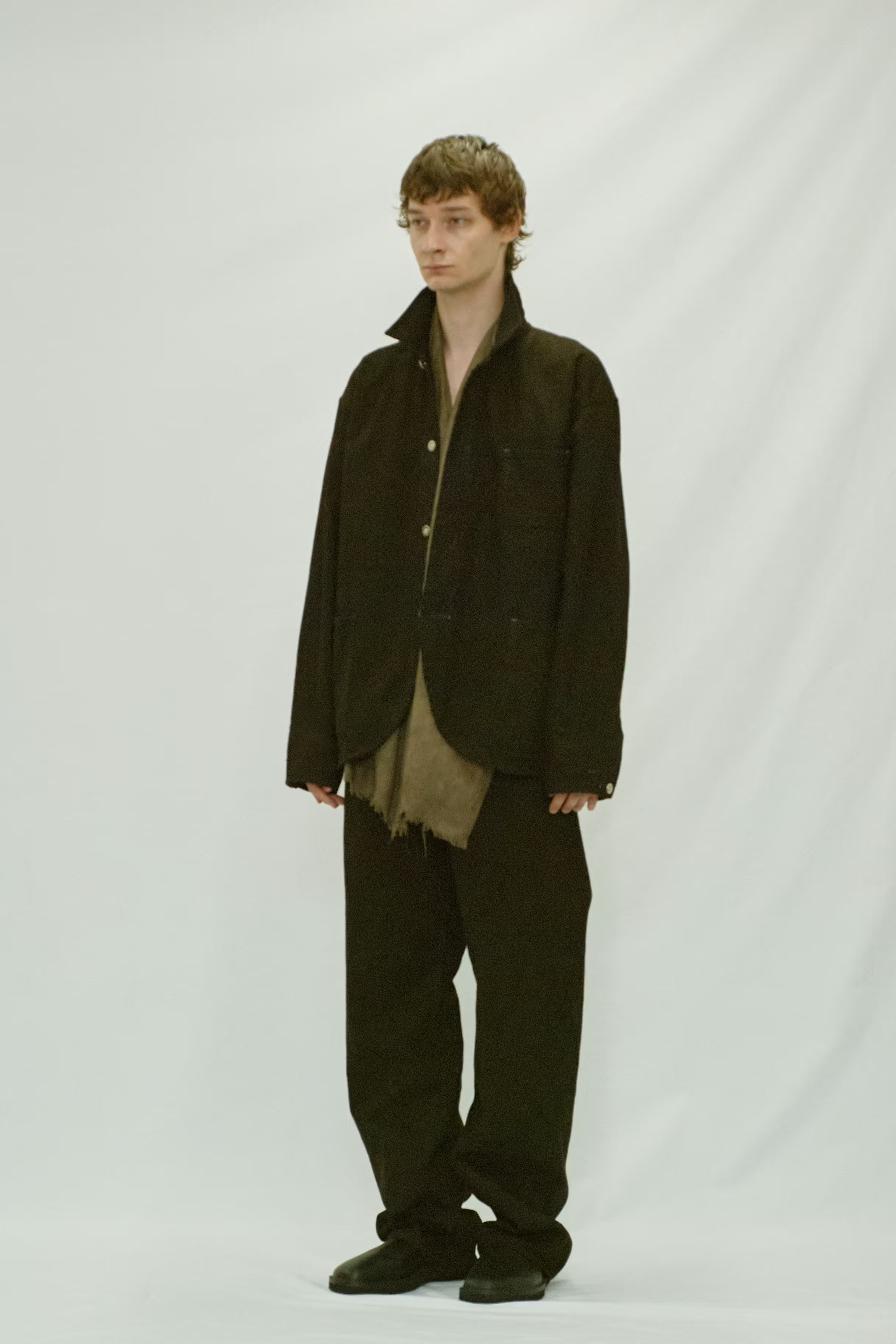
Yuma Tanaka / Courtesy of Yoko Sakamoto
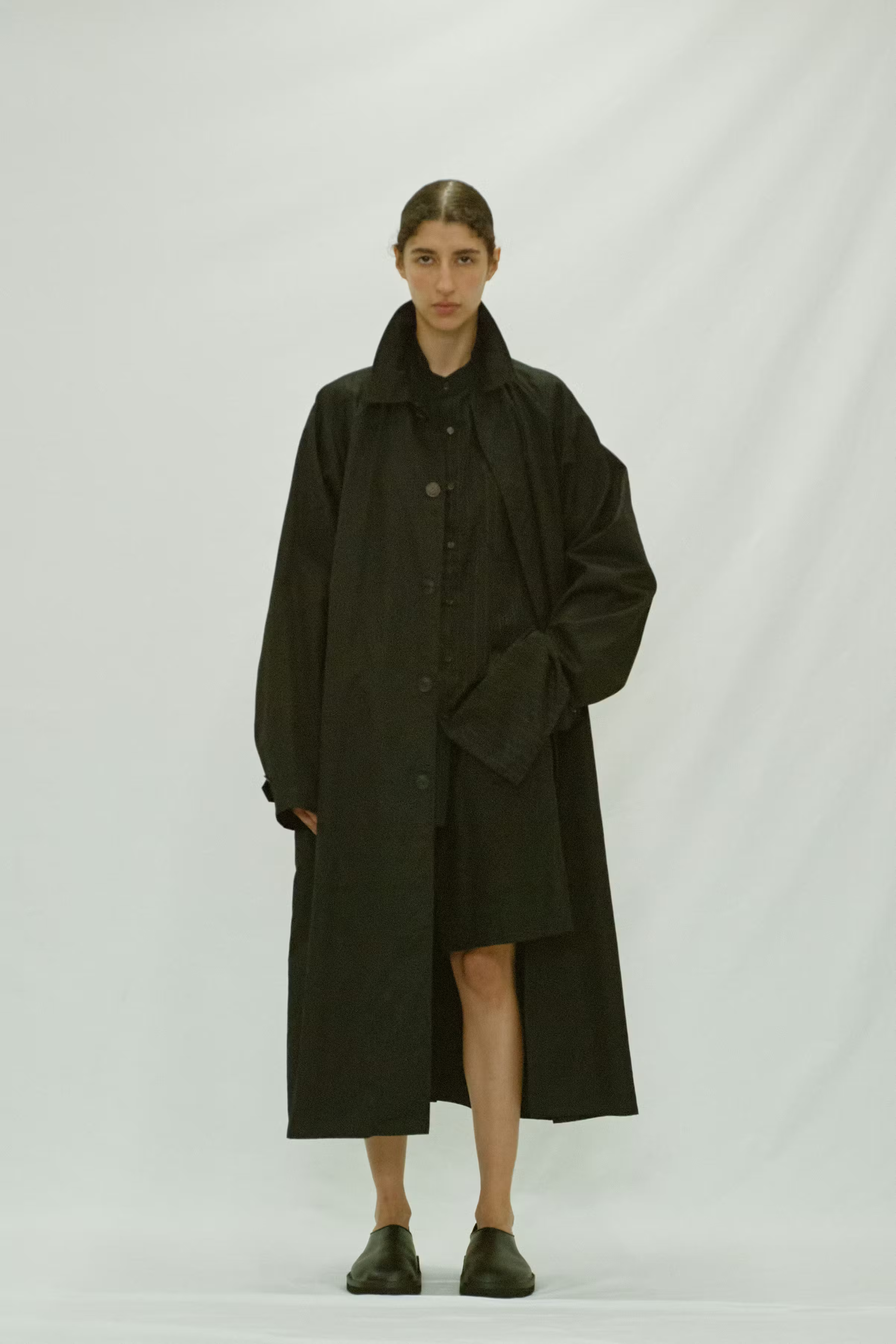
Yuma Tanaka / Courtesy of Yoko Sakamoto
Yoko Sakamoto
By the time Yoko Sakamoto founded her eponymous line, her ethos was fully formed, from the hand-dyed textiles to the relaxed-cut garments informed by historic workwear and artisan wardrobes. It’s difficult enough to make clothes simultaneously suave and fascinating, but Sakamoto also imbues them with a human touch. Her collections have grown over the seasons but are still quite perfect, a wearable spread of washed-out denim, full-figured but lightweight shirts, generous blue-collar outerwear, and leather footwear elegant enough for a painter’s studio. The clothes are cut wide and abrupt, but it’s the varying “imperfections” — the organically treated fabrics and paint-splattered denim and handwoven sakiori scarves — that make it all feel sublime.
Credits
By: Jake Silbert
Editor-in-Chief: Noah Johnson