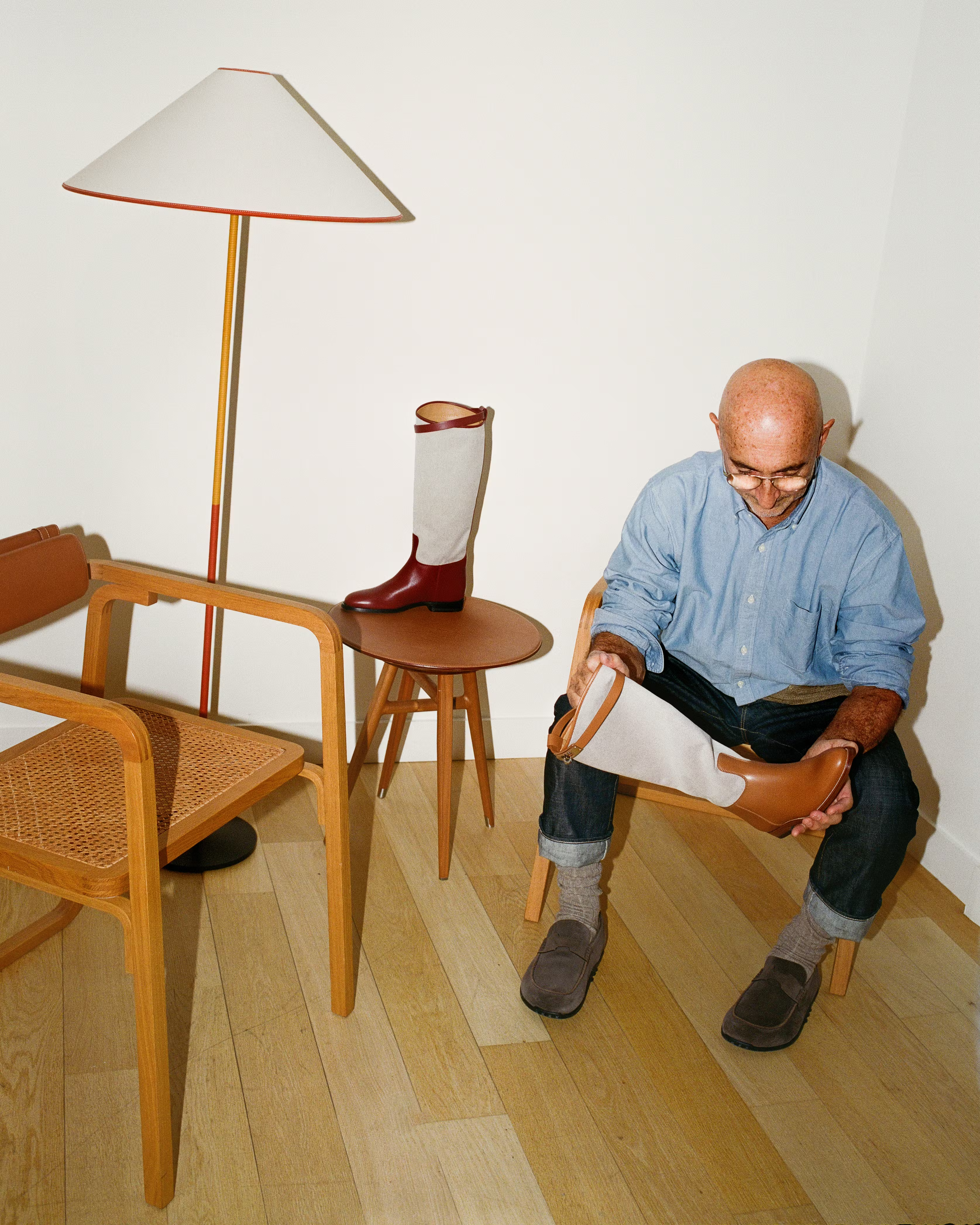
Hermès’ Footwear Designer Has Defined
the Shoe Agenda for Three Decades
By Divya Bala
Photographed by Axel Aurejac
Video by Enzo Farrugia
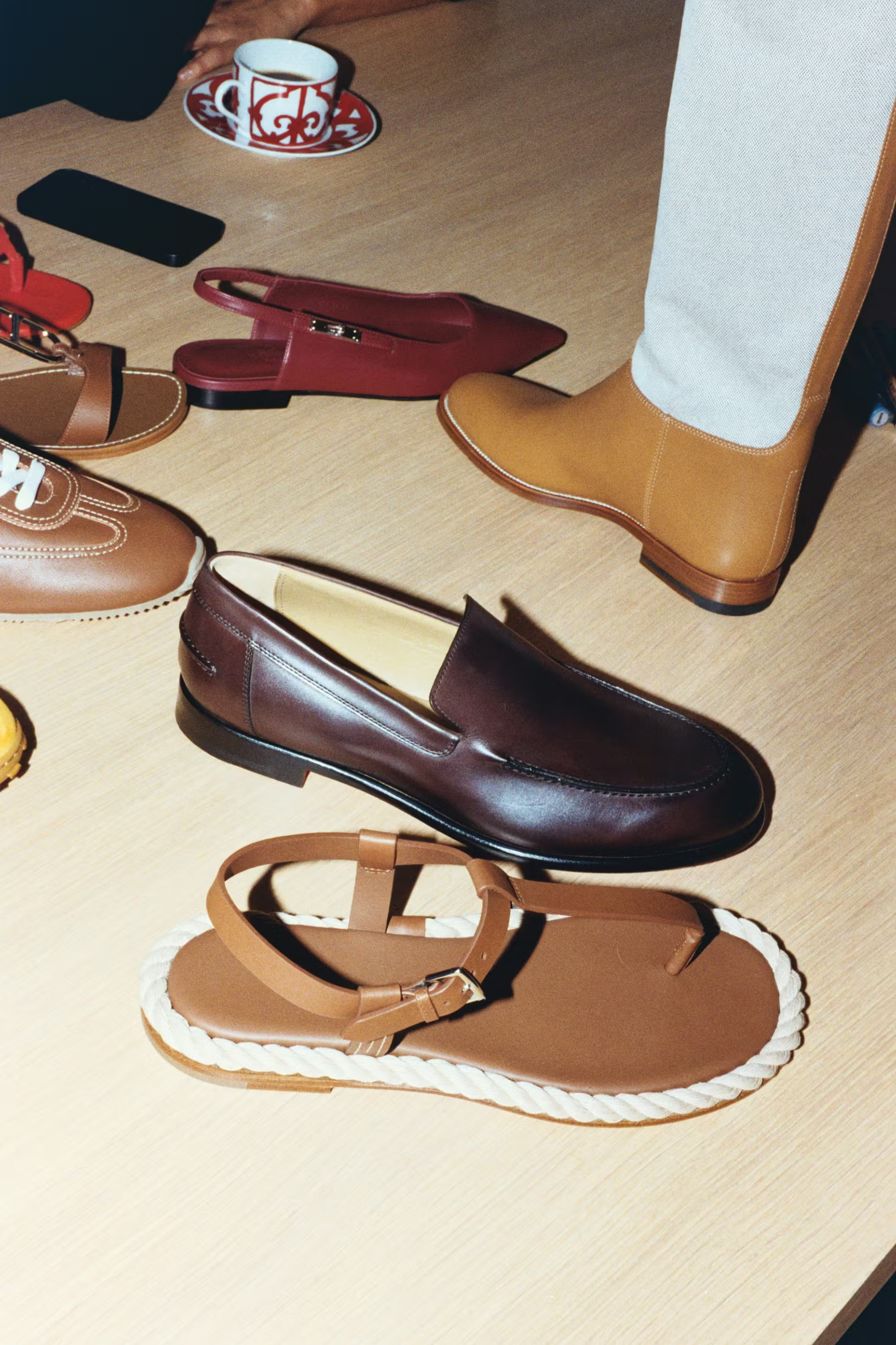
At the Hermès offices above Paris’ 8th Arrondissement, the table is set with madeleines piled and fanned like flower petals, clementines still wearing green stems, and coffee served in the house’s red-and-white teacups. Pierre Hardy arrives without fanfare in a blue shirt and cuffed jeans, a taupe knit tied around his waist. He’s wearing brown moccasins, fawn-colored socks, and a few sentimental accessories: a wedding ring dotted in oblong diamonds, a gold chain, and a Rolex. A smattering of freckles betrays his love of the Mediterranean sun.
Hardy, who turned 70 in February, has been designing footwear for Hermès since 1990, expanding his remit to include high jewelry in 2001 and, more recently, the design of the house’s beauty packaging. It’s a tenure that has allowed him to build an entire category from the ground up, a rare structure within luxury: a house that entrusts footwear to a single, public-facing creative director over decades. It’s perhaps why Hermès shoes feel so assured, and why Hardy’s influence is so widely felt.
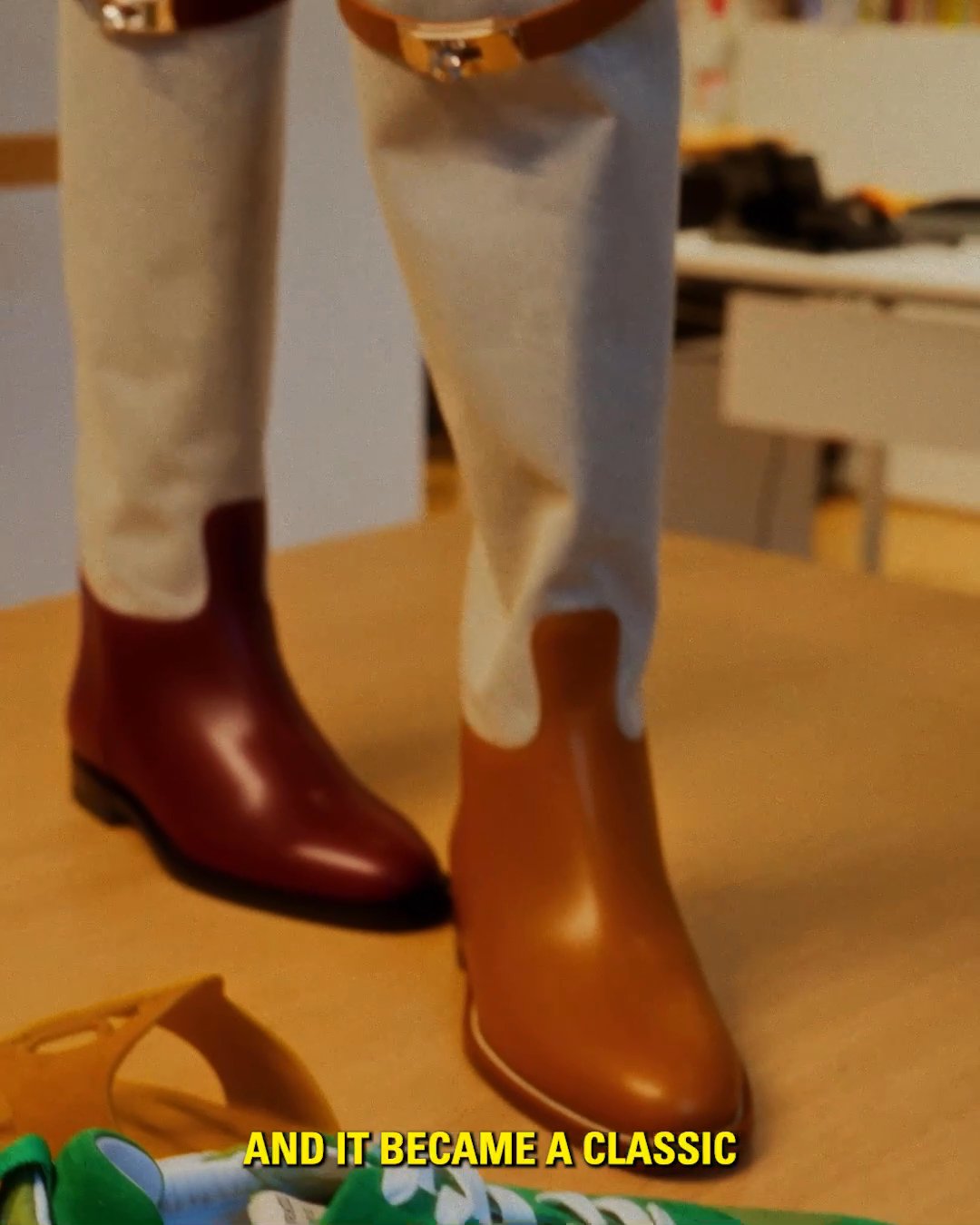
In 1997, Hardy introduced the Oran, that “barefoot” sandal defined by its H-shaped leather upper that has remained in production ever since. The following year, he produced the Quick sneaker — the first all-leather luxury sneaker not designed for sport, long before the category formally existed. At a canonically understated house, moments of audacity have emerged by Hardy’s hand, such as the Sputnik satellite-inspired Tango sandals from Spring 2019, or the Spring 2020 Audace with its sculptural, transparent block heel. Still, “there’s no strategy,” Hardy says of his own prescience. “It’s not, ‘Oh, I have a genius idea, let’s do this and I’m sure in 20 years’ time it will still be there.’ No, it just happened.” He shrugs. “The aim is not to achieve something for the future; the aim is to try and try and try again. But you never know.”
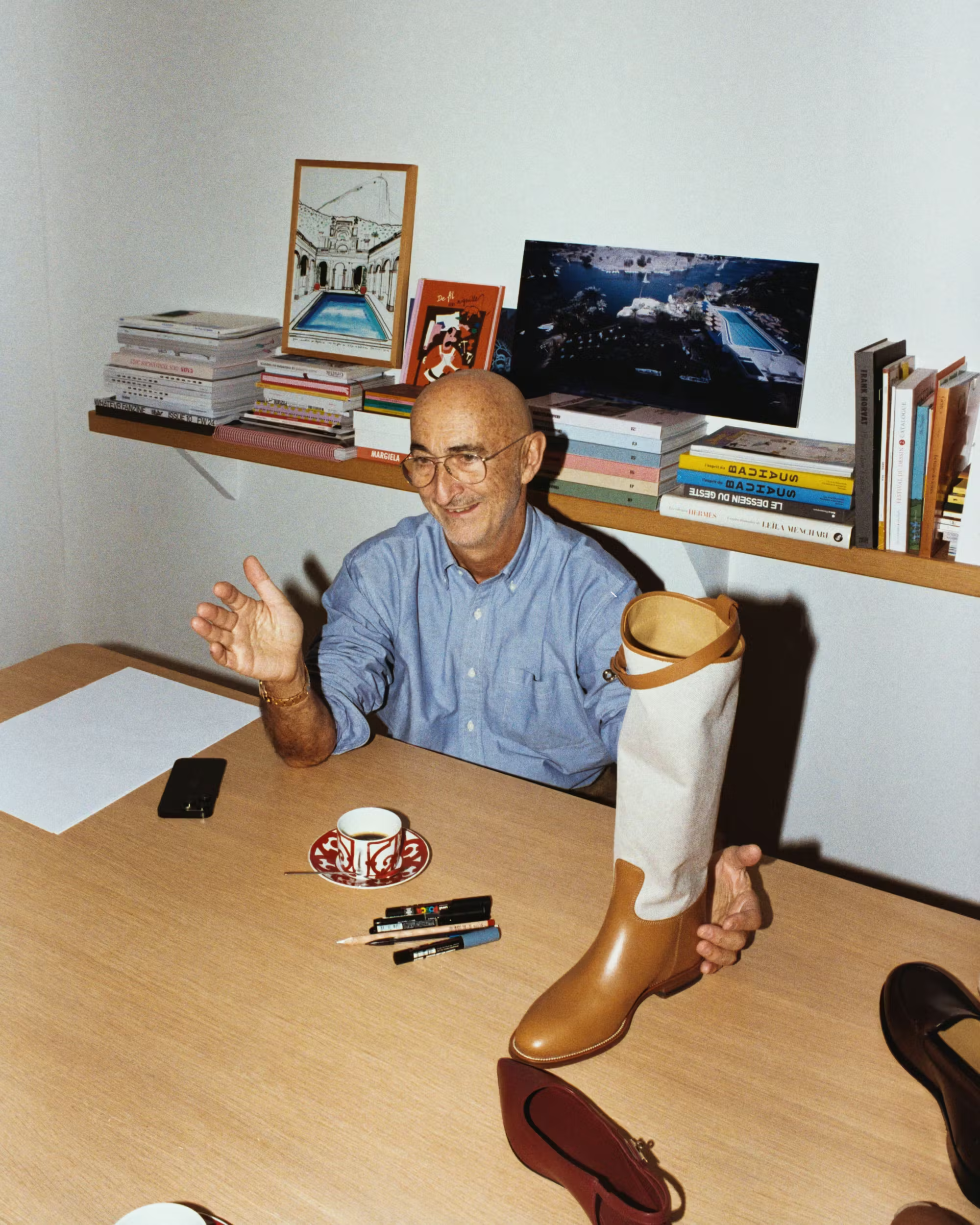
Raised in Paris by a ballerina mother and a PE teacher father, and having trained in modern and contemporary dance for 15 years, Hardy’s understanding of design is inseparable from physical awareness. He studied fine arts at the École Normale Supérieure in Paris, and later taught applied arts and scenography. His earliest memories of footwear belong to his father’s running shoes, his mother’s dance shoes, and his own childhood flip-flops: a blend of sport, performance, and barefoot freedom that would yield some of his most fêted creations. “The body is very important as a starting point,” he says. “After many years, I realized that what I love most in my jobs is to address the body and to, in a way, take care of it.”
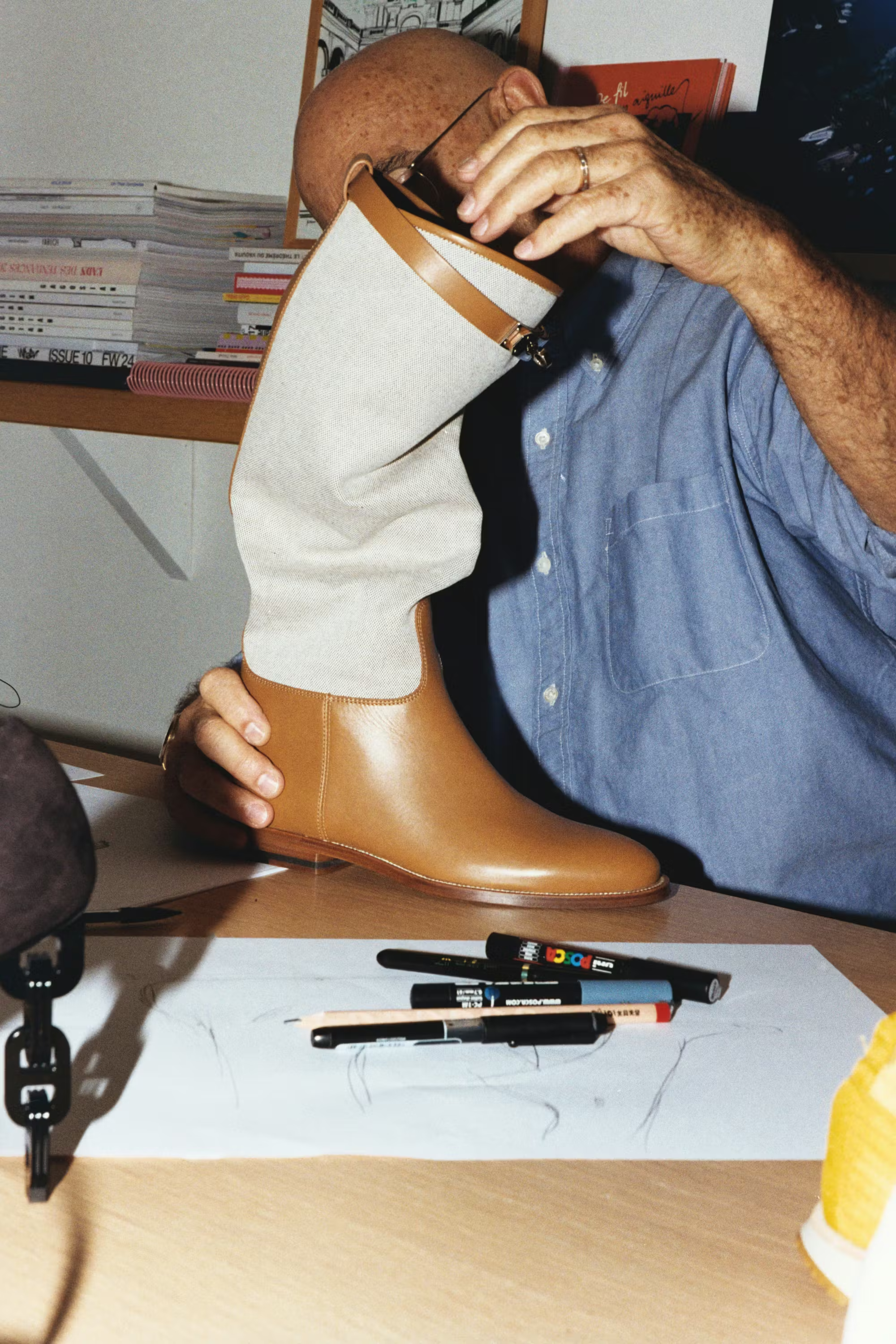
Hardy is a man of simplicity. He prefers summer to winter. He loves to drive (“This is my macho, sexual thing — my ‘bro’ thing!”) and lists his gray 1980s Mercedes 300SL as his long-time favorite. When asked what he treasures most, his answer is “time.” His art collection includes the work of Spanish sculptor Miguel Ortiz Berrocal and Italian artist and designer Vincenzo De Cotiis. But his most cherished possession is a childhood pop-up book of Cinderella, a miniature theater of transformations that he only later realized mirrored his own life — dance, drawing, shoes, fashion — unfolding into form.
Hardy didn’t set out to design shoes. While working as an illustrator for Vogue Hommes International in the late ’80s, his sketches caught the eye of the team at Christian Dior. After three years at Dior, Hardy moved to Hermès, where he was tasked with building the house’s nascent footwear category almost from scratch. But his creative output couldn’t be contained by one house; in 1999, he launched his eponymous label, a high-contrast graphic playground where he exercises his experimental impulses in parallel to his work for the heritage brand.
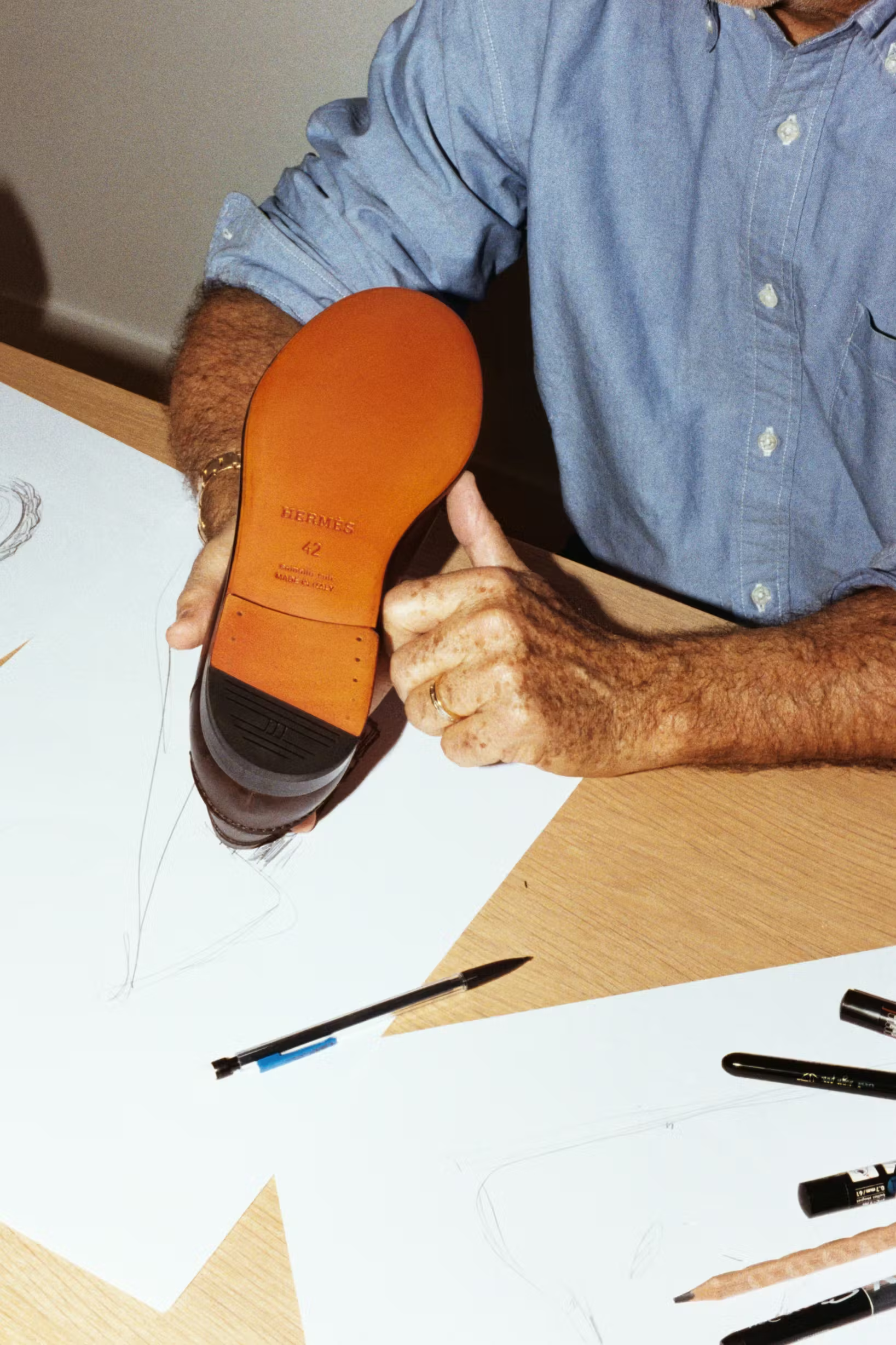
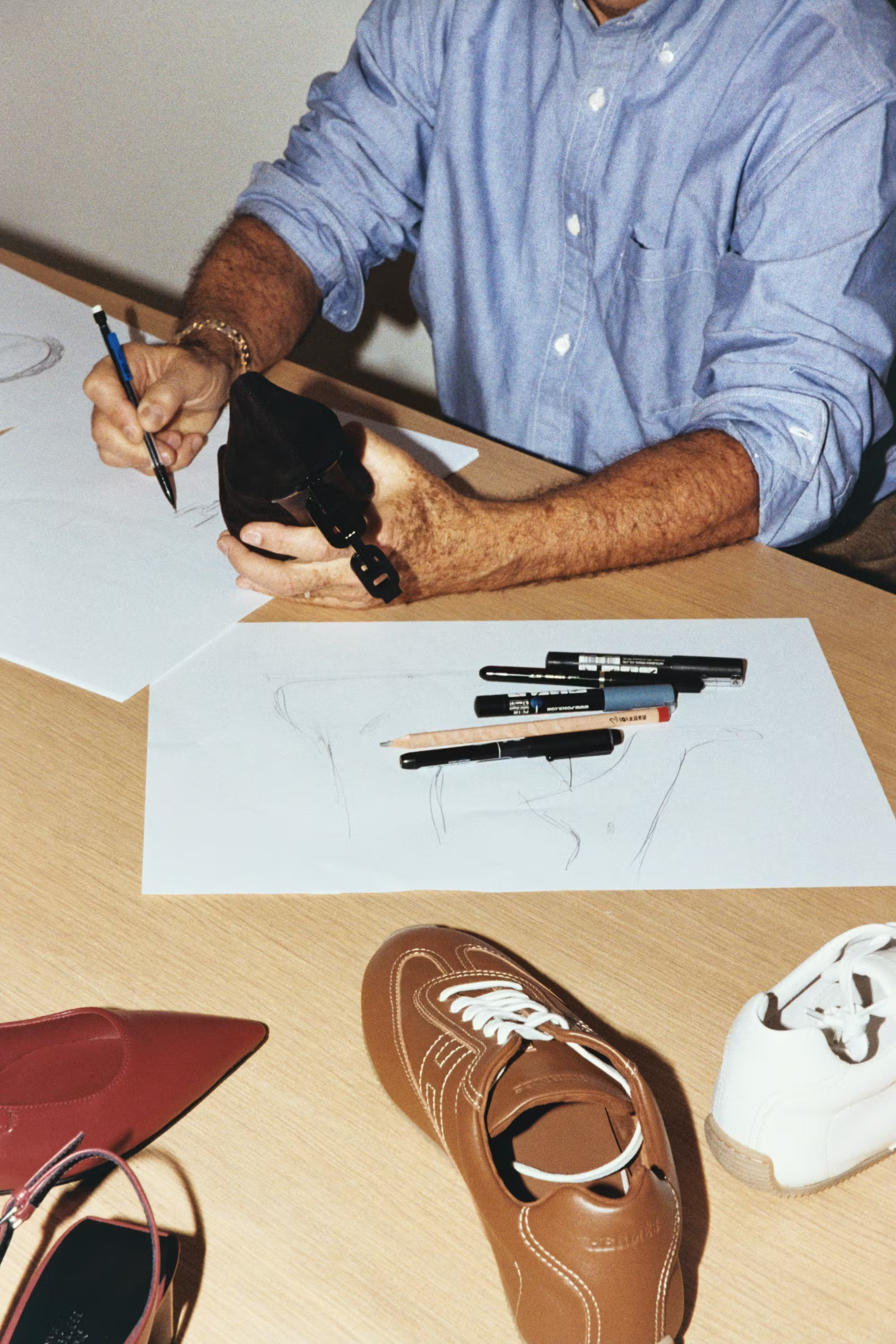
At the office, Hardy picks up a black shoe featuring Hermès’ chaîne d’ancre motif. When the photographer asks him to sketch it, Hardy laughs. “It’s very complicated to draw. It might take more time than we have,” he warns, before setting to work, mechanical pencil rhythmically scratch, scratch, scratching on a loose sheet of paper. He tilts his head from side to side, absorbed in the object’s geometry. Sketching, Hardy explains, is the purest part of the job, a preoccupation that started in childhood. “It’s the thing I prefer to do in life,” he says. “I could draw on an old envelope. There’s no ritual.”
Neither are there moodboards nor ceremonial beginnings to a collection. The work starts intuitively. “It’s not cerebral,” he says. “The first move is quite spontaneous, and then more rational, more effective, more efficient.” For women, design often begins with the question of the heel: height, proportion, balance. For men, it’s a question of volume and silhouette. Sandals are different. There, the foot becomes the starting point, drawn first and carefully, before the shoe is built on top. Hardy describes the process as a kind of puzzle, a maze with no definitive solution, only new exits to discover. “The foot will be the foot,” he says, dismissing the idea that its constraints might ever become frustrating.
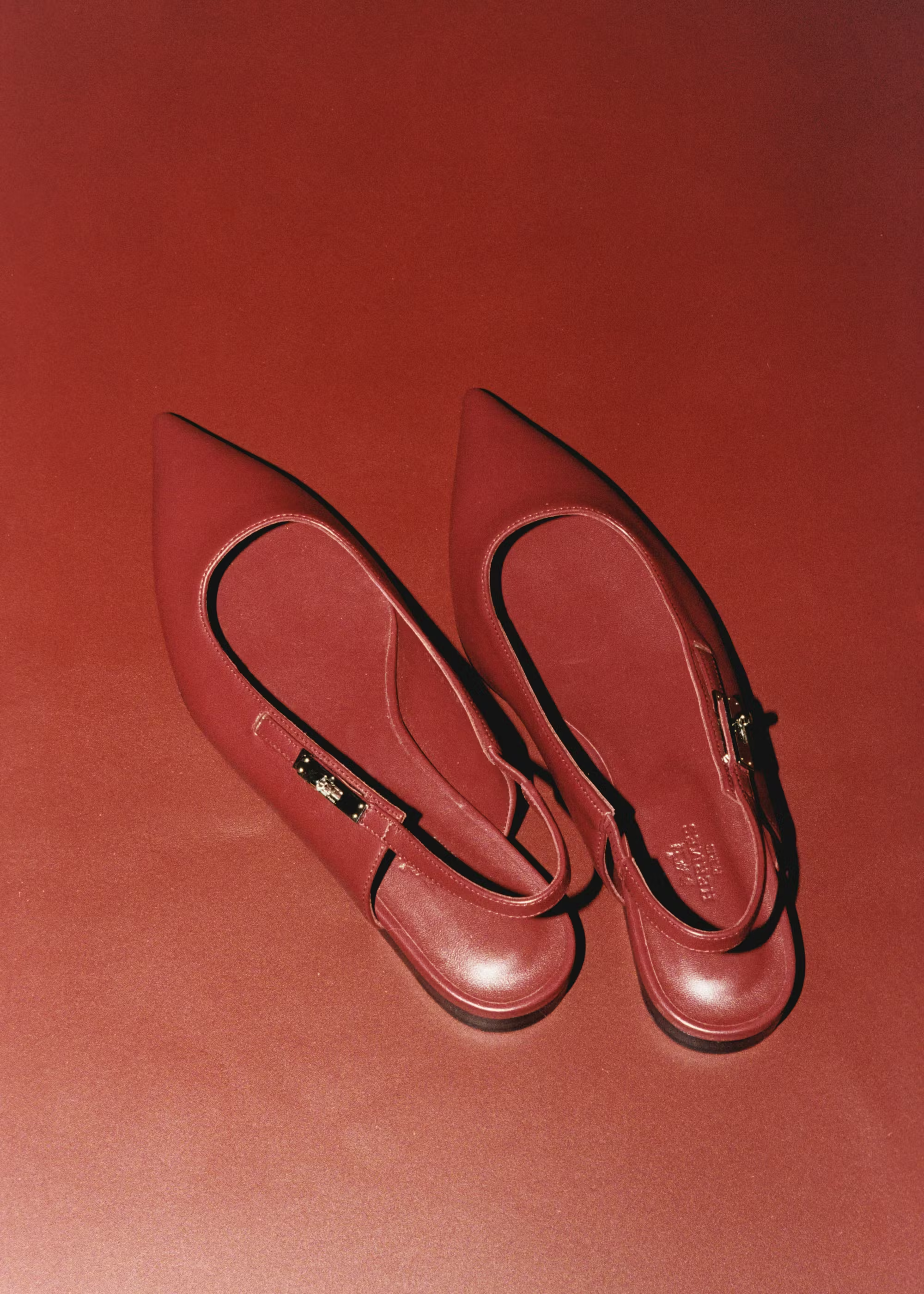
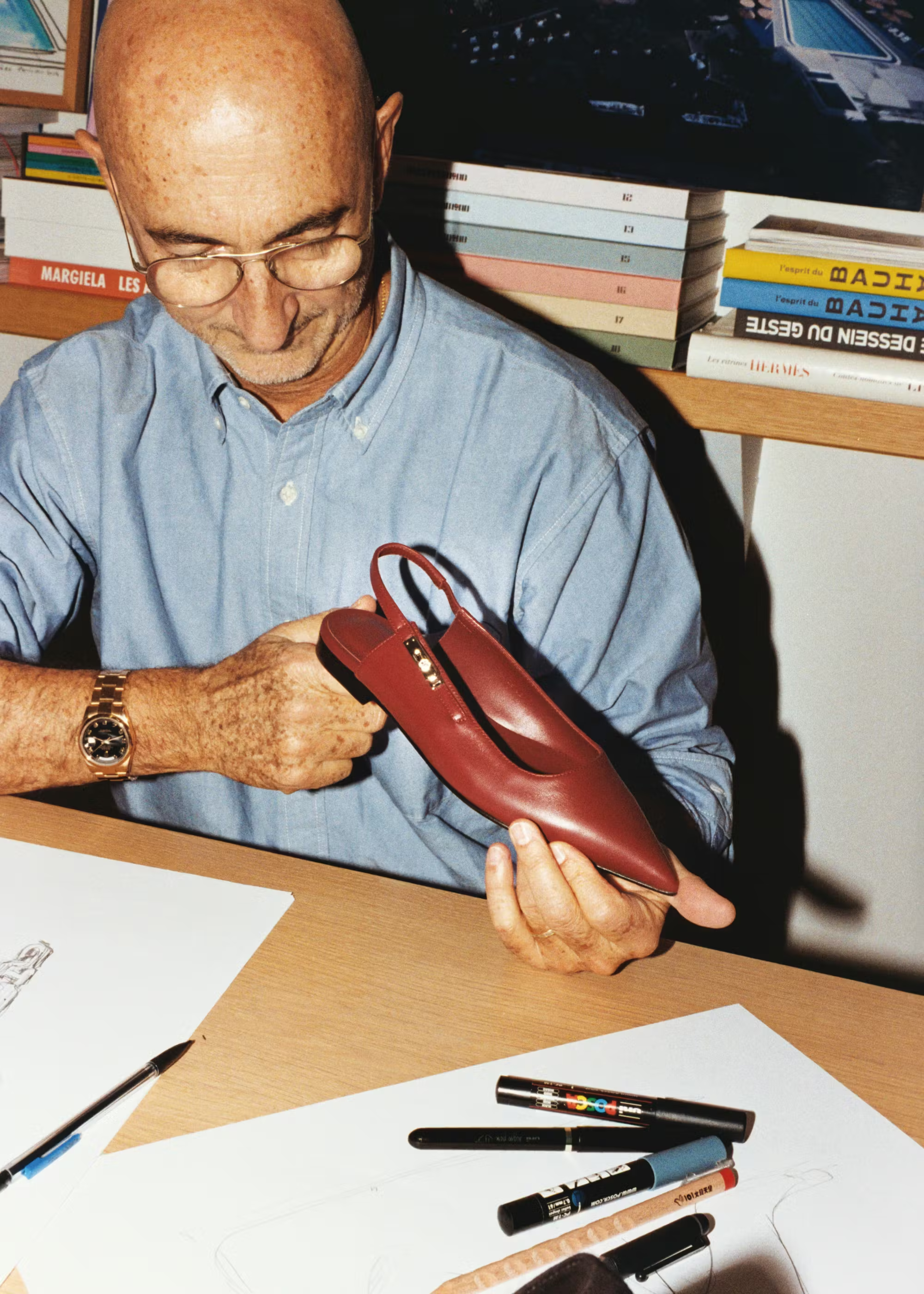
This is perhaps why the sandal recurs so persistently in Hardy’s work. “In the sandal there is some mythology,” he says of one of the oldest known forms of footwear. The pursuit of the perfect design is eternal. “It’s like Don Quixote. It’s something you can continue to aim [for] because there’s no end.”
Hardy’s three-decade-plus career is striking in an industry defined by turnover. “Frankly, I think it’s not the job” that’s burning people out, he says. “I think it’s the brands and the companies.” At Hermès, he has found a culture built on patience, respect, and continuity. Opportunities designing jewelry or beauty packaging arrived not through ambition, but invitation: “They see in me more than I see myself.”
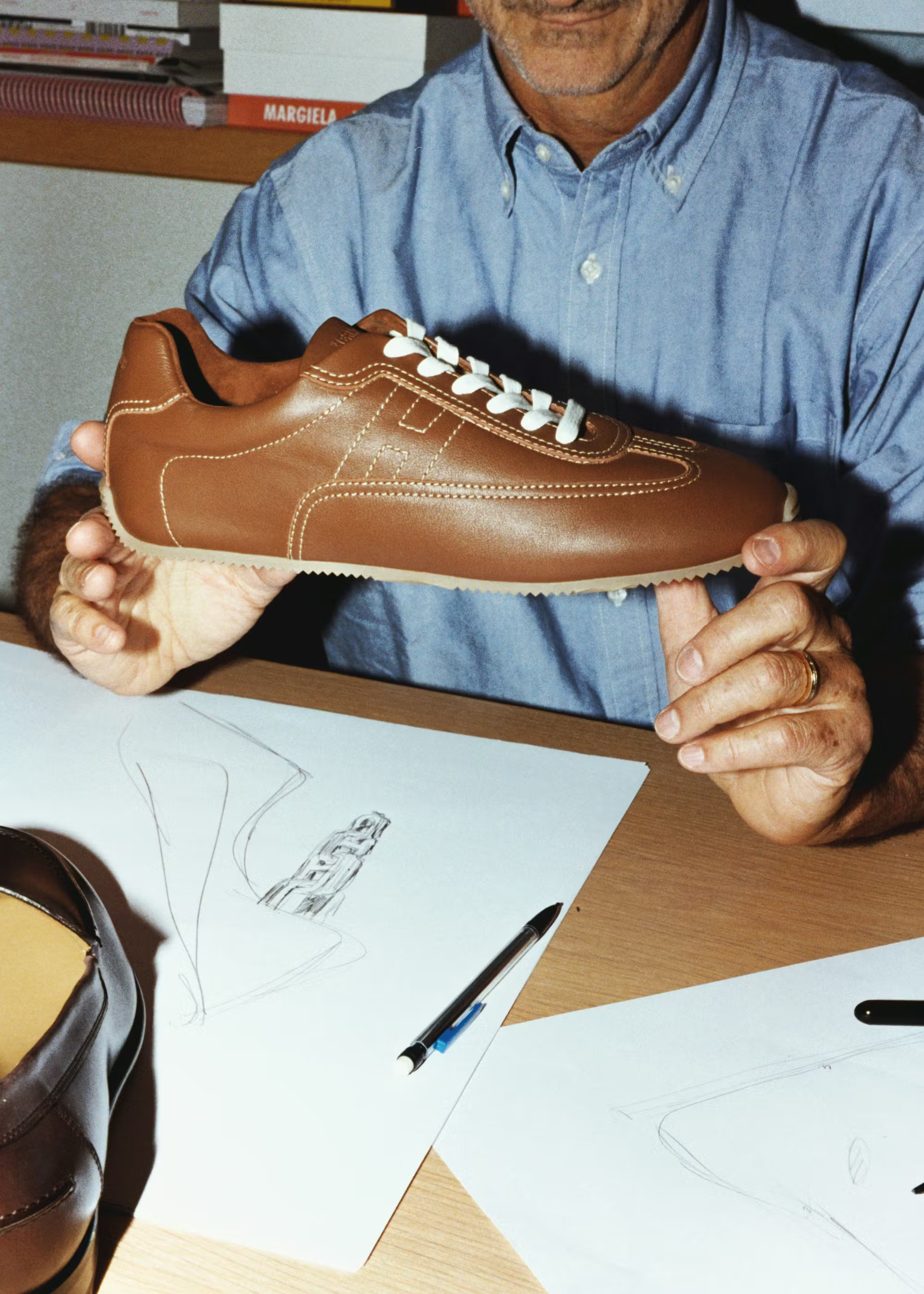
Despite overseeing both his own label and Hermès’ footwear and high jewelry collections, Hardy is careful to keep his worlds separate. When designing for Hermès, he describes becoming a character of sorts, thinking not about personal expression but about what the house is — and what it should be. Hermès designers work largely in silos. Hardy sees his creations styled into full looks only at the runway presentations. “It’s interesting,” he says. “It’s rarely the way I was imagining it.” With the arrival of Grace Wales Bonner as the house’s next creative director of menswear, his work will soon be incorporated into yet another designer’s vision.
In the meantime, he’s simply enjoying himself. “It’s fun,” Hardy says of his career, sliding across a perfectly rendered sketch of the chaîne d’ancre heel. “It’s a subject so narrow that the deeper you go, the more you discover subtleties and variation. You’re peeling the same object to reach its essence and perfection — and that never happens because perfection is always in regards to a moment.”
Credits
By: Divya Bala
Video by: Enzo Farrugia
Photographed by: Axel Aurejac