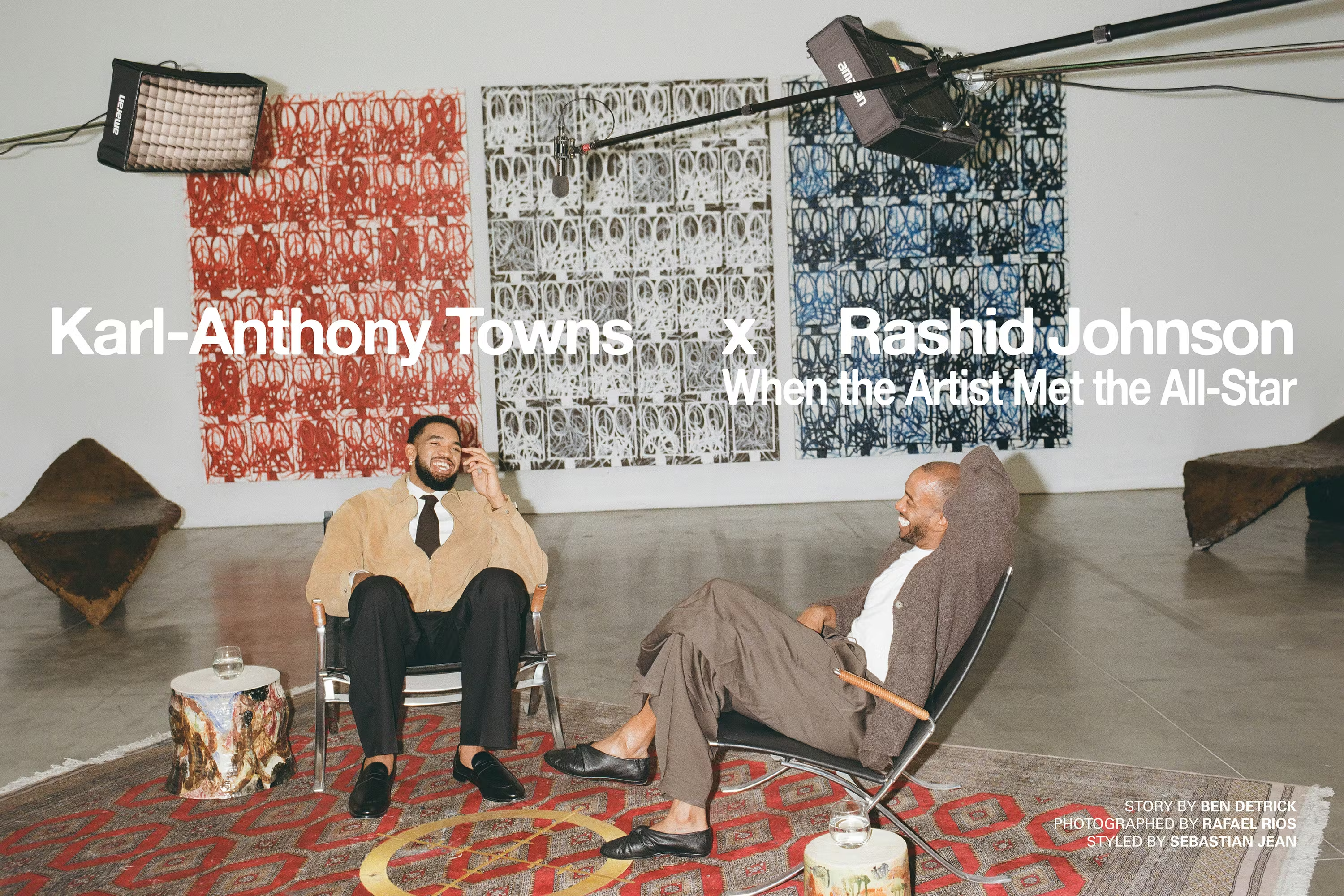
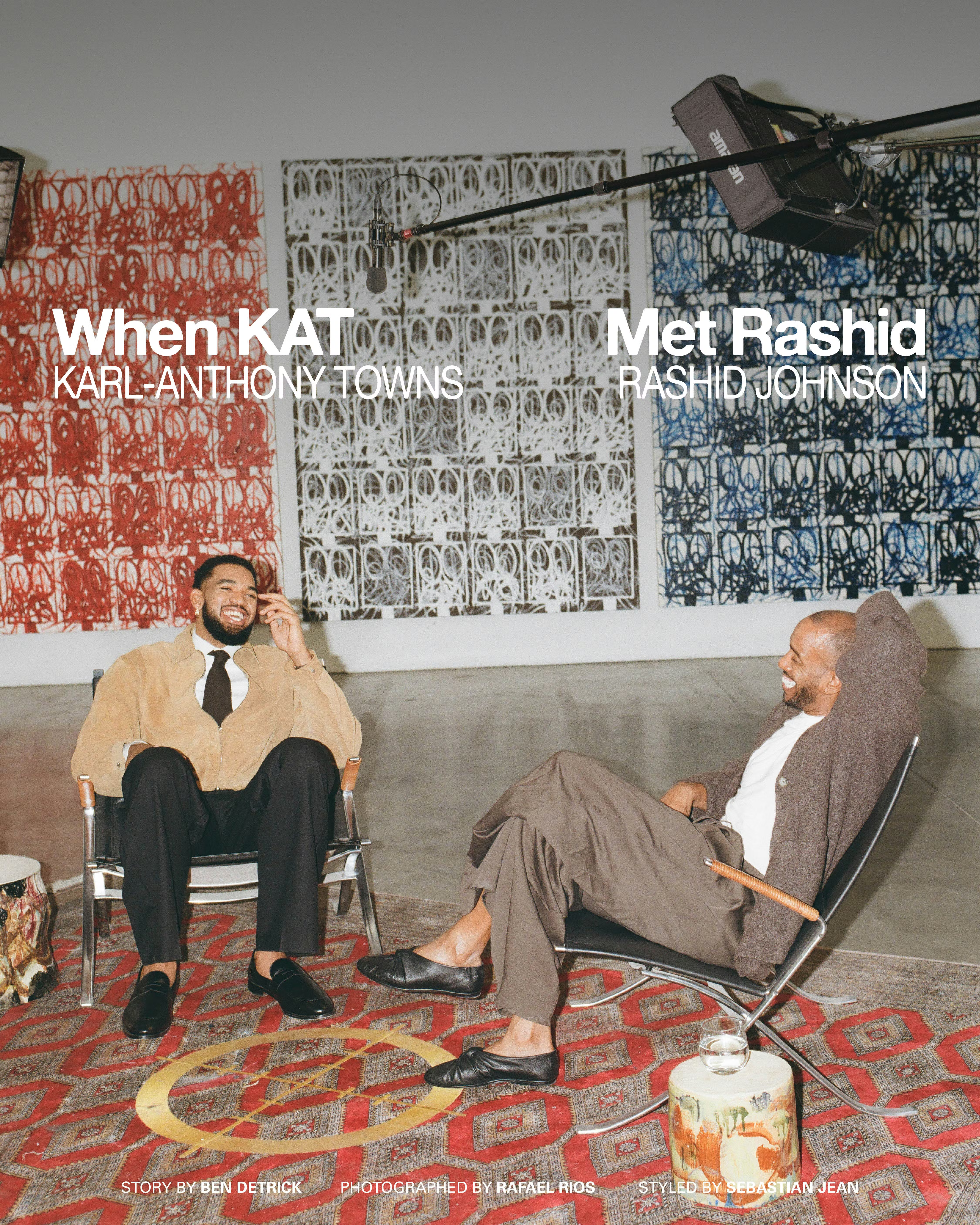
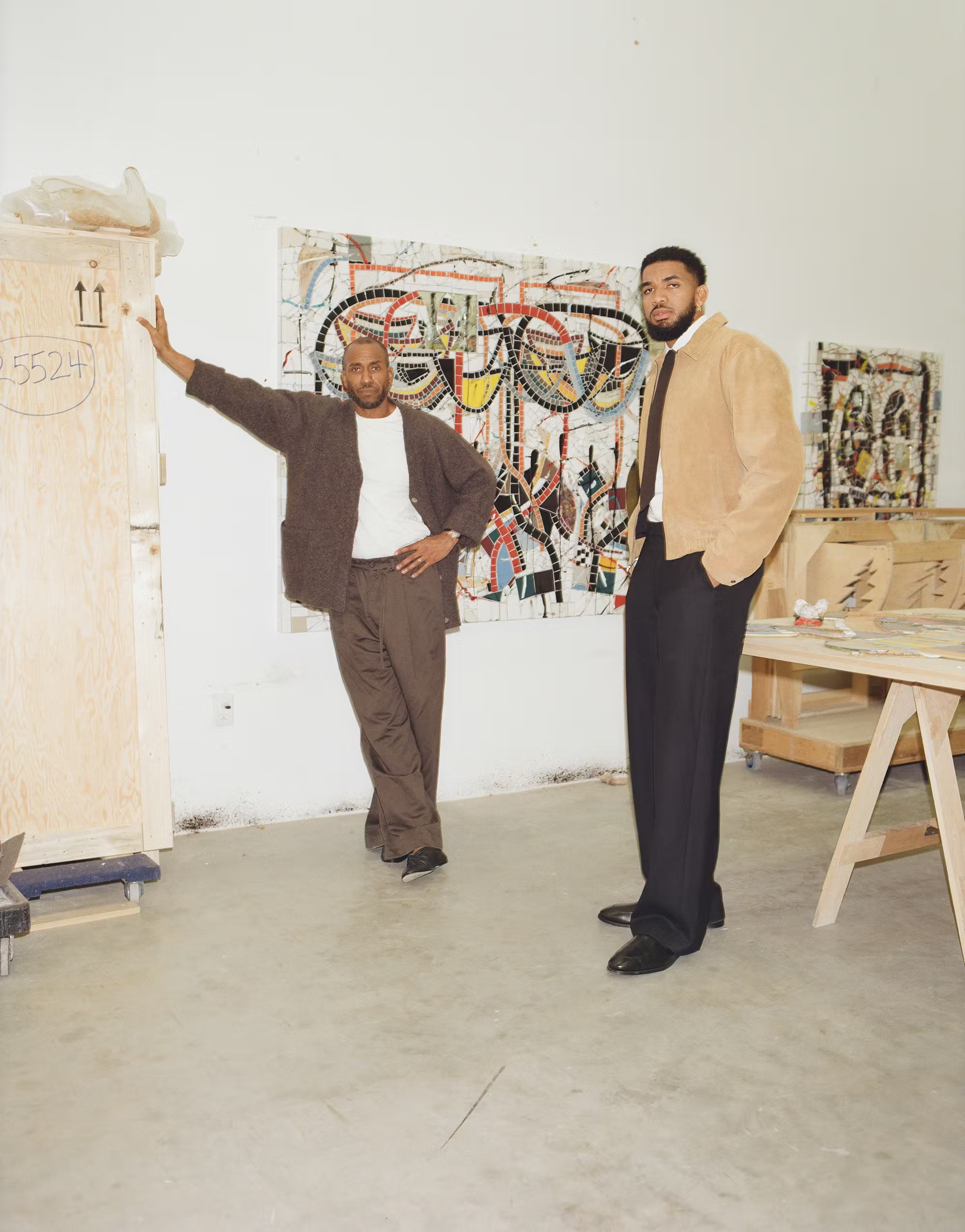
When Rashid Johnson, one of the most successful multidisciplinary artists of his generation, met Karl-Anthony Towns, the seven-foot All-Star center from the New York Knicks, there was an immediate connection. It was late April 2025, the Knicks were heading into the NBA playoffs, and Johnson’s blockbuster, career-spanning retrospective was opening to great acclaim at the Guggenheim. KAT walked in, they were introduced, and “it felt like the world was at a standstill,” Towns says. “Even for the five, 10 minutes we had together in that chaotic scene.”
The moment sparked a genuine friendship and another data point in the matrix between basketball and the art world. The 49-year-old Johnson, a Chicago native who’s lived in New York City for two decades, is known for work that explores Black identity and male vulnerability; his paintings have entered the collections of hoopers like LeBron James and Kevin Love while fetching sums in the low millions at auction. Towns, who just turned 30 and has been described as “the greatest shooting big man ever,” is relatively new to art collecting; the first piece he ever bought was from Johnson’s Anxious Men portrait series. But he’s eager to learn.
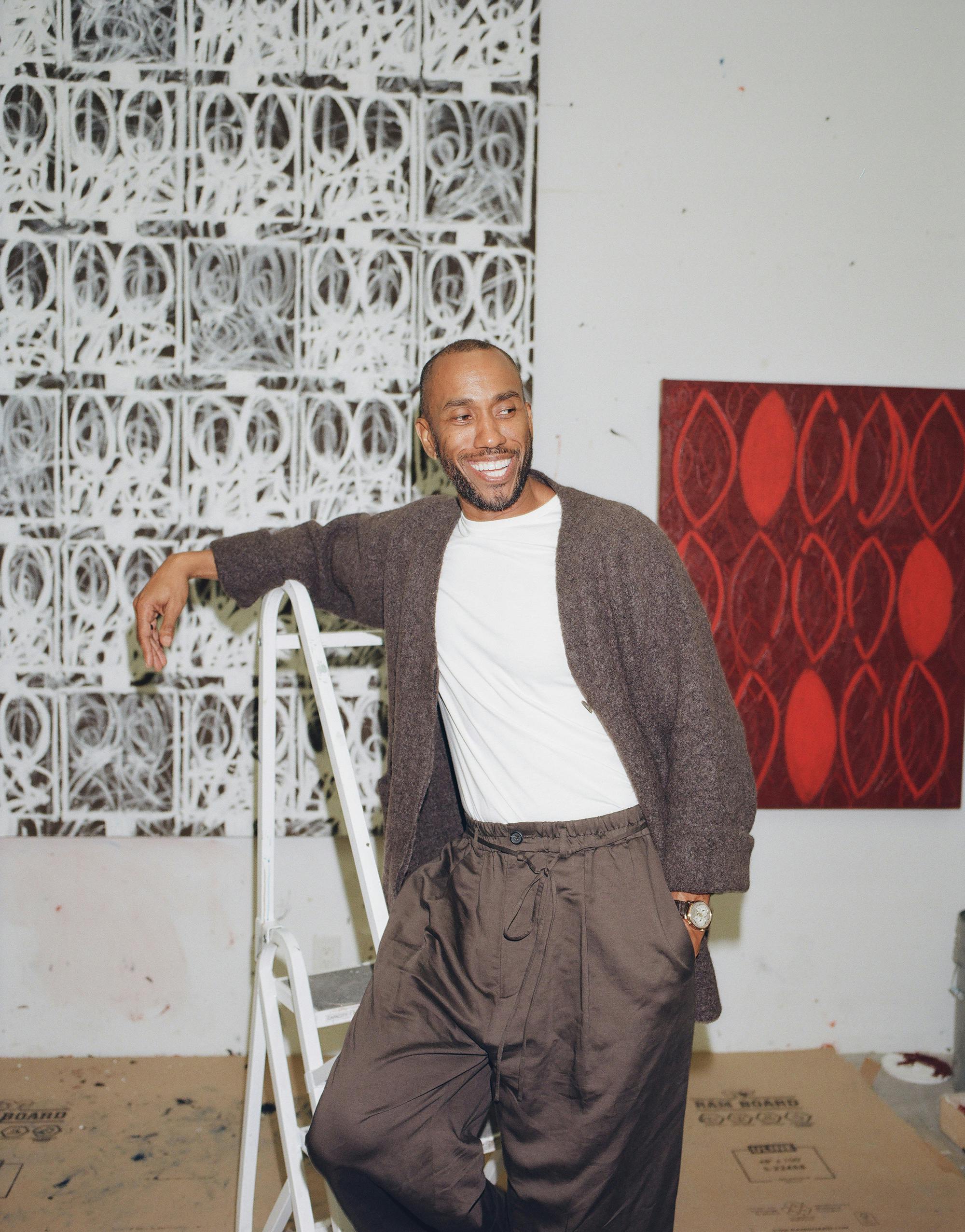
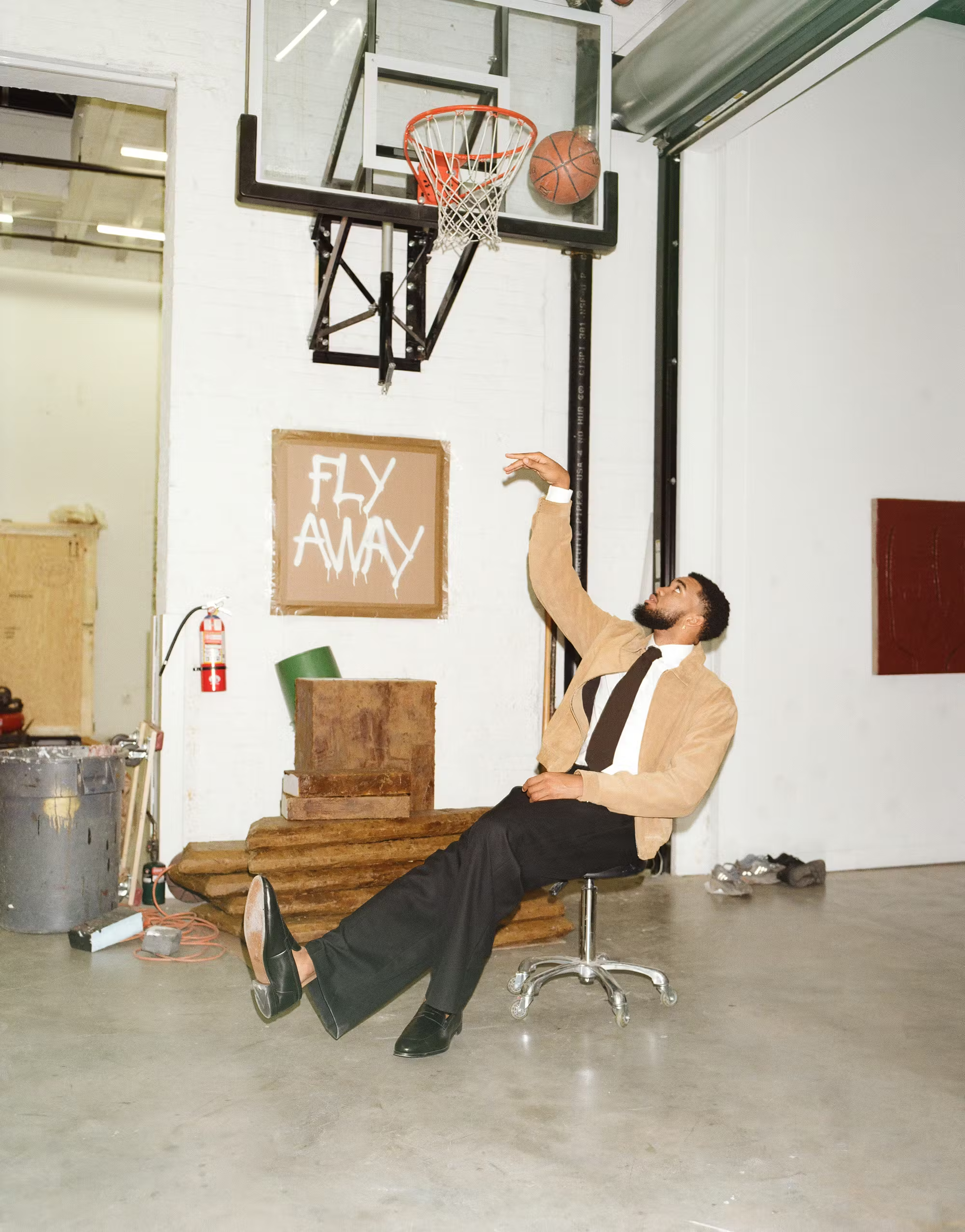
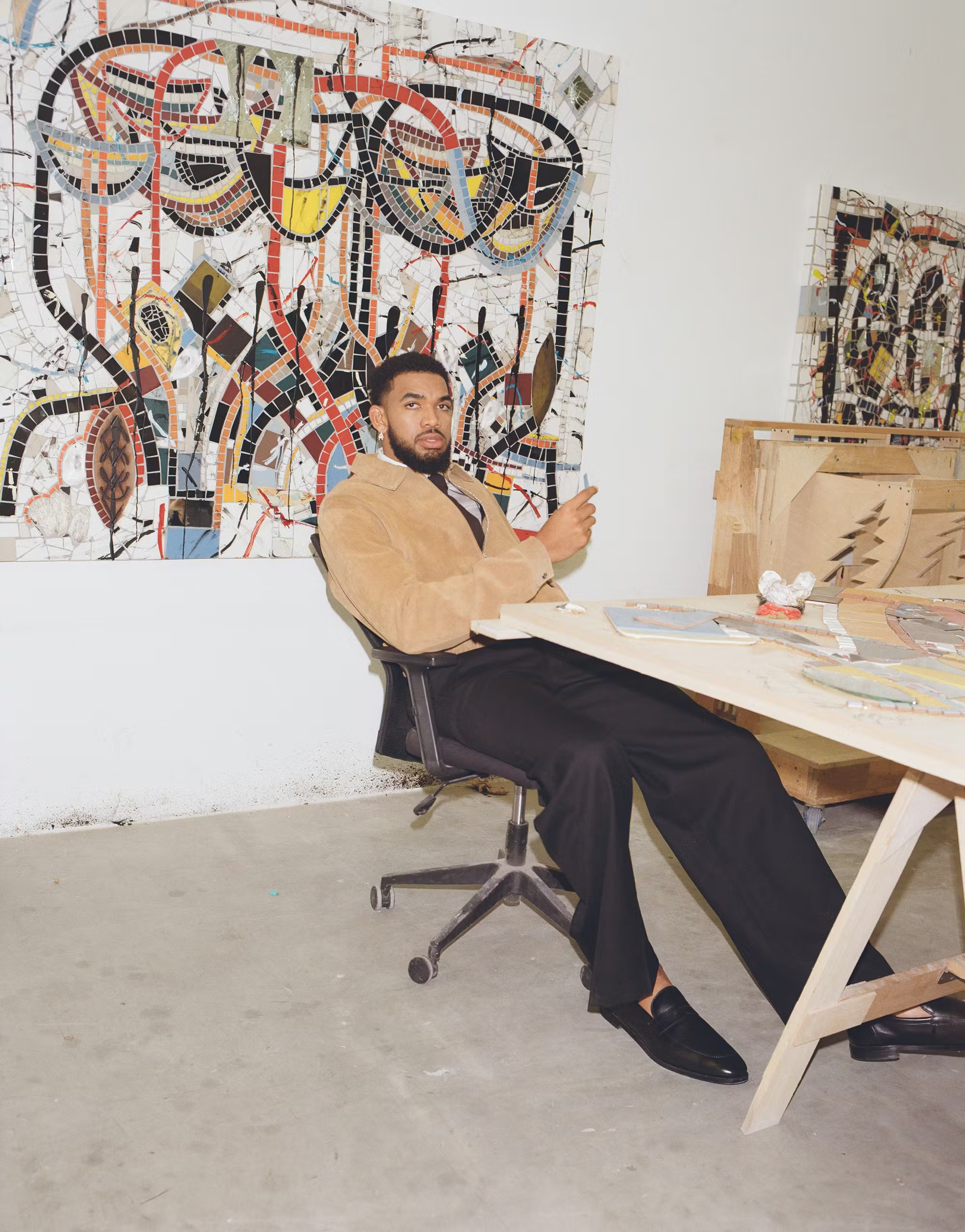
On a gusty fall evening, Johnson ushers Towns through his sprawling East Williamsburg art studio that includes a white-walled gallery space, offices, and a work area cluttered with paintings and sculptures in progress. They admire a piece that’s been scooped up by Usher, then pause to eyeball the height of a basketball hoop mounted to a wall. “That’s higher than regulation for sure,” Towns says.
Over several hours, Johnson and Towns discuss the overlap of their two passions, the experience of dropping a 50-ball, luxury watches, and the pressures that arise when dreams come to fruition. Along the way, they issue a challenge. “We’re going to play two-on-two,” Johnson says. “I’m going to bring my man, you bring your man.”
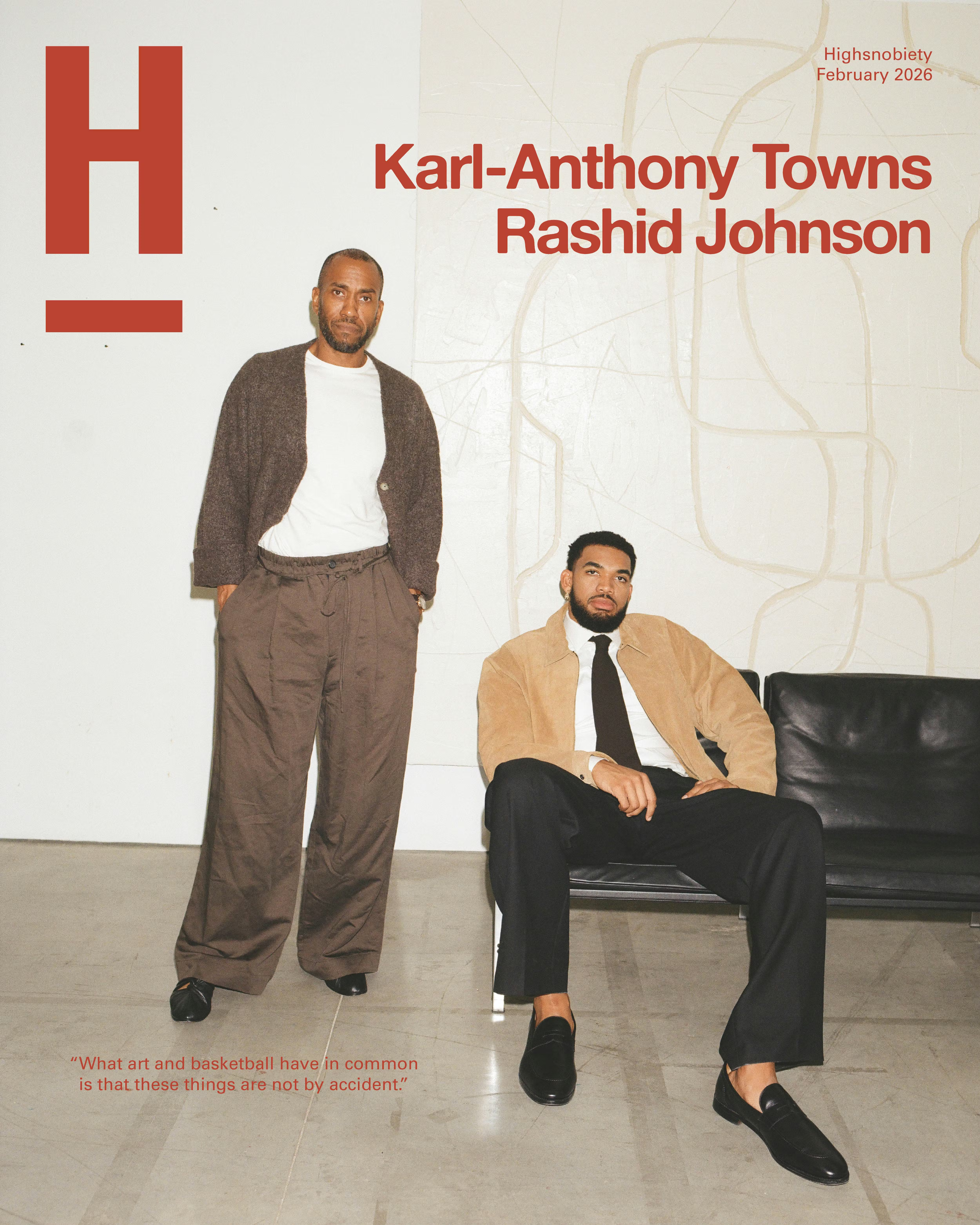
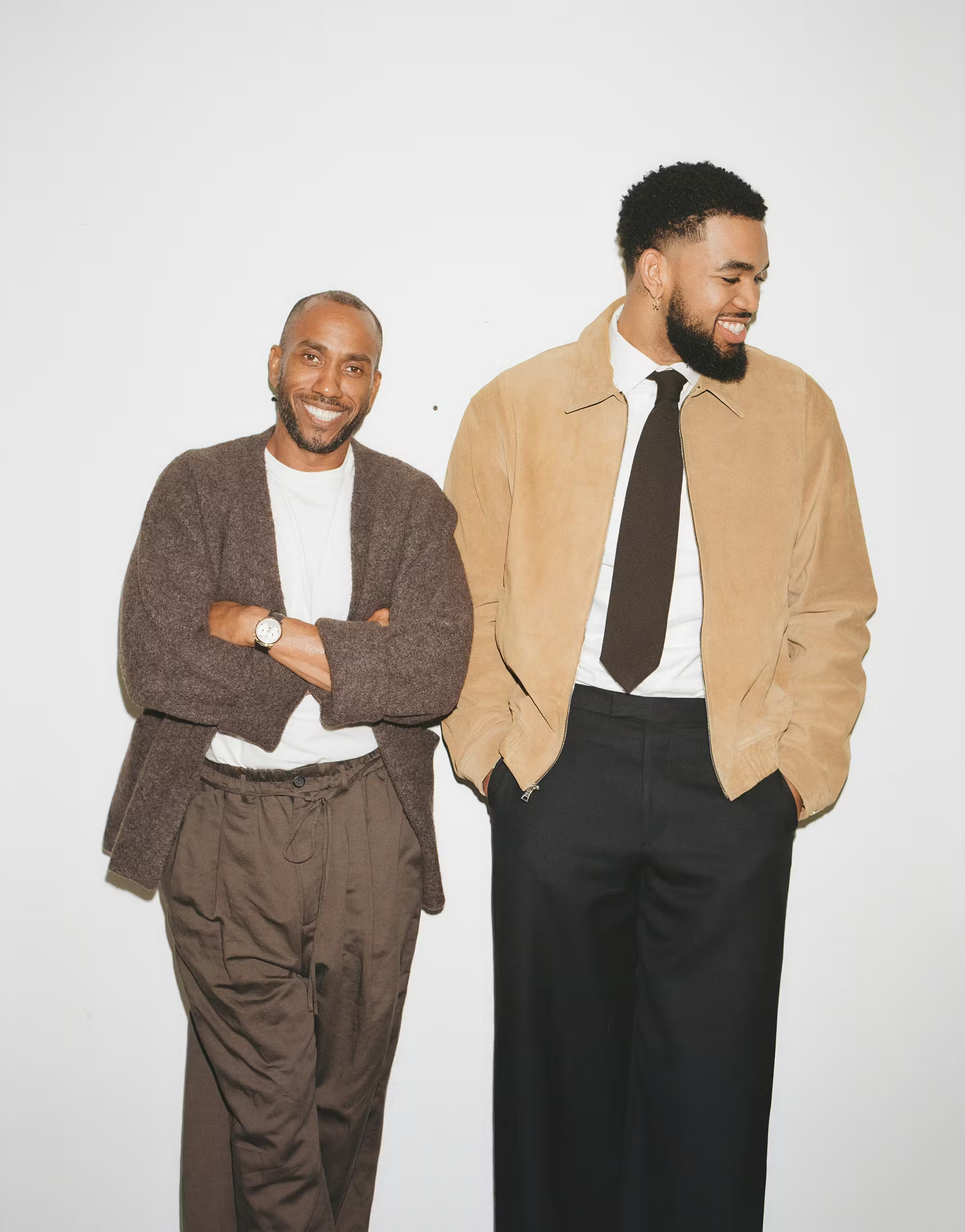
Rashid - Top and watch TALENT'S OWN Sweater, pants, and shoes LAUREN MANOOGIAN, KAT - Jacket, top, pants, tie, and shoes TALENT’S OWN Earring CHROME HEARTS
This conversation has been edited and condensed for clarity.
You guys have a lot of similarities in your craft and your friend circles. Let’s start with that. How did you guys meet? Where did this friendship come from?
Karl-Anthony Towns: For me, it was a mutual respect. I had such respect for his art and for who he was and what he did with his art to represent who he was and people like us. When I stepped into the art world, I wanted to go both feet in — just like I did in the NBA. I had one dream and one goal: I wanted one of Rashid’s pieces to be the first in my collection. And I’m honored to say it was. At the time I finalized that purchase, he was being honored at the Guggenheim and having one of the biggest shows in the world. I was able to actually meet the artist behind the work. It’s great when the art is amazing, but when the artist is amazing, it’s even better. I have tons of respect for my brother here.
Rashid Johnson: KAT’s such a humble and thoughtful guy. He showed so much enthusiasm for art and so much sensibility around his understanding of what art could be and how it could speak to him.


What was it about Rashid’s art that resonated with you?
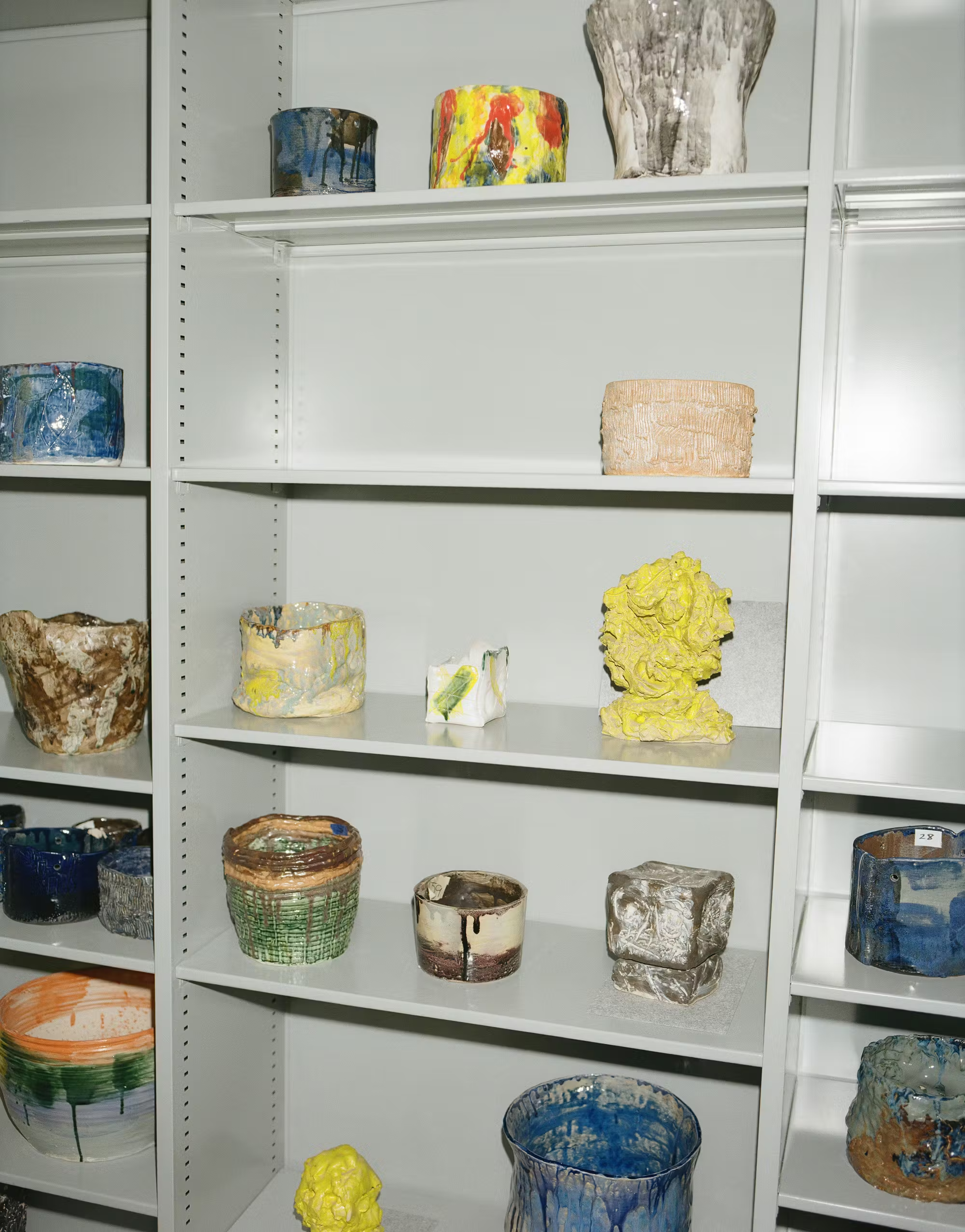
KAT: Anxious Men resonated with me. I loved the wax, the textures, the different materials. I wanted people to walk into my house and be like, “What is that?” I felt that the drawing I purchased represented the multiple people you become during an NBA season: sometimes it’s fun, sometimes it’s very stressful. All-Star Weekend comes by, playoffs are coming, you’re on that three-game losing streak. Art is all about the beholder.
RJ: I love that you say that. That makes a tremendous amount of sense. When I first met KAT, interestingly enough, he was in the playoffs, so it was quite a stressful time, I imagine. And he still showed up and had this great energy. It was a high-stress moment for me as well, thinking about the reviews and how the work was going to be received.
KAT: In a way, we leaned on each other for a sense of relief.
RJ: It took a little pressure off me because I was very much the center of attention that evening. KAT shows up and I’m like, “Thank God, there’s somebody else people will pay attention to.”
As friends, what’s the dynamic? Are you texting?
KAT: We definitely text. We talk about playing tennis and we talk about the art world. Maybe I’m asking him for his opinion on art. I’m a newbie to art collecting. At this point I feel very educated in the subject matter, but at the end of the day, I’ve never picked up a paintbrush. I’m terrible at arts and crafts. If I draw a person, it’s a stick figure. I got to ask the expert how he feels about art because I don’t possess those skills. But with a basketball, I can create my own canvas.
RJ: It’s quid pro quo. I’m a sports guy; I love basketball. I love what KAT does. In a lot of ways, what I try to do mirrors some of what he does, and vice versa. He’s got this versatility in his approach. He’s a great rebounder, he can shoot, he can defend. He’s got all of these kaleidoscopic skills. And I think about my practice as one that touches on a number of different approaches and isn’t satisfied with being one-dimensional.
KAT: We’re always looking for that 1 percent we could do better. He never feels that a painting is fully finished. It’s getting rave reviews and he’s like, “I wish I could’ve had another day with it.” And that’s how I feel. On some of the best nights statistically in my career, I’ve gone home and been upset about the shots that I missed. I could have got one more point, two more points. I could have got one more rebound. I could have got one more steal. That’s where we meet up. What’s that next level, and how do we get there?
Aside from the similarities that you two personally have, what draws basketball and art together? What’s that intersection point?
RJ: There’s a group of folks in the basketball world today who are interested in art and committed to it. LeBron has been a collector for a number of years. Reggie Miller was collecting for a period of time. Grant Hill was collecting. So there’s a rich tradition of these Black men who have become quite resourced getting into the arts, supporting the arts, and making sure that culture is buoyed by them. It’s another part of the special connection.
KAT: The people before us — the legends before us — have set us up to eat more at the dinner table. Bernard King, Patrick Ewing, John Starks, Stephon Marbury, Amar’e Stoudemire, Carmelo Anthony, Jeremy Lin, J.R. Smith. But I also think that men of color are more educated now in the art world and in amazing Black artists who are changing the scene.
RJ: One word that overlaps in these two spaces is “craft.” It’s so much about the process of building skills and adding skills, whether it’s a turnaround jumper or whether it’s learning more about ceramics. It’s something that has to be nurtured. Basketball also has this natural sense of improvisation that has so much to do with how artists work in the contemporary space. You’re making decisions on the fly. There’s a beauty to it. You talk about how Steph [Curry] shoots.
KAT: Greatest shooter of our lifetime.
RJ: You look at how Kyrie [Irving] handles the rock. It has so much to do with poetry.
KAT: If you decide to take a turnaround jump shot on the fly, you live with that decision. You don’t get it back. And sometimes you do something you never would’ve thought of. You end up making a piece that sells for $1 million.
What makes our art so beautiful is the attention to detail. Bernard King is a perfect example. He’d decide, “I’m going to get 50 by only going to these spots. I’m going to take this type of jumper, make this type of move.” What art and basketball have in common is that these things are not by accident. That glass having a scratch on it is not by accident. That blue paint is not by accident.
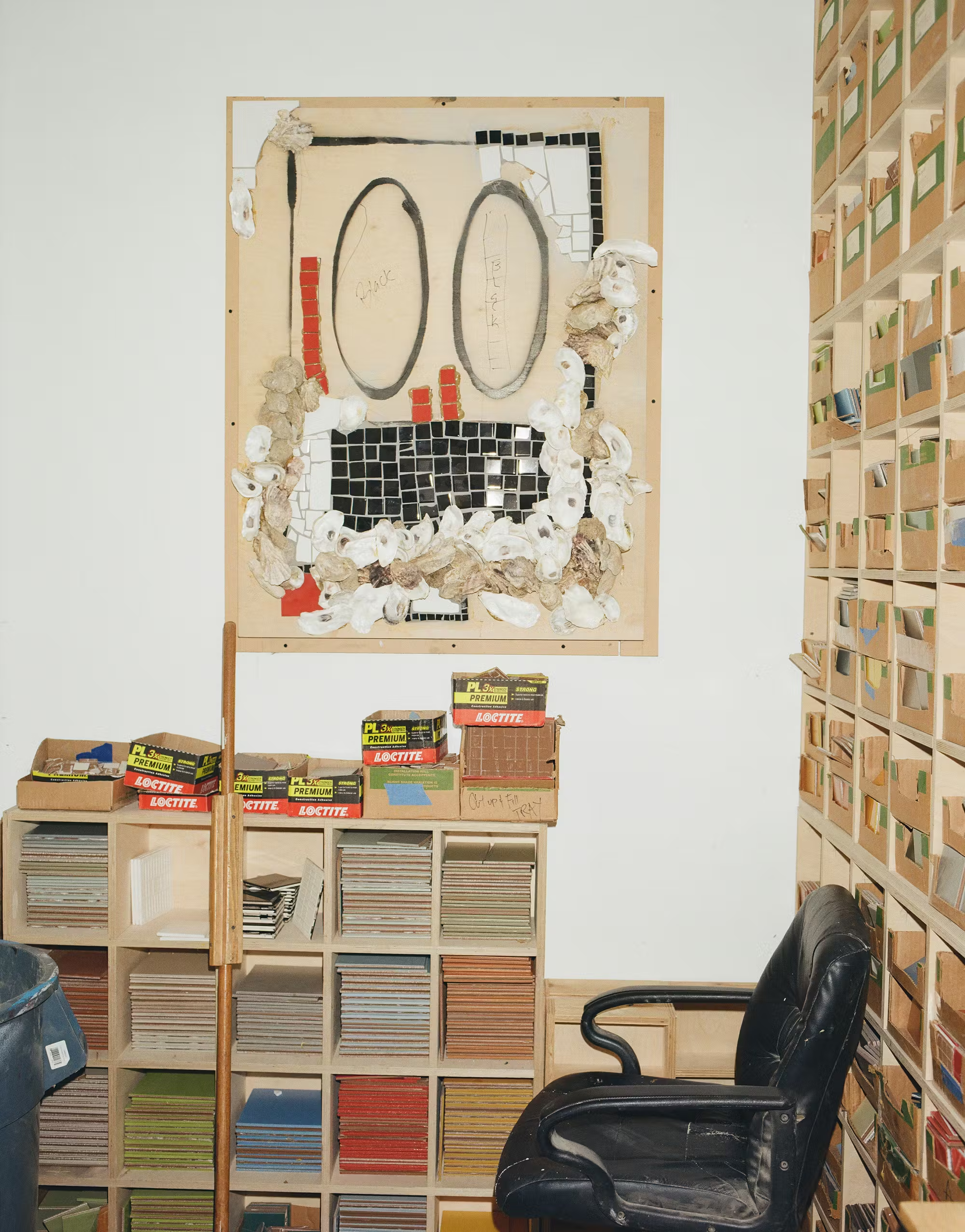
RJ: Sometimes it can look haphazard.
KAT: Sometimes the simplest play in basketball that you see at a third-grade game becomes the greatest play in NBA history. Shout out to [former Knicks head coach] Tom Thibodeau. We had plays that he saw at a [Catholic Youth Organization] game. And it worked amazing for us for years.
RJ: In the middle of a 50-point game, do you think, “Oh shit, I have 50”?
KAT: You get lost in it. You’re shooting the ball, and everything’s going in, and everything feels good. When you get to that threshold, it takes your teammates’ understanding, “I could be watching something really special here — we’re going to keep giving him the ball.”
RJ: What about the tough nights? There are times when I’m just failing. I get the luxury of literally walking away, folding up the thing, locking the door, and saying, “Today wasn’t my day.” How does it feel to not be able to quit?
KAT: You on national TV and shit ain’t working? For me, you trust the work. Before every game, I get this last stretch in. And I’m talking to myself. It’s kind of a self-affirmation: “I’ve done everything I could do. I’ve prepared for this. I understand everyone knows me for scoring, but I could be great at passing the ball, flowing the offense, or defensively being where I got to be.”
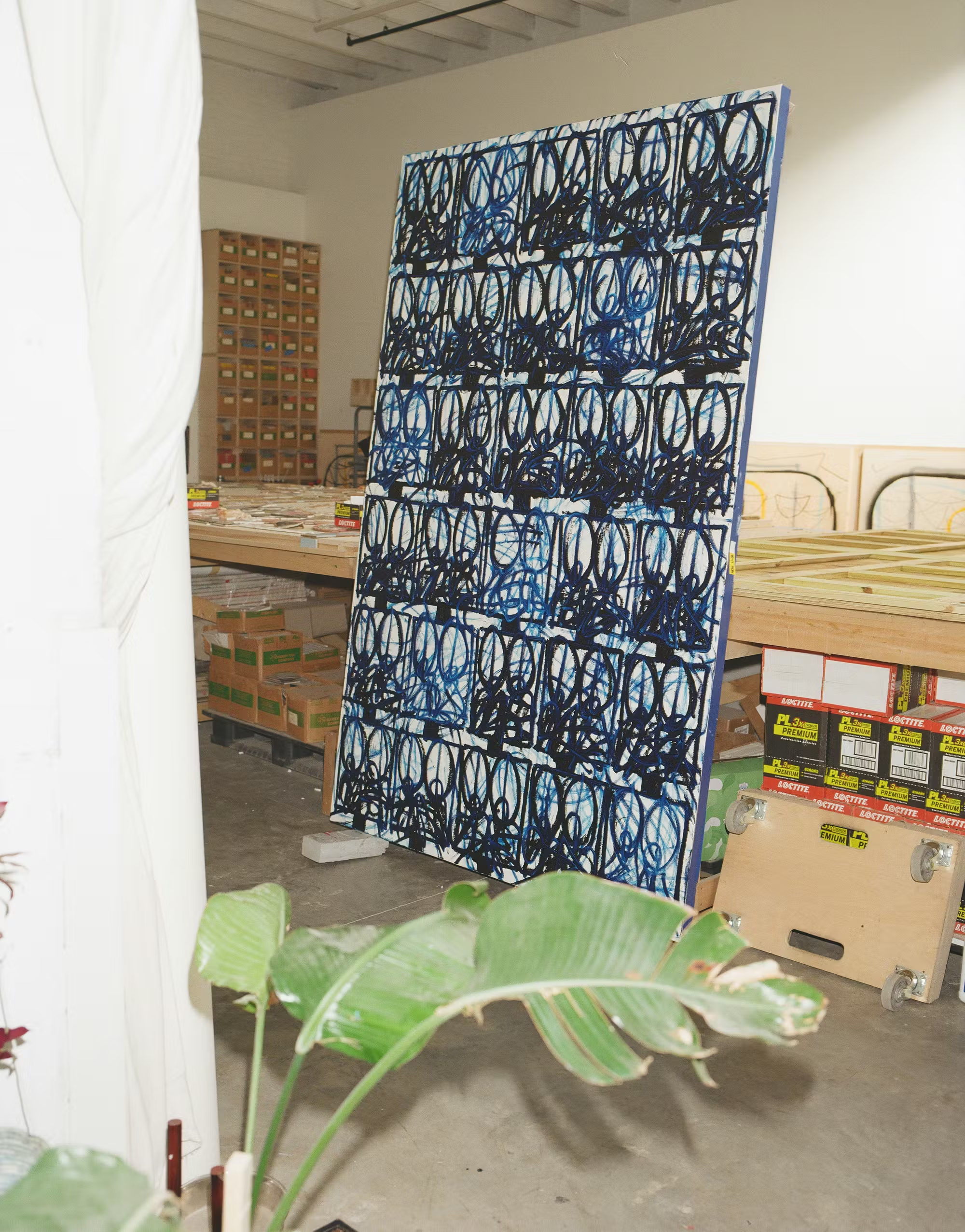
RJ: There are times when you’re being witnessed doing what you do, right? There’s the game on national television. There’s the time when I’m at the Guggenheim and you’re seeing all the hard work and the labor I put into my project. But the real time it’s all being built…
KAT: All the nights when you’re here by yourself, playing your Sade.
RJ: People understand that work gets done. But I’m not positive they fully understand the level of commitment — the actual amount of hours and the psychological space.
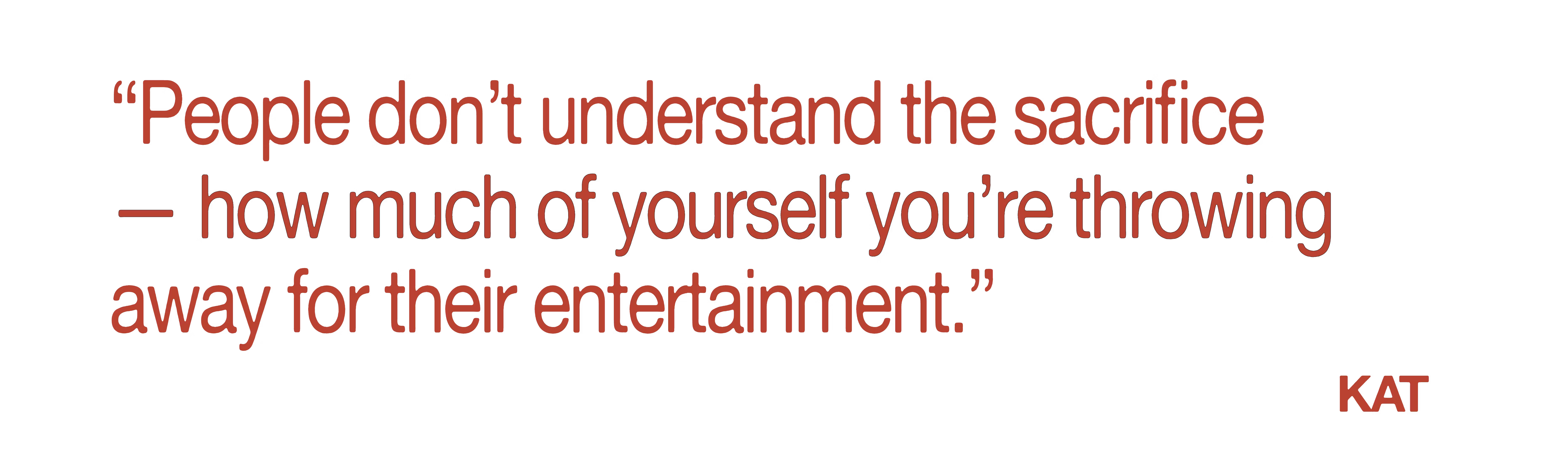
KAT: They don’t understand the sacrifice, how much of yourself you’re throwing away for their entertainment. You can never get it back. I remember thinking when my mom passed, “I’m getting funeral arrangements ready, and people don’t realize I’ve given a whole part of my life with her away.”
RJ: The fans have all paid in advance, and they expect to see you. And, yeah, maybe you don’t feel 100 percent, maybe something in your life is weird. Maybe something with your partner. You’ve never heard of a guy missing a game because of a breakup, but do you know how many people have missed work because of a breakup? Or an argument? And that’s not an option. It’s almost like theater, right? The show must go on.
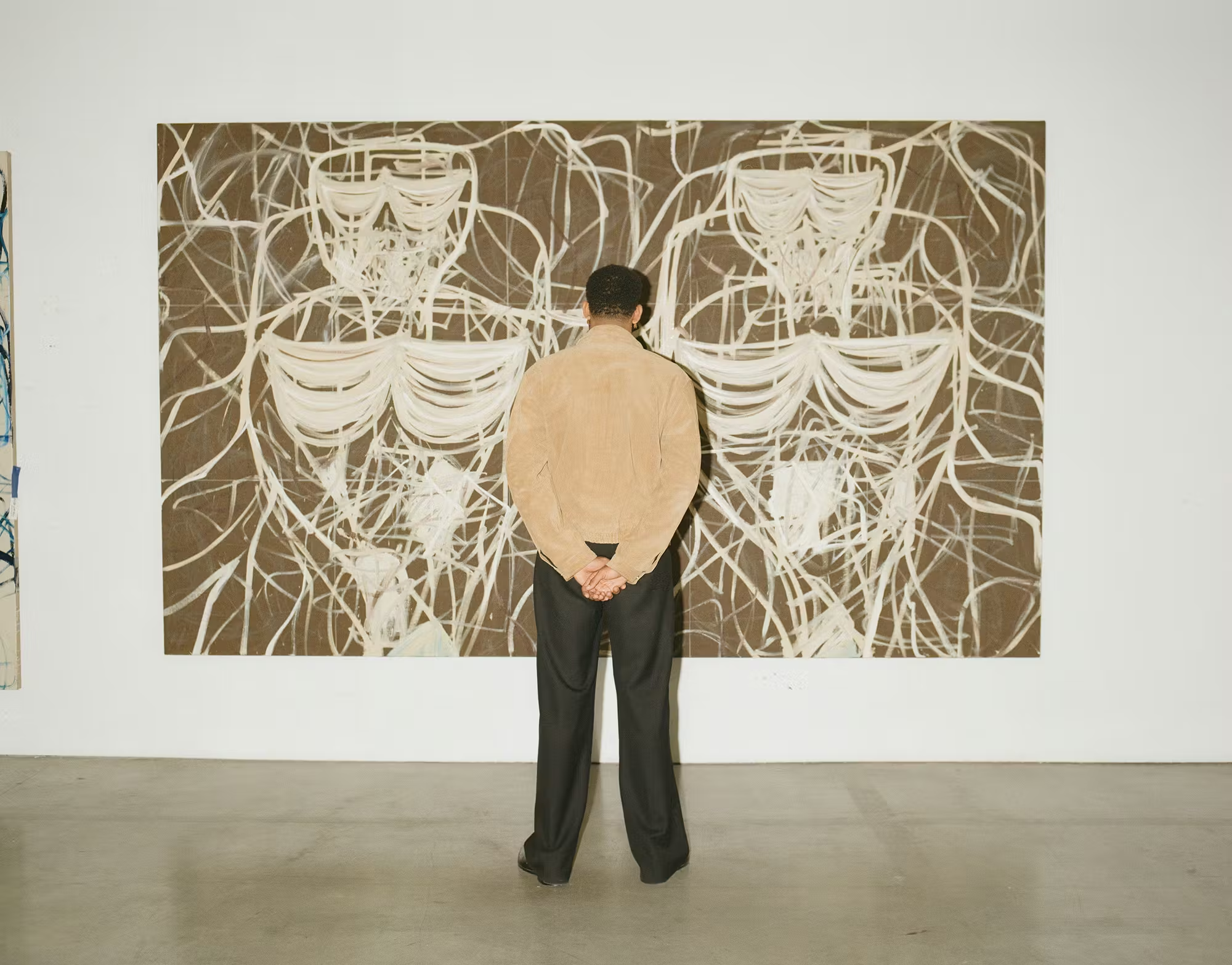
KAT: I went through it last year: being ridiculed for missing a game, for having my shoulder full of tears, for dealing with a family death, and having my emotional status be questioned. It’s tough. The sports world is ruthless.
RJ: It’s an interesting thing, this experience of being witnessed.
You’re both pretty high-profile. Back in the day, MJ could go out, you’d never hear about it. Do you have to think about how you socialize because someone’s going to be there with the camera?
KAT: I’ll answer for both of us: Absolutely. When you're one of the biggest artists in the world and you're an NBA player, every moment of your life is documentable, and people want to document it. The brand is always on the line. We’re asked to open the curtains to our lives more than ever. Back in the day, it wasn’t mandatory. It was okay to be the mysterious figure in sports. God forbid it’s summer and you’re a basketball player and you don’t post a workout video. Your coffee order could be something people don’t agree with, and that’s news: “He wants coconut milk instead of whole milk.”
RJ: You eat pizza with a fork? In New York, if this man puts a fork to a slice, it’s going to be a problem.
KAT: Oh, it’s over. And it’s a blessing. This is something we both asked for. We are not diminishing the prayers that we’ve been putting up to God and the world every single day. We’re more talking from a place of experience — educating others on what it’s like when your prayers are answered at this level.
RJ: Are you a watch person?
KAT: I am.
RJ: I’m like a fucking psychopath with watches. It’s crazy. It got fucking weird. I’m going to Geneva next week with the guys from Patek, and then I do some indie brands like F.P.Journe.
KAT: Yeah, F.P.Journe is going crazy.
RJ: I’m close with those guys.
KAT: So you the plug. If you’re successful, you want to buy art or you want to buy watches. It’s guaranteed. And then when you have too much, you get a yacht.
RJ: It gets down to: What artworks do you have in your house? The size of the house doesn’t matter. Everybody can afford the nicest car.
KAT: When you get to the point where a Cullinan is boring, it doesn’t matter anymore. I’m like, “I sold all the cars.” Having the Maybach truck in Minnesota, the snow is crazy. I ain’t trying to take that out. The Range is perfect. That’s like the Rolls-Royce in Minnesota. That’s all you need.
RJ: I’m trying to develop that sense of gratitude. When you get to a certain stage in your career, you have to say to yourself, “I’ve done well.”
KAT: Was it your wife who got you to start realizing that?
RJ: She played a role.
KAT: Mine is the same way.
RJ: Fatherhood, having a son, has really changed how I move around in the world — realizing I’m not the center of everything.
KAT: They asked me about shooting free throws in the playoffs, but I’m more nervous about being a dad. I just know my life is going to be fully different.
RJ: I became a more mature person in some ways, and my priorities evolved. But I’m still very, very focused on what I do. We’re both blessed to do the thing that we love. And that’s the reward. That’s when you’re really getting it all. There are people in both of our fields who just do this because they have the athleticism, or because they have the draft skills.
KAT: My father gave me the gift of my first basketball and allowed me to see a hardwood floor. But I fell more in love with competing and finding a way to win. When I was younger, my mom and I used to do puzzles together. I feel like every day is a new puzzle, and I get to go out there and solve it.
Credits
By: Ben Detrick
Grooming: Laila Hayani
Photographed by: Rafael Rios
Director: JP Blair
Styled by: Sebastian Jean
Video Assistant: Weston Flemmons
Styling Assistant: Natalie Cohen
Gaffer: Miloš Janjušević
Sound: Jet Cafuli