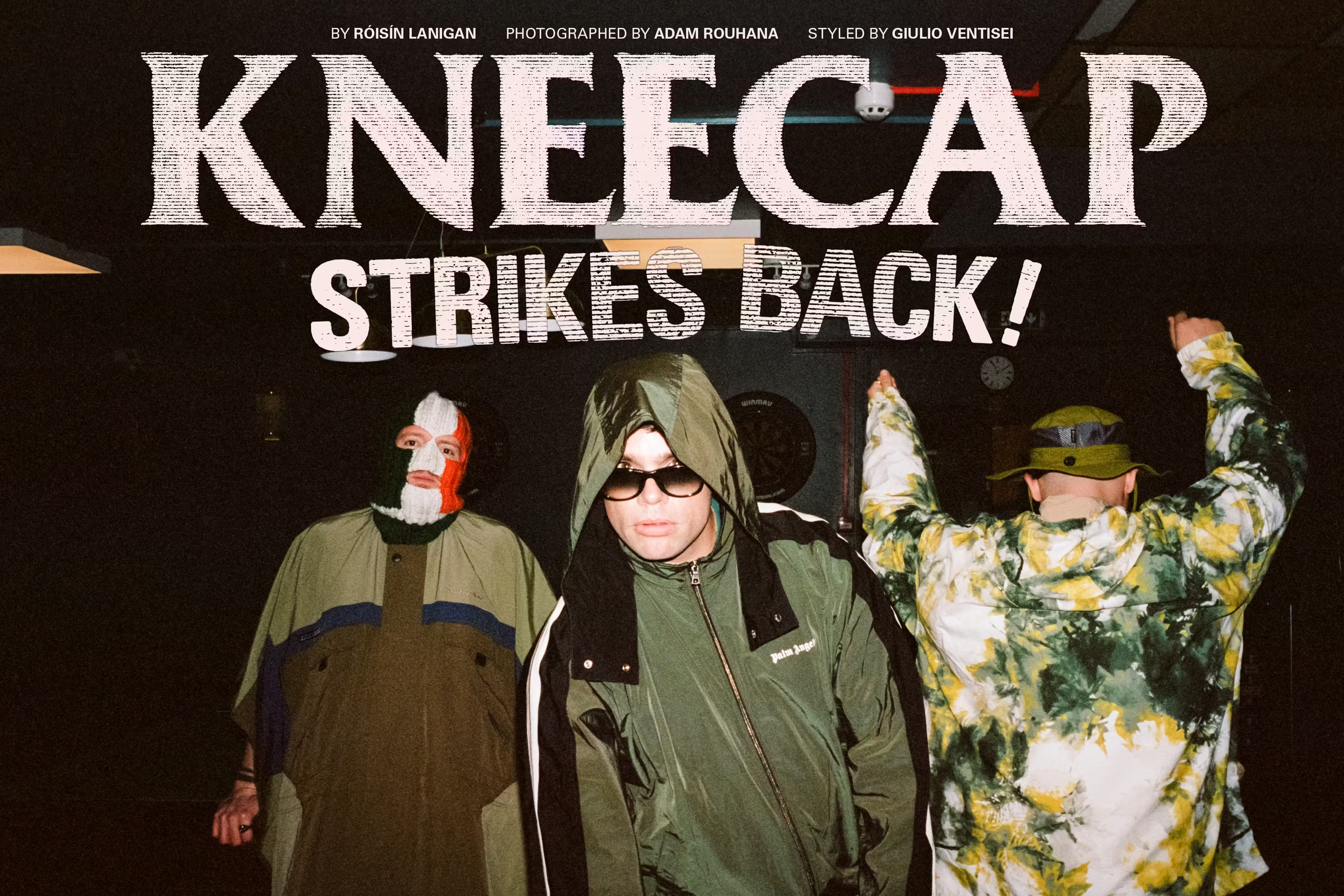
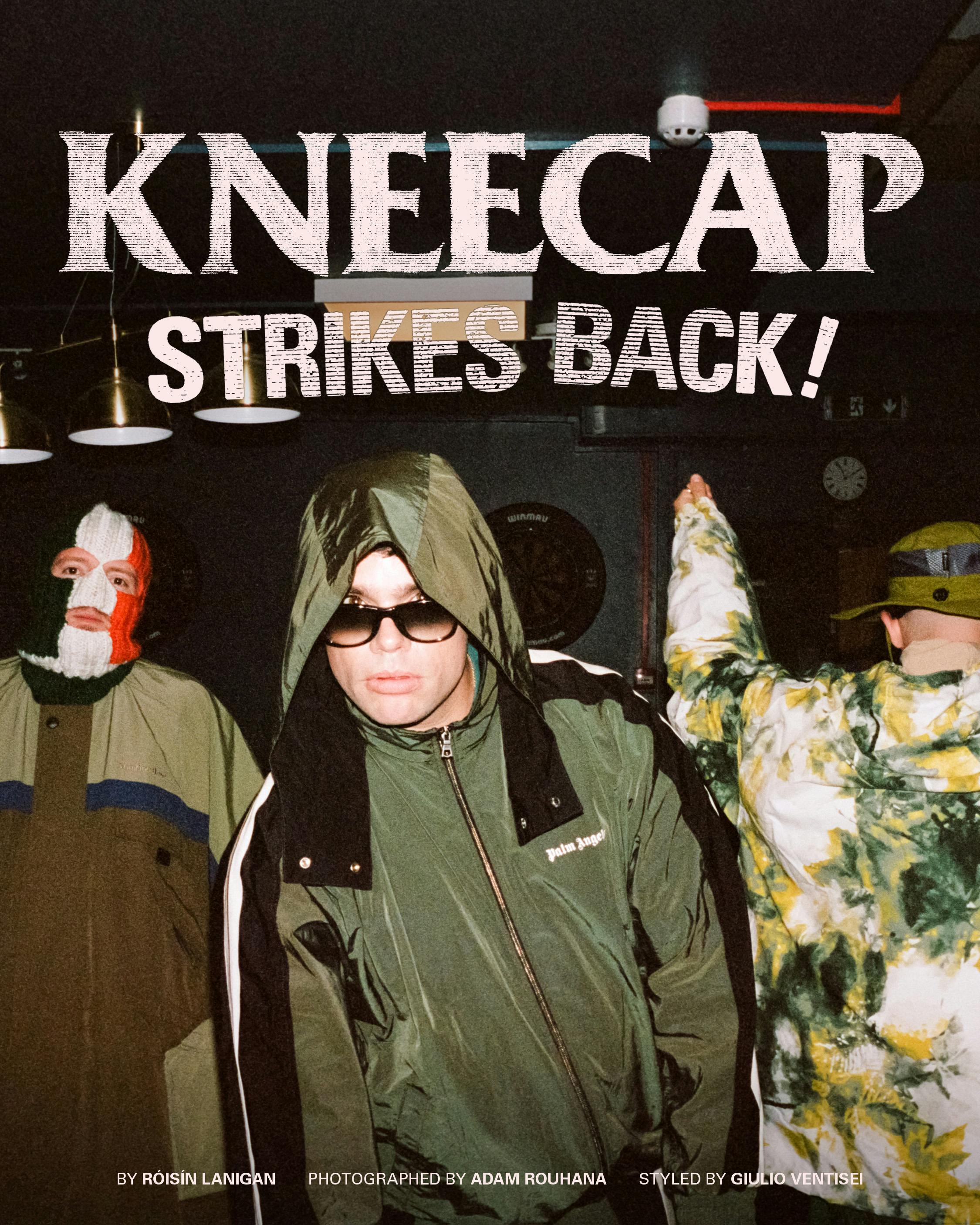
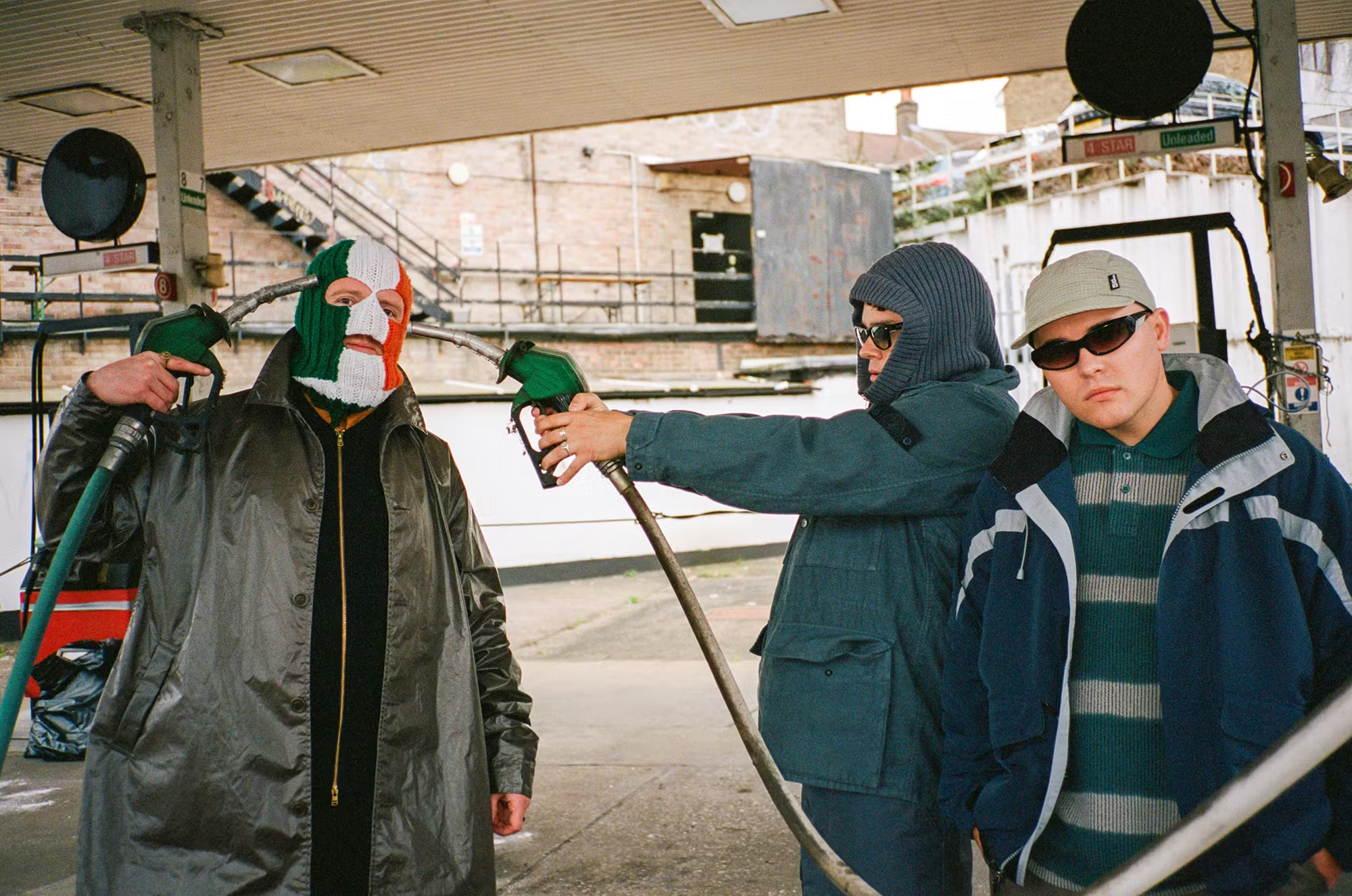
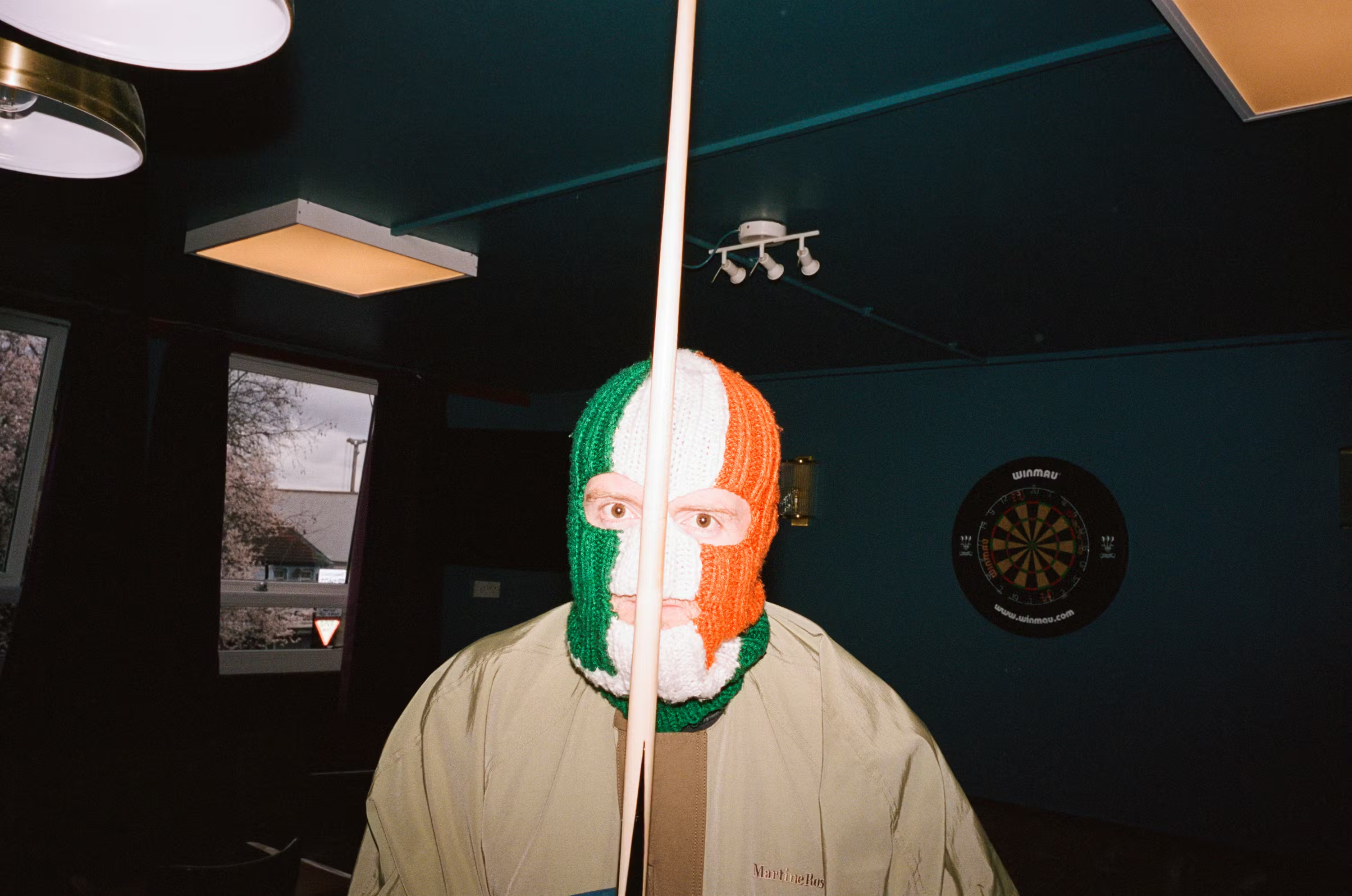
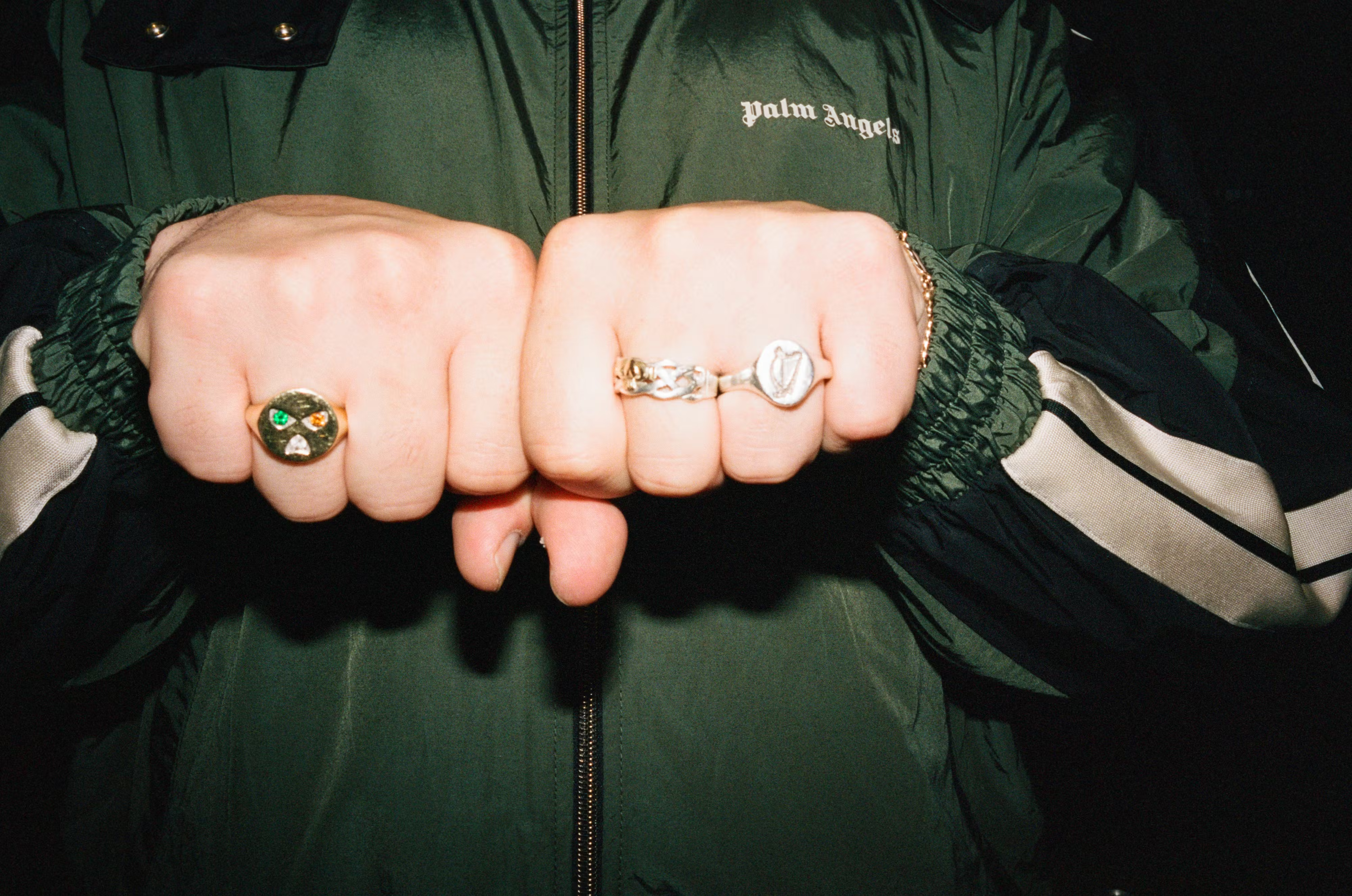
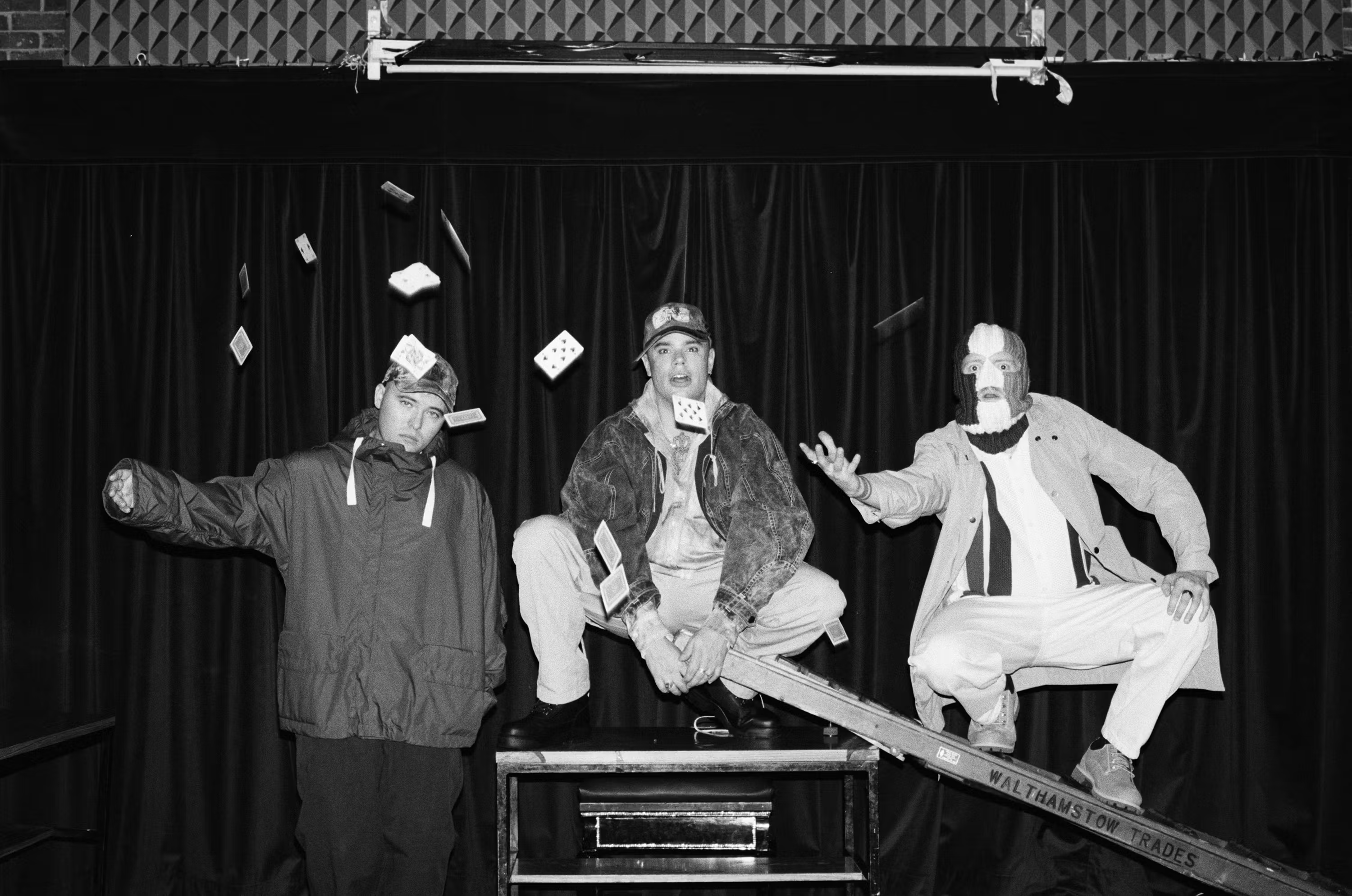
(L-R) Anorak poncho MARTINE ROSE, cargo pants MAISON MIHARA YASUHIRO, balaclava MODEL’S OWN, boots TIMBERLAND, Full track-suit PALM ANGELS, sunglasses RAY-BAN, sneakers NEW BALANCE, Anorak, trousers, and hat COLUMBIA, sunglasses RAY-BAN, shoes MERRELL 1TRL
The word fenian means many things, depending on who you ask. In early Irish mythology, the Fenians (or Fianna) were a band of warriors protecting the ancient Irish people. Later, during the Irish War of Independence, the label was used by groups of revolutionaries fighting to free Ireland from British control.
In the war’s aftermath, the word took on a darker meaning in the north of Ireland, which remained part of the United Kingdom. It became a slur — a derogatory term for Irish Catholics by those in the unionist community, police officers, fans of the football club Rangers FC, and occasionally even politicians. (British National Party leader Nick Griffin tweeted the phrase “fenian bastards” as recently as 2012.)
“It’s funny how they tried to use it against us,” says Naoise Ó Cairealláin, better known as Kneecap’s Móglaí Bap. “They try to make out like we’re forest people — that we’re backwards. It reflects this feeling happening overall when it comes to Irish identity. For a long time there was a hangover of self-hating shame around our language and our culture — that it wasn’t that valued.”
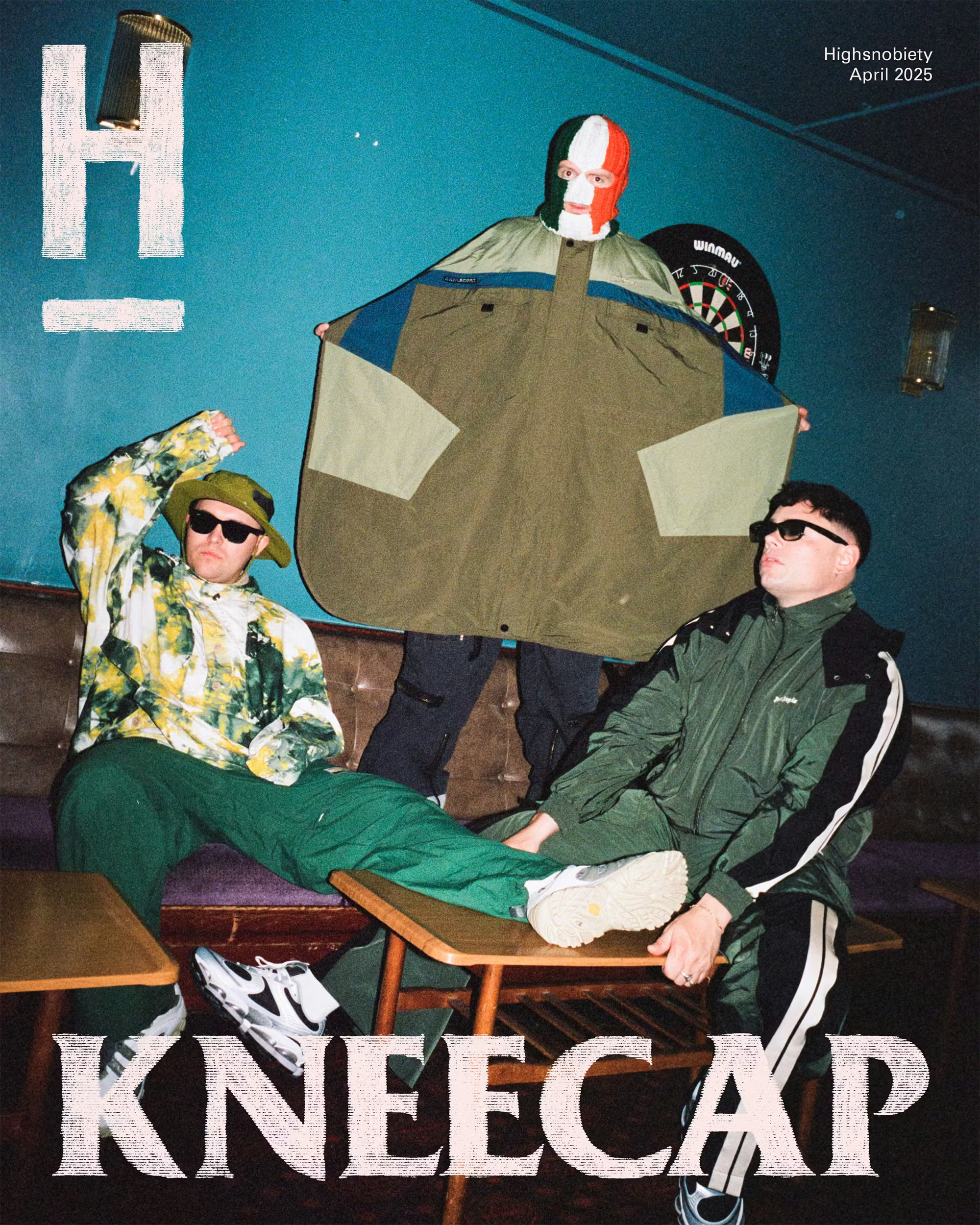
In a way, Kneecap has made a career out of killing that notion. The band — vocalists Móglaí and Mo Chara (legal name Liam Óg Ó hAnnaidh), and DJ and professional crowd-surfer DJ Próvaí (JJ Ó Dochartaigh), aged 32, 28, and 37, respectively — named its latest studio album after what used to be an insult. Fenian, out May 1, is a searing sophomore offering that addresses what has been a turbulent year for Kneecap. In 12 months, they won a BAFTA, an IFTA, and a Sundance Award for their self-titled biopic. Their Coachella performance placed them squarely at the forefront of the Palestine solidarity movement. Last May, Mo Chara was charged under the 2006 Terrorism Act for allegedly displaying a Hezbollah flag at a gig. After months of delays and weeks of chaotic scenes outside London’s high courts, the case was dropped. (The British government appealed, but in March, the judges upheld the dismissal.)
Fenian partially responds to those events, but it also sees the band turn back to what it does best: putting out songs that make people go nuts. This is not Kneecap hiding from confrontation in a “just stick to the football mate” kind of way. Instead of lawyers and social media infographics, this is a sonic reckoning. Solidarity through ceol agus craic.
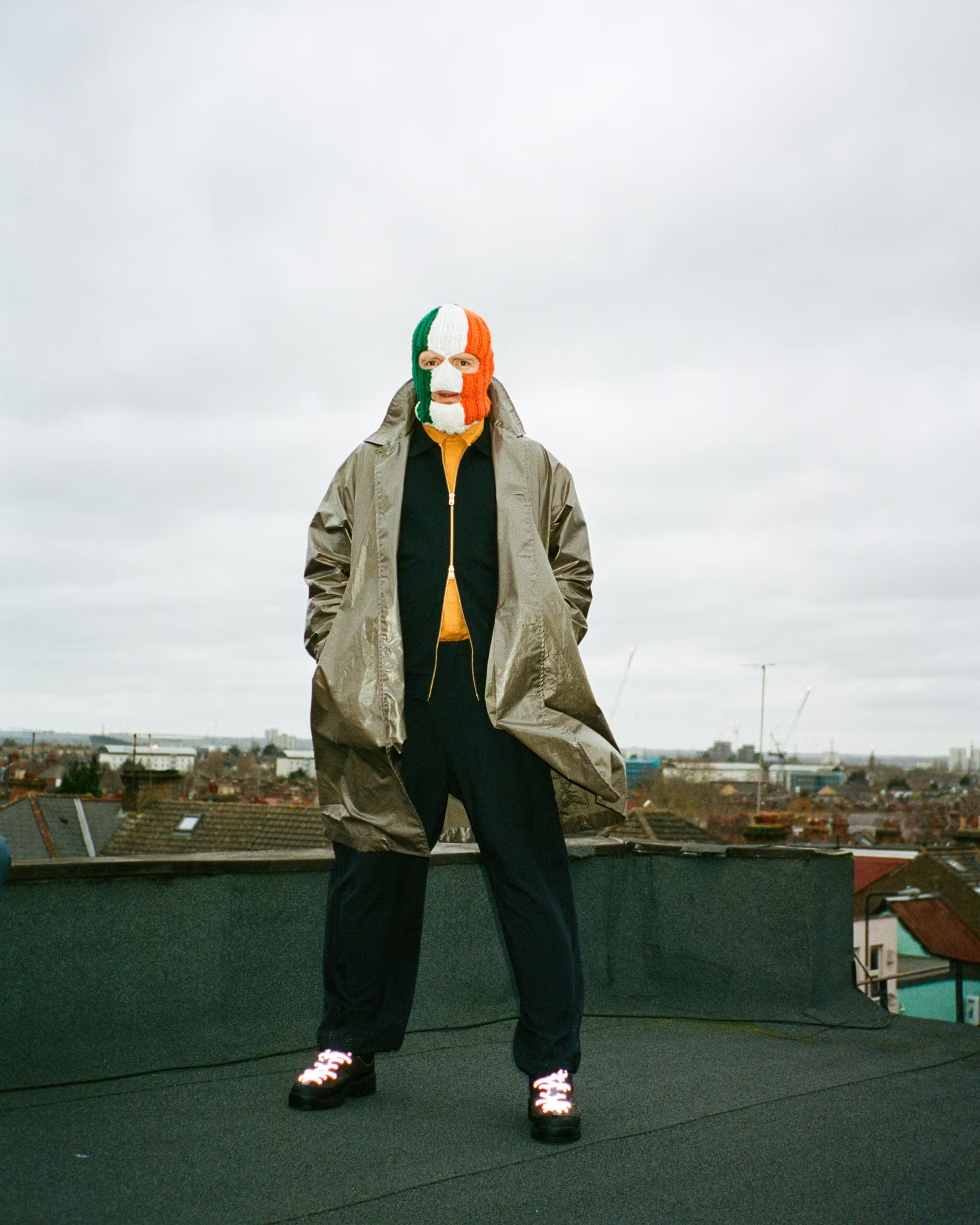
Shirt YMC, zip jacket FRED PERRY, coat CASEY CASEY, trousers DESCENTE ALLTERRAIN, balaclava MODEL’S OWN, shoes GRENSON
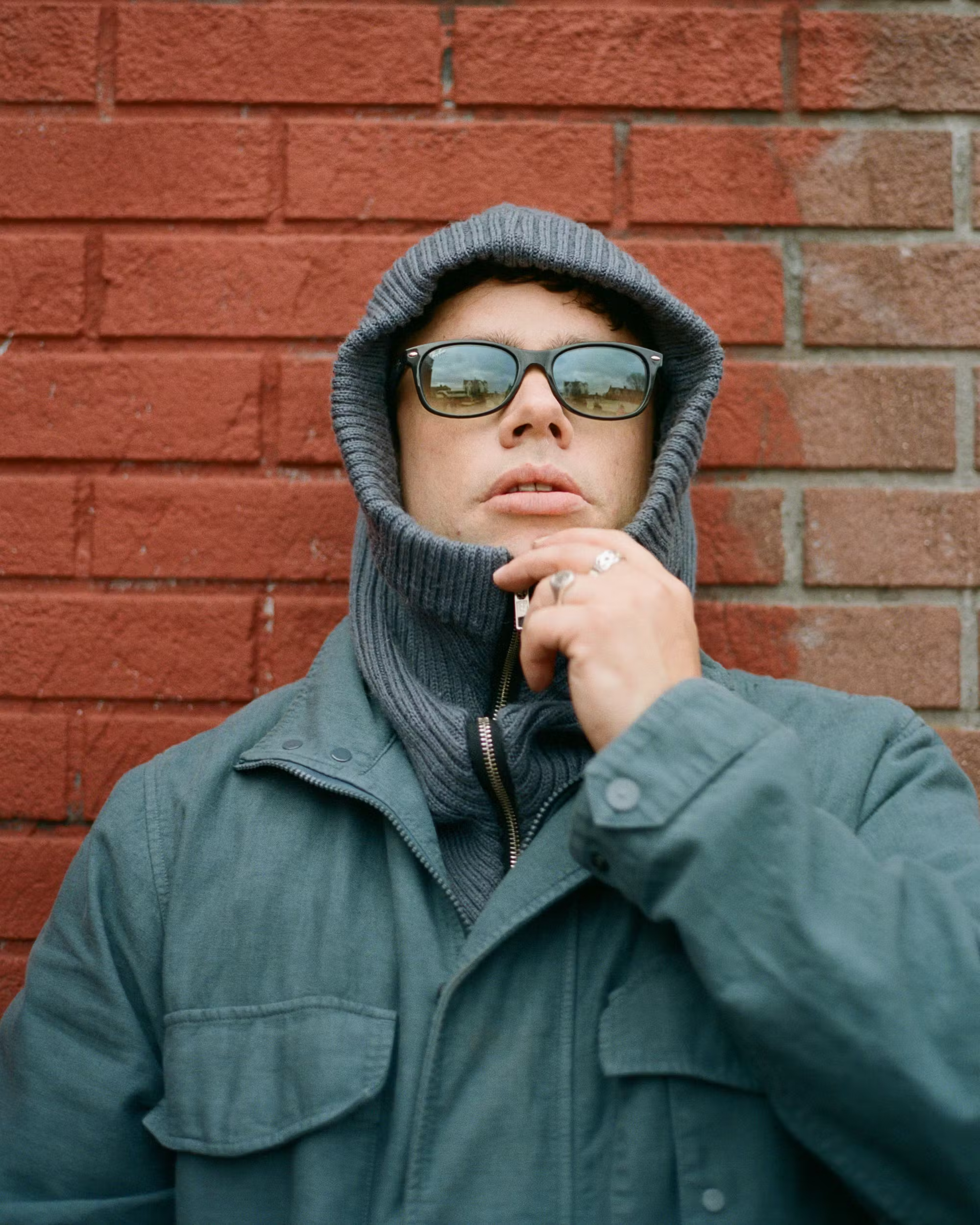
Blue knitted hoody SASKIA LENAERTS, blue jacket and blue cargo pants STONE ISLAND, sunglasses RAY-BAN
“Carnival,” Mo Chara’s favorite track, speaks to the bread-and-circuses sideshow that was the Kneecap trial, which Mo Chara believes was intended to distract from the Palestinian genocide. It’s followed by “Palestine,” featuring the West Bank artist FAWZI, which is performed in both Irish and Arabic, a blistering anti-colonial manifesto that includes the lyrics “ní stopfaimid go dtí go bhfuil gach duine saor” (we won’t stop until everyone is free).
“I’m not the first, and I’ll not be the last Irish person who has disrupted the status quo and been labeled a terrorist,” Mo Chara says. “Whatever stress we’ve been under for the past year or two, we have to remember it’s fucking marginal to what families in Gaza are going through. At the end of the day I can deal with financial loss, I can deal with gigs being cancelled, countries banning us.”
“Receding hairlines,” interjects Móglaí.
“I can deal with a receding hairline,” Mo Chara replies.
We’re speaking on a dreary February morning in northeast London, inside the dusty glamor of Walthamstow Trades Hall. Since 1921, this building has functioned as a nonprofit members club for the workers in the area, founded and funded by local Trade Unions. These days, it hosts drag bingos and Women’s Institute meetings, gigs, poetry readings, comedy shows, and quiz nights.
We arrange ourselves in a corner away from the red velvet curtains, chintz carpets, and snooker tables. The band is feeling slightly worse for wear. They arrived in London yesterday and spent the night at Leicester Square Hippodrome — one of the only places in the city licensed to sell alcohol after 11 p.m.
But they’re in good spirits. Breakfasts are swiftly ordered and surprisingly wholesome (bananas and eggs). Mo Chara is the most talkative of the trio, quick to answer and to joke. Móglaí speaks more carefully, interjecting with facts or context, and DJ Provaí is the quietest. Speaking to them as a group, you get the impression this is a rhythm they’ve become used to in the past seven years, one they’ve nearly mastered: the art of jumping into each other’s gaps, listening to each other’s opinions and interrupting where their own thoughts diverge.
There is, obviously, a lot of talking. And the talking is very fast. This is not a specifically Kneecap observation. There are few things Irish people enjoy more than the sound of a cacophony of voices in a snooker hall.
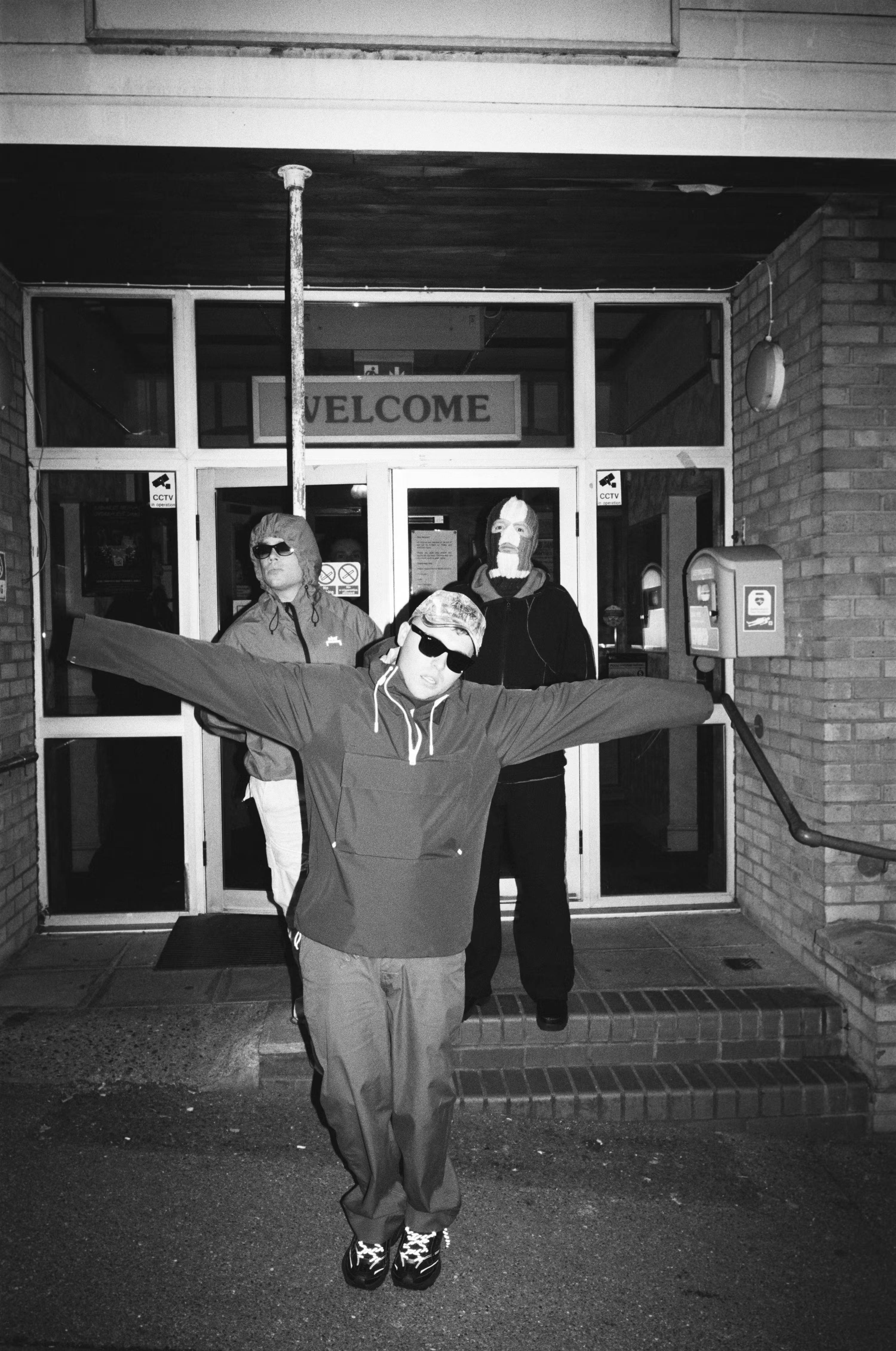
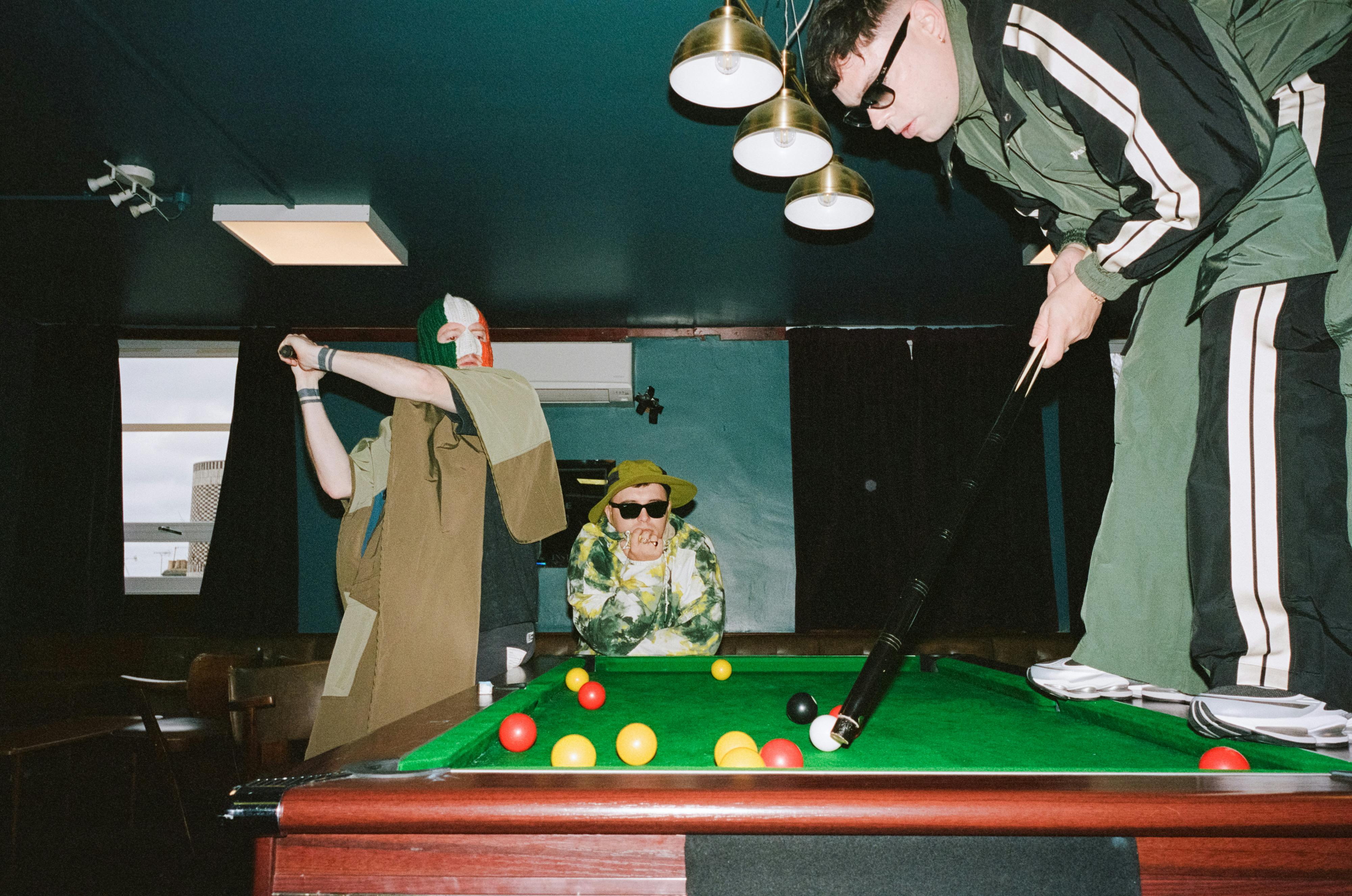
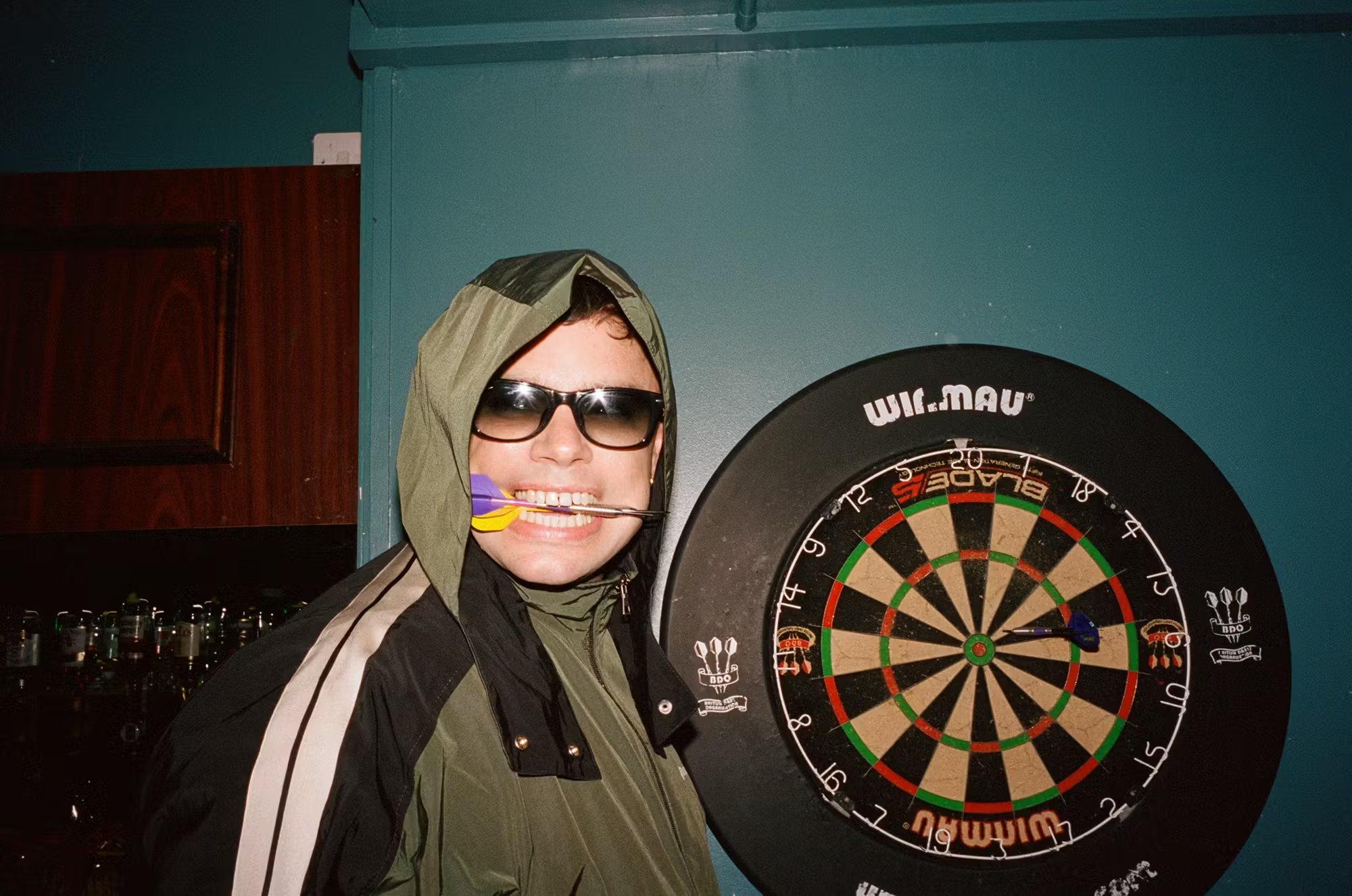
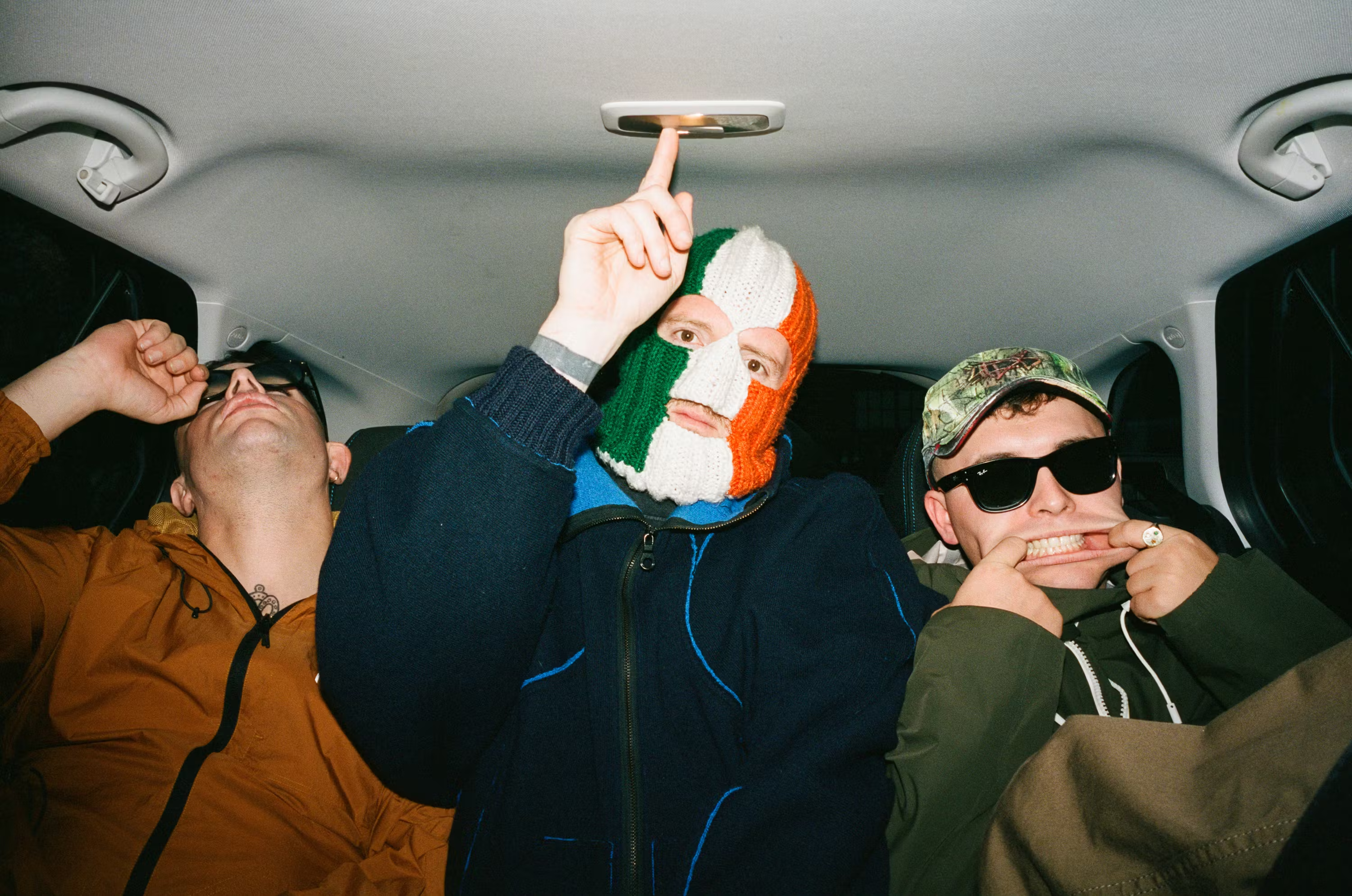
(L-R) Windbreaker jacket A-COLD-WALL*, cargo pants MAISON MIHARA YASUHIRO, sunglasses RAY-BAN, sneakers AXEL ARIGATO, Pull-over anorak BELSTAFF, pants MHL, hat 4FSB, sunglasses RAY-BAN sneakers REPRESENT, Full tracksuit SASKIA LENAERTS, balaclava MODEL’S OWN, shoes CLARKS ORIGINALS
It’s a few months before Fenian drops — when the singles and the anticipation start piling up. But beyond all the buzz and the drama, Kneecap is doing something fundamentally interesting: disrupting the so-called “green wave.” Showing Irish people the way they actually are, at a time when the world most needs to see it. “Our culture has always had to be palatable for the Brits or the Yanks,” Mo Chara says. “It had to be fun and light and not a headache for the powers that be. Finally, Irish culture and Irish people are saying that we’ve had enough of being watered down for export. We’re going to be authentically ourselves, and it’s long overdue.”
“It had to be packaged for an international audience,” echoes DJ Próvaí. “When you reclaim a culture, you reclaim a confidence.”

It’s been nine years since Kneecap released their first-ever track. “C.E.A.R.T.A” (Irish for “rights”) was inspired by Móglaí escaping the police after tagging a bus stop with a friend, who was arrested and spent the night in police custody after refusing to speak English.
The song was a rallying cry for the Irish language, but not in an after-school special kind of way. The band posted the song on Facebook, and “people assumed it was clean and wholesome and PC,” Móglaí says. “I had my dad’s friends, who are all Sinn Fein councillors, sharing it without listening to it and having their PR people tell them to take it down because we were rapping about taking MDMA and sniffing coke.”
The song, he says, was a way to “portray the language the way it actually is. Despite 800 years of oppression, people still raised their children speaking Irish. That’s the coolest part, and it’s the only way a language actually survives.”
Locally, “C.E.A.R.T.A” was a success, and the band’s popularity began to grow, both on social media and by old-fashioned word of mouth. Kneecap played their first gig in 2018, in a Gaeltacht (Irish-speaking) area of Donegal, right at the bottom of the night’s line-up. They didn’t hang around afterward; their first album, 3cag, was released the same year. The title takes its name from the Irish word for MDMA: trí chonsan agus guta (three consonants and a vowel).
The Irish-language scene in the north is intensely interconnected. Most fluent speakers know each other, either socially, from attending Irish-speaking schools, or through events at Cultúrlann, an Irish language arts and cultural center on the Falls Road. Mo Chara and Móglaí were friends for more than a decade before forming the band. They later met DJ Provaí, who’d moved from Derry, through the same community ties.
It’s hard to overstate just how intertwined the personal and the political is for anyone who grew up in west Belfast, as Móglaí, Mo Chara, and I all did. It’s a place where international solidarity is a given. There are as many Palestinian, Cuban, and Basque Country flags there — hanging from shops and houses, as well as painted on walls — as Irish ones. A slogan often appears on protest literature and graffiti in the area: ní saoirse go saoirse don Phalaistín (there is no freedom unless Palestine is free). The “international wall,” which separates the predominantly Catholic nationalist community from the mostly Protestant loyalists, is decorated with murals expressing solidarity with Gaza and the West Bank, along with criticism of American imperialism.
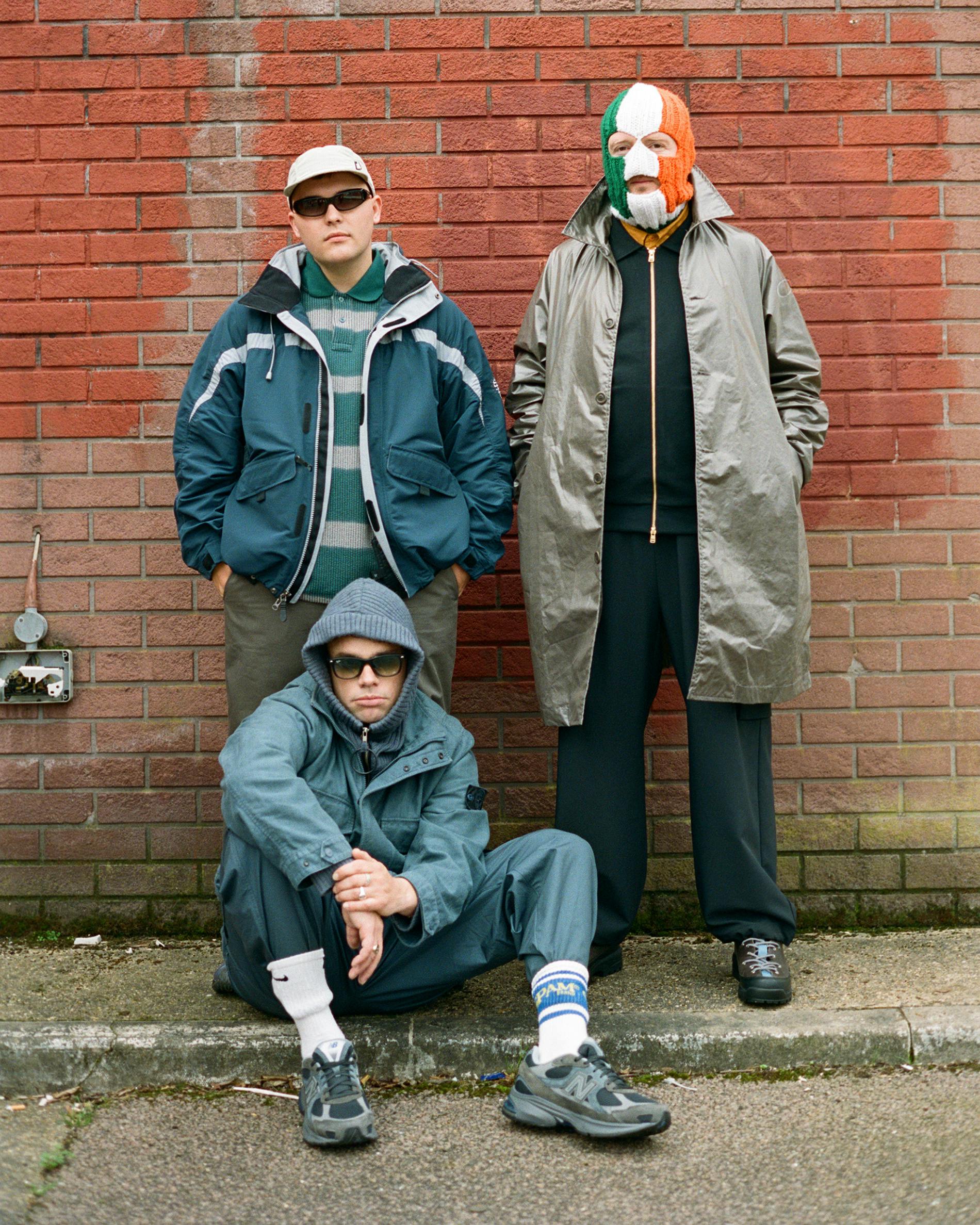
(L-R) Stripe polo top NAPAPIJRI x MARTINE ROSE, jacket MARTINE ROSE, trousers SAMSOE SAMSOE, hat JACK WOLFSKIN, sunglasses ASOS DESIGN sneakers MERRELL 1TRL, Blue knitted hoody SASKIA LENAERTS, blue jacket and blue cargo pants STONE ISLAND, sunglasses RAY-BAN, sneakers NEW BALANCE, Shirt YMC, zip jacket FRED PERRY, coat CASEY CASEY, trousers DESCENTE ALLTERRAIN, balaclava MODEL’S OWN, shoes GRENSON
“If you walk down the Falls Road, you’ll see a mural of Nelson Mandela; you’ll see a mural of [Native American activist] Leonard Peltier; you’ll see the Black Panthers,” Móglaí says. “Politics is part of the fabric of where we’re from. It’s not something where you’re into politics or you’re not.”
From the beginning, Kneecap has made music and navigated controversy in tandem. When “C.E.A.R.T.A” was banned from Irish state broadcaster RTÉ Radio, hundreds of people signed a petition to readmit it. (Kneecap said they were “delighted” with the ban.) Two years later, they were condemned by the national conservative political party after chanting “Brits out” at a concert at Belfast’s Empire Music Hall. In 2024, a £14,250 grant the band received from the then-Tory government in Britain was blocked by Business Secretary Kemi Badenoch, who said the money should not be given to “people that oppose the United Kingdom itself.” Kneecap filed a discrimination case against the British government, won, and split the grant money between youth organizations working with the Protestant and Catholic communities in the north of Ireland. Even Kneecap’s name — a satirical reference to the practice of kneecapping during The Troubles — has been a topic of handwringing discussion.
Last July, Kneecap was banned from entering Hungary for three years by the country’s totalitarian Prime Minister, Viktor Orbán. In response, they aired a message during Budapest’s Sziget Festival, the first foreign festival Kneecap had ever played. “We must stand together,” it read. “Oppose Orbán. Oppose Israel. Oppose genocide.”
“They’ll let in a war criminal who has an international arrest warrant out for war crimes,” Mo Chara says, referring to Israeli Prime Minister Benjamin Netanyahu’s visit to Hungary, which the country withdrew from the International Criminal Court to enable. “But they won’t let us in their country to play a few tunes.”
Kneecap is careful to separate the governments banning them from the fans around the world who want to see them. “America is run by awful cunts, but there are some good people in America, and we’d love to play there again,” Móglaí says. “It’s very unfair that a government elected for a four-year term has a say in what music Americans can consume. They’ll give you diabetes, but they won’t let you listen to Kneecap. It’s too dangerous.”

Ironically, it was during this same period of government interference and international travel bans that Kneecap played some of its best-attended gigs. Wembley, in summer 2025, was the biggest show they’d played to date outside of Ireland. When they performed at Glastonbury’s West Holts stage, organizers hit capacity two hours early and were forced to close the area. “We were under such pressure to not only deliver a gig, but to deliver this moment,” Móglaí says.
“There were so many eyes on us,” Mo Chara agrees. “People were expecting something. To play Glastonbury with such a crowd and under such a microscope was iconic.”
That moment — along with DJ Próvaí losing his day job as an Irish teacher after footage leaked of him at a gig with the words “BRITS OUT” written on his ass cheeks — forms the basis of Kneecap’s biopic. Kneecap the film was directed by Rich Peppiatt and released last year. “It put us in this international context,” Móglaí says. “People who weren’t Irish came away from the movie reflecting on their own identity, their own language, their own culture, be it Aboriginal Australian or Basque Country. It put into perspective how much we have in common with people around the world when it comes to colonization.”
“The way to colonize a people is to devalue them and dehumanise them until you can control them,” Móglaí adds. “We’re seeing neo-colonisation happening in Palestine, which is why Irish people can relate to it.”
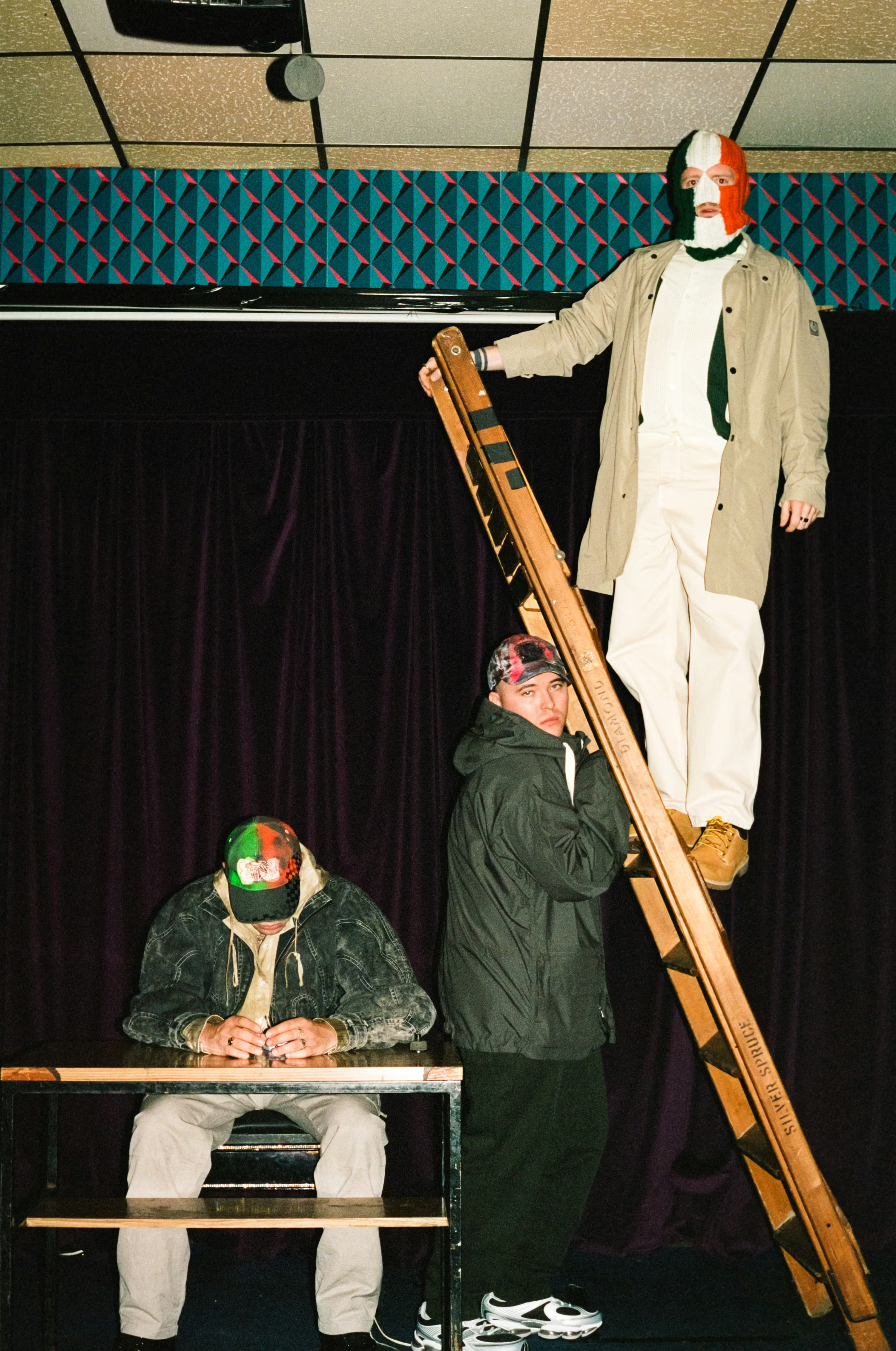
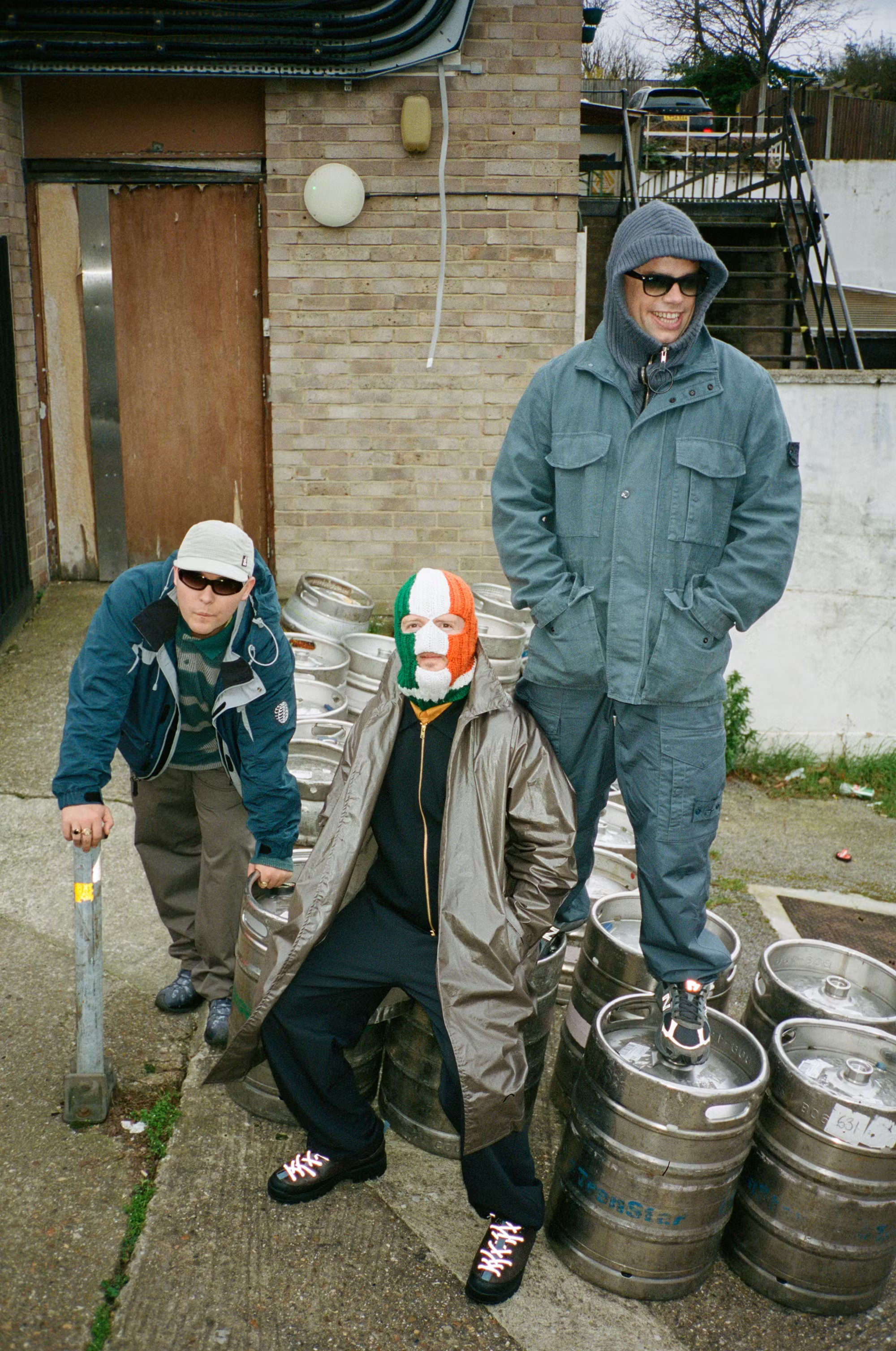
(L-R) Shirt DEADWOOD, jacket IM MEN, trousers STONE ISLAND, hat 4FSB, boots TIMBERLAND, Jacket NANAMICA, trousers YMC, hat 4FSB, sneakers NEW BALANCE, Knitted button shirt SERGIO TACCHINI, coat BELSTAFF, beige jeans CASEY CASEY, balaclava MODEL’S OWN, shoes TIMBERLAND
“If someone doesn’t understand the Irish solidarity with Palestine, start with the media defining them as savages and terrorists,” Mo Chara adds. “I’m not saying it’s on the same par, but there are parallels there. We have a lot of shared history.”
For record and film executives, it can be difficult to package this kind of stance for a mass audience. Kneecap’s views, coupled with their global success, have exposed the cracks in the entertainment industry’s “green wave.” As more Irish actors, musicians, writers, and fashion designers become globally renowned, there is a pressure to flatten Irish identity to secure mass-market appeal.
Fenian plays with this expectation — with lyrics like “tiochfaidh ár lá,” or “somebody sample that,” and songs like “Cold at the Top,” a self-deprecating tale about the narcissism that comes with celebrity status. “Liars Tale,” the album’s lead single, is a riotous punk-rave evisceration of UK Prime Minister Keir Starmer that labels him “Netanyahu’s bitch.” (In March, Starmer called the band “completely intolerable.”) Another track, “RA,” is a satirical attack on Riocht Aontaithe (Irish for the United Kingdom) and the legacy of British imperialism and neoliberalism — a theme that’s revisited in the song “Occupied 6.”
Like Kneecap’s first two albums, Fine Art and 3cag, Fenian is multilingual. The song “Gael Phonics” functions as a modern language lesson, translating words more graphically than the Duolingo owl (“west Belfast” is IBF; “double vodka” is vodka dúbailte), while “Éire go De” features a roll call of local legends — including Móglaí’s late father, the Irish language activist Georóid Ó Cairealláin.
As much as the album is political, it is also deeply personal. The final track, “Irish Goodbye,” returns home, dealing with grief and loss. The lyrics are a goodbye to a mother who left before she could hear them, filled with memories both beautiful and difficult, of picnics in the park and calls to the crisis team. The (translated) lyrics conclude: “She called me ‘the beat of my heart’ / She was the making of me / How come it’s always the best of us / Who can’t bear to be?” Fenian slows down here, allowing us to sit in the empty space that follows after someone leaves our lives unexpectedly.
It’s little surprise that “Irish Goodbye” is Móglaí’s favorite song on the album — the one that means the most to him. The track also features spoken word artist Kae Tempest, who says they broke down in tears as they delivered their verse. “I love what we made,” Tempest says. “I love the way that musicians get to make beautiful things out of the pain we've been through. And then we can give these beautiful things to other people, and hopefully they can feel closer to the beautiful feelings in their own hearts.”
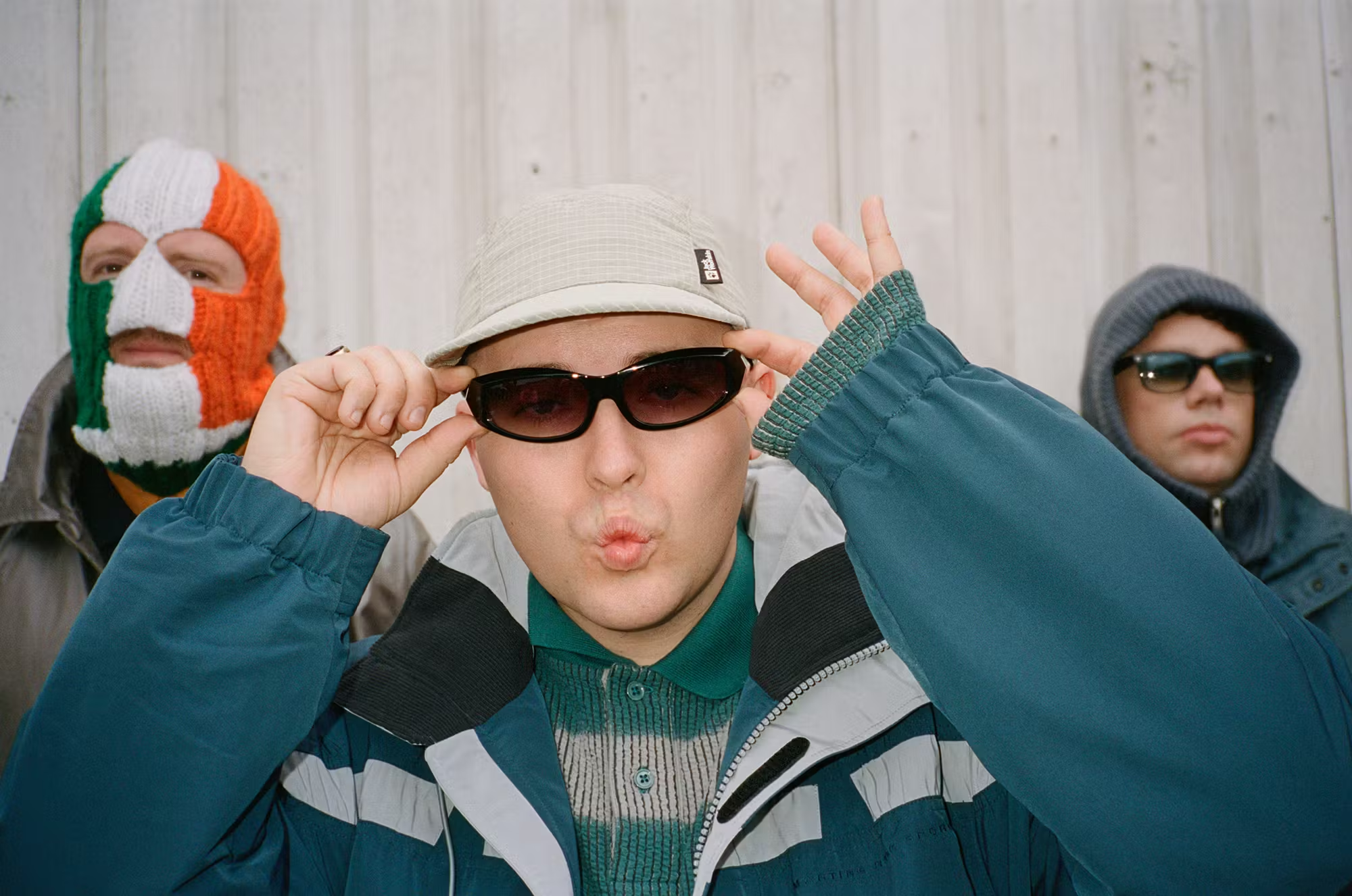
(L-R) Stripe polo top NAPAPIJRI x MARTINE ROSE, jacket MARTINE ROSE, trousers SAMSOE SAMSOE, hat JACK WOLFSKIN, sunglasses ASOS DESIGN sneakers MERRELL 1TRL, Shirt YMC, zip jacket FRED PERRY, coat CASEY CASEY, trousers DESCENTE ALLTERRAIN, balaclava MODEL’S OWN, shoes GRENSON, Blue knitted hoody SASKIA LENAERTS, blue jacket and blue cargo pants STONE ISLAND, sunglasses RAY-BAN, sneakers NEW BALANCE
As much as Fenian is a middle finger to those who doubted, banned, and arrested Kneecap, the album is also a form of catharsis. A way of turning frustration and grief and loss into modern Irish rebel music, with synthesisers instead of uilleann pipes and bodhrans.
Despite — or because of — the band’s newfound global platform, Fenian retains the energy of Kneecap’s earlier work, fine-tuning it and recalibrating the things that made it great. Not just their backbones, but their ability to turn the worst experiences into anthemic party hits. And their humor, which hasn’t changed.
“It’s worth remembering that the English language is actually a very new concept in Ireland,” Mo Chara quips. “We spoke Irish for 2,000 years; we’ve only spoken English for two to three hundred.” He grins from behind sunglasses. “How am I doing?”
Credits
By: Róisín Lanigan
Makeup: Soraya Phipps
Photograped by: Adam Rouhana
Hair: Paul Preshaw
Styled by: Giulio Ventisei
Production Assistant: Mikayah Noah
Styling Assistants: Habon, Kokpheng Ou