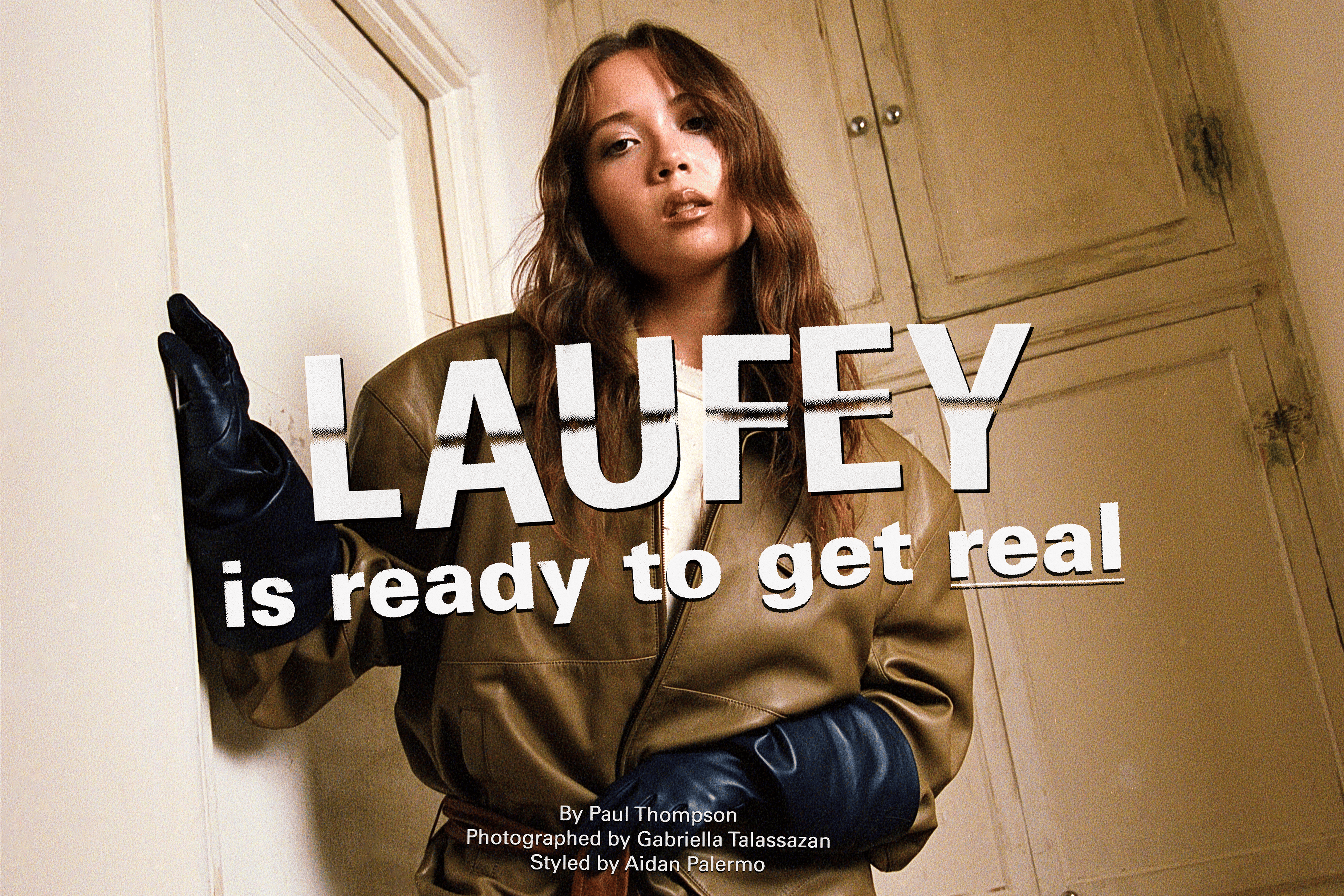
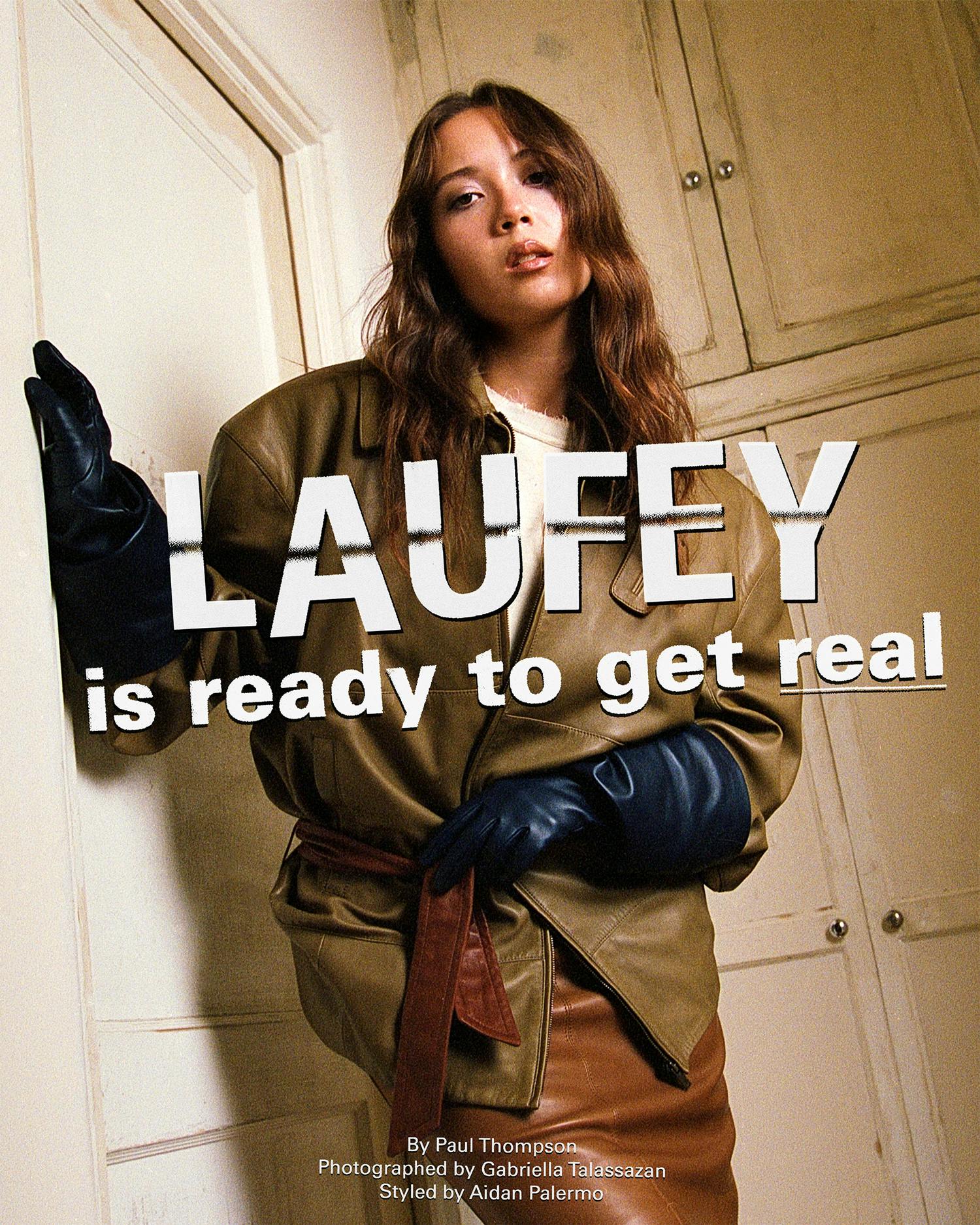
Weeks ago, we started asking people what music they were listening to. And over and over again, we heard, “not much.” A few had dipped toes into Addison Rae or the new Lorde album. Many had migrated to podcasts or audiobooks. One editor’s Spotify algorithm had been taken over by “Chill Lowfi Study Beats.”
The consensus was clear: we were in a music rut. Which felt strange considering the season. There’s always been a special relationship between music and summer: the festivals, the boomboxes, the stadium tours. In 2017, SZA’s Ctrl blasted from every beachfront and Bushwick rooftop. Last year, Charli XCX rewrote the script with brat.
This year, things feel more diffuse. At the same time, there’s never been a more exciting moment in music. So this week, we’re showcasing three artists you should be paying attention to. The first was SAILORR, the former theater kid pushing R&B forward. The second was Jane Remover, the producer, vocalist, and digital disruptor turning heartbreak and burnout into otherworldly sound. Today, we’re featuring Laufey, the Icelandic singer-songwriter who’s finally ready to spill her guts.
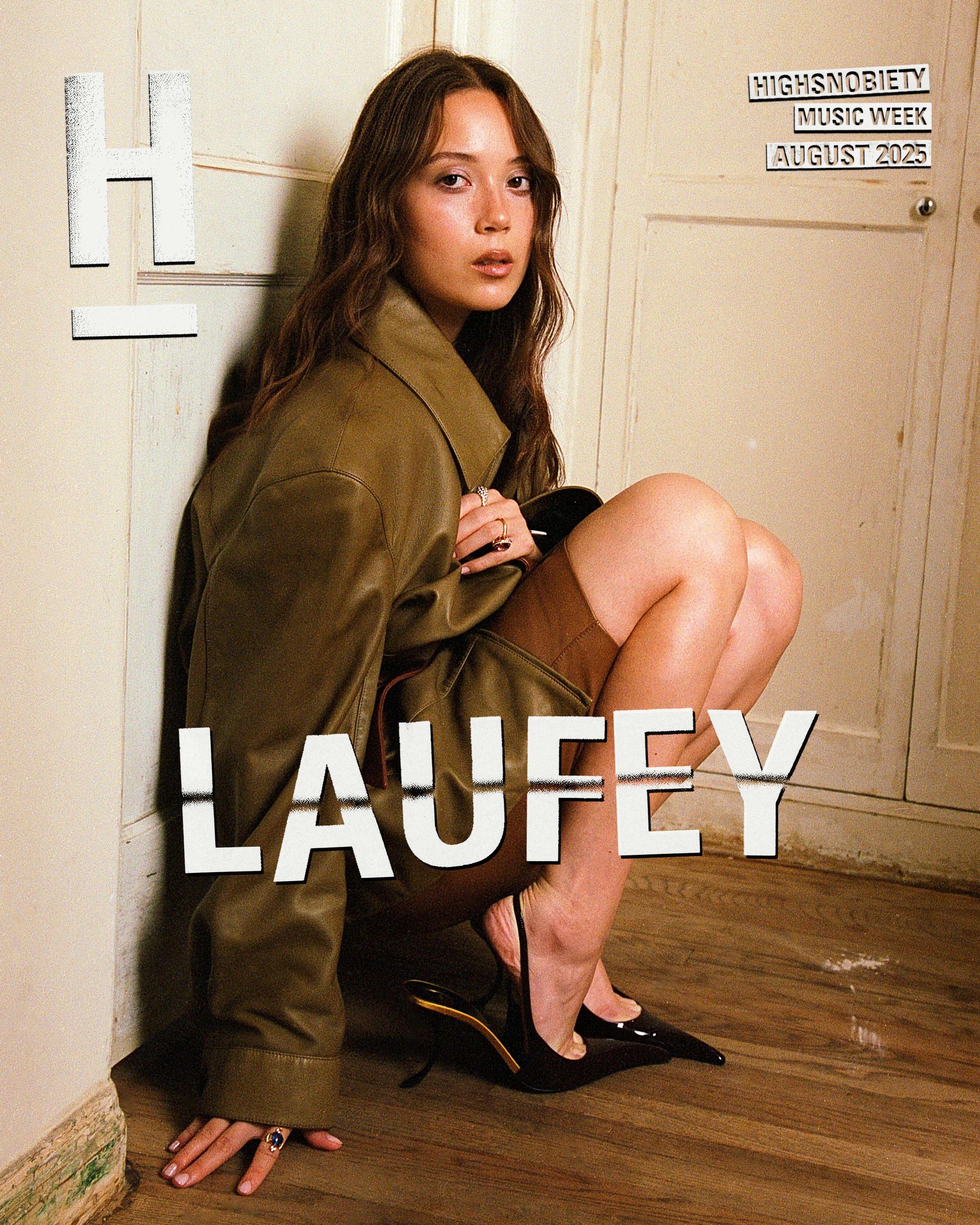
It comes off like a confession. “I don’t write very well in studios,” Laufey says, eyeing a constellation of stylists, publicists, and photography assistants as they swarm through the second story of a tiny home on the Southern edge of the Hollywood Hills. The Reykjavík-born singer, who recently turned 26 and is on the precipice of releasing her third LP, A Matter of Time, is explaining that a crowded, professional environment is the opposite of what she needs to tap into the creative flow that has made her one of pop’s most interesting — and least likely — new stars. “I need to be so vulnerable with myself,” she continues. “I have to be completely on my own.”
Laufey’s craving for isolation doesn’t suggest an underlying solipsism. In fact, she’s been channeling others her whole life. A prodigious cello talent and a jazz vocalist, she moved to Boston after high school to study both disciplines at Berklee. The style she landed on there, and which is reflected on her trio of albums, fuses jazz, classical, and bossa nova with pop approaches that span decades. Her writing sometimes borrows — in syntax and topic, or just in structure and tone — from the Great American Songbook, but on the whole it’s diaristic and disarmingly modern. At her sharpest, Laufey seems to be deliberately blurring the chronology and provenance of her lyrics, as if the conversation she just had at a bar could have happened in 1955, or on a naval ship, or in a dream. When she sings, on 2023’s “Letter to My 13 Year Old Self,” of the peers who “try to say your foreign name and laugh,” it scans at once as hyperspecific to her experience and background and a little like a parable.
Warm and unassuming, quiet but assured, Laufey sounds in conversation, at first, like someone who’s been media trained. Her answers roll out in paragraphs, the wording just so. But her presentation comes with none of the usual rigidity; you realize, quickly, that she has simply thought about what she wants to say.
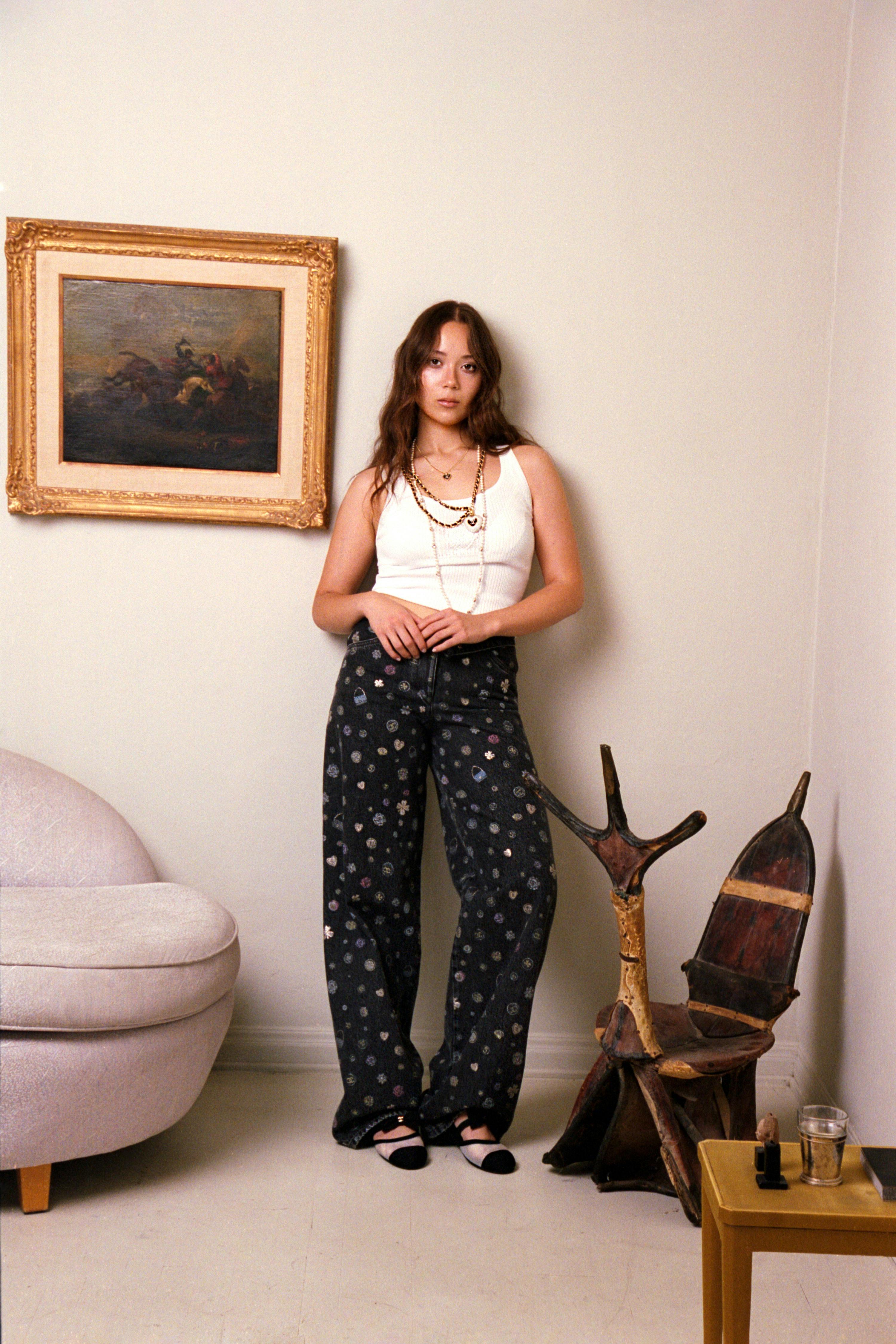
Just as a foundation in rigorous training and theory allowed her to experiment and find new musical forms, Laufey’s gifts as a synthesist have prepared her to burrow deeper into her own psyche. A Matter of Time retains the sweeping aesthetic scope of 2022’s Everything I Know About Love and the following year’s Bewitched. But it takes formal and topical risks that, until now, Laufey was not prepared to take, most of them in service of baring her truest self to an ever-growing audience.
Laufey was raised mostly in Reykjavík by her Icelandic finance executive father and her mother, a violinist with the Iceland Symphony Orchestra who was born in China. She practiced cello from an early age, aiming to evoke mid-century jazz singers like Ella Fitzgerald. By the time she left for Berklee, she had a lifetime’s worth of immersion in classical and contemporary music. She’d also appeared on a pair of singing-competition reality shows — the past and present colliding in sometimes jagged, sometimes elegant ways.

At Berklee, her pressure-cooker adolescence gave way to something freer. This was in part because, for the first time, Laufey was received as an individual. “I’ve always been a twin — I mean, I am still a twin,” she says. “But we were kind of attached at the hip, always in the same classes, always referred to as ‘the sisters’ or ‘the twins’ instead of by our names.”
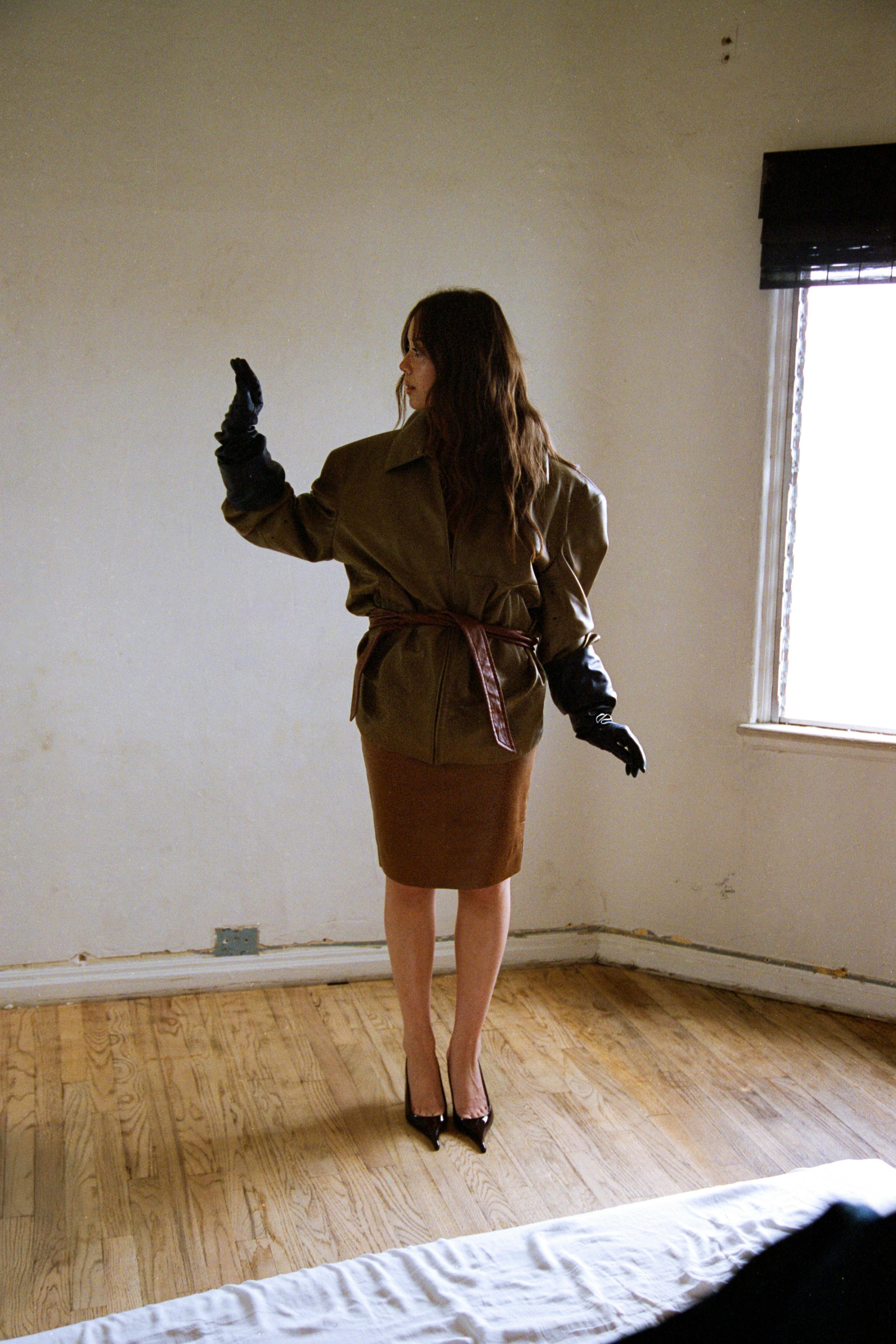

In Boston, she was one of one. She started dating and going to parties — things she hadn’t had time for in high school. “I was living for the first time,” she says, “and it kind of opened up a new side of myself.”
Berklee also upended her framework for musical success. “Growing up, I thought the best interpreter of the given music was the best musician — the best technical musician,” she explains. “But at Berklee, the best musicians to me were the best creators of music. Even if you weren’t the fastest at playing scales, you could still be the best musician, because it was really about who was the best at creating their art and writing music that felt unique, that was true to them and their identities.”
When Laufey recorded her first original composition, the muggy, languid “Street By Street,” she knew immediately that she’d landed on the right approach: rooted in orthodoxy but still intuitive. It was a significant breakthrough. Unlike many of her peers, she’d avoided writing lyrics throughout her teenage years. “I was not comfortable enough in my skin to be deciphering my emotions in that way,” she says. “I couldn’t even look at myself in the mirror and talk to myself. I was kind of embarrassed.”
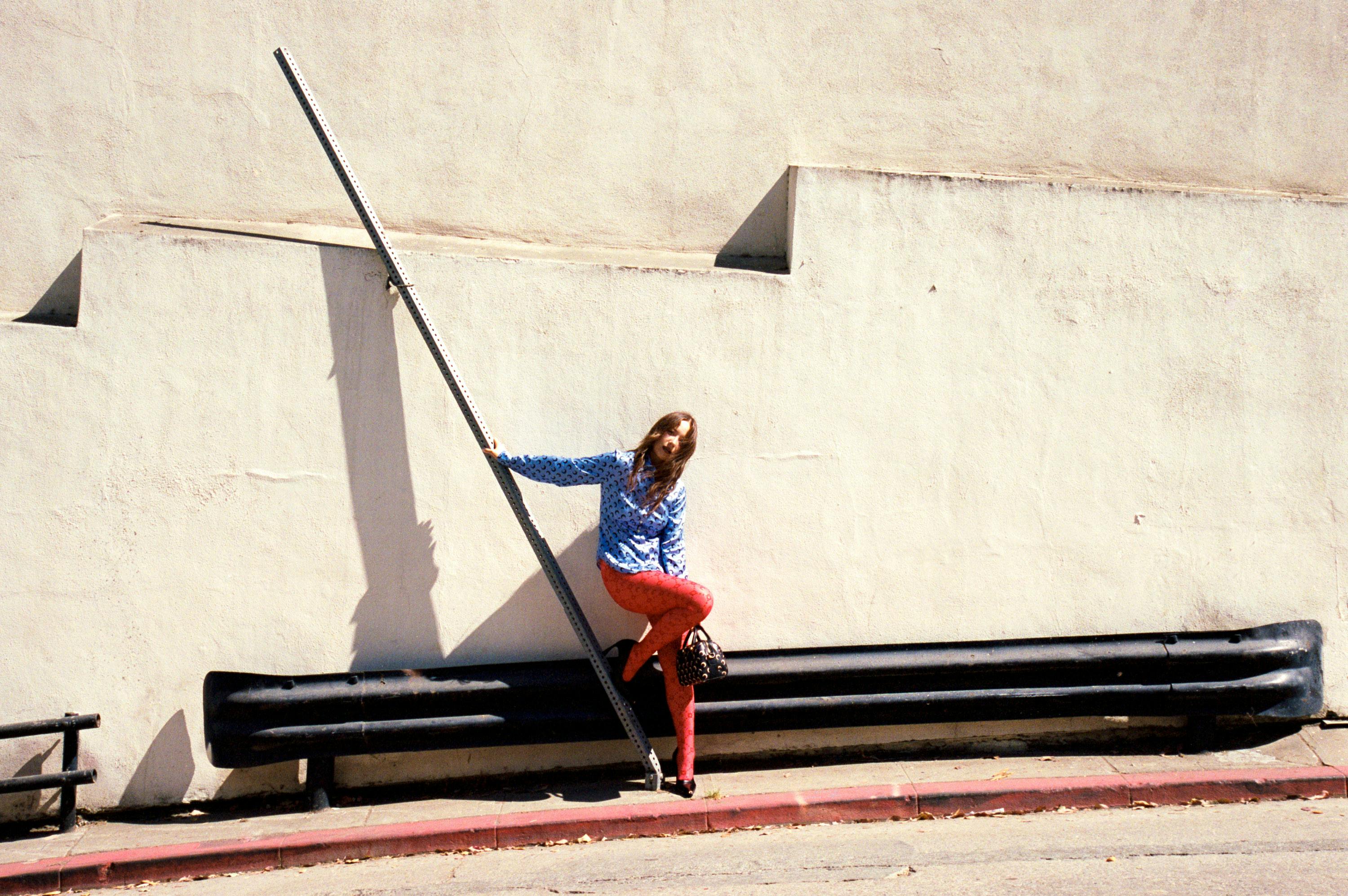
Yet even then, Laufey was developing a vast vocabulary of lyrical technique. “When I finally had the emotional maturity to be able to face myself and write the lyrics I wanted to write — to put my emotions into something tangible — I had this back catalog of understanding when it came to songwriting.”
The recipe yielded impressive, and immediate, results. What’s perhaps most striking about her debut EP, Typical of Me, is the degree to which it presents Laufey as fully formed: already slipping fluidly through time, already positing her rich, pliable voice as the element uniquely suited to anchor all her different musical modes. She says her fanbase, which grew steadily through Everything I Know and Bewitched, is composed of those who listen to her for the full sweep of her project, and of those who might pick and choose among the tracks with tinges of different genres. While Laufey hopes that her work will serve as a gateway for young listeners to get into older music, I just like the orchestra songs or I’m a ‘bossa nova Laufey’ fan makes her just as happy.
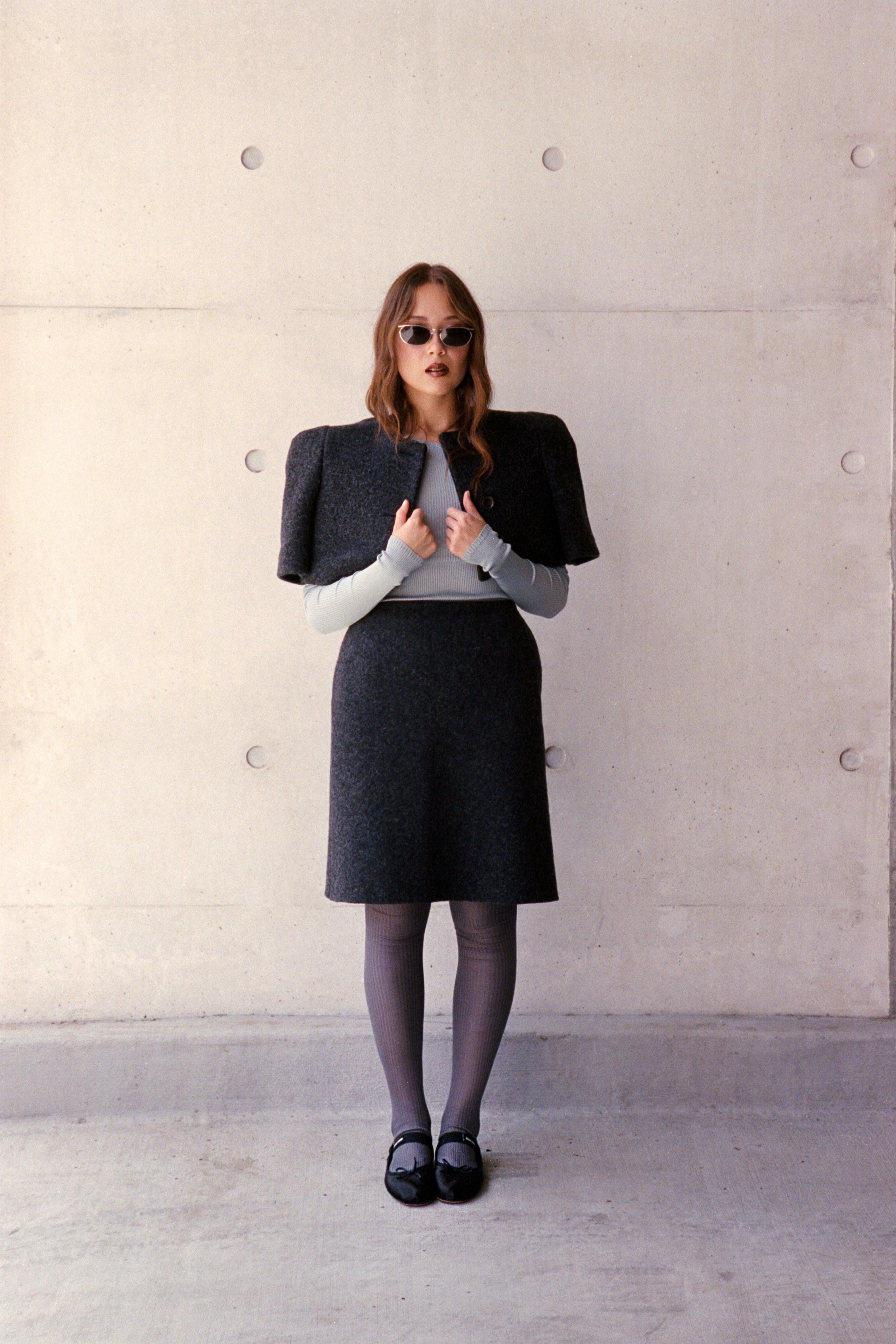
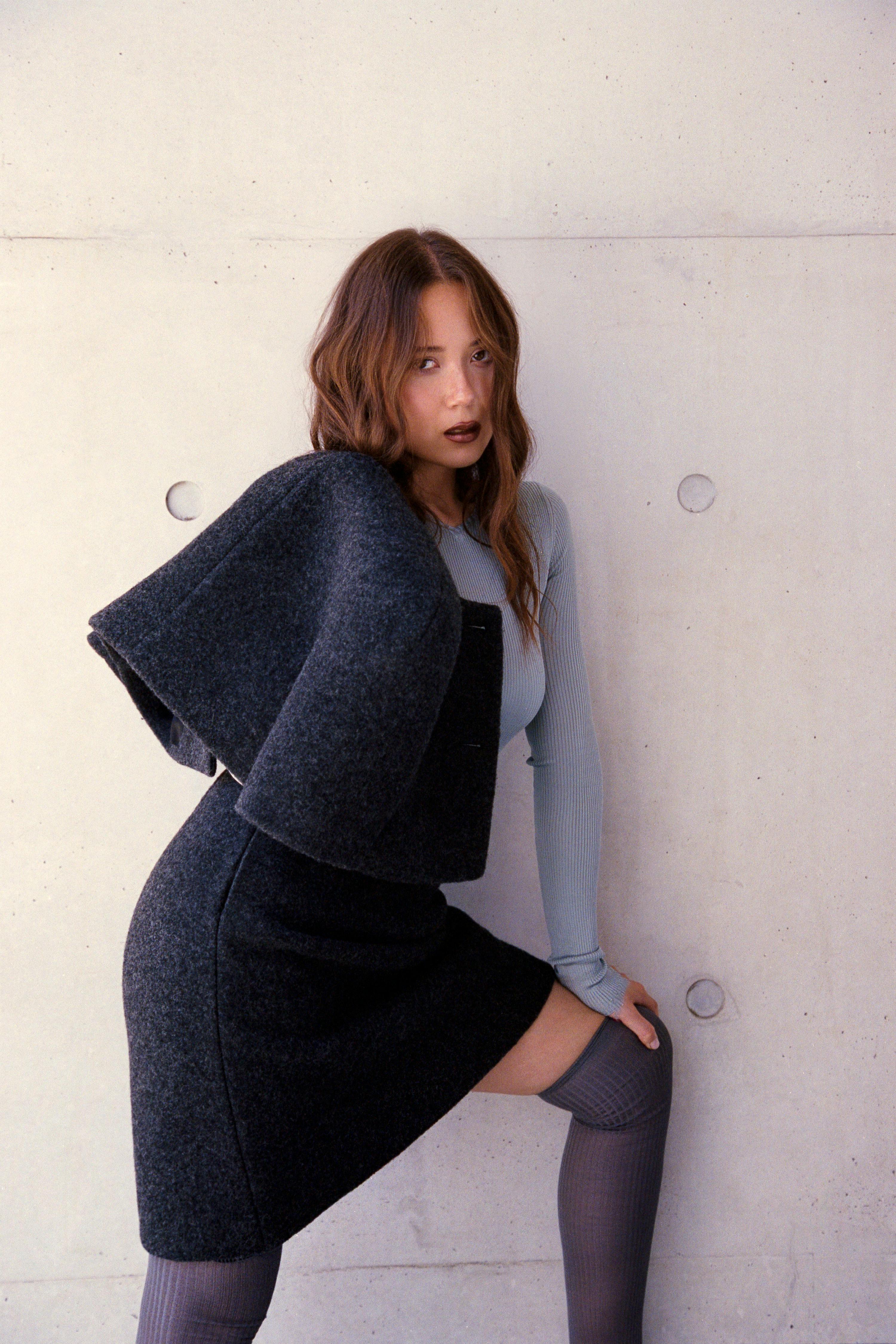
It’s understandable, though, that that audience could make an already conscientious writer self-conscious. Laufey is clearly grateful that so many girls and young women have connected with her work. (A quick TikTok search for “Laufey tattoo ideas” leads down a particularly sincere rabbit hole.) But she also began to notice that concern for them would creep into her process. “When I was writing songs of self-reflection, songs of insecurity, I used to make sure that it kind of ended with a hopeful message: ‘You’ll be OK, you’re still beautiful,’” she says. On A Matter of Time, she has scrubbed that fear from the writing. “With this album, I was less occupied with how it would be received by the public and more interested with how it served the truth,” she adds.

That willingness to sit with discomfort is also borne out in the music, which is dominated by chord progressions that seem to take forever to resolve — if they ever do. “My songs on this album aren’t very hopeful,” Laufey continues. “They’re quite cynical.” She cites in particular a swelling, pensive cut called “Snow White,” about the feeling that she’ll never quite fit into the molds pop artists are expected to fill. “It’s literally saying, ‘I’ll never be satisfied.’ Which often, in the moment, feels true.” Even “A Cautionary Tale,” with its triumphant, blooming choral arrangement, has an acidic streak of self-criticism. The way Laufey sings about her “chameleon heart” makes you wonder how many post-breakup hours she’s spent taking stock of how permeable she’ made her own boundaries.
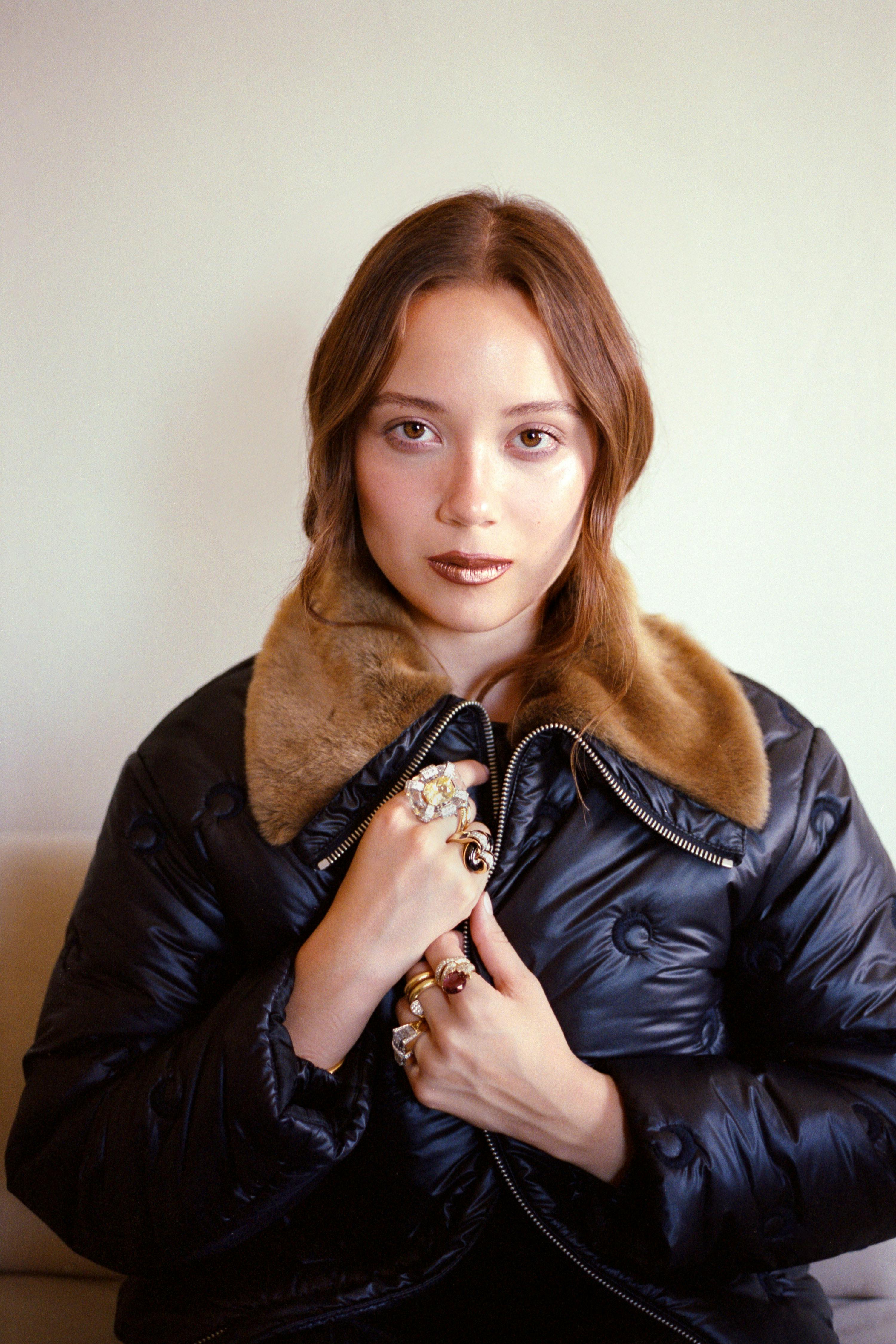
In shaping A Matter of Time to these sometimes knottier specifications, Laufey had to learn to control the production process in a way she hadn’t before. “My whole project has been breaking rules of pop music, and jazz music, and classical music, to get to this final product that is a mix of all these different things, different sounds,” she says. But it’s hard to shake the parameters you’ve spent a lifetime internalizing. So it was an act of faith in herself that allowed her to step outside of those rubrics. For the new album, she adopted the attitude: “It doesn’t really matter what’s right or wrong. If it’s what I want, then it’s right.”
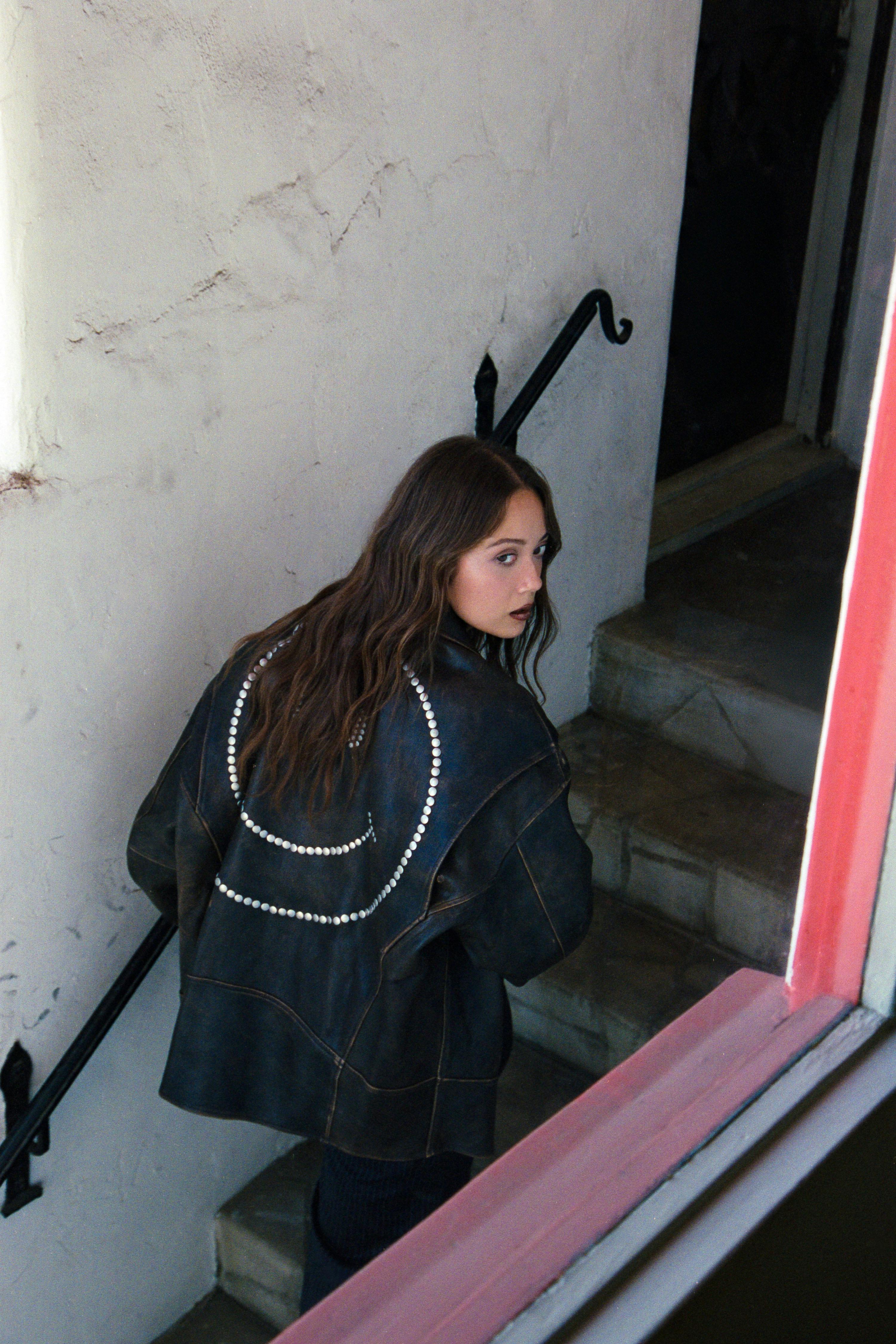
Credits
By: Paul Thompson
Photographed by: Gabriella Talassazan
Photo Assistant: Sean Doolan
Styled by: Aidan Palermo
Hair: Rena Calhoun
Makeup: Amber Dreadon
Nails: Emi Kudo
Production Assistant: Ben Fisk
Photo Assistant: Sean Doolan