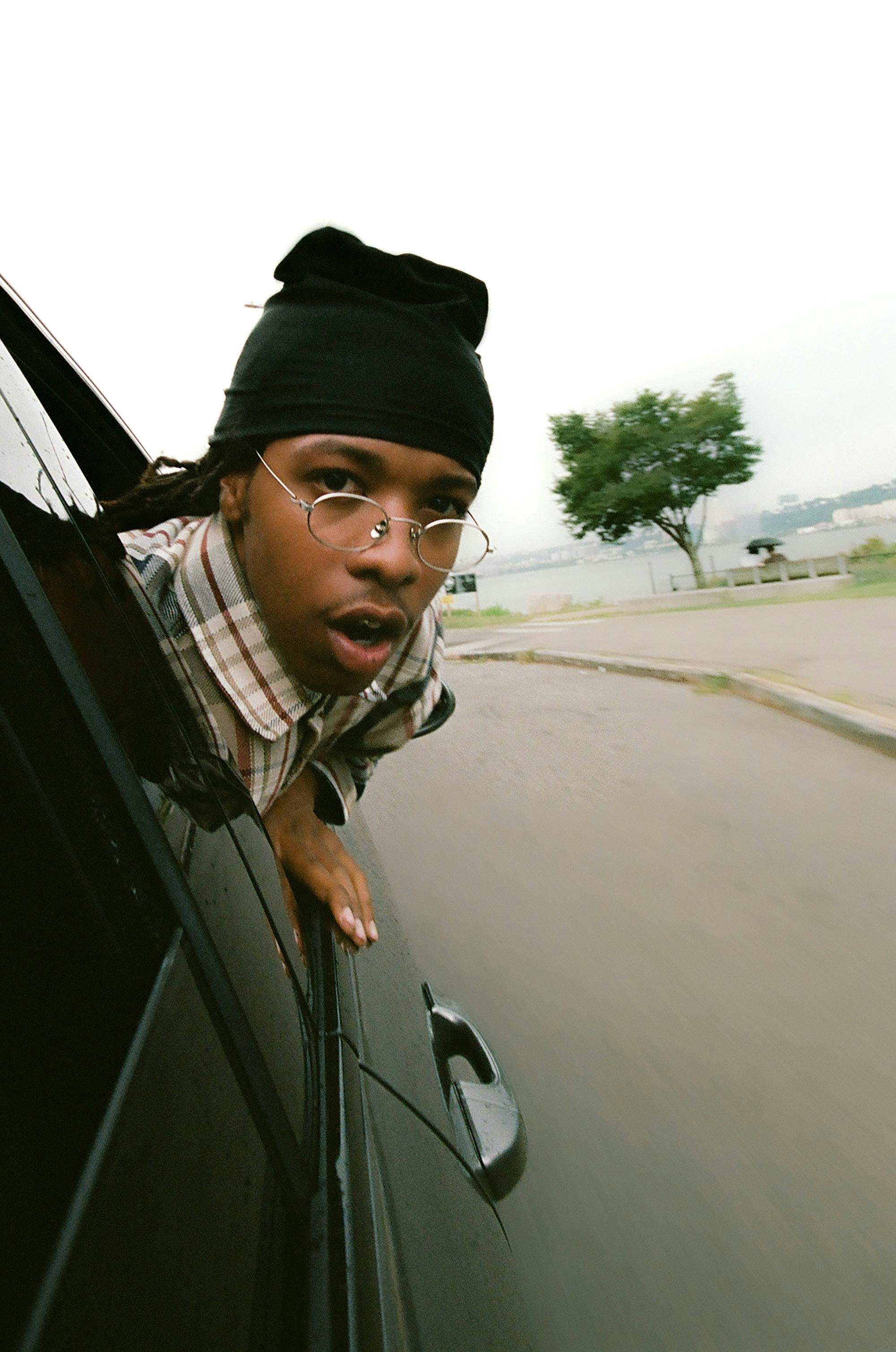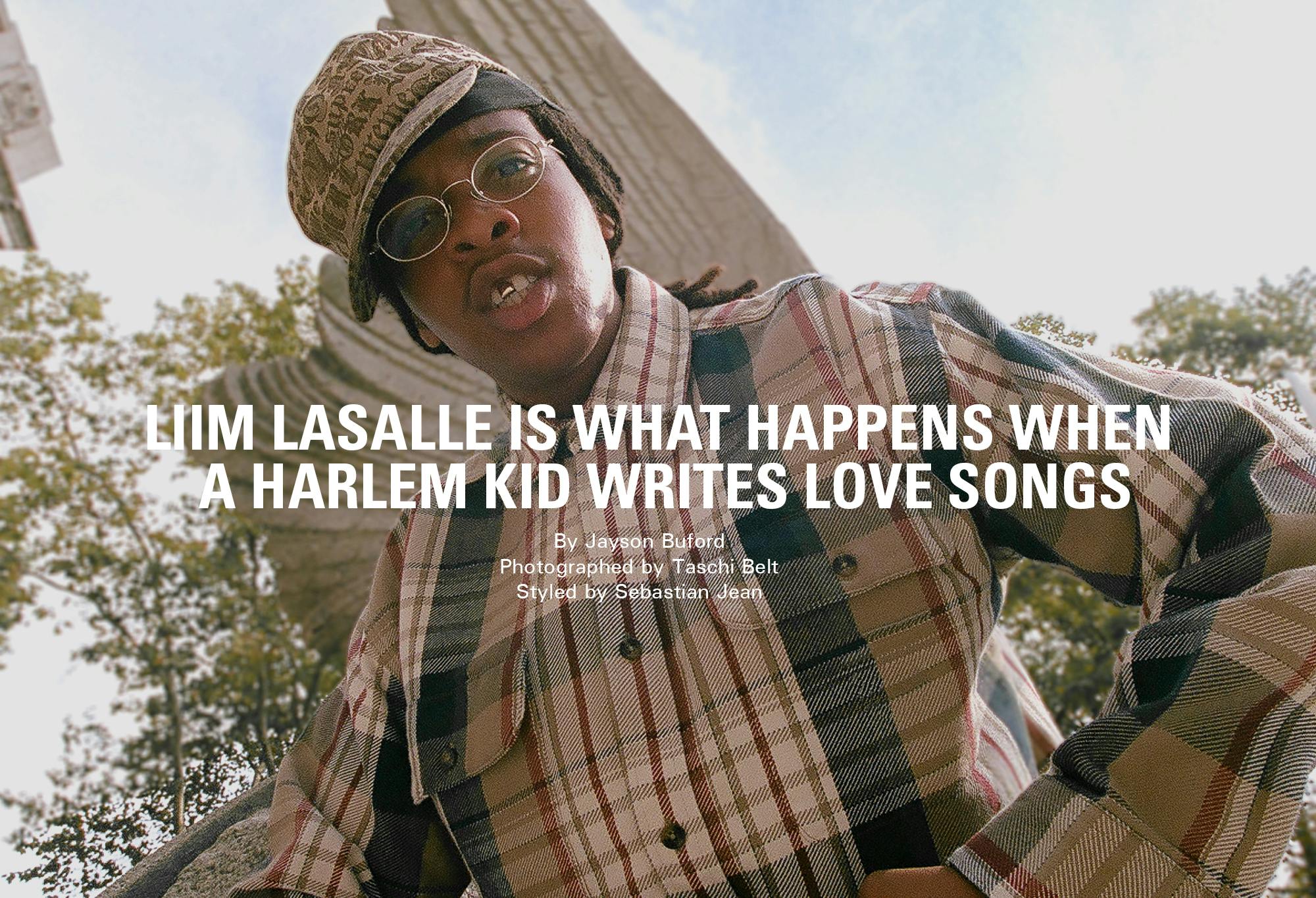
Liim Lasalle laughs when I mention the 1 train. Because he was born and raised on 125th Street, in the Grant Houses near the northern border of Morningside Heights, the 21-year-old artist has taken his share of rides on the local 7th Avenue line. In a TikTok video, he called the 1 his favorite train, despite its inconsistency.
The 1 is a lonely road, plagued by constant stops and hot air that gusts from broken vents. Riding in those cars must’ve been hard for Liim as a kid, itching to get to the park to skate and to find his place in a city where success is right there for the taking, where competition and failure are just as close. He is forever the person who rode those trains. “I love it, and I hate it,” he tells me.
It has been a year of change for Liim. He recently went through a breakup, and the relationship still weighs heavily on his mind. He ended things not because of infidelity or boredom, but to focus on his career, which he treats like something he has to take care of, a mad scientist nurturing rabbits in a lab. His debut album Liim Lasalle Loves You came out Friday on Three Times Louder, the new label from famed producer Sickamore. The music is alt-pop, alt-R&B, with slow-groove harmonies. The single “Mezcal,” tinged with longing and boyish defiance and inspired by trying the drink for the first time at a Clairo show, is about walking alone after a fractured relationship.
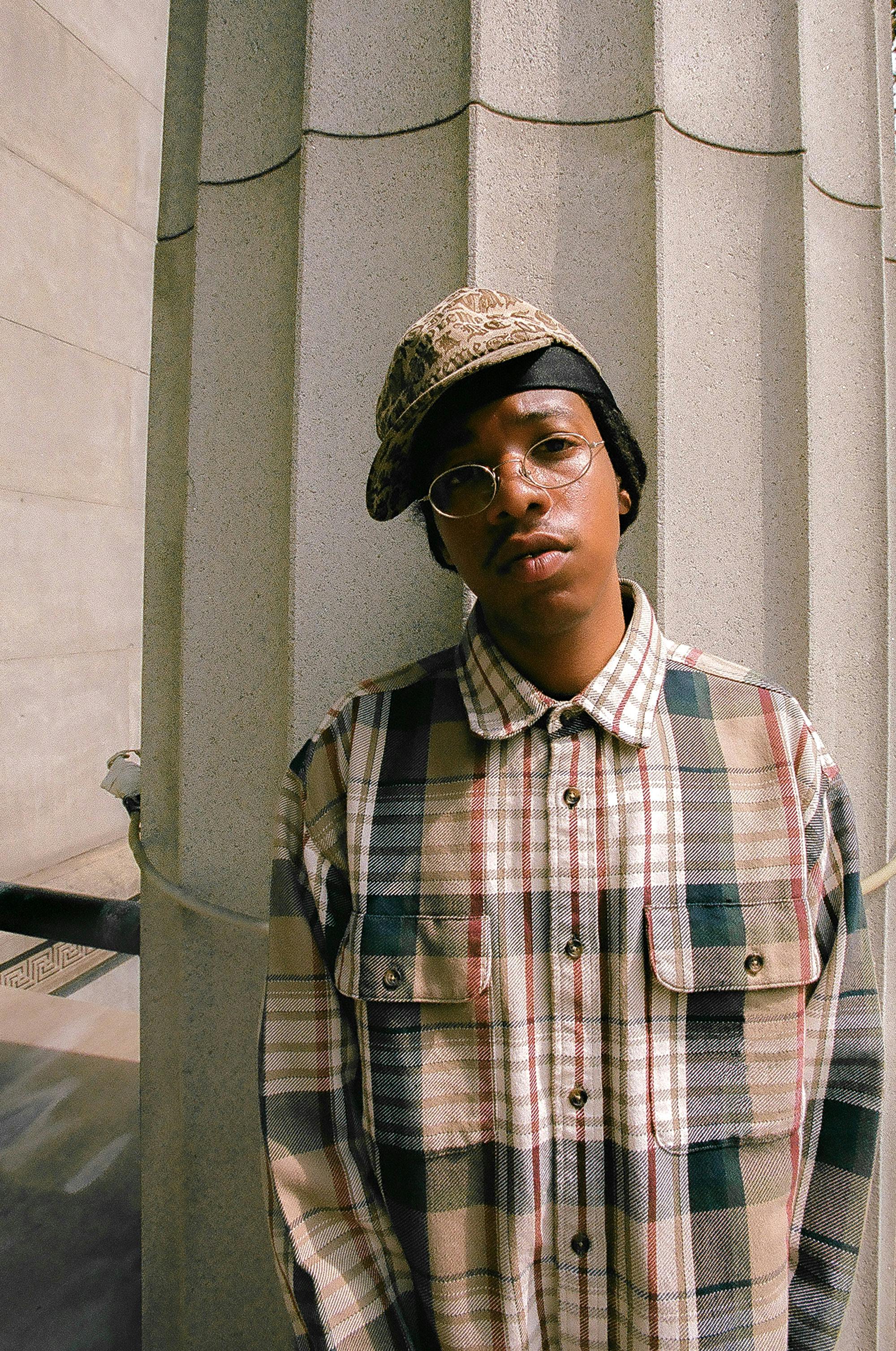
Shout-outs are tacky, but Tyler, The Creator has spoken about Liim in interviews after the two met at a birthday party, and Tyler doesn’t shout out just anyone. Liim’s sound is “like Max B. over Stereolab chords, but like, you can tell he be with some dirty skaters,” Tyler told Zane Lowe in August. Twice he mentioned that Liim is “from New York,” as though that explained everything. In some ways, it does.
At its core, Liim’s album is a coming-of-age story. He’s much too cool to admit this, but the lyrics see him probing his past, revisiting the beefs in Grant Houses, skating sessions in Tompkins Square Park, swimming lessons at P.S. 25, fistfights at school. “Growing up in Harlem was beautiful, challenging, complex, sad — all of those things,” he says. “Columbia was buying up the block, changing the stores. I lost the ocky — the bodega. I saw it turn into a Starbucks.”
Liim is a romantic. The song “Sahara Freestyle” is about falling for someone, wanting to get to know their family, wanting to rub their thighs while they tell you their secrets. “Shams Love Song” sounds like a vortex sucking down sand, showcasing Liim’s ear for delicate, piercing beats. His joyful crooning could work as the opening credits of an A24 movie. He gets at the feeling of being young, unwise, eager for love and connection, even if those things feel far-fetched.
His mother is Muslim, and he grew up attending Islamic school, but he was kicked out at a young age. “Nigga lied on me, talking about how I stuck the middle finger up at him when he was teaching,” he says. “Things like that made me stray away from the faith.” Liim told the teacher that his father was going to accost him, but the opposite happened: his father gave Liim an ass-whooping that night. After that, he went to P.S. 125, also known as The Ralph Bunche School, then Harlem Link Charter School, and a few more schools that he bounced into and out of.
The Grant Houses are famous, bordering on notorious — in 2014, raids led to a series of federal indictments that Liim says named some of his friends — but Liim somehow fell into more of a Nick Carraway experience. As a teenager, he was meeting billionaires’ kids (“I don’t want to say who”) who took him on trips to Turks and Caicos, complete with a private chef available upon landing. Vacations meant drinking mojitos and shooting his shot at the kinds of women who were not hanging around the Grant Houses. All he had to do was get on the plane and act like he’d been there — a certain quality that most New York City kids have when the situation calls for it. He was cool, could talk to anyone. “I was able to branch out,” Liim says. “Money was never a thing I looked for in a friend, but I was introduced to an insane quality of life.”
Adam Zhu, the proprietor of Manhattan’s Market Gallery, met Liim at Tompkins when he was 15 or 16, an uptown kid hanging out south of 14th Street, someone who was “around the neighborhood,” Zhu says. “Stylistically, he was a Harlem kid meets downtown weirdo creative shit. What I always found compelling was the dynamism of his interest. He has an indie, punk influence, too. It didn’t conform to what you expect someone from Harlem to be making.”
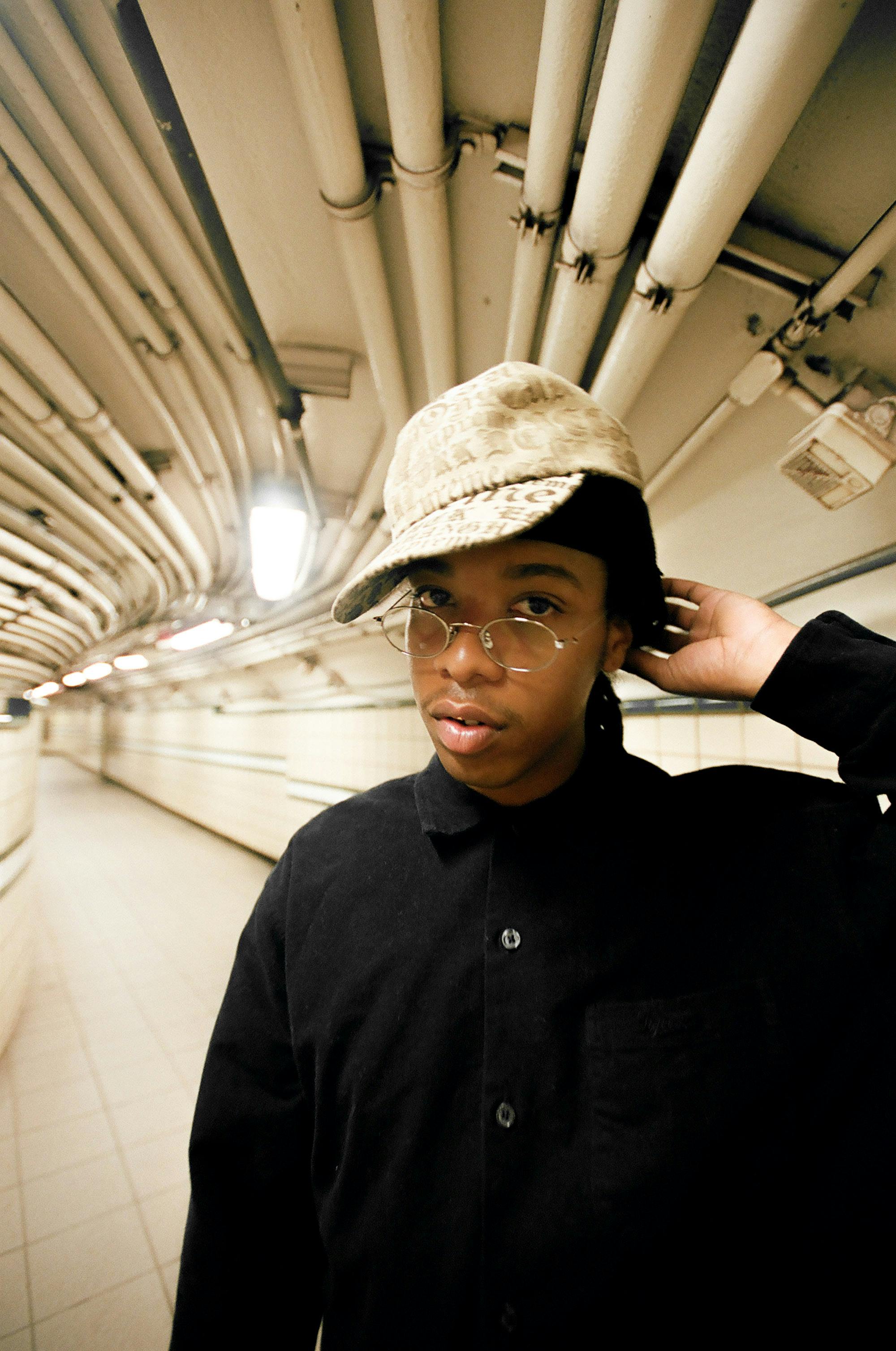
Zhu, 28, grew up in skating in the East Village and became a regular at — and then an employee of — the Supreme store on Lafayette Street. (He’s now a consultant for the brand.) When he met Liim, he advised him to come by the shop, “build a relationship with the brand, familiarize yourself with the community surrounding Supreme,” Zhu says. There was synergy there, and Liim started modeling for Supreme. The gig helped pay for his first apartment, a shoebox on 5th Street and Avenue A that cost $2,500 a month.
Zhu has seen Liim re-focus on music after difficult breakups and after being unhoused. He’s watched him figure out how to stay healthy while chasing his goals, blossom as a model and an artist. “As much as I can be a mentor to him,” Zhu says, “there’s always a trust [there] because I believe in his talent.”
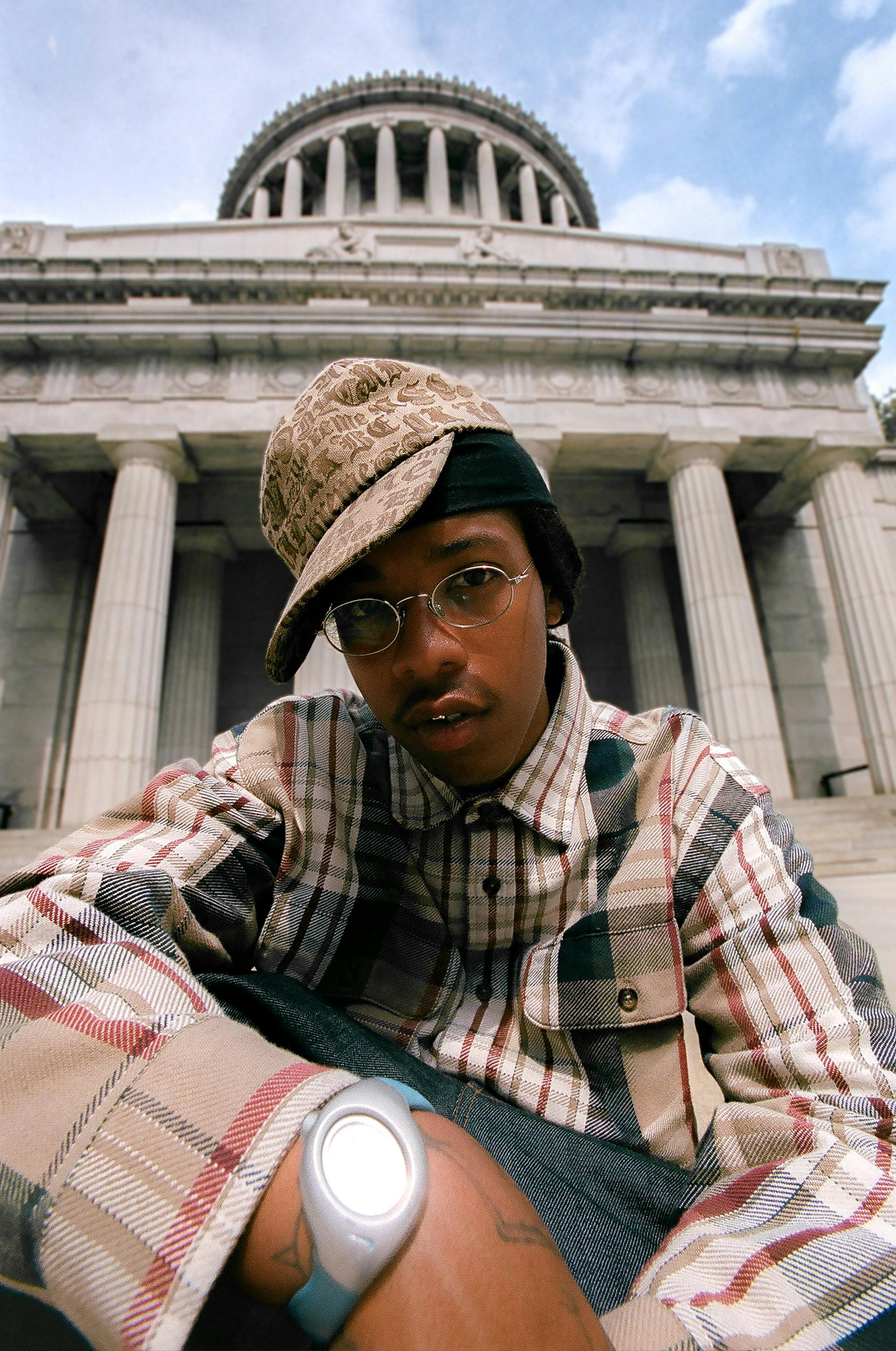
We skip the 1 on the way to Grant’s Tomb, the burial spot of the Union general and U.S. president, a landmark on Riverside Drive just a few minutes from the Grant Houses. Instead, we hop in a car, and Liim rides shotgun. This is another seminal spot for him — a place he’d go to skate when he was younger. With its towering columns and statues of eagles, the building feels more like something out of ancient Rome than contemporary New York.
Inside, the western, northern, and eastern walls of the dome are painted with murals of the battles of Chattanooga, Appomattox, and Vicksburg. Liim and the photographer take some pictures, despite security’s protestations that they don’t have a permit. This spot holds memories of the time before success, the time before photoshoots. He remembers all the places he frequented when he was struggling, wishing, and dreaming. “A lot of things in my life have happened that are so coincidental,” he says, “but I compartmentalize it into confidence.”
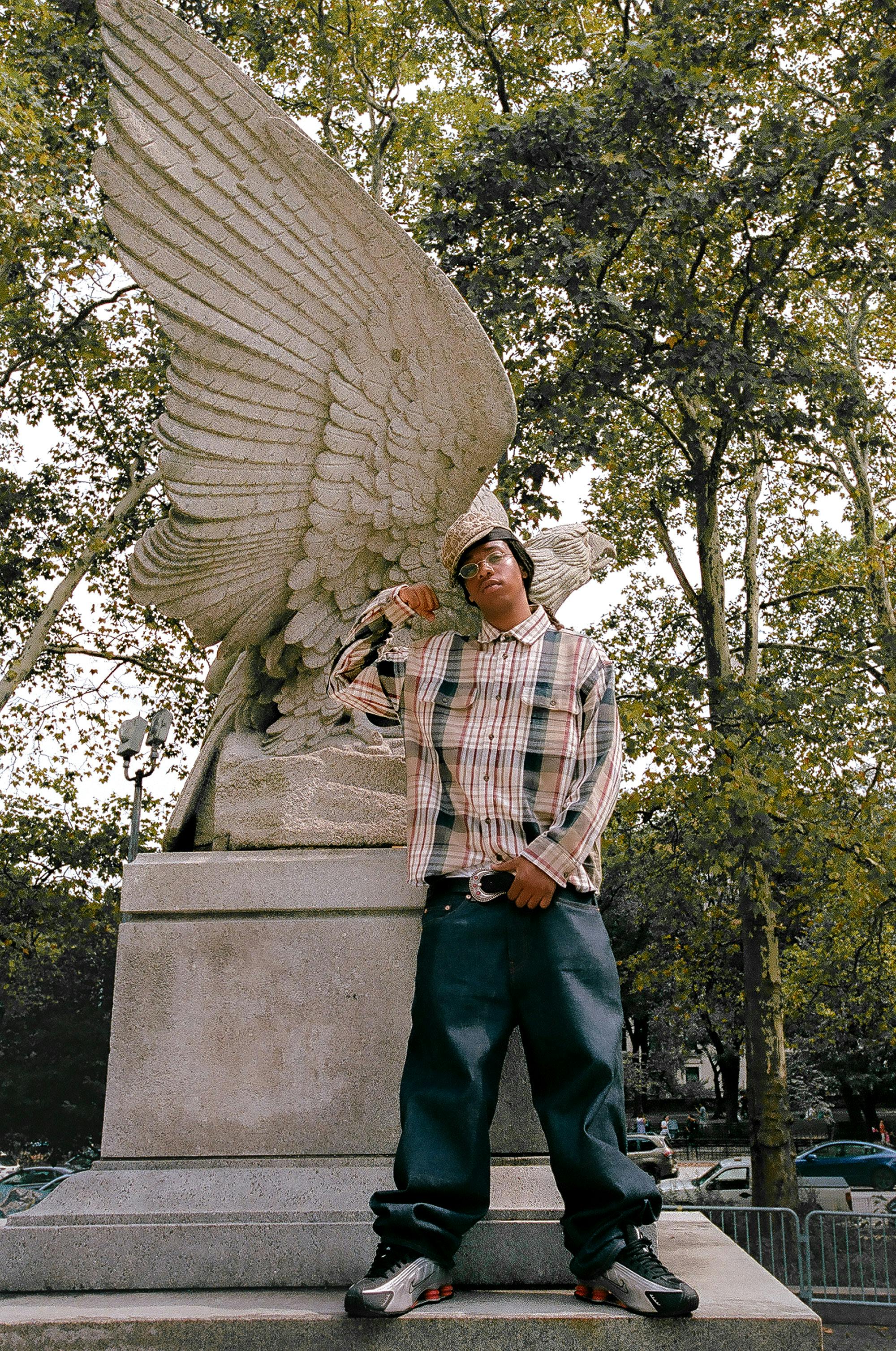
As he posts up next to one towering stone eagle, its massive wing extended into the sky, he somehow holds his own, drawing the eye with his stance, casual but assured. Things are starting to look a little different.