



By Liana Satenstein
Photographed by Tyrell Hampton
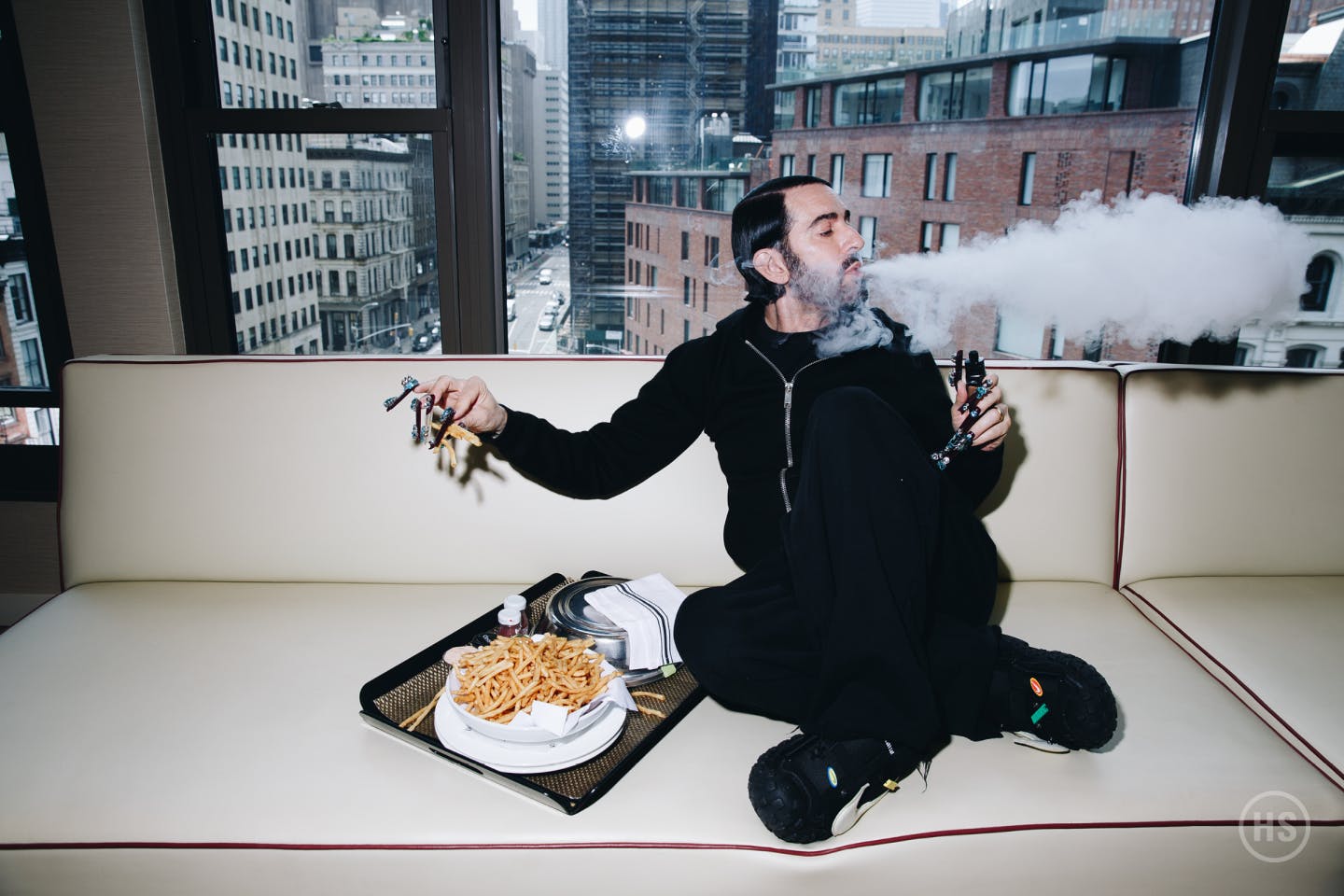
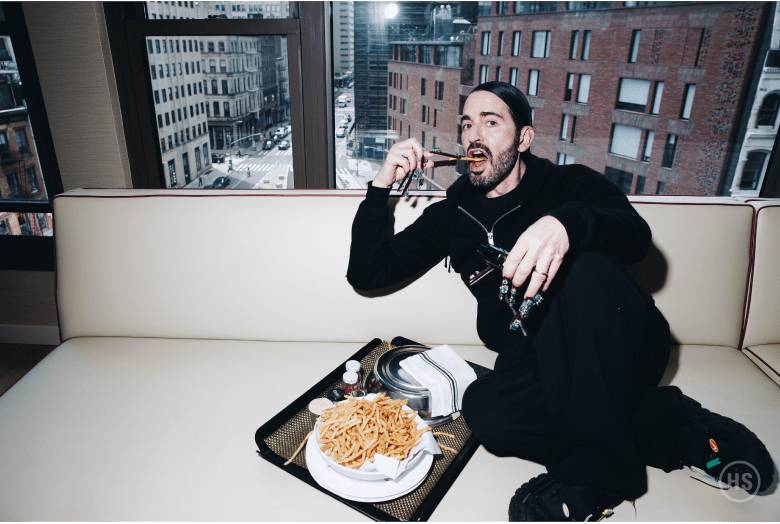
“I’m in my nail era,” says Marc Jacobs, introducing himself as if I haven’t been soldered like an acrylic to every single one of Jacobs’ ASMR fests on Instagram, wherein the designer click-clacks the ornate tips together or tap-taps the camera. The nails are done by the nail artist Yulenny Garcia, aka Muñeca (“It means ‘doll’ in Spanish,” says Jacobs), from the Bronx. Last week, Muñeca and Marc posted videos on their respective Instagram accounts of the two of them vaping together and chit-chatting in Spanish. (Jacobs can kibbitz in Español ? It was news to me, too.)


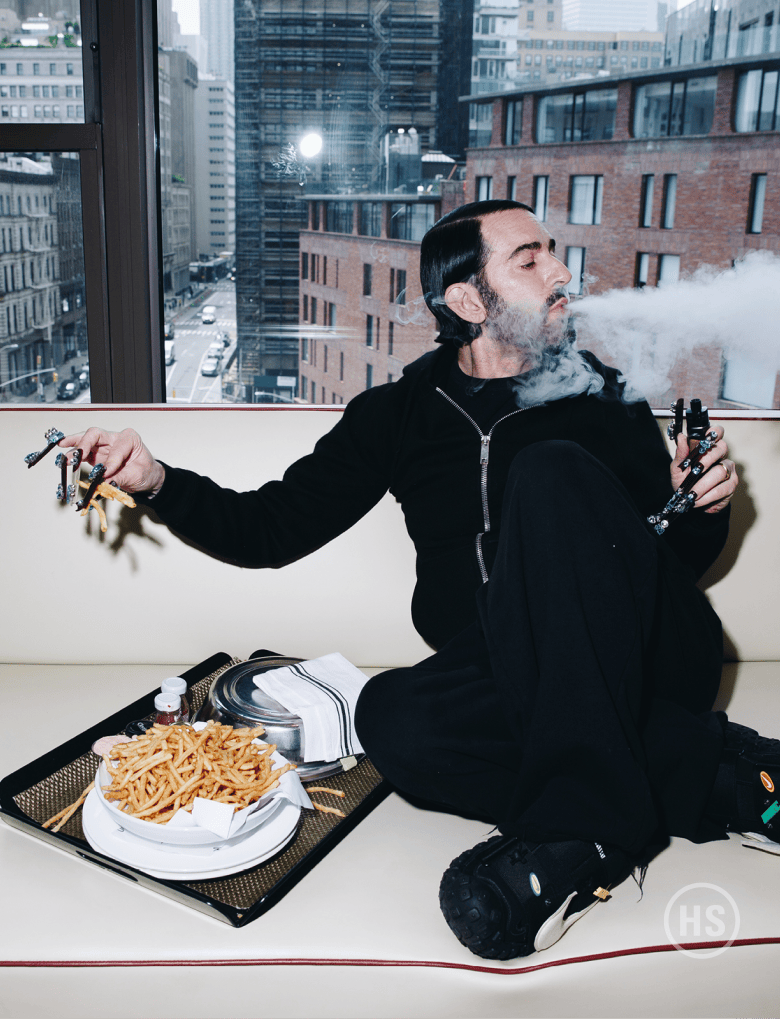
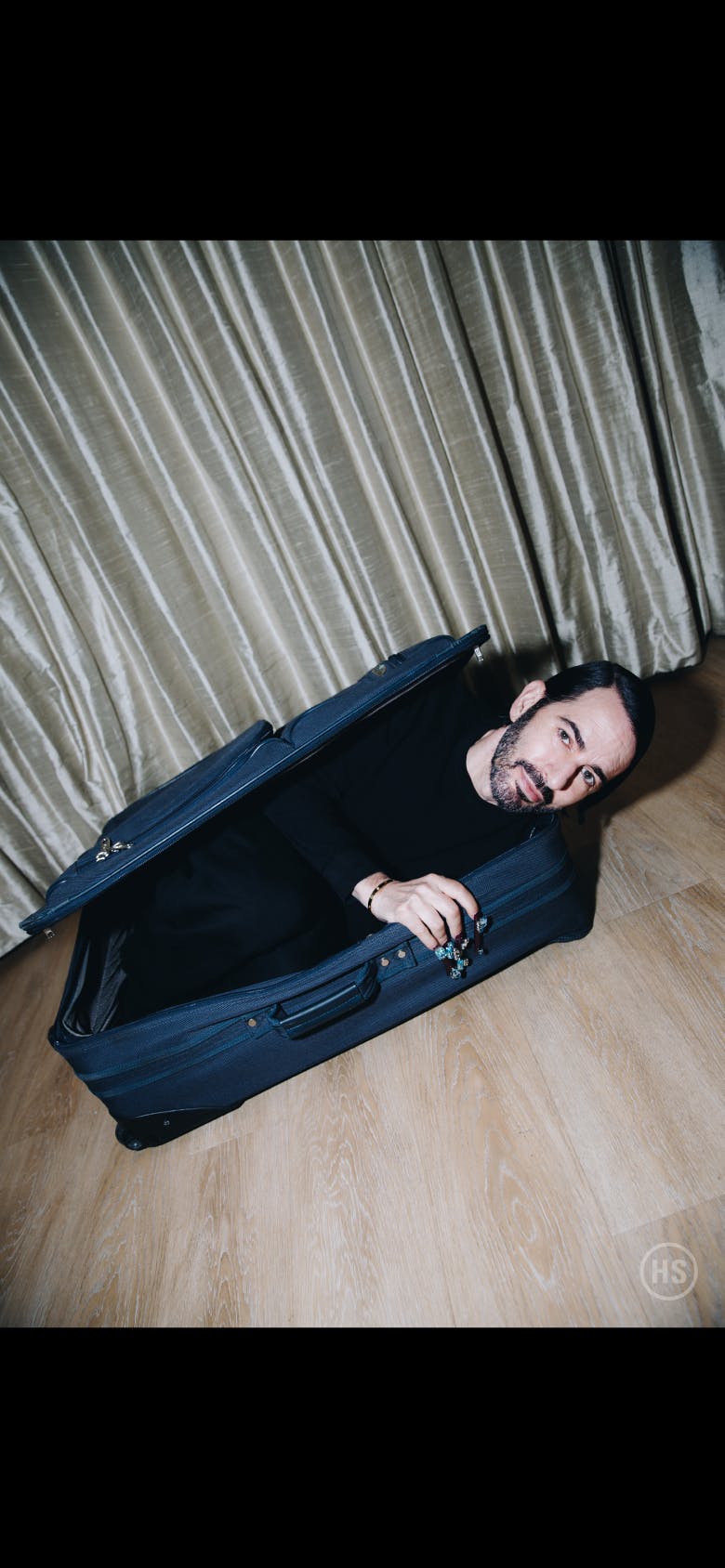
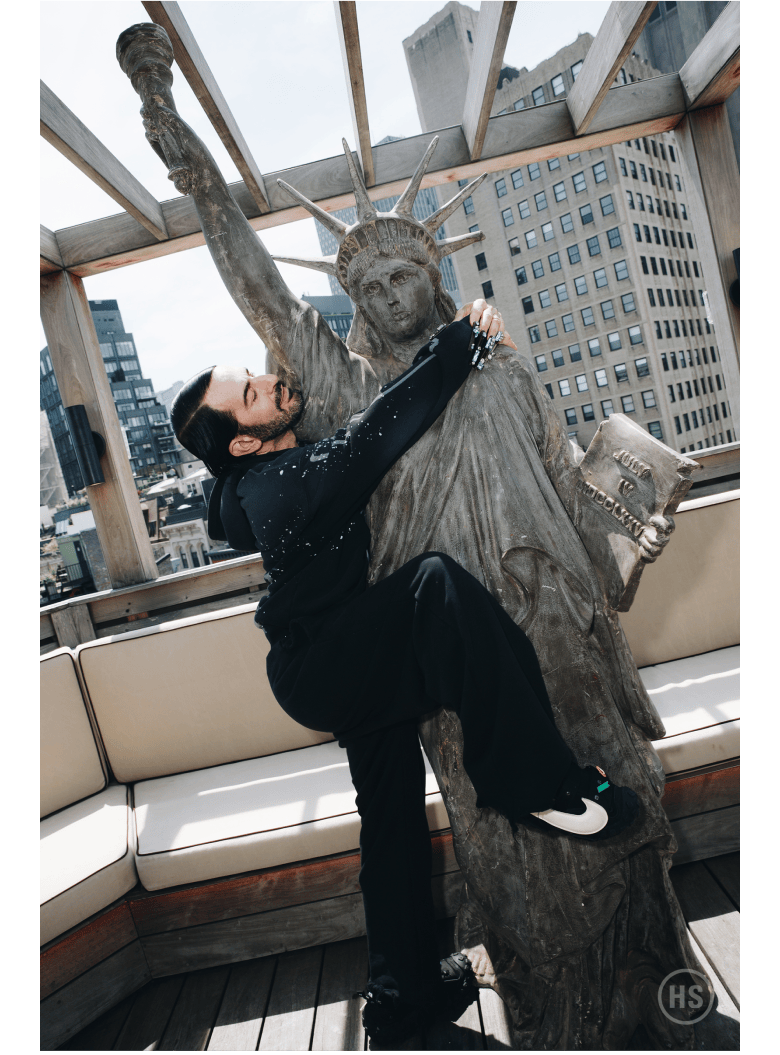
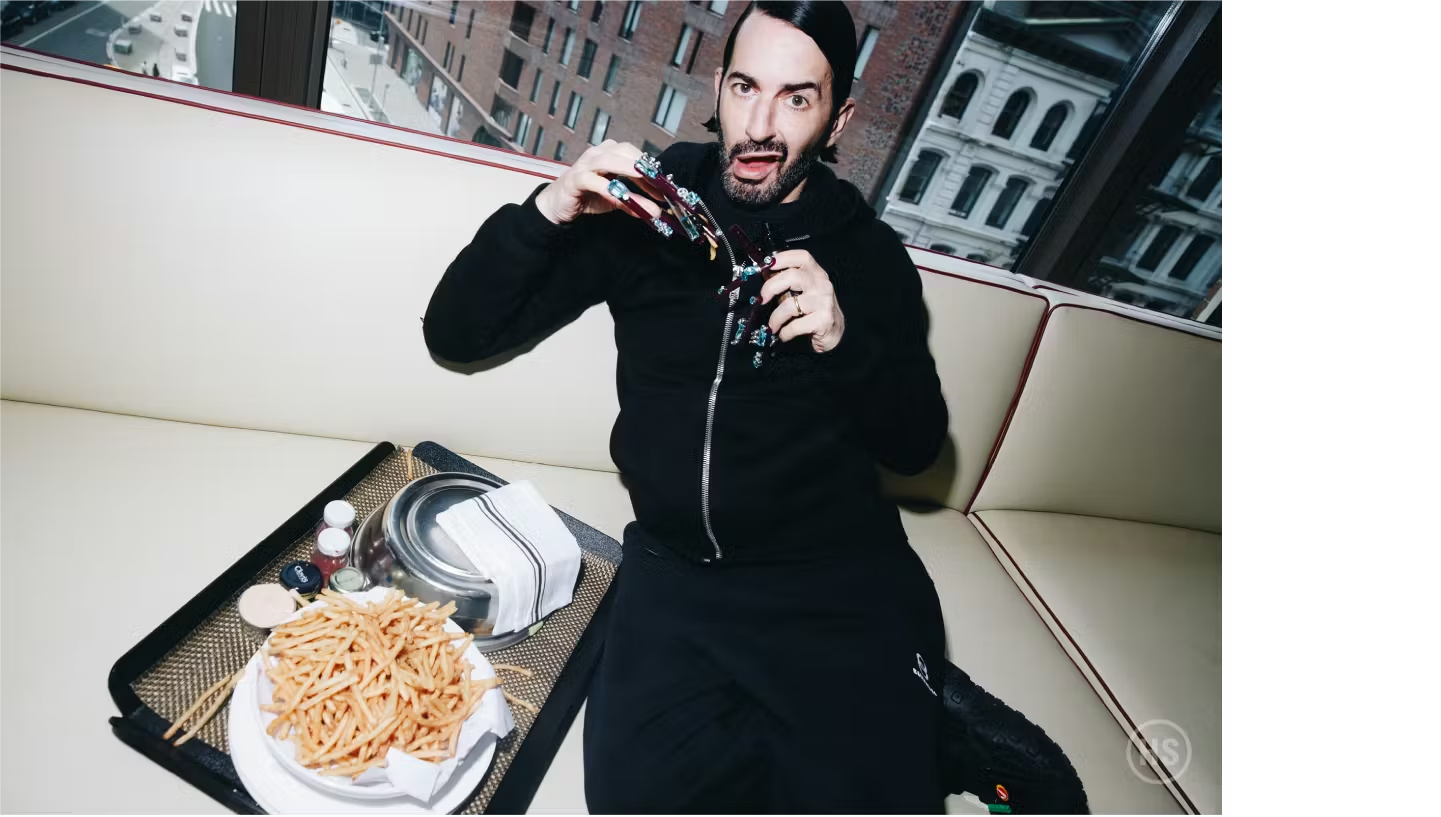
His latest nail design is a masterpiece: faux tortoiseshell tips adorned with gumball-sized stones, each claw spanning the length of a Juul.
Does Jacobs leave the ornate design up to Muñeca?
“I’m so controlling,” he says with a smile. And I kick myself for asking such an obvious question.
“I made two sketches of my right hand and left hand,” he continues, “and laid out all the stones. She gives me a lot of input as we’re going along, but like I am with most things, I’m pretty much like, ‘I don’t know what I want, but I want it exactly like this.’ ”
A few days after our interview, Jacobs goes onto Instagram to show the world exactly how he meticulously designed the nails: the various beads that came in topazes, gold mirror, and amber hues (collected alongside “Claudio from our design studio”), the inspiration behind the faux tortoiseshell (Lorenzo Mongiardino resting tables from the ’70s), and a sample that Jacobs designed himself (“I make charts”). No stone is left unturned; no nail is left unglued. He captions the video with his regular hashtag #gratefulnothateful, his very own zen punctuation mark.
The designer proves himself just as obsessive about his nails as he is about his runways. Similarly, there is more than what meets the eye when it comes to his nails; a spiritual layer beyond the cuticle; a wink to his essence that transcends the physical, feelings and sensations. The nails have been a mind-body eye-opener for Jacobs. In the mornings, Jacobs likes “when my nails are lined up” before starting his transcendental meditation session. In other cases, the nails have become a soft reminder to be more in tune with himself and his surroundings. They keep him present and calm and give him something with which to creatively fixate. “I think there’s an actual science to it because, with these nails, you have to do things slower,” he explains. “Maybe, in some strange way, taking the time and being very conscious and aware of everything you’re doing slows me down in a way that reduces stress.”
The acrylic nails you see on Marc Jacobs aren’t just nails at all. They are a way of life.
In between elegant vape hits, a discontinued cinnamon-vanilla flavor that his husband has scoured the country and abroad for, Jacobs gives the enlightenment-by-way-of-acrylics example of retrieving a soda from the refrigerator. “Your nails make all these noises, like wind chimes against the other bottles. Then, you’re amused by it, and you’re like, ‘Oh, my god, I just would typically open the refrigerator, not even look in, just reach for the top and pull something out,’ and now all of a sudden, it’s like this whole… wind chimes.”
This is the world of Jacobs, in which a false nail tapping on aluminum becomes an orchestra of angels singing.
Right now, the Jacobs world has never been bigger. Over the past year, the Marc Jacobs team has delightfully pummeled content through TikTok. The strategy is simple: Don’t produce aesthetically high-gloss content like many other fashion brands hungry to resonate with Generation Z or Alpha, but instead, brazenly employ every TikToker in the universe and allow them to do their thing. It’s worked — some of my favorite clips include the fanatically followed Zumba instructor in London who writhes and grinds like a wave to Tinashe’s “Nasty”; the loquacious sensation Raymonte who goes up to random passersby and exuberantly compliments their outfits; and a dweeby bespectacled guy named Goofy Goober who painfully dances. And like everyone on the brand’s Tiktok, he blatantly wears full Marc Jacobs.
Hijacking all of TikTok so you can’t unsee your brand is a fabulous idea. “Both his brand and him are killing it on social media, and I think that’s because he’s in on the joke that makes him, someone who has already ‘earned’ their coolness, even more incredibly cool,” says Harper’s Bazaar executive digital editor Lynette Nylander. No doubt. It’s a cheeky fest that has paid off in dividends: think pieces, other brands attempting to recreate it, and a zillion Tote Bags being shown off on the app. Jacobs credits the success to his team, armed with the perpetually tapped-in Ava Nirui, who has been cultivating a 2.0 Jacobs community through Heaven (a subset of the brand self-described as “a gateway into the sprawling and enigmatic omniverse of Marc Jacobs subversion”), and longtime right-hand man Michael Ariano. “Nobody could do all of this and I don’t pretend to do all of it. I think part of a talent is also surrounding yourself with other talented people,” Jacobs says of his loyal team. “It makes for a much more well-rounded company that it’s not flat and it’s not governed by one person and one person’s opinions.”
For the brand’s 40th anniversary, they’re linking with New York–based artist Futura — whose collaborations with brands Supreme, COMME des GARÇONS, Nike, and others you may remember — to reinterpret the classic logo for core products (yes, the Tote is one; stay tuned for the SoHo pop-up during New York Fashion Week). “Futura was always kind of the coolest. Maybe he wasn’t as popular as Keith, he wasn’t one of the Warhol crowd, but he was definitely one of the original OG cool graffiti artists,” says Jacobs. “I was so happy that he was willing to participate because there just aren’t very many authentic people that are New York people from that period who are creative and they’re alive.”


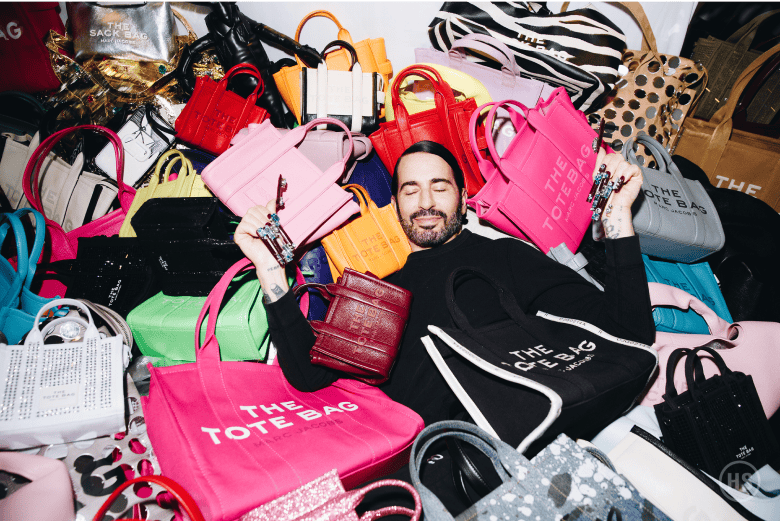
The brand account antics are great — and successful — but then there’s Jacobs’ personal Instagram, too. His account volleys between earnest, mundane, and hilarious. There’s the bidet talk (cue the long nails conversation!) where he explains the mechanics of a Toto (there’s a dryer!). There’s Jacobs in his car, en route to work, click-clacking his nails together like he’s summoning a spirit. But it was his tenderness while explaining the inspiration behind his latest take on the Marc Jacobs Tote Bag that I was most taken with: It’s now rendered in leather and splashed with a Stephen Sprouse graphic that reads “tote bag” in the late designer’s jagged, searing neon fonts. Fans will recognize that the Sprouse piece is inspired by Jacobs’ reign at Louis Vuitton, when he collaborated with the artist, creating a bag that defined a decade. “I was very stressed out, and one day I came to work, and Stephen had taken a scrap of the Louis Vuitton monogrammed canvas, and he wrote his version of the serenity prayer on it as a gift to me. And the way that went was ‘grant me the serenity to chill.’ I always think about that when shit hits the fan,” Jacobs explains on Instagram.
What a beautiful moment to share with the world! No high-tech hijinks, either: In the video, Jacobs stands in a Sprousified window of a Marc Jacobs store, holding the bag, tenderly. It’s just Marc chatting to the camera, no mics, no editing or effects — and it’s one of his most-viewed videos.
Bags come and go; as do reissues and reinterpretations. But having the creator explain it so thoughtfully? So earnestly? No high-profile campaign can do this. No celebrity on a billboard can sell a bag like raw Marc in front of a camera. You can’t buy genuine!



The Sprouse bag was the era of Marc Jacobs I grew up in. The Stam bag, too. Ladylike 2010s filled with Peter Pan bows and pert midi-skirts. Oh, and Marc by Marc Jacobs! The campaign with Victoria Beckham in the hulking white shopping bag! Naomi in the nude on a “Protect the Skin You’re In” T-shirt. My Substack friend Nisha, a Mensa fashion freak who owns multiple tops from Spring 2009 (specifically from Looks 1, 2, 5, 11, 27, and 35), nails the appeal of Jacobs: “He’s always been a dab hand at a retro flourish worn with a sense of humor and irony or in being inspired by subculture looks without killing their cool factor as soon as they go on a runway.”
And who can forget those formidable collections? The ravers. That Vivienne Westwood ode. The punks. New York fashion legend Lynn Yaeger whom Jacobs infused into a very hat-centric collection in 2011. “He has a fresh New York feeling,” says Yaeger. And yet, because of that freshness, although he himself will admit he is sentimental and a product of his Mudd Club and Debbie Harry youth, we don’t long for his past. We don’t reminisce about the good ole days of Marc Jacobs. “He’s not rehashing his work from 20 years ago, and his current work feels like it really strongly reflects his personal preoccupations and point of view right now,” Nisha adds. Marc Jacobs, now with his oversized dollhouse chairs and Kiki boots, isn’t a stunt; it’s the progression of design and construction at its core. SSENSE’s editorial director Steff Yotka thinks of his social media venture as a delightful branch on the MJ tree. “You can watch people the longer their careers are sort of crystallized into a version of themselves or a caricature of themselves,” she says. The social media, the shows, the product: Jacobs isn’t stagnant, nor is his red-hot moment about reinvention; it’s simply that the essence of his brand is metamorphosing and transforming, whether that’s on the runway or on Instagram and Tiktok.
Marc wasn’t always the Marc we see on social media today. The Manhattanite believes he was once shy, recalling his early days as a stock boy at Charivari, where he began working at 16 years old, folding shirts and running back and forth to the tailor. He was nervous to talk to people, describing himself as “a little awkward,” a feeling metastasized into “shame,” but Jacobs powered through, thrown into working among a fabulous fashion crowd. “I did learn to ask people questions when I wanted answers, and I stopped feeling ashamed about asking stuff I didn’t know,” says Jacobs. “And so that was a very good part of my years at Charivari. It really helped me to break out of that feeling of shame around things that I wasn’t educated in.”



If anyone knows the legend of MJ, they’ll know it was at Charivari that he got his first big break: When he became a salesman, Jacobs showed Barbara Weiser, the daughter of Charivari owner Selma, a sweater he enlisted his grandmother to knit. Weiser loved the oversized knit (The New York Times called it “kids clothes for grownups”) and helped produce what would become the legendary sweaters he showed at Parsons School of Design. (One of the oversized polka dot sweaters is currently in The Met.) The duo later produced the sweaters under the name Marc Jacobs for Marc and Barbara, and the rest is history.
Charivari was fashion destiny; a kid-in-a-candy-store fantasy. Jacobs remembers his first Mugler sweater, his first Montana jacket. “Those things were really important to me because I love those designers, and I love their work,” says Jacobs. “And I felt grateful that I had them and I could wear them.” That love has trickled into his present Instagram universe. He currently wears an amalgamation of designers that aren’t his own, flagrantly tagging them and singing their praises. Balenciaga this. Chanel that. Front row at both shows. “I do find it funny when people are that impressed by that kind of thing. I understand why, because it’s not typical. So it does strike a chord. Most designers would not behave that way,” says Jacobs. “I think I’m always becoming, and I think part of me becoming who I am always is becoming more truthful and more honest and, like I said, reducing the shame and being more authentic.”
The unbridled embrace of fashion is beyond a curious moment of wearing other designers and, rather, a route to self-discovery. “When I was a little kid, I looked at things my mother wore or other women wore, and I said, ‘Why don’t boys get to have sequin things? And why do boys not have gold metallic boots? And why do boys not have this? And why is this only for women?’” says Jacobs. “It’s like boys can have nails and boys can have gold boots, and boys can have whatever they want, and these things are not gendered, and they never were.”
Overall, things are going well for Jacobs, although it takes work and self-reflection. I ask Jacobs about one of the many books that has made a cameo on his Instagram: Fyodor Dostoevsky’s Notes From Underground. Told in the first-person and once referred to as a confession, the story, if you can call it that, is a fraught contemplation of the world by a debilitatingly “conscious” narrator (we’d call this an “overthinker” today). “Notes From Underground was looming in our heads and our conversations,” he says, after he discussed it in an impromptu book club with his friend and husband. “So we kept finding traces of that idea of the message or messages that are contained within it.” Is the book a reflection of a former Marc? Perhaps, there is a thread of what it’s like to champion one’s self-critical demons. Most recently, Jacobs was harassed by the radical animal rights’ group Coalition to Abolish the Fur Trade, aka CAFT, who claimed Marc Jacobs used fur in a collaboration with Fendi for Summer 2023. Indeed, there was fur, but it was upcycled and never put into production. And the designer had not used fur in any of his own brand’s collections since 2018.


So how does Jacobs deal with the harassment? Especially when someone is literally banging down the door — or in Jacobs’ case, when a shrill CAFT demonstrator is screaming at a blacked-out window as he is en route to the Met Gala? The answer could be that Jacobs sucks on a vape, a replacement for “five packs of cigarettes a day,” or that he partakes in the aforementioned transcendental meditation. Ultimately, it’s a mindset shift. “Shit goes wrong. Goldfish die, somebody breaks your front gate, all kinds of stuff. In the past, I think those things would really set me off. And then I’d be like, ‘Everything’s falling apart,’ but instead, I was just annoyed by certain things and saddened by other things,” says Jacobs. “Maybe I’m just in a period of being able to acknowledge what I’m feeling and moving on, so that’s that.”
Is this refreshing water-off-a-duck’s-back perspective nirvana? Perhaps it’s nailvana. “I’m just a lot happier since I have the nails,” he says. Even this blissful era isn’t without some sort of critique — and yet, Jacobs sees the joy within the critique. “Among 500 comments, there’s five negative ones. One of them is like, ‘I miss kilt Marc. I miss grunge Marc. I miss muscle Marc. I miss this Marc.’ I just think it’s so funny because for anyone who really does miss that thing, they should know that this is just my trajectory,” he says. “It’s like I’m always becoming, and I’m always playing with, and I’m always trying, and when I stop doing that, I mean, that’s when I’ve just had it.” Leave it to Jacobs, who has his finger — albeit with a lacquered tip — always on the pulse.
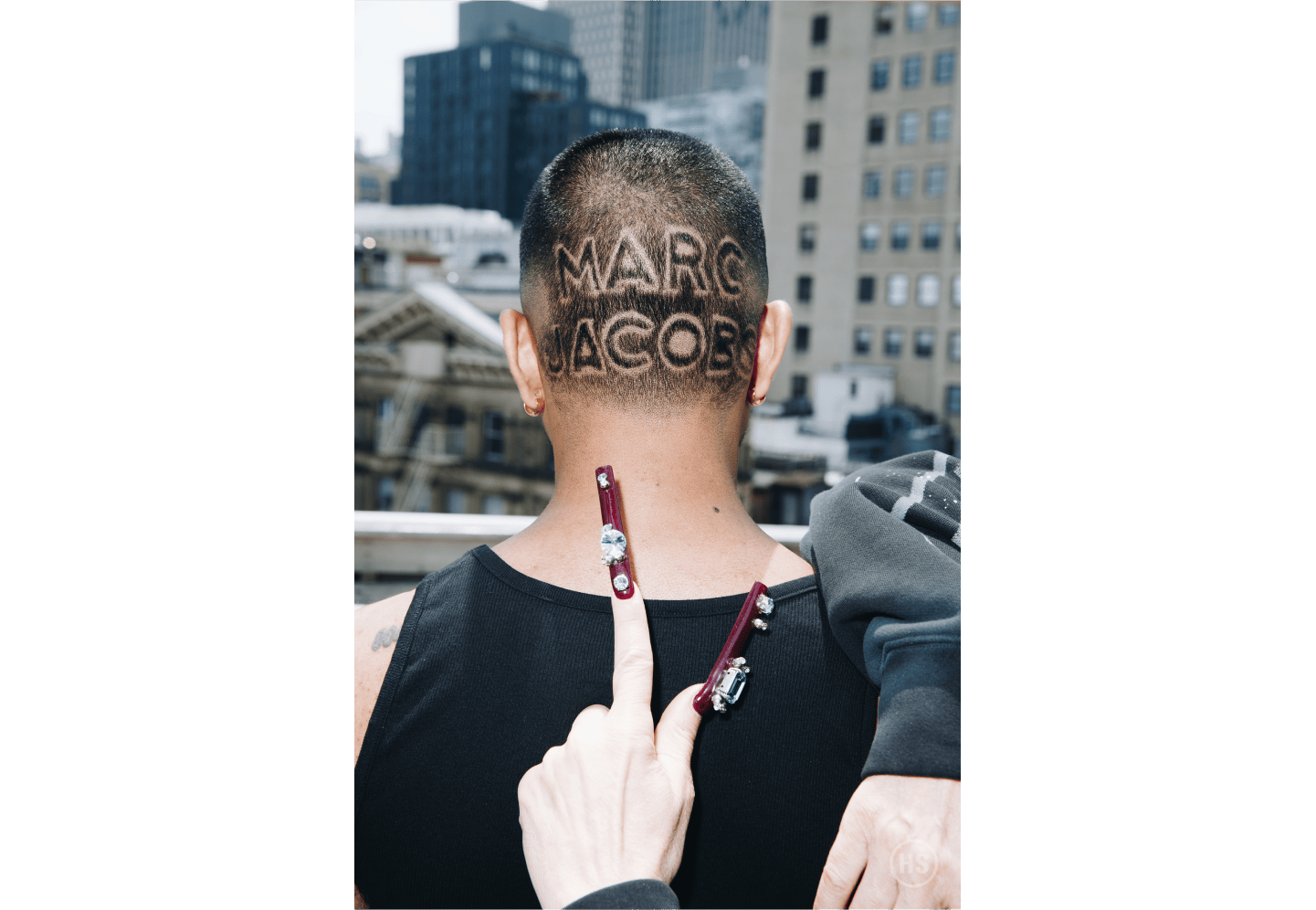
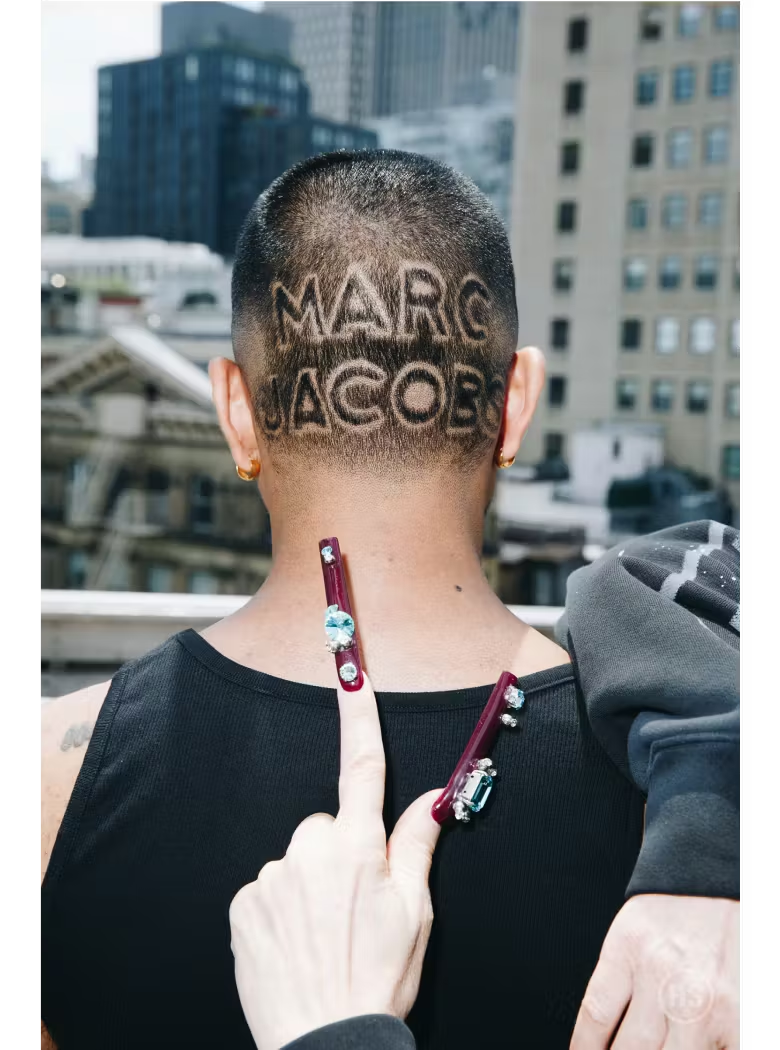
Credits
Words by: Liana Satenstein
Photographed by: Tyrell Hampton
Hair by: Rei Kawauchi
Makeup by: Yumi Lee
Set by: Milena Gorum
Executive Producer: Tristan Rodriguez
Production: t • creative
Production Coordinator: Mehow Podstawski
Production Coordinator: Ryan Keenan
Production Coordinator: Zane Holley
Extra: Abhi Janamanchi
Extra's Barber: CtheSurgeon
With Thanks: The Roxy Hotel