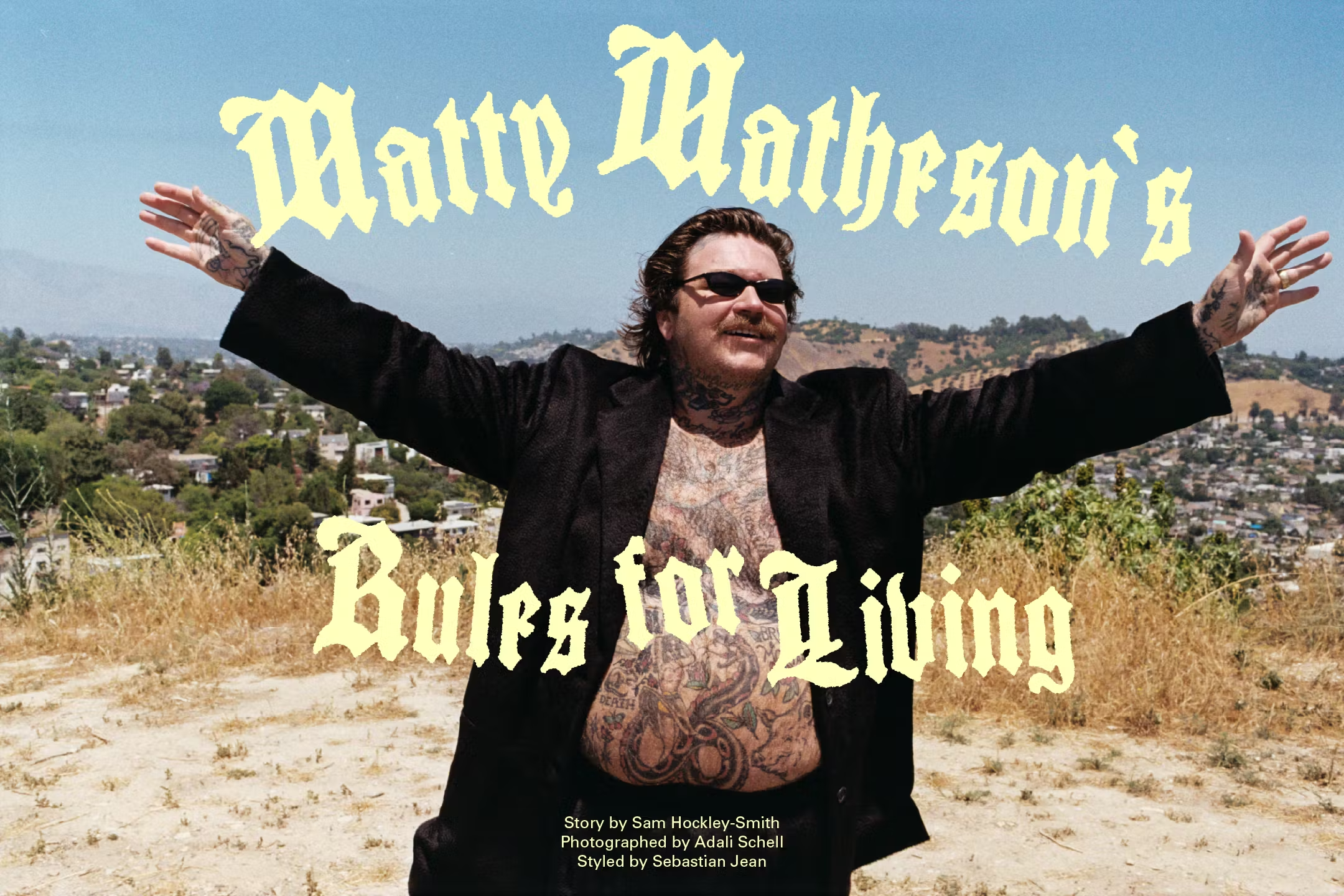
In April, Matty Matheson and his band, Pig Pen, played their debut show at Sneaky Dee’s, a club and Tex-Mex restaurant in Toronto. Matheson prowled the stage in the narrow space between menace and comfort, wearing a torn-up T-shirt over a white long-sleeve and a black hat that barely kept his mess of hair in place.
“This building is a special place,” he waxed from the stage. “Their food makes you go to the bathroom, and it tastes good. What comes out is fine so…this song is about how people should grow their own vegetables.” The band launched into “Venom Moon Rising,” a pummeling, ragged, apocalyptic anthem that features Matheson, voice beyond thrashed, yelling, “THE SUN WILL NEVER RISE AGAIN.”
It might seem odd that a song about gardening features a line about global oblivion via solar collapse, but Matheson and his childhood friends and bandmates — Wade MacNeil, Tommy Major, and brothers Daniel Romano and Ian SKI Romano — wrote the song in pandemic lockdown, during the period of time when it felt like our wounded society wasn’t going to limp along as it had. For most of us, things were different than before, then slowly they became the same again. Not for Matheson. “I got really scared about not being able to provide for my family because I was only playing half the game,” he says. “I was only talent. I was like, ‘Holy fuck, I don’t have a job. I’m not self-reliant.’”
“That really bummed me out and made me kind of depressed and pissed off,” he continues. “I was like, ‘I need to fix that. I need to generate jobs. I need to generate opportunity. I’m afraid of sitting back and watching it all go away.’ Like, no, I can just serve food in a parking lot. No, I can just grow vegetables in my backyard. I can buy sewing machines and make clothes. Those are the things I’m attracted to. That’s what I love — figuring it out, like, ‘How do we make all these things happen?’”
That mindset goes a long way toward explaining why Matheson has been able to stay relevant for as long as he has. What started as working in restaurants turned into owning restaurants, then starring in YouTube cooking videos, Vice cooking videos, and travel cooking shows. Cookbooks turned into voice acting and TV guest spots, which turned into brand partnerships and his own product lines — and then all of a sudden, all of those things were running at once.
Over the course of nearly 20 years, Matheson has built an entire world around himself in such a way that you could, in a single day, eat at a Matty Matheson restaurant, cook a Matty Matheson recipe from a Matty Matheson cookbook in a Matty Matheson cast iron pan using ingredients from Blue Goose, the farm Matty Matheson owns and runs with his friends Keenan and Ashley McVey. You could do this while watching a Matty Matheson cooking video, wearing clothes designed by Matty Matheson from his Rosa Rugosa line, and you could finish with a marathon viewing of The Bear, the award-winning dramedy on which Matheson plays the amiable Neil Fak and initially served as consultant to make sure the chefs acted like chefs and the kitchen looked like a kitchen. (He now mostly executive produces.)

Still, Matheson keeps moving and expanding, building an empire on the back of his personality and reputation as a caretaker, party-starter, and good friend to anyone lucky enough to enter his orbit, as he cooks food at once accessible and intricate — sloppy recipes that harbor hidden depths of flavor, never pretentious, always just within reach. You never wonder how he does it so much as feel like maybe you could do it, too, sorta like the first time you see a friend’s band play and think, Wait, could that be me?
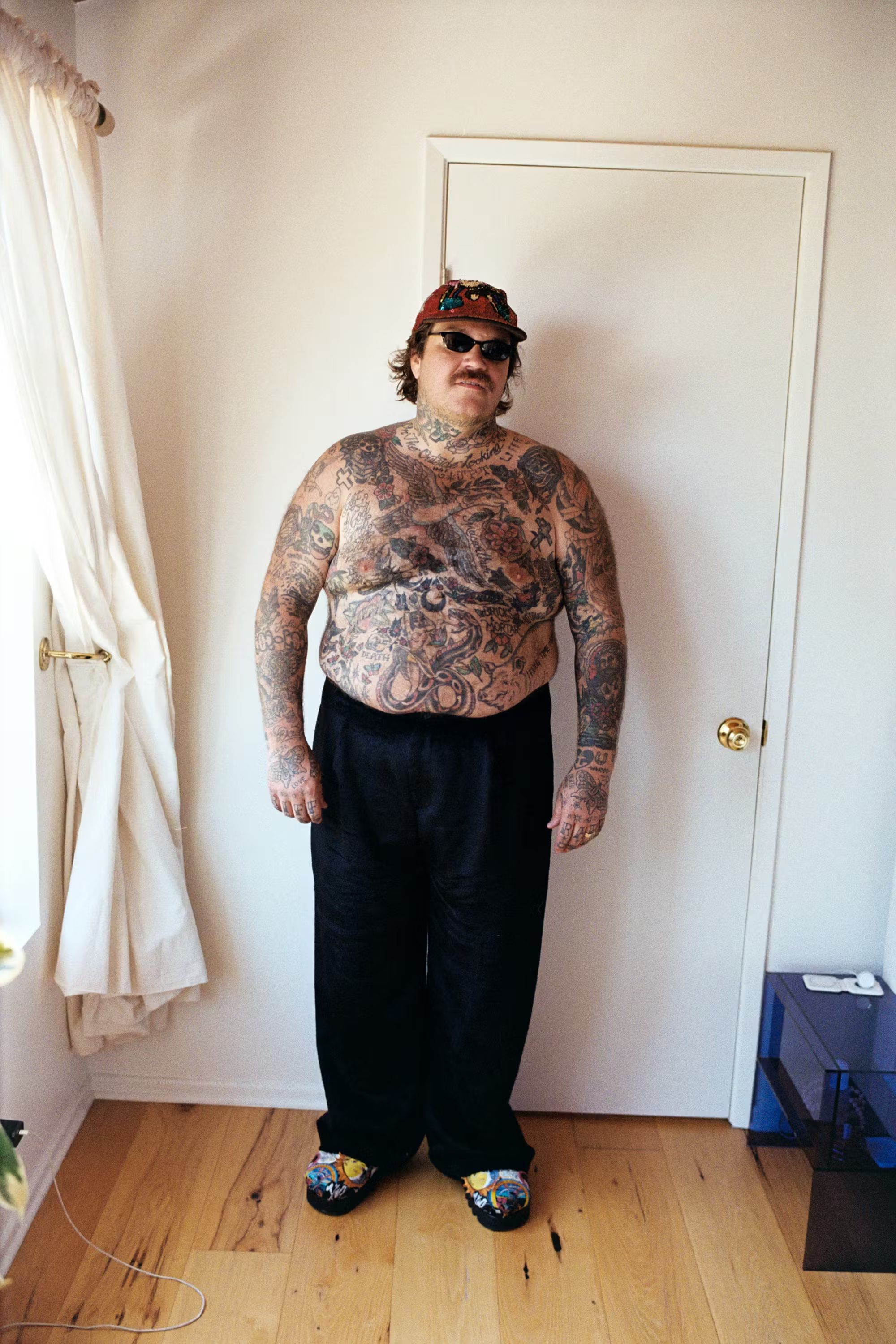
“It’s such an interactive show. Kids start going off, your friends start going off, and you’re all in the mix,” Matheson says. “That’s the thing about hardcore: The crowd is very much part of it, just as much as the band. It’s this unified kind of force happening in that moment.”
In person, the reason for Matheson’s ubiquity is obvious. He’s exceedingly affable, with a tendency to speak in an astute, hilarious stream of consciousness that bounds between self-deprecation and genuine warmth and back again.
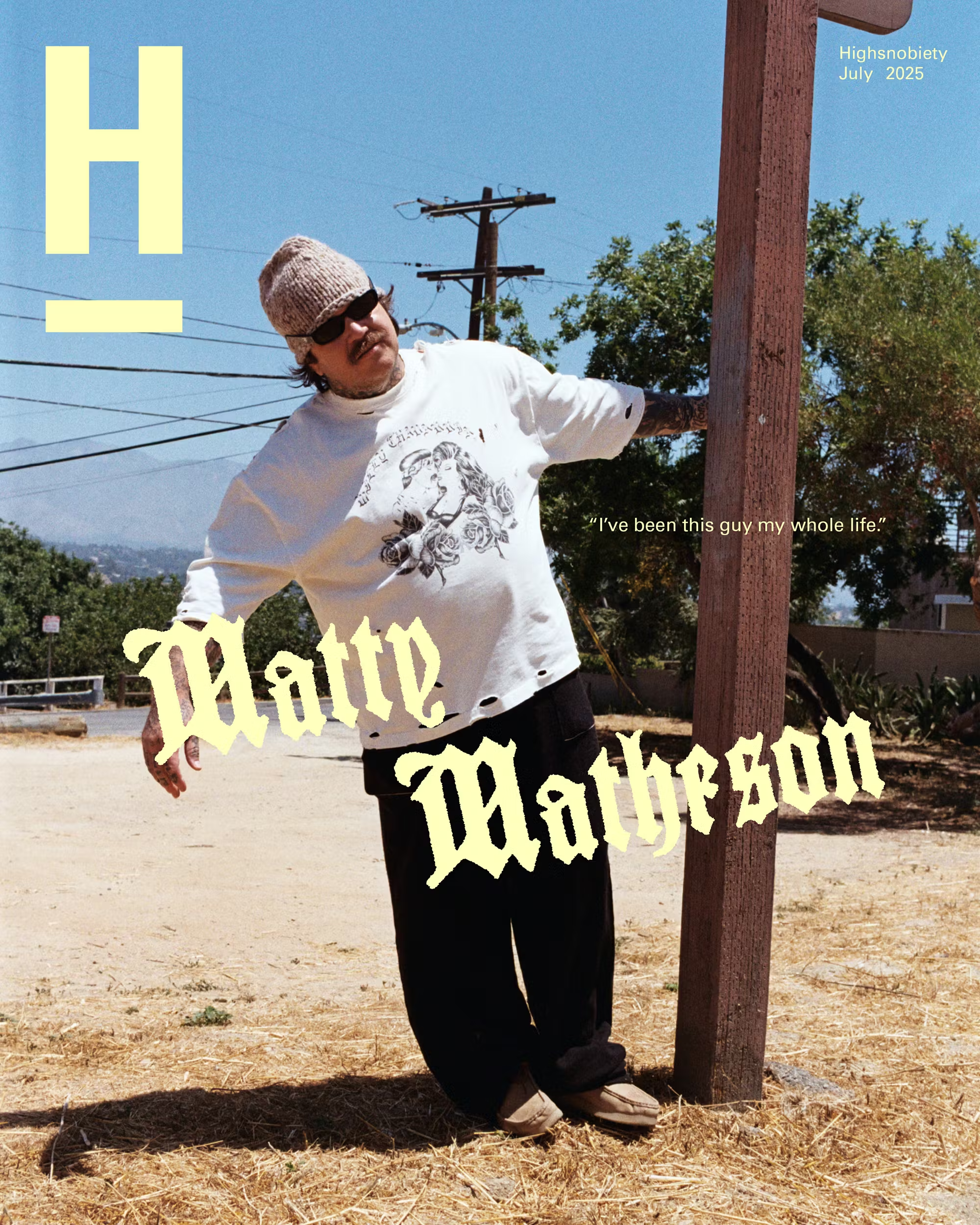
“I’ve been this guy my whole life,” Matheson tells me. “I’m the middle kid, the people-pleaser, the class clown. I’ve always been the funniest guy in the friend group. Maybe because we moved around a lot and I went to a bunch of different schools growing up, that’s how I got attention and made friends.”
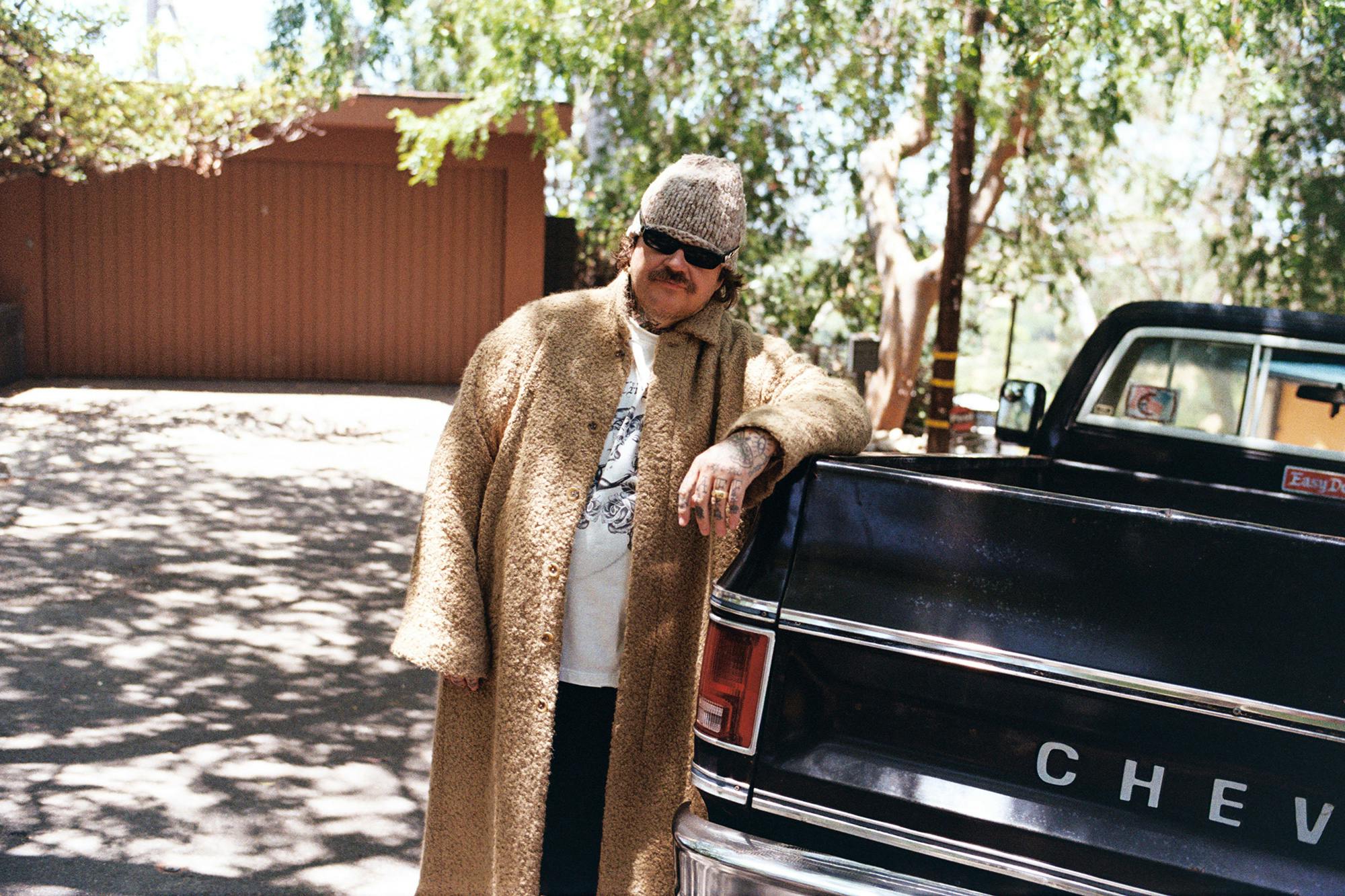
When you move around a lot, the stuff that feels like yours becomes a lifeline. Interests become obsessions, and at first, Matheson was obsessed with music. As a teenager in the mid-’90s, Matheson found a home in hardcore and heavy music while living in Fort Erie, Ontario, just over the Canadian border from Buffalo, New York. “Growing up, my dad was a Led Zeppelin and Black Sabbath guy, AC/DC, Thin Lizzy, all that kind of energy,” Matheson says. “But then my sister, who’s 10 years older than me, had tapes from Danzig and stuff. I still remember seeing HR Giger–inspired art for the first time and thinking, ‘What is all this?’”
His interest piqued, Matheson spent his teenage years criss-crossing the border with his siblings and friends, going to shows in microscopic venues, concert halls, and basements scattered across Buffalo, Syracuse, and other up-up-upstate towns and cities. “From there, I went down that hole,” he says.
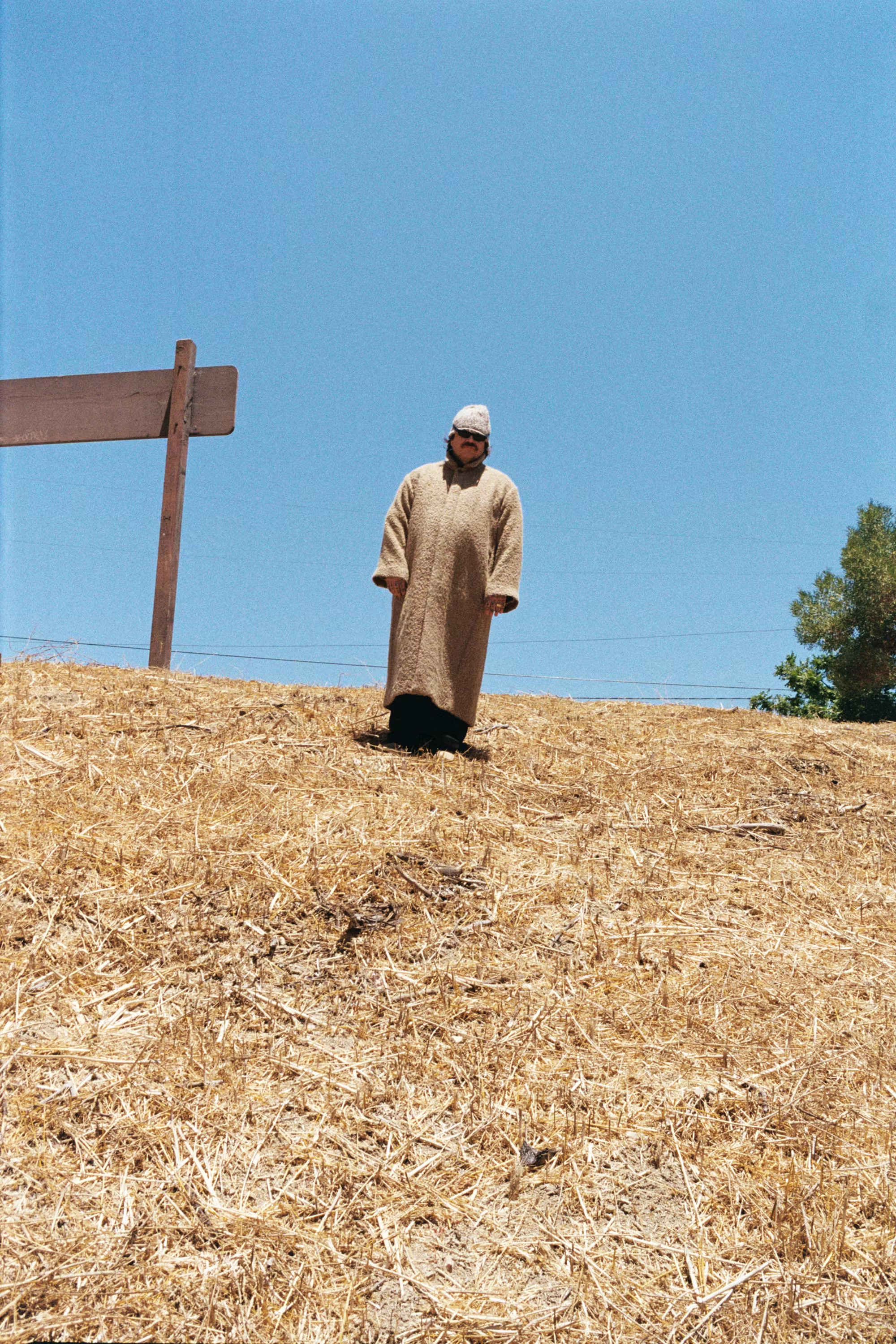
He and his friends decided to start their own band, Hanging Hearts. “Every weekend my friends and I would take my parents’ old shitty red Sundance — we called it the ‘Scum Dance’ — and rip off to shows in Rochester, Syracuse, Erie, even Boston,” he says. “It was an amazing time being part of those scenes, going to shows, and doing it all with your best friends with no money.”
Life got in the way, as it tends to do, and Matheson started cooking. Spending long, grueling hours in the kitchen meant that pretty much everything — music included — had to take a back seat. But the DIY streak stayed alive in his new career: In 2008, when he was only 26, Matheson and a few of his friends opened the Toronto restaurant OddFellows. “Nobody working there was over 30. It was a bunch of kids. We’d do grazing nights on Sundays — things like Taco Hell: all-you-can-eat tacos for $15,” he says. “In the winter, we’d do pierogi nights and show old hockey games. All our friends would come by every Sunday. Barely anybody paid. We gave away booze; we just partied.”
The place closed down in about two years. “We didn’t know what the fuck we were doing, but it was an amazing, crazy moment in time,” Matheson says. With restaurants, “you have those flash-in-the-pan moments — those golden eras when everything’s firing on all cylinders. OddFellows was one of those things. If anyone was around then, they know what time it was. Cool things can’t last, though.”
Cool things can’t last is one of those off-the-cuff Matheson observations that, through a combination of hard-earned perspective and bemused delivery, ends up becoming a thesis for his career as a whole. He’s right. Cool things can’t last, but they can always mutate, and if their mutations are authentic, people still find a way to connect.
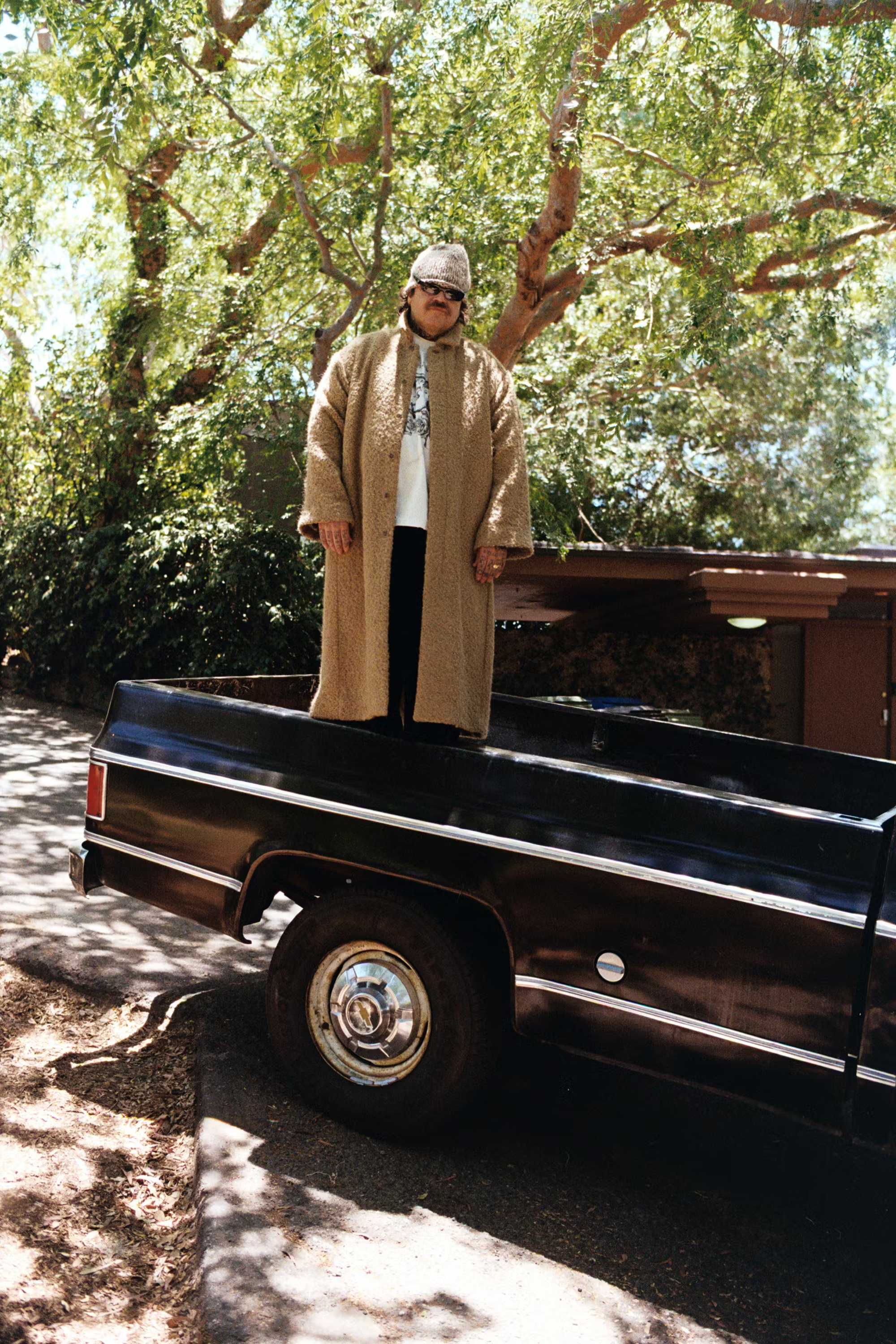
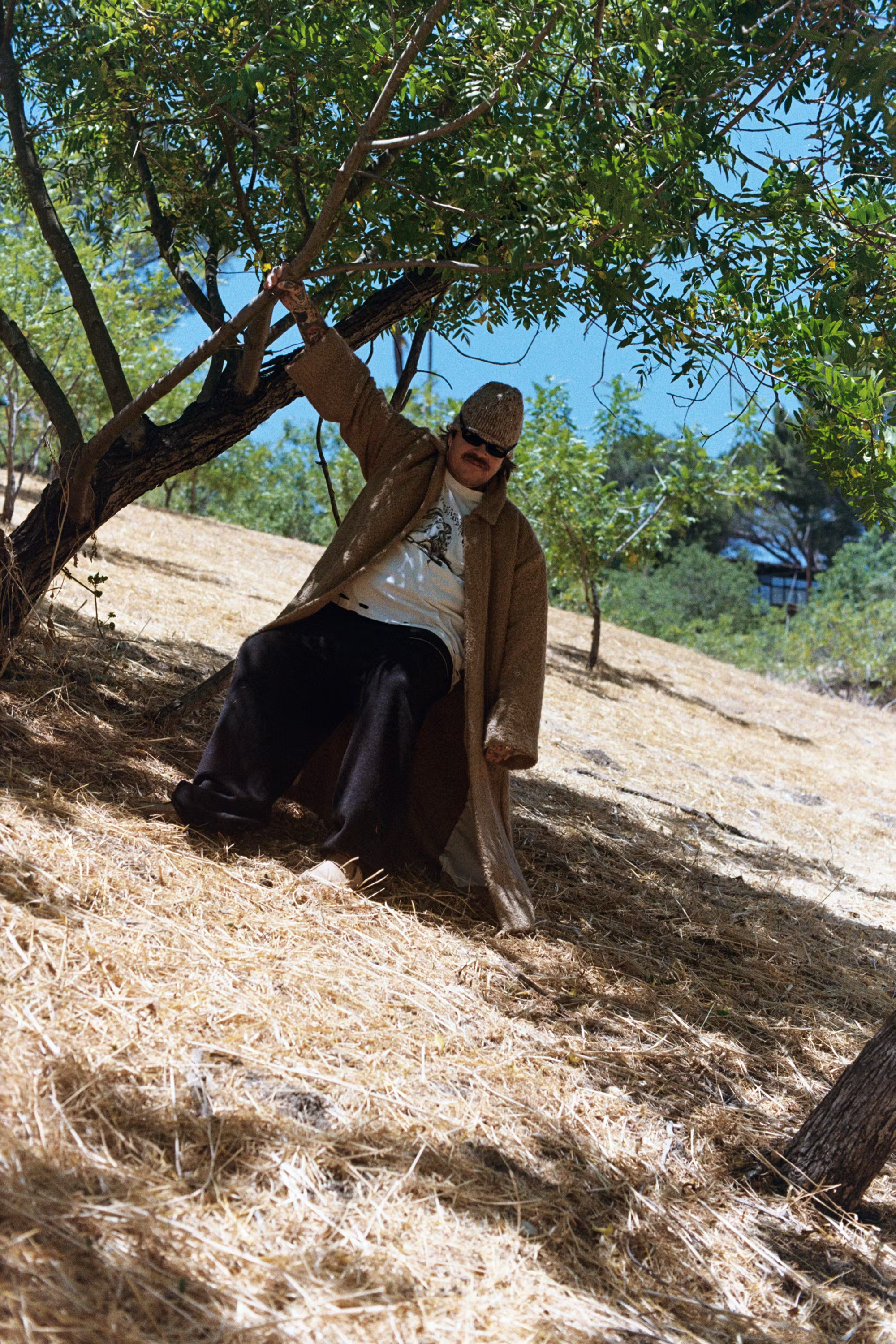
That’s more or less what happened with Pig Pen, which formed when Matheson and his friends were looking for a low-key way to kill time and create something together while the world was on pause. “We all met up at their studio near where I live in Ridgeway, [Ontario],” Matheson says. “We wrote 10 songs — five before lunch, then went to get pizza at the Rex Hotel, then wrote five more. We recorded it the next day. We sat on it for two years, then as life started up again, we [had to] decide, ‘Do we want to do this?’”
They ended up doing it. One show bloomed into some festival gigs, which turned into a small tour, with more to come. Pig Pen’s Mental Madness is a blistering 10-track album that evokes crushing heaviness through repetition, oscillating between inspiration and despair, joy and terror. The stuff of life, basically. It’s not an especially complicated record, and it’s not really trying to be, but this whiplash between high highs and low lows is indicative of a question that was prevalent during the height of the pandemic: *Is this the end of the world, or a chance to imagine a better society? *
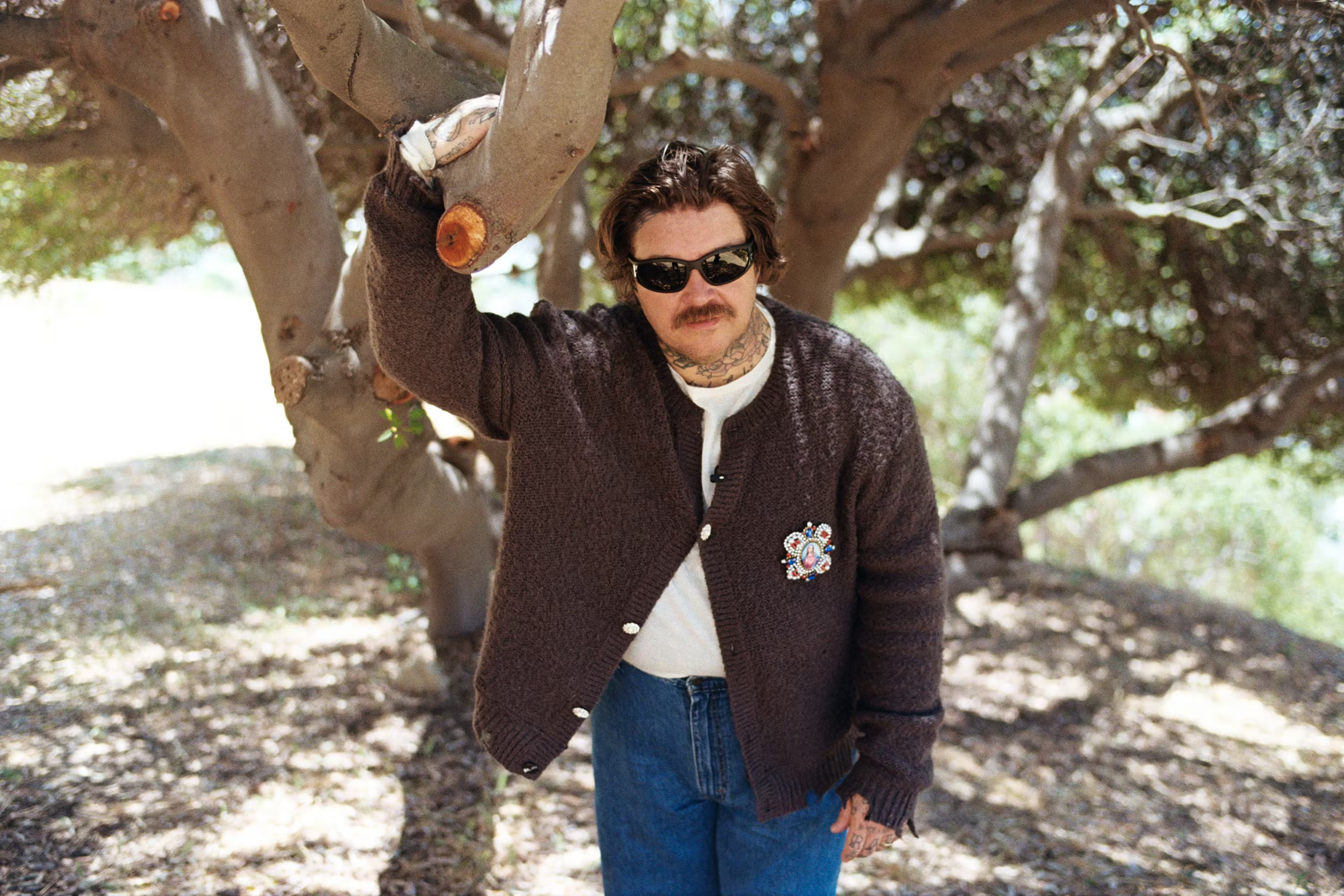
The answer, for Matheson, wasn’t just the Pig Pen album, his workwear line Rosa Rugosa, or even his Prime Seafood Palace, a hyper-local take on a meat-and-vegetables restaurant that excels at perfect renditions of familiar dishes, which began its gestation process years ago. (“Grinding it out for six years trying to make a restaurant happen… I don’t wish that upon anybody.”) It was also Blue Goose Farm: a chef’s dream of a small-scale farm selling flowers and vegetables in Ontario, which officially opened last year. While it’s true that each of these endeavors is about music or food, there’s also a borderline utopian ethos lurking just underneath. Matheson is welcoming in new collaborators, allowing creative whims to blossom into full-fledged projects that create a warmer, softer world.
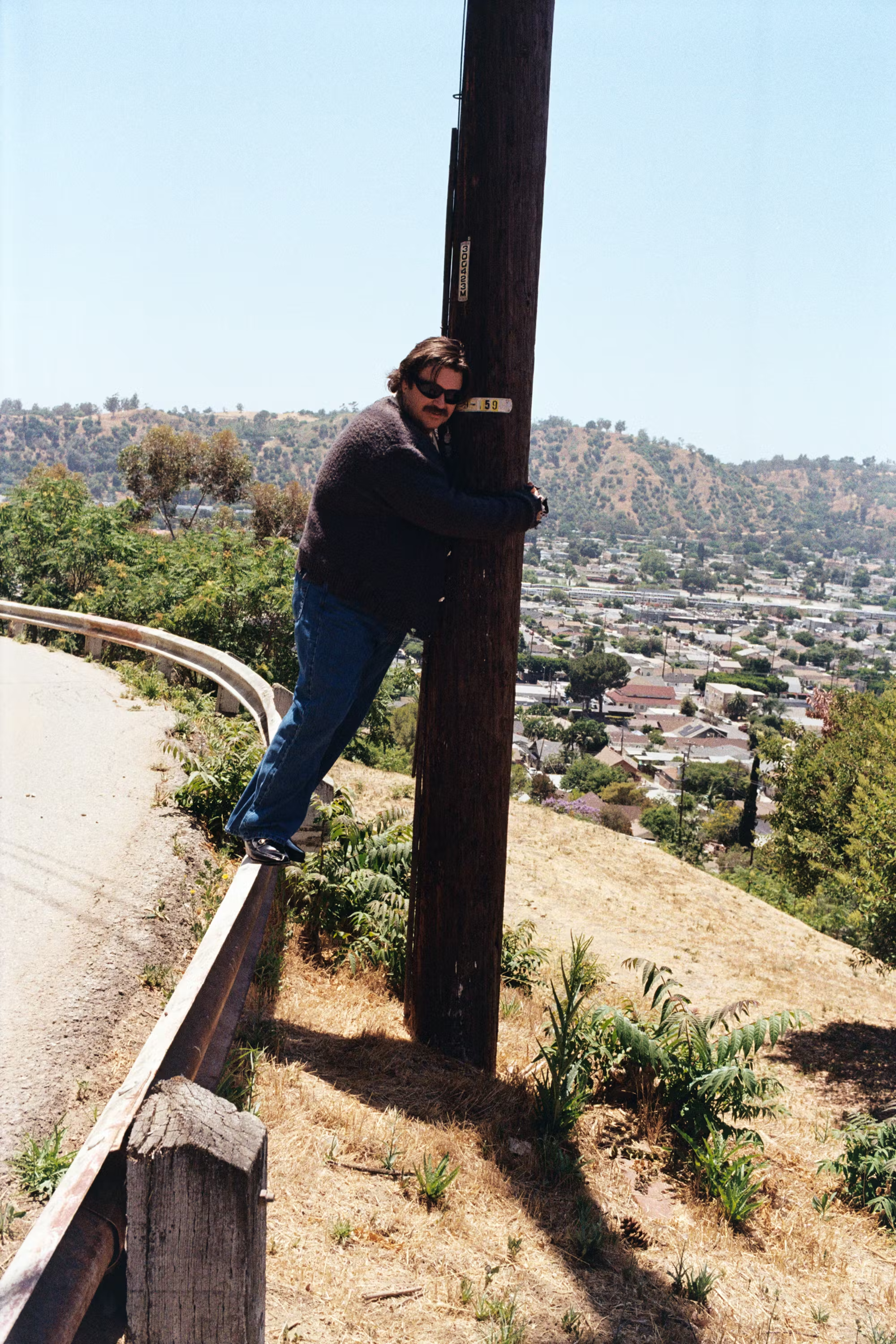
This is most apparent when it comes to Blue Goose, which espouses sustainable agriculture and a “hands off” (as much as that’s possible) approach to gardening. Produce and flowers are sold out of the farm shop, both in-person and by mail, but the real draw for Matheson seems to come from the presence the farm forces upon him. He’s growing what he’s eating, slowly, carefully providing food for the surrounding community. It’s the most direct version of the feeling he’s been cultivating all along.
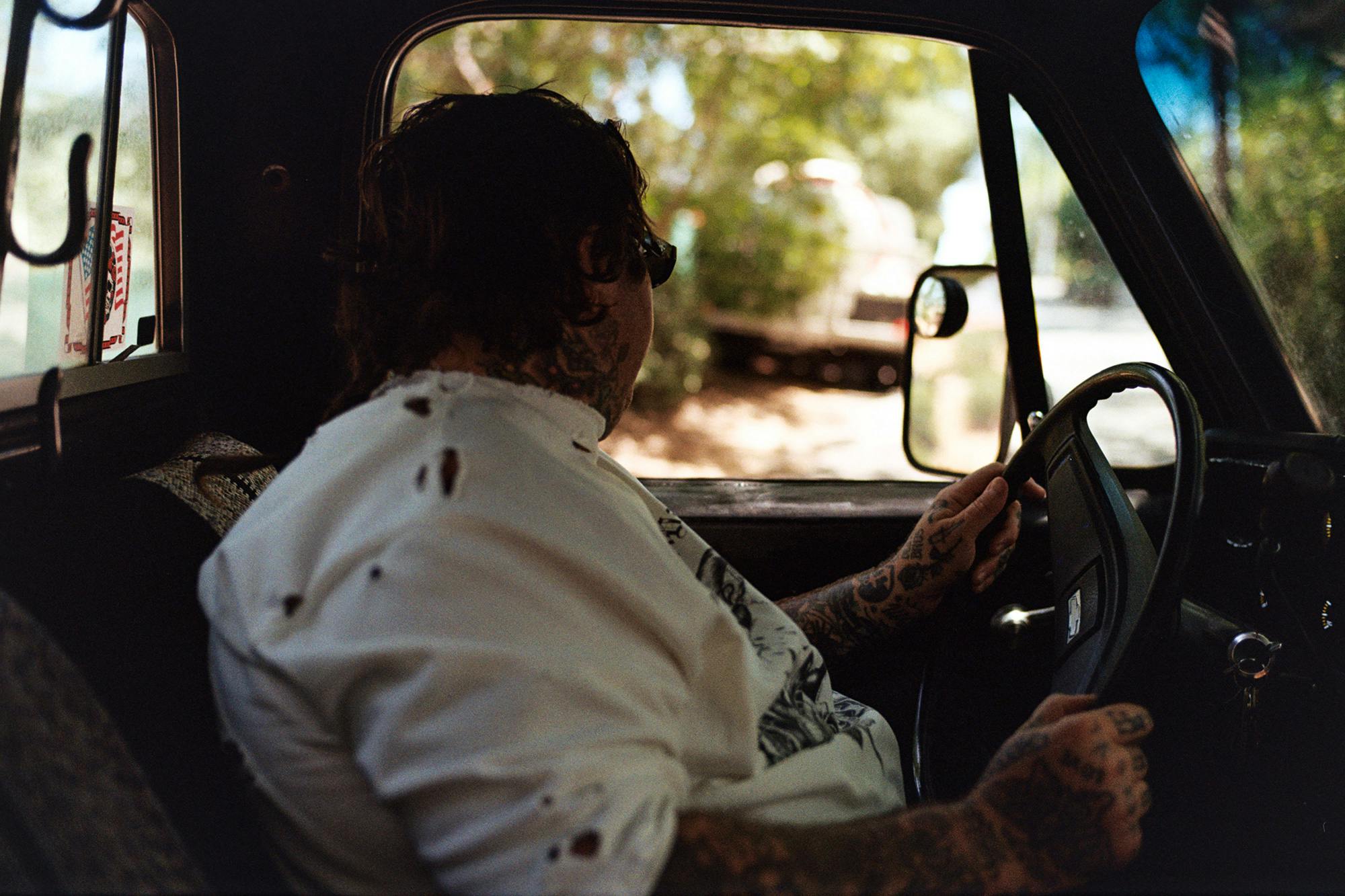
Understanding Matheson’s relationship to the farm is the key to understanding how he sees his place in the world. He wants to work. He wants to provide for the people who cross his path. The fame part is a side effect of that, but the core remains the same. “We got to the point where we’re like, ‘If we don’t do this, then what the fuck?’” he says. “‘Now, more than ever, we need to be growing food.’ So we just dug our heels in and started growing vegetables.”
Now, “what Blue Goose has turned into is insane. It’s an incredible thing. It’s the same thing as having kids — you’re like, ‘Oh, I’ve never felt this type of love before.’ Having Blue Goose is one of those things that’s opened my heart and mind to what really is important. Growing vegetables is easily the coolest thing I do, you know?”
On the farm’s website there’s a picture of Matheson barefoot in a pair of overalls, no shirt, straw hat shading the top half of his face. He’s leaning toward a patch of dragon-tongue beans, climbing tall toward the sun. If you look closely, he’s barely stifling a proud grin.
Credits
Story by: Sam Hockley-Smith
Photographed by: Adali Schell
Styled by: Sebastian Jean
Grooming: Sonia Lee
Styling Assistant: Bastien Allen