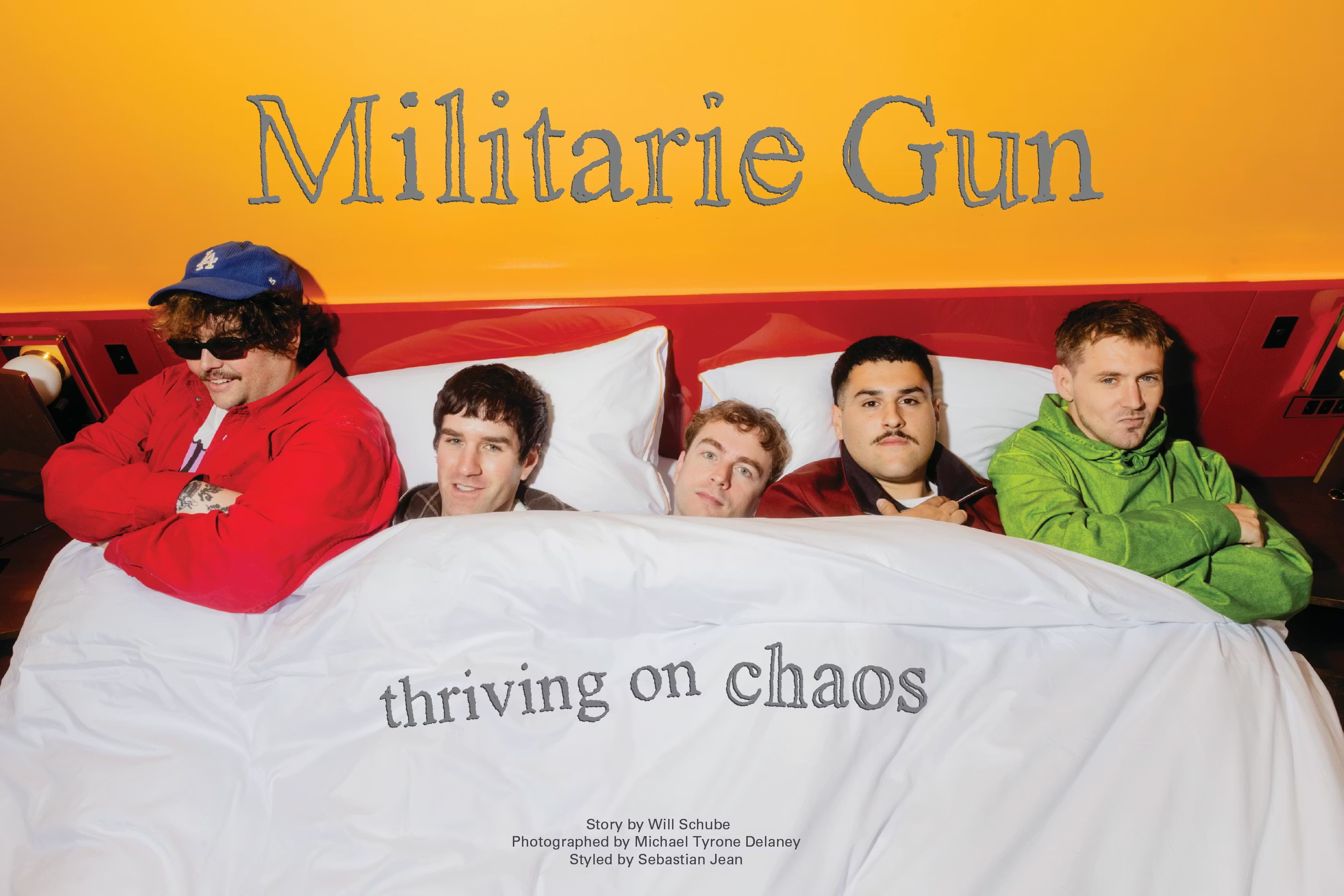
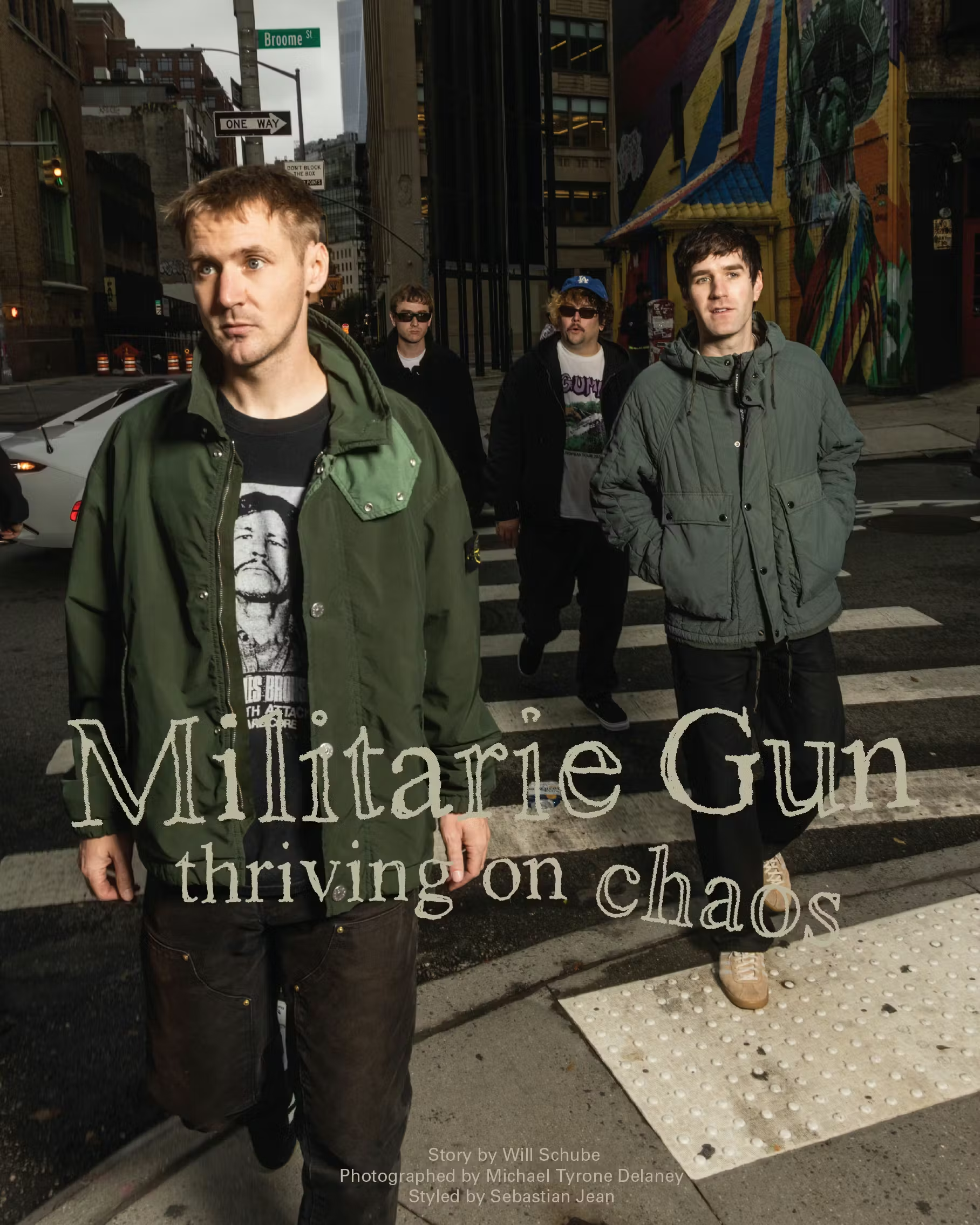
Ian Shelton doesn’t lie. Whether in lyrics, in interviews, or on-stage between songs, the words that come out of his mouth, he insists, are true. Perhaps he’s motivated by an adherence to old punk ideals. Or maybe he sees no point in making anything up because his childhood was so isolating and traumatic that it scans like an A24 flick. (By the way, don’t get Shelton started on the indie studio: “Nothing has endings anymore. Every movie is about a white guy who learns nothing.”) Whatever the reason, on God Save The Gun, the third album from Shelton’s punk-leaning rock group Militarie Gun, he sets out to prove that he’s the most honest dude in showbusiness. As he sings on “Life Under the Gun,” “I’m trying to live my life with nothing to hide.”
Shelton, 33, started Militarie Gun with guitarist Will Acuña during COVID-19 lockdown. The band is probably one of the biggest hardcore-adjacent groups we’ve got. Post Malone is a fan, and Modest Mouse’s Isaac Brock, a personal hero of Shelton’s, makes a cameo on God Save The Gun, out next week. Their fanbase is bigger than ever, too. Even before the album arrived, something felt different at their shows. “People have been singing along to ‘B A D I D E A’” — one of the album’s singles — “louder than anything else,” Acuña says.
“B A D I D E A” is the catchiest song the band has ever released, a bit like Fugazi covering Gwen Stefani’s “Hollaback Girl.” It’s bound to make some hardcore purists angry, but Militarie Gun’s greatest strength has always been their malleability. Their music may not be punk in the traditional sense of the word, but it has the DNA of defiance that all great punk acts share. And really, the only criteria that matters is whether it’s any good. The music is good, of course, but it’s more than that. There’s something refreshing about Militarie Gun — a band that, in the age of multihyphenates and brand deals and bigger-picture hustling, is purely aimed at writing songs and performing them. There’s no greater scheme, no angle. Just a bunch of guys in zip-up hoodies bopping around in a set piece garage. “It was really gross to me when the Turnstile moment was happening and people asked us, ‘How big do you want to be?’” Shelton says. “The only thing we care about is how we write a better record.”
Shelton shows up to our interview at a Brooklyn coffee shop in a Gorillaz T-shirt and a blue Arc’teryx jacket. He’s extremely candid, a self-described agent of chaos convinced that his band is at its best when the house is on fire and no exits are readily identifiable. “My job is to push everybody into the scariest territory of, ‘Will this song work? Is this a bad song? Is this a good song?’” he says. “When we’re all in a state of not knowing if we can land the plane is when we’re all having a good time.”
“I’m a very stressed-out, very dramatic person,” Shelton adds with a laugh, almost eager to prove that he’s difficult to be around. “It’s on me to bring my drama to everyone else’s feet and make them react to it.”
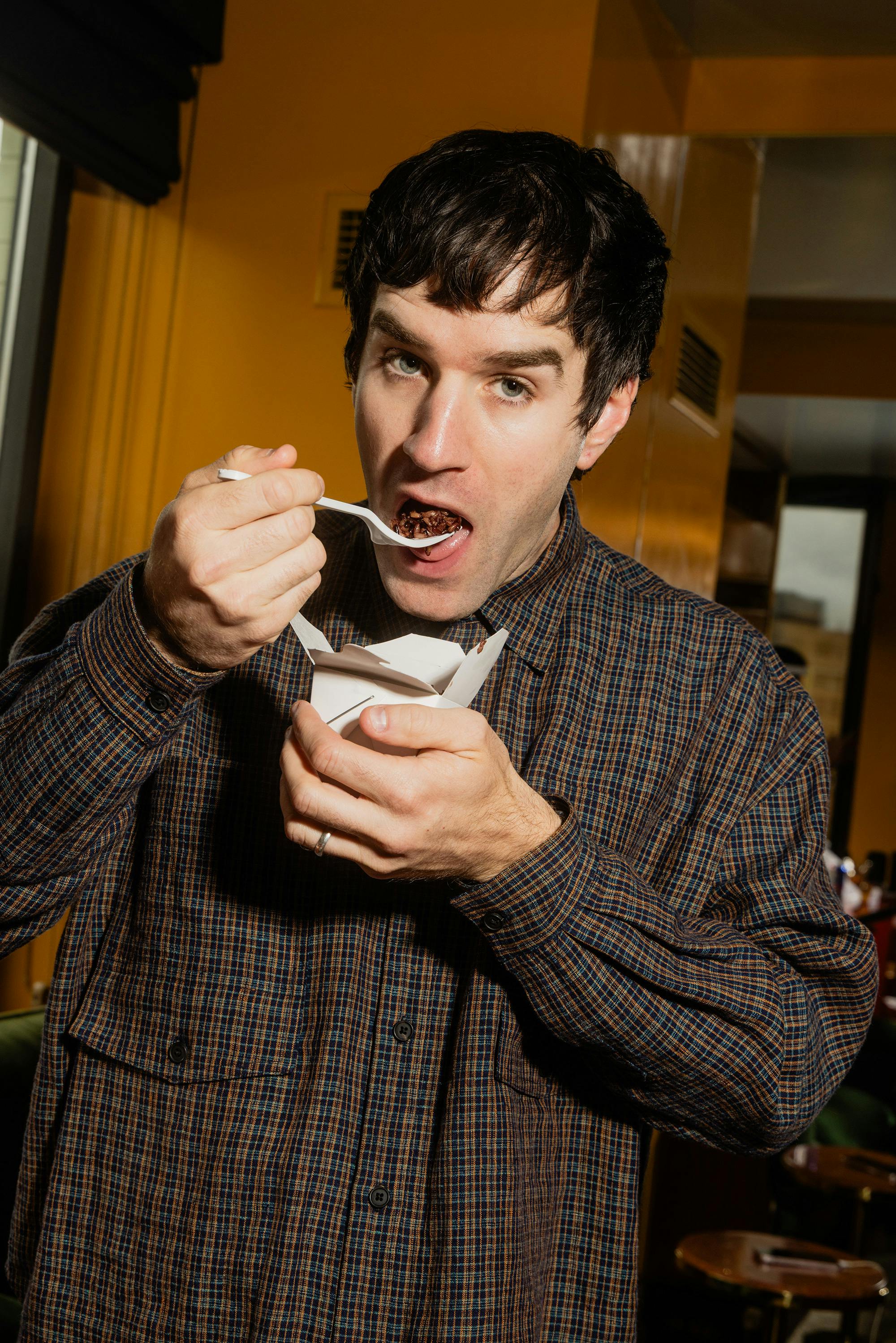
The idea of a dictatorial bandleader is trite. And it’s at this point that I begin to realize that Shelton’s self-deprecation is less about vying for praise or attention and more about a deep discomfort that life seems to be going pretty well. After all, no one else in Militarie Gun speaks about Shelton the way he speaks about himself. They all think he’s crazy, but each of them would run through a brick wall for their leader. “He doesn't shy away from that vulnerability and is good at sending out a lifeline to someone who may not hear what they’re needing in other music,” says Kevin Kiley, who plays guitar, sings, and joined the band in 2024 while they were touring for Life Under The Gun.
Drummer David Stalsworth also cites Shelton’s vulnerability and how it helps him connect with fans. Acuña, who’s known Shelton since they were both slinging hot dogs at a now defunct shop in Seattle, sees Shelton’s unrelenting energy as the guiding force, the thing that keeps the whole train on schedule. “He is fully a maniac…he’s a nonstop little energy machine so he is a very good band leader,” Acuña says. “You need someone that can actually roll with the punches and keep it positive and lead a bunch of dudes, and he does it well.”


It was partly this pressure of keeping everything together that led to Shelton abusing alcohol. The band used to participate in a ritual called “tea time,” capping off each recording session with a ceremonial Twisted Tea (or two). Before long, Acuña and bassist Waylon Trim noticed a change in Shelton. “He was drinking a lot on his own,” Trim says. “He would go to the practice space by himself some days and just drink the whole time.” Tea time would get earlier and earlier, lasting longer and longer. “We’d show up for a full band practice the next day,” Trim adds, “and the trash would just be full of cans.”
While writing and recording demos for God Save The Gun, Shelton would drink too much, cause chaos, and see where it led the band. The results, he unfortunately found, were tremendous. Alcohol did wonders for Shelton’s creativity. God Save The Gun is far and away the group’s strongest album to date, an epic tour of the bandleader’s psyche over the past three or so years.
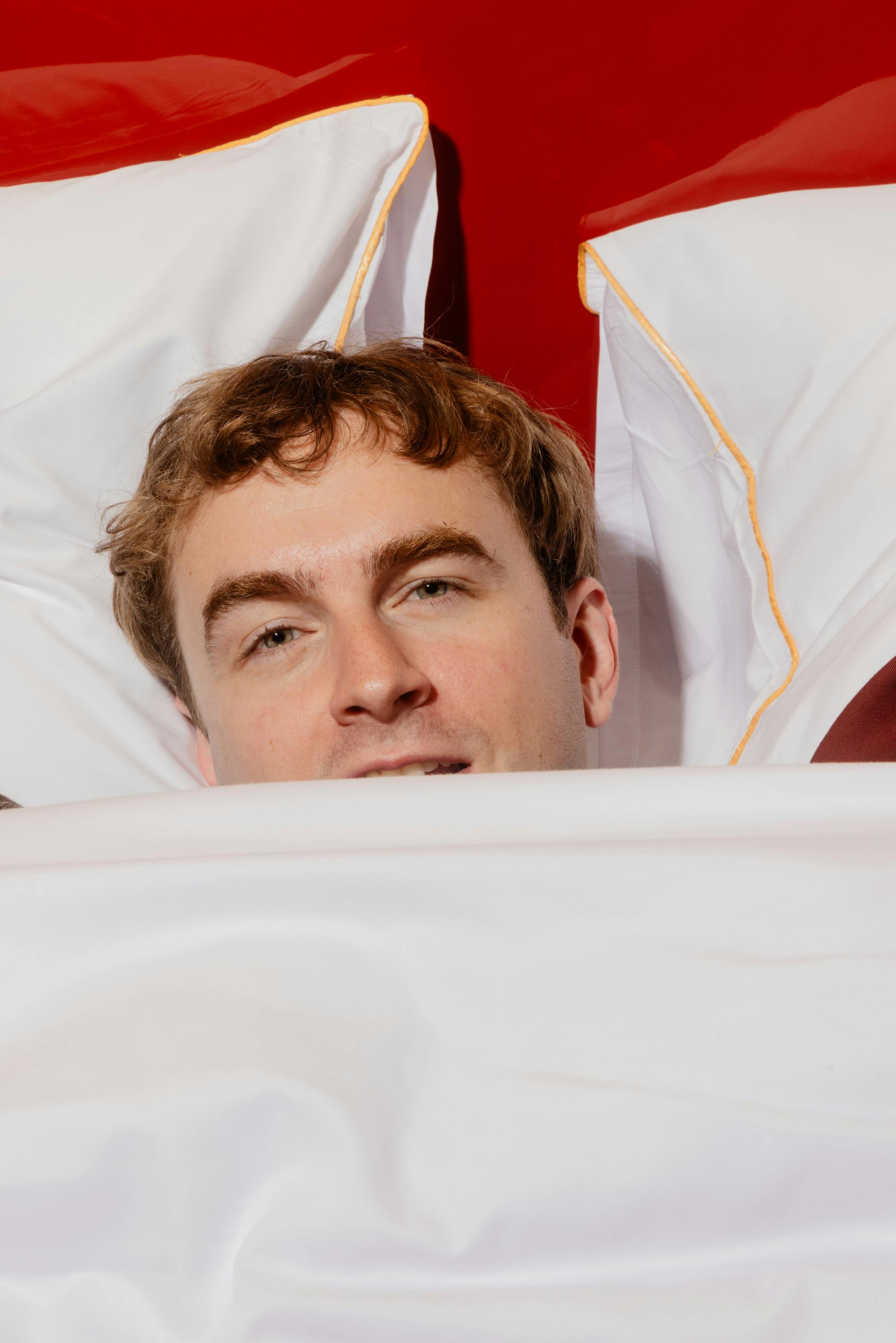
Of course, there was the bad side. Shelton couldn’t shake the feeling that he was letting the band down. “It kept gnawing at me in a way that I couldn't get out from under,” he says. “It wasn’t some big life-changing rock bottom, but people were disappointed in my actions.” While living with Taylor Young, who produced Life Under The Gun, he smoked some weed after having a few drinks and proceeded to vomit profusely. “I was in the shower for fucking hours on end,” he says. “The shame was terrible.” He quit for a few weeks before drinking again, but after a few hungover mornings in the studio he stopped for good.
While Shelton plans on staying sober, he doesn’t necessarily jive with the language of rehabilitation culture. “I find it to be really didactic. It’s telling you the way to heal, that you need to be sober — though that is also the message of the album. On the last line of ‘God Save The Gun’ I sing, ‘If you want to keep your life, you got to let it go.’ But I’d never tell anyone else to do that.”

If Shelton thrives on chaos, it’s probably because his life started out that way. He met his dad for the first time when he was 12, and they never formed a relationship. His mother was what Shelton calls “a constantly relapsing alcoholic.” Living with her was about “waiting for the other shoe to drop,” he says. “We were living in fear of what happened when we got home from school.” The glue that held their family together was Shelton’s father figure: His younger brother’s dad, the buoy in the ocean of his mother’s addiction.
Having grown up inspired by punk bands to be straight-edge, Shelton didn’t really get into booze until he was 30. “Unfortunately, alcohol was the only thing that ever made me feel normal,” he says. “It slowed my brain down, and it felt so good.” He’d always been an organizer and a planner. But he started to seek out chaos: random wrenches he could bend to his will to feel in charge.
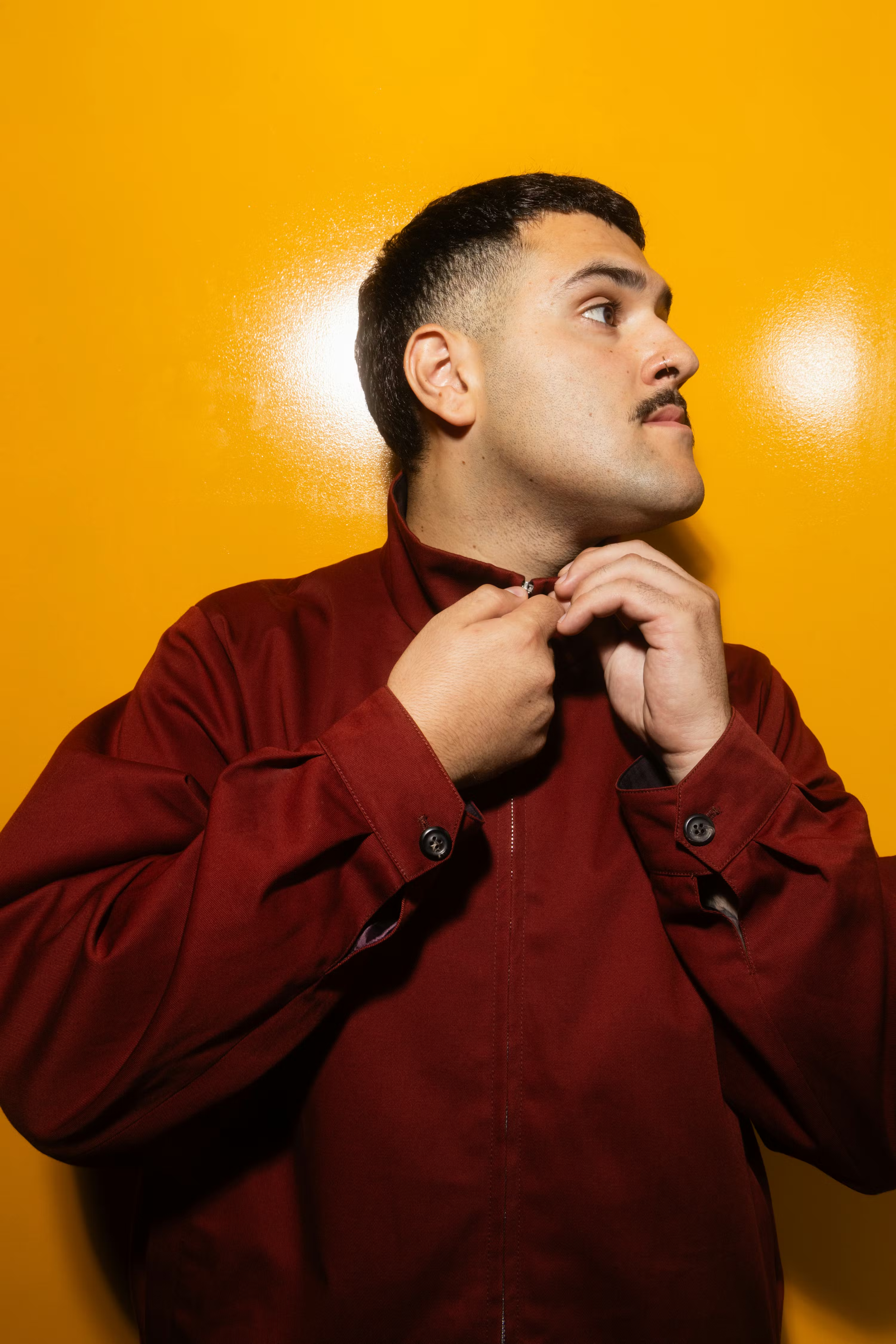
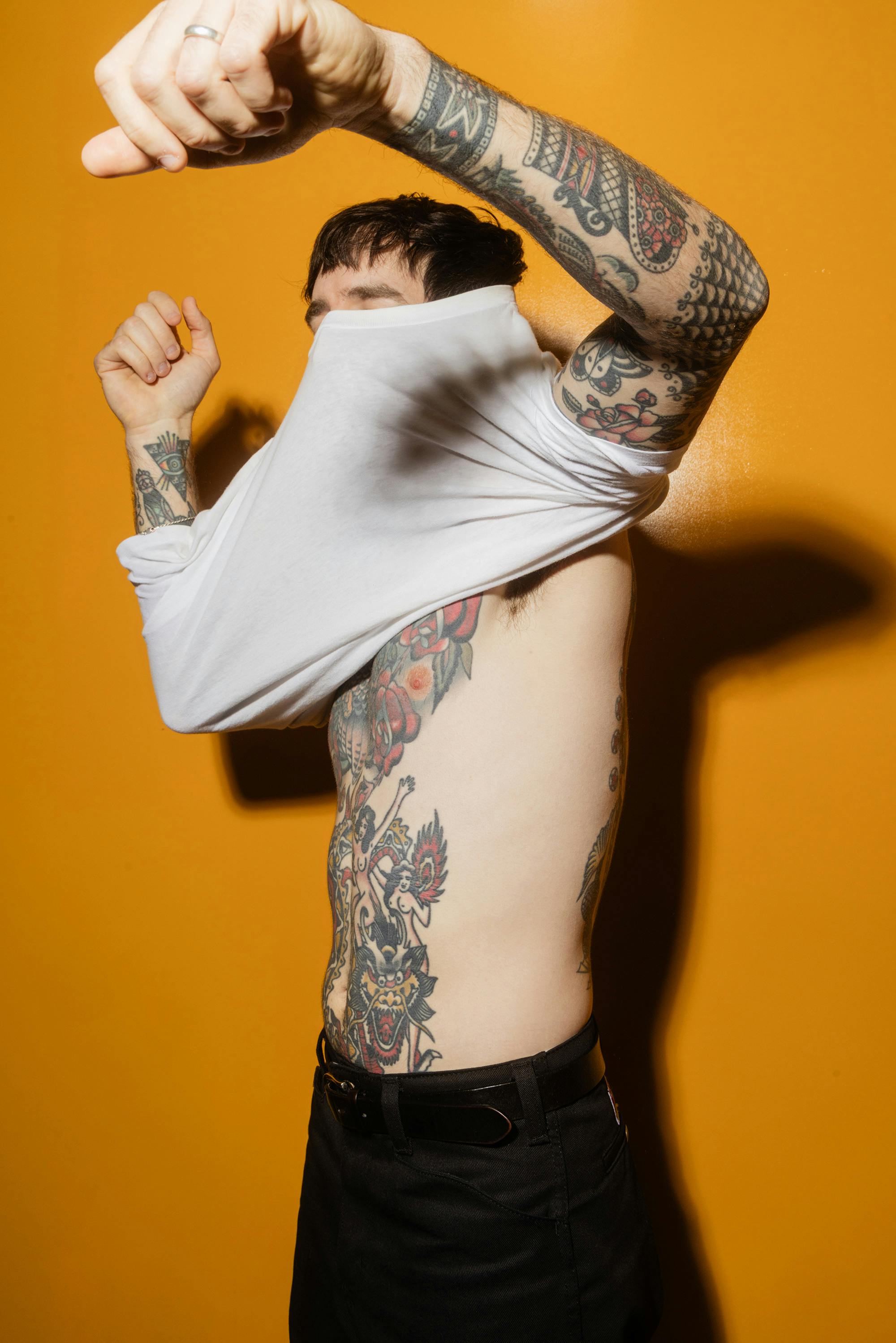
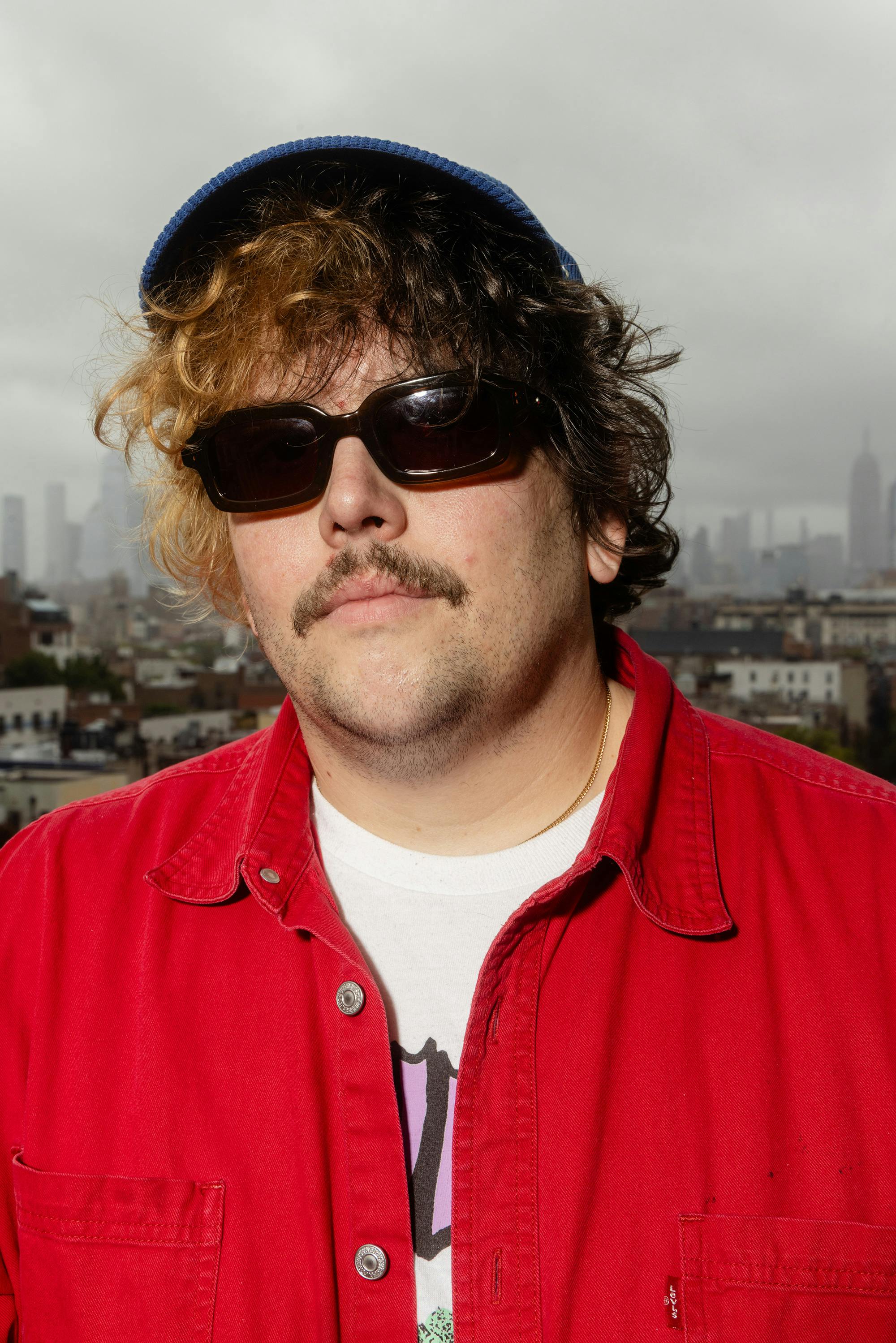
Shelton started Militarie Gun as a way to stay busy during COVID-19, a different outlet from his hardcore punk band, Regional Justice Center. He recruited Acuña in 2020 to help record the band’s debut EP, My Life Is Over. Acuña played some keyboards and helped Shelton shoot videos. Eventually, he joined up with Shelton full time.
When the band started, it was purposely nebulous. “It was purely what interested me on the day,” Shelton says. “I was listening to Fugazi one day, so I wrote ‘Life in Decline.’ Jesus Lizard was an inspiration for ‘Dislocate Me.’” Both of these songs appear on My Life Is Over. On subsequent albums, Shelton didn’t abandon his hardcore roots; he simply showcased more of the stuff he was into. “I’m also obsessed with Modest Mouse and Third Eye Blind,” he says. “It was always about going to the practice space and writing whatever I felt like. I was like, ‘I’m going to do what I like that I think is hardcore.’”
That ethos wove its way into God Save The Gun. “On a long enough timeline, we’ll isolate everybody because we’re never going to do the same thing again,” Shelton says. That much is clear on the album. “Daydream” is an acoustic guitar ballad that features some of Shelton’s prettiest vocals to date. When the string suite comes in, it gets dangerously close to “Wonderwall” territory. “I’ve been drunk everyday for a month,” he sings. “I learned from you and mom.” The music changes, the themes stay the same. “Thought You Were Waving” is good ol’ fashion rock: crunching guitars, sloshing hi hats, and one of the stickiest melodies on the record. Shelton cooks up a metaphor about mistaking someone drowning for a wave hello, eventually coming clean: “I really wish I could read your mind.”
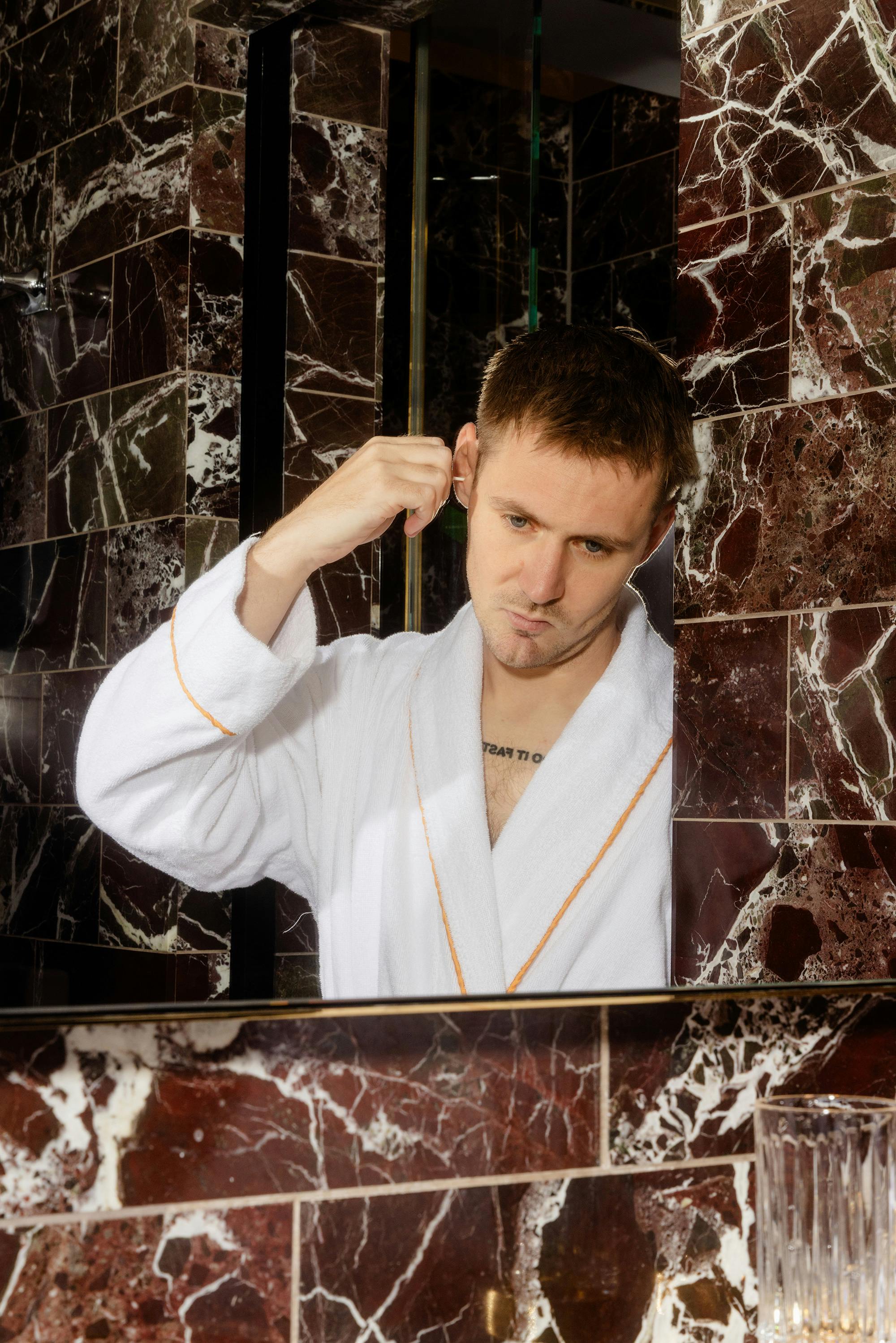
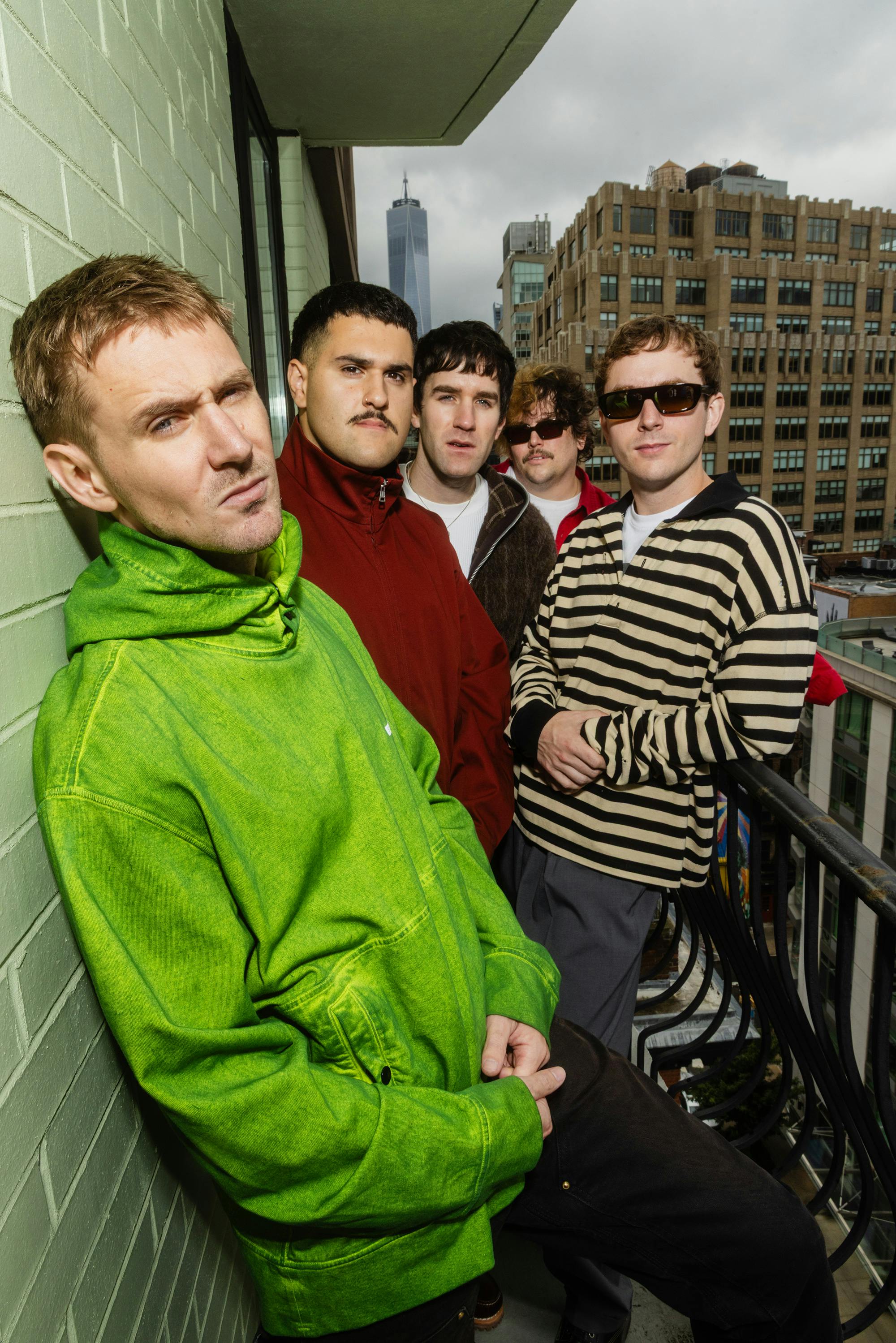
Another reason God Save The Gun scans like the band’s most ambitious statement to date is because its members are, in many ways, a band for the very first time. Early Militarie Gun efforts such as All Roads Lead To The Gun and Life Under The Gun featured a rotating cast. Acuña was a steady presence, but the rest of the studio contributors and touring members never really stuck. Now, with Acuña, Trim, Stalsworth, and Kiley, things feel cohesive. “The goal was to be more connected. A lot of weight has been on Ian to do things himself,” Kiley says. “But we were all in the studio every day. Recording definitely brought us closer.”
Still, the lyrics were entirely Shelton’s domain. And he wrote best while wasted. “Had I not been so fucked up while writing, I don't know that I would’ve come up with something as brutally plain as, ‘How are you going to say sorry to the person who discovers your body?,’” he says, quoting a line from “I Won’t Murder Your Friend.”
It’s perhaps a disservice to God Save The Gun to talk about what comes next, but it’s something that’s been on Shelton’s mind. “I wrote a lot of great songs before I ever drank, but we’re not going to make a record because it’s our album cycle,” he says. “We’re going to make a record when we have something to say musically and emotionally.” Acuña, though, isn’t buying the idea that Shelton can only write while boozing. To him, it’s just another way for Ian to bring himself down. “He’s dramatic,” Acuña says. “All alcohol did was slow down the writing process.”
So maybe there’s another bullet in the chamber. But if there’s not, Shelton seems content. There’s a new balance to him. There’s a responsibility, too. This, in large part, is because Shelton can’t help but write what he sees as the truth. For him, a lot of that can be boiled down to something simple: even when other people fucked up, he fucked up, too. “As much as my music can be pointed at other people, it's meant to also be pointed at me.”
Credits
Story by: Will Schube
Hair: Sergio Estrada
Photographed by: Michael Tyrone Delaney
Styling assistant: Natalie Cohen
Styled by: Sebastian Jean
Location: The Manner
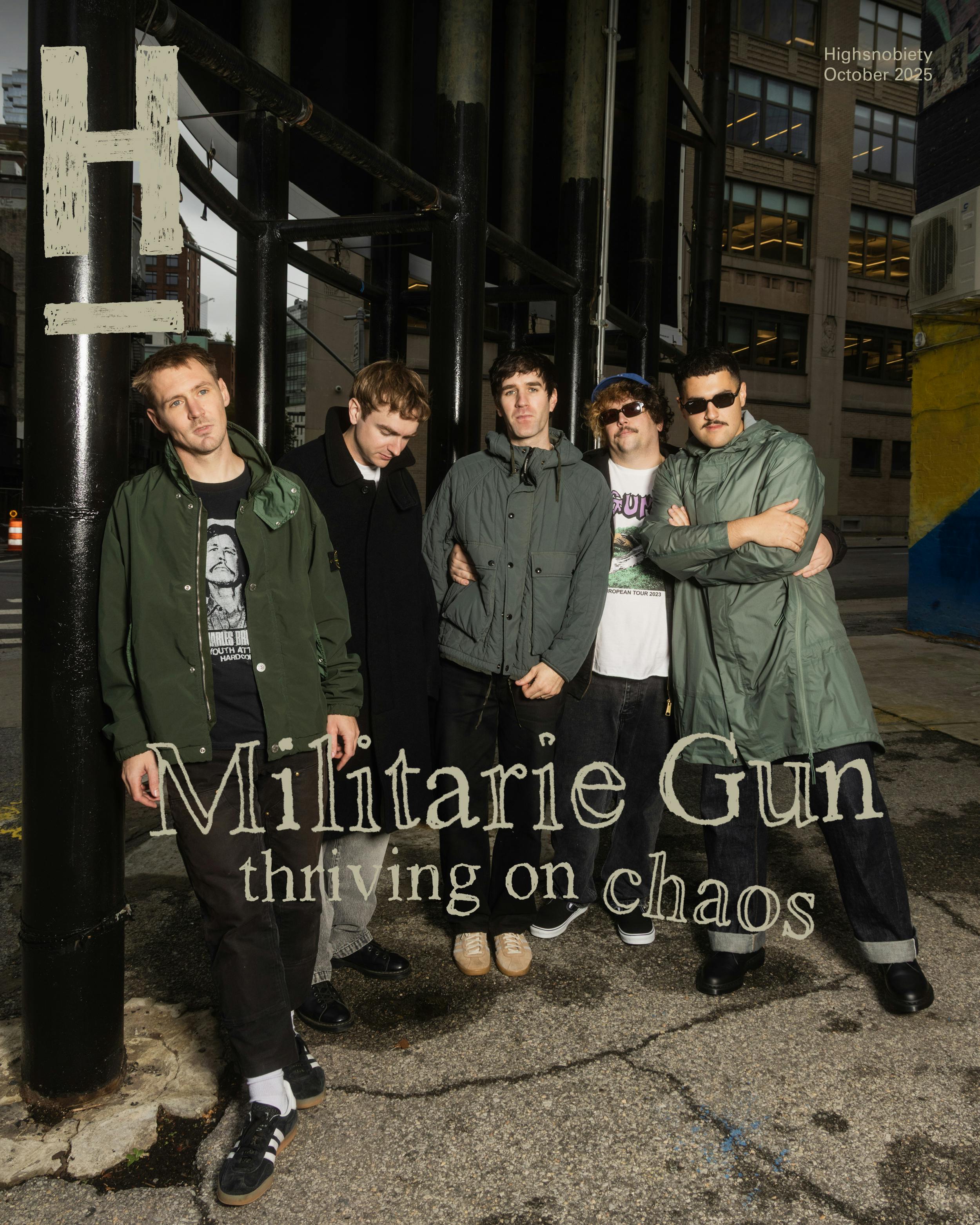
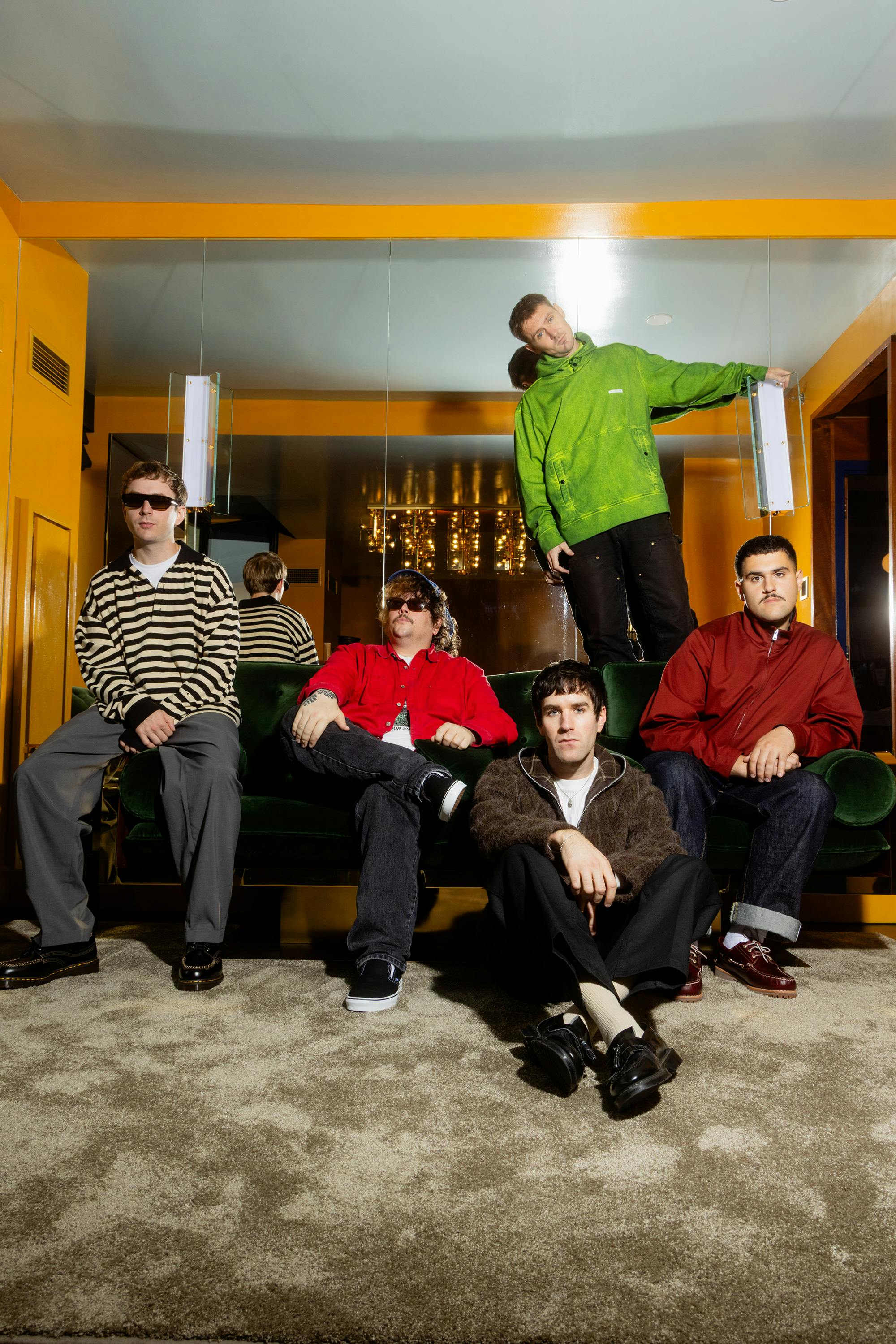
Cover: (L-R) Ian wears top and pants IAN’S OWN, jacket STONE ISLAND, shoes ADIDAS Waylon wears jacket MFPEN, pants WAYLON’S OWN, shoes DOC MARTEN, glasses GUCCI Kevin wears jacket C.P. COMPANY, pants KEVIN’S OWN, shoes ADIDAS David wears shirt DAVID’S OWN, jacket and pants CARHARTT WIP, shoes VANS, glasses DAVID’S OWN William wears jacket C.P. COMPANY, pants WILLIAM’S OWN, shoes DOC MARTENS, glasses RAY BAN
Group Shot 2: (L-R) Waylon wears top and pants MFPEN, shoes DOC MARTENS, glasses GUCCI David wears shirt DAVID’S OWN, jacket LEVIS, pants CARHARTT WIP, shoes VANS, hat DAVID’S OWN Kevin wears shirt KEVIN’S OWN, jacket OUR LEGACY, pants BEN DAVIS, shoes SOLOVAIR Ian wears jacket STONE ISLAND, pants CARHARTT WIP, shoes ADIDAS William wears jacket OUR LEGACY, pants WILLIAM’S OWN, shoes TIMBERLAND