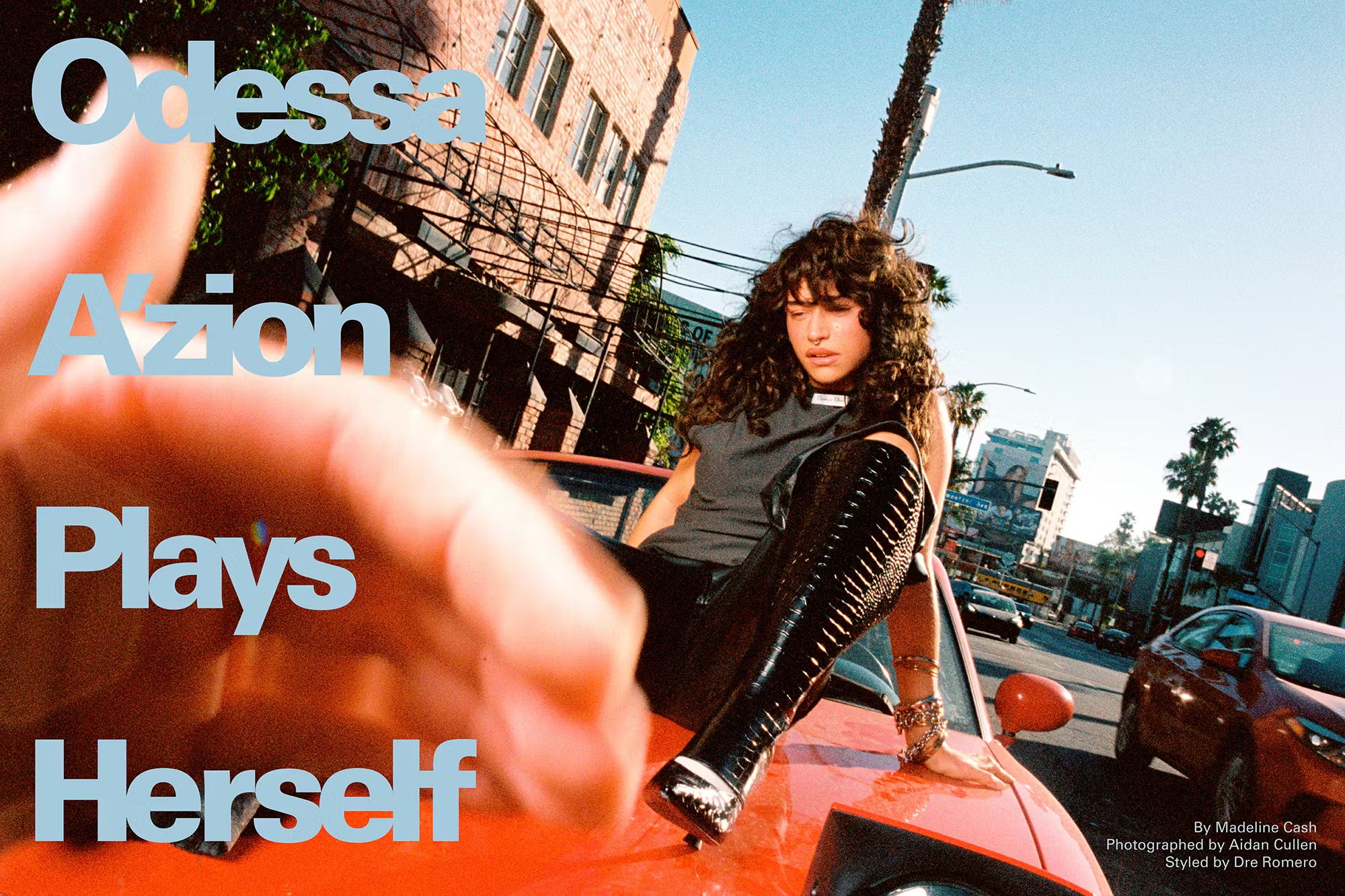
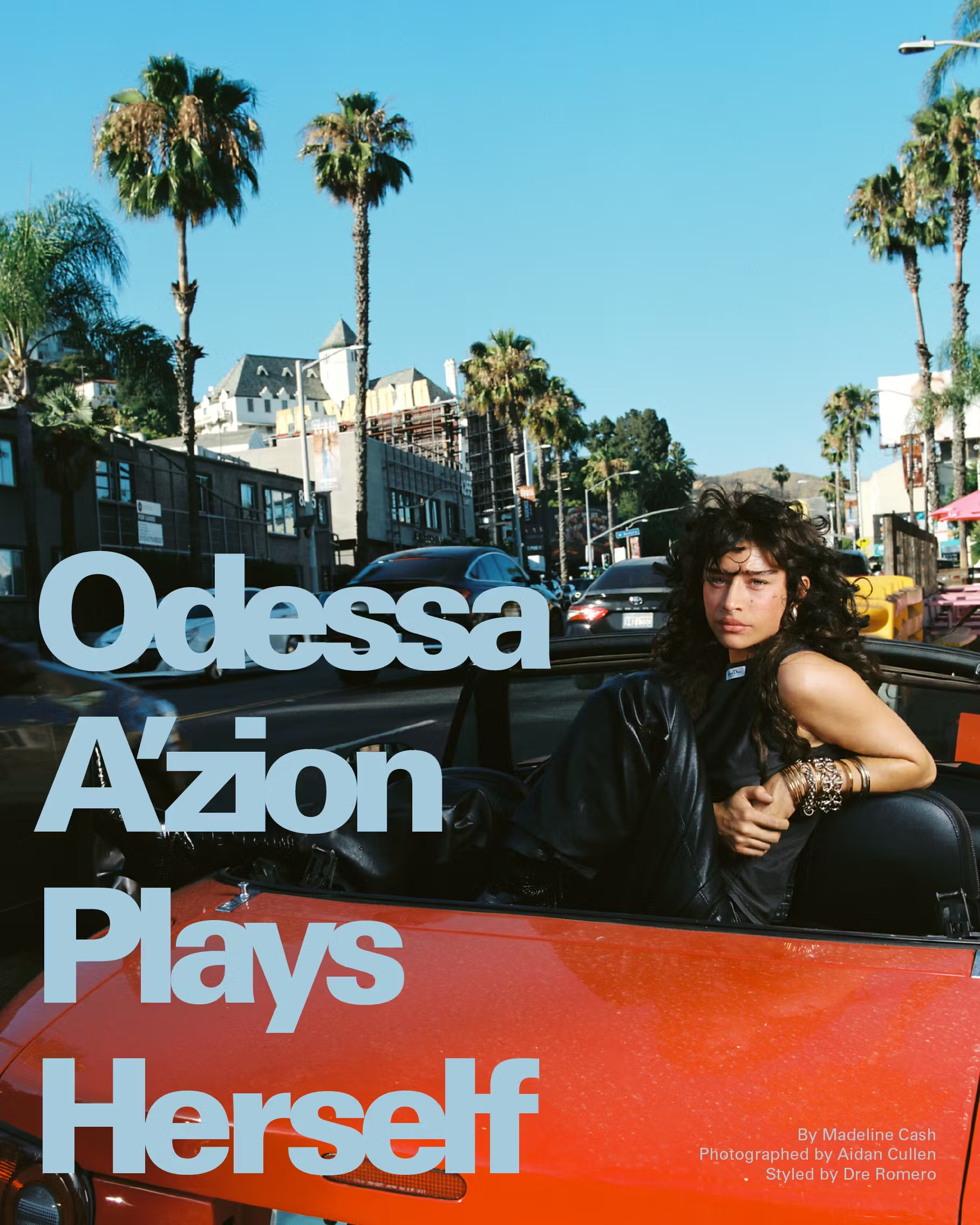
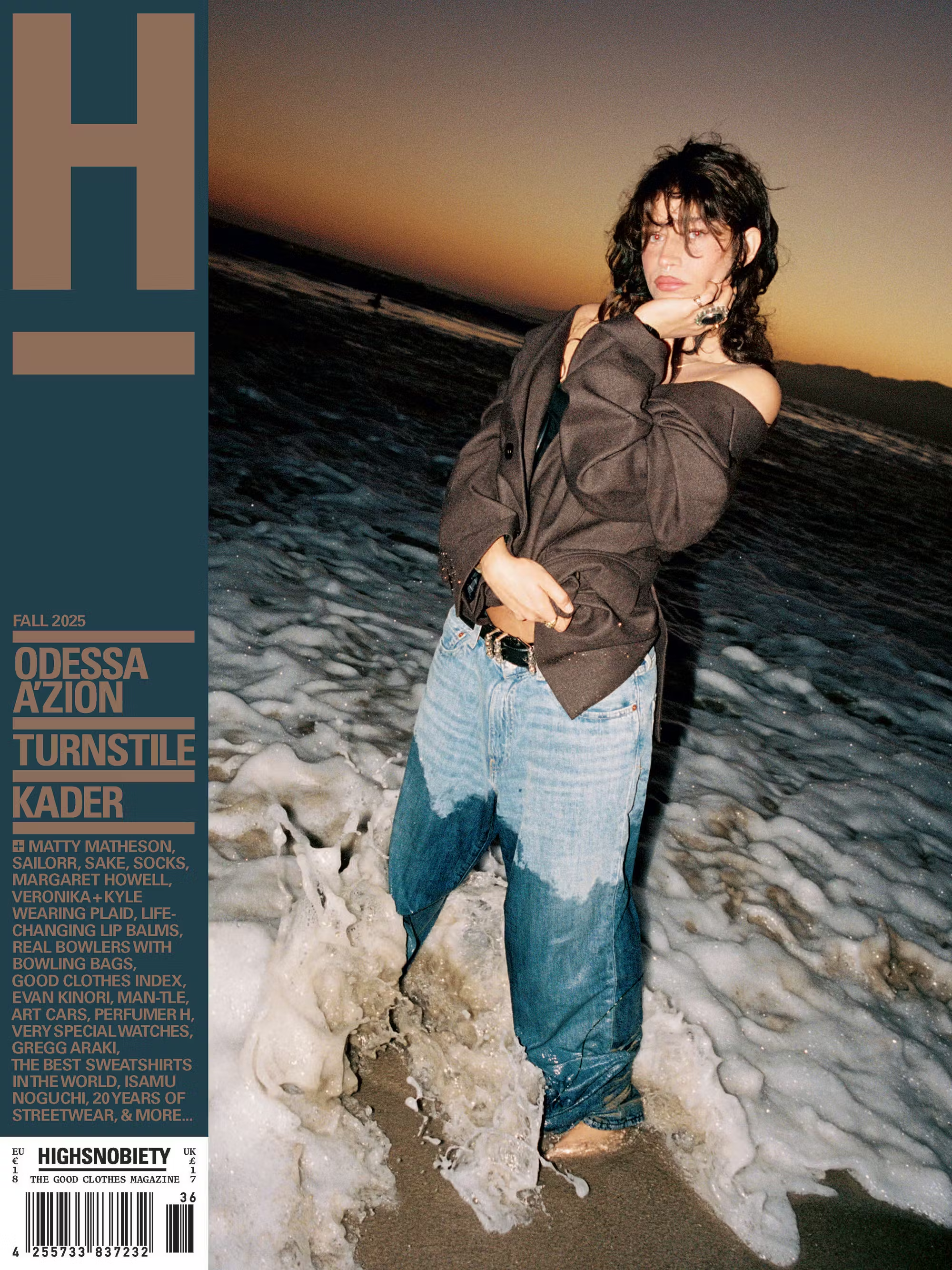
This story appears on the cover of the fall 2025 issue of Highsnobiety. Head here to get a copy.
Odessa A’zion’s first acting roles were at summer camp. “I was always the creature,” she says. “Anytime they needed somebody running around the stage on all fours, it was me.” Barefoot, bald, bloody — the stranger the part, the better. “I was a fucking weird kid.”
Eventually, A’zion graduated from her creature days. Her breakout role was in 2017 as a dreadlocked teen in Nashville, and a slew of projects followed: the CBS show Fam and films Am I OK?, Good Girl Jane, and the Jennifer Esposito–directed Fresh Kills. The work kept coming, and she couldn’t afford to be too particular. Still, there was an undercurrent of volatility to these parts — a sense of disorder. “For a while, it was definitely runaways, drug addicts, the problem child,” A’zion admits.
Then, last year, the 25-year-old got a call that may well put her squarely in the public eye. It was from Jennifer Venditti, the legendary casting director, who asked if she could record an audition tape for director Josh Safdie. He was starting work on the A24-produced Marty Supreme, a film about the life and career of professional ping-pong player Marty Reisman, starring Timothée Chalamet, Gwyneth Paltrow, and Tyler, The Creator. “I was like, ‘Are you fucking kidding me?’” A’zion tells me, still sounding incredulous.
She sent in the tape, clinched the role, and started work on the project, which comes out in December. “This was the first time I booked something and thought, ‘I love this director, I love this script, I love this character,’” she says. “It made me feel like my real career was just beginning.”
She’ll also appear in Rachel Sennott’s HBO comedy series, I Love LA, which comes out in November. A’zion plays Tallulah, a character unlike any she has yet taken on. Without revealing too much: “She’s femme. Like, tits-out femme. She’s confrontational in a way that I’m not,” A’zion says. “Even just wearing her clothes — tiny, slutty little dresses — I didn’t feel like myself. It gave me a little bit of an identity crisis.” She describes Tallulah as smart, manipulative, and unpredictable, though not without empathy. “When we were casting, we were struggling to find someone who could bring the comedy but also the truth and emotional depth to the character,” Sennott says. “Once we saw Odessa, everything just clicked.”
In some ways, A’zion was always destined for stardom. She’s the daughter of actor and screenwriter Pamela Adlon and the granddaughter of filmmaker Percy Adlon. Her older sister, Gideon Adlon, is an actor as well. But in other ways, A’zion seems diametrically opposed to the perfectly manicured world of Hollywood actors. When she was younger, she wanted to be a veterinarian or a marine biologist. During COVID-19 lockdown, she fostered three bunnies, two ferrets, two dogs, three cats, three tortoises, an iguana, two snakes, and a bearded dragon. “Her first pet was her crested gecko named Pineapple,” Gideon says. “She loved him so much that she still has his ashes.”

As an allergy-ridden child myself, I also owned a bearded dragon, and we discuss the connotations of being, in her words, a “weird reptile kid.” But A’zion isn’t particularly worried about being labeled a weirdo. In fact, she strives for it. A’zion is an unbrushed iconoclast, all nervous energy and instinct, resisting refinement at every turn. It’s tempting to interpret this as a kind of anti-careerism — the studied messiness of a Gen Z actor disillusioned with polish — but that would imply a level of planning she disavows. She is neither cynical nor ambitious. She is, as best as I can tell, simply reactive. It’s refreshingly genuine.
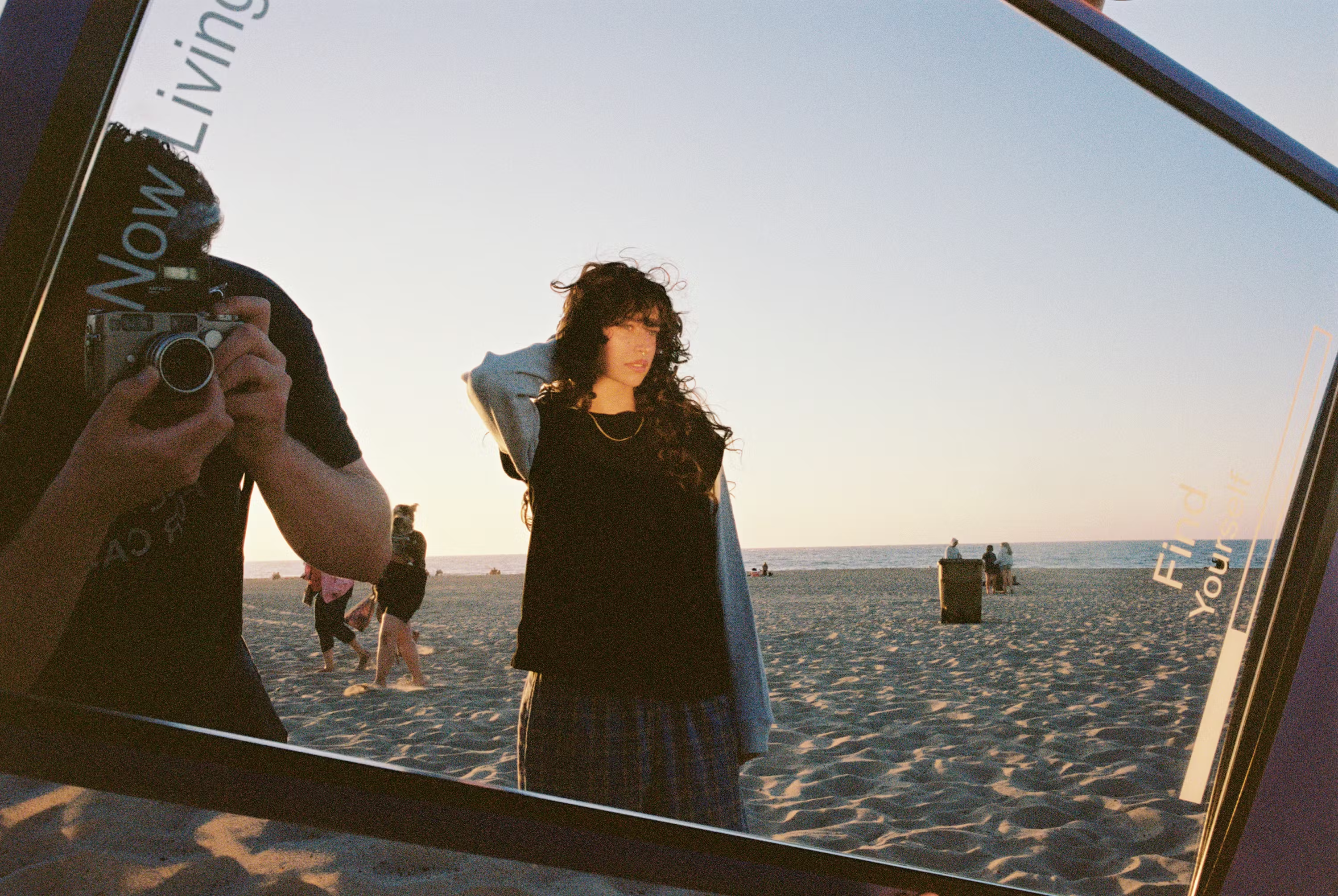
We meet at Swingers in Los Angeles, a ’50s-style diner with LA-style prices ($15 milkshakes) that the actor picked. I’m catching her, barely, amidst taping Sennott’s show. She tells me she’s nervous for the photoshoot that will accompany this story, though it’s hard to believe that anyone who looks like A’zion can be camera shy.
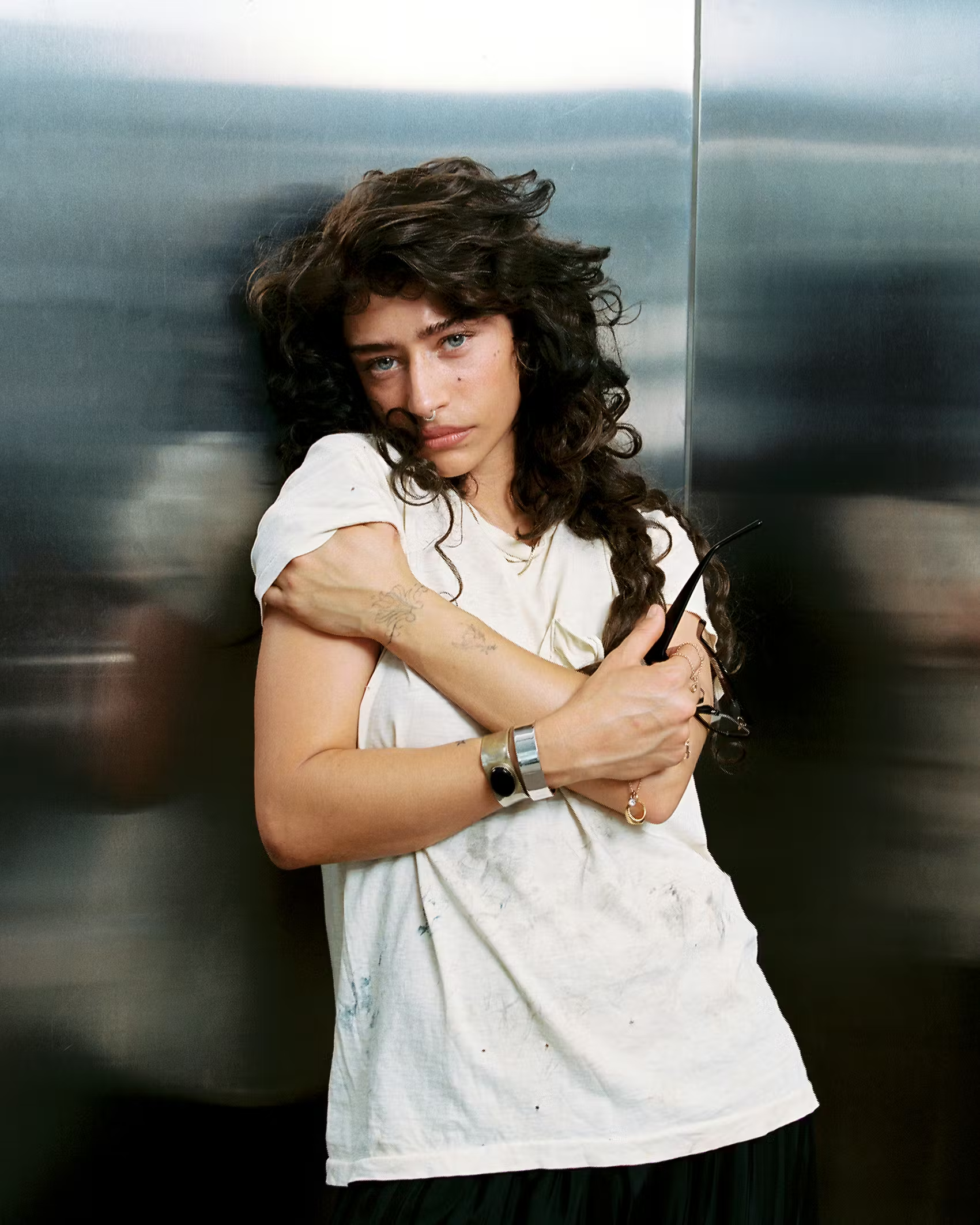
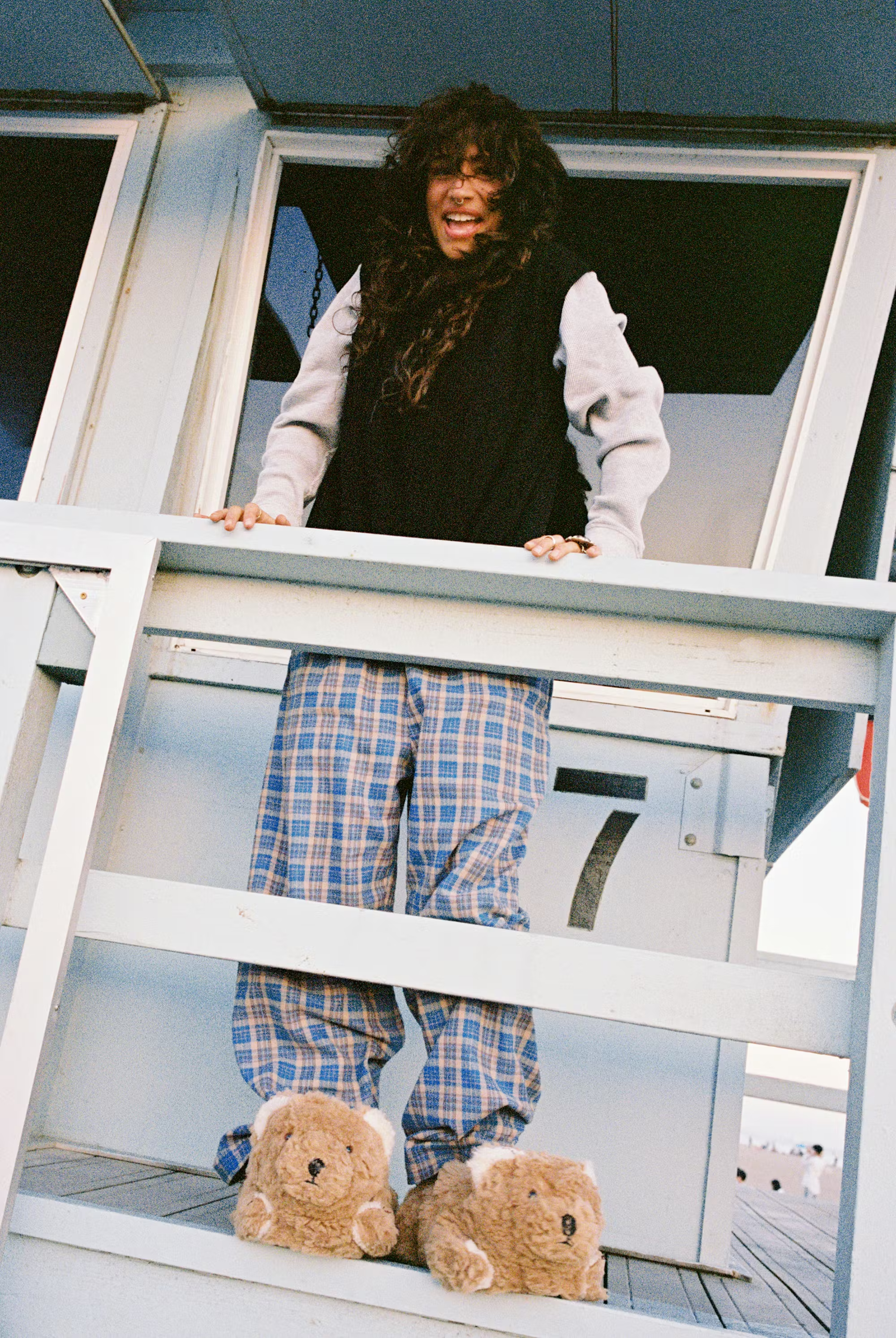
She’s wearing a sweatshirt and baggy pants, a few tattoos poking out from her sleeves. Her hair is curly and wild, an effect many people pay big money to achieve, but I get the feeling she’s actually just rolled out of bed. She calls this her Marie Kondo style — “whatever sparks joy.” She just wants to be comfortable, loose, free.

As a teenager, A’zion attended high school in the San Fernando Valley: at a charter school that shares a campus with a Korean church and a mental rehabilitation center. I went there, too, a couple years ahead of her, and my friends and I used to joke that we were all unwitting rehab residents. “Weird place,” A’zion and I say in unison.
It was around that time that A’zion started to become interested in acting. She begged her mother for headshots and made home movies with her sisters, Gideon says. She dabbled in the school’s theater program but realized she was not “a theater kid.” So, she enrolled in independent studies — a program for students unable to attend daily classes — and started auditioning. She’s been rejected. A lot. “Every movie you see that I’m not in, I probably auditioned for,” she says. Getting turned down is part of the job; it gives actors a “harder helmet.” When asked how she handles losing out on a part, she shrugs. Someone else was better suited to it. “Comparison is the thief of joy,” she says sagely.

She was filming in Budapest when Venditti called her about Marty Supreme. A’zion describes herself as “super superstitious.” She doesn’t talk about potential parts until they’re booked, for fear of jinxing them. She doesn’t plan her Oscar speech. She keeps her audition pages until a role is locked or lost, at which point she permits herself to throw them away. So, she didn’t tell anyone she was up for the Safdie project. But she did buy a pair of boots with the faintest hope of wearing them on set in New York.
Eventually, Safdie FaceTimed her. “He was talking about scenes, shooting locations, the production designer,” she says. “And I was like, ‘Wait. Are you offering me the role?’ Actually, I think all I said was, ‘I just bought these boots.’”
A’zion has a mantra when starting a relationship with any director: “Do they want to work with me, or on me?” With Safdie, it was the former; they had similar ideas about bringing her character to life. It was fun and easy, a true creative kinship in which A’zion has been able to remain herself.
She has no particular method for immersing herself in a character (though “no shade” to anyone who does, she quickly adds). She used to meditate, harkening back to an earlier obsession with Buddhism. Now, she essentially memorizes her lines and says a prayer. She fears even an acting coach would detract from her organic flow, imposing structure onto something that comes naturally. She wishes she could take herself more seriously. But whatever she’s doing has worked so far. Her older sister calls her “very, very, very” determined. “Anything she’s ever had a passion for or wanted to do, she’s done,” Gideon says. “And she does it well.”
With any iota of spare time, A’zion is playing music. She’s written songs privately since childhood and names Led Zeppelin, Lauryn Hill, The Kinks, Weezer, Radiohead, and ABBA as influences. She taught herself piano, “but also guitar and ukulele and drums and all that,” she says, as though everyone does it. She records under the moniker bugzbee, a reference to her first car: a 1991 red VW Cabriolet. One of her three public singles, “Helpless,” is lo-fi and emotionally exposed, somewhere between indie pop and bedroom confession — think early Clairo meets Mazzy Star. Like much of what she does, it’s imperfect on purpose, vulnerable, a little off-kilter.
Although the songs released under her alias no longer represent her, A’zion says they served a purpose: “I had waited so long to make music, I just wanted to get something out there.” She hopes bugzbee isn’t dismissed as a quaint side project, “just another actress making music,” but she also doesn’t much “care what people think, honestly.” She does what makes her happy.
As for her career aspirations, she answers plainly. Going forward, “only bangers.” She doesn’t want to take on any more roles out of financial necessity; she’d rather make good art. I ask what she wants people to know about her, and she pauses, then offers two sentiments. The first is about retaining joy — a joy that permeates our whole conversation. A joy that means nurturing things beyond acting: her music, her relationships, her animals, her identity. The second thing is about that identity itself. She is, she declares, “a freak.”
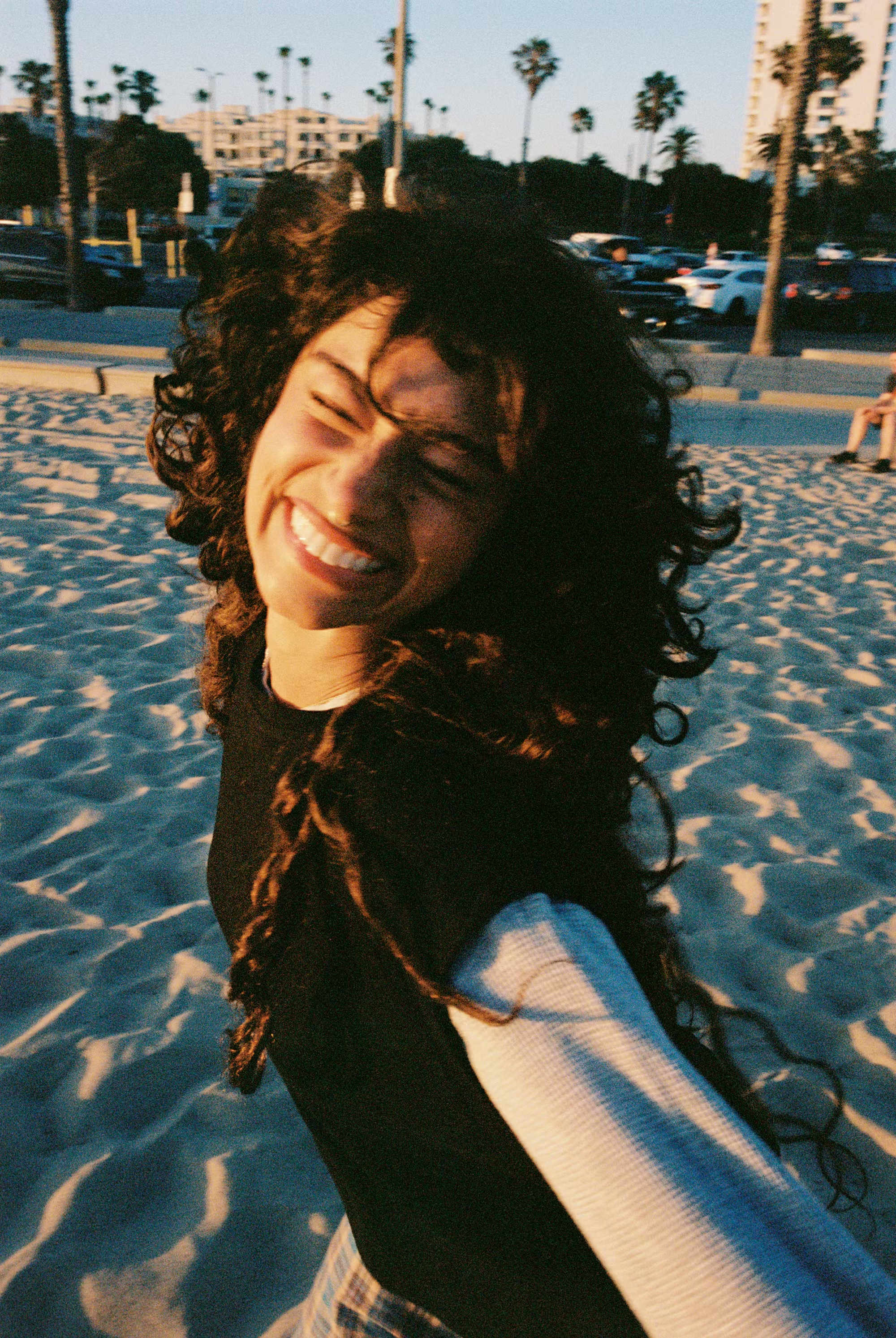
There’s a picture on A’zion’s Instagram, if one bothers to scroll 313 weeks deep. It’s of her on a balcony, barefoot, hair in a turban, flailing arms accompanied by a bottle of wine. She’s stunning, but she’s also just a kid goofing off. That she’s been able to maintain this essence while holding her own in Hollywood is no small feat. She’s evolved from playing unhinged teenagers to roles that are more fully formed — more adult. But she’s holding onto the spark that makes her weird and wild, that galvanized her to pursue her dreams. And she hopes the world follows suit. “Let the freaks be freaks.”
At 29, I’d all but retired the freak flag. But I leave A’zion with some youthful wonder restored. Maybe we’re all wandering around a mental institution disguised as a high school. Why take ourselves so seriously?
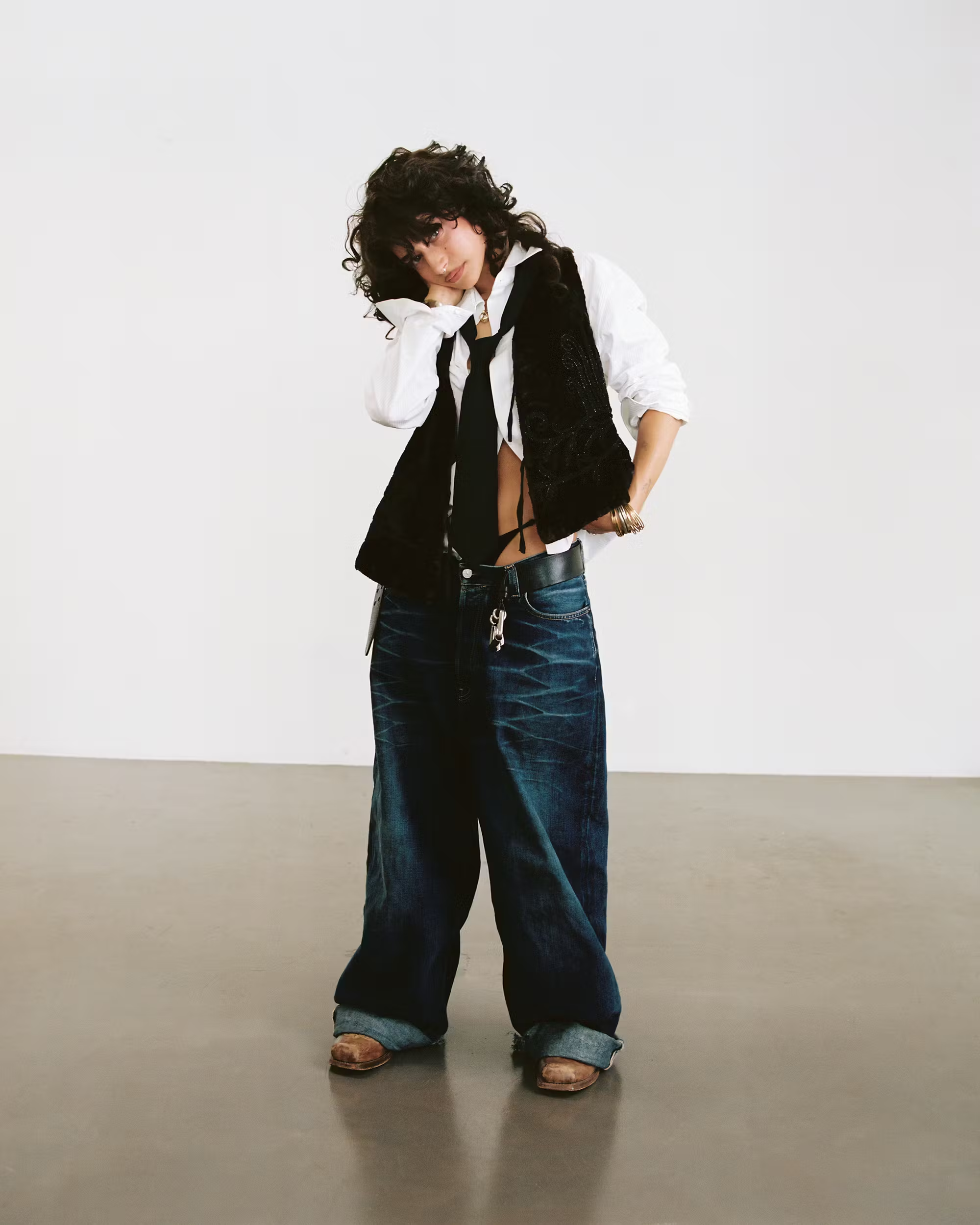
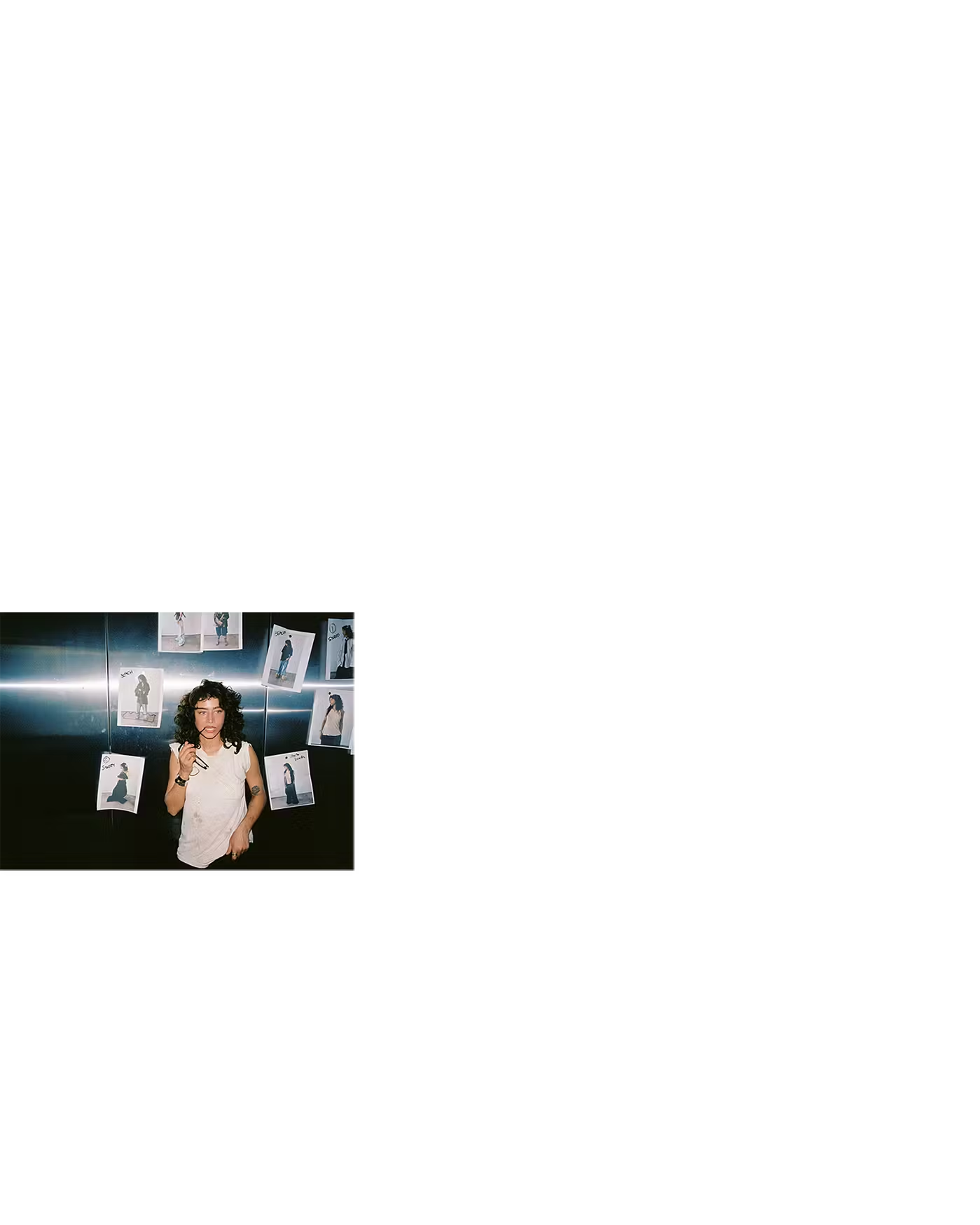
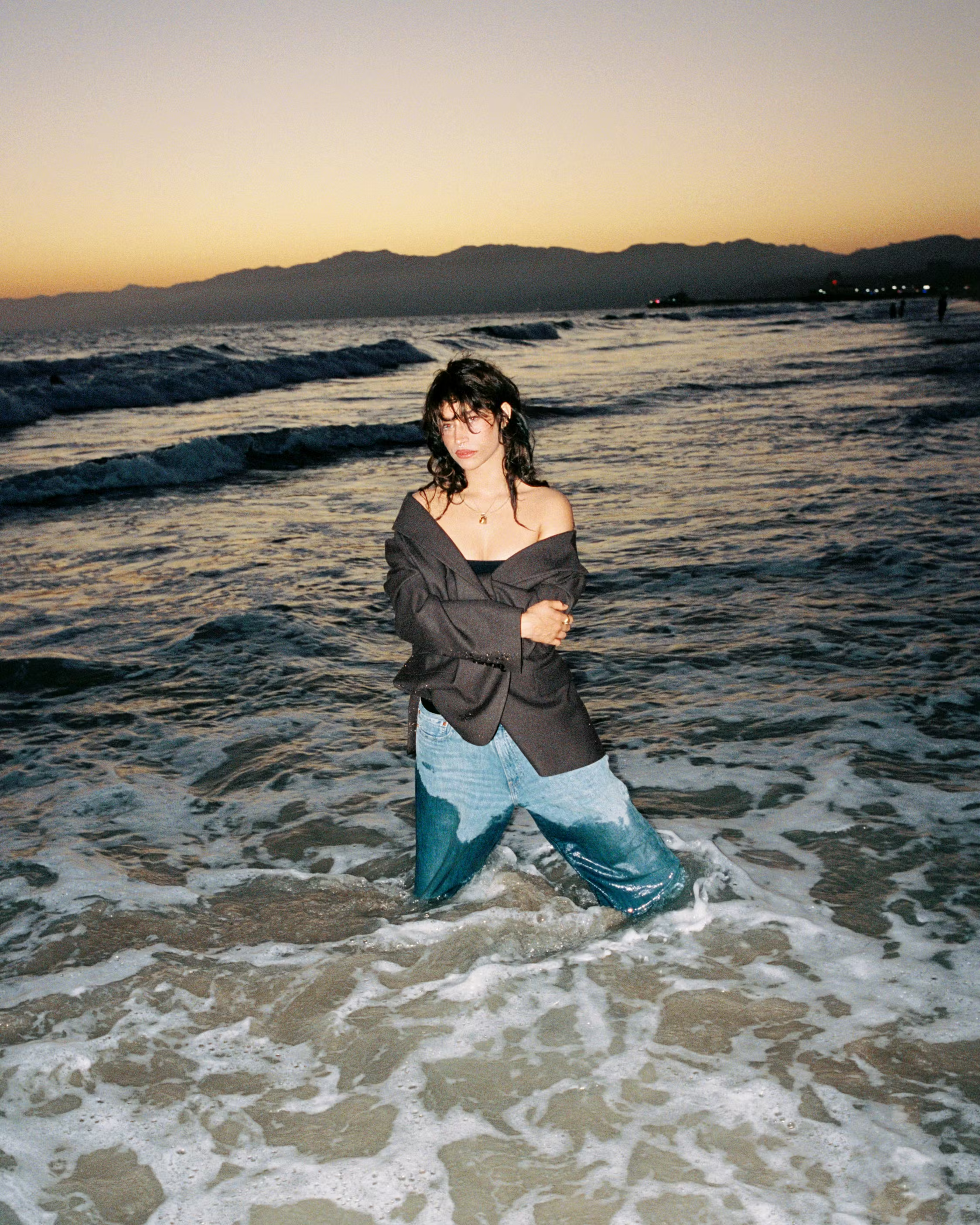
Later, I stop by the photoshoot that A’zion was so nervous about. I understand her apprehension; the white backdrop is bigger than my New York City apartment. It’s daunting. A’zion gets the aux and puts on “I’m a Loser” by The Beatles. With a cadre of wardrobe, hair, and makeup people surrounding her, she couldn’t be further from a loser, but she has the humility of a reptile nerd. Here, she’s given the leeway to be herself, a rising star, a professional weirdo.
Credits
By: Madeline Cash
Styling Assistant: Lizzie Palma
Photographed by: Aidan Cullen
Production Assistant: Cary Slatkin
Styled by: Dre Romero