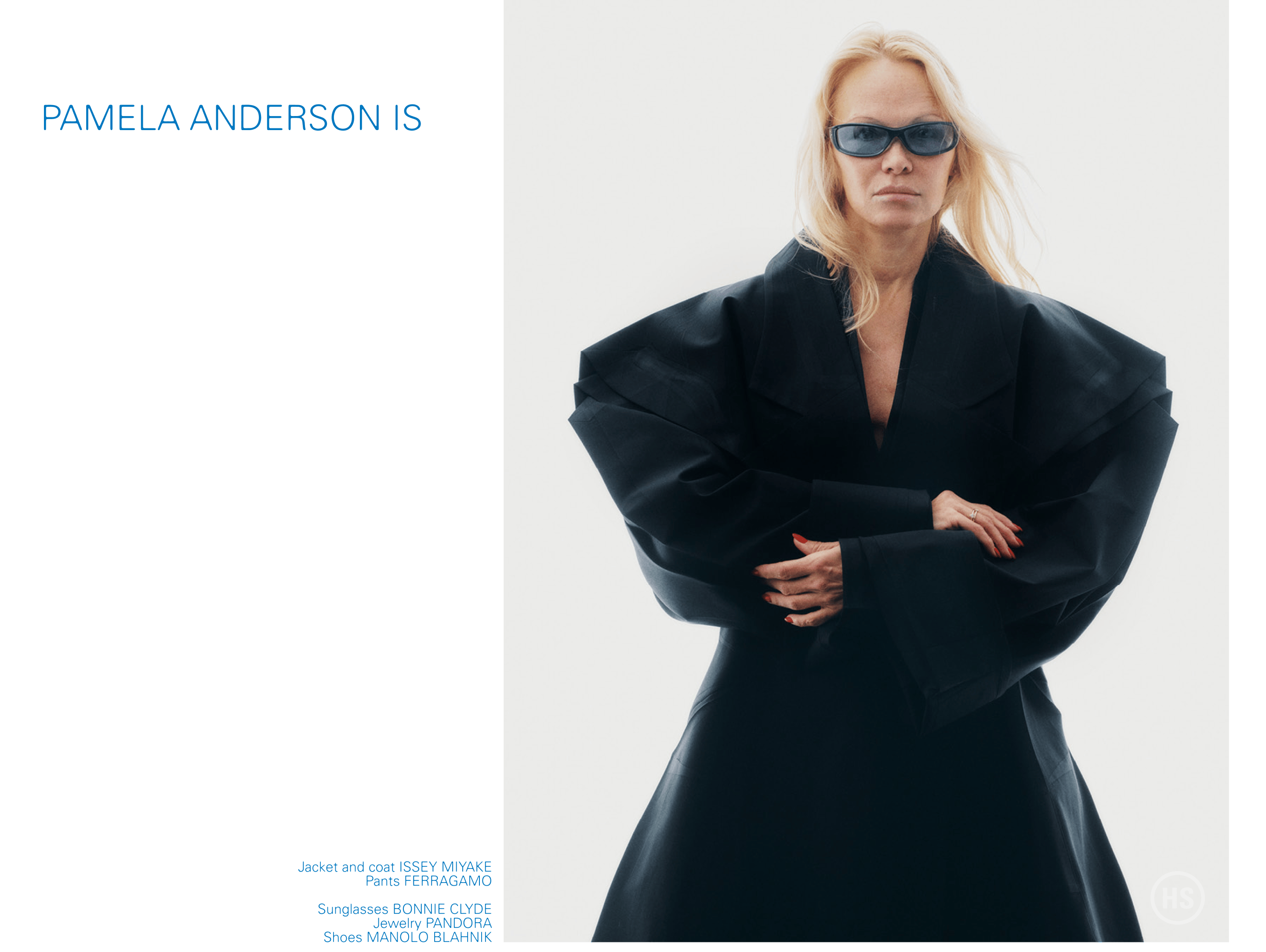
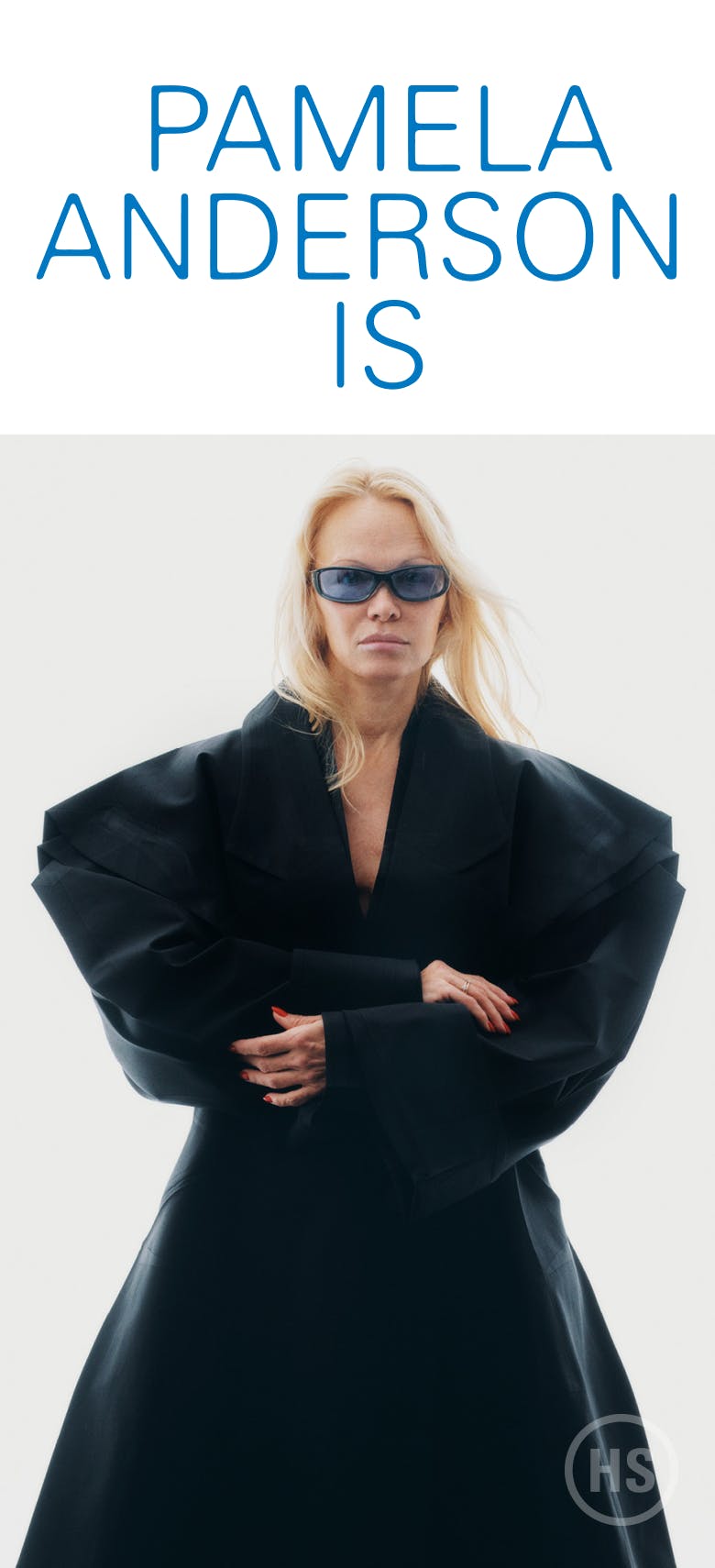

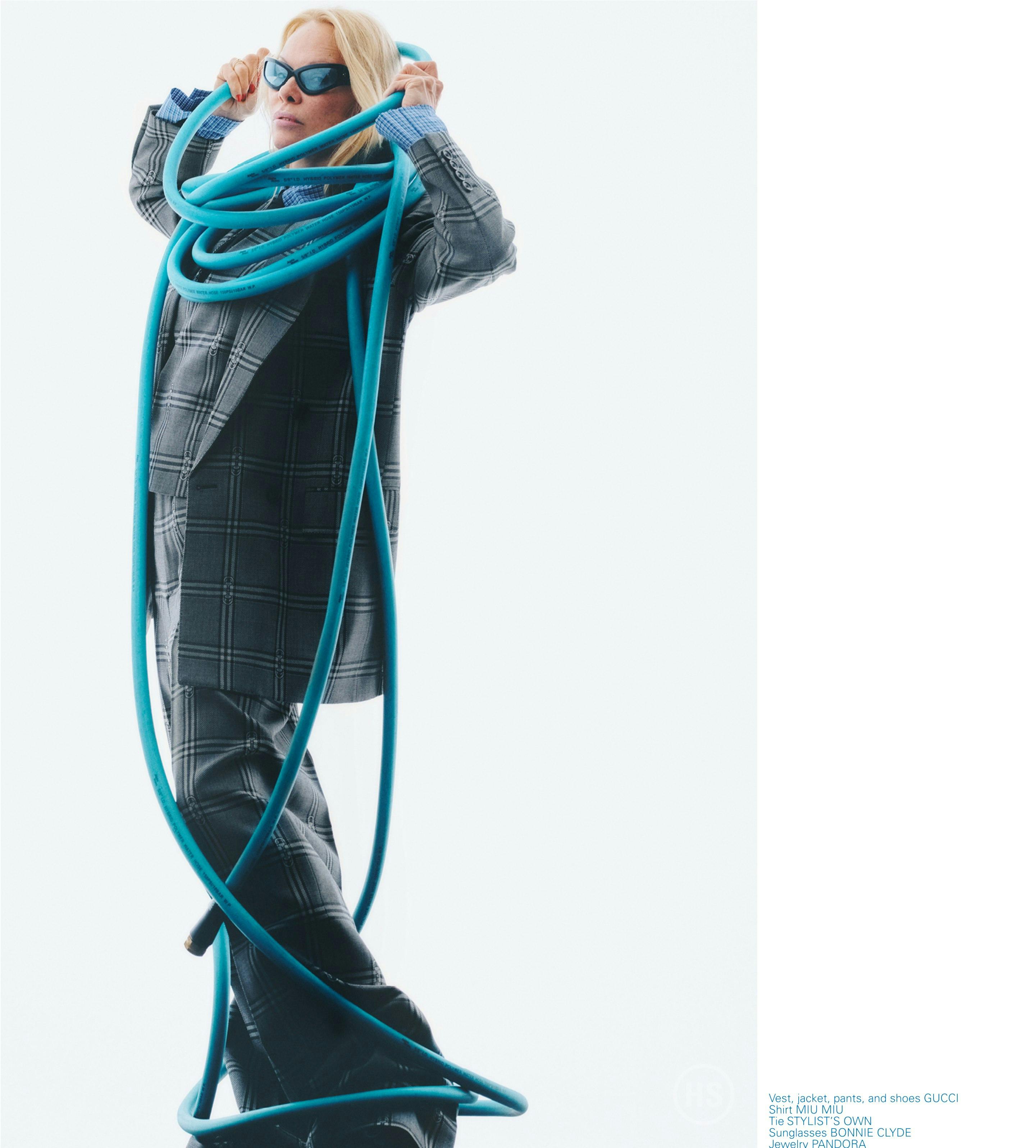
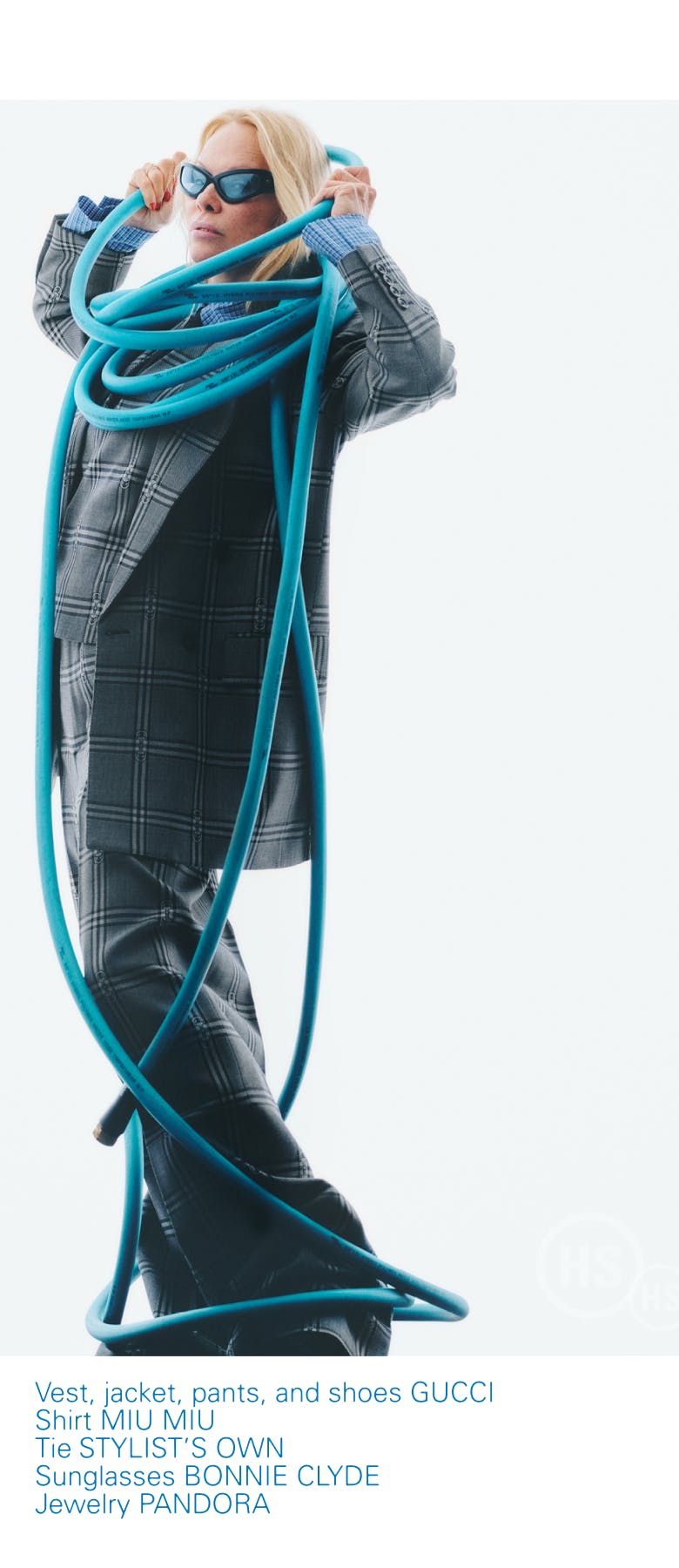

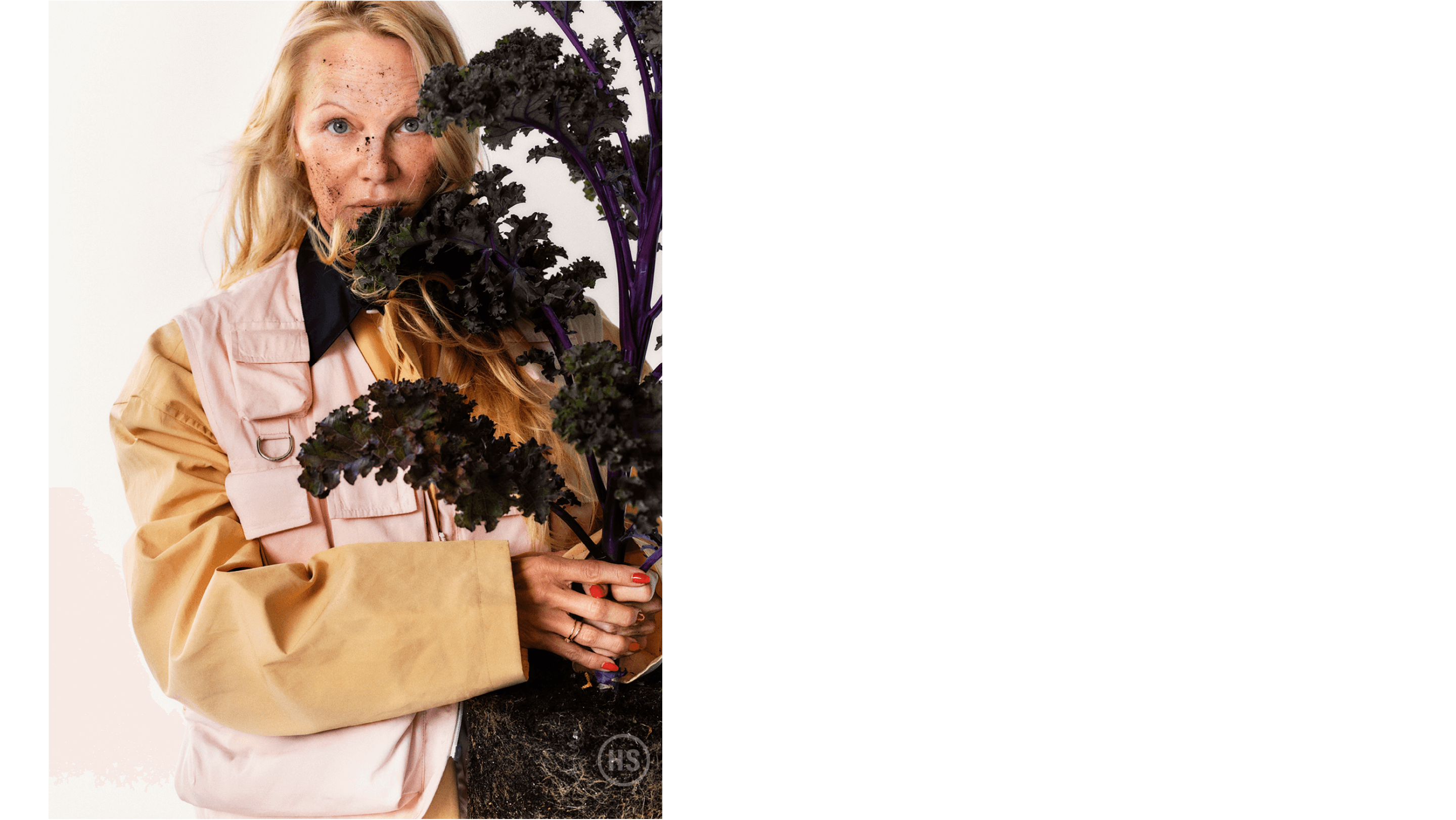
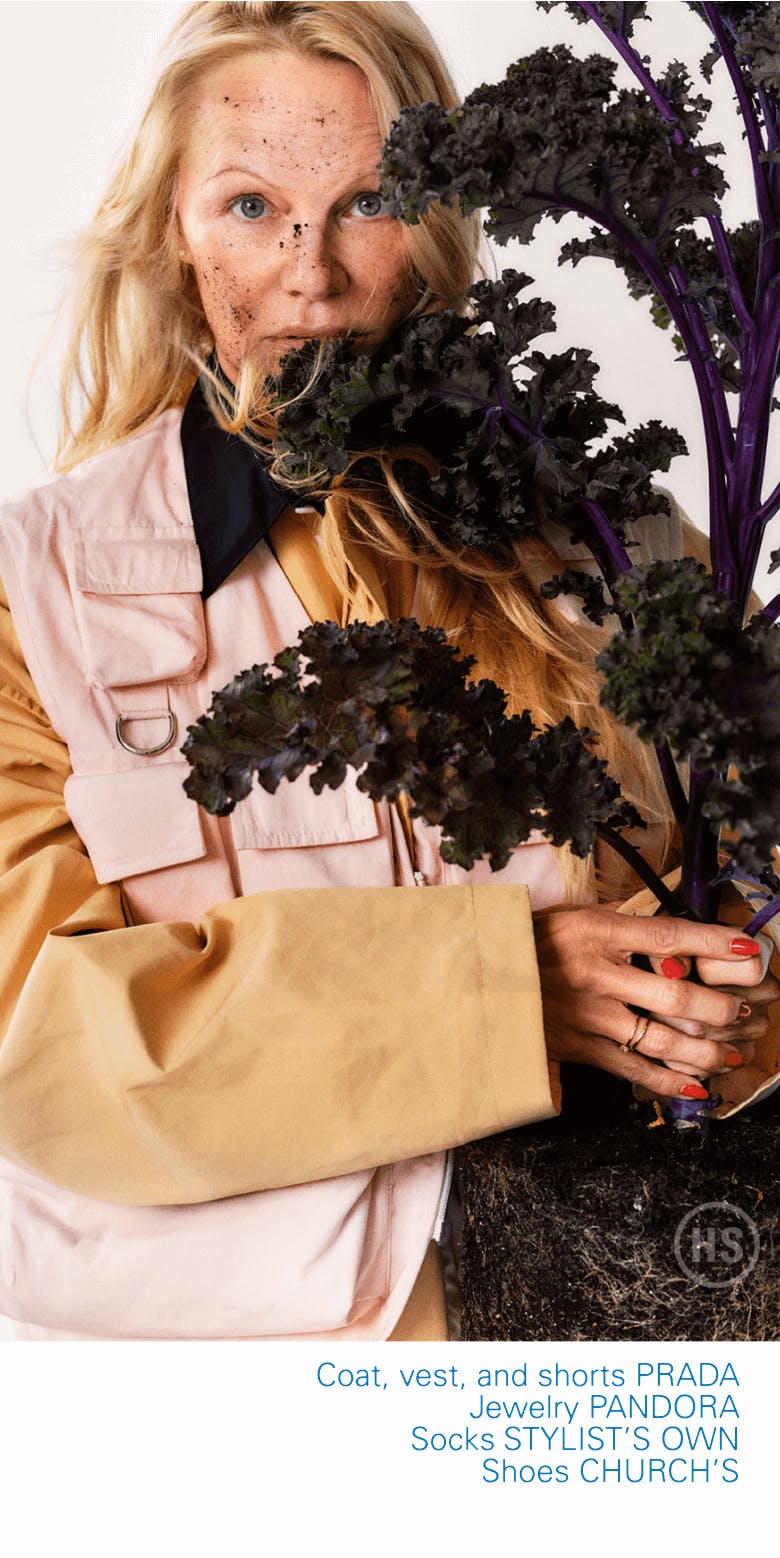
“My face gets more interesting with age,” she says.
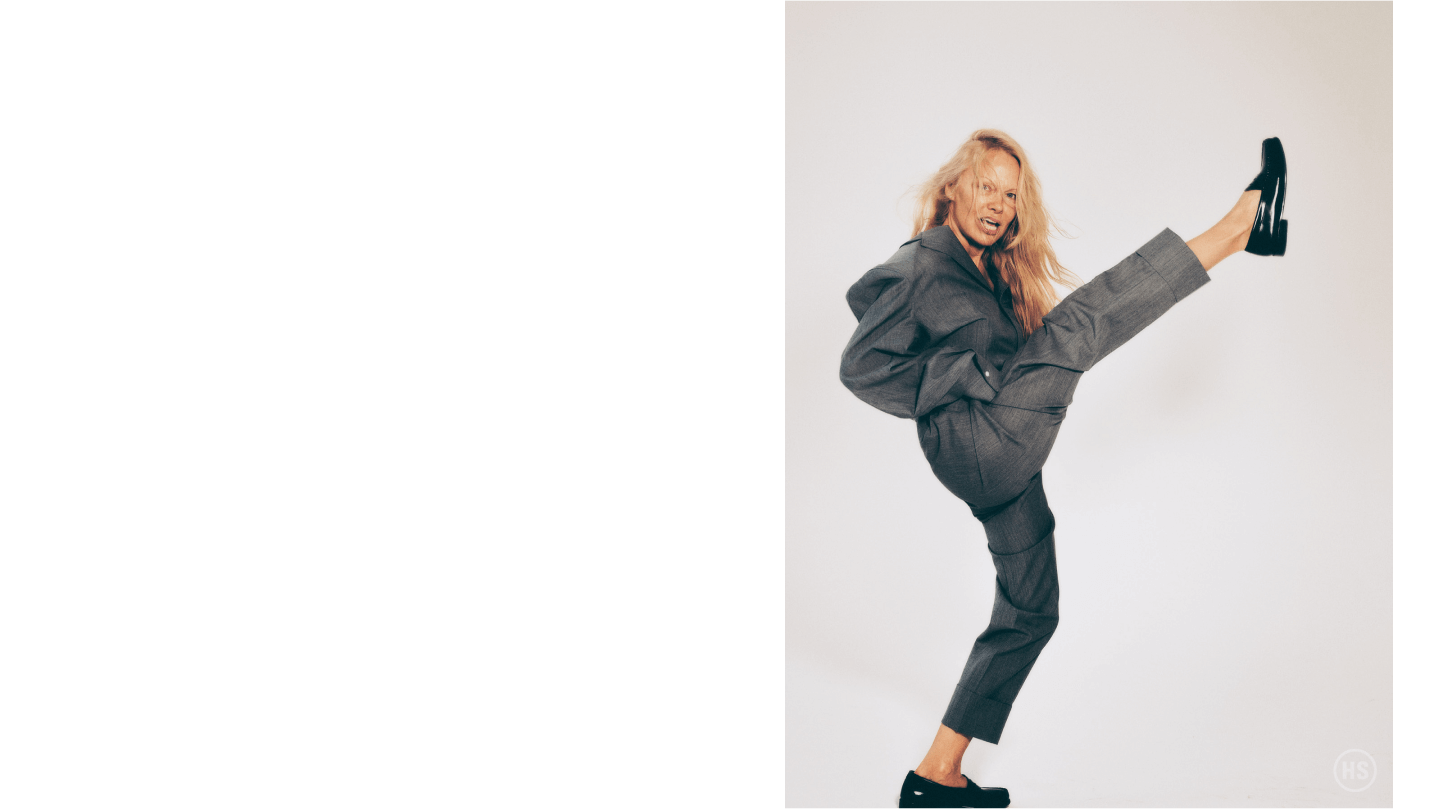
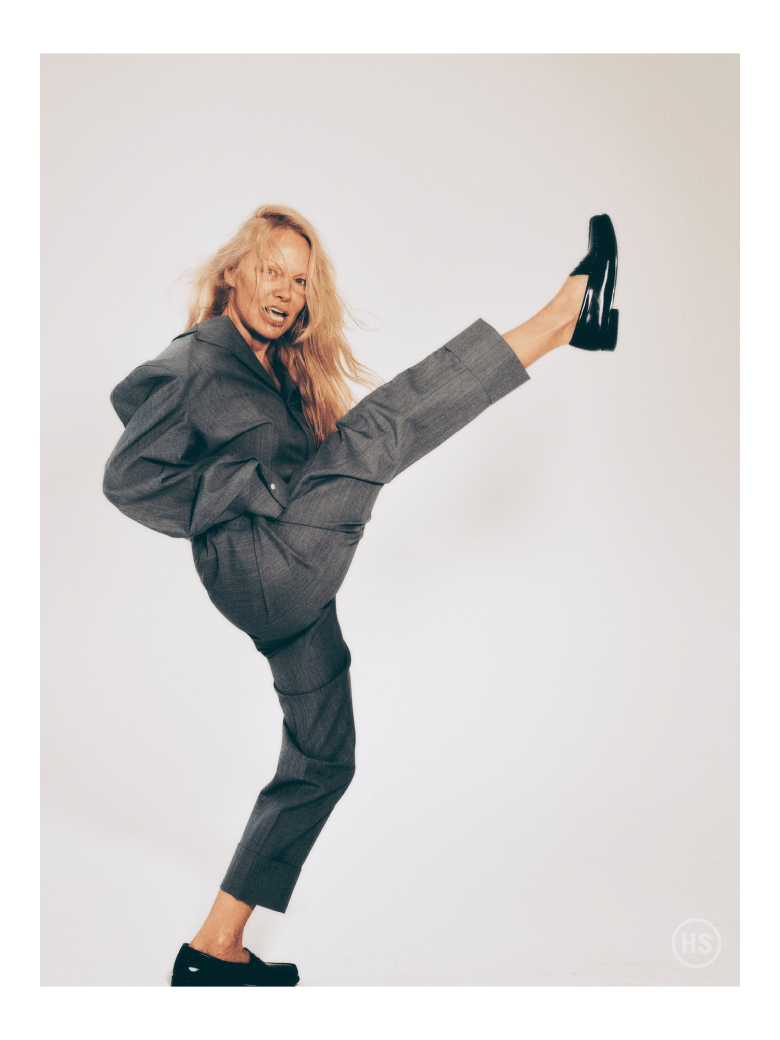
“No Cetaphil?” I ask, speculating on what must go into this whole no-makeup thing. “No, I’m a tomboy! I was actually always a tomboy growing up,” she confesses, as if this is still a surprise to her, even though she put it in her recent memoir, Love, Pamela, and says as much in the 2023 Netflix documentary Pamela, A Love Story. “I never wanted to wear a dress. I was athletic. I made mud pies,” she says, gesturing with her left arm, as if her childhood were sitting next to her, just offscreen.

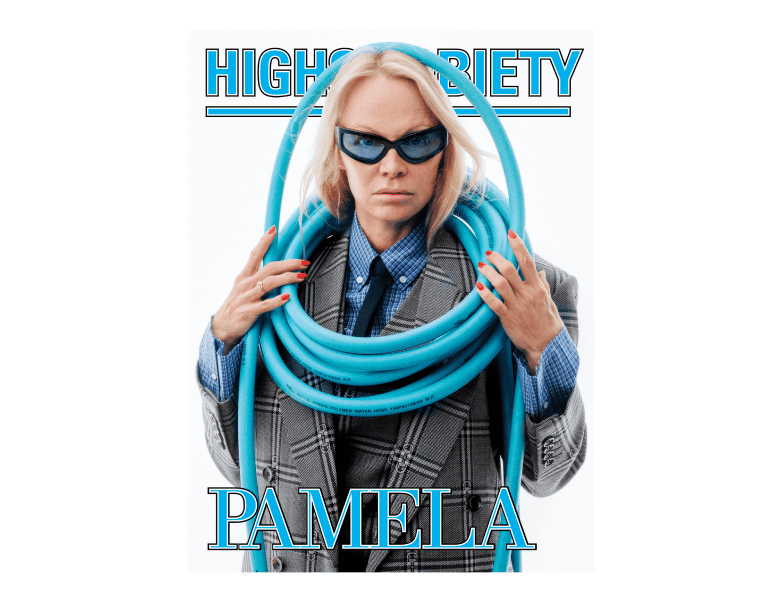
Anderson and I are technically connecting through our respective computers. I’m sitting at a bare desk in Berlin, where it’s nighttime and raining. She’s brightly lit at her grandmother’s house having just started her day in Vancouver. Besides similar white button-ups, we’ve got no apparent common ground, yet our back and forth feels intimate. For one, she’s agreed to speak to me without representation, which is rare for her. And behind her, through a small window on a wall filled with books, I can see the garden she’s been posting on Instagram.
Her “more natural” beauty routine, she goes on to explain, is something she’s “harvested.” She means this literally: “I make rose oil, which I do with rose hips. I’m interested in my Epsom salts, olive oils, and shea butter.” No doubt, this was not what was applied to her face when she was appearing regularly on TV in the 1990s. Anderson calls her recent hiatus from glam a “healing experience,” a sentiment that both does and does not acknowledge how the star helped define a destructive norm that countless young people have chased. Though she may have been a hyper-femme swimsuit model – a thin white woman who naturally fit the role – she was also subjugated by that role, too. As a person whose body has likely been viewed more than any other body, ever, the standard she helped define was no doubt harmful to her, too.
Yet it’s tough not to notice how Anderson’s healing experience has fueled her comeback. It started with a series of makeup-less appearances. There was also a swimwear collaboration; a viral Heaven by Marc Jacobs campaign; being spotted in Alaïa, Yohji Yamamoto, and The Row; and a brand deal with Pandora, which Emily Sundberg’s newsletter credited as responsible for the brand’s “great revival in 2023.” (Since publication Anderson has bought the skin-care line style Sonsie.)
Anderson’s Instagram was transformed. Some posts were archived and new imagery of gardening and writing from a vast field in Vancouver were artfully peppered in. Suddenly, Anderson was returned to the limelight, and right in time to promote her new memoir and documentary. From there, she took her makeup-less campaign to Paris Fashion Week. She’s not the first to show up to fashion week makeup-free (Marc Jacobs even did a runway show with only barefaced models in 2014), but, on her — on Pamela Anderson — it was a statement nonetheless. “My boys were like, ‘Mom, you must have a glam team.’ And my agents were like, ‘You have to have a glam team! Where’s the stylist?’ I go, ‘I know how to put a dress on myself. I don’t need someone buttoning up my blouse. I got this.’ And they were just horrified.”

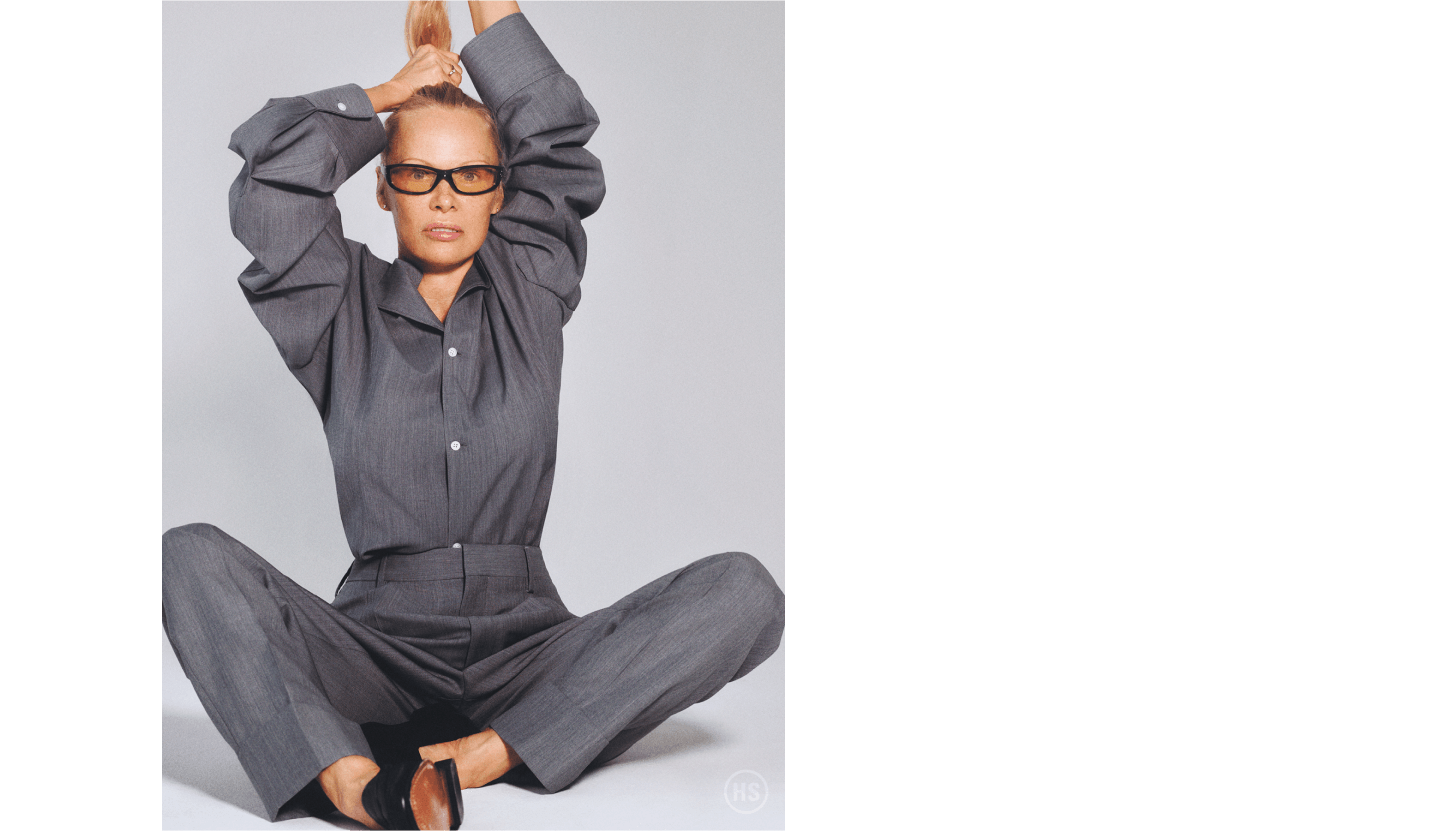
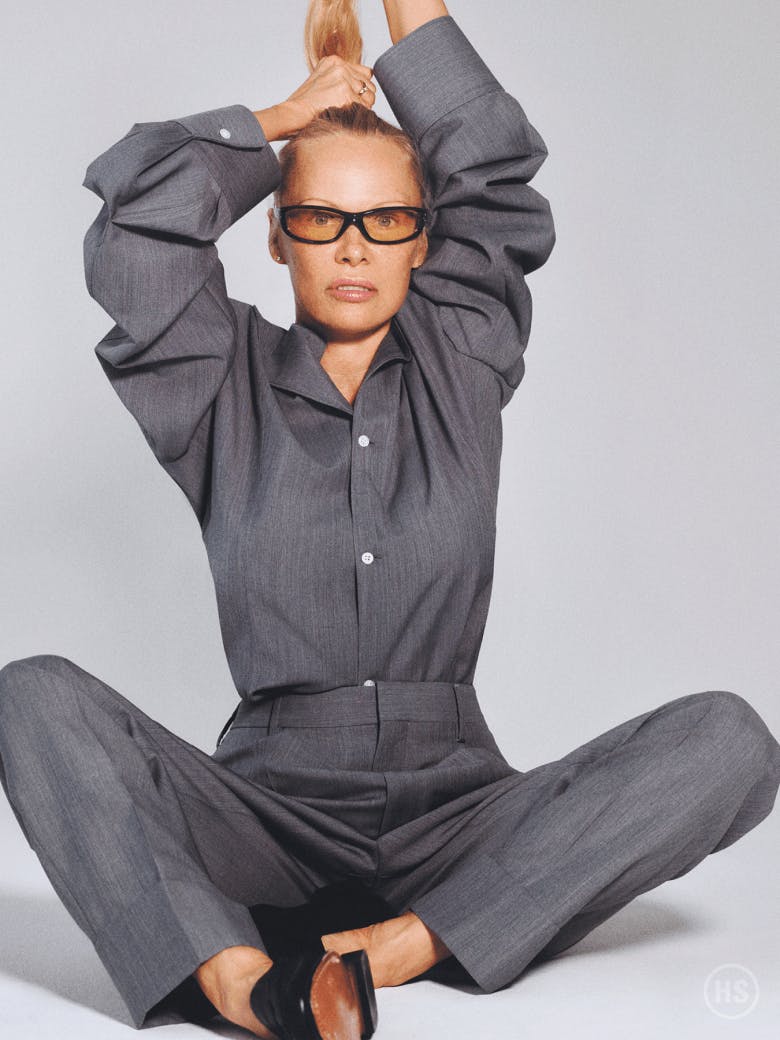
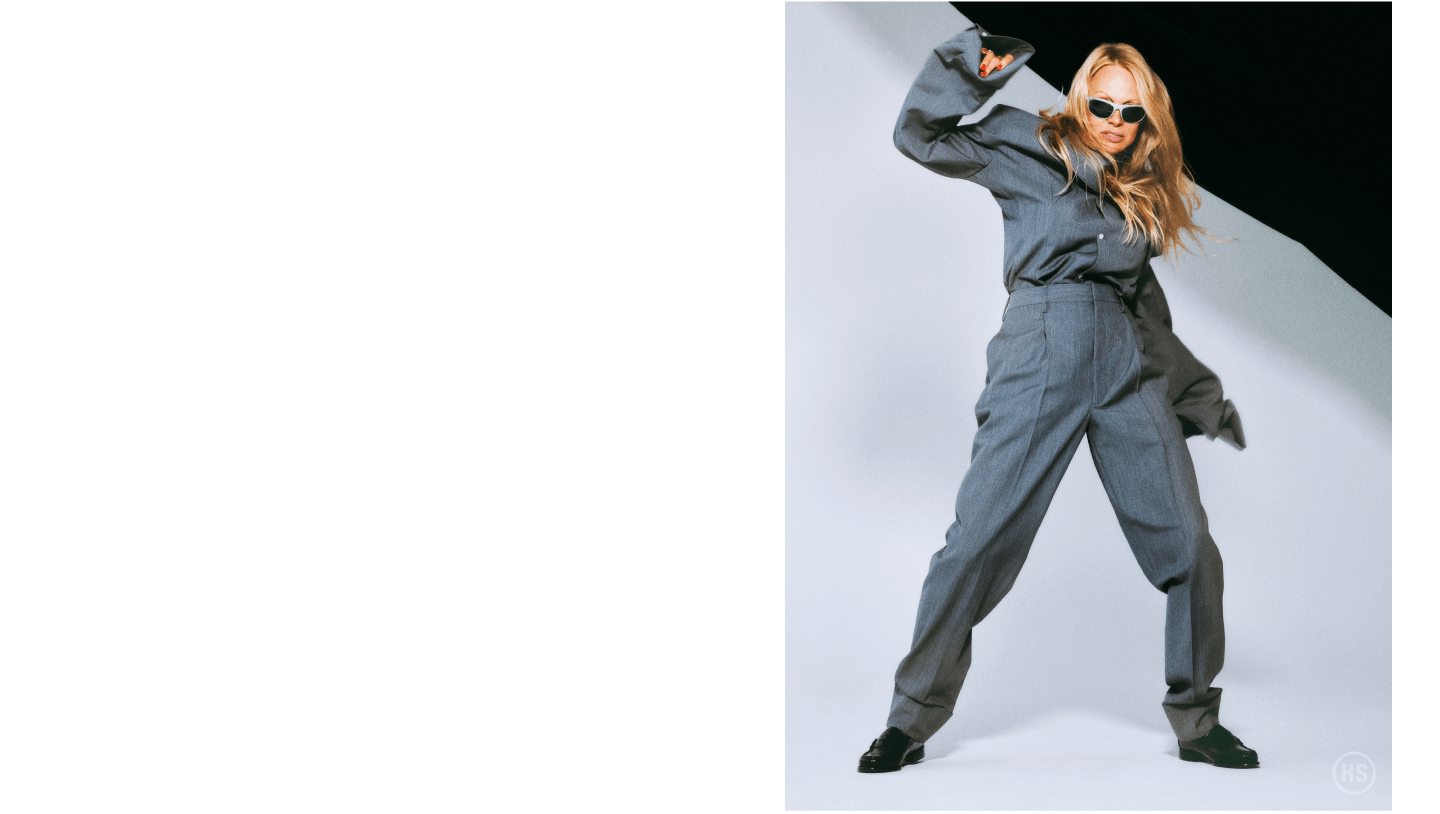
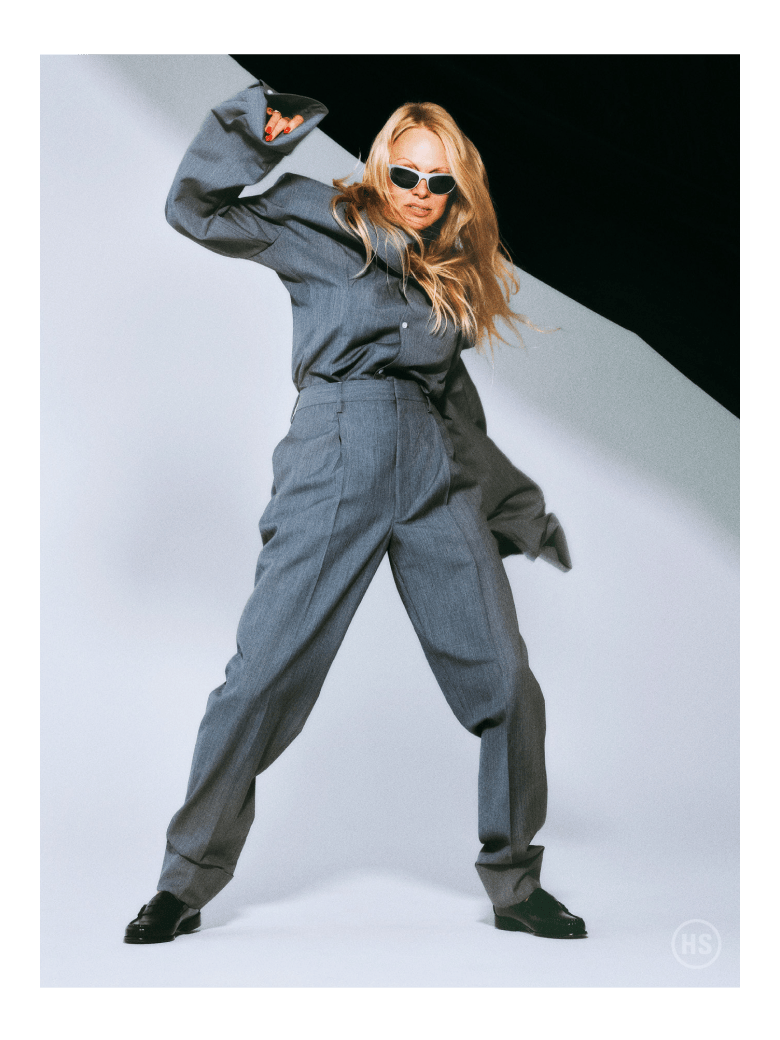
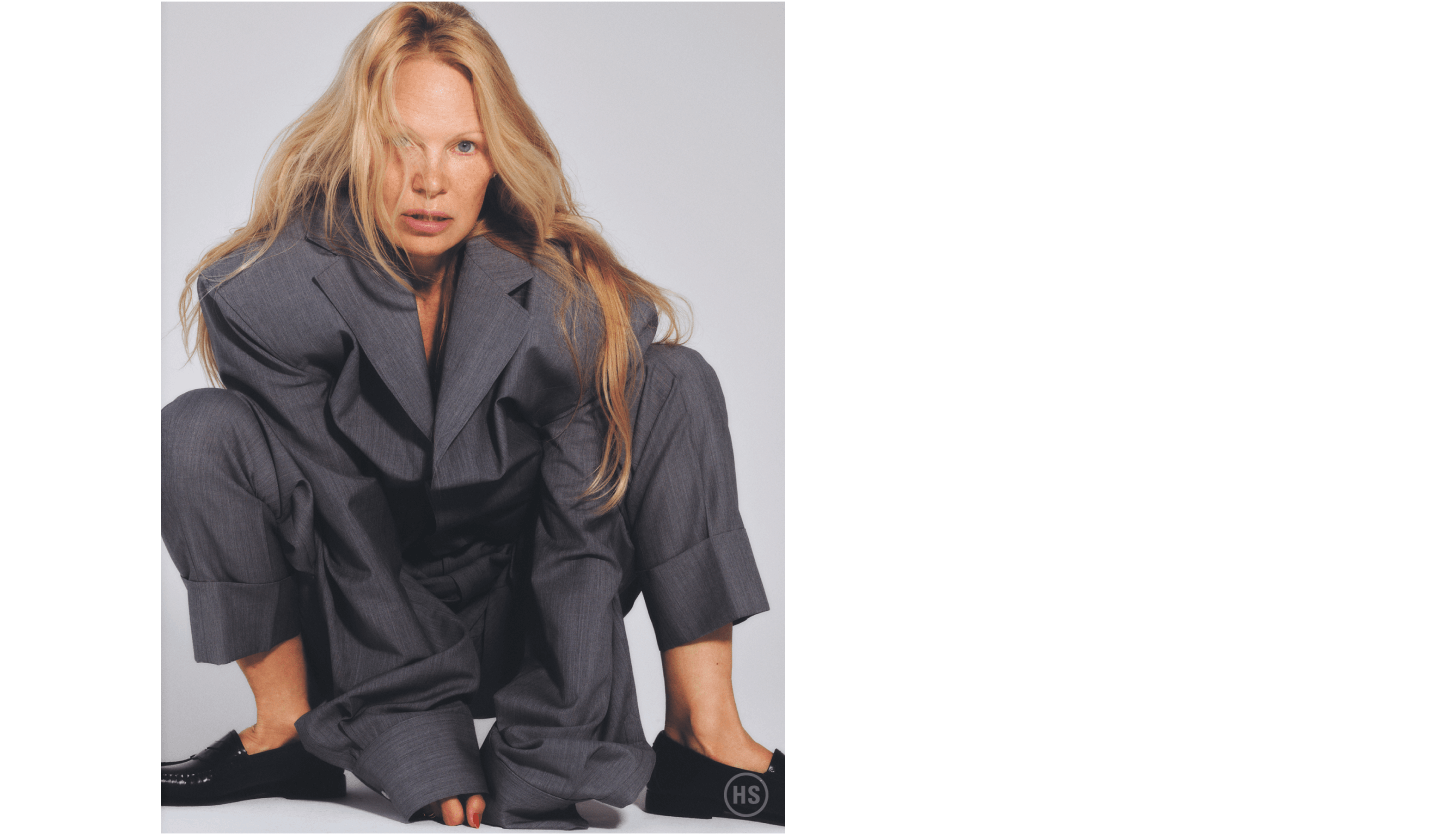
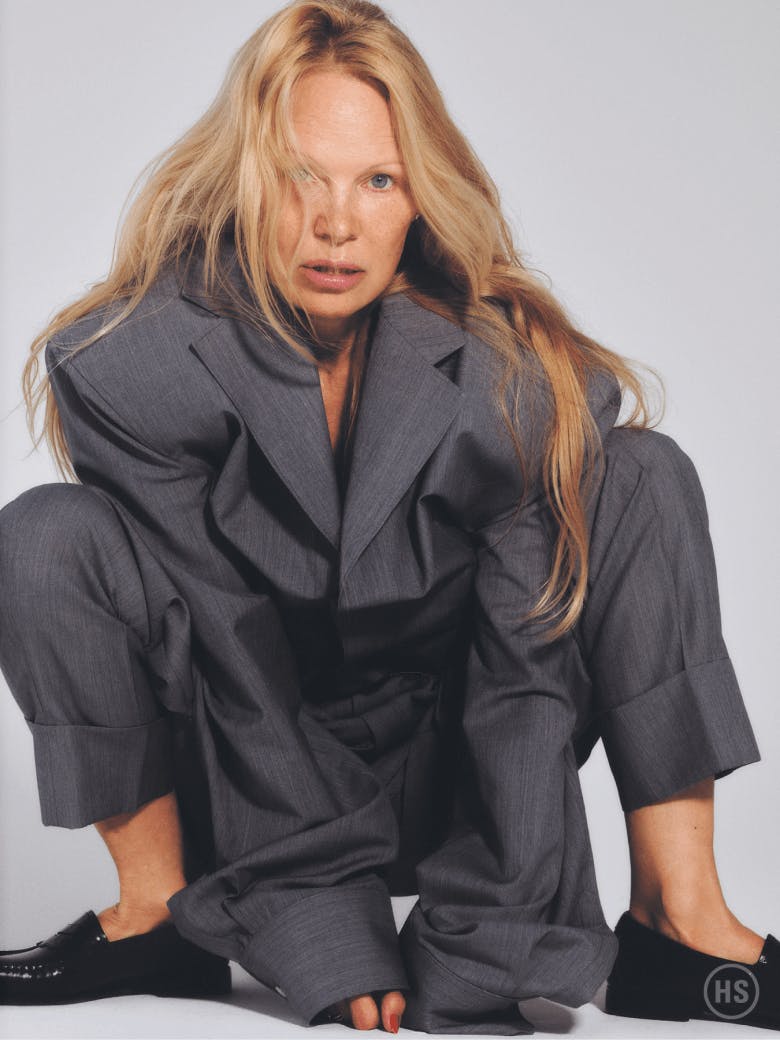
It all started with a letter from Playboy. And after making her way to the West Coast, Anderson landed Playmate of the Month following her appearance on the cover of the October 1989 issue. She became one of the publication’s stars, eventually breaking the record for most Playboy covers of any bunny. Then came Anderson’s mainstream commercial spotlight: ABC’s Home Improvement for two seasons, and a role as C.J. Parker on Baywatch. Global recognition followed: A Baywatch Barbie was born, Coca-Cola bottles were posed with, and by 2000 — long before TikTok algorithms, Twitter trends, and the birth of Instagram — Guinness World Records named Anderson the “most downloaded star” of all time. The same year that Britney Spears released Oops!... I Did It Again and Bill Clinton was in his second presidential term, Baywatch was one of the most-watched television shows in the world.
Add to this a very public relationship: A few days after meeting him, Anderson married Tommy Lee from heavy metal band Mötley Crüe. In 1995, a tape of the couple having sex was stolen from their home and released without their consent. The event, Anderson tells me, “derailed her life, personally and professionally,” and, she explains, it still influences how people perceive her. It wasn’t until the release of her memoir and Netflix documentary in 2023 that she decided it was time to contend with the public again. “People stop me on the street sometimes and say, ‘Wow, Pamela, I used to hate you, but then I watched the documentary and decided you’re not actually bad,’” she says, adding, “It doesn’t hurt my feelings. I’m glad people are coming around finally.”
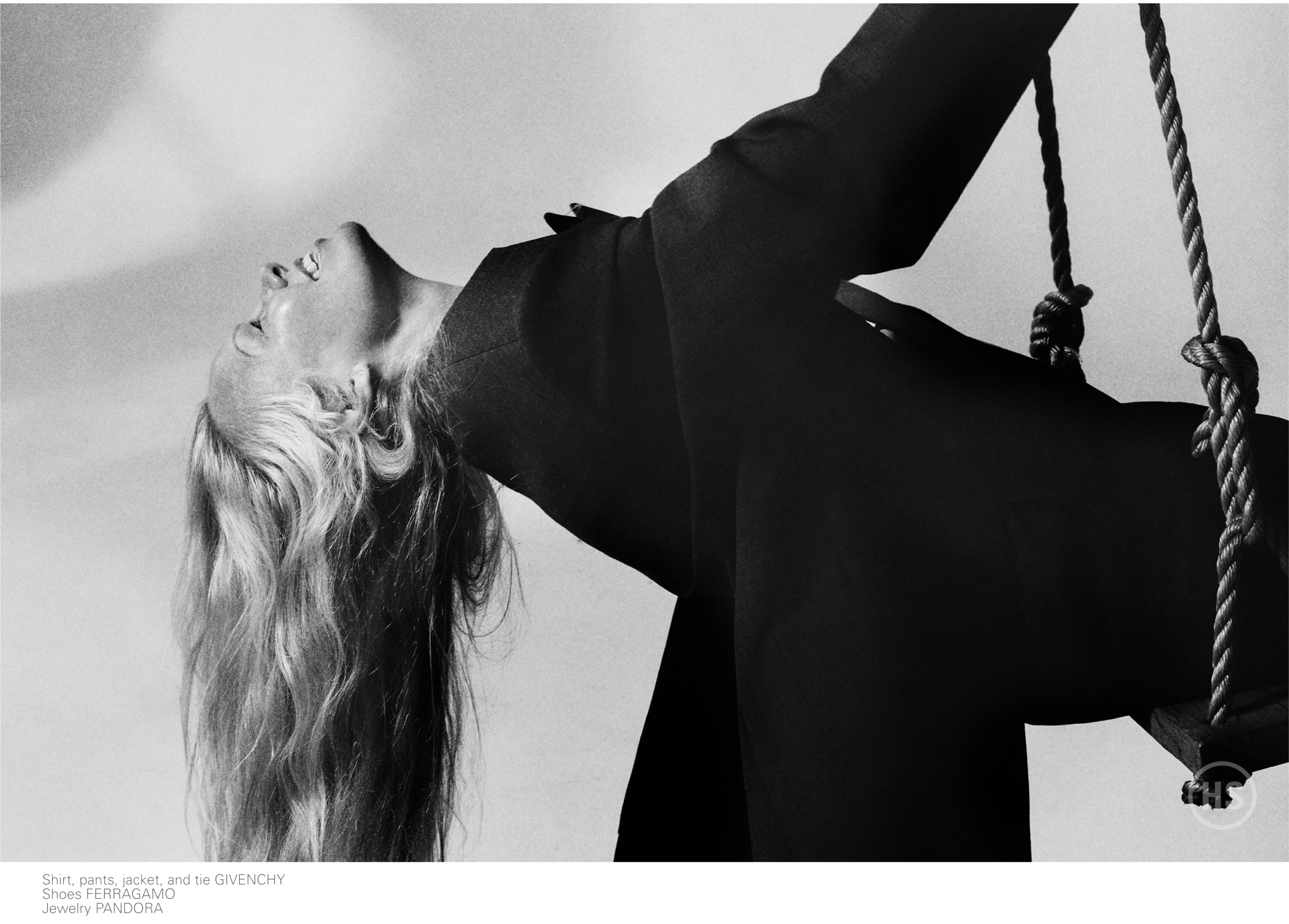
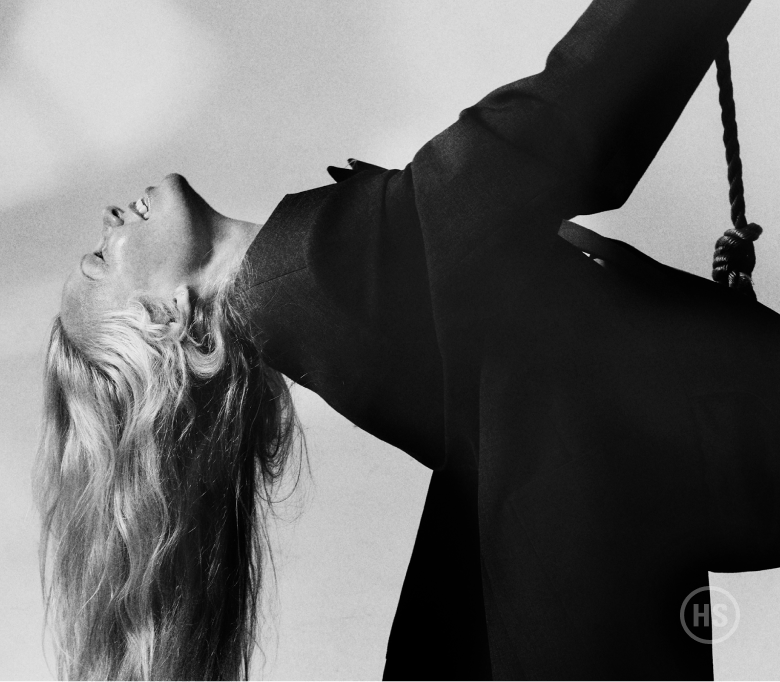
Admittedly, by this point in the interview, I also see her in a new light. As if she can read my thoughts, she pauses mid-sentence to tell me she feels “protective over me.” Like a mother, she says. “I feel motherly towards you. I feel like you’re my son, and I’m your mother.” And this is when I realize it’s true – not my mother, but what Gen Z calls “Mother,” which, in the words of my 18-year-old sister, is “like a totally iconic feminine figure.”
Even before the Paris Fashion Week appearance, Anderson resonated with young people defeated by a looming recession and burdened by a rampant mental health crisis; to so many sitting alone in their bedrooms, yearning for connection. Anderson, like Gen-Z, has lived a dual life, public and private, from the get-go. It’s why the obsession with Anderson scans. So does the Mother moniker.
“Pamela Anderson has always been a woman who was handed so much shit by social and media at large,” actor and musician Reneé Rapp, who dressed up as Anderson for Halloween, tells me over text message. “Whether she cared or not — she kept going. In the face of misogyny and slut-shaming, she kept going. I can’t imagine how difficult that was, but her irreverence and sex appeal were incredibly inspiring and powerful for a young woman like me to watch.”
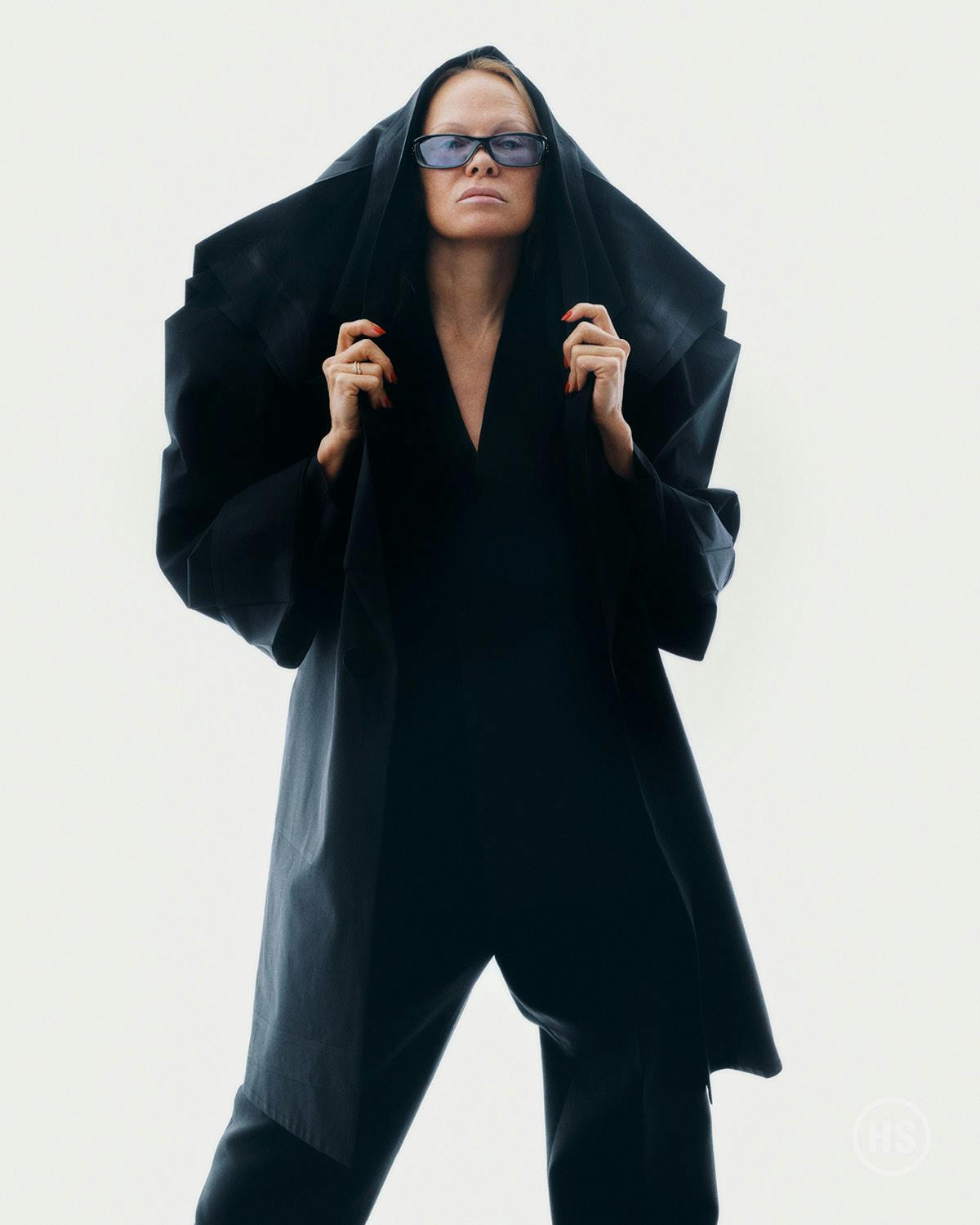
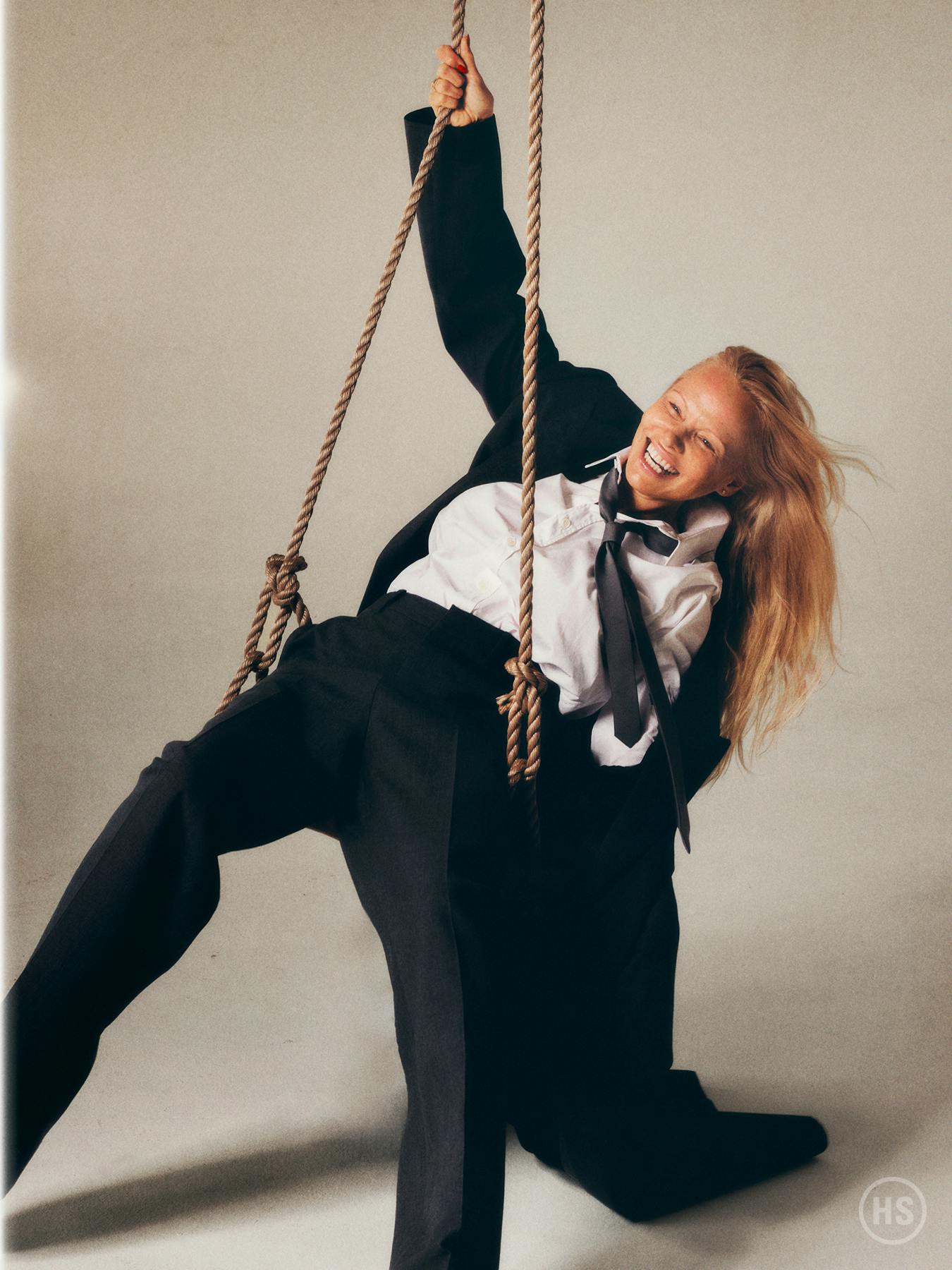
As the weight of this realization sets in, a stream of urgent questions pours out of me: Why does love feel so bad sometimes? (She doesn’t know.) Does she know she’s a gay icon? (“I believe all people love without labels, but I feel close to the LGBTQIA+ community.”) What does she think of men’s fashion? (“I like wearing my ex-boyfriend’s Carhartt. He was a construction worker.”) Does she feel successful? (“No, do you?”) But here she elaborates: “Success is living your life as you want. I feel successful because I’ve overcome and gotten through certain things and feelings. And this drives my kids nuts because my kids are ambitious. They’re calculated. They’re men. They’re young, and they have all this passion. But they’re materialistic, and I keep going, ‘Eh, it’ll pass.’” So, Pamela Anderson, you’re telling me that you’ve divorced material wealth from success?
“We all get roped into, ‘Oh, I want to be successful so I can have this and this, and show people that I’m cool, chic, admired.’ And then we’re all just left with debt and a fancy car. It’s just like chasing age. You’re not going to win. A life is less conclusive than that.”
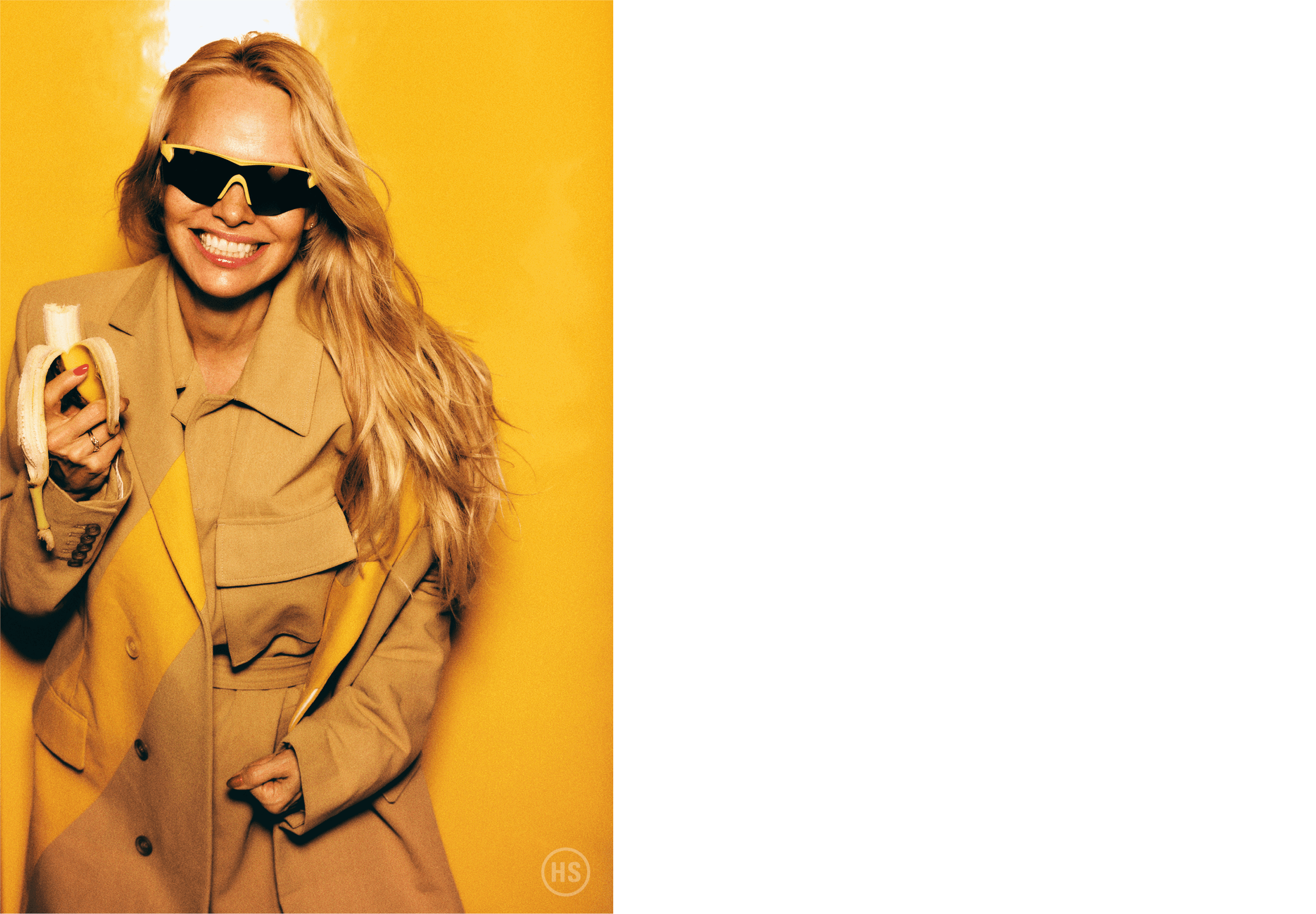
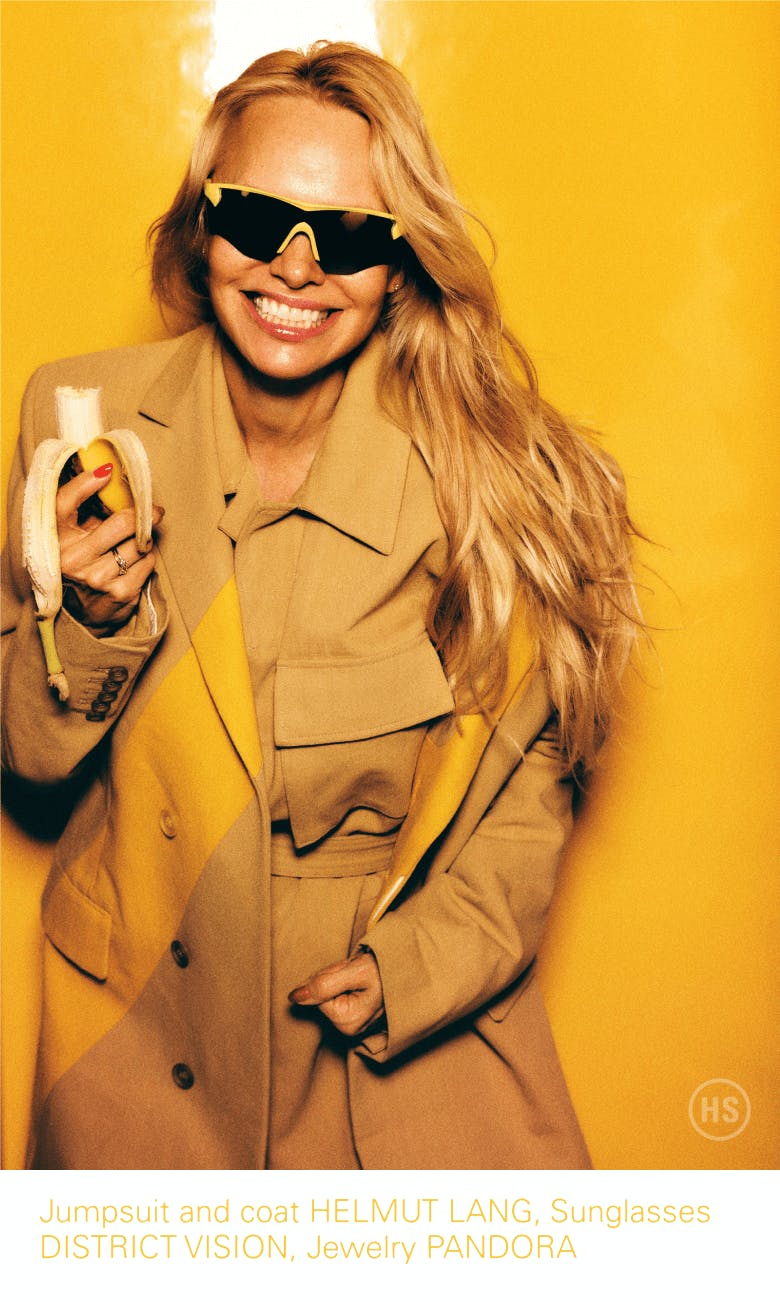
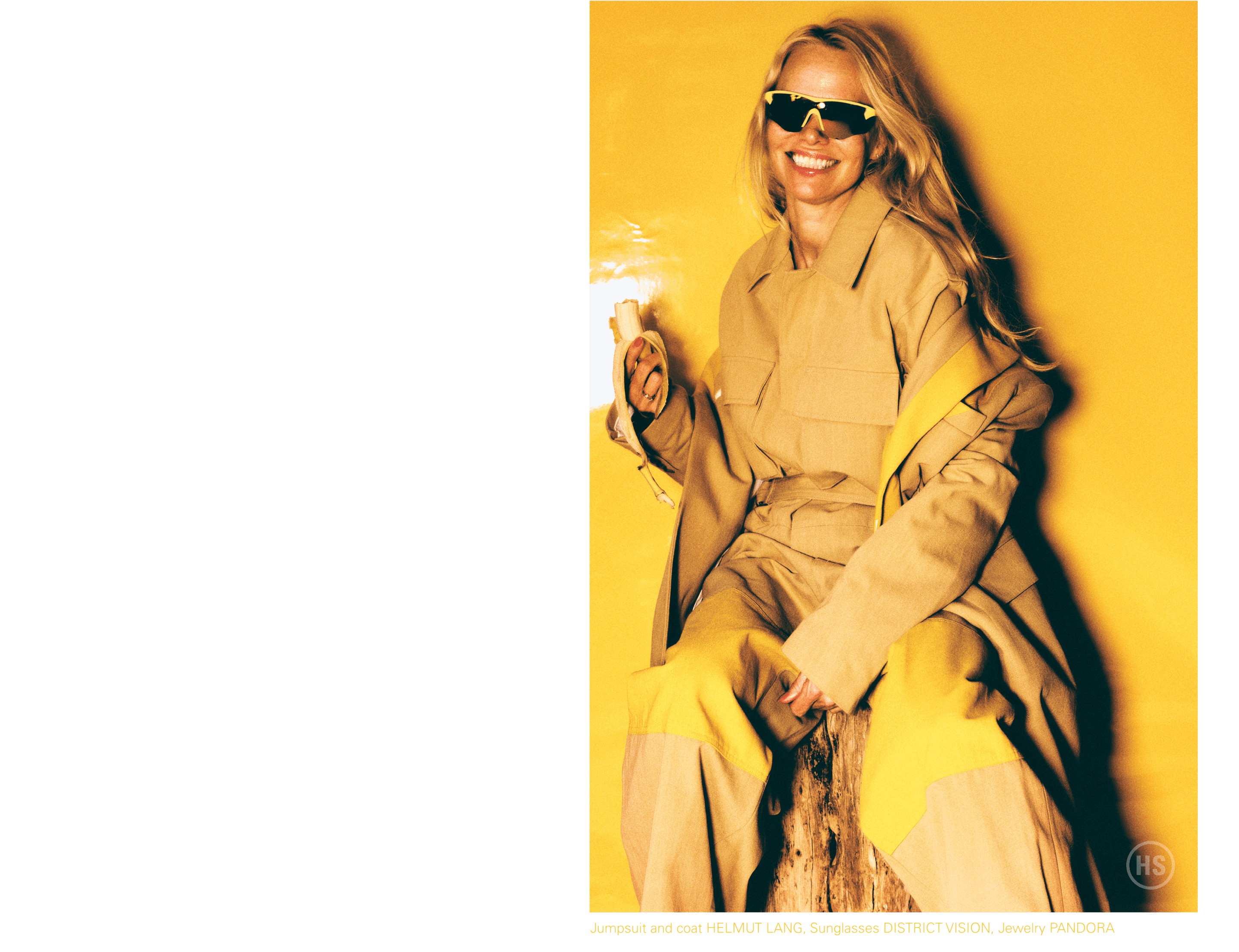
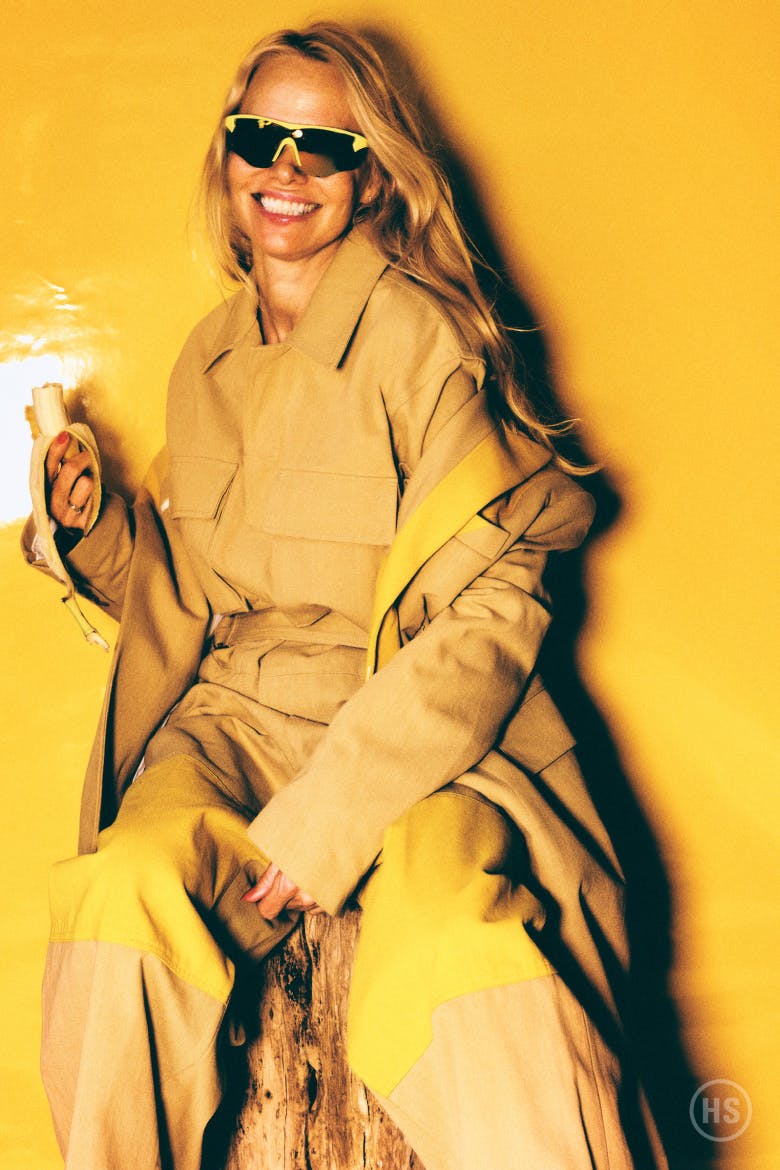
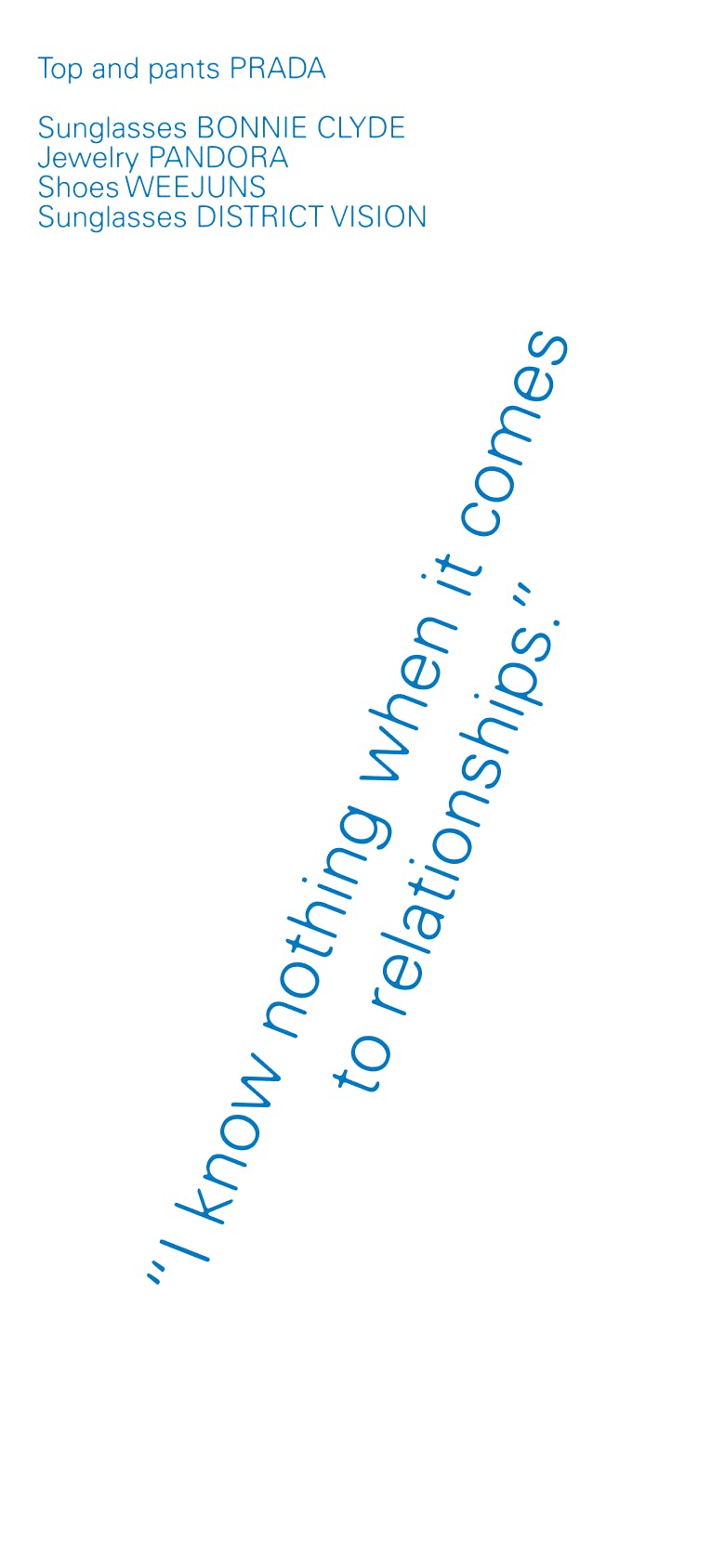
More important, she says, is love. “Love is the most important thing in the world. So if you’re in love, you’re brave, and it’s an important thing to cherish,” she muses, unprompted, gesturing with both hands. “Being lonely is good. If you can be alone, then you can be with another person, probably.” On the latter assertion, she checks herself: “I know nothing when it comes to relationships.”
I respectfully disagree. After five marriages and a memoir organized around memories of her past lovers, she has to know something about them. “You fall in love with people there to expose a part of yourself that you need to get through. Relationships are mirrors,” she says, which I guess is her way of agreeing with me — she does know a thing or two about relationships, after all. The tough part, she continues, is knowing when or how to leave a romantic dynamic. She adds, emphatically: “You can love somebody, but you can’t change them. And sometimes the most loving thing to do is get out of the way!”
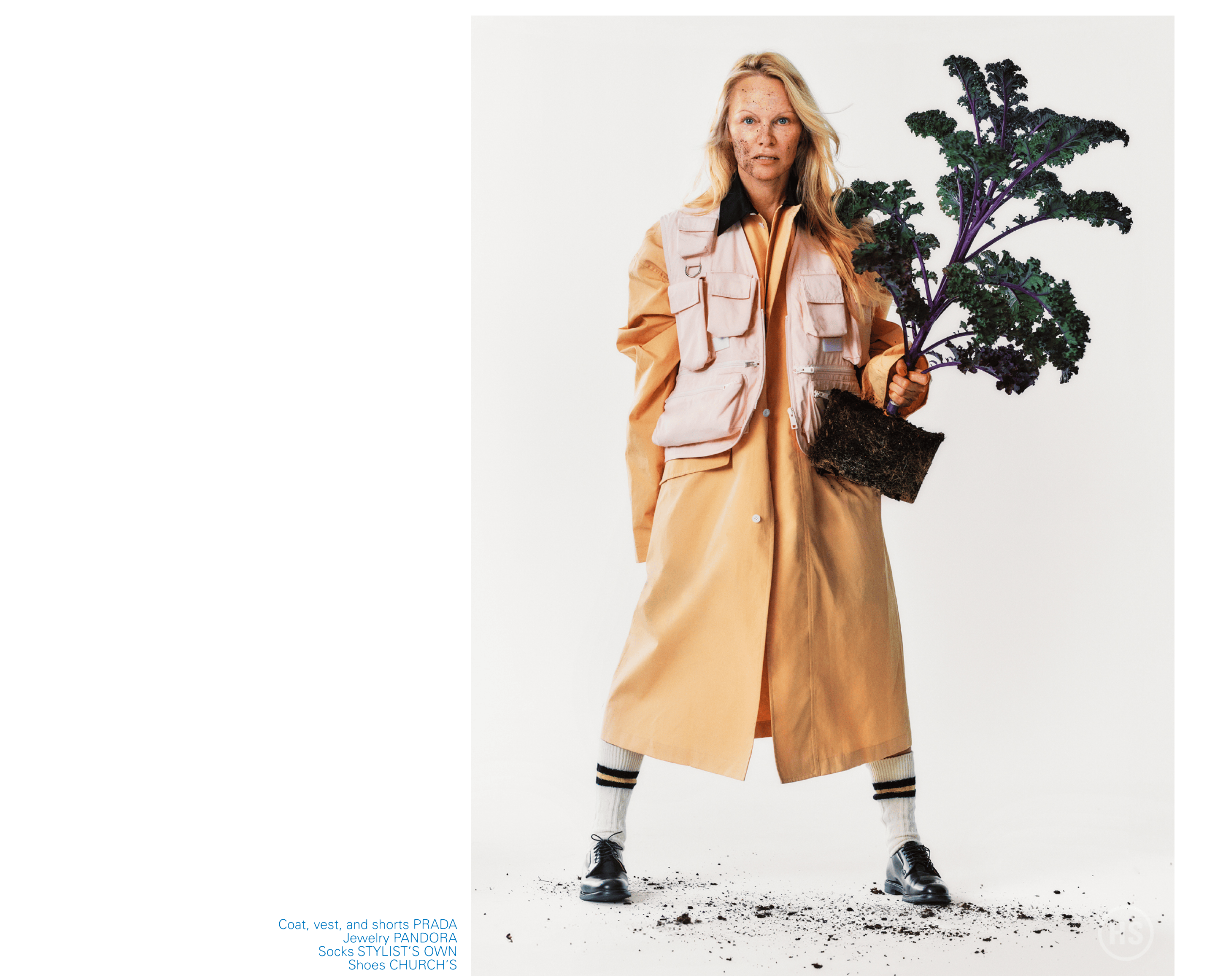
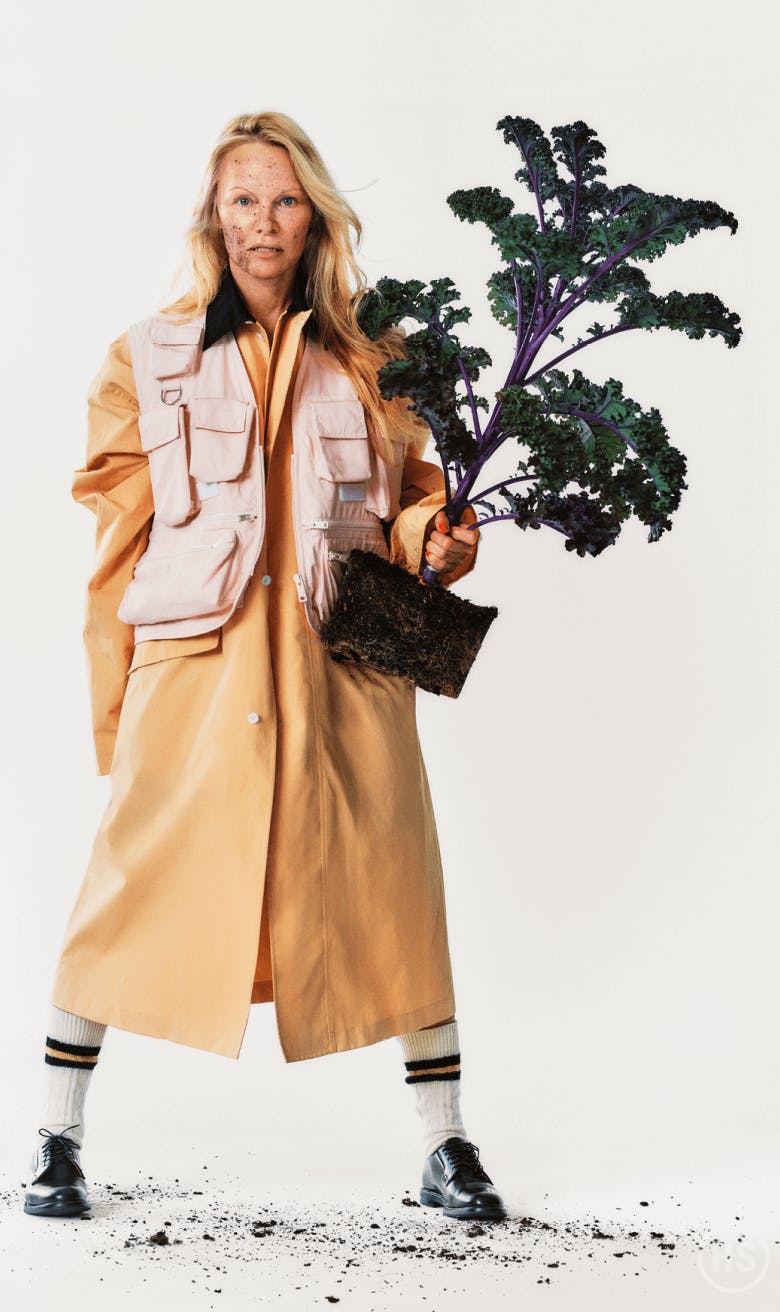
“And I’m still sad, and it’s authentic.”
Is this coded? I ask. Is she telling me what it’s like to love again after a toxic relationship? But here Anderson defaults to wisdom. “It’s important to remember that breakup tears aren’t just about that person. They’re about your whole life… Look, it’s not supposed to be easy. Relationships are one of the hardest things you can throw yourself into.” She stops and checks herself again, which I now recognize as one of her talents. The intensity I felt a few moments ago is gone as she says, “I’ve never seen TikTok, but I’m like everybody else! I think that’s what was fun about the relatability factor of being at fashion week. I’m this small-town girl in all these fancy clothes and appearing at fancy places. And I’m still sad, and it’s authentic.”
Authentic, if also quite self-aware. Just as Anderson is relatable and not at all. Her relationships are and are not like everyone else’s; she is and is not just a woman in her mid fifties choosing not to wear makeup. Anderson is a conventionally beautiful woman with a massive platform and access. However she chooses to wield them, she will always make a splash.
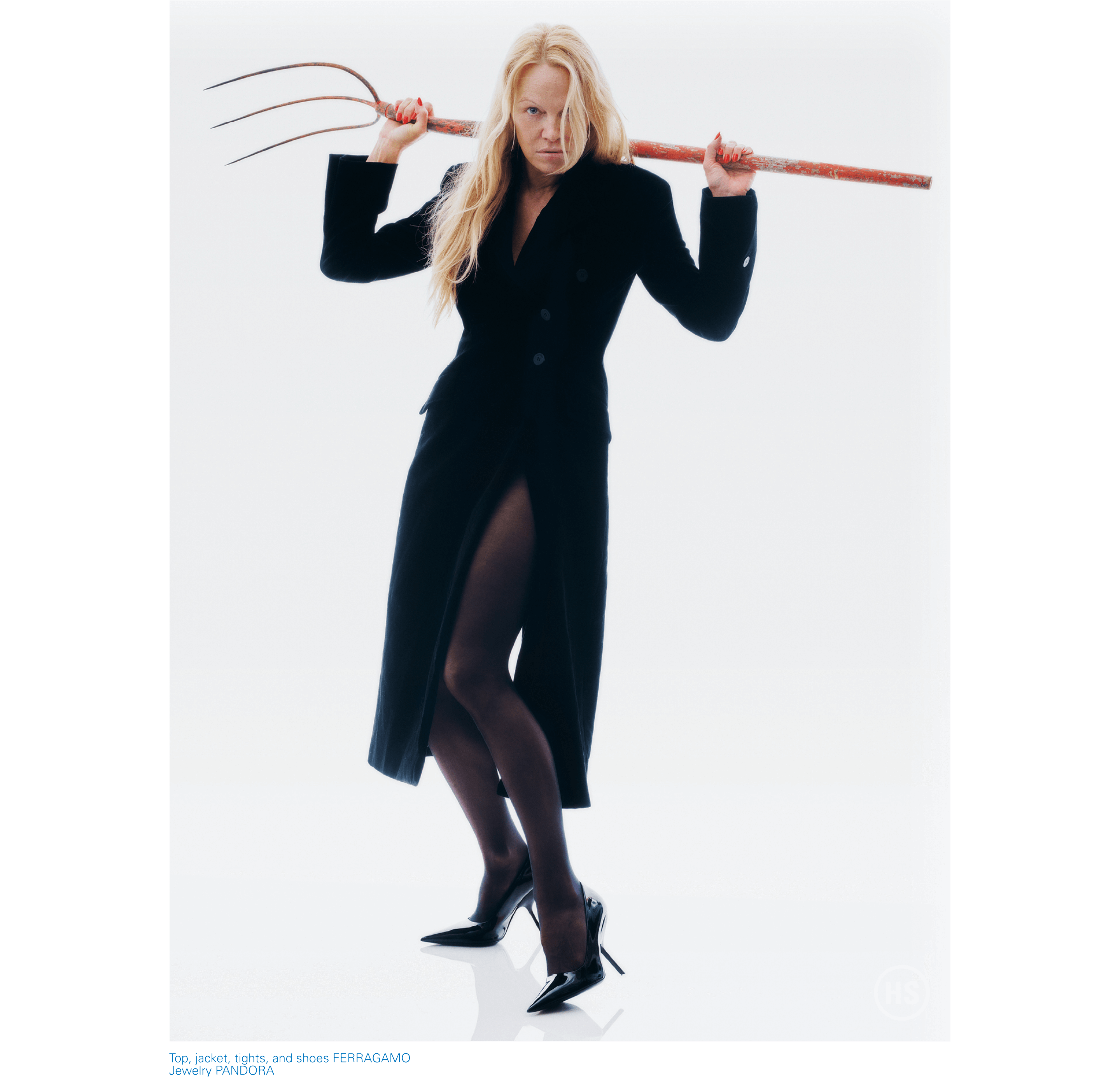
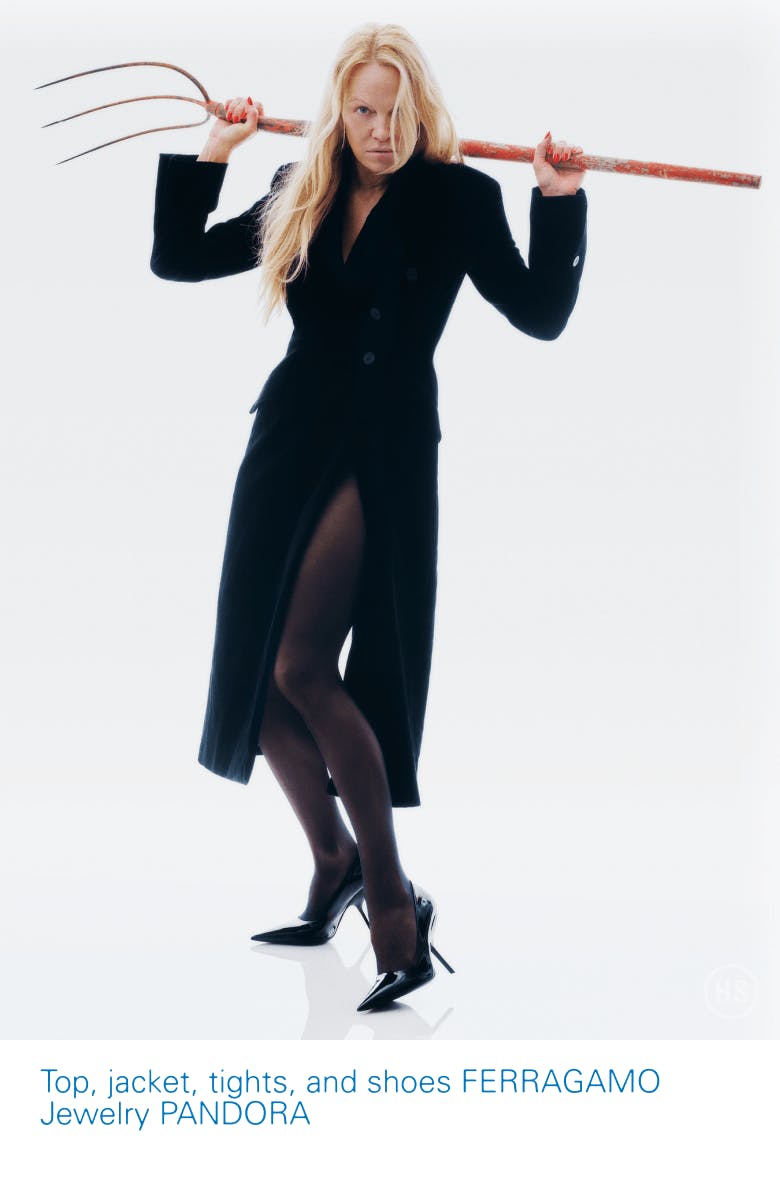
Credits
Photographed by:: Robert Lindholm
Styled by:: Jan-Michael Quammie
Production:: t • creative
Hair:: Ledora Francis
Skin:: Dmtry Kukushkin
Set Design:: Rosie Turnbull
Production Coordinators:: Mehow Podstawski and Zane Holley
Styling Assistants:: Talia Restrepo and Stephan La Cava1