Warp-speed trends and digital-first aesthetics may define the era we are currently carving out, but a counterpoint is taking place in the fashion ateliers of Paris, a return to material honesty with a focus on forensic craft, archival and ethnographic research, and technical experiments.
Whether deconstructing vintage French workwear, reviving 1920s weaving techniques, or redefining the very fabric of sneakers, these are labels celebrating the garment as a living object, still seasoned for fresh interpretation. From the performance grit of Village PM to the careful, sculptor-like precision of Casey/Casey, here are the 13 names to know in Paris’ fashion scene.
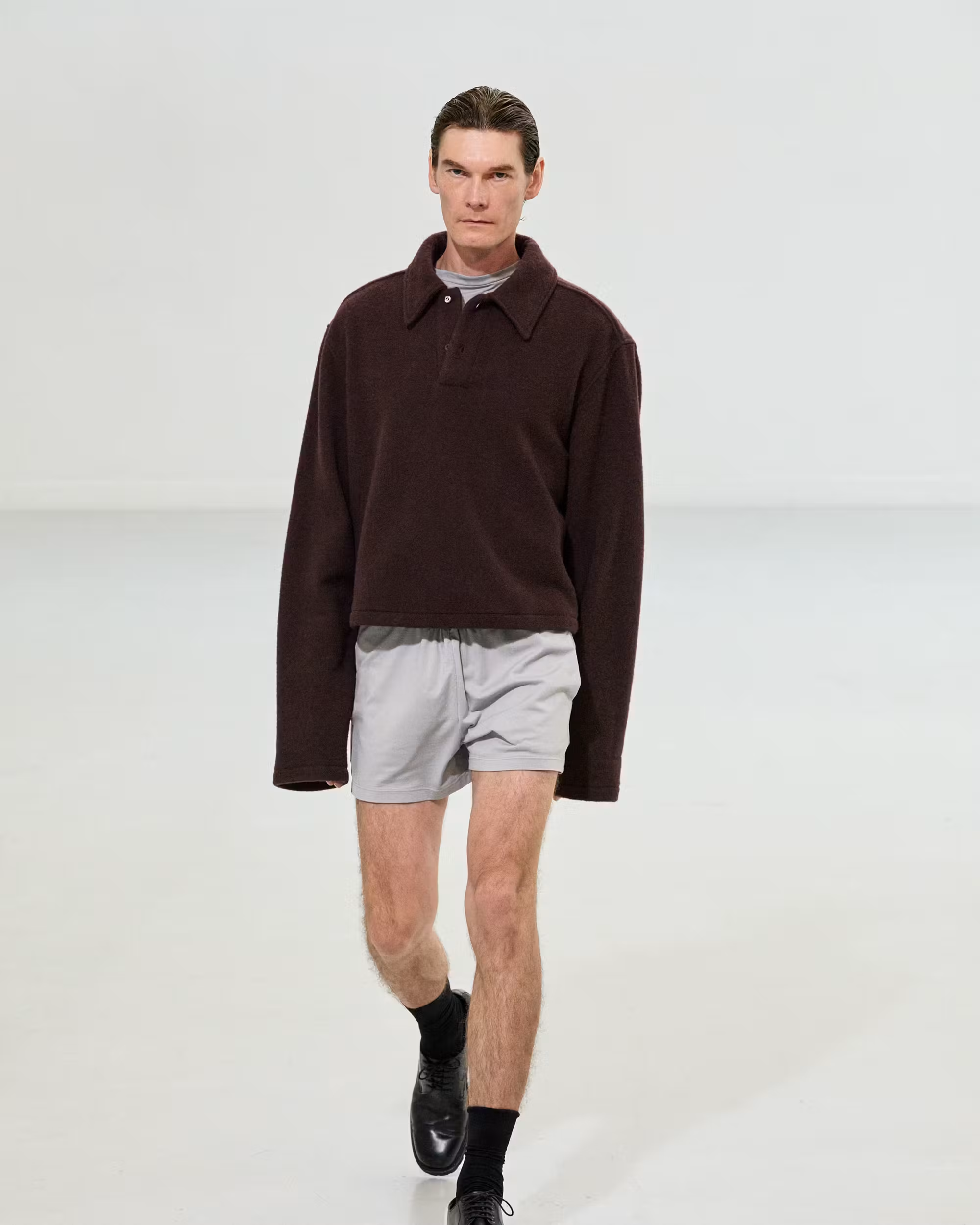
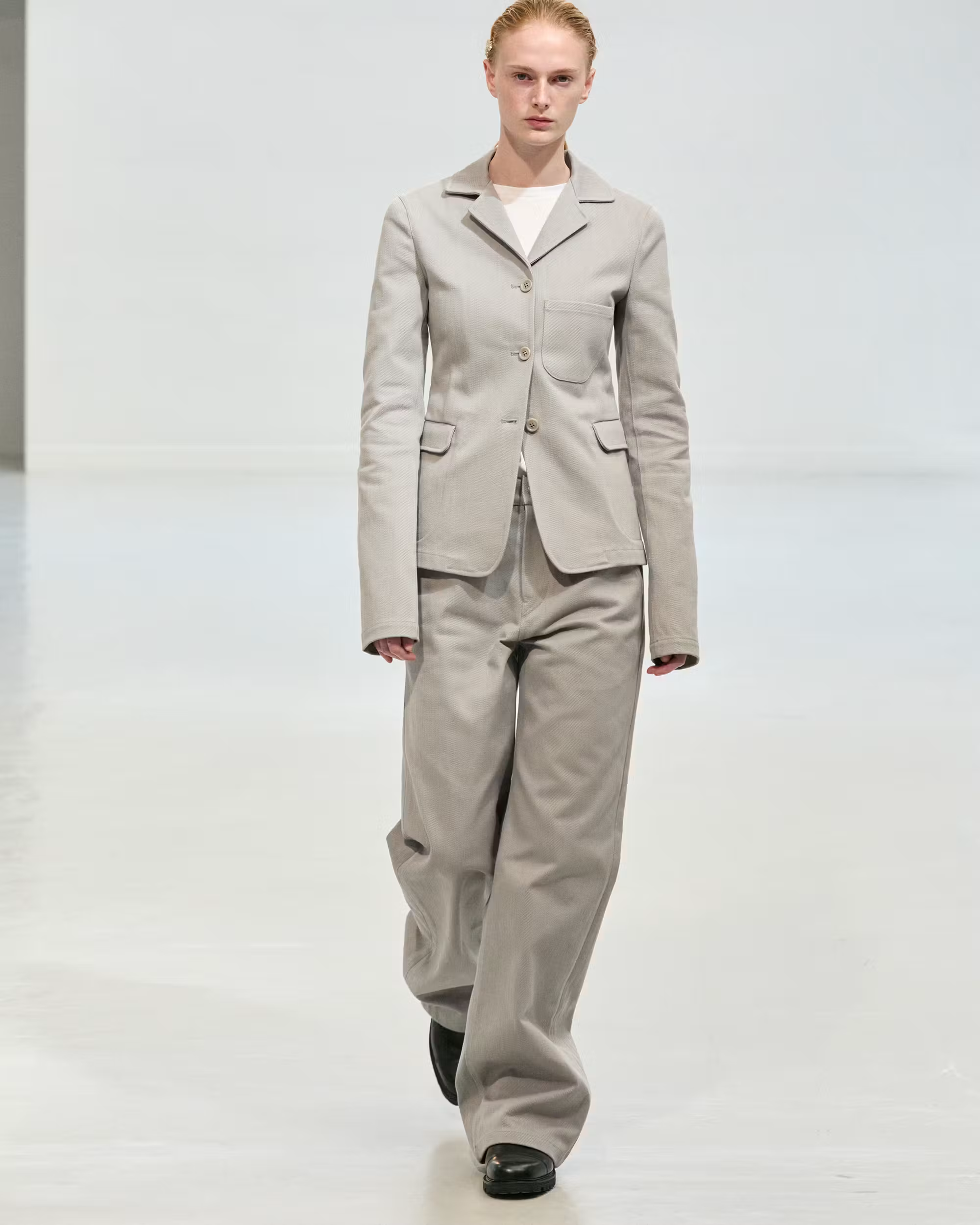
Phil Engelhardt / Courtesy of Rier
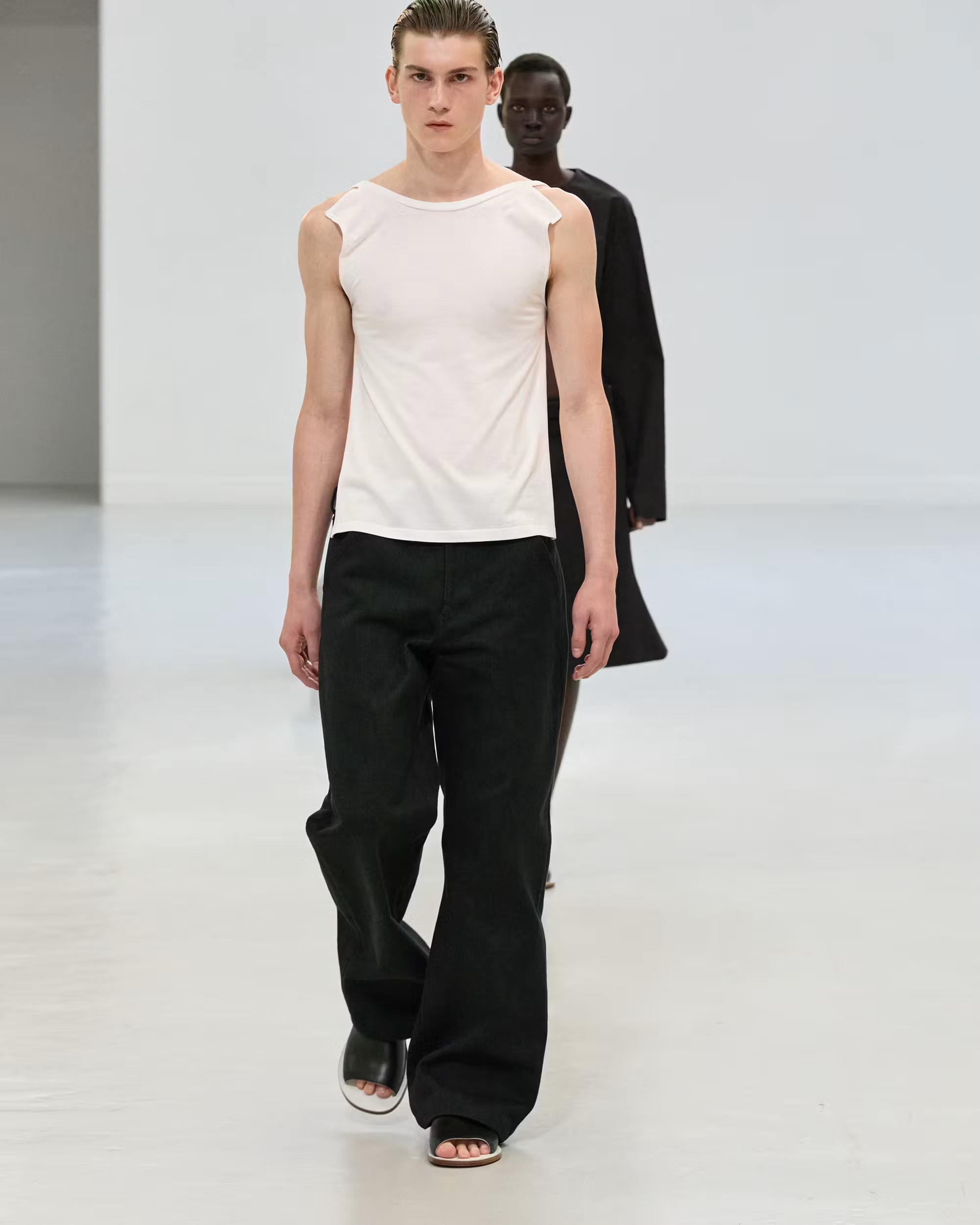
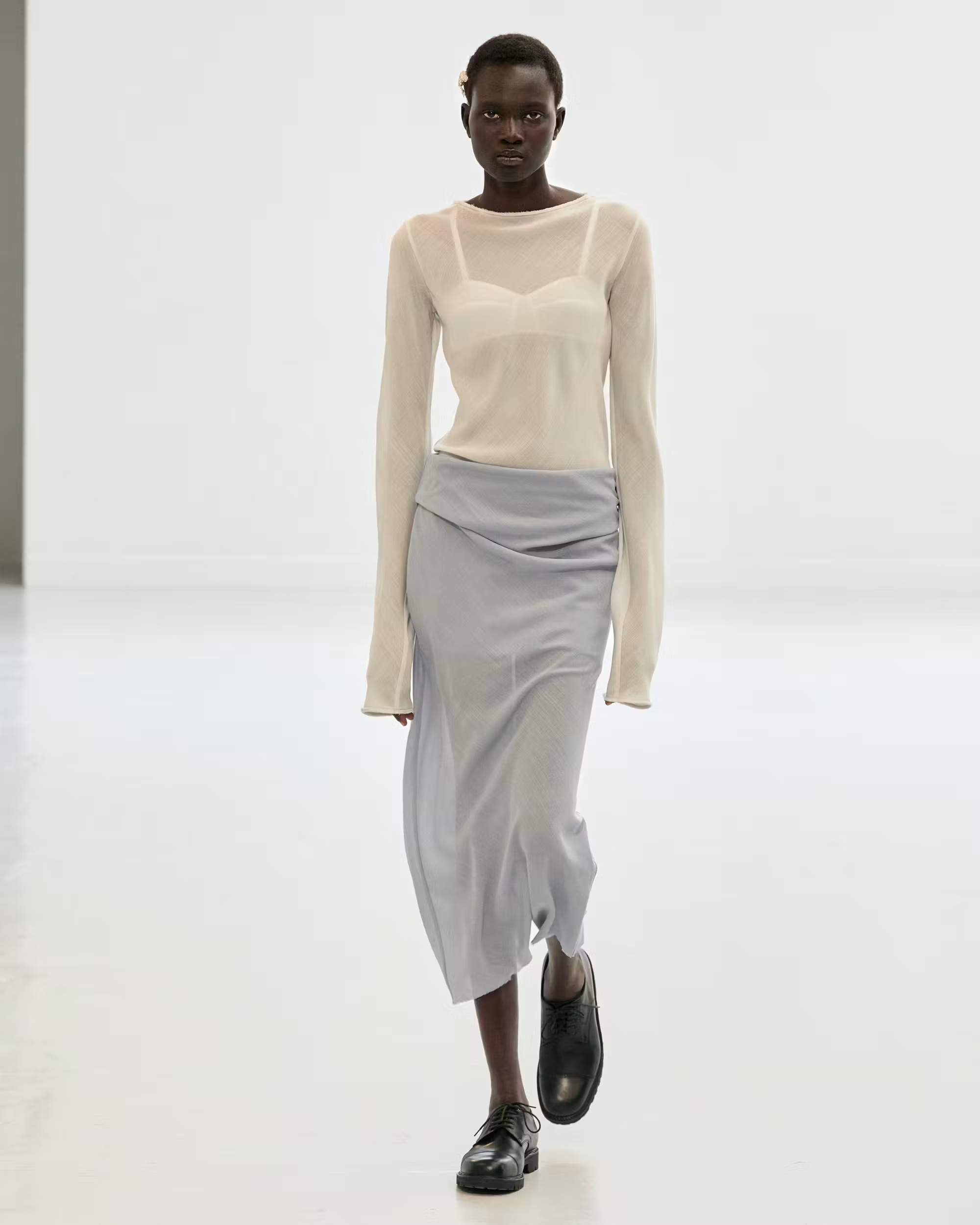
Rier
Founded in Paris in 2019, Andreas Steiner’s Rier reimages the rugged mountain gear worn in his youth in South Tyrol for conscious pragmatism. Steiner, an alum of Prada, Miu Miu, and Louis Vuitton, brings a high-fashion rigor to alpine staples, most notably in the Spring/Summer 2026 “little leather pants” that redefine the classic lederhosen.
Rier rejects micro-plastics, prioritizing biodegradable materials and local Austrian craftsmanship across wrinkle-free and weather-resistant fabrics, including a custom gabardine fabric that Steiner revived through 1920 archival weaving techniques. By juxtaposing folklore with city life, Steiner creates an “imaginary space” between Paris and the Dolomites, mixing heritage tailoring with sportswear.
From an LVMH Prize shortlist to a Salomon collaboration, Rier is a masterclass in what Steiner describes as “pragmatic versatility.” As the designer notes, “Many people who wear Rier tell us they receive compliments from strangers. There’s no visible logo, yet people understand, and they have started to recognize it.”
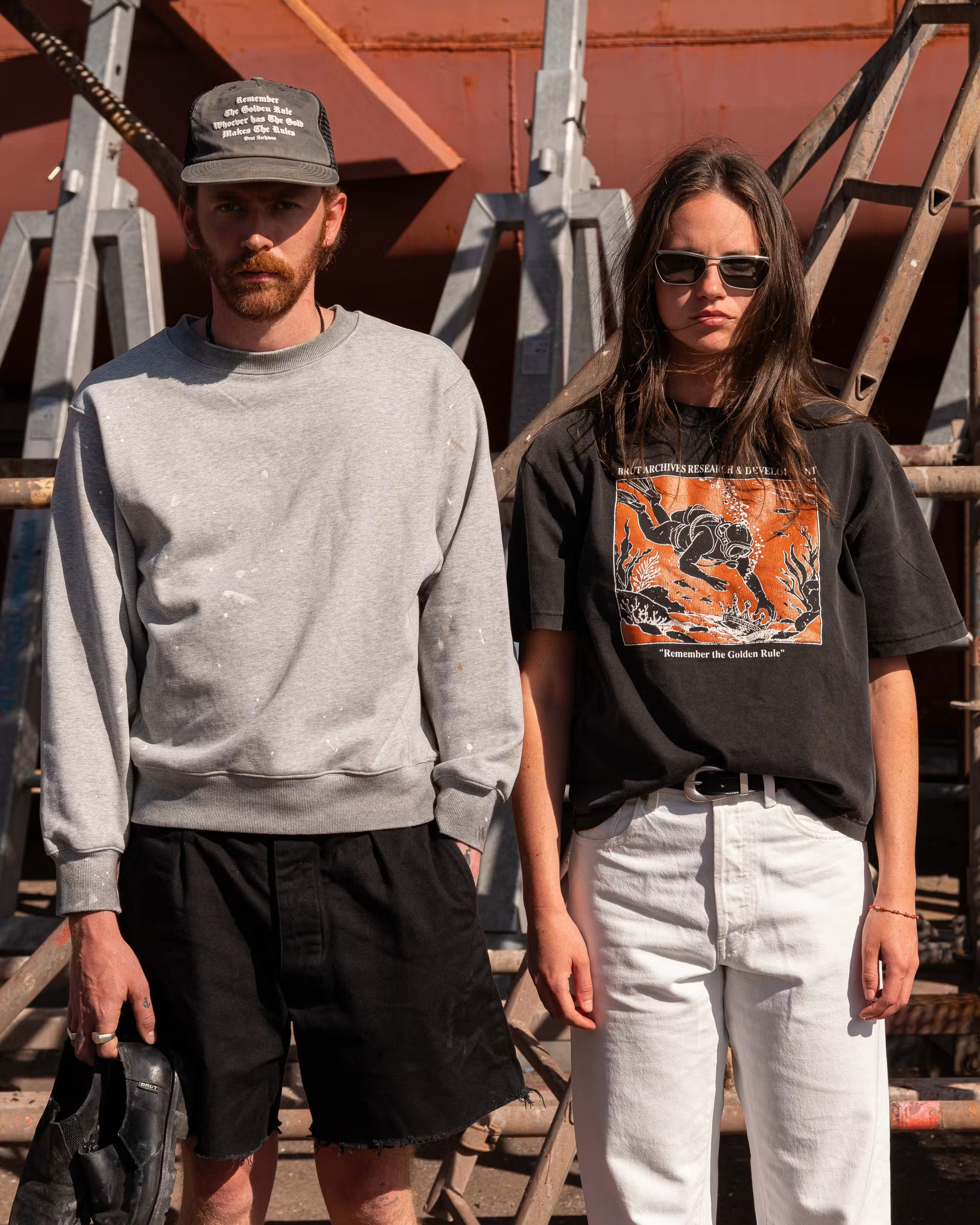
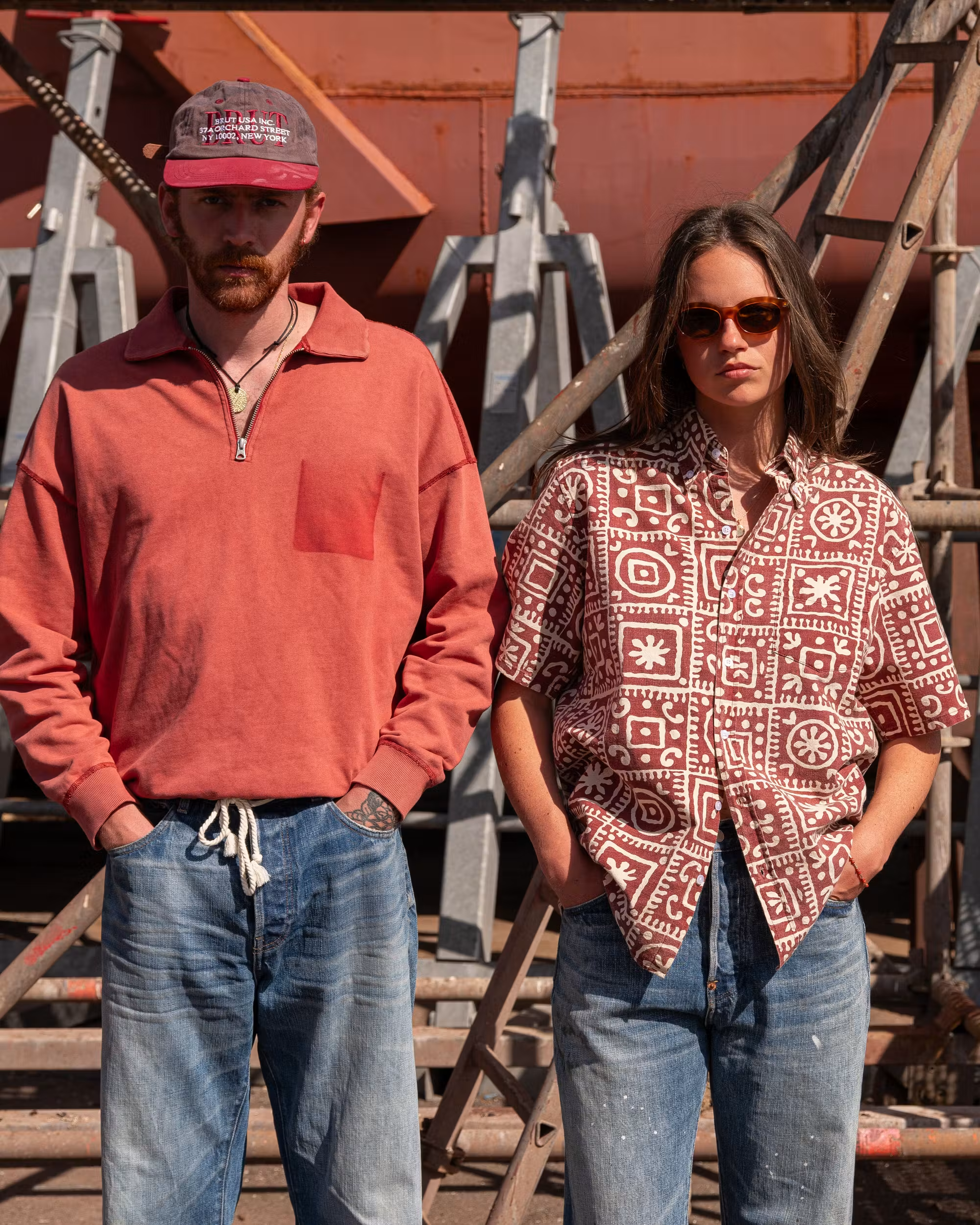
Courtesy of BRUT
BRUT
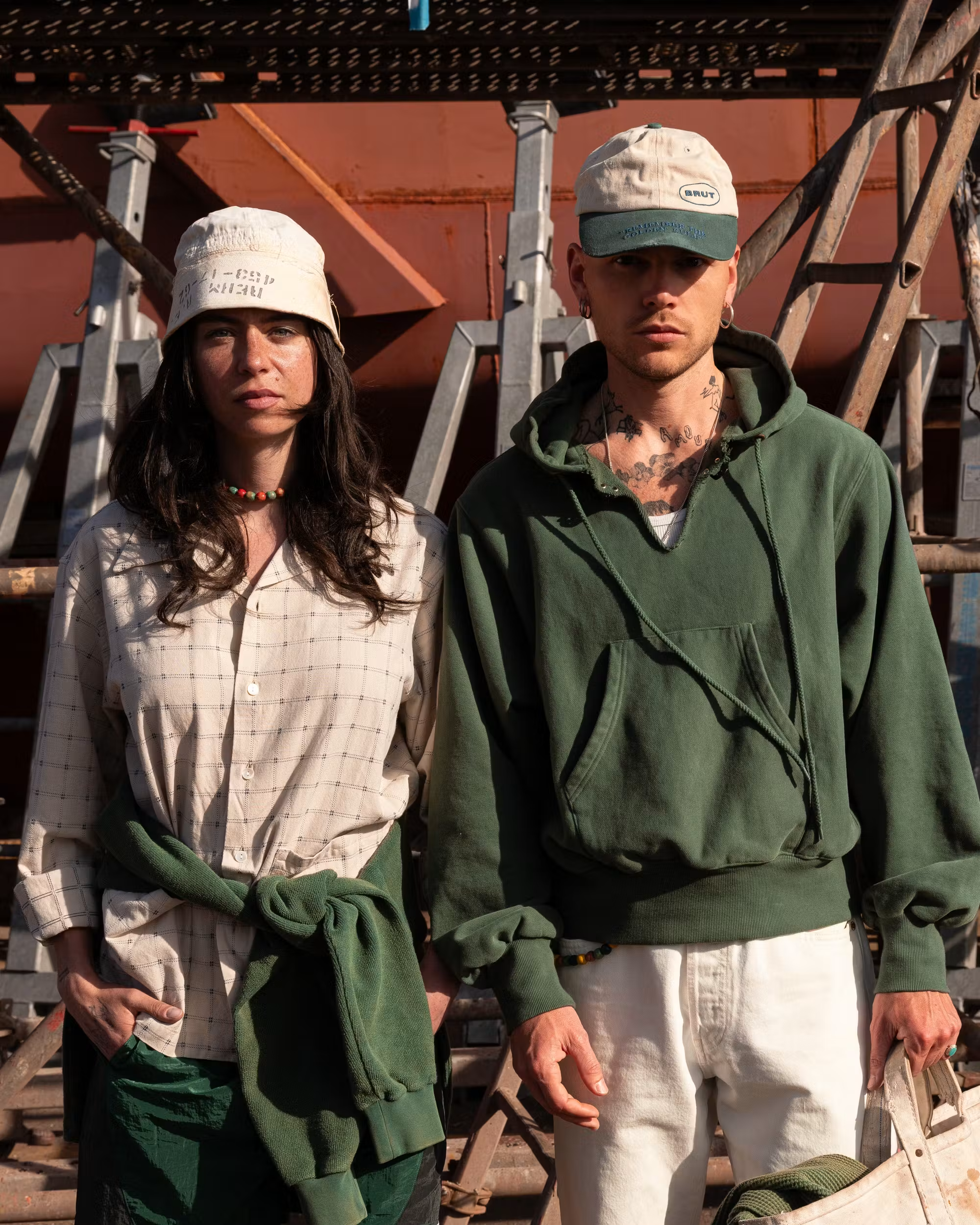
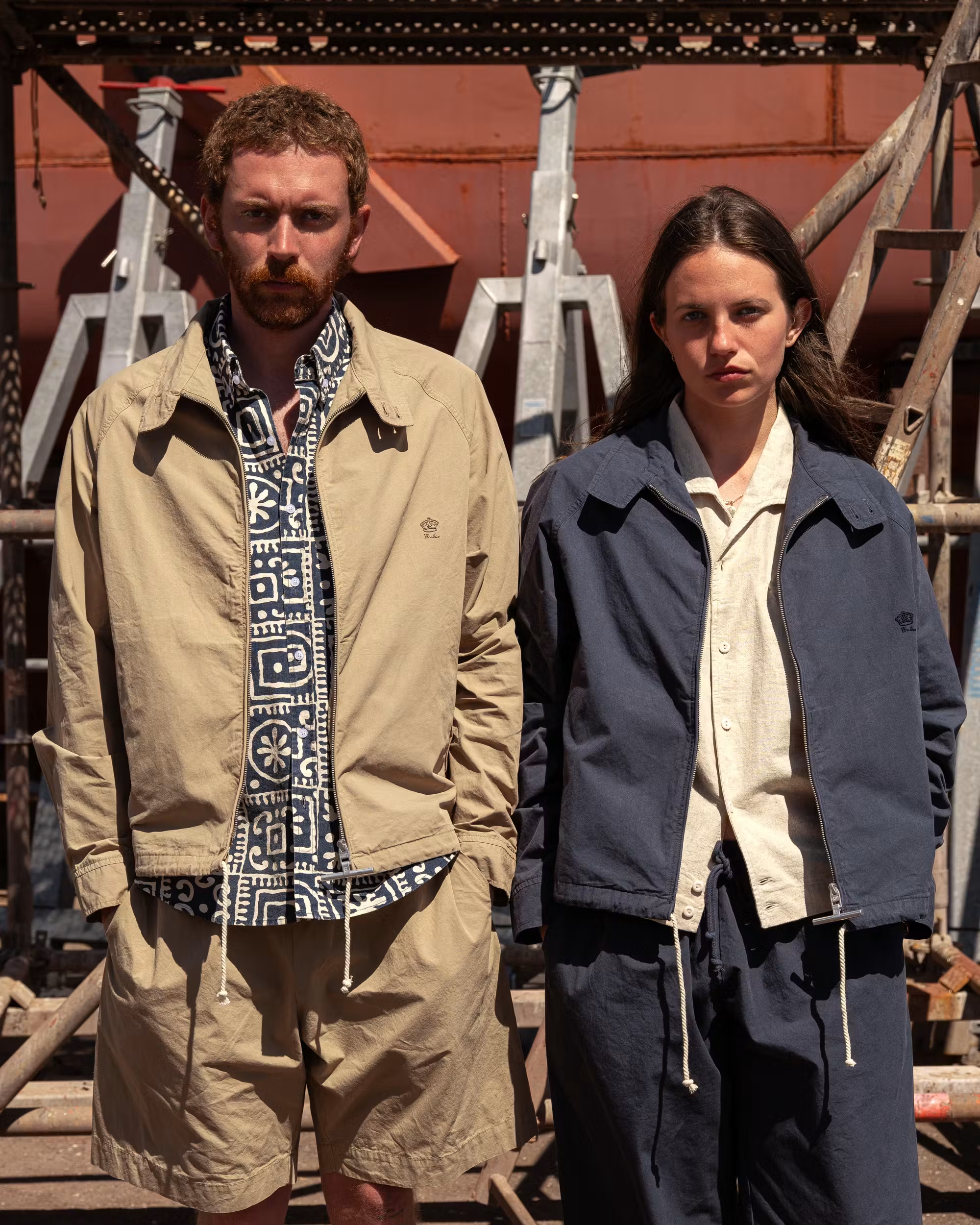
Before it was a brand, Brut was an industry secret, a personal archive where houses like Margiela and Gucci went to study vintage French and American workwear. In 2020, founder Paul Ben Chemhoun went from archivist to maker, launching a line rooted in the forensic deconstruction of the past.
At its heart is the REWORK® program, a Parisian atelier where Chemhoun and his team surgically reimagine deadstock for modern wardrobes. Now anchored by flagships in both the original Paris space as well as New York, Brut’s rugged, intellectual aesthetic has caught the eye of cultural heavyweights from Cillian Murphy to Charlotte de Witte.
Courtesy of Casey Casey
Casey/Casey
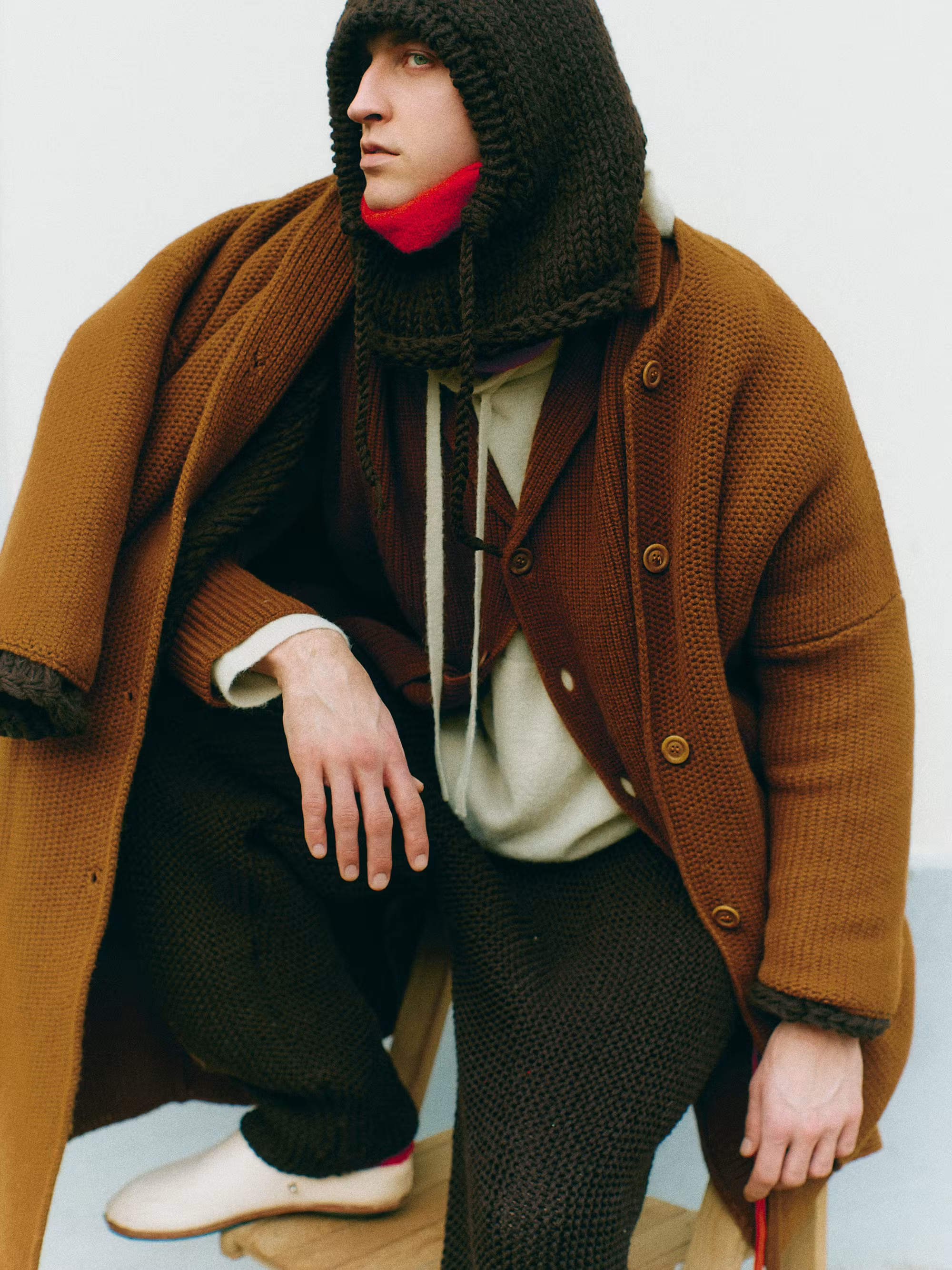
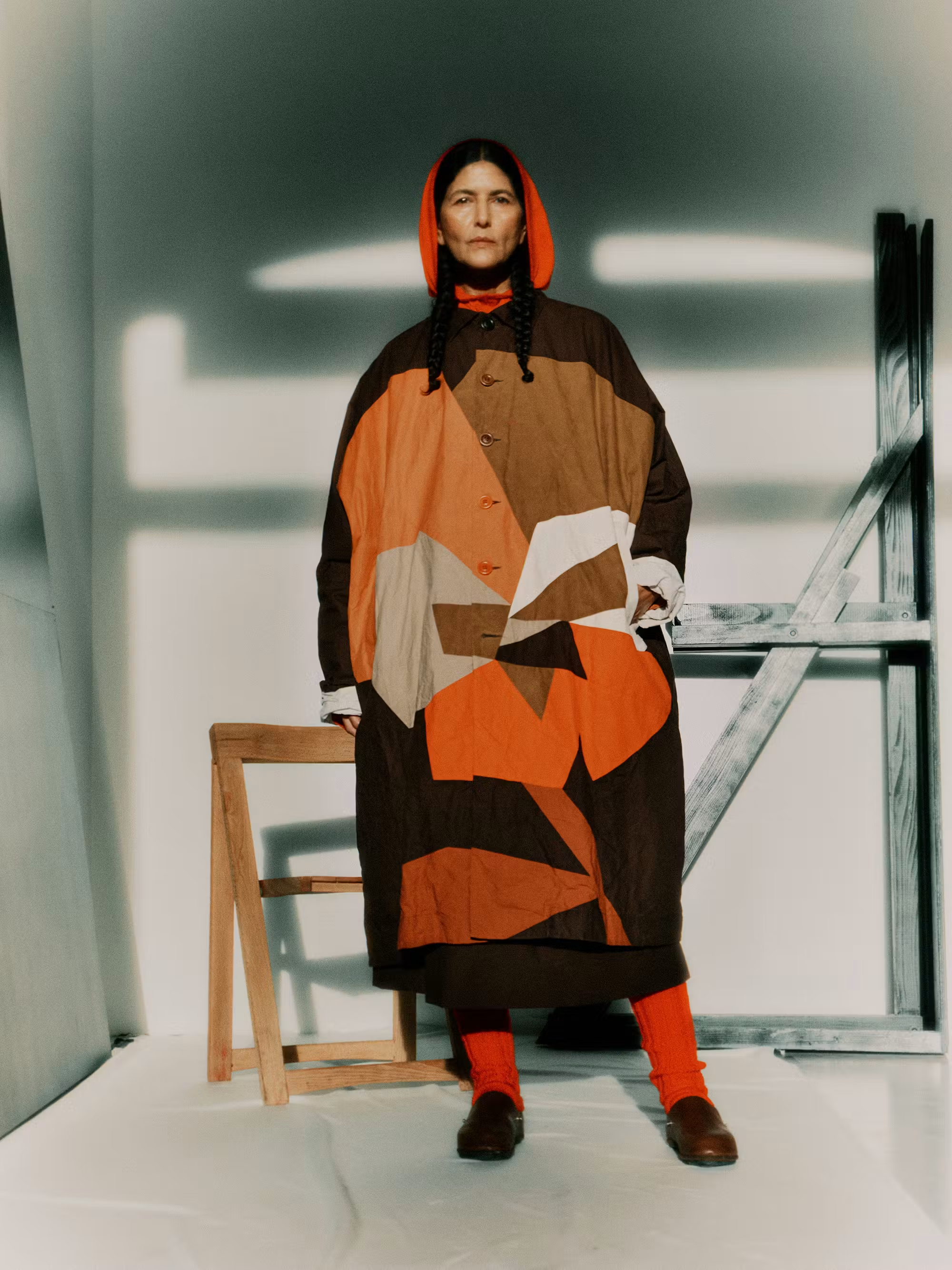
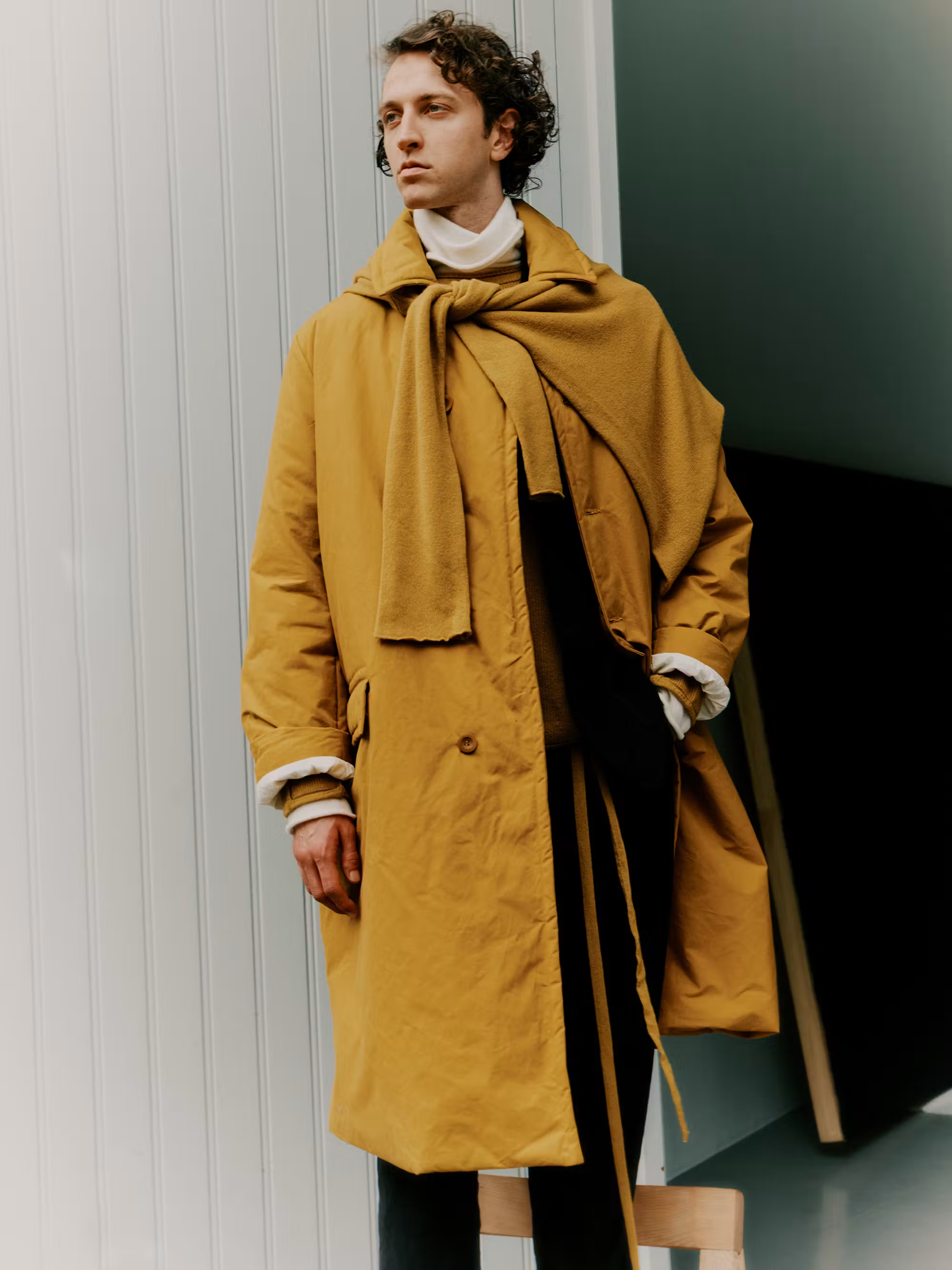
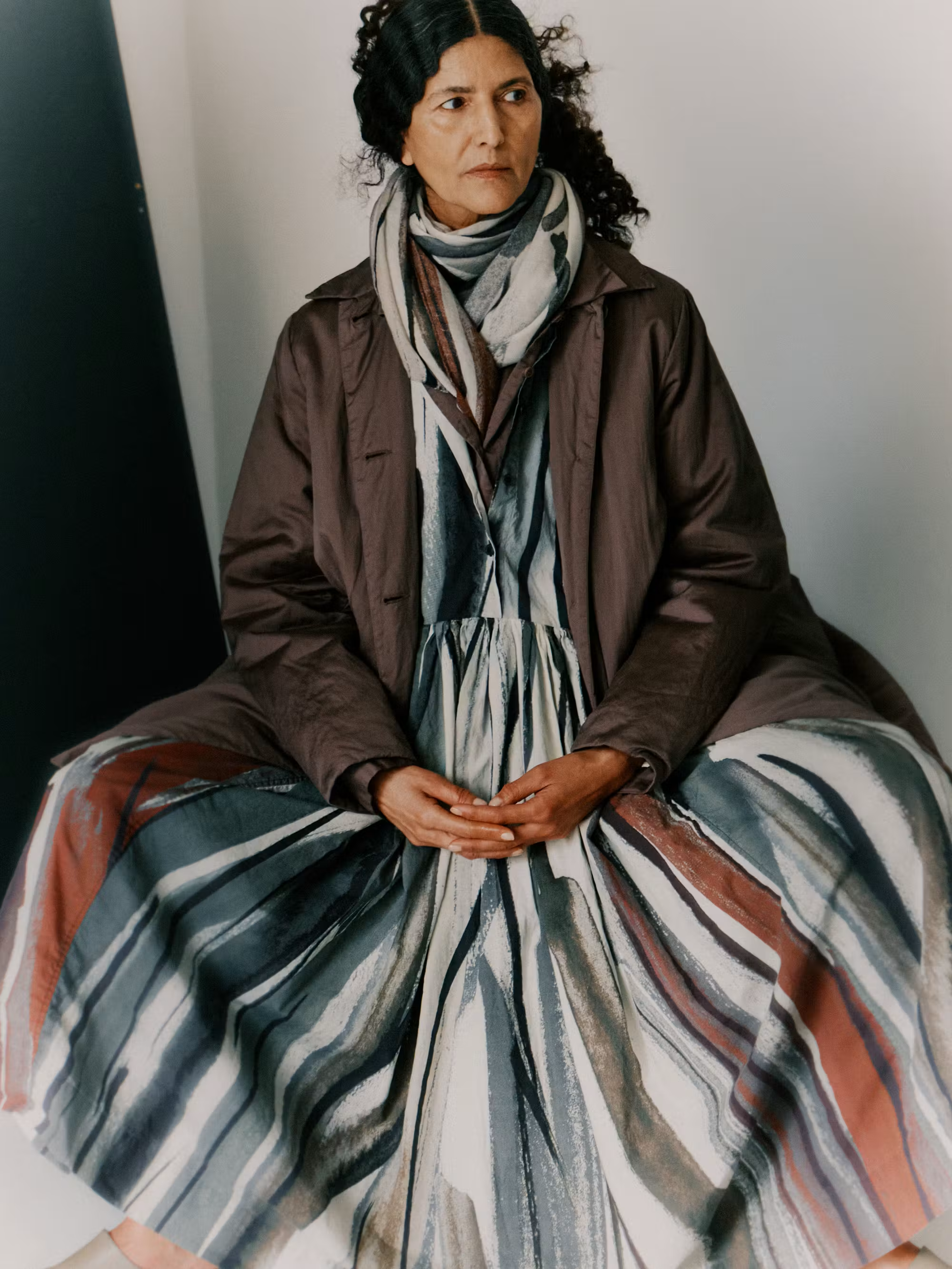
Treating textiles as a tactile, artistic medium, designer Gareth Casey approaches garment-making the way a sculptor might. From his boutique in the 7th arrondissement, his Anglo-French heritage informs a British utility with a romantic Parisian sensibility, where the focus remains on the character of the cloth rather than any logo noise.
Using exclusive, in-house developed fabrics like his Paper Cottons, pieces undergo rigorous dyeing and over-dyeing processes for a lived-in patina, finished with Casey’s subtle, signature red hand stitch.
“Modern style is less about trends and more about how clothes are lived in – quiet, functional, and personal,” Casey tells Highsnobiety. “[These are] garments that evolve with the wearer and not only perform for the moment.”
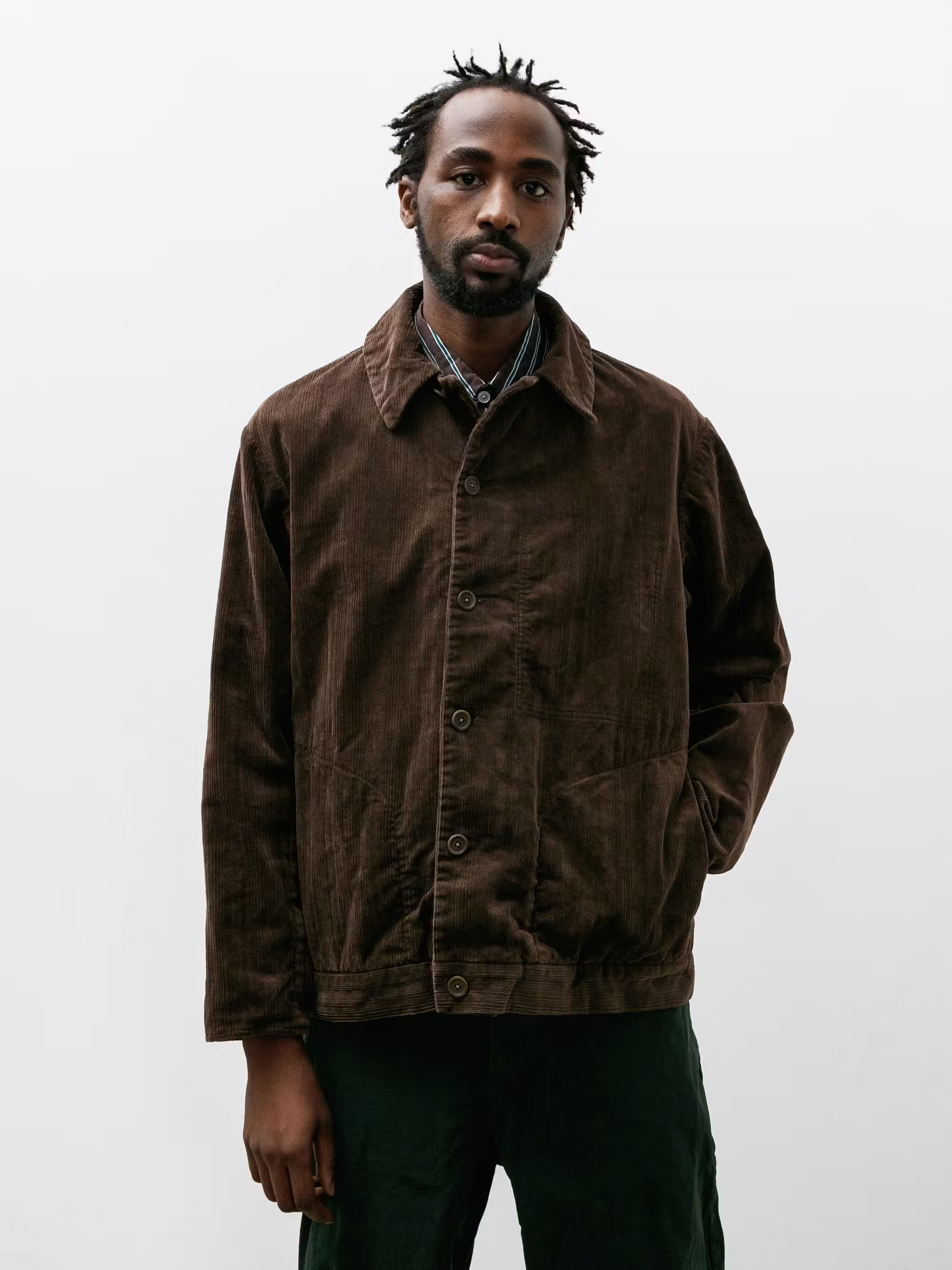
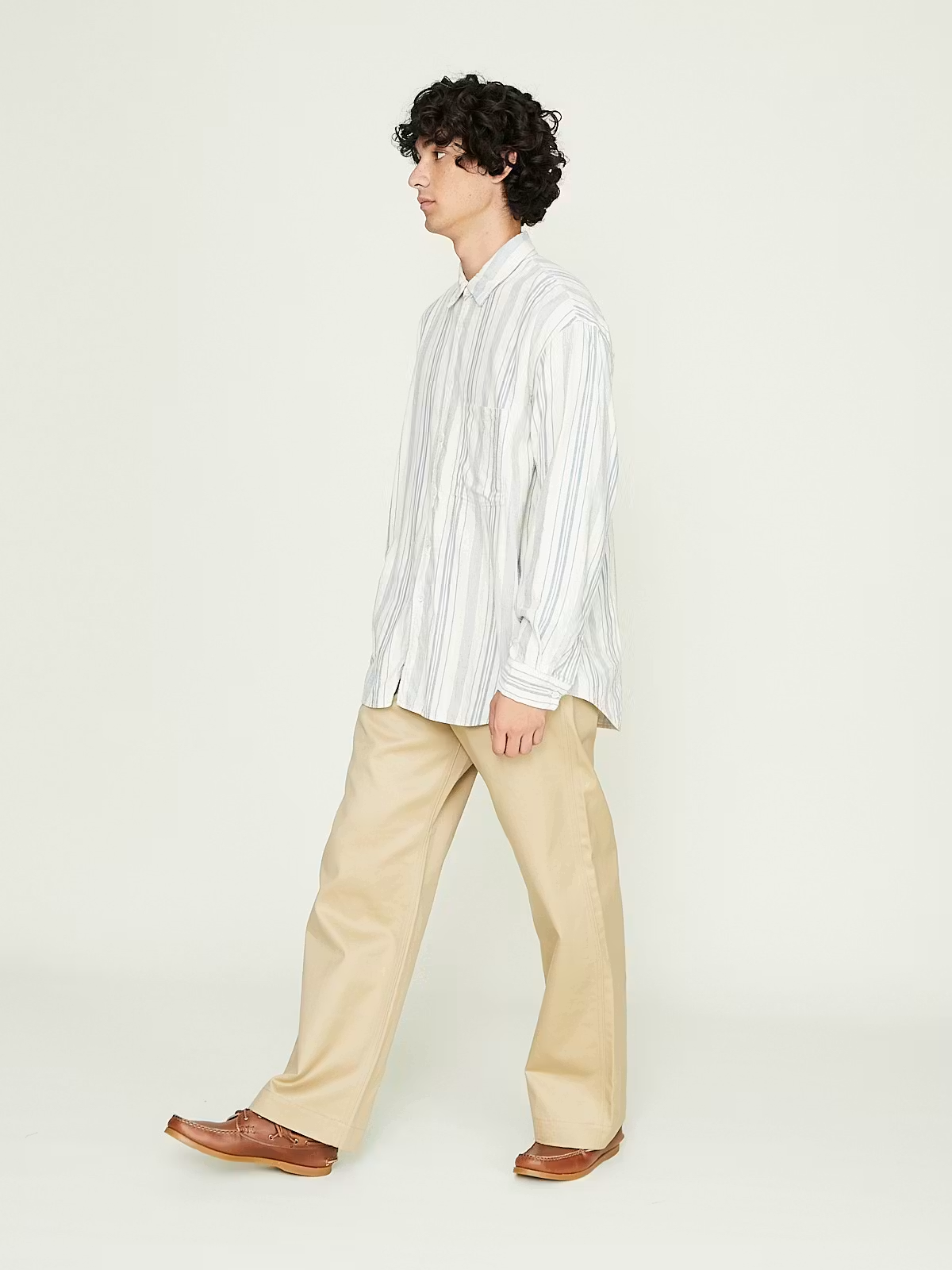
Courtesy of Maidens, Mouki Mou, Neighbour
Oliver Church
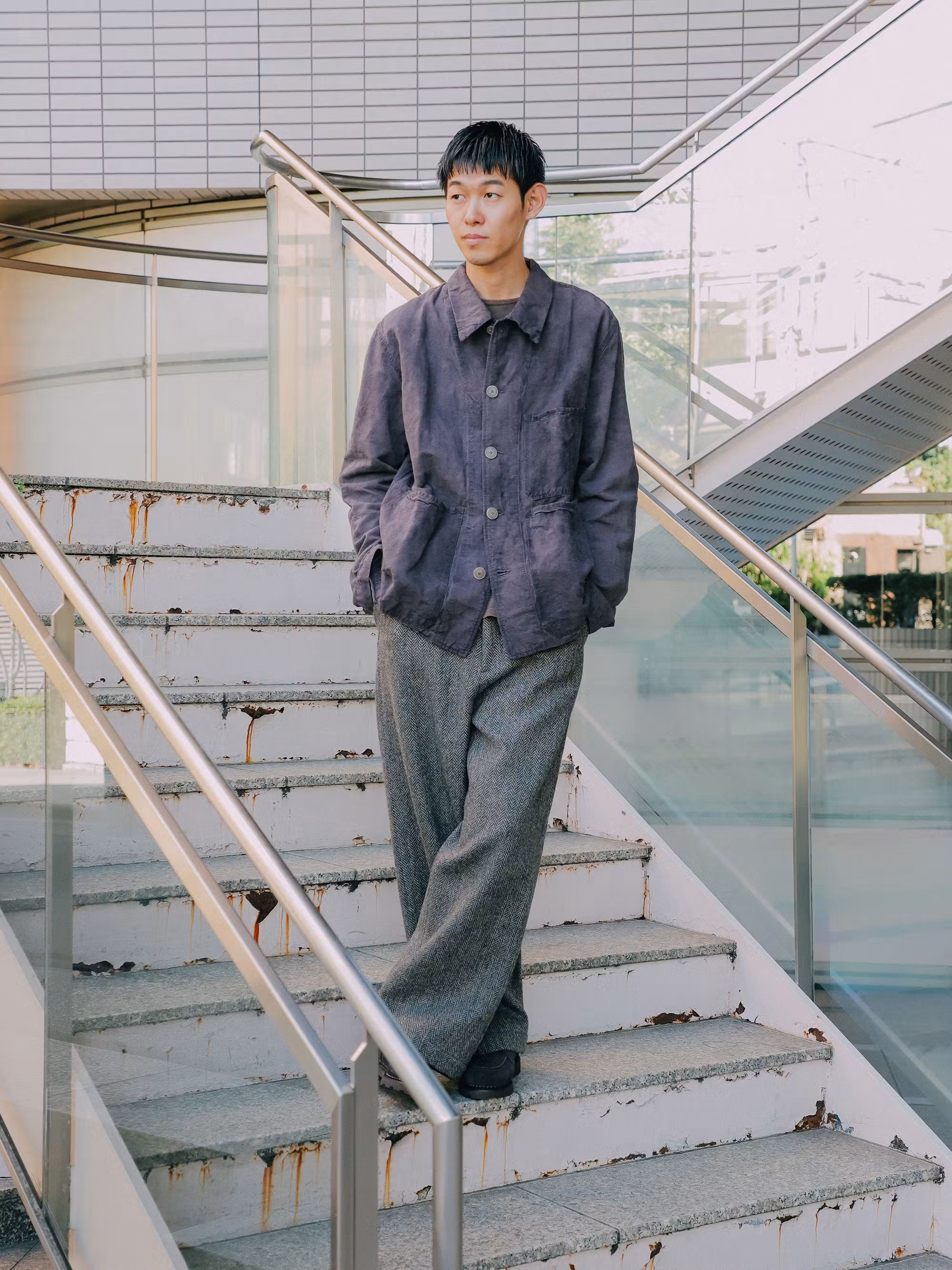
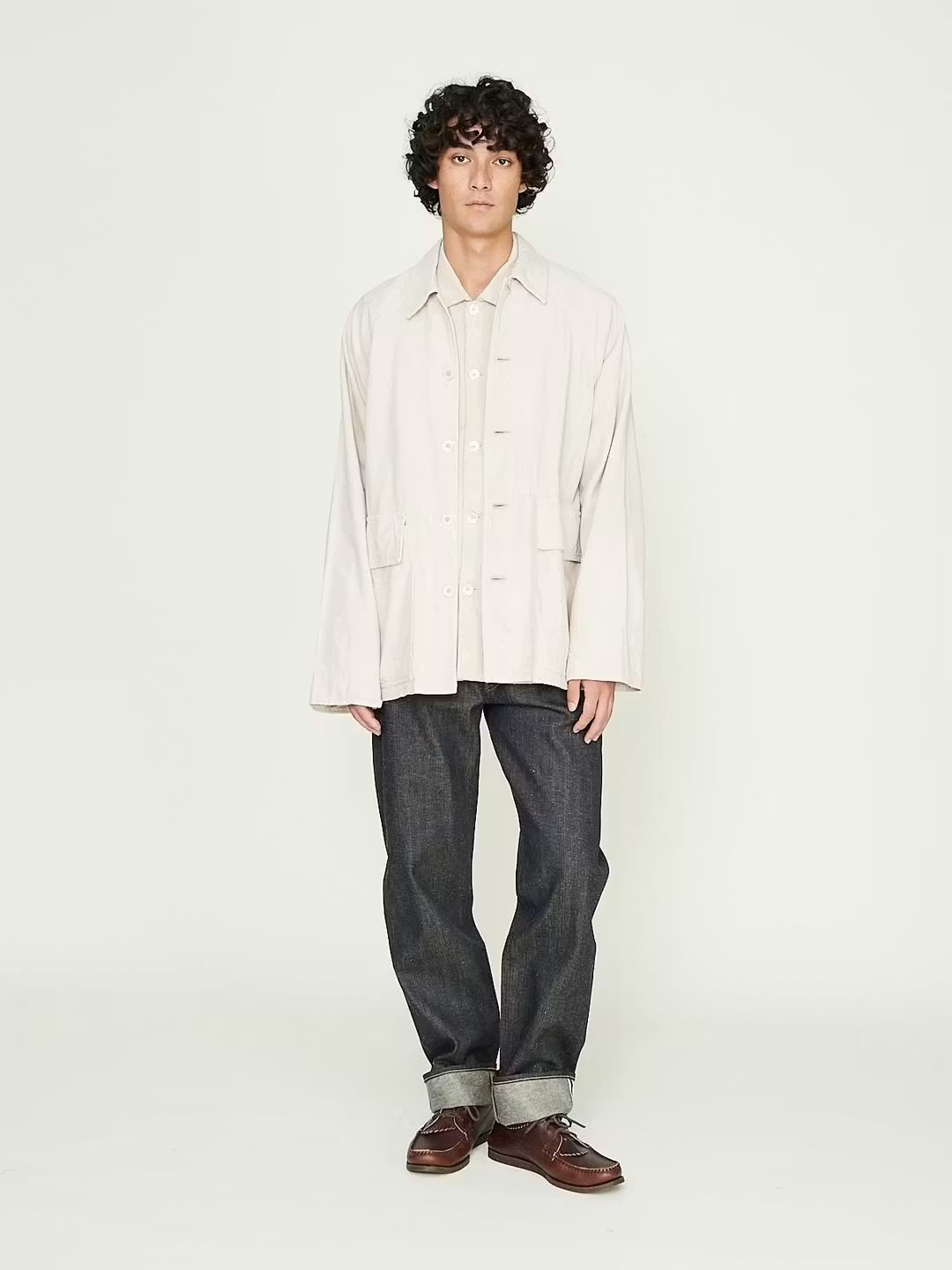
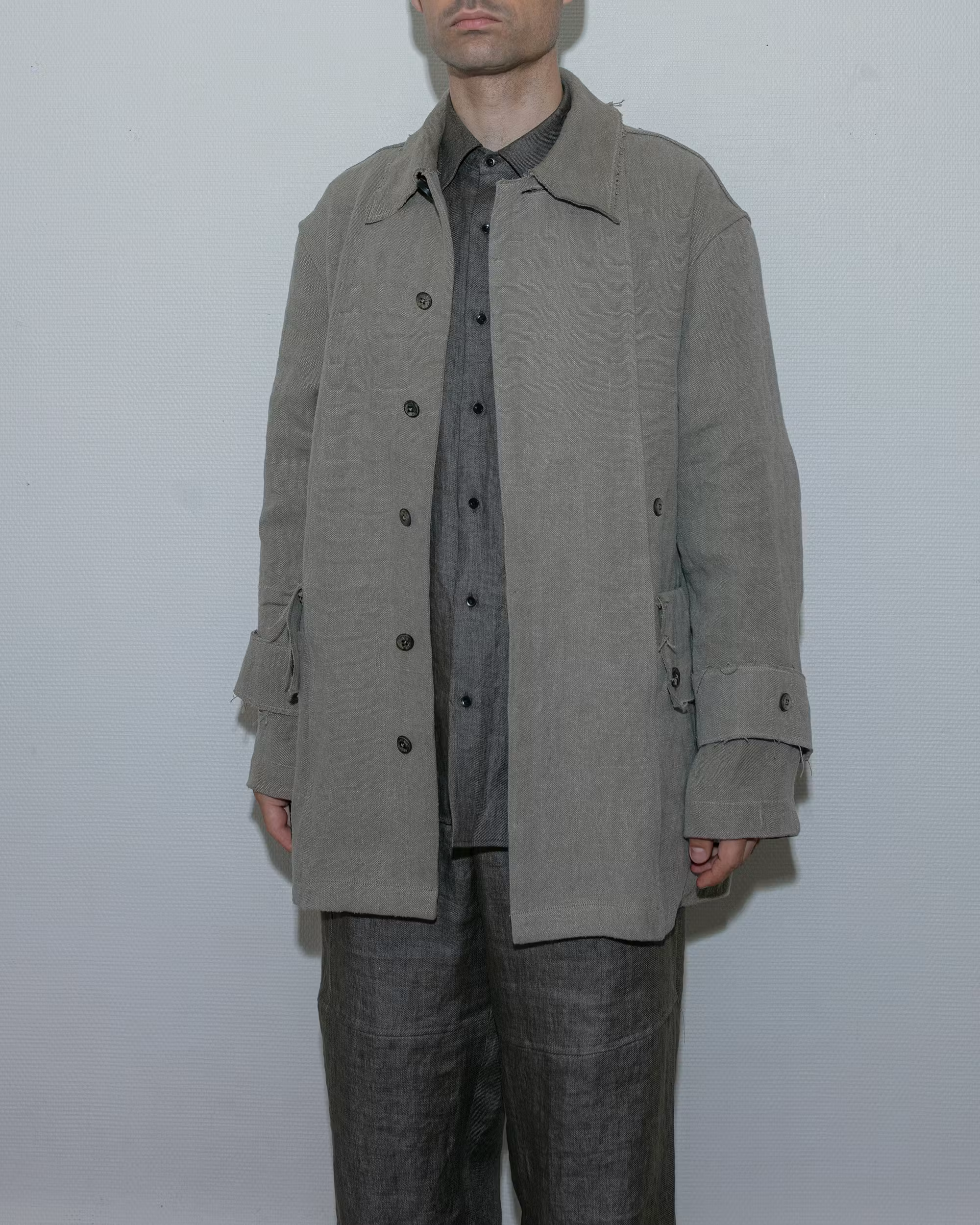
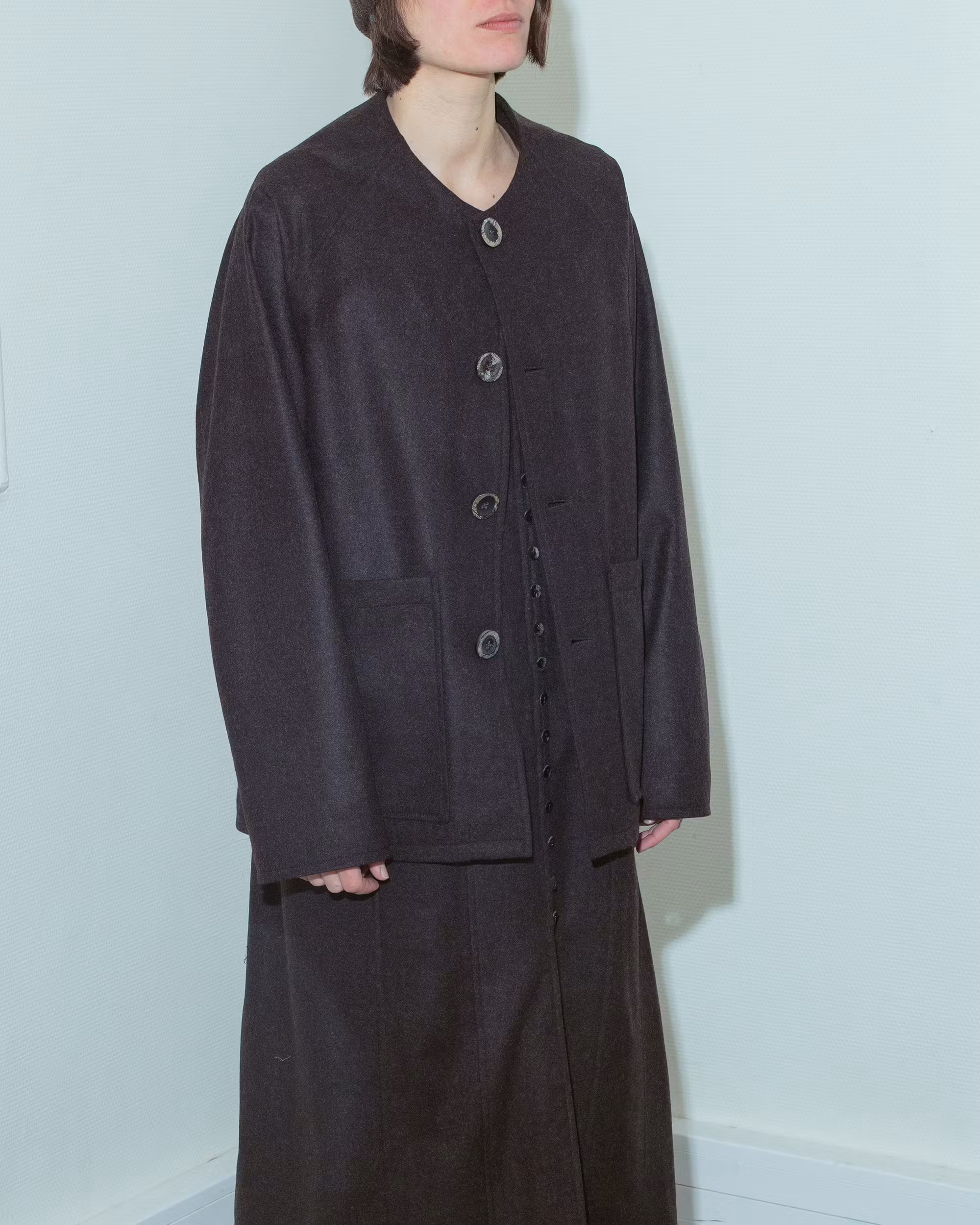
Chance is a core tenet for New Zealand-born designer Oliver Church’s creative hand. From his Paris atelier, Church is designer, cutter, and sewer, transforming hand-dyed antique linen and antique Kelsch into intimate, dreamy dialogues with the wearer. He says his work is often born from “misinterpreting something from afar and imagining details and form from a distance based on what you think you see in the silhouette of a shape or blur.” This reliance on memory over direct reference lends a poetic inconsistency to his hand-sewn buttonholes and hand-finishing.
Eschewing collections for an archive of patterns with which he produces one original wholesale order at a time every month, Church then saves a few private orders for personal clients upon request.
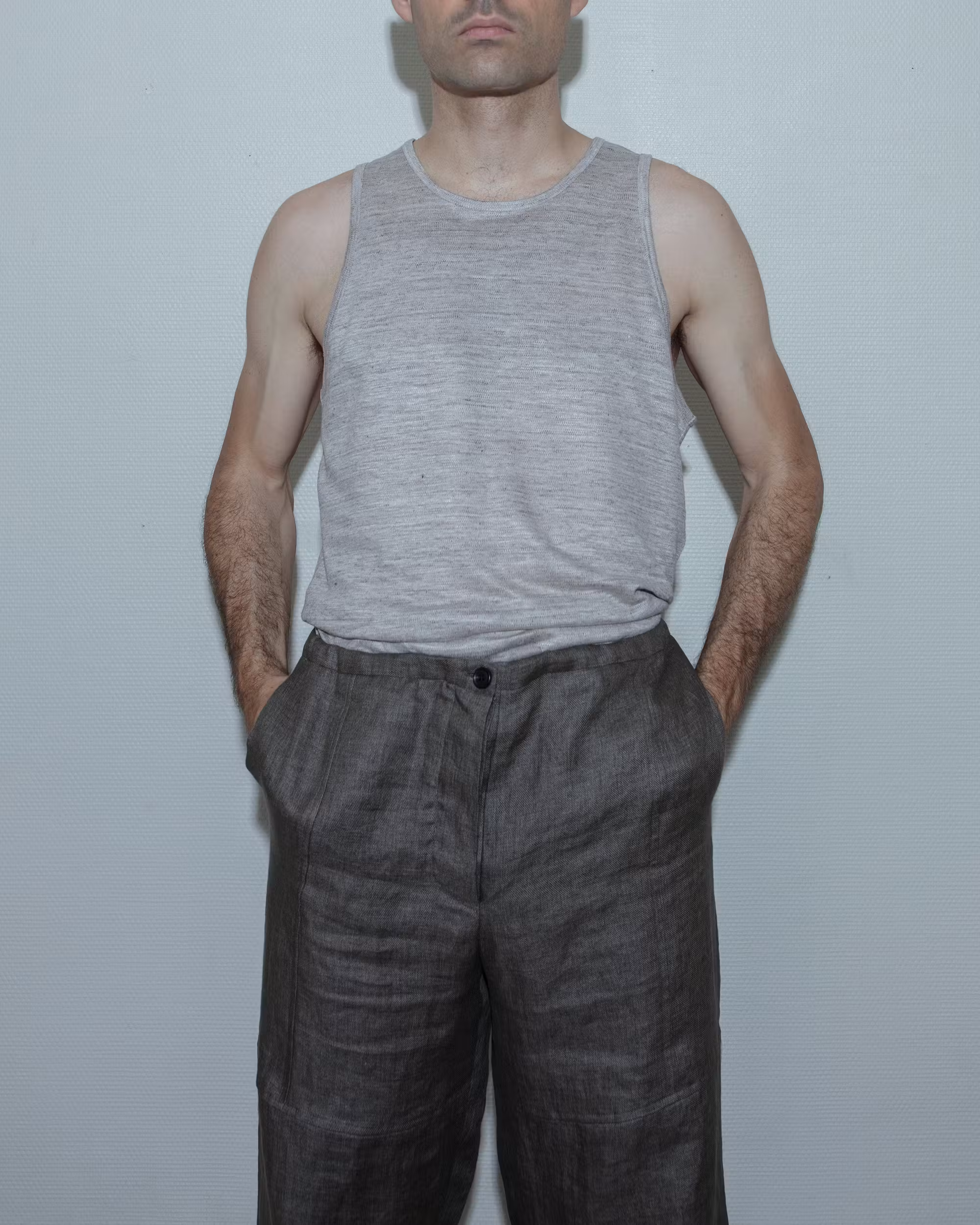
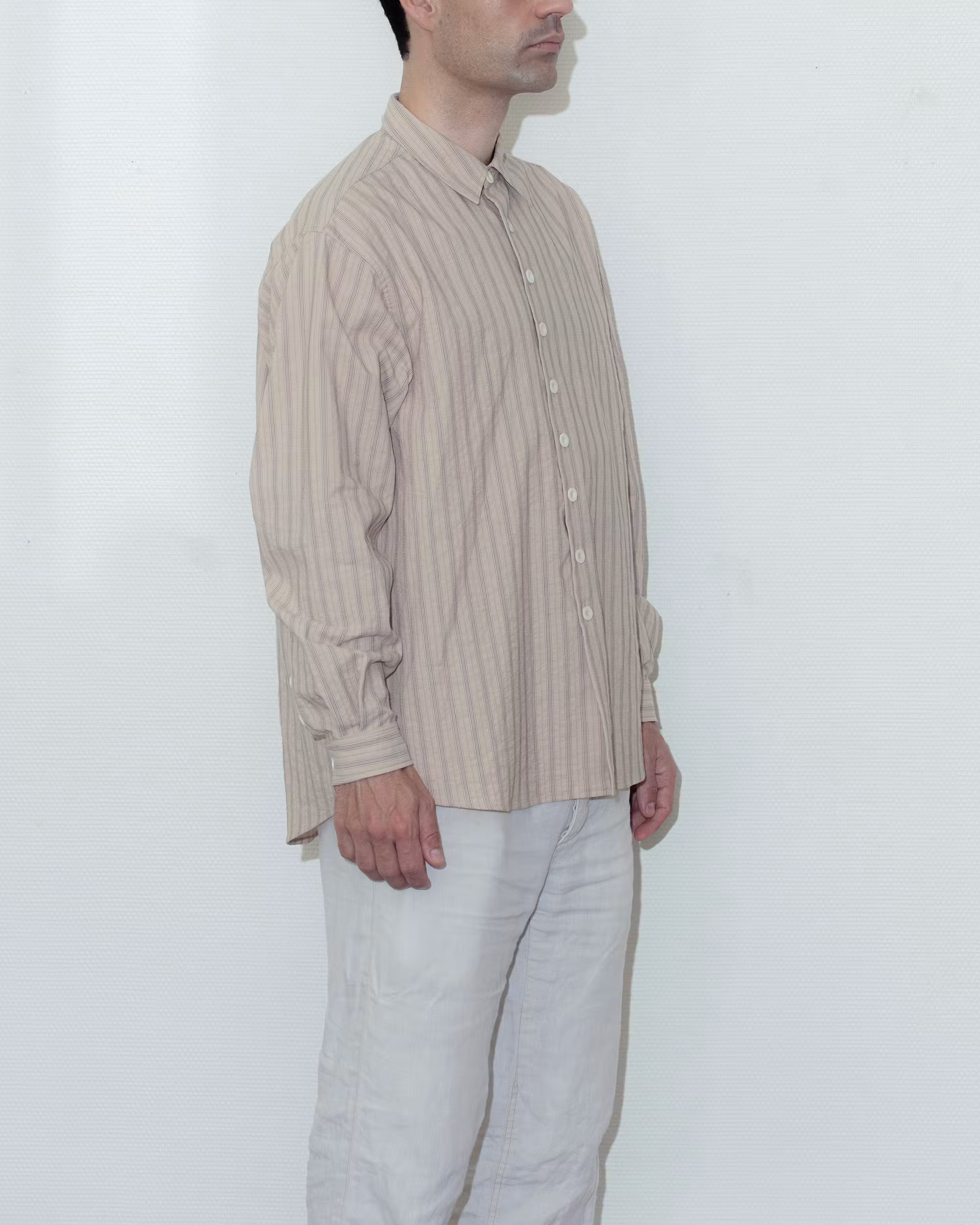
Courtesy of Maison Douillet
Maison Douillet
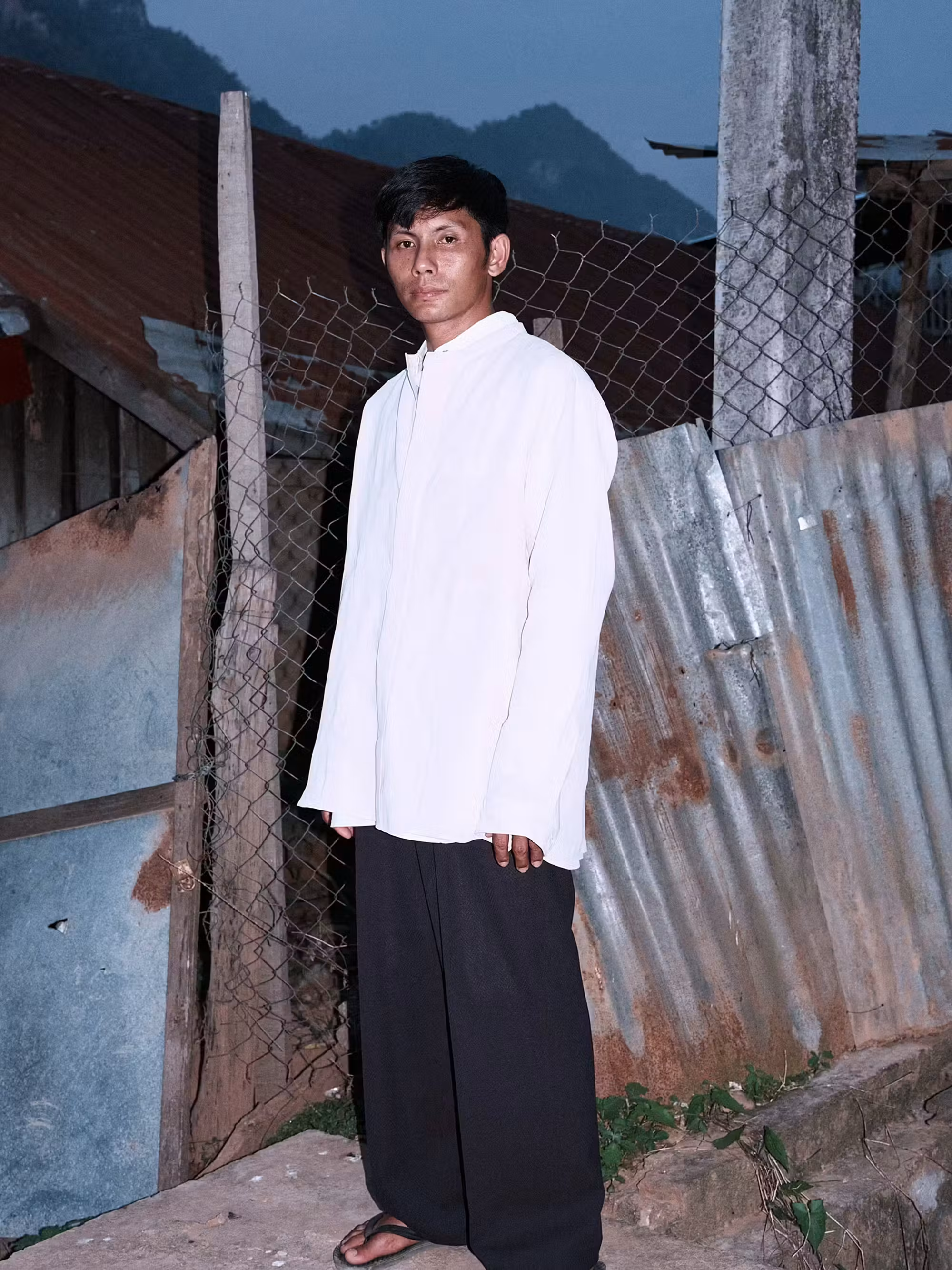
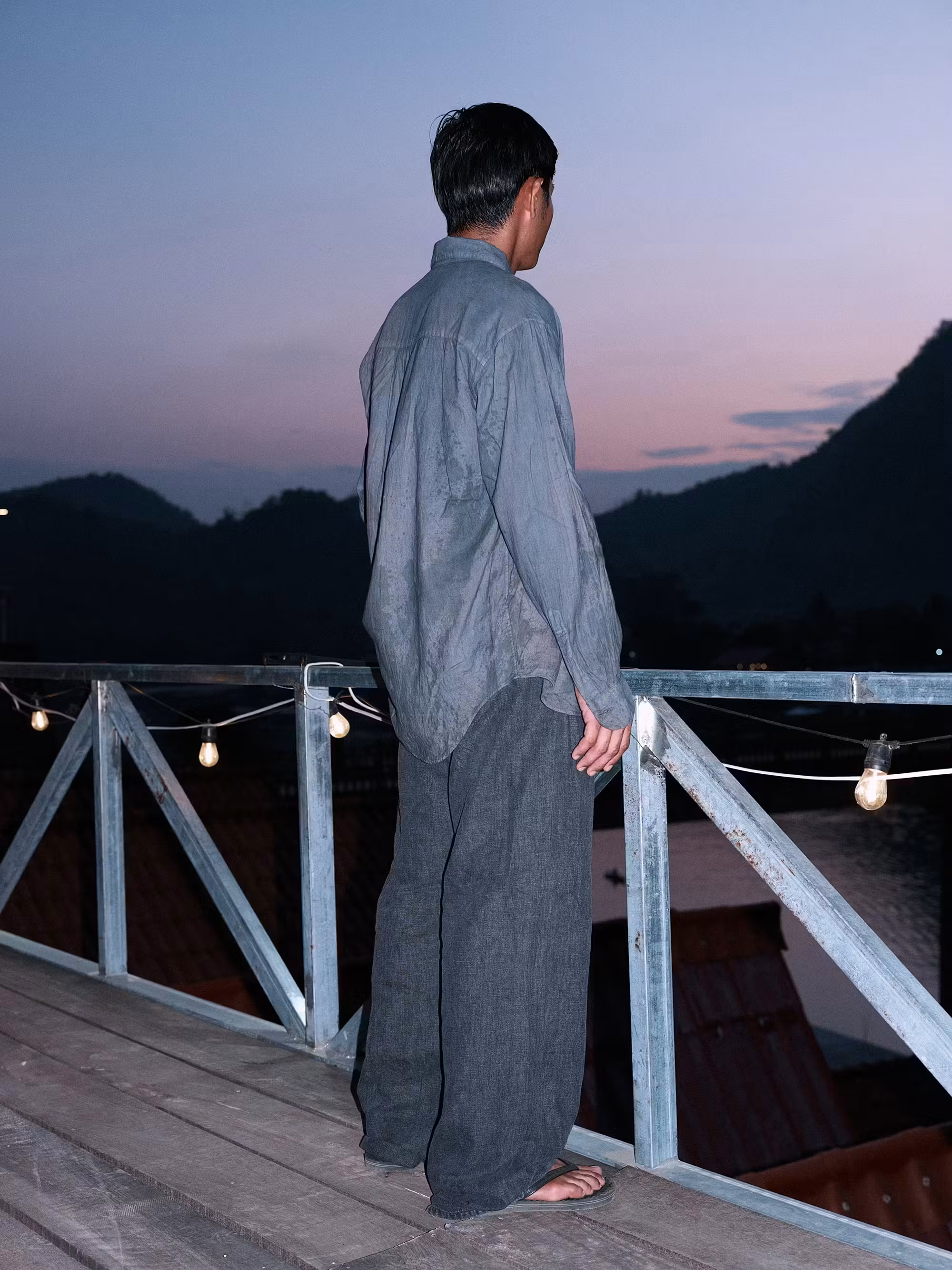
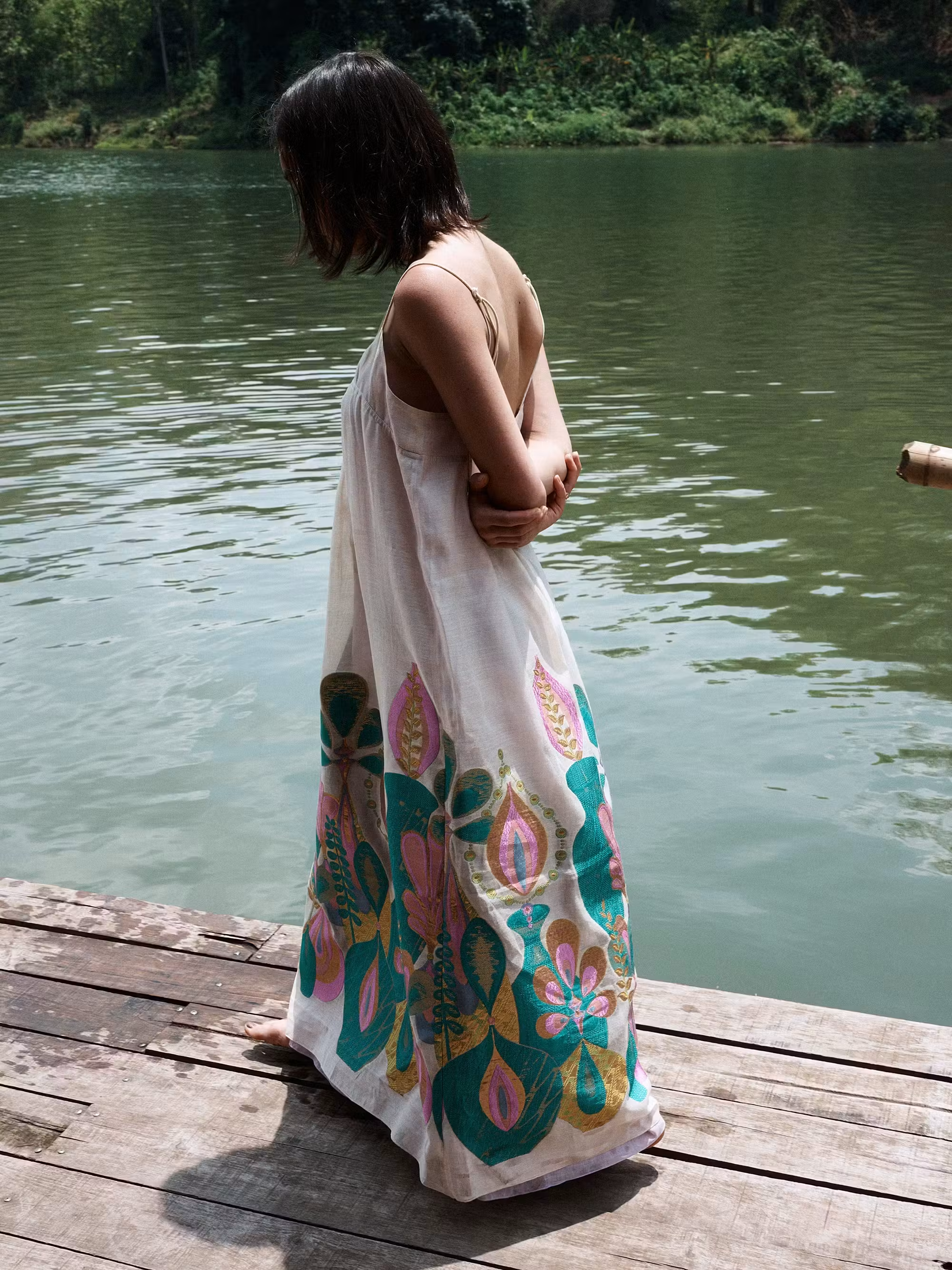
Operating with the spirit of a research project rather than a traditional label, Maison Douillet is rooted in the rugged, pre-industrial soul of the Chartreuse massif region in France. Since its 2021 inception, the brand has sought to restore the emotional bond between wearer and object. In the hands of brothers Clement and Germain Douillet, the aesthetic leans into a tactile exploration of the Alps, working with high-density natural fibers like hemp, yak, and burel wool to create garments with a spirit that is at once ancient and innovative, scattered with recurring signatures such as raglan sleeves, external loop closures, and vertical panels.
“The themes of rituality, austerity, and truthfulness are important to us,” explains Clément. “And they lead us to develop our general approach to garment making, and incorporate recurring visual codes in the garments: elongated fits, sleeveless constructions, and adaptable design elements.”
Courtesy of Seya
Seya
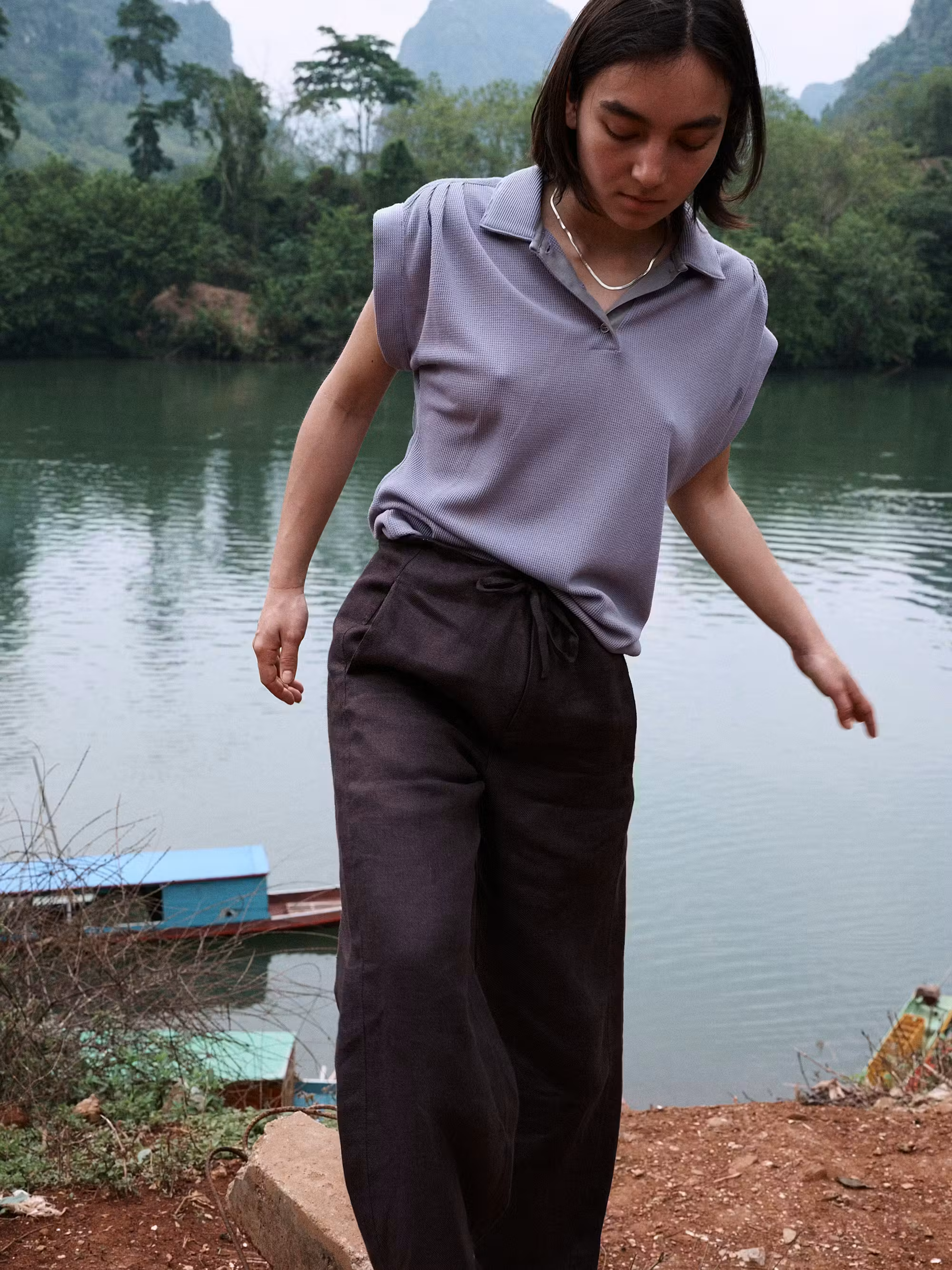
Rejecting rigid definitions of luxury, Seya operates as a living ethnographic study led by Japanese designer Keiko Seya. Since 2017, the project has acted as a “documentary” of her travels worldwide, translating diverse value systems into high-integrity garments made from yak, summer wools, and double-faced finishes.
By partnering with artisans to preserve centuries-old ancestral crafts, Seya seeks to highlight a design philosophy that embraces the gray area between cultures. “Style is already inside. Then we carefully choose our outer side (clothes) to suit it,” explains Seya. Favoring silhouettes that allow for personal narrative over loud symbolism or signifiers, Seya’s aesthetic runs on a refined neutrality. “We think a lot about ambiguities in clothing, in between styles.”
Cristaseya
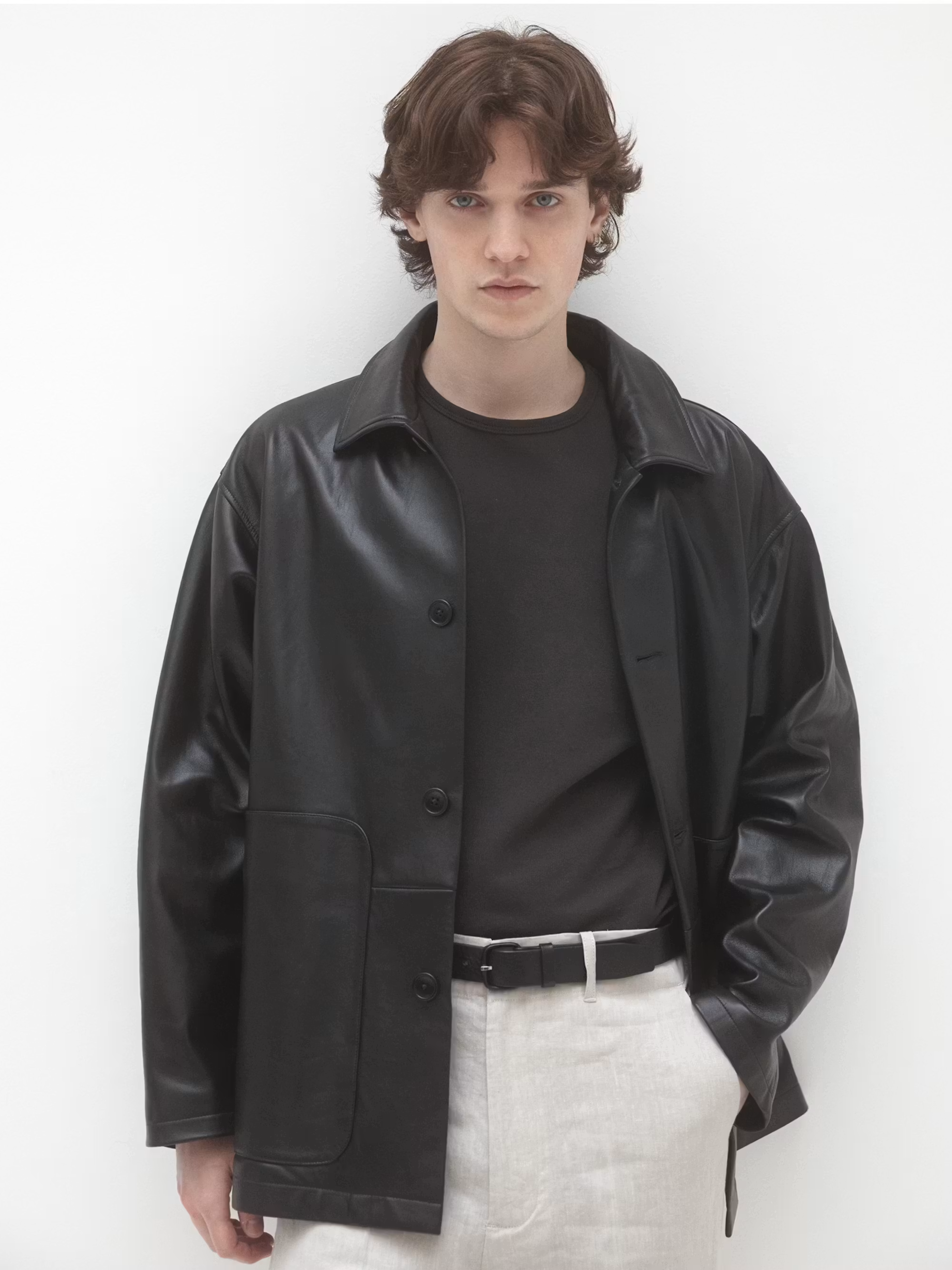
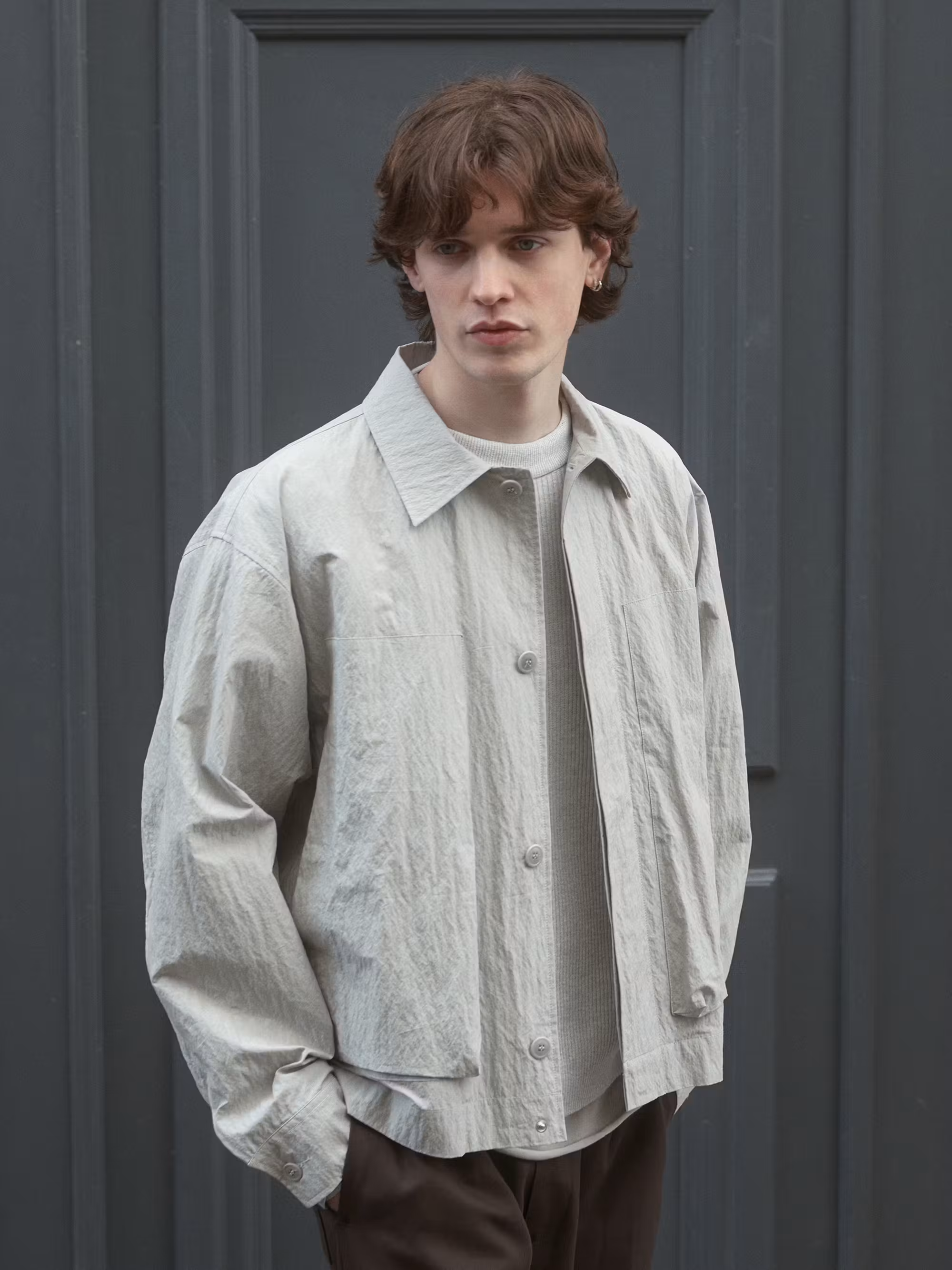
Cristaseya is an ongoing lifestyle project, housed in the first floor Parisian apartment where it debuted in 2013, effortlessly blurring the line between fashion, hand-crafted art and homewares, and interior design. Founded by Italian stylist and consultant Cristina Casini, the in-house label strays from a classic seasonal output towards a careful curation, born in a once appointment-only atelier for a client list that includes the likes of Sofia Coppola and Lorde. Those not in Paris who wish to remain in the inner circle can sign up to a mailing list that discreetly signals temporary e-commerce pop-ups.
The collections, released in editions roughly twice a year, are a sophisticated collage of the found and the fabricated. From Japanese wool blazers and Italian shirting to hand-thrown Greek ceramics, each piece is chosen for its specific weight and tangible history.
Courtesy of Arpenteur
Arpenteur
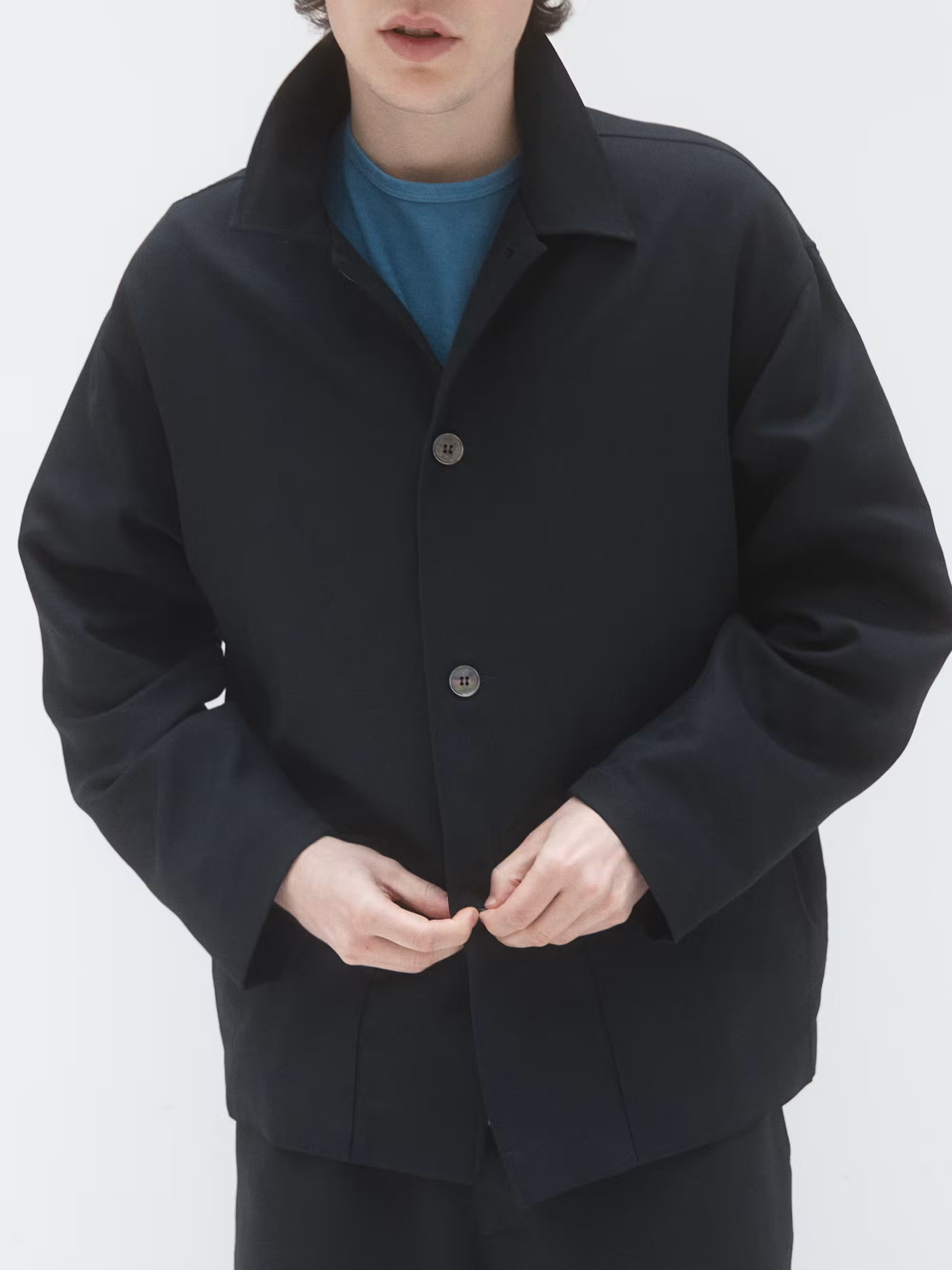
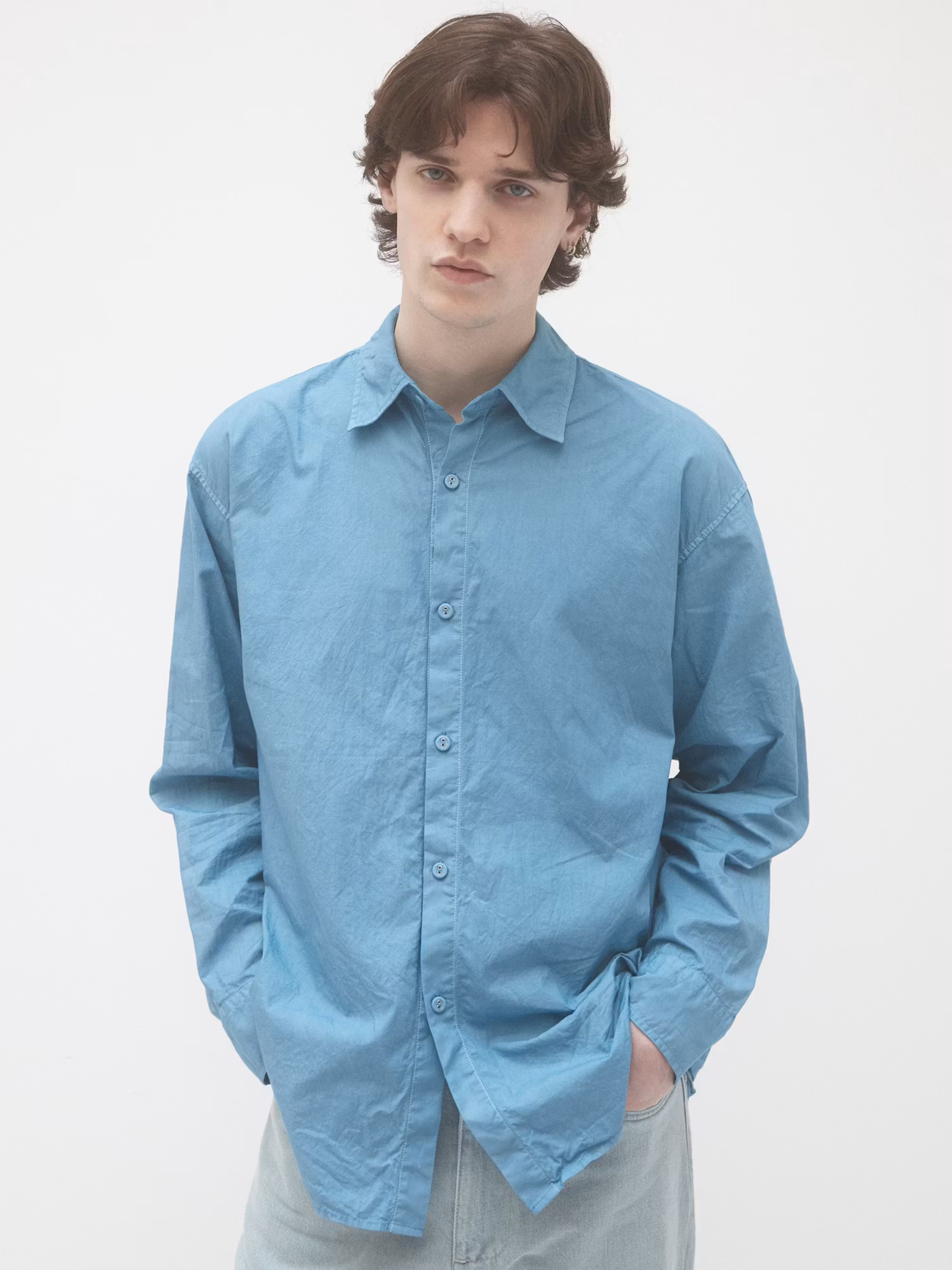
Founders Marc Asseily and Laurent Bourven have, since launching in Lyon in 2011, used Arpenteur to outline the contours of a contemporary French aesthetic. The brand evolves classic menswear with a modern perspective, prioritizing a utilitarian “formal research” over nostalgia. Every garment is manufactured in France using materials developed exclusively with local mills – think heavy wool meltons and traditional cotton mesh. “We’re trying to keep very focussed on the result itself,” explains Bourven. “I would say seeing a new fabric is what inspires us most.”
There’s an intention of invisibility, where technical prowess is left for the wearer to perceive at their discretion. “We tend to erase the design work behind functionality so that the people wearing our clothes do not notice details very consciously, but still know they’re here for a reason,” notes Asseily, a philosophy that results in a wardrobe designed for the friction of everyday life while remaining “classically relevant” for the modern dresser.
Courtesy of Sire
Sire
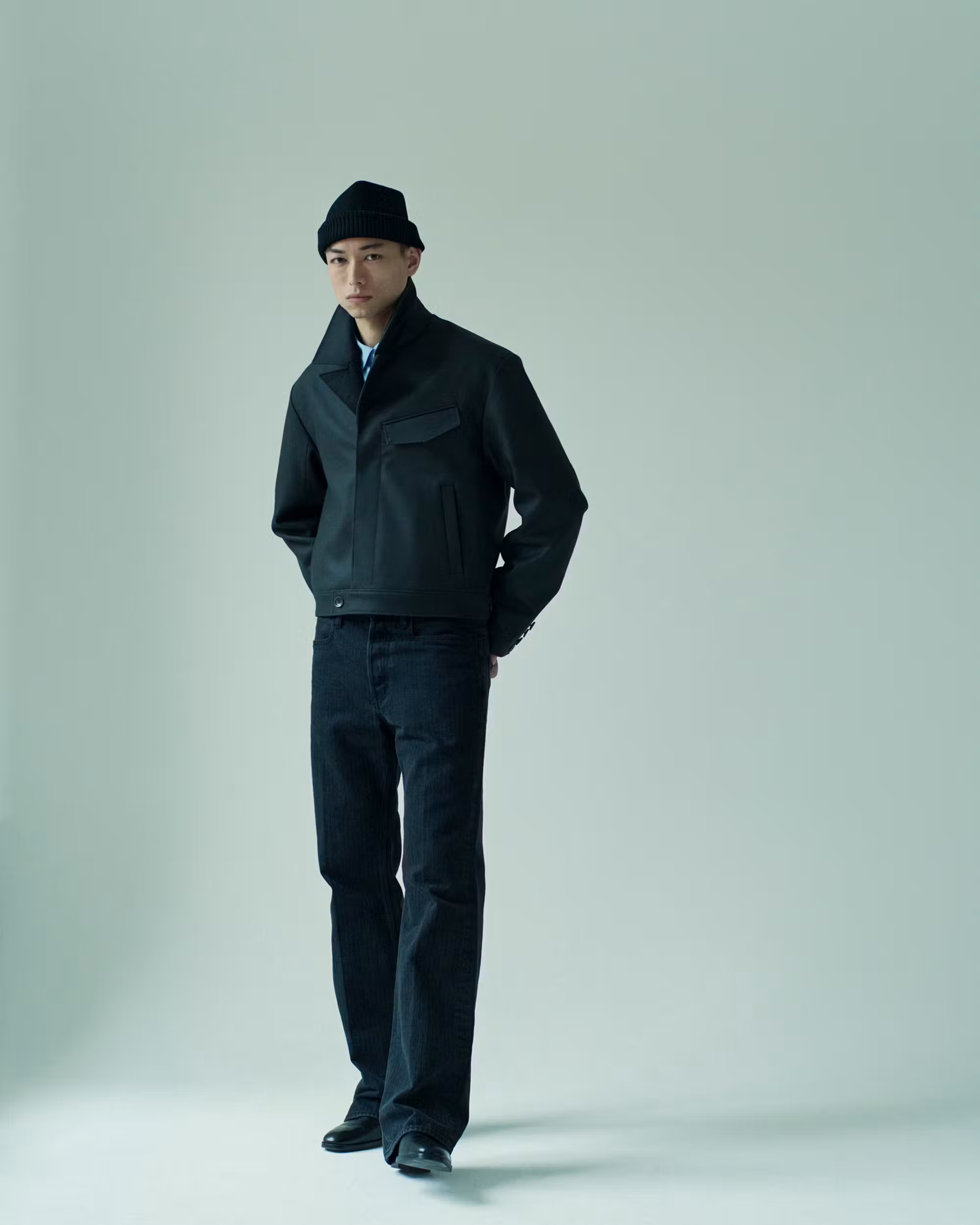
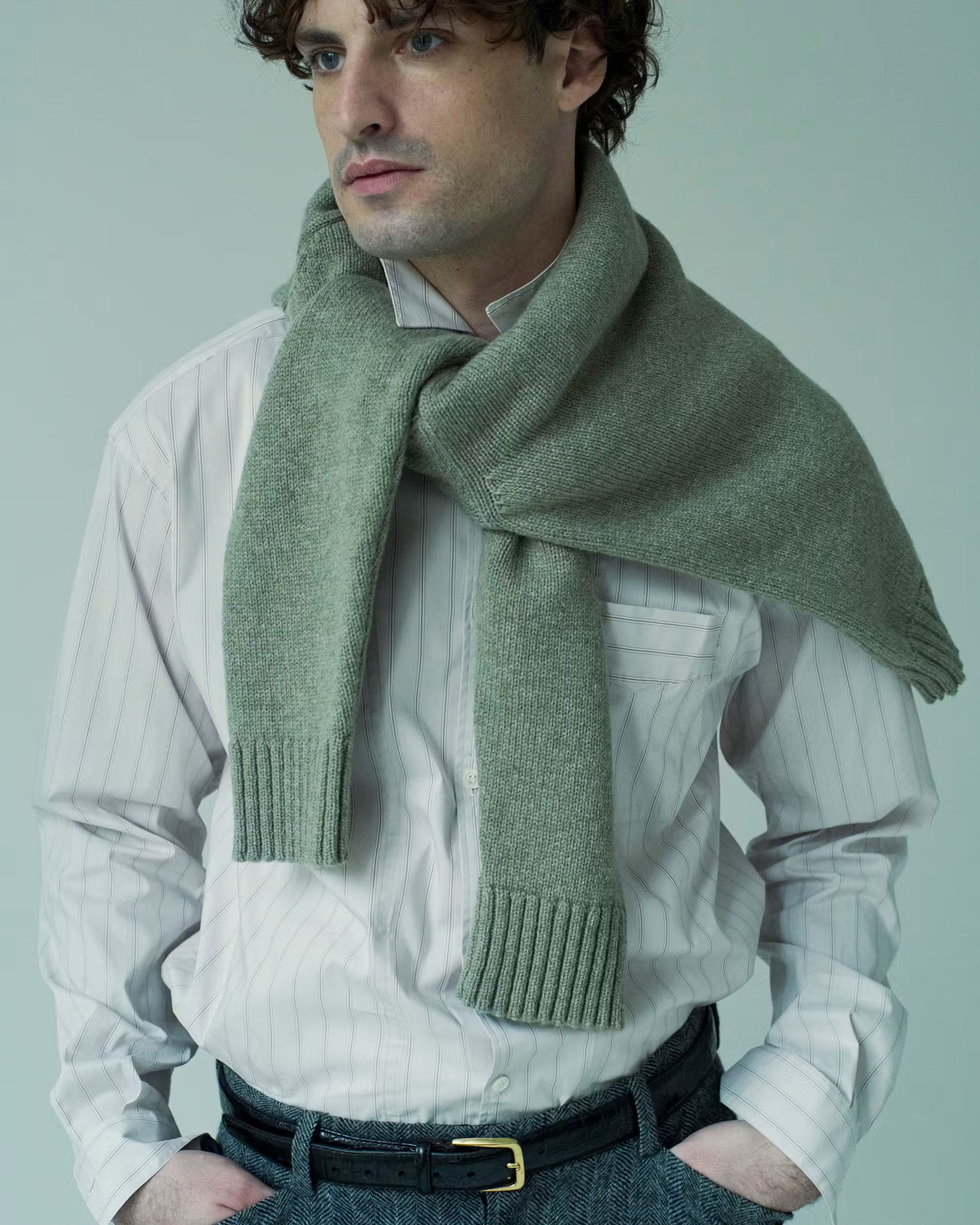
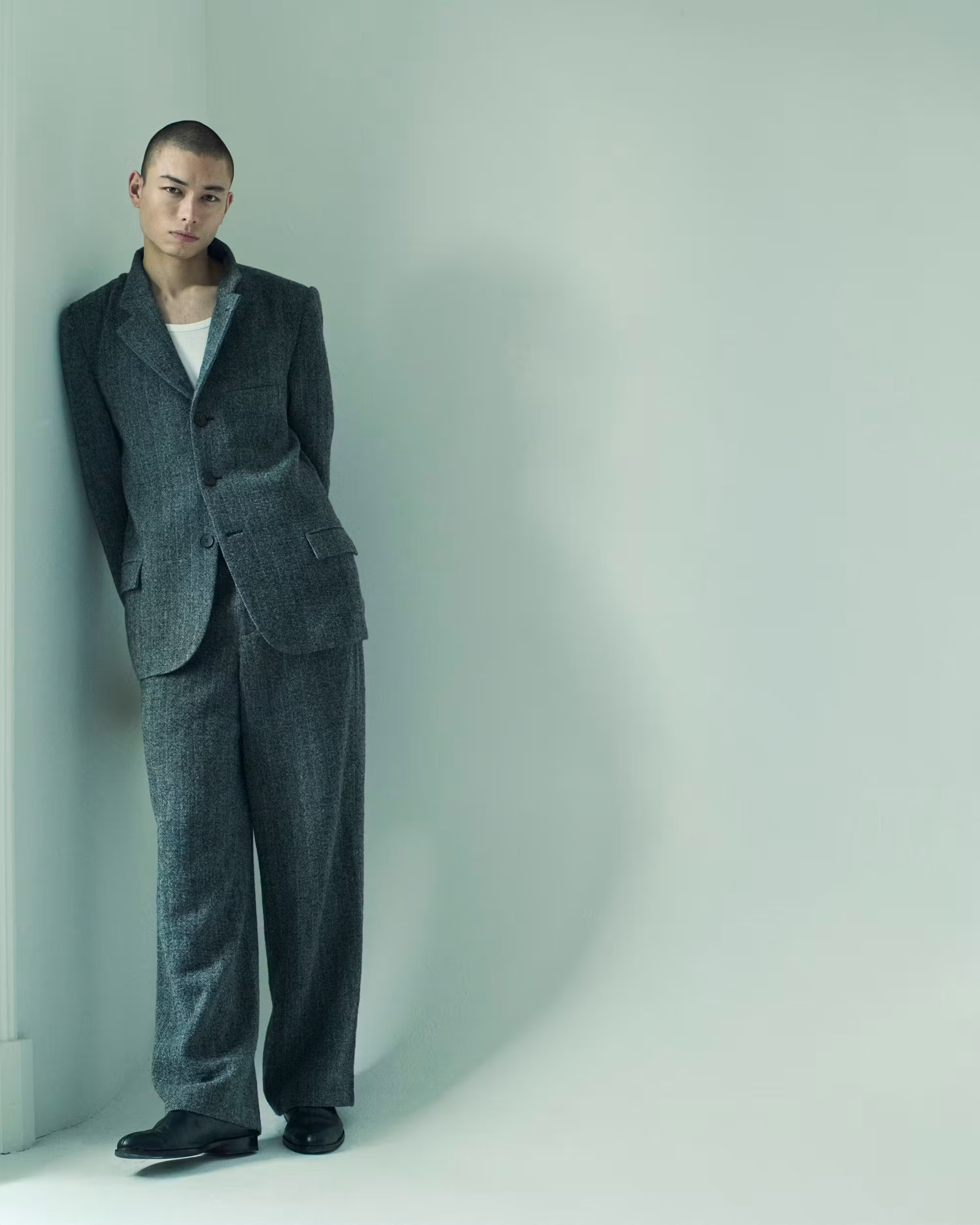
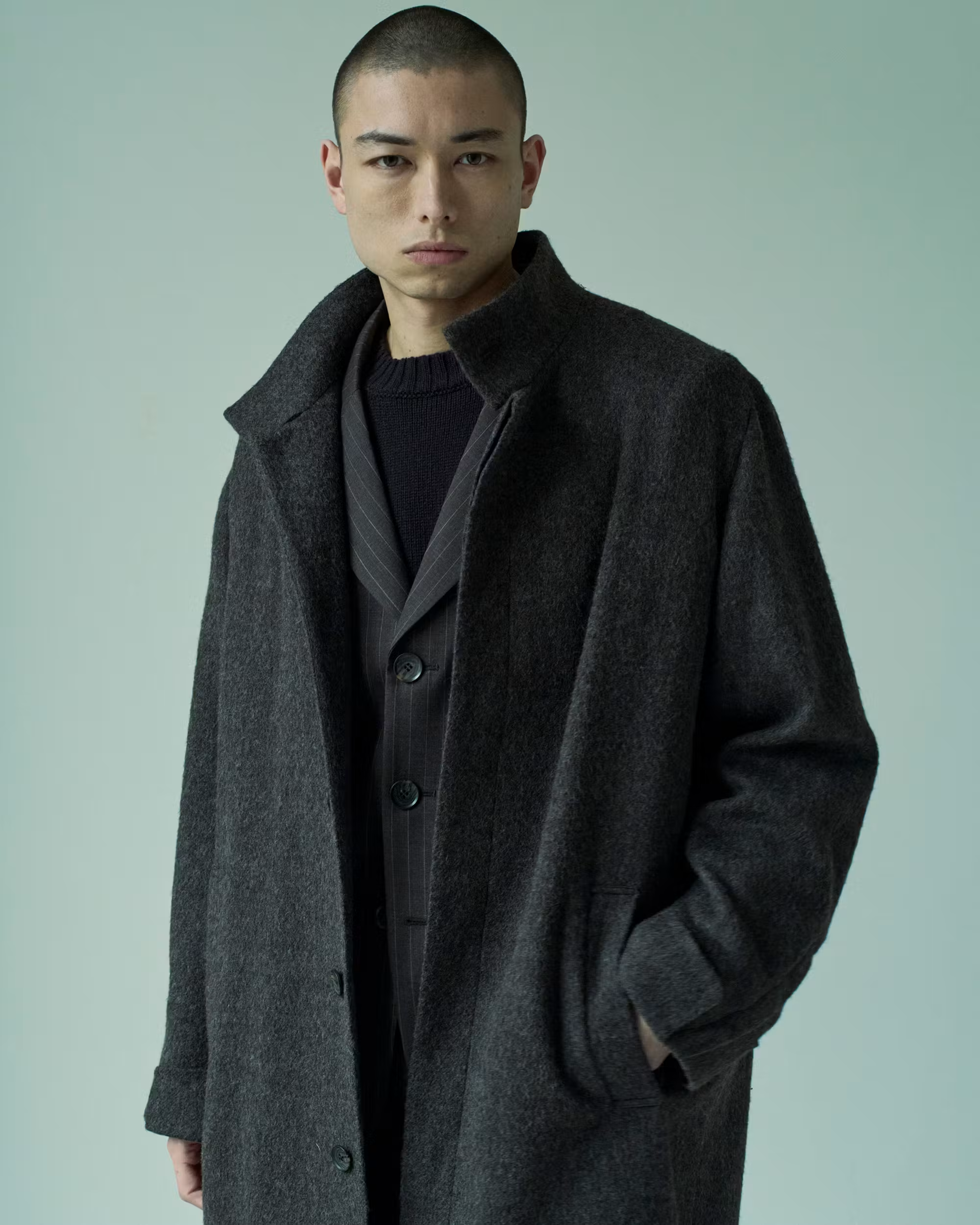
Emerging from the intersection of Parisian sensibility and Tokyo’s technical precision, Sire represents a clever dialogue between its founders Yojiro Ichikawa and Hugo Sire. After meeting at the Atelier Chardon Savard and refining their craft within the men’s design studio at Hermès, the duo launched their namesake label in 2024. The project harmonizes Sire’s tacit understanding of the Parisian market with Ichikawa’s mastery of Japanese textiles.
Collections are released on a traditional biannual fashion calendar, designed in Paris and produced entirely in Tokyo. Every garment is crafted from natural materials sourced directly from Japanese mills, elevating menswear essentials into a study of international craftsmanship.
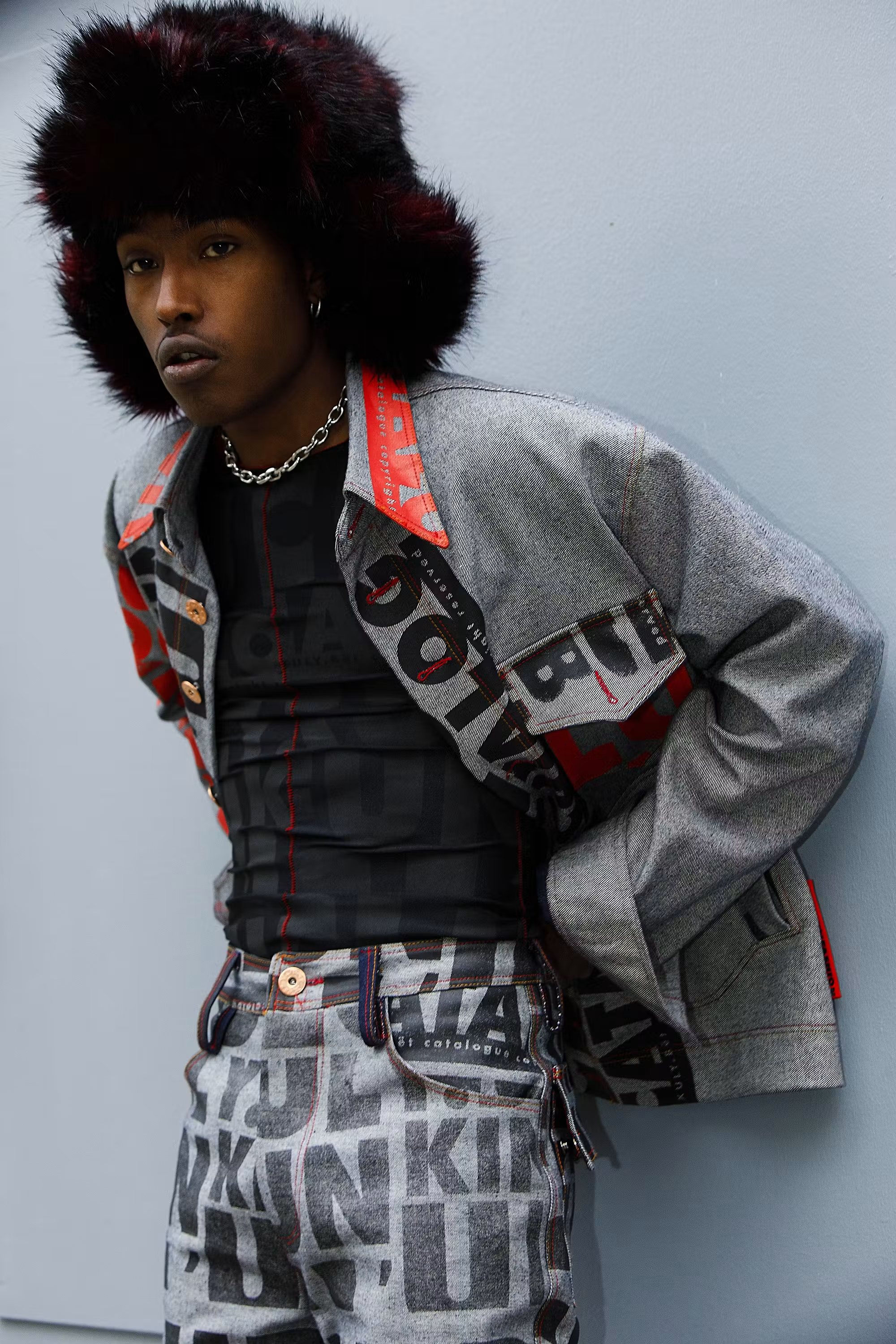
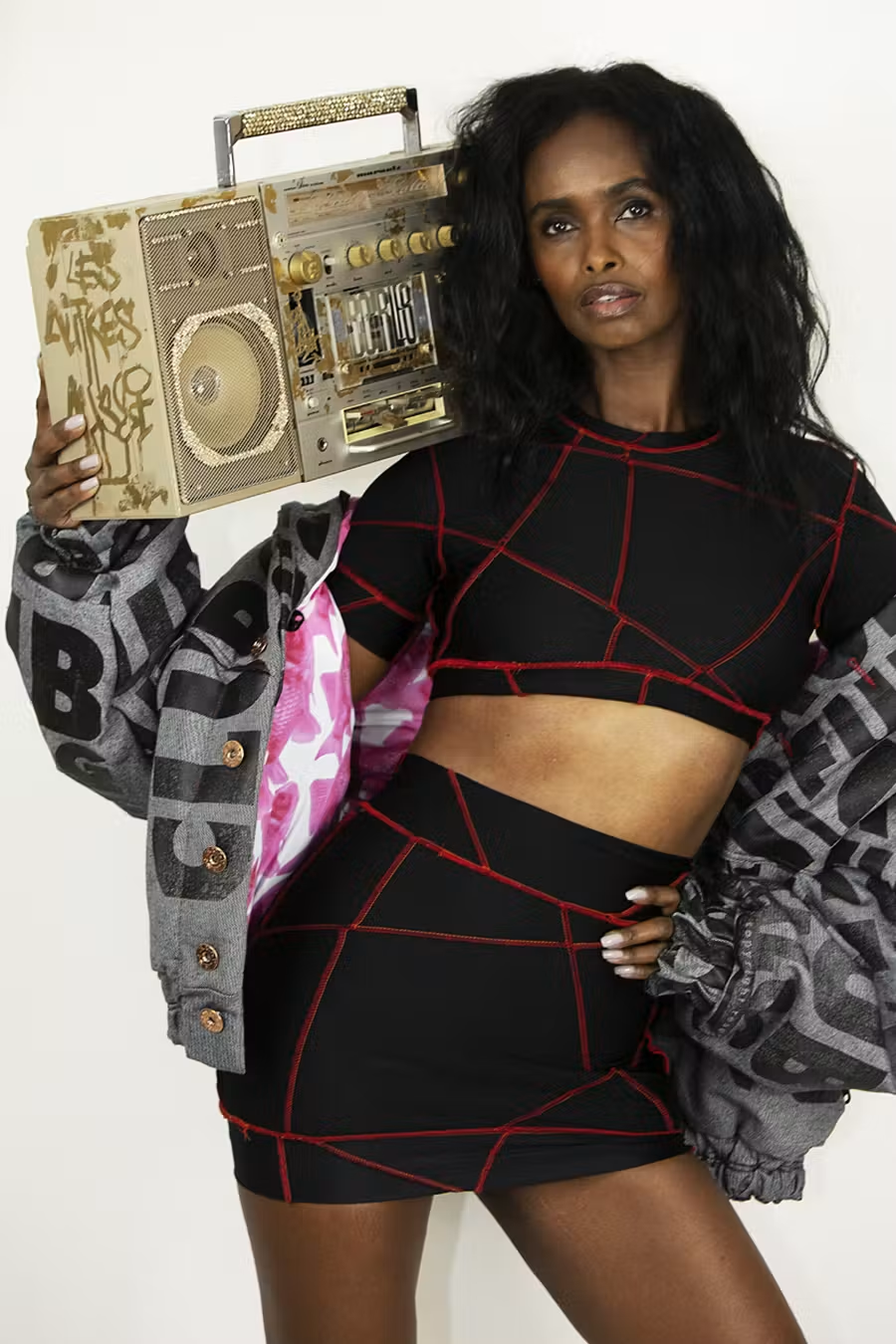
Marc Baptiste / Courtesy of Xuly.Bët
Xuly.Bët
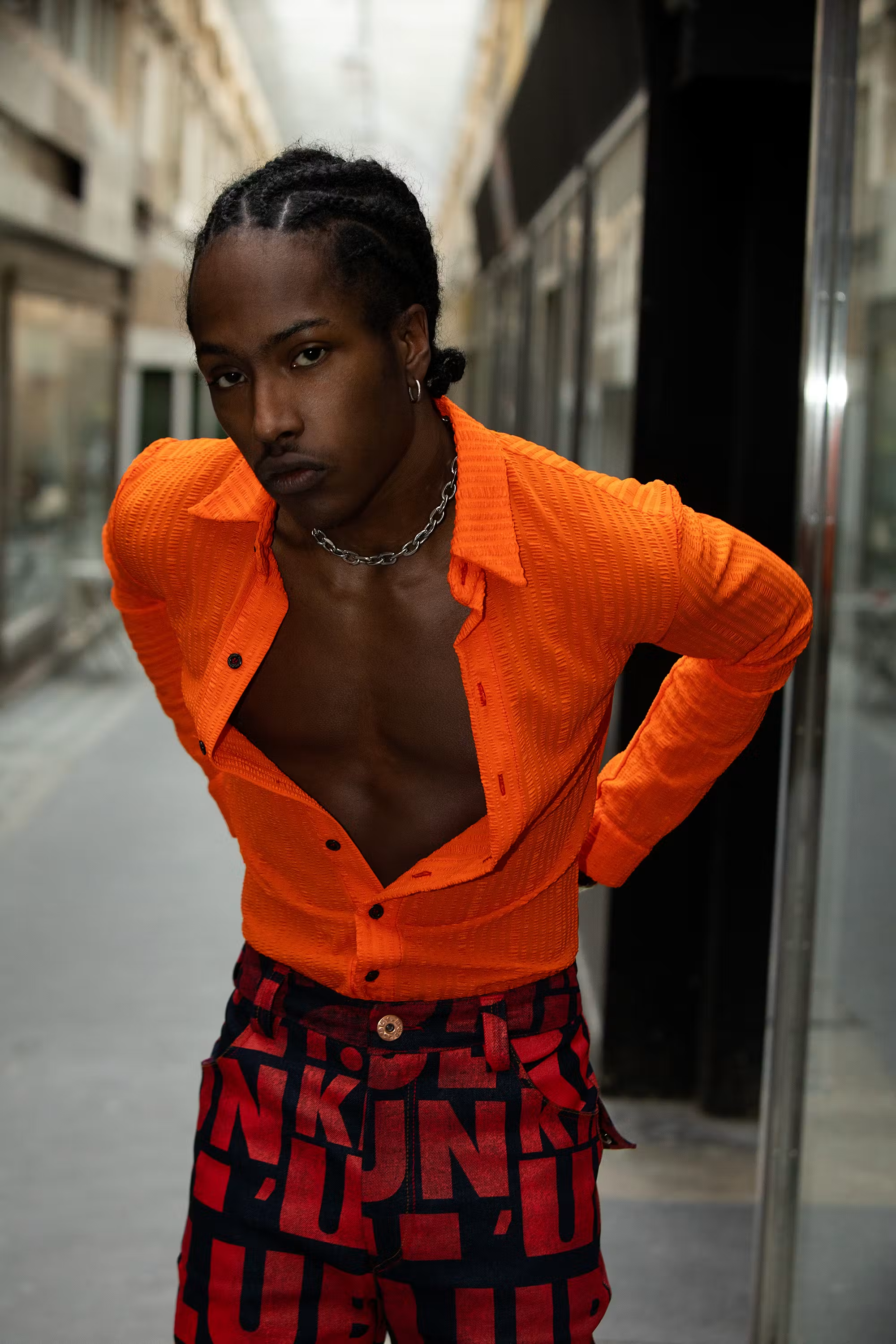
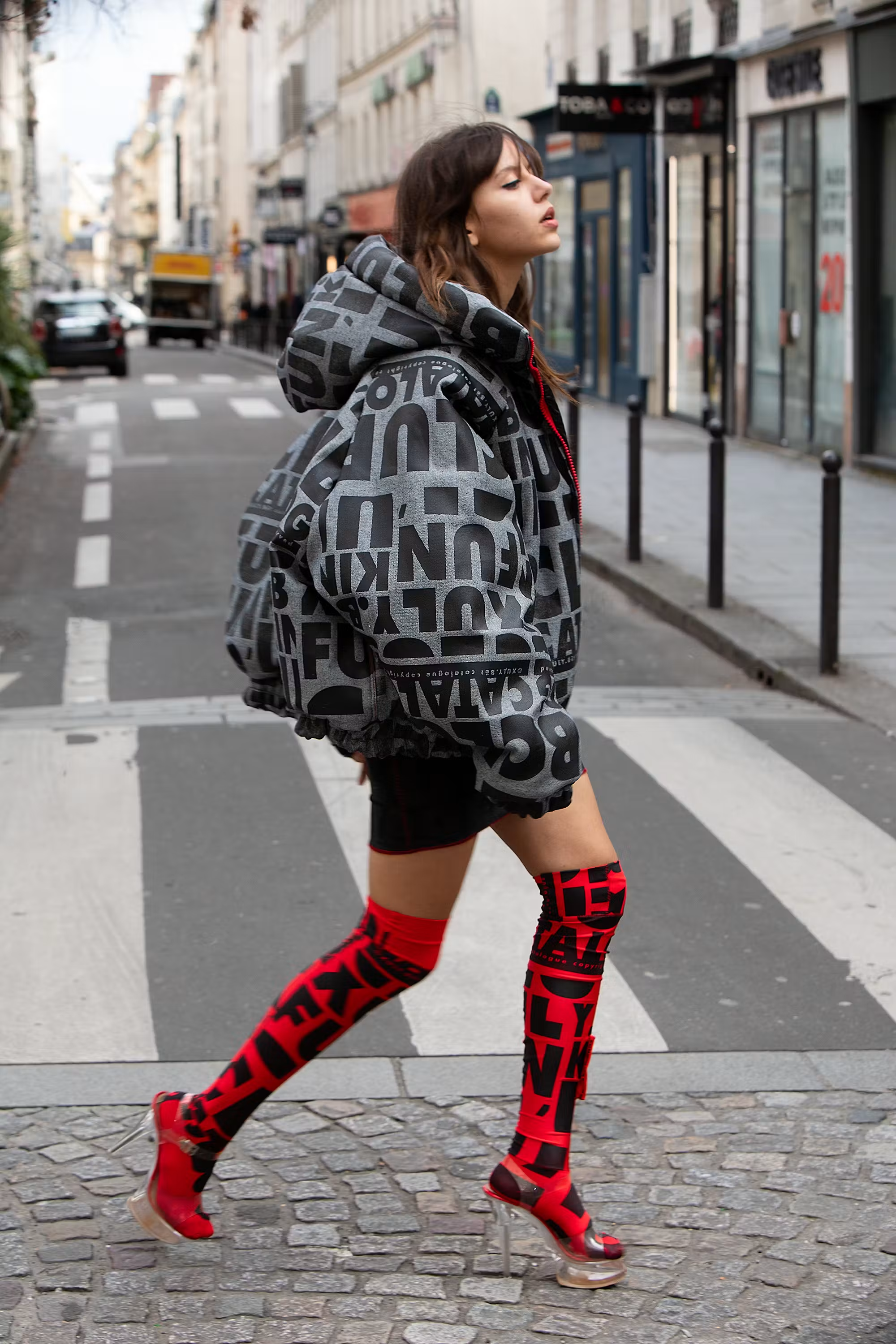
Xuly.Bët was repurposing scavenged marketplace and vintage textiles long before upcycling became industry standard. Founded in 1991 by Paris-based Malian designer Lamine Badian Kouyaté, the label’s name, meaning “keep your eyes open” in Wolof, is a manifesto for his cobbled-together aesthetic. Kouyaté’s signature codes are a high-energy clash of technical sportswear and bold prints, often featuring his signature tagline, “Funky Fashion Factory,” for a vision that is kinetic and urgent, which invariably led to the industry’s first true high-fashion collaboration with Puma in 1995.
Despite his roots in resourcing fabrics, Kouyaté transcends the ‘sustainable” label, focusing on the pure, subversive style that made Xuly.Bët a magnet for cultural icons across the decades, from Erykah Badu in the ‘90s to Rihanna, Rosalía, and Dua Lipa today.
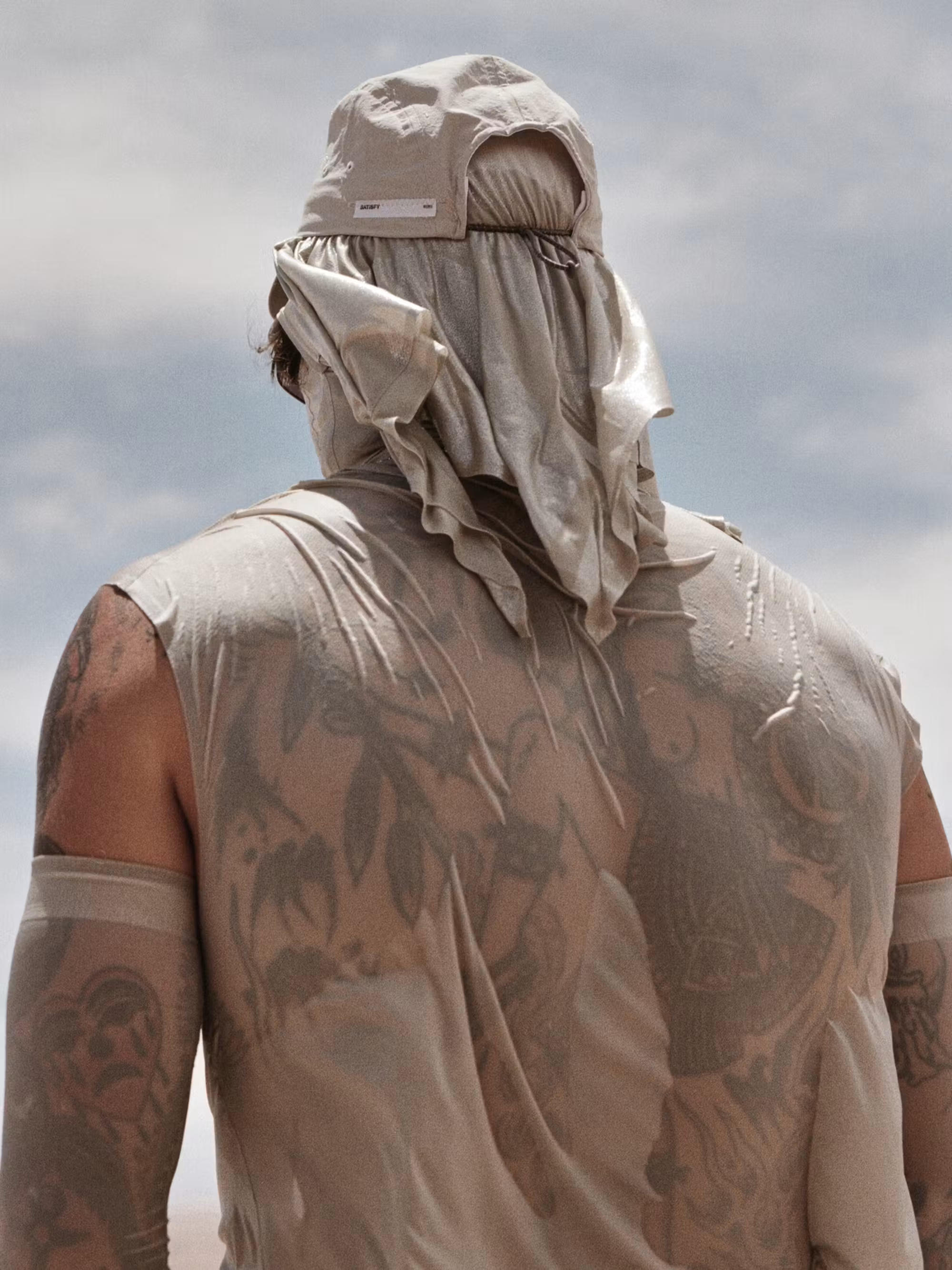
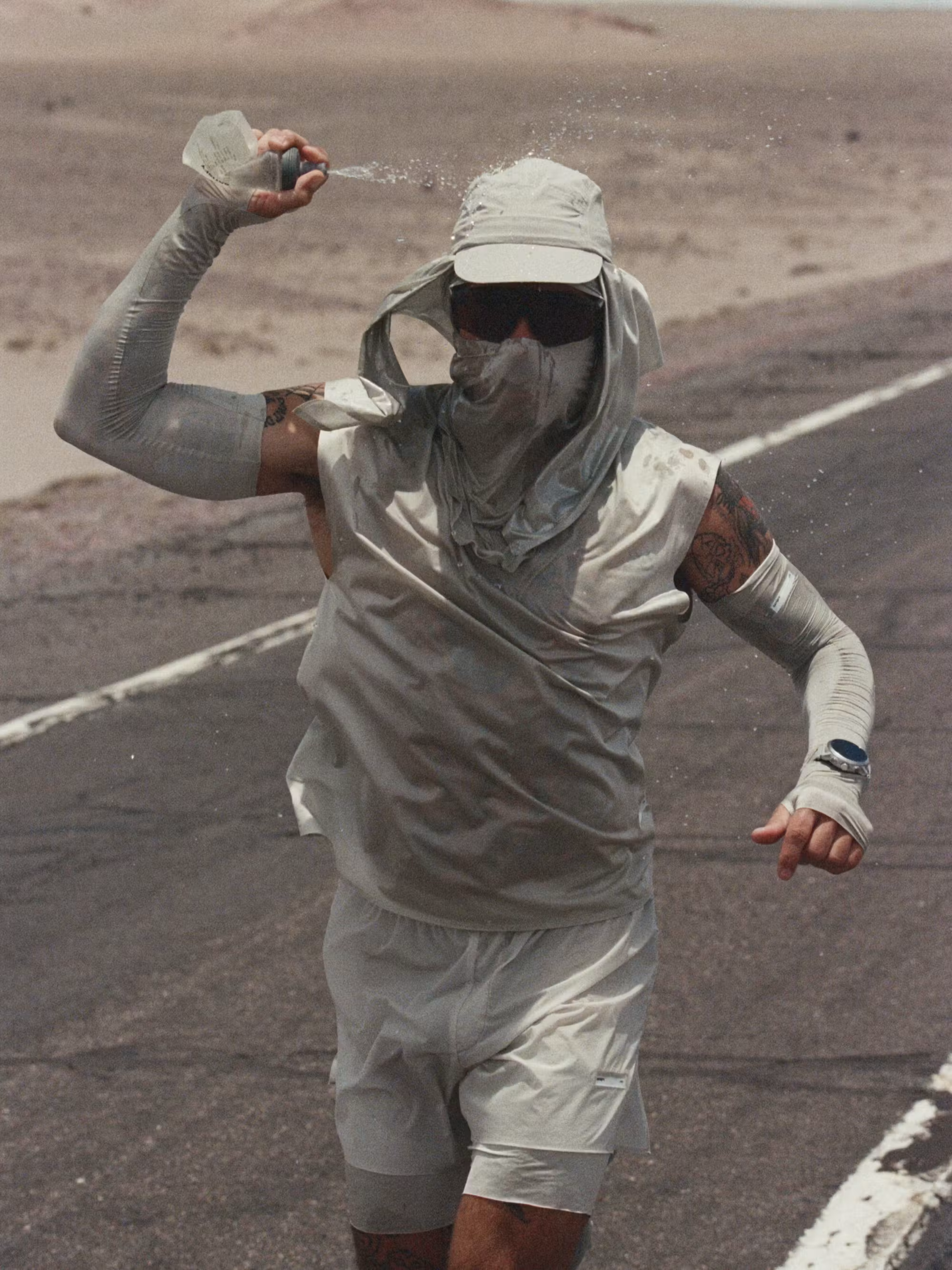
Courtesy of Satisfy
Satisfy
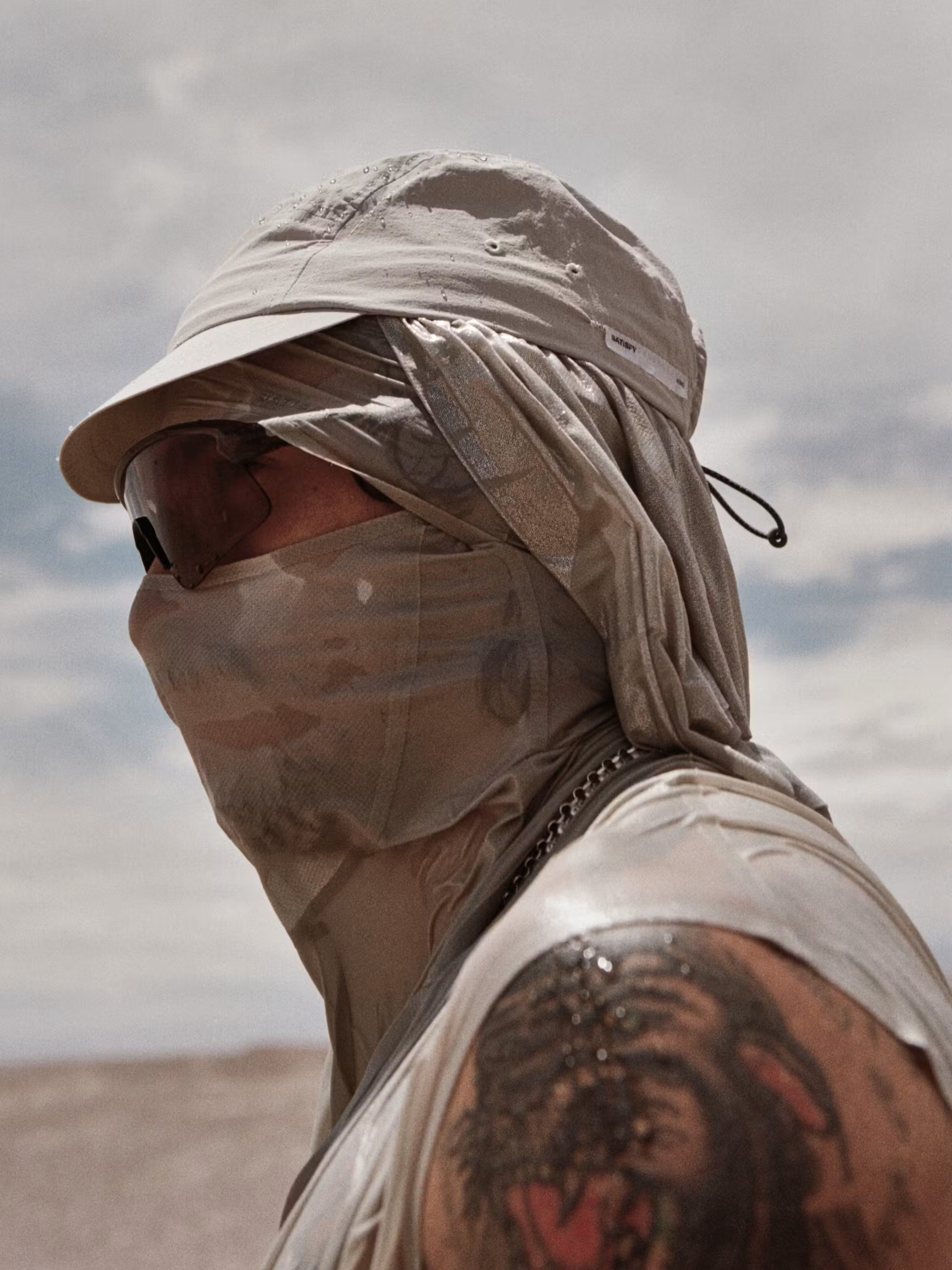
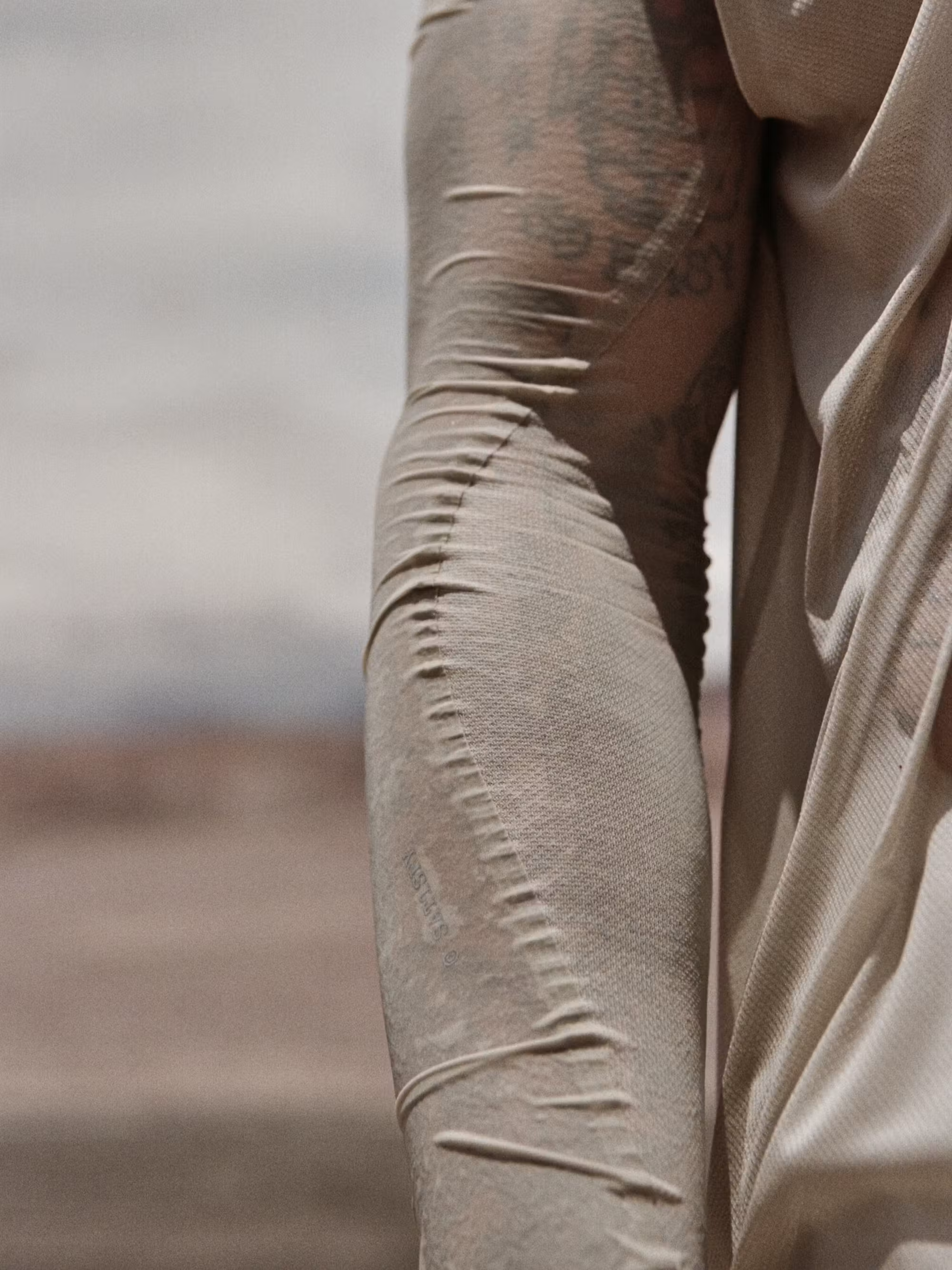
Last year, Satisfy celebrated a decade of “performance innovation,” having spent the last 10 years proving that running is, above all, a creative act. Founded by Brice Partrouch, the mind behind the indie sleaze noughties label April77, the brand translates a lifelong obsession with the runner’s high into high-fashion construction with a DIY aesthetic. The label’s ethos was crystallized by medical-grade technology, subcultural grit, and innovations like MothTech™, a body-mapped ventilation system inspired by the holes found in distressed vintage band tees.
Materials are sourced from Italy and Japan, while maintaining small-batch craftsmanship in Portugal. From collaborations with Sonic Youth to footwear for Hoka and Crocs, Partouche’s vision for running remains breathlessly lofty.
Courtesy of Village PM
Village PM
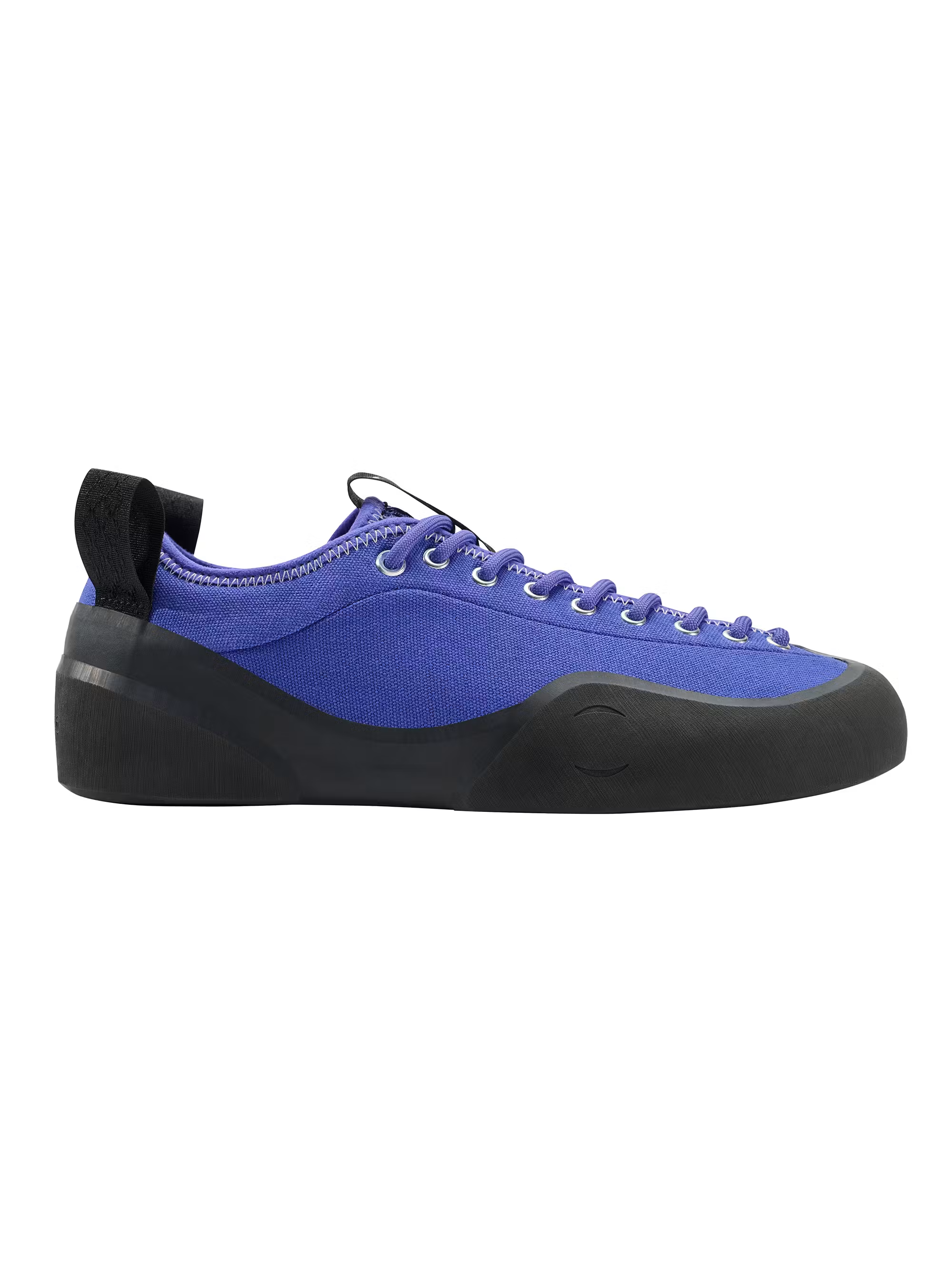
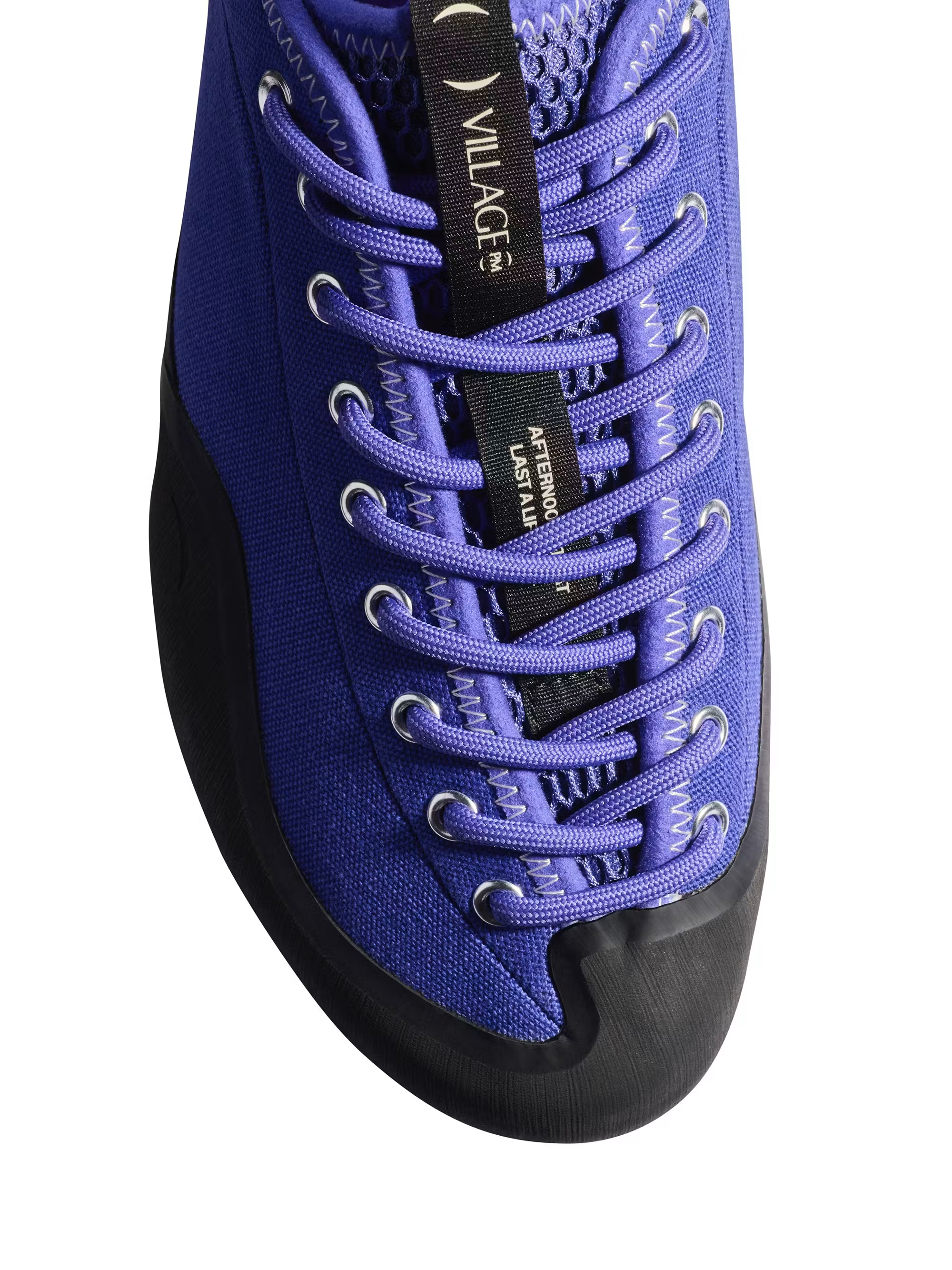
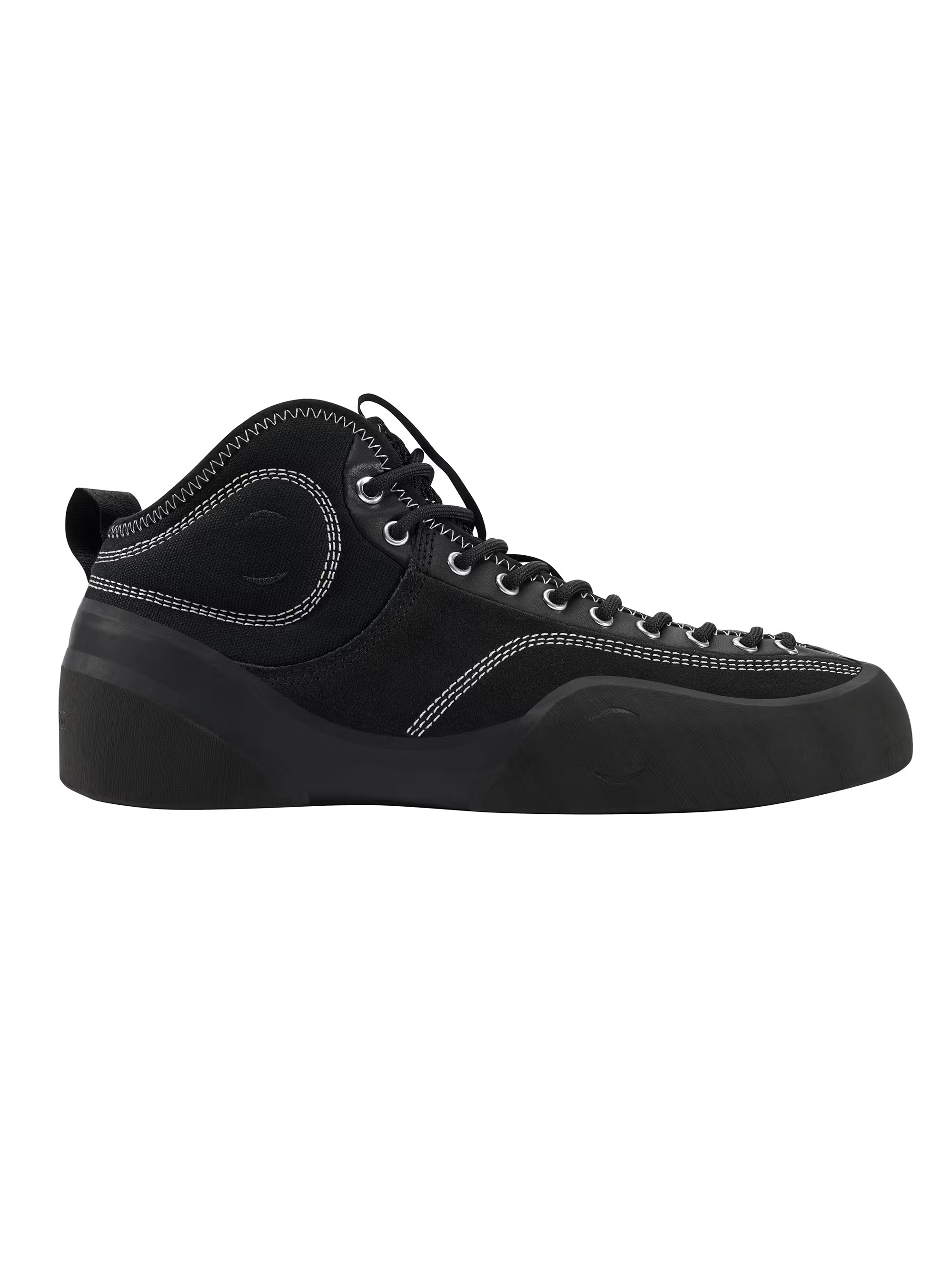
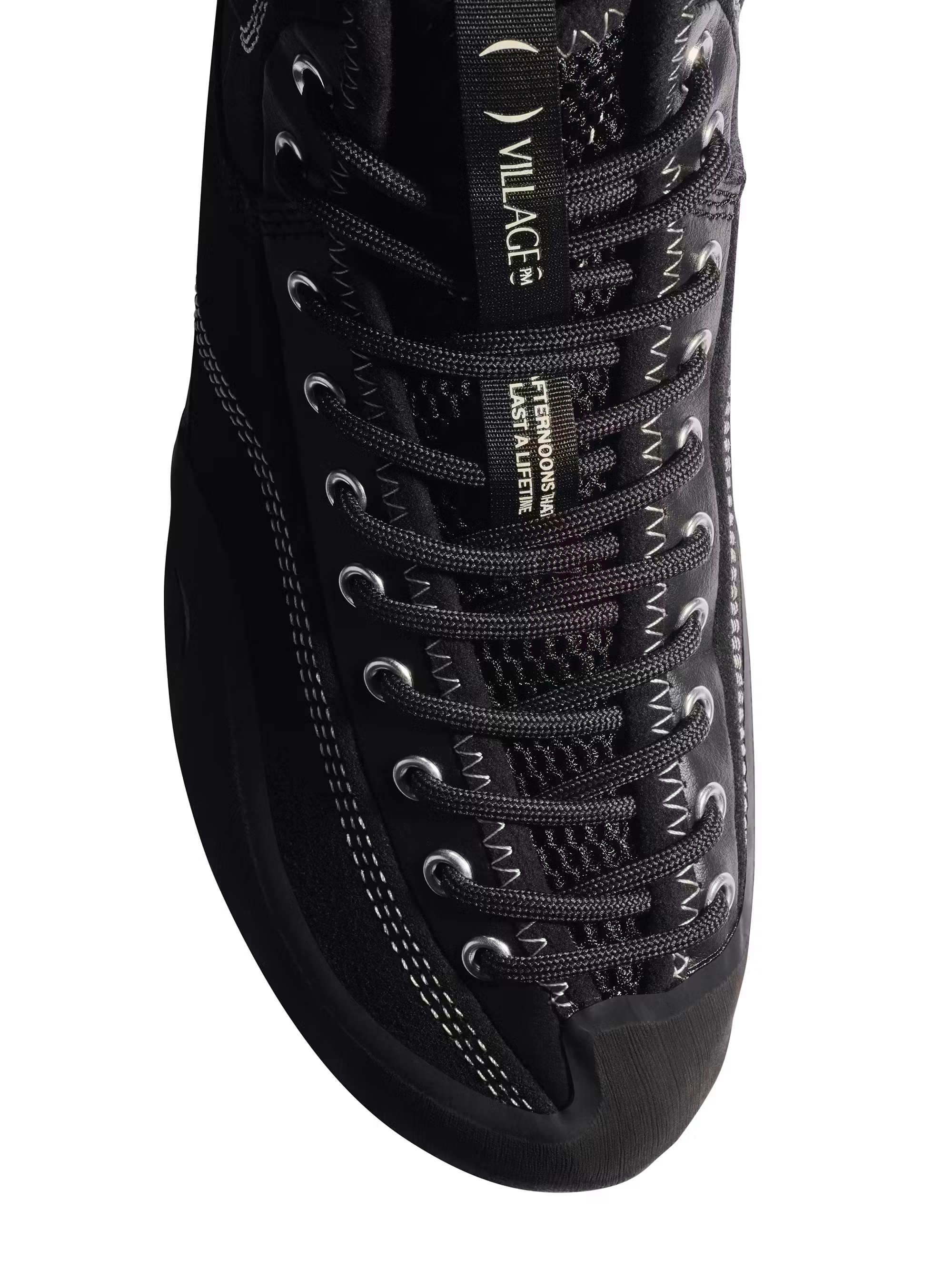
Founded by skateboarders Basile Lapray and Bram De Cleen, Village PM has quickly ascended from underground favorite to the shelves of Dover Street Market and Haven. The design philosophy is centered on an “asymmetric precision fit” that mirrors the foot’s natural anatomy, using a full-foot lacing system and soft, “sticky” climbing rubber to ensure the shoes are as responsive to conditions as they are easy to break in.
What really sets the label apart, however, is a radical commitment to repairability. Village PM silhouettes are engineered to be easily serviced by a cobbler once the rubber wears thin from relentless flip tricks, with the outer layer able to be peeled back simply and replaced, allowing the soul of the shoe to continue on and “keep pushing.”
Courtesy of Zomer
Zomer
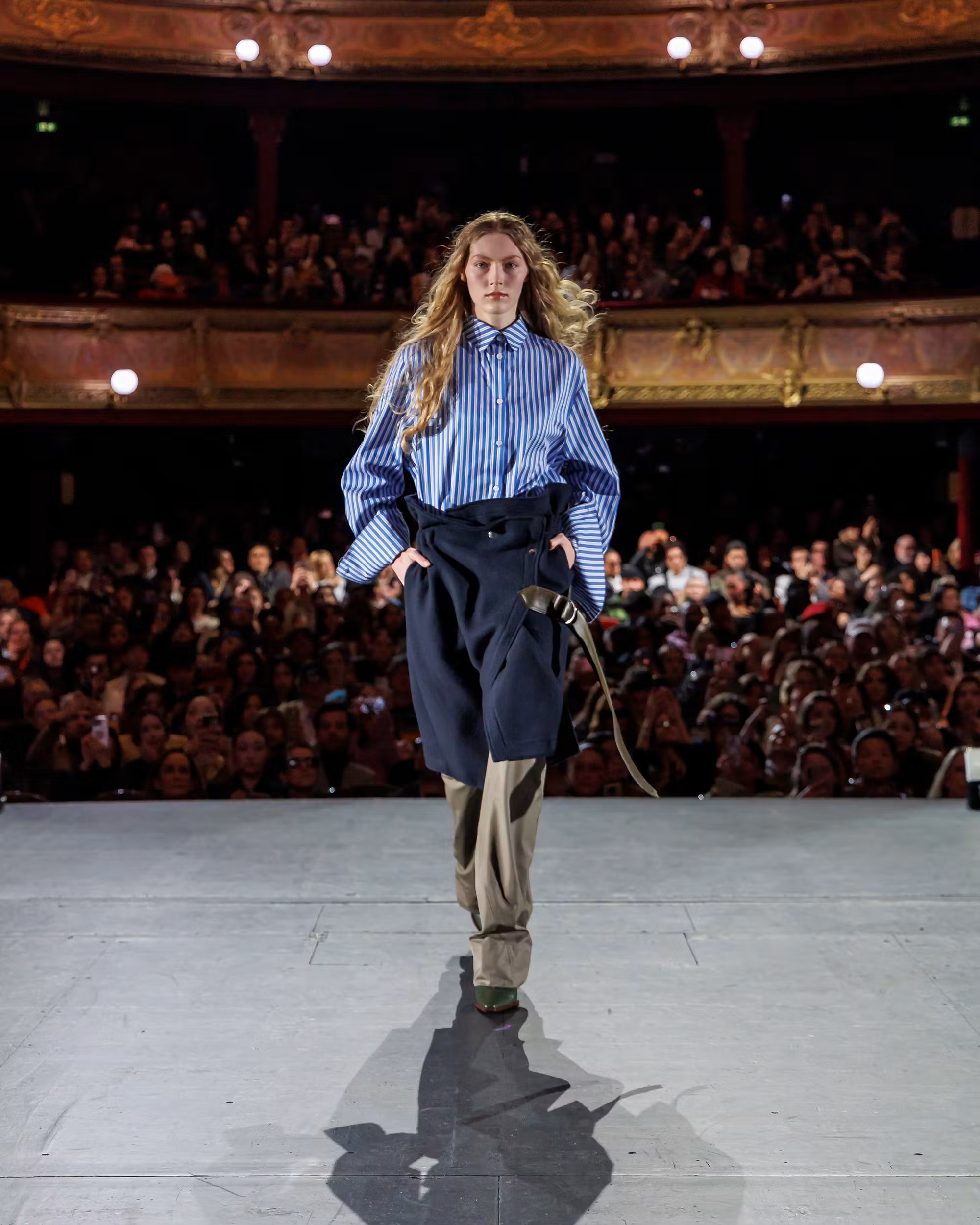
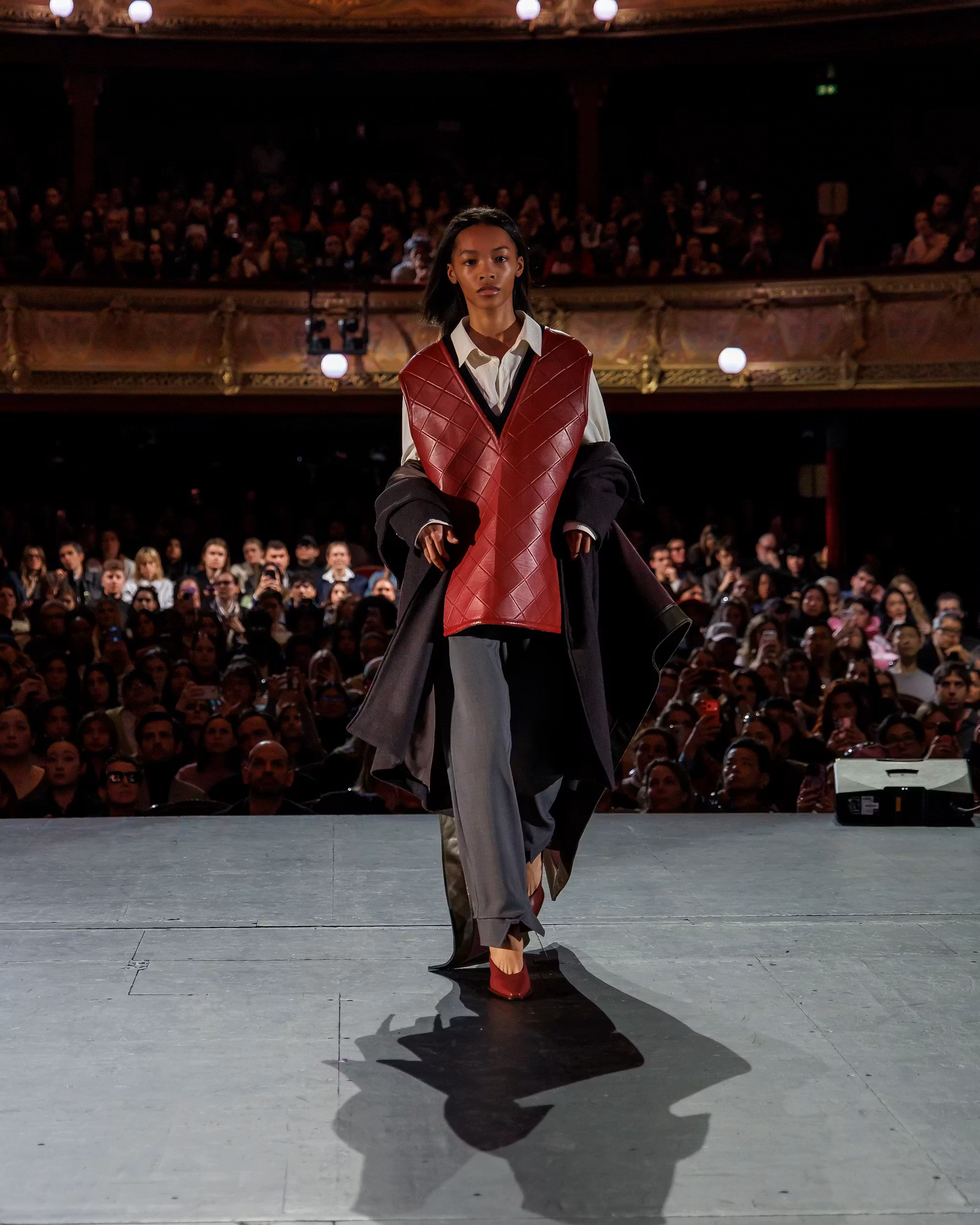
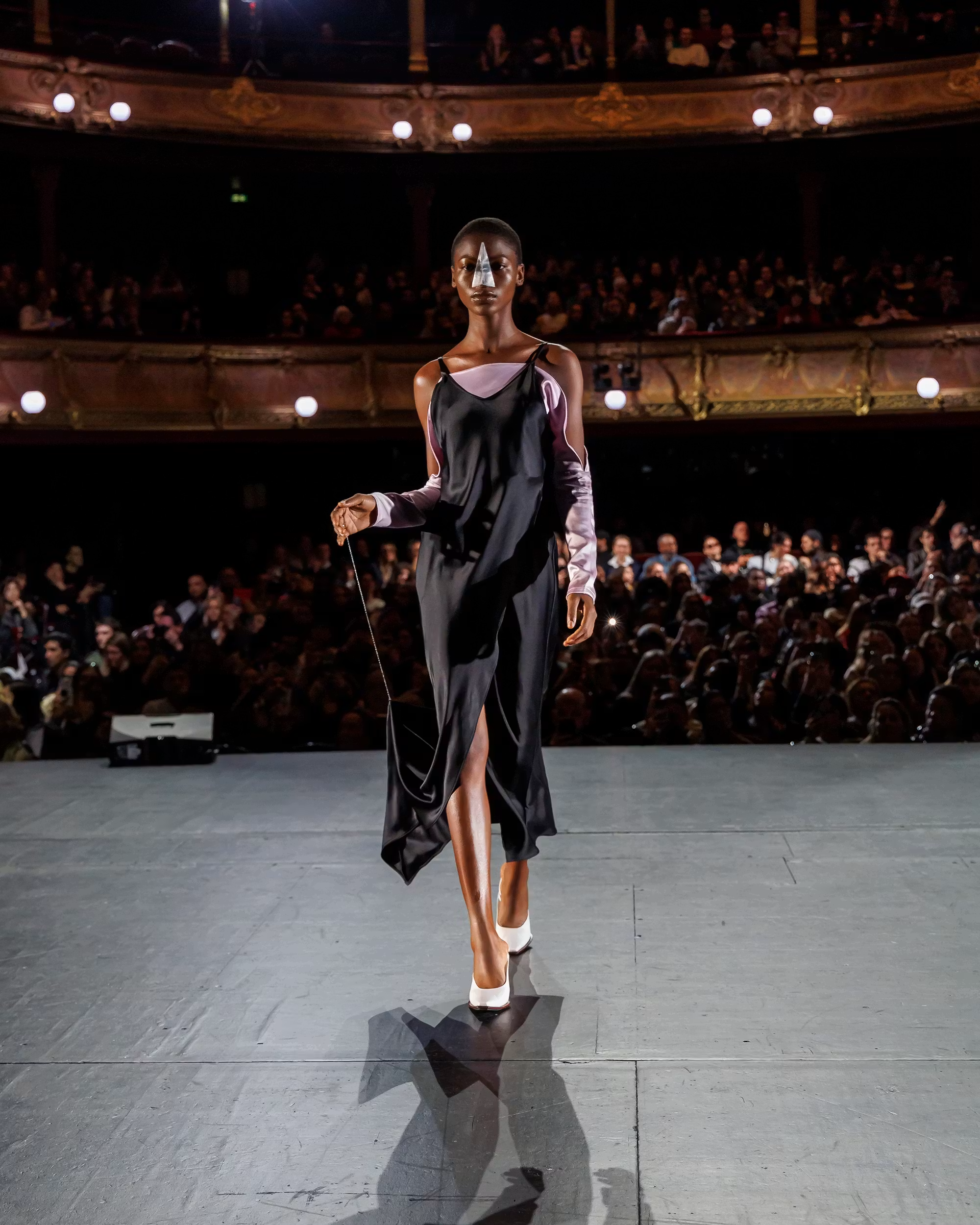
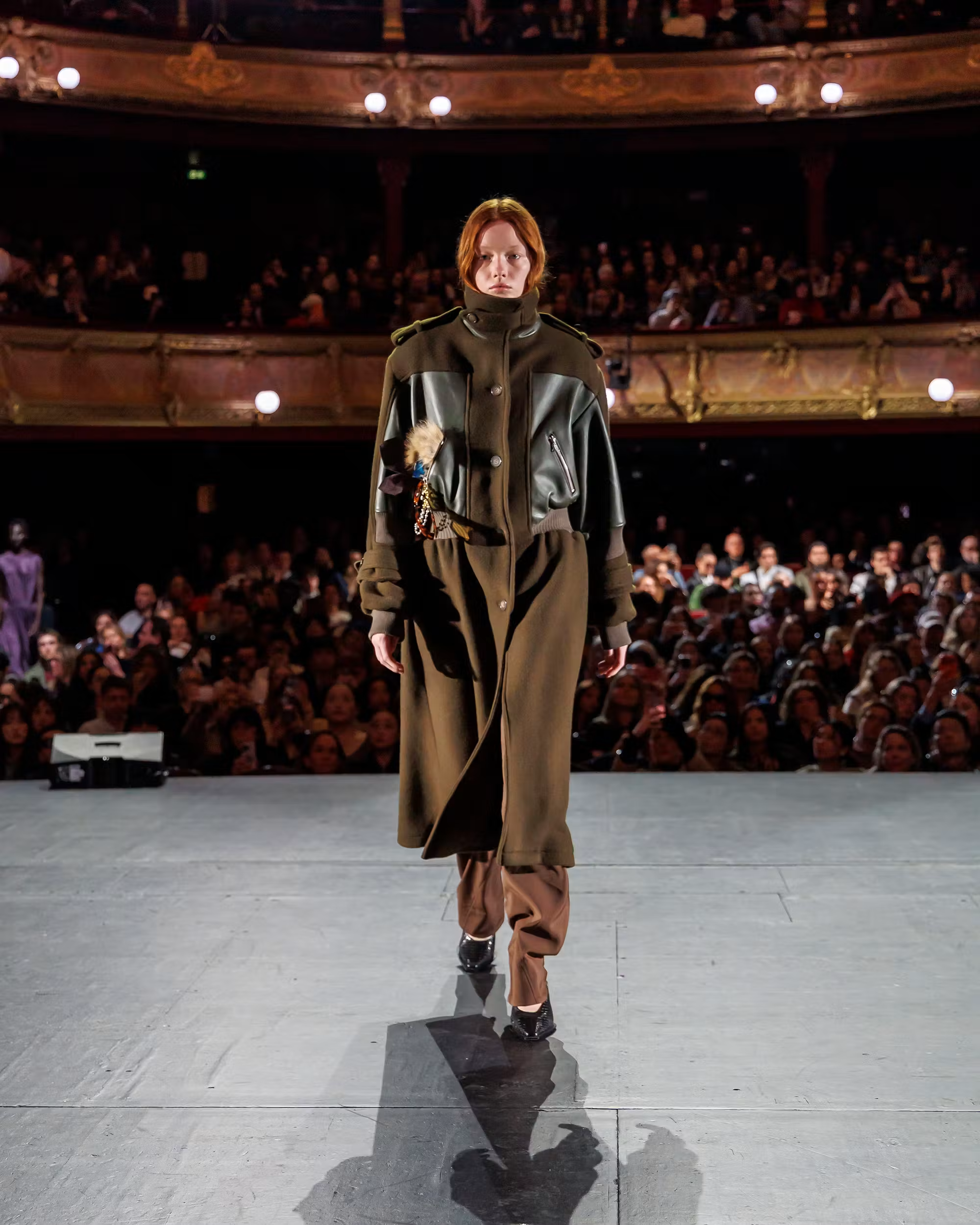
With a visual DNA rooted in the Caribbean, Tatarstan, and the Netherlands, Zomer (meaning “summer” in Dutch) thrives on the eclectic tension of garment archetypes – familiar, everyday styles – and their subversion with signature twists. Founded by notoriously camera-shy Danial Aitouganov and stylist Imruh Asha (the two send stand-ins to take their bow at every show), the brand’s collision of cultures dictates a specific, off-kilter use of proportion, weighted by recurring codes like raw edges, red topstitching, and an infectious sense of play.
In speaking to the founders, one senses a deliberate rejection of the static for a constant, restless evolution. “There’s a certain playfulness that feels very important to us, a garment should always have a twist,” explains Aitouganov. “Our use of color is also quite specific, and there is always a recognizable sense of ‘Zomer’ in the work – but it’s always evolving. The challenge is not to repeat yourself, but to keep a sense of identity as you move forward.”