How to Build a Magic Surfboard
Story by Laura Thompson
Photographed by Brian Karlsson
Kobe Hughes and Tom Morat are getting desperate. It’s a sunny Sunday afternoon in September, and the two pro surfers and surfboard shapers are crouched on a sidewalk in Williamsburg trying unsuccessfully to pry open a cellar door.
Morat gives it a few tugs. “Diz!” he shouts in his Aussie twang. “Dizzzzz!”
Diz — who the U.S. government knows as 33-year-old Derrick Disney — can’t hear him. He’s locked in, metaphorically speaking, in Pilgrim Surf + Supply’s underground shaping bay, running a screeching planer over six feet of polyurethane foam. In just a few hours it will become one of his famed twinzers. Morat and Hughes, meanwhile, are literally locked out.
If I were to tell you to close your eyes and picture a surfer, you’d probably come up with some Jeff Spicoli avatar, a shaggy haired slacker chasing endless summer. But ask any real head on the East Coast and they’ll tell you the same thing: summer is for kooks. The crowds are part of it, but the bigger issue is the waves. In the dog days, New York’s coastline looks like a choppy lake. This slice of the Atlantic needs autumn hurricanes or winter nor’easters to really get things pumping. Which is why, after a waveless week spent 15 miles inland, Morat, 25, and Hughes, 23, are itching to pack up the truck and get down to Rockaway Beach at even the faintest sign of swell.
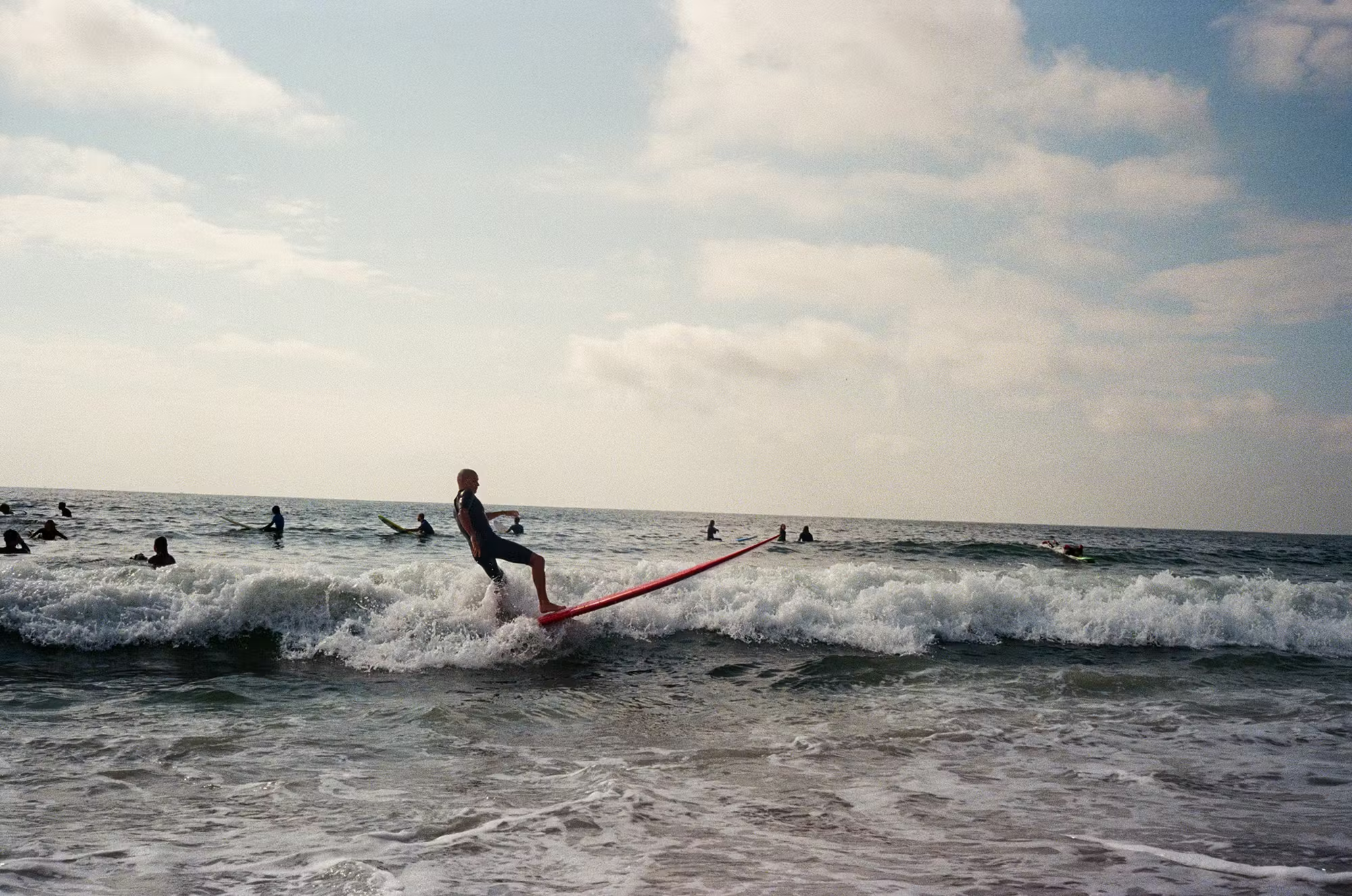
Tom Morat rides a glider in Rockaway.
As for the other clichés: admittedly, there’s a lot of hair between the three of them. Hughes’ tresses fade from espresso to auburn with shocks of brassy blonde as they approach his waist. But calling them slackers couldn’t be further from the truth. These are the fledgling da Vincis of watercraft, an up-and-coming cohort of obsessive polymaths who combine principles of engineering, aesthetics, and freak-level proprioception to build surfboards that have gained a bona fide cult following. Or, as they self-identify: these are three of Southern California’s premier “board dorks.”
They’re in New York at the behest of Chris Gentile, the visual artist and design obsessive who happens to own Pilgrim, Brooklyn’s only surf shop. To the wider world, Pilgrim has long been typecast as a gorpcore darling. But to the city’s surfers it’s more like a beach carpark — the place where you suit up and hype up your friends, where you crack a beer and relive the best wave of the day. At any given time, there’s a cinematographer at the shop screening their latest surf film, or a pro dropping by to say hello during a layover.
This atmosphere is part of what inspired Gentile to build out Pilgrim’s surfboard shaping residency. For the past three years, his shop has welcomed some of the best shapers from every corner of the globe, convening them for a few weeks at a time to build boards for anyone who submits an order form and puts down a deposit. Now, with the help of Gentile’s second-in-command, George Nickoll, and a nice cash infusion from Sun Bum, the residency is going bigger than ever.
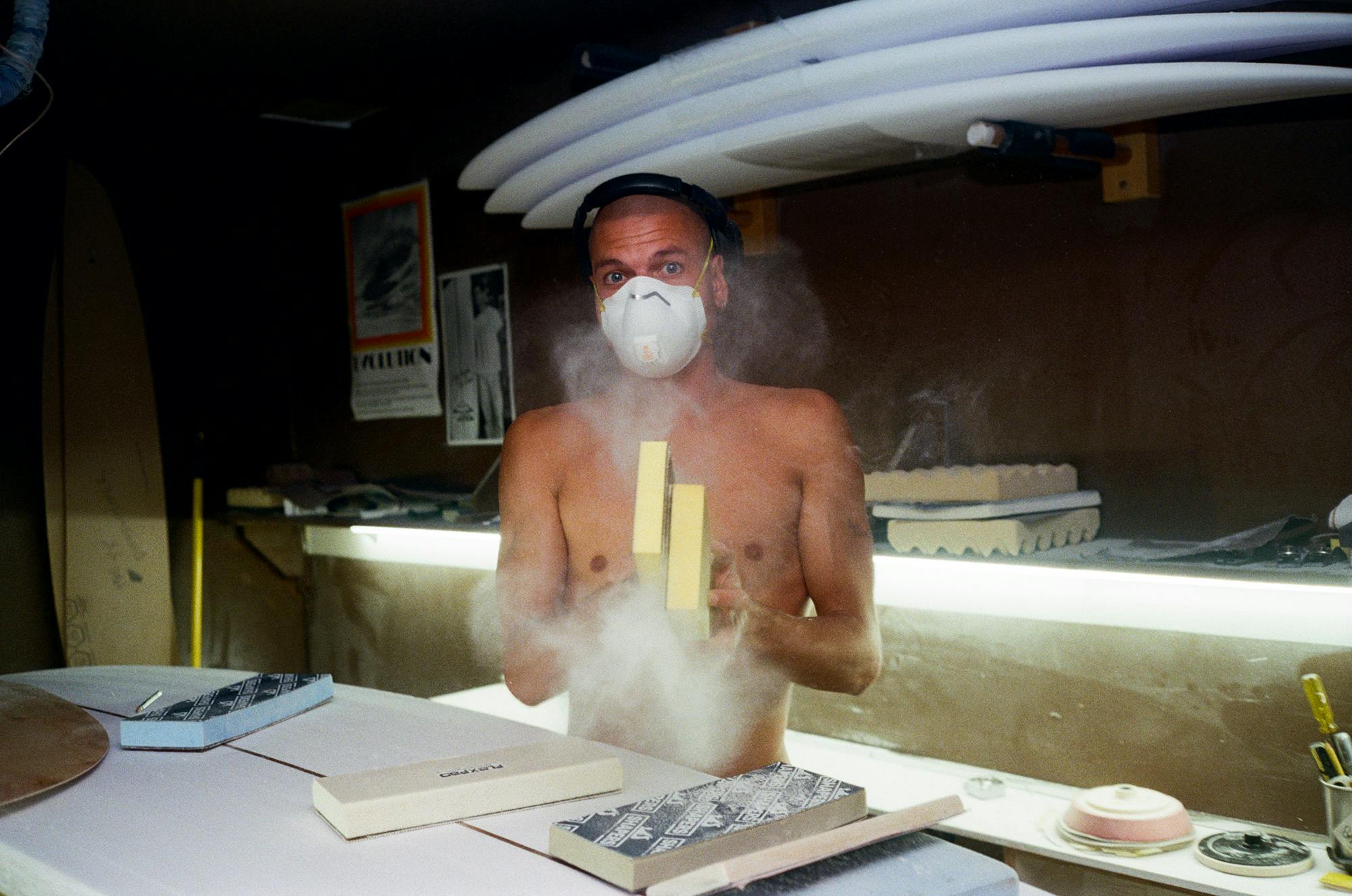
Morat and 10 other shapers will rotate through Pilgrim’s residency.
This summer and fall, 11 board builders — ranging from seasoned legends like Peter Schroff and Malcolm Campbell to experimental young guns like Disney, Hughes, and Morat — are rotating through Gentile’s basement art studio turned shaping bay. They get to take on the challenge of designing boards (price tag: roughly $1,200 to $2,200) for New York’s unique urban surf community. But these boards aren’t just sports equipment. They’re beautiful, extremely rippable art pieces, extensions of the master craftspeople who make them. And I’m about to spend 10 days immersed in their world of saltwater and sanding screens, learning how to make the kind of surfboard that feels like magic under your feet.

Surfboard technology, if you want to call it that, hasn’t progressed much in the past century. Most boards use the same basic components we’ve had since the 1950s: a foam core, reinforced with a wood stringer down the middle, topped off with a fiberglass-and-resin coating. Sure, factories in Thailand have flooded the market with “pop-outs,” crude and cheap machine-molded boards; likewise, there are computer programs that can shave a foam blank into approximately the right dimensions. But even those still have to be finished by hand. To paraphrase the incomparable William Finnegan: a real surfboard is hand-shaped and hand-glassed by a real surfer.
“The materials haven’t changed, but surfing has changed so much,” Gentile says. “And it really is through the design, the exploration and innovation that’s happening in people’s backyards and garages. It’s not happening with, like, a test tank and a wave pool with scientists and engineers. It’s more like the Campbell brothers, who made the first three-fin surfboard in their garage.”
The Campbells’ three-fin board — the bonzer — came out of what’s known as the shortboard revolution, a period in the late ‘60s and early ‘70s when surfing became more performance-oriented. Single-fin longboards, good for noseriding and leisurely swerving, were eventually supplanted by multi-fin shortboards, which turn on a dime and fit better in steeper, barreling waves. This went hand-in-hand with the professionalization of surfing, with its new rules and governing bodies and sponsors and world tours and championship purses. Pressure mounted for surfers to land bigger, more complex maneuvers — think of the tailslides and aerials you might see on a land-based halfpipe — and they in turn pushed for boards that were sharper, lighter, faster.
These boards are not magic boards, a phenomenon I heard about repeatedly during my time in Pilgrim’s shaping “dungeon.” A magic board isn’t necessarily meant to push the outer limits of what’s possible for the human body to do while racing along an avalanche of water. Rather, it’s extremely personal, like a perfectly worn-in pair of jeans. It’s meant to work best under the unique set of circumstances a surfer brings to each session: the width of their stance, how they distribute their weight, how they crouch, how they like to draw lines down the face of a wave, how waves typically break at their home beach, etc. etc.
So everyone’s magic board is different. “I can pretty quickly put a board under my arm and be like ‘this feels magic,’ like, right off the bat,” Morat says. “It’s like dapping someone up and” — he pops his tongue — “it hits so perfectly you know you’re going to be homies.”
The magic board is considered the pinnacle of “alternative surfcraft,” a rapidly expanding branch of the surf universe populated with free (i.e. not contest) surfers, independent filmmakers, and custom board shapers who favor quirkier, often vintage designs. (There are still a handful of corporate sponsors in this world, too.) As a subculture, it encourages creativity and experimentation, both in and out of the water. Think of it as an avant-garde school of art, à la the modernists, if their manifesto read: we’re absolutely ripping!
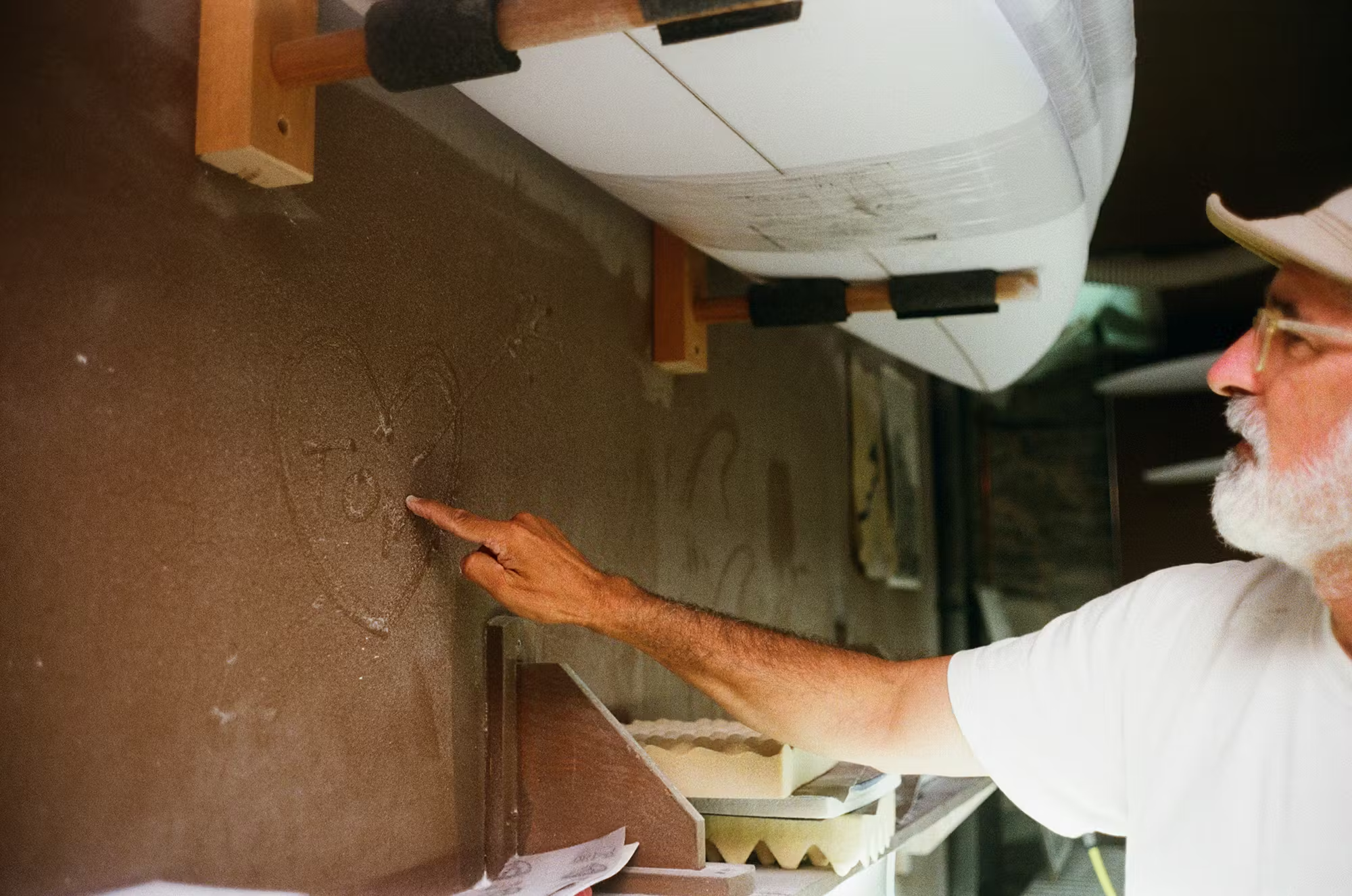
“The materials haven’t changed,” says Pilgrim’s Chris Gentile, “but surfing has changed so much.”
The people who buy these boards are the kinds of people willing to travel for waves. Their quivers run at least five boards deep to account for every surf forecast imaginable. They proselytize about their favorite builders as if they were creative directors at major fashion houses. Mention of, say, a Skip Frye Eagle is met with a knowing-but-jealous smile; ditto a displacement hull from Marc Andreini. For the Pilgrim residency, most buyers are local to New York or the surrounding area, which serves a dual purpose. First, they’re saving $100 or more in shipping costs. More importantly, they get to meet the shapers in person.
“Many people wanted to come and actually have a conversation before they started,” Gentile says. “You know, ‘maybe make the nose a little narrower,’ or ‘put a little bit more foam under the chest.’ They’re getting things that are truly customized. And then the really special thing is people get to hang out in the shaping bay and watch.”
That’s the other thing about this world: everybody eventually gets to know everybody. Isabella Manning, a New York-based stylist and designer who’s been surfing for a decade, met Morat years ago in Malibu. At first, things were rocky — Manning says Morat burned her on a wave (Morat doesn’t recall this) — but over time they got to know each other. In August, Morat made amends by letting Manning try one of his single-fin mid-lengths at that very same Malibu point break. “It was literally unbelievable,” Manning says. “When I got into the wave, I just took one step and I was in the pocket. It was almost hard not to be in the perfect place on the wave with that board. It made things feel effortless.”
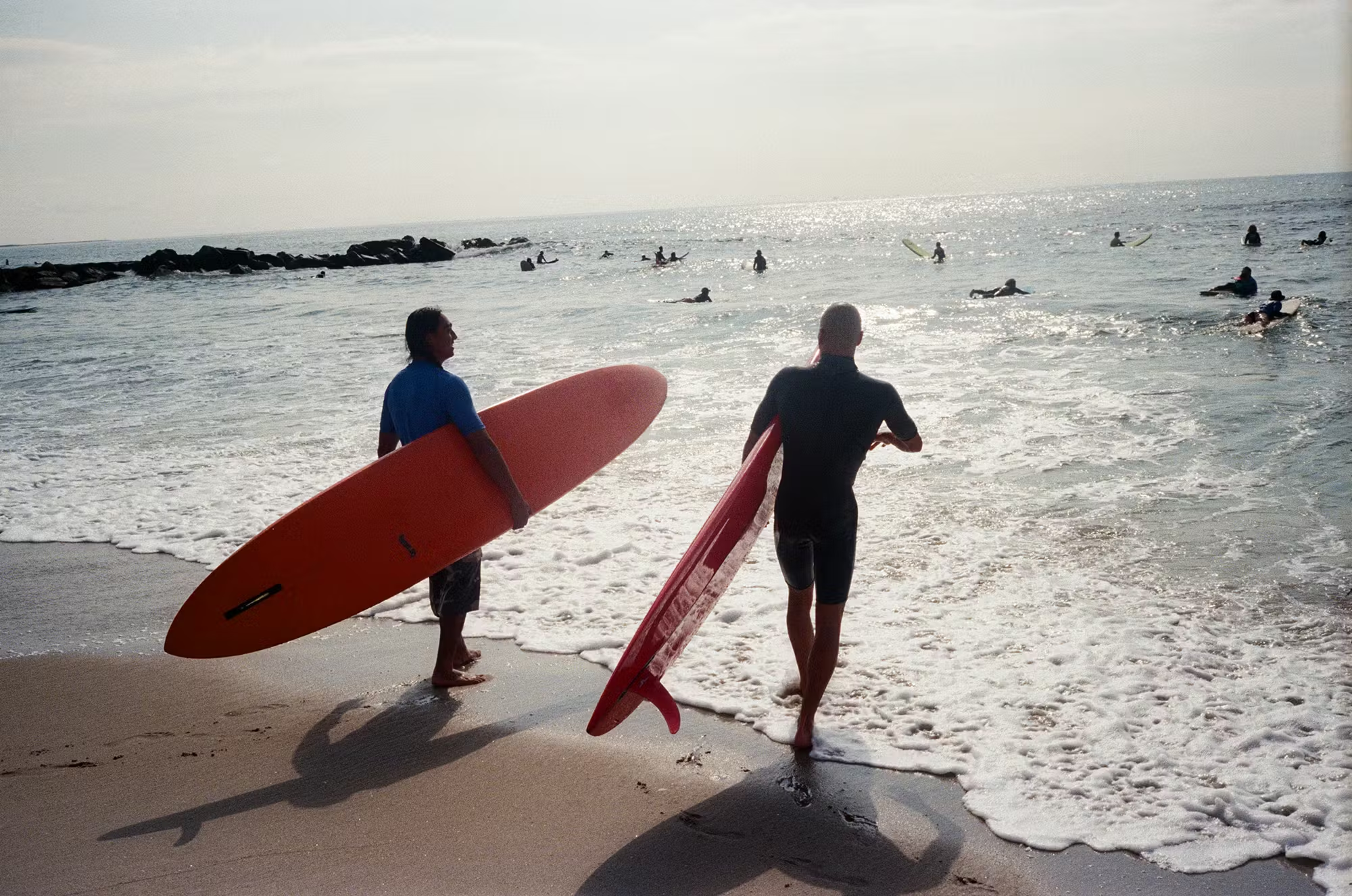
Kobe Hughes (left) and Morat will each complete a queue of orders for New York’s unique surf community.
When the residency’s order queue opened up, she knew she had to have one of her own. But Rockaway waves break differently than Malibu waves, so she and Morat agreed to tweak the design to make her board more New York-friendly. Although Manning typically prefers longboarding, Morat suggested she shorten the mid-length to accommodate the steeper beach break (and her six-floor walk-up).
“When you get something that was hand-shaped, your experience surfing is so much more personal,” Manning says. If you have “the best session of your life” on the board, “it’s more fulfilling when you’ve been working with someone to build it.”
Back at Pilgrim, we’ve finally made it down into the dungeon. “This looks kind of like a Kobo outline,” Disney announces, gesturing to the board that made him so oblivious to our shouting and banging.
“It’s got some whammy,” Hughes — affectionately known as Kobo — replies approvingly.
Morat Gentile, and Nickoll, meanwhile, busy themselves loading up Gentile’s Toyota Tundra. The surfers are desperate to touch water and, in Morat’s words, “get grounded.”
In Rockaway, it’s apparent that my secondhand mini mal is not my magic board. It has a lot of rocker, making it forgiving of bumps and late takeoffs but sluggish on mellow days like today. The three shapers, on flat, arrow-like boards aptly known as gliders, breeze past me every chance they get.
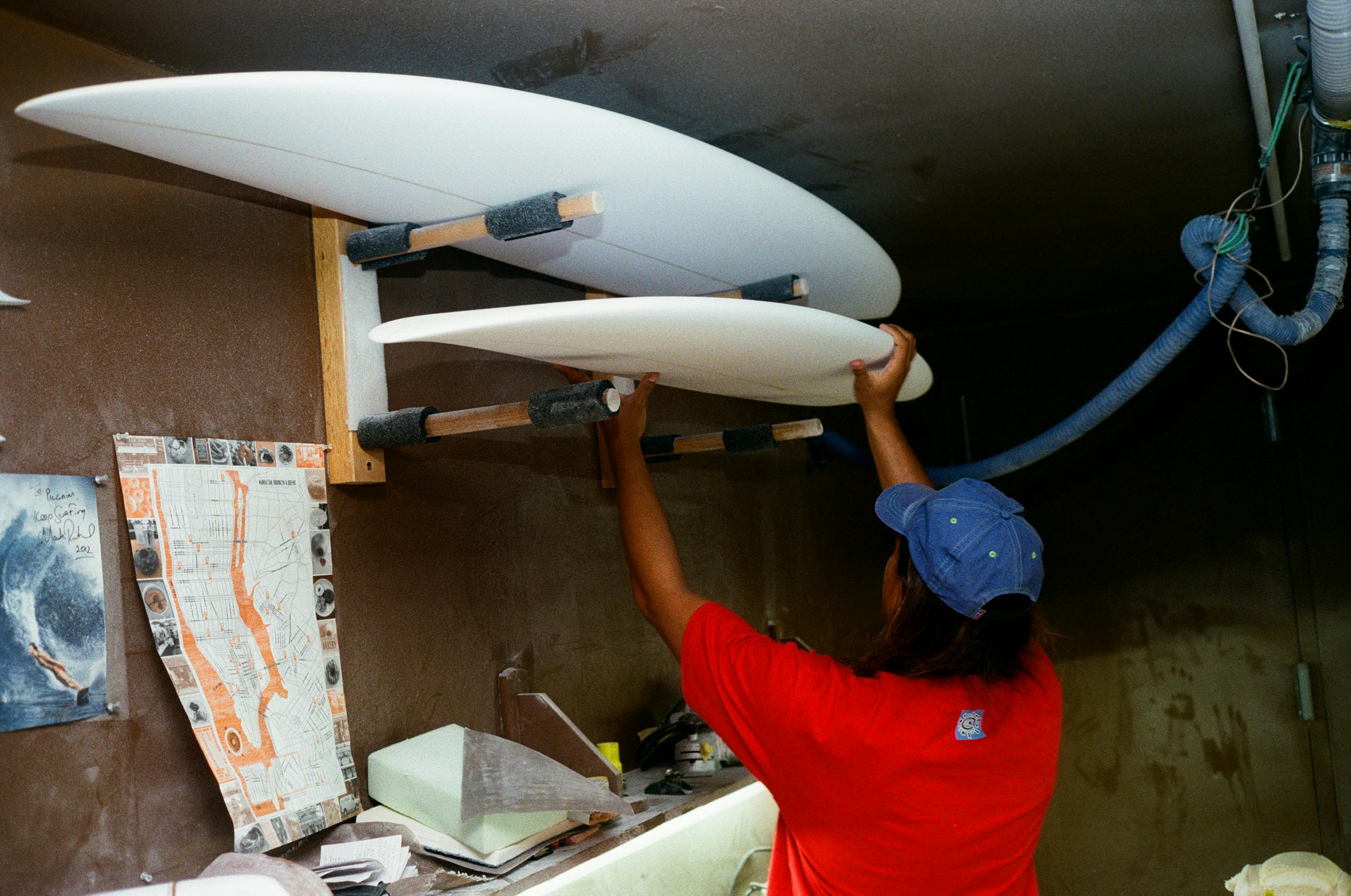
Hughes’ current fixation is a model he calls the Patty Star, with the wide point shifted toward the tail.
This is one of the reasons these three are becoming such sought-after craftsmen: they are, first and foremost, really fucking good surfers. “There’s a lot of surfboard shapers out there that don’t surf, or don’t surf well,” Hughes says, explaining that they’re then not as dialed in to the way water feels when it’s flowing beneath a surfboard.
“Surfer-shapers can tune into a concept or design that’s tailored exactly to their approach to surfing,” Disney adds. So when you’re choosing a shaper to make you a board, “it’s like, choose your player — Kobo’s got his star board spinning, Tom’s got that thing with the quad-concave, and I’d probably just have like, a little fish twinzer thing.”
Translation: Hughes’s latest fixation is a board model he calls the Patty Star. This player surfs relatively upright, with his feet close together, so the star board has the wide point shifted toward the tail to tighten his turn radius. Morat’s current favorites feature four overlapping concave hollows on the bottom to give him lift and speed as he ricochets up and down the face of a wave. Disney crouches low and draws long, meandering lines, so he places two miniature “Canard” fins ahead of the standard twin fins on a fish-shaped board for maneuverability and drive.
Those same player profiles carry over onto dry land, too. Hughes is the wunderkind protégé of Ryan Burch, a titan of modern alternative surfboard design (who is also his uncle). When he’s not in his shaping bay in Encinitas, he’s a professional free surfer who you can catch in campaigns for Sun Bum or on billboards advertising canned cocktails. He’s suspicious of the Instagramification of surfing, but it’s impossible not to notice how seamlessly his happy-go-lucky magnetism translates to social media. Rumor has it he once even charmed Alicia Keys.
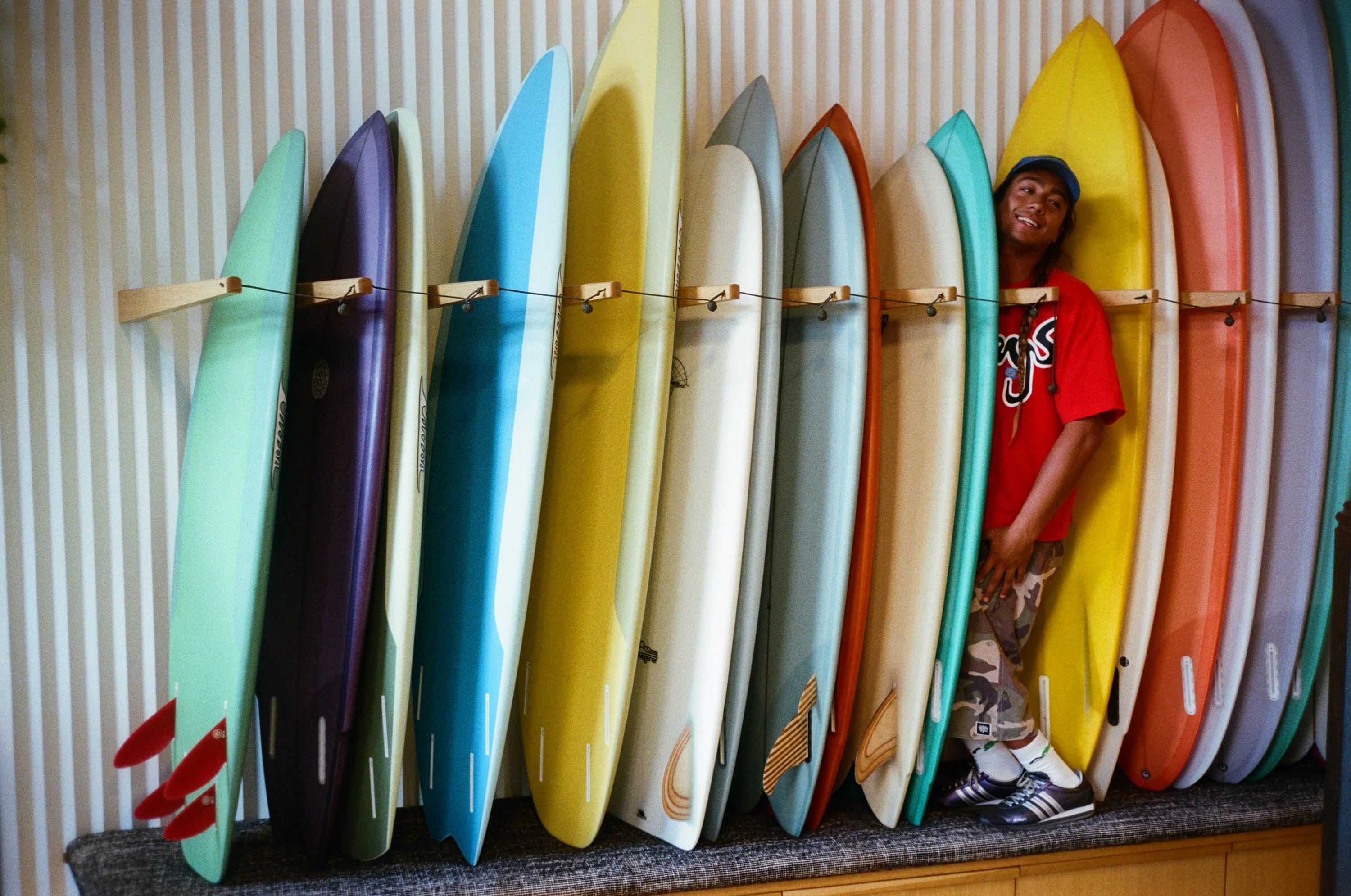
The kinds of people who buy boards from Morat, Disney, and Hughes have quivers that run at least five deep.
Morat, the most recent cover boy for the high-end surf mag Emocean, has a frenetic energy. He cut his teeth at Thomas Surfboards — a major operation out of Noosa, Australia — and now splits his time, and his board-building business, between France, Australia, and Southern California. His whirring brain constantly cycles between the sensory input of here and now, his dream to parlay board building into a multidisciplinary artistic empire, and the endless spreadsheets he keeps to figure out how to make that dream financially possible. (Surfboard sales margins are notoriously slim; after labor and materials, Morat estimates he nets about $100 per board.) “I have a pretty bad attention span,” he says. “The only time my brain shuts up is when I’m on a wave or when I’m shaping a surfboard.” Even then, instead of a dull, consistent whine, Morat’s planer sounds more like a NASCAR race.
As for Disney, he’s another export of Encinitas. He downplays almost everything. “I’m always whittling away at something,” is how he sums up his creative output, which now consists of thousands of surfboards, carved wood sculptures, abstract drawings and paintings, and a recent foray into bronze casting. But other people love to talk about Disney, the sweet-but-aloof savant. Morat describes him as “the kind of guy where, at the airport, they can be calling ‘Derrick Disney to the gate, the doors are closing’ over the loudspeaker, and he still won’t walk any faster.” Mikey February, one of the most renowned pro surfers in the world, tells me he has long aspired to surf like Disney. And from his mentee-turned-contemporary, Hughes: “Derrick’s done good from surfing, but I think for him, making surfboards and his art and surfing is all just a way to express himself. He’s just a special human with a cool perspective.”
During a night of barhopping, Disney lost his phone and was actually delighted — no more constant communication! Another night, watching Disney run a tiny blade called a spokeshave along the stringer of a nearly complete board, I caught him singing along to “Just a Bum” by Michael Hurley underneath his respirator: “Easy come, easy go, don’t ya see, don’t ya know, your lovin’ hobo.”
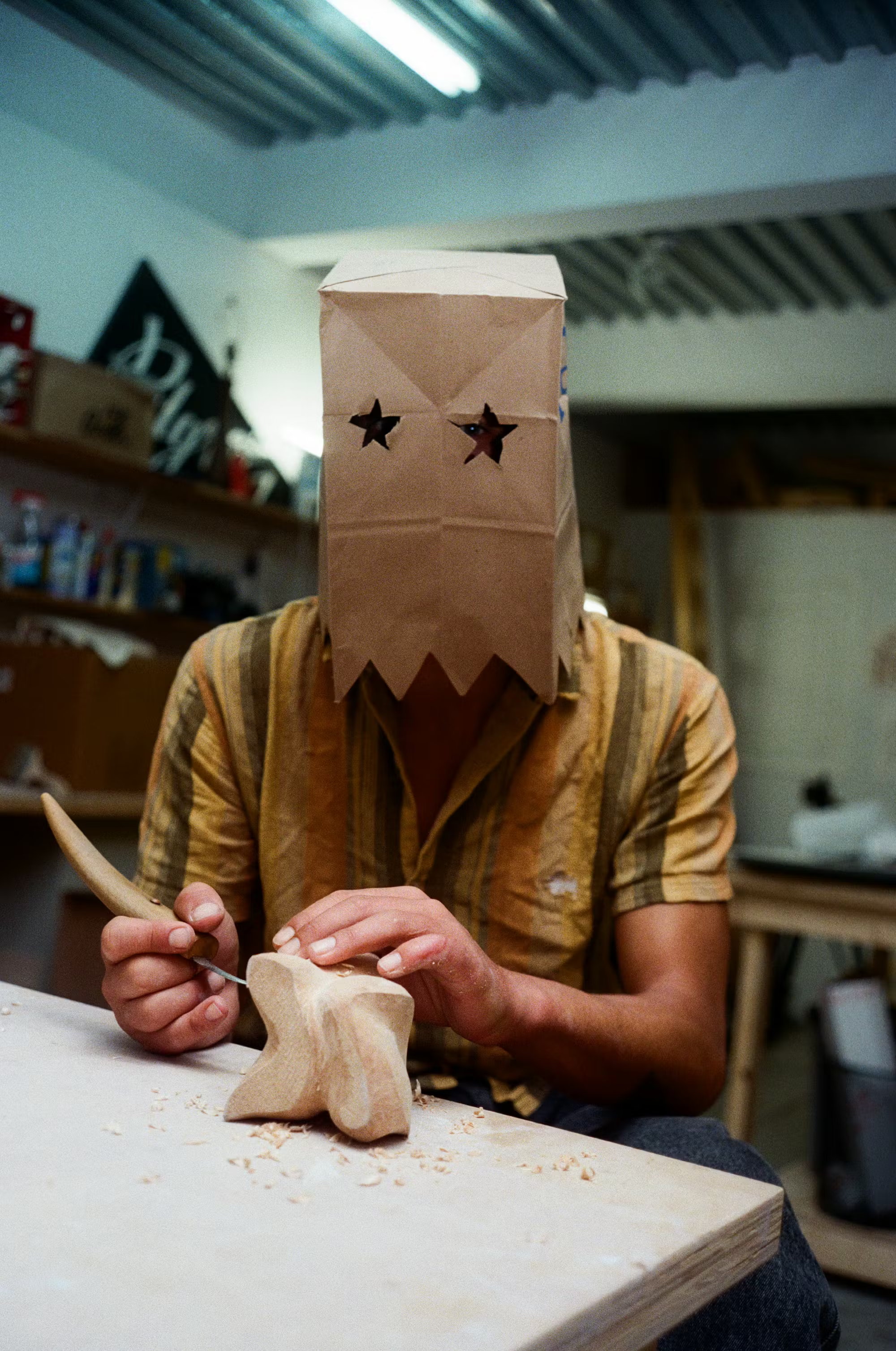
“He’s just a special human with a cool perspective,” Hughes says of Disney.
After my subpar performance in Rockaway, as the sun begins to set, Disney produces a bag of split wood and wordlessly builds a campfire. Morat wanders off to make a few phone calls — it’s business hours in Australia. Hughes sips a beer and watches the sets roll in, growing as the tide rises.
“Might as well catch some more waves,” he shrugs, then grabs a board and wades back into the inky ocean.
So, for the million-dollar question: how do you shape a magic surfboard?
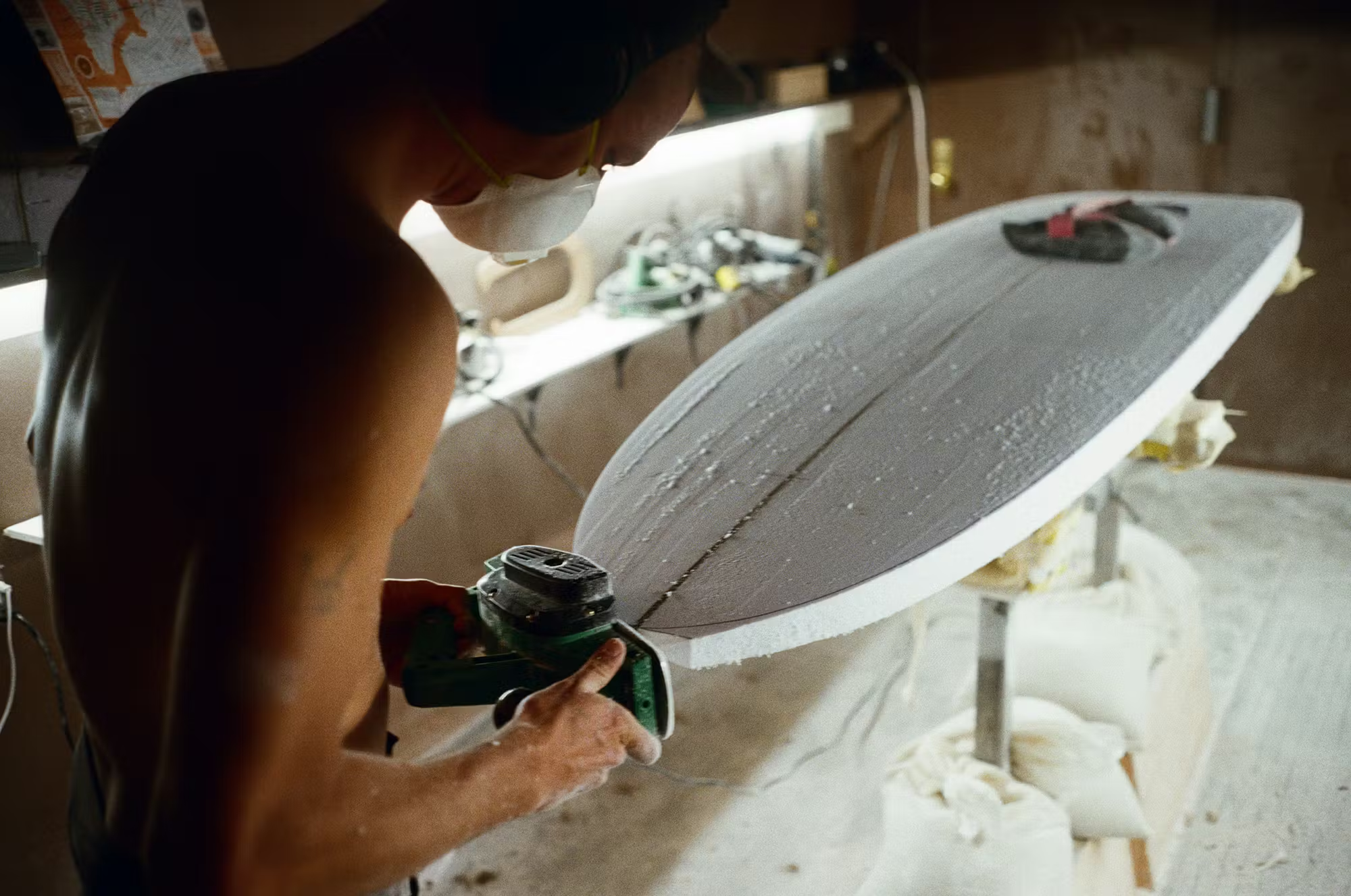
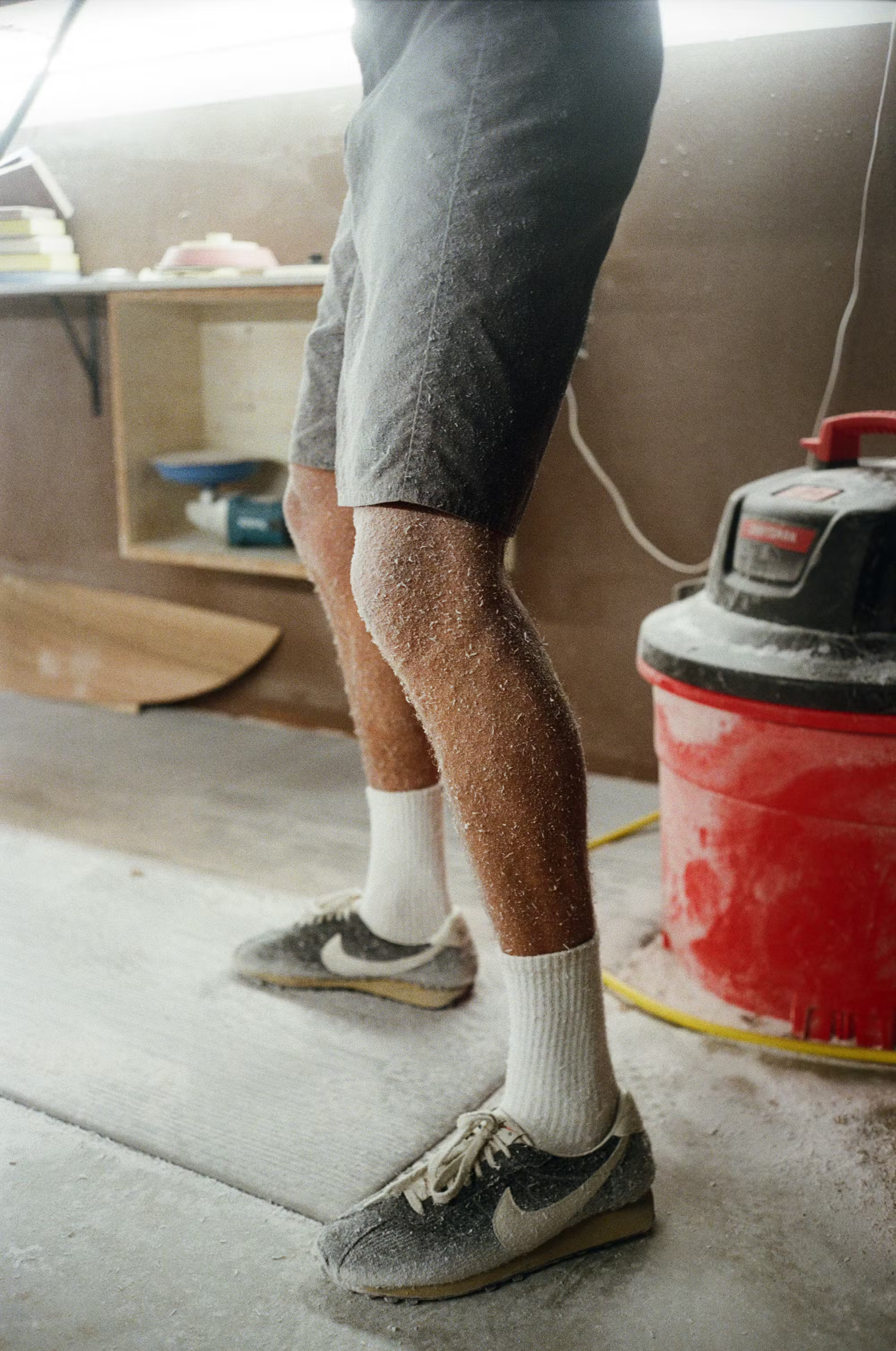
For brevity, let’s skip the countless prototypes, variations on the same design that a shaper has been refining by fractions of an inch for months, if not years. From there, there’s skinning the blank and measuring and outlining and handsawing and truing up and planing and foiling out and sanding and shaving the stringer and measuring again and sanding again and stepping back, flipping off a sidelight, cocking your head, and sanding again. But the truth is, if you watch any of these three surfer-shapers make your dream board, all you’ll be able to discern is a dusty dude in boardshorts doing some sort of reiki healing massage up and down a streaky foam blank. It’s complex hydrodynamics disguised as ritual.
Eventually, you’ll quit your staring contest with the foam to rub the dust out of your own eyes. When you look again, a perfectly formed surfboard, as naked and fragile as a newborn, will be sitting on the shaping rack in front of you. The dusty dude will continue sanding for at least another hour. And you’ll be too mesmerized to look away again.
By the last full day of the residency, the shapers have essentially lived a movie montage. They’ve built surfboards in the dungeon and gotten barreled at Lido Beach, but they’ve also hobnobbed with the Fashion Weekers in Chinatown, ridden CitiBikes across the Williamsburg Bridge, shot off fireworks in Fort Greene Park, and eaten chopped cheeses and Sabrett hotdogs sitting on grimy curbs. They’ve been the guests of honor, alongside Mikey February, at a fundraising event on behalf of two local surf charities. The boards they’ve made are each wrapped with a small band of plastic, awaiting a trip up to Rhode Island to be glassed. By the time the boards are ready for pick-up at Pilgrim in late October, customers like Manning will have been anxiously awaiting them for roughly eight weeks.
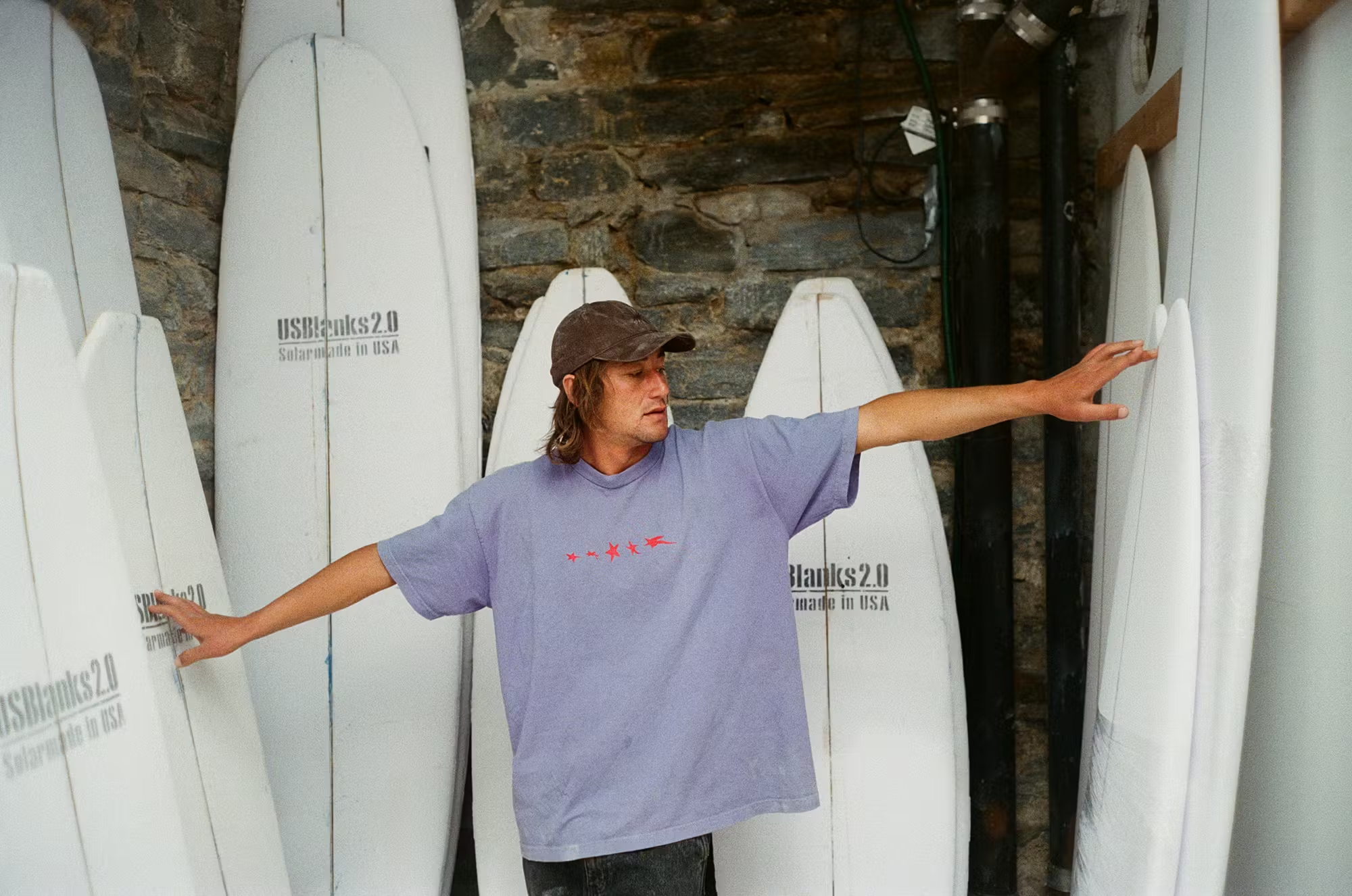
But for the shapers, it’s time to get back to real life, which is almost as charmed as their time in Brooklyn. Disney and Morat are headed to California to kick off a new Stab Magazine video series starring February, who recruited 17 of the industry’s top shapers to build (mostly) alternative boards to test around the world. Disney, Hughes, and Morat all contributed as representatives of the modern vanguard.
Hughes has to miss the party — another sponsor needs him at a pop-up in Japan. When he returns, he and Disney will be helping their unofficial patron saint, Ryan Burch, with a limited release of computer-shaped, hand-finished stock boards, the alt-board world equivalent of an Our Legacy x Stüssy drop. Morat is needed back at the shaping bay/glassing factory/wetsuit atelier he works out of in France, where he’ll catch up on his European order queue.
In the two weeks they spent in New York — while I, a writer, begged these incredibly tactile athlete-artisans to verbalize the sensation of building and riding a magic board — Disney, Hughes, and Morat kept coming back to one concept: “chasing a feeling.”
“You’re trying to make something, to accomplish a feeling, but you might not know what that feeling even is until you feel it,” Disney explains. “Then when you feel the thing that you’ve always wanted to feel in a board, but weren’t sure existed — that’s magic.”
“But,” Hughes says, “there’s not, like, a board that is the end-all-be-all. After you have a magic board for a while it’s not that it loses its magic, but you start to get curious about other things, trying out new feelings.”
A surfboard’s magic, it seems, lies not with its perfection, but with its potential. Once you catch that brief euphoric feeling, planing effortlessly across water like Jesus on the Sea of Galilee, you don’t step onto the shore, tuck your board under your arm, and head home. Instead, you paddle right back out to the horizon, hopeful for what’s still to come.
“For all I know, I could never make another magic board again — I hope not, touch wood,” Morat says. “But there’s this blind faith that I’m going to get some waves soon, and this blind faith the next board is going to be really good.”
Credits
Story by: Laura Thompson
Photographed by: Brian Karlsson