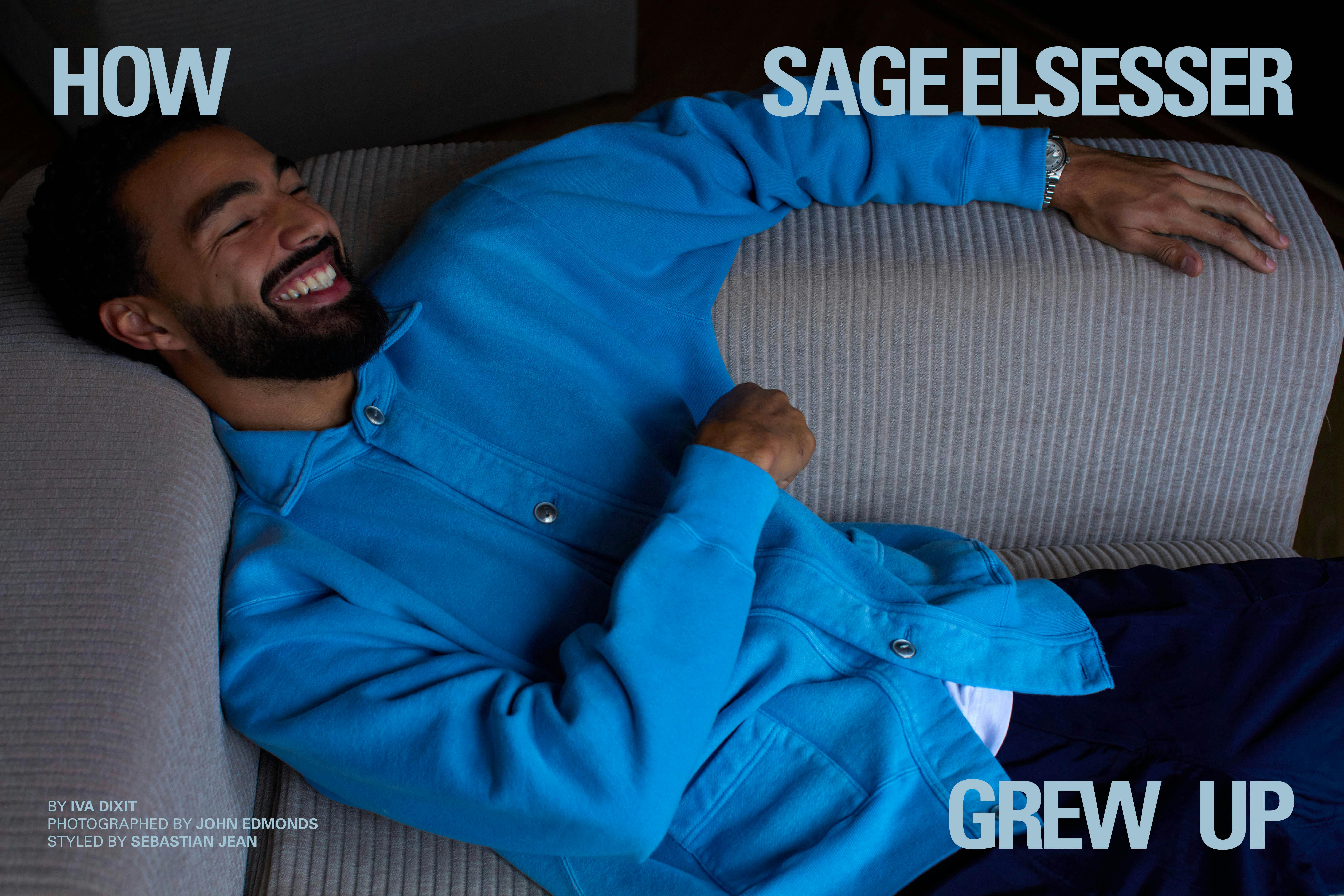
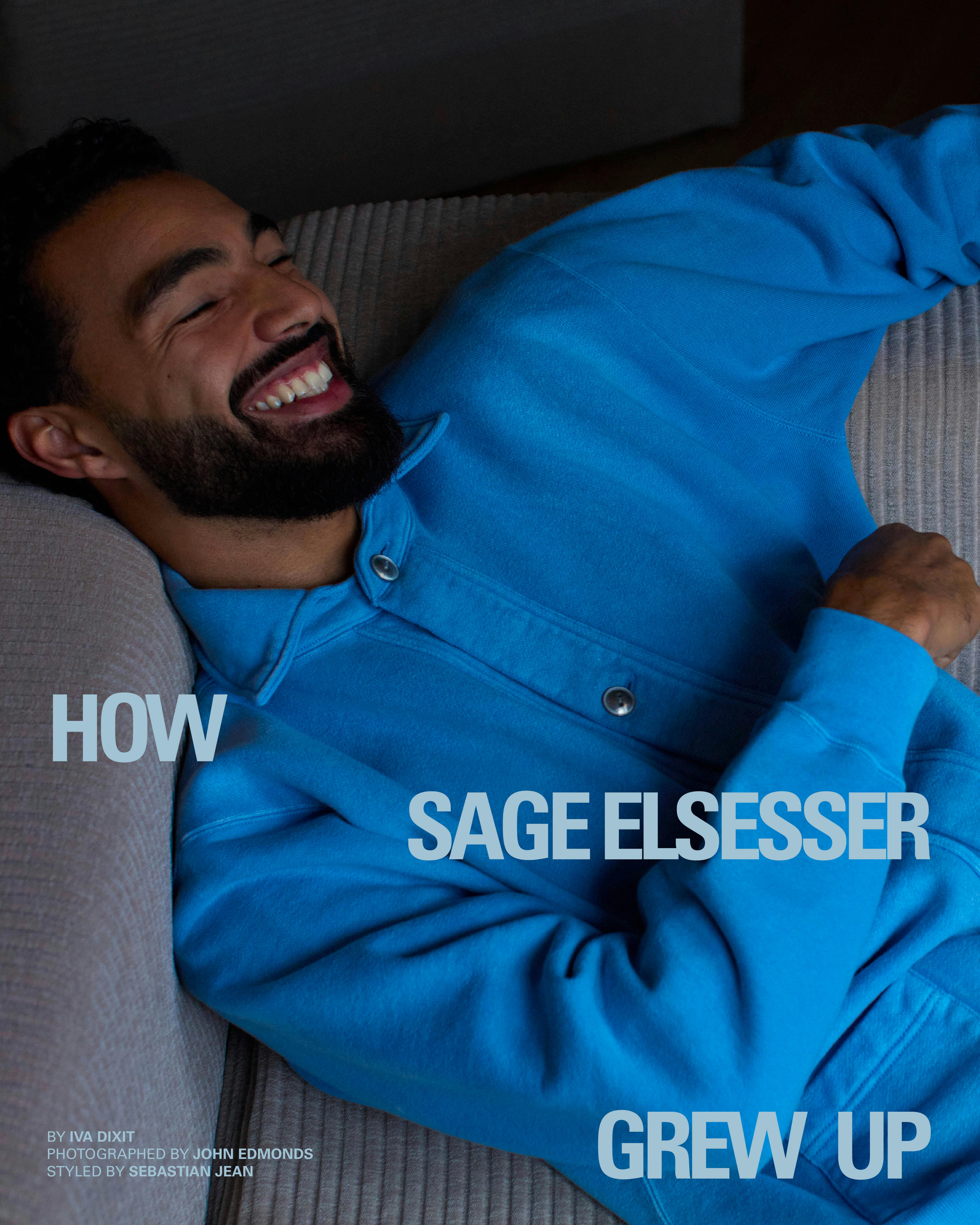
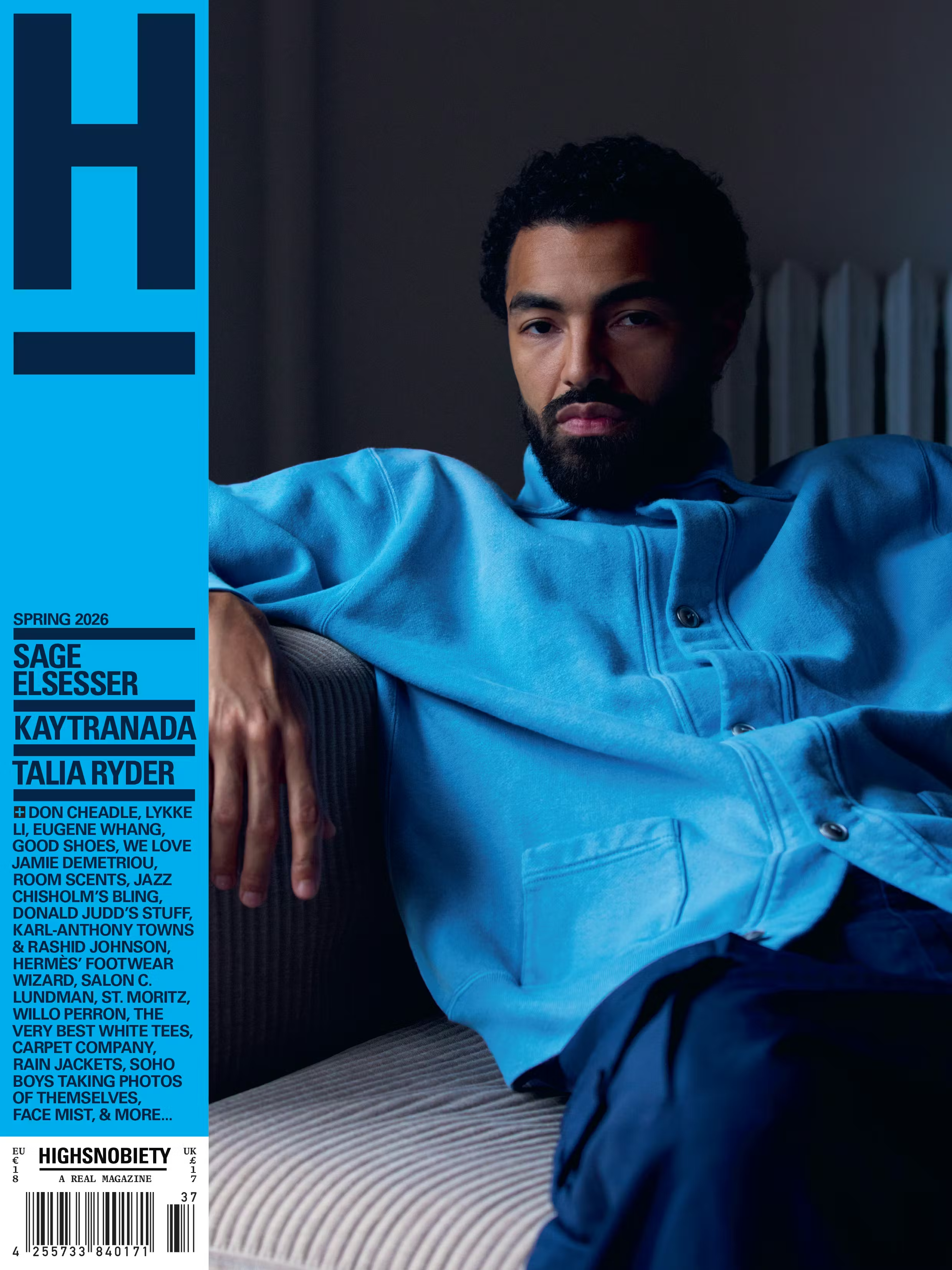
This story appears on the cover of the spring 2026 issue of Highsnobiety. Head here to get a copy.
The ollie, in skateboarding, is the mother of all moves. No, literally. “It is the basis of everything,” Sage Elsesser explains.
The ollie requires a certain inexplicable telepathy between your knees, your ankles, and your upper body, all three of which must know exactly when and at what angle to tilt and bend in order for you to defy Newtonian physics and tear, for a few precious seconds, through the air, united with the board. “Nothing beats that feeling when you’re a kid and you learn how to do the thing that’s gonna teach you how to do everything else,” Elsesser says.
Professional skateboarding is an insular world, and Elsesser is one of the best-known virtuosos of the sport, which went from punk kid subculture to mainstream vehicle of stardom and sponsorships in the past 10 years. He was 17 when he made his explosive debut as one of the lanky teenagers doing double-heel flips in William Strobeck’s “cherry,” a 40-minute work of cinéma vérité made for a little-known skate brand called Supreme.
For the skate world, “cherry” was the equivalent of a cultural Cambrian explosion, bringing their sport into the mainstream in a way it simply hadn’t been before. Supreme went from an IYKYK thing to a billion-dollar entity with a private-equity ownership stake whose box logo was the uniform of every millennial creative director. This was 2014, and skate videos were just taking off on a newish platform called Instagram. But timing, circumstance, and excitement came together in that way that happens once in a generation, creating capital-C celebrities out of teenagers who until then had just been happy to coast over handrails.
Among skating aficionados ranging from ages 14 to 44, or even just the casual Supreme fan, Elsesser’s preternatural skill on the board is still spoken of in hushed awe. “People forget the source material,” says Elsesser’s oldest sister, Kanyessa McMahon. “He is the source material.” Overnight, he went from boarding school 11th grader to global sensation, becoming one of the earliest team riders to join Jason Dill and Anthony Van Engelen’s newly formed skate brand Fucking Awesome. He’d always been gifted at many things — soccer, art, music — but it was skateboarding, and the people he met through it, that brought him into a decade of creative experimentation and collaboration. “cherry” created many generational skateboarding superstars who’ve stayed true to the sport. But Elsesser’s trajectory stands out for just how many industries he’s actively involved in. Turns out, if you can charm gravity into loosening its rules for you, you don’t have to limit yourself to just one career.
In videos from his Supreme era, Elsesser can be seen preening with the cockiness that only a 17-year-old boy is capable of, his charming insolence offset by his otherworldly abilities. “He was already really good when I met him,” Strobeck says. “He was on his way up.”
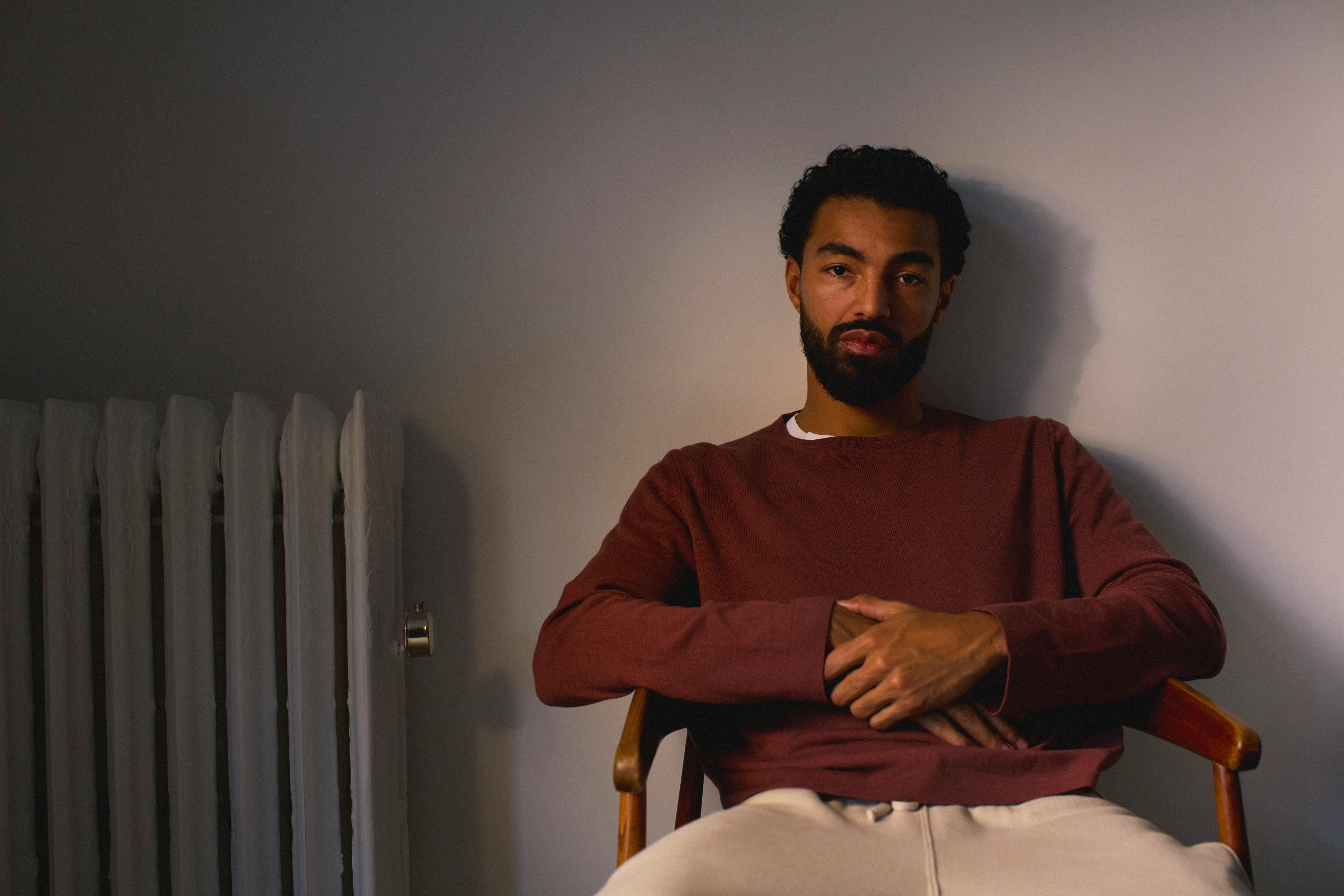
But that was then. The Elsesser I’m meeting today, at the Wythe Hotel in Brooklyn, has been softened, the cheeky impudence of his teenage persona giving way to an air of quiet gravitas. He’s 29, but he seems older. And his primary focus is his career as a musician under the name Navy Blue. If Sage the Supreme skater was a little bit of a bratty bro, Sage the musician is introspective and mournful, making music devoid of the artifice of masculinity.
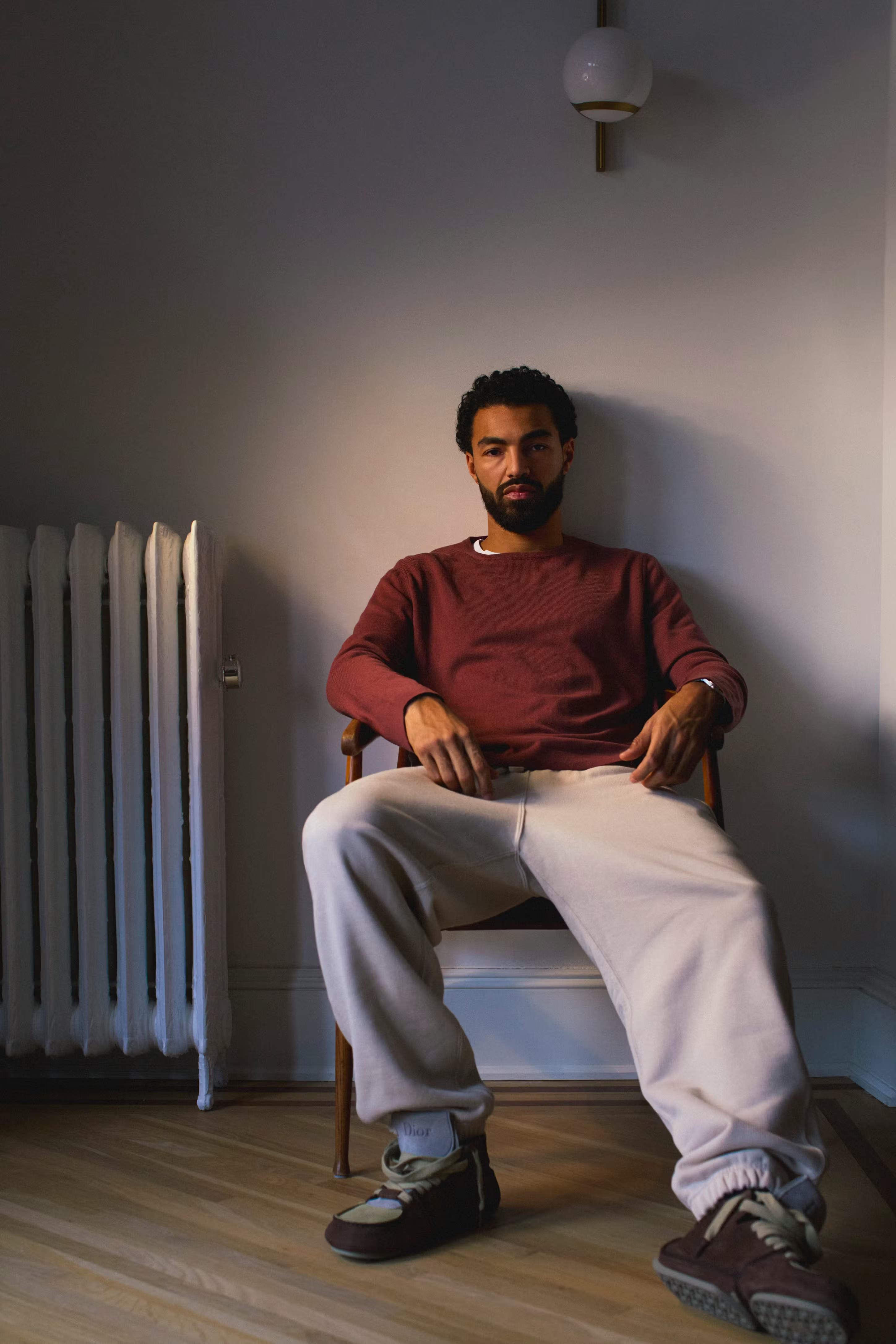
T-shirt CDLP Top and pants STOFFA Shoes DIOR
Part diary entry and part declaration, his latest three-album project is an ongoing musical excavation in which Navy Blue takes stock of himself and his place in this messy world. On Memoirs in Armour (2024), he observes, “That’s a heavy boulder to lift.” On The Sword & The Soaring (2025), he beseeches, “Save me from the wrath of myself / Lift the mask, then ask for some help.” The third album, Sir Render, forthcoming this spring, is special to him for many reasons, but particularly because he got to collaborate with two very different legends: the late rapper Ka and the late James Earl Jones. “This album is really about grappling with your shadow self,” he says.
If you meet him and talk with him and are patient, pushing past his initial blush of shyness, Elsesser will tell you about his journey from skateboarding to recording 10 albums and back again. He’ll come alive not just as a face in a Supreme lookbook or a character in the background of an Odd Future video or supermodel Paloma Elsesser’s brother, although he is all those things. But he’ll come into focus as the eye of a cultural hurricane, shaping the whirlwind around him in his own quiet, persistent way.

Sage Gabriel Carlos Atreyu Elsesser grew up in Los Angeles, a well-loved third child in a family made up of two musician parents and three sisters. (It’s a family that has produced more than one star of the downtown New York City scene. Paloma, his older sister, is a fashion-world fixture, and the younger Ama is becoming one.) In addition to an unusually culturally enriching home life, Elsesser played soccer and basketball and was very good at both, but he found himself gravitating to the individuality of skateboarding: “There wasn’t a coach telling me how to do it.”
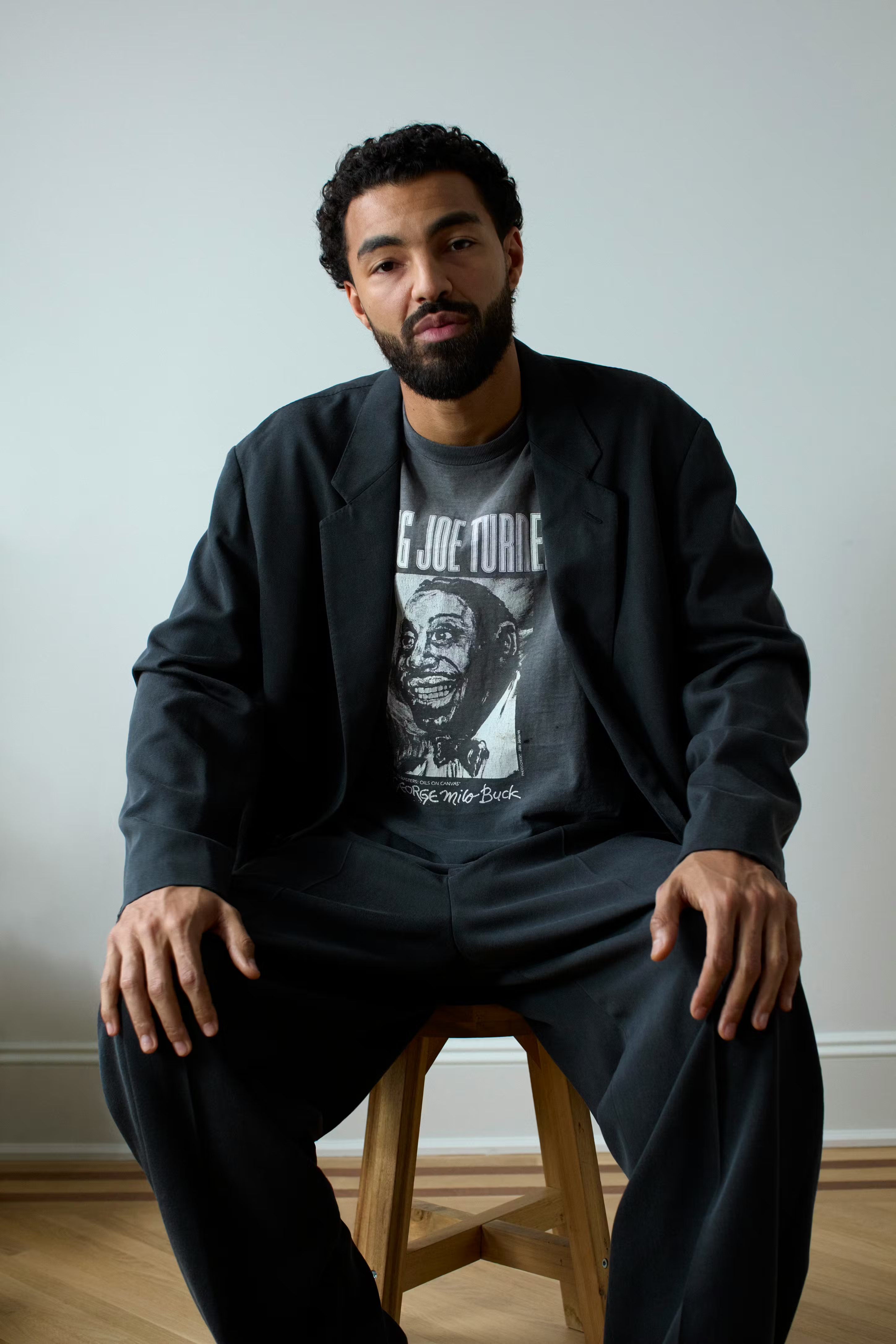
Vintage T-shirt TALENT'S OWN Jacket and pants A.PRESSE
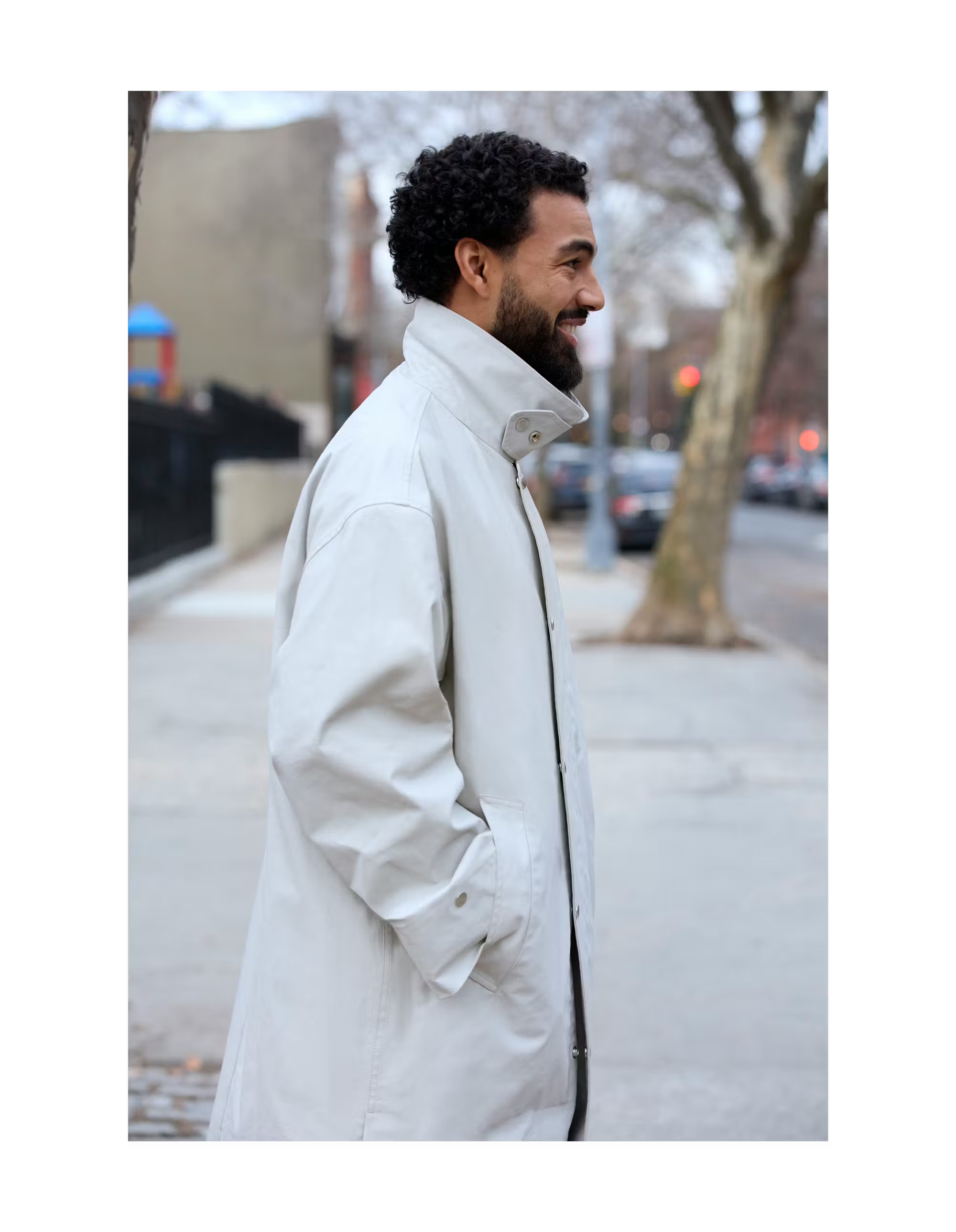
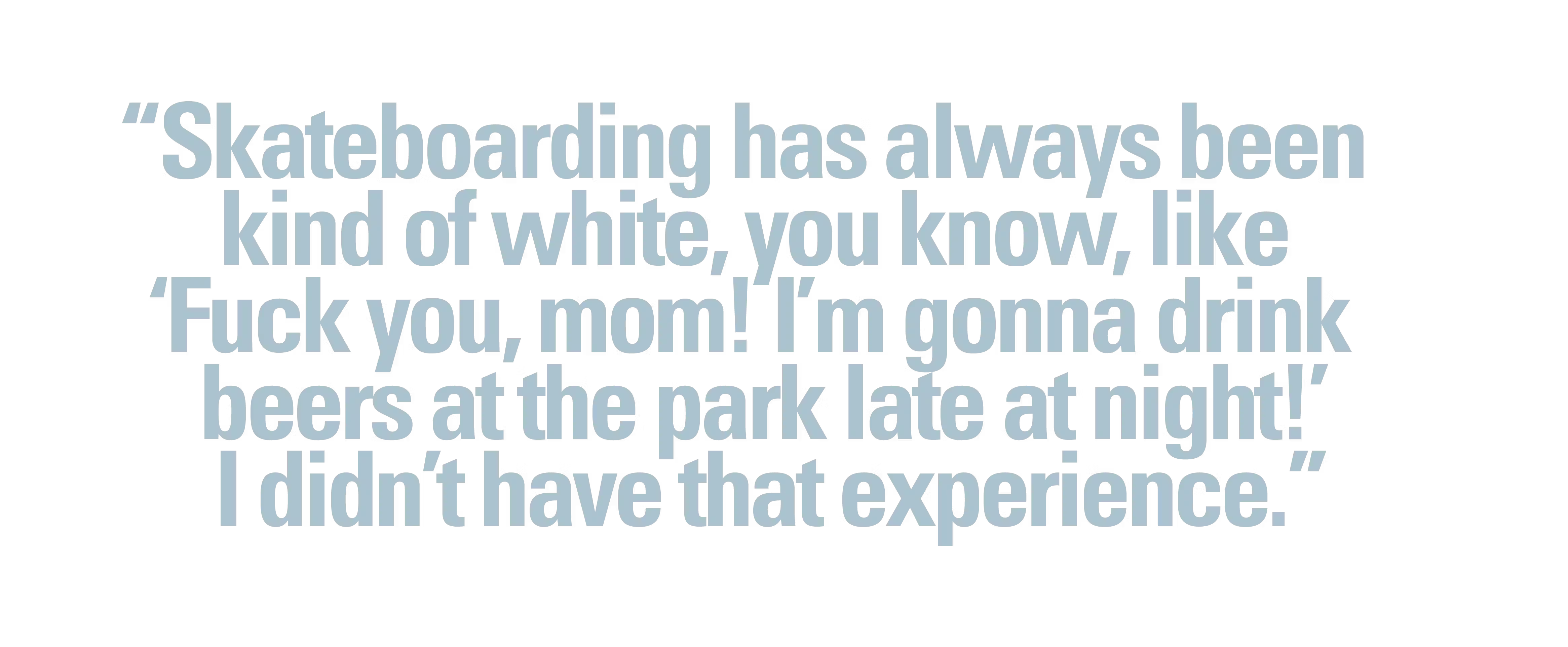
The sport, which had long been associated with homeowners shaking their fists at white suburban truants, wasn’t always kind or welcoming to Black kids. But Elsesser found his people, connecting early on with future skate stars such as Na-Kel Smith. “Skateboarding has always been kind of white, you know, like, ‘Fuck you, Mom! I’m gonna drink beers at the park late at night!’” he says. “I didn’t have that experience.”
Skateboarding taught Elsesser how to be patient and how to appreciate the balletic poetry in the daredevilry of it all. “It’s not an easy thing, learning how to find your balance,” he says. “I mean that figuratively and literally. Learning how to balance on this unsteady object, and then learning about gravity and learning how to make the board leave the ground, and then, in turn, how to make it flip, then learning the artistic side of it. Like, okay, this thing is not like a sport. This is kind of like a dance.”
Beyond sharpening his natural athleticism, skating was also Elsesser’s inroad into more creative spaces, teaching him what he liked to listen to, watch, and consume. “My world just kind of opened up,” he says. He would study fellow skaters, observing what they wore, how they dressed, what music they were into.
Developing taste, that curious sharpening of instinct and obsession, is something he’s been good at from a young age. “I was kind of like the early hipster kid in terms of the music I was finding, which kids my age were not listening to — which I never was ashamed of,” he says. His YouTube rabbit holes served up eclectic psych rock and an Australian punk group. “Even when I would get into a certain kind of music, I still could be into something that was almost entirely opposite,” he adds. “I could listen to 21 Savage, and then the next song is Vashti Bunyan. And that might make sense to me.”
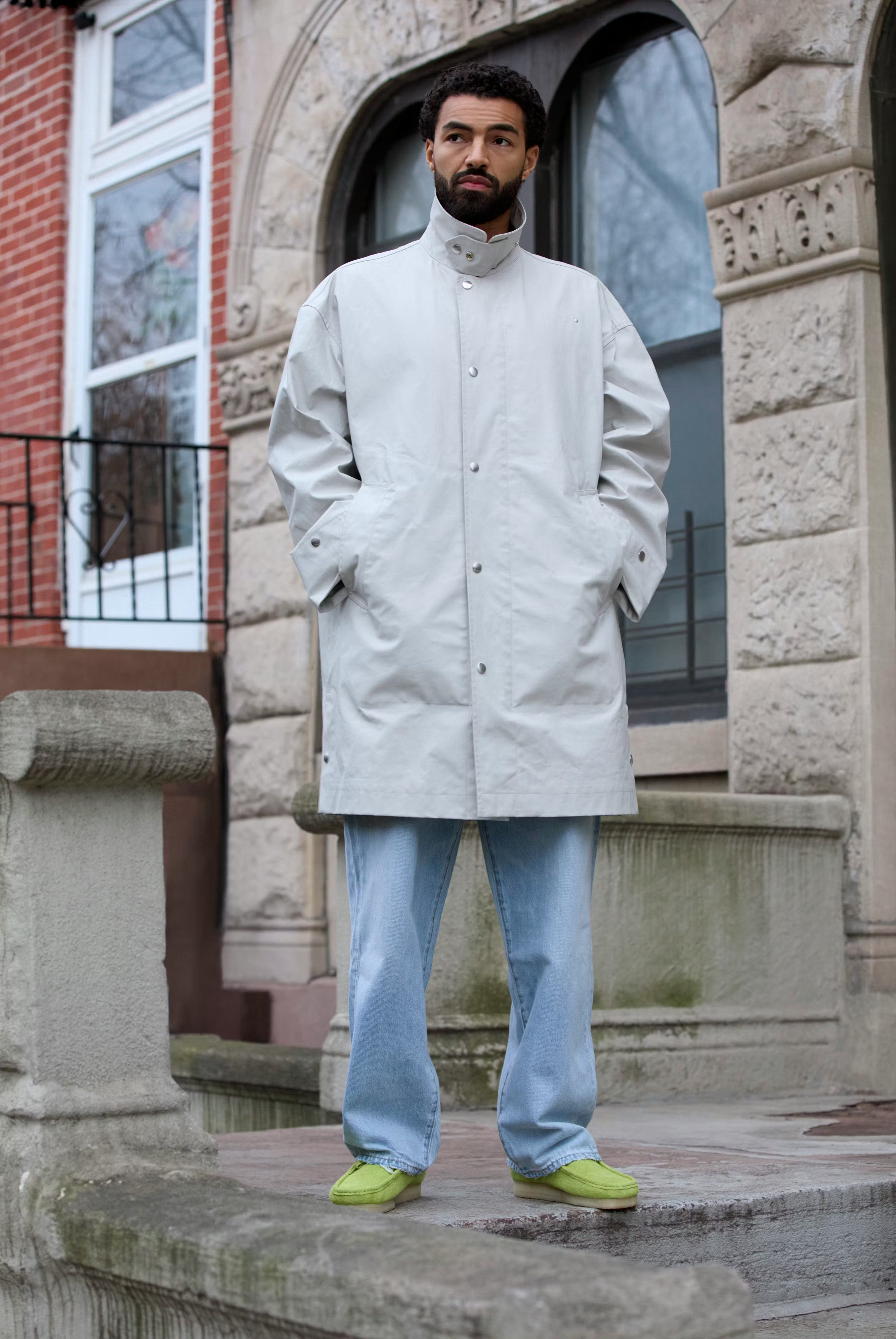
Coat LEMAIRE Pants LEVI’S Shoes CLARKS
“There are so many trends he’s been in front of, partially because he does not care,” McMahon says. “And he kind of never has.”
At 13, his mother sent him off to a predominantly white boarding school in East Hampton, New York. As he recalls, the decision was left to him, but his mother’s stance was, “You would be silly to not take this opportunity.” He did his own research, came to the same conclusion, and ended up in a cafeteria with recycled bamboo floors where the quality of the food blew his mind. Despite the East Coast culture shock, he assimilated quickly, did well, made friends — but he was a sensitive, lonely teenager who couldn’t shake an undercurrent of doubt. “Why am I entitled to have this life of promise and all these blessings?” he’d wonder. “And I have friends I’ve left at home who are inevitably going to be in the system.” During those years, he’d take the bus into the city on weekends, stay with his friend Aidan Mackey, and skate with him through Tompkins Square Park.

Strobeck, the proto–Frederick Wiseman of chronicling modern skateboarding on film, recalls meeting a 15-year-old Elsesser. He was goofy, but he was also utterly obsessed with skateboarding. “That’s all he cared about at that moment,” Strobeck says. “He was young and just so electric. He had that big energy, and he had to put it somewhere.” Elsesser knew all about Strobeck, including the skate videos he’d made. “He texted me every day to meet up” and film together, Strobeck says.
After “cherry” was released, Elsesser just wanted to keep going, Strobeck says. So the pair of them, plus Tyshawn Jones and Sean Pablo, put out another video called “JOYRIDE.” six months later. “We were in a bulletproof bubble” of success, Strobeck recalls. “It almost felt like we could do anything.”
Strobeck, their elder, watched the three skaters get stronger and better and more sure of themselves. But they also became recognizable. “They walked down the street, and people knew who they were,” he says. “Everyone wanted them. I remember a lot of casting agencies and companies hitting me up like, ‘Hey, can we use those kids?’ As soon as things get hot, everyone wants a piece.”
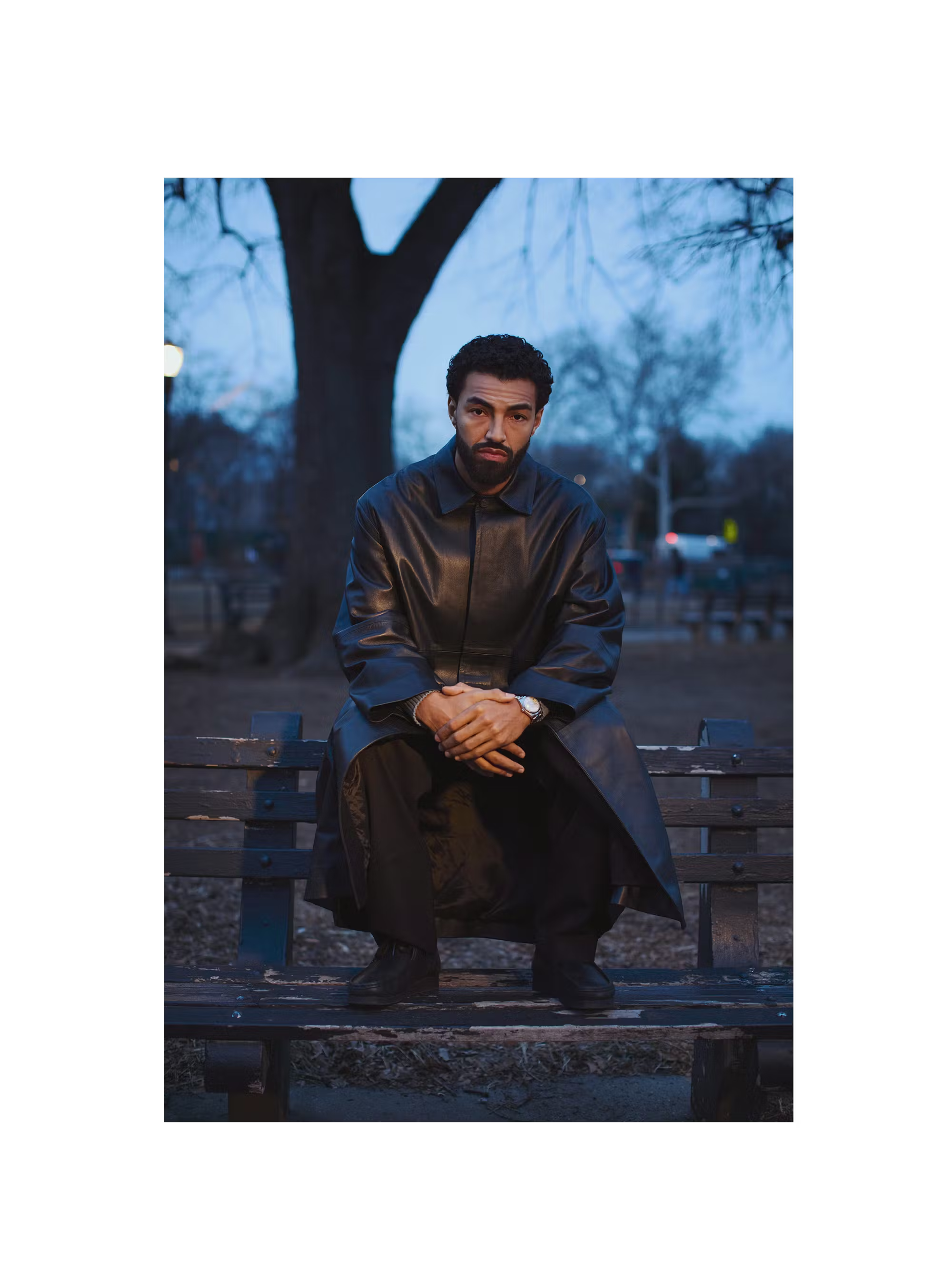
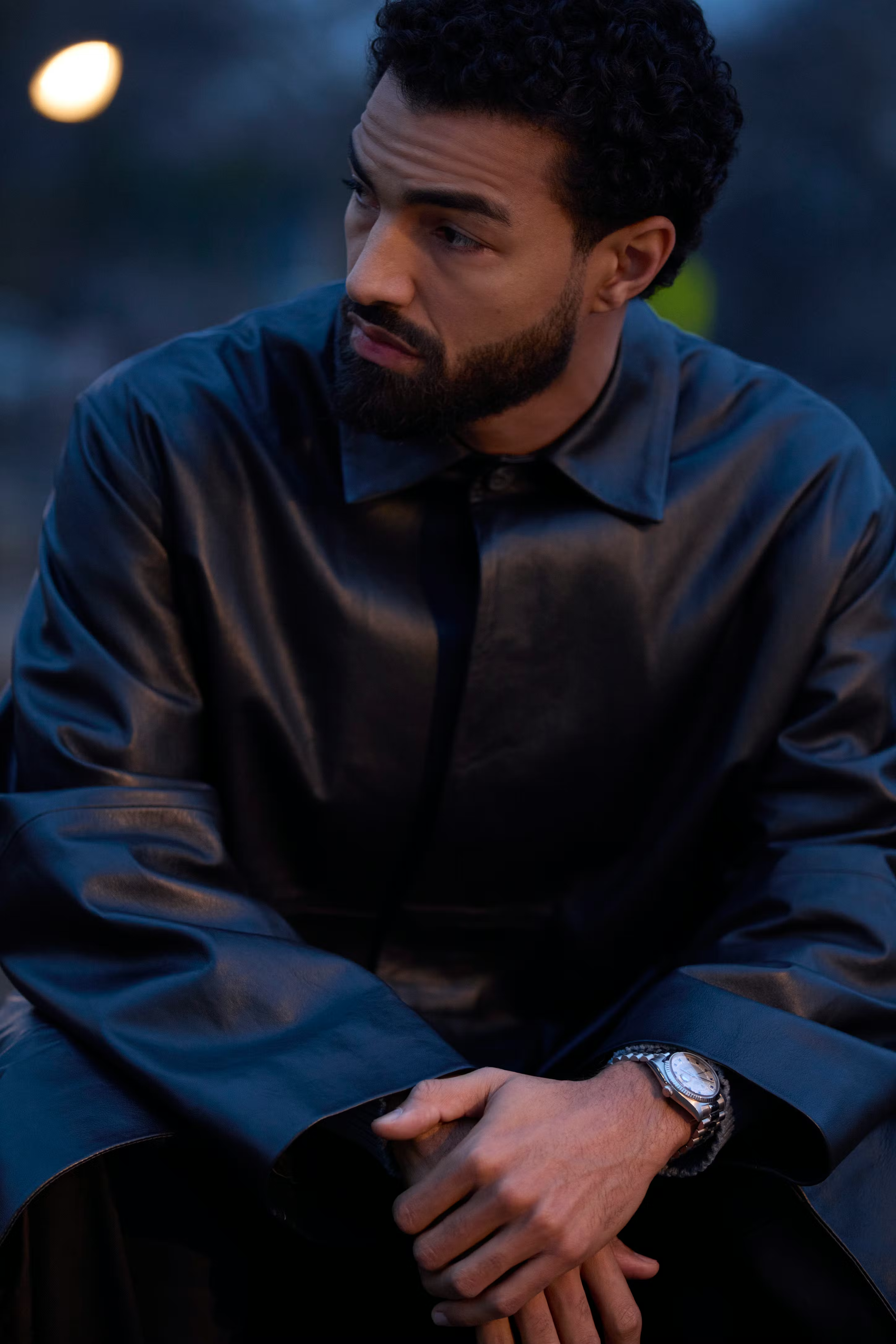
Coat and pants LAUREN MANOOGIAN Shoes CLARKS Watch VINTAGE ROLEX, TALENT’S OWN
For Elsesser, a deal with Converse followed, then a cascade of opportunities. Still, his doubts never went away. Some of the people he was skating with didn’t need to rely on the sport for income, but for him, going pro came with added pressure. It was his one chance to make it big, and who knew how long it would last?
Skateboarding is not a sport that is kind to the body or the mind. As Elsesser describes it, “we [skaters] all have a little bit of that self-harming vibe to us where we kind of enjoy getting beat up. We’ll be trying a trick for hours and tell ourselves, you know, ‘Just one more. I’m not allowed to have a sip of water until I land it,’ or, ‘I can’t eat.’ Just this kind of ultimatum in our heads.”
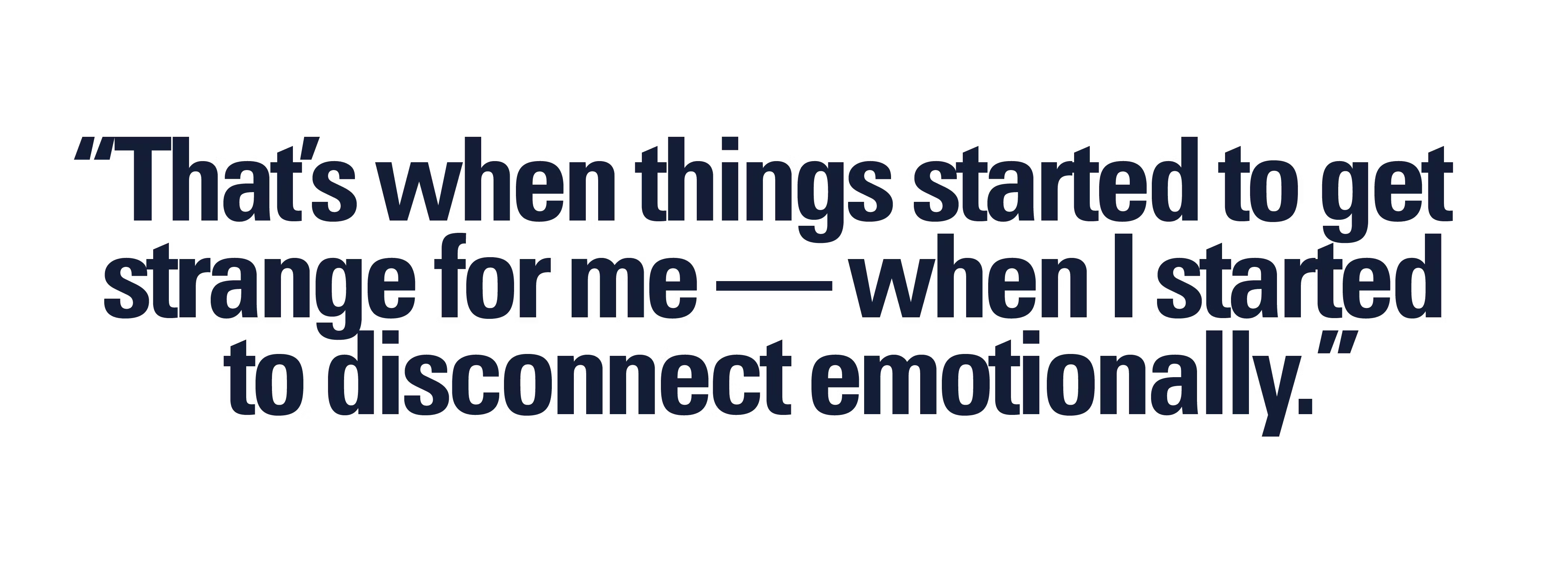
What starts as a harmless mental negotiation with yourself can turn dark very quickly. Despite the meteoric trajectory of his fame, being the constantly photographed face of Supreme, a sense of isolation began to infect Elsesser. He’d always struggled with depression, but this time, “it manifested through my struggles with addiction and substance abuse,” he says. “I’m super grateful to have made good money through something I love to do, you know, I never worked a nine to five. But I look back, and that’s when things started to get strange for me — when I started to disconnect emotionally.”
“He can be very passive about his own accomplishments,” says his sister, McMahon. “Part of that is because no one has ever given him the fucking credit.” When Supreme blew up with “cherry,” she says, it wasn’t because the Supreme “guys were finding skateboarders and being geniuses. It was Sage saying, ‘Here are my friends. Here’s who I want to put on. Here’s who I like and think is talented.’ And that’s how you get a team that’s basically all brown.
“A lot of people got credit for how they found those kids,” McMahon adds. “And they didn’t find those kids. They asked one kid who his friends were. And those kids had flair. They had style. They did all these things organically that no one else was doing.”

Elsesser was a depressed 18-year-old when he began posting his tracks to SoundCloud — without his name attached. “I felt safer just posting it anonymously, so I didn’t have to bear the brunt of saying, ‘Hey, I make music now,’” he explains. “I was also fearful of the judgment of people in skateboarding at that time. I was really public-facing. I was doing a lot of modeling for Supreme. So every couple months there were like 30 images of me online.”
Elsesser’s one refuge was his music, which he’d been making all his life. Even while filming “cherry,” Strobeck says, Elsesser would text him videos of himself “doing a rhyme, just doing what he does.” He finally started sharing his work with some industry friends, who encouraged him to make more. Matt Martians, one of the founding members of Odd Future, told him he had good ideas. Earl Sweatshirt, Elsesser’s close childhood friend, said, “‘Man, your music is special. You should explore more of that. You should rap more,’” Elsesser recalls.
Elsesser began slowly distancing himself from the sport that made him famous. “I felt like I wasn’t getting the support that maybe I deserved,” he says, and his sheer love for it had started to fade. He was a little older and less willing to risk injury. And even though he’d been pro for 10 years, he still felt like he was failing to honor young Sage, who’d spent hours and hours investing in his dream.
As Navy Blue, he could stash away a lot of his discomfort. “Every spliff is but a remedy,” Elsesser raps on Sir Render, made when he was emerging from his “emotional and spiritual bottom.” He was battling with his mental health and realizing he needed to get sober, both running refrains through 15 haunting and sonorous tracks. But the record isn’t entirely morose. On the song with his friend and mentor, Ka, his joy is palpable. “I think it’s my best one,” Elsesser says of the album. “It’s a world that I created, that I spent a lot of time in. I really wanted it to feel like a film. I wanted to make something that you could just press play on and have a full experience.”
Music has served Elsesser well. At the time of our interview, he was just coming off an extended tour across London, Europe, Australia, and New Zealand as the opener for the British hip-hop performer Loyle Carner. Despite being in the limelight since he was a teenager, opening across multiple nights wasn’t an effortless task for Elsesser. “My music is quite emotionally charged, so it’s already tough going out there and being as vulnerable as I am,” he says. “And then imagine the extra layer of being vulnerable with people who don’t know you.” He’s referring to the hierarchy: “The stigma of being an opener is like, you know, your music is lower. People are still coming in. People are getting drinks.” But getting over that self-consciousness was important to him. “Once I just started doing the thing, I felt some relief,” he says. “Going onstage having set an intention, grounding myself, it always gives me that extra push that makes me feel like I’m not performing for an audience.”
So, Navy Blue is thriving. And Elsesser has gone in new directions, too. He met Adrian Douzmanian, the co-founder of Miami-based skate brand Andrew, through his model sister. The two men bonded over their shared love of soccer, Stone Island, and watches.
Their friendship eventually grew beyond just “talking shit” to a legitimate business venture. In 2023, they launched Very Special together with two other co-founders, and they now deal vintage watches to some of the most famous people in the world. “Sage has a natural ability to decipher when something is good or not based on, like, first listen or first view,” Douzmanian says of Elsesser’s finely tuned sense of cultural cool. “It’s kind of automatic in his brain.”

Top A.PRESSE Pants GIORGIO ARMANI Shoes TIMBERLAND
Still, Elsesser hasn’t fully given up on skating. After years of a self-imposed sabbatical, two summers ago, he finally reconnected with the sport in a way that surprised him most of all. A friend was staying with him and one day casually said, “I’m going skating if you want to come.” Elsesser found himself smiling. And his first thought was, “You know what? Why not?”
He’d been so absorbed in music that he’d forgotten how much he loved doing this thing. So he went. And he ollie’d. And it all came back. He remembered the hours and hours he’d invested in skating “when I wasn’t good, when I was a kid and I was learning,” he says. He remembered who he was: the boy who’d found such wonder in daring physics to hold him down. And he found that the wonder was still there.
He could still live in “that moment when you’re like, ‘I just made the board leave the ground, stay on my feet, and go back down,’” he says. “When you’re a child, you’re watching it happen and thinking, ‘How do you do that?’”
Credits
By: Iva Dixit
Photography Assistant: John Law
Photographed by: John Edmonds
Grooming: Mo’Jay Rivera
Styled by: Sebastian Jean
Styling Assistant: Nathan Josaphat
Production Assistant: Alyssa Soares